

Planning a new build or renovation in 2025? The strength and stability of your home begin with the right flooring framing. This crucial step ensures safety, long-term durability, and energy efficiency in every project.
Poor flooring framing can lead to uneven floors, costly repairs, and even regulatory problems. The risks are real, but avoidable with the right guidance.
This handbook gives you expert advice, step-by-step instructions, and the most current standards. You'll learn about the fundamentals, materials, installation, regulations, 2025 innovations, troubleshooting, and top professional tips.
Whether you’re a homeowner or builder, follow this comprehensive guide to set a solid foundation for your project.
Understanding Flooring Framing Fundamentals
Flooring framing sits at the heart of every successful build, forming the solid foundation that supports daily life above. Whether planning a home or commercial project, understanding the essentials of flooring framing is crucial for safety, comfort, and compliance. This section breaks down the fundamentals, ensuring you grasp both the science and the practicalities before work begins.
The Purpose and Importance of Flooring Framing
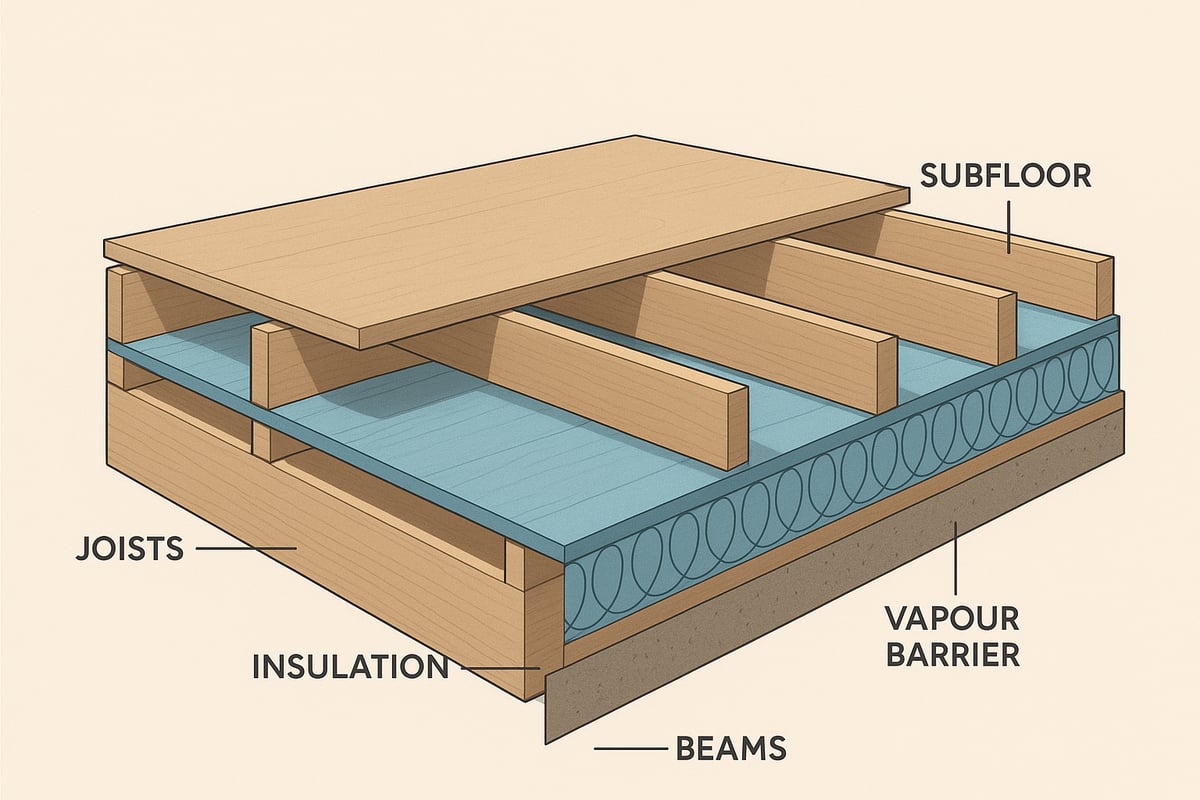
Flooring framing is the backbone of any structure, providing essential support for everything above. It transfers loads from walls, furniture, and occupants down to the foundations, maintaining overall building stability. If flooring framing is poorly designed or installed, issues such as uneven floors, creaks, or even dangerous sagging can quickly arise.
Consider a real-world scenario: a home with substandard flooring framing may experience persistent dips and movement, leading to expensive repairs and safety risks. For a deeper dive into why correct framing is vital, see the Framed Home Building Basics guide. Ultimately, proper flooring framing is non-negotiable for any long-lasting, secure build.
Key Components of a Flooring Frame
A typical flooring framing system consists of several interconnected elements, each playing a distinct role. Joists span horizontally to carry the load of the floor, while beams act as the main support underneath the joists. Subflooring—usually plywood, OSB, or chipboard—rests atop the joists, creating a flat surface for final floor finishes.
Supporting elements like noggins and bridging help prevent twisting and add rigidity. The two most common methods are platform framing, where each floor is built separately, and balloon framing, where studs run continuously up several storeys. Joist spacing in the UK generally follows 400mm or 600mm centres, ensuring even weight distribution and structural stability throughout the flooring framing.
Types of Flooring Systems
When choosing a flooring framing system, options include traditional timber, engineered wood, and steel. Timber remains popular for its availability and ease of use, but engineered wood products like LVL and I-joists offer greater strength and consistency, reducing the risk of warping. Steel systems are often chosen for commercial or multi-storey buildings due to their load capacity and fire resistance.
| System | Pros | Cons |
|---|---|---|
| Timber | Cost-effective, flexible | Can warp or rot if untreated |
| Engineered Wood | Strong, stable, light | Higher upfront cost |
| Steel | Durable, fire-resistant | Needs specialist skills |
Recent data shows engineered wood usage in UK construction has grown by over 20% in the past five years, reflecting a shift in flooring framing trends.
Load-Bearing Considerations
Effective flooring framing must account for various loads. Dead loads include the weight of the structure itself, while live loads cover people, furniture, and everyday activities. Point loads are concentrated forces, such as a heavy bathtub or kitchen island.
Calculating the correct load requirements involves understanding room use and referencing UK building codes. For instance, kitchens and bathrooms need stronger flooring framing than bedrooms, given higher expected loads. Striking a balance is key—overengineering can drive up costs, while underengineering risks failure.
Common Mistakes and How to Avoid Them
Mistakes in flooring framing are costly and can compromise safety. Common errors include incorrect joist spacing, using substandard materials, or failing to allow for movement and moisture. These shortcuts often lead to bouncy floors, squeaks, or even structural collapse.
To avoid pitfalls:
- Double-check all calculations before installation.
- Choose materials that meet UK standards.
- Engage qualified professionals for complex tasks.
A notable case saw a floor fail due to improper joist installation, requiring complete replacement. Investing time and expertise in flooring framing prevents such disasters and ensures lasting quality.
Choosing Materials and Tools for Flooring Framing
Selecting the right materials and tools is crucial for long-lasting, high-performance flooring framing. Your choices will directly impact strength, safety, and compliance. Let us break down what you need to know before you start your project.
Timber Selection: Grades and Sustainability
Timber remains the backbone of most flooring framing in the UK. The key is choosing the correct grade and species for your project. Softwoods like pine are popular for joists and beams, while hardwoods are used for specific structural needs.
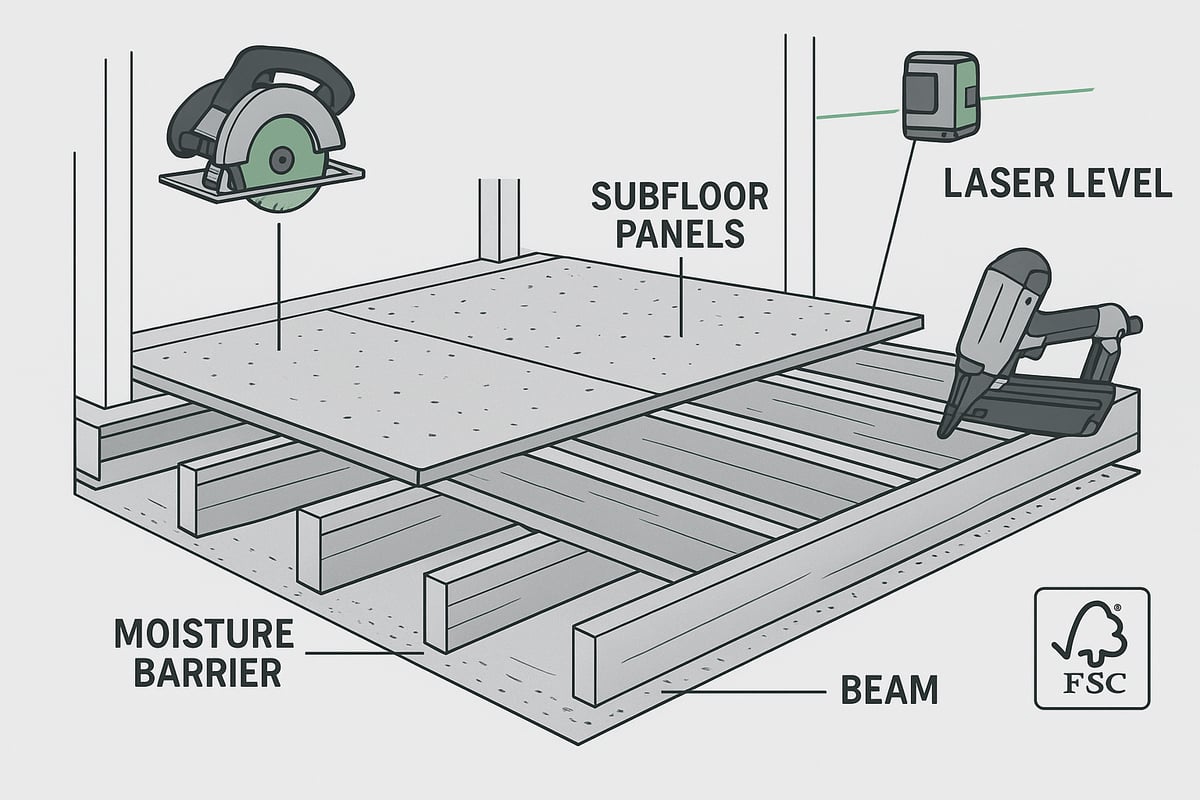
Timber grading is essential. C16 and C24 are common in UK construction, with C24 offering higher strength and longer span capability. Always check for FSC or PEFC certification, which ensures your timber is sourced sustainably and ethically.
For longer spans or demanding applications, C24 is often the go-to. If you want a deeper dive into how timber can shape your flooring framing choices, the Log and Timber Frame Homes Overview provides clear guidance on structural options and benefits.
Engineered Wood and Alternative Materials
Engineered wood products are transforming flooring framing. Laminated Veneer Lumber (LVL), glulam beams, and I-joists offer superior strength, consistency, and less warping than traditional timber. These solutions are ideal for modern builds requiring wide, open-plan spaces.
Steel and hybrid systems are increasingly found in commercial and specialist residential projects. Engineered wood’s market share is rising in the UK, thanks to its reliability and sustainability. Consider your building’s requirements, as the best material for flooring framing will depend on span, load, and design.
Essential Tools and Equipment
Having the right tools is vital for safe, efficient flooring framing. At a minimum, you will need a circular saw for cutting timber, a laser level for precision, a nail gun for rapid fixing, and robust joist hangers for secure connections.
Personal protective equipment (PPE) is non-negotiable. Always wear safety boots, gloves, goggles, and hearing protection when working on flooring framing. Investing in quality tools not only speeds up the build but also improves accuracy.
Laser levels, for example, ensure your floor is perfectly even, preventing issues down the line. Reliable tools and proper safety gear are the foundation of a professional result.
Moisture Management and Treatment
Moisture is the silent enemy of timber flooring framing. Without proper treatment, your joists and beams are susceptible to rot, mould, and long-term weakening. Preservative treatments and vapour barriers are essential to protect your investment.
UK Building Regulations require damp-proof membranes and adequate ventilation for all ground floors. Following these standards prevents condensation and rising damp, safeguarding the structure. Prevention is always more cost-effective than repair.
In every flooring framing project, proactive moisture management is key to long-term durability and compliance.
Step-by-Step Guide to Flooring Framing Installation
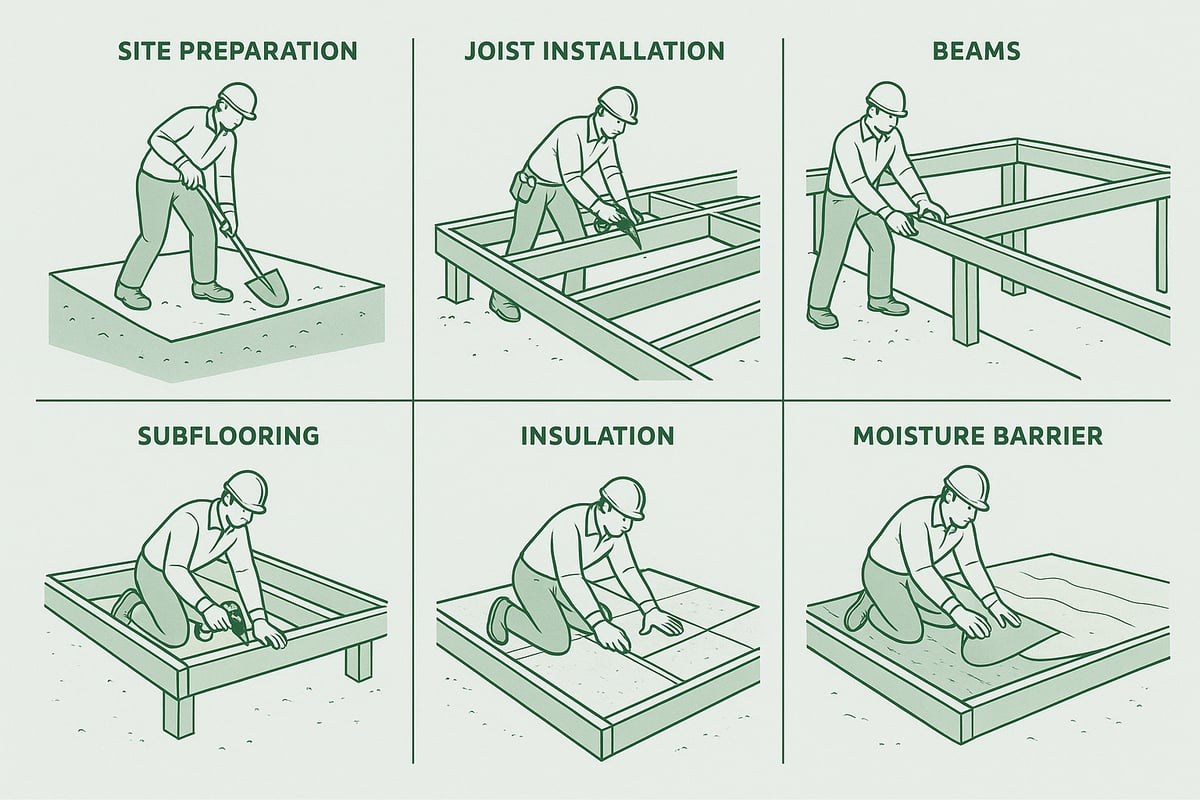
A successful flooring framing project starts with careful preparation and follows a structured process from the ground up. This guide walks you through each stage, from planning to final checks, ensuring your work meets the highest standards for safety, performance, and compliance.
Site Preparation and Planning
Proper site preparation lays the foundation for reliable flooring framing. Begin by assessing subsoil conditions to ensure stability and avoid future settlement issues. Clear the site of debris, vegetation, and obstacles, then level the ground to create a flat, even surface for your flooring framing project.
Mark out the floor area accurately using stakes and string lines, referencing architectural drawings and building plans. An accurate site survey is essential, as even minor errors can lead to misaligned floors or structural weaknesses later.
Checklist: Tools and Materials
- Tape measure and laser level
- Marking paint or chalk
- Shovels, rakes, and compactor
- Safety gear (PPE)
By investing time in thorough planning and preparation, you set up your flooring framing for long-term success and compliance.
Laying Out and Installing Joists
The next step in flooring framing is calculating joist spacing and layout. Joists are typically spaced at 400mm or 600mm centres, depending on the expected floor loads and the type of flooring system used. Use a tape measure and marking tools to lay out joist positions precisely.
Secure joists to the supporting walls and beams using joist hangers for added strength, ensuring each joist is level and firmly fixed. Accurate spacing is crucial—closer spacing (400mm) provides greater strength for heavy-use areas like kitchens, while wider spacing (600mm) may suffice in bedrooms.
Tips for Success:
- Double-check measurements before fixing joists
- Use a laser level for accuracy
- Confirm joist ends are adequately supported
Proper joist installation is at the heart of effective flooring framing, ensuring the floor will bear loads safely and remain level over time.
Installing Beams and Supporting Structures
Beams are the backbone of any flooring framing system. Start by positioning the main beams according to your structural plans, ensuring they align with load-bearing walls or columns. Use temporary supports to hold beams in place while you check for level and alignment.
Secure beams to foundations or masonry walls using steel plates, timber connectors, or anchor bolts. Intermediate supports, such as sleeper walls or posts, may be needed for longer spans. Typical residential beam sizes in the UK range from 150x50mm for small spans to much larger sections for open-plan layouts.
Key Steps:
- Position and brace beams before fixing
- Use approved connectors for maximum strength
- Inspect all fixings for tightness and stability
A well-installed beam system distributes weight efficiently, forming the basis of a robust flooring framing solution.
Fixing Subflooring and Decking
Once joists and beams are in place, it’s time to install the subflooring. Common options include plywood, oriented strand board (OSB), and moisture-resistant chipboard, each offering different benefits for flooring framing.
Lay subfloor panels perpendicular to the joists, staggering joints for added stability. Fasten panels with screws or nails, spacing them according to manufacturer guidelines. Screws are often preferred for a squeak-free finish. Allow for expansion gaps (typically 2-3mm) around panel edges to accommodate changes in moisture and temperature.
Best Practices:
- Check each panel for level before fixing
- Apply adhesive where required for extra hold
- Use a chalk line to mark joist positions for accurate fastening
Correct subfloor installation ensures your flooring framing is solid, quiet, and ready for final finishes.
Insulation and Soundproofing Integration
Integrating insulation within your flooring framing boosts both comfort and efficiency. Mineral wool and rigid foam boards are popular choices for thermal and acoustic performance. Place insulation snugly between joists, avoiding gaps that could allow heat loss or sound transmission.
For multi-storey buildings, regulations often require enhanced soundproofing. Acoustic underlays or resilient bars can be added to further reduce noise. Always check the latest standards for U-values and sound transmission in your area.
Benefits:
- Improved energy efficiency and comfort
- Enhanced privacy between floors
- Compliance with building regulations
Proper insulation is a key upgrade to any flooring framing project, protecting against cold, noise, and future energy costs.
Moisture Barriers and Vapour Control
Protecting your flooring framing from moisture is vital for long-term durability. Install a damp-proof membrane (DPM) or vapour barrier directly above the ground or below the subfloor to block rising damp and condensation. Overlapping seams and sealing edges help create a continuous barrier.
UK Building Regulations require effective measures against moisture ingress in ground floors. For official guidance, refer to the UK Building Regulations 2010, which outline minimum standards for materials and installation.
Installation Tips:
- Extend the DPM up walls to meet other damp-proof courses
- Inspect for tears or gaps before covering
- Use compatible tapes and adhesives for sealing
A reliable moisture barrier is a non-negotiable element of flooring framing, preventing costly decay and structural issues.
Final Checks and Quality Assurance
Before signing off, conduct a thorough inspection of your flooring framing. Check for level and alignment across the entire floor area. Ensure all fixings—screws, nails, and brackets—are secure and meet the relevant standards.
Use a spirit or laser level to confirm flatness, and address any snags such as protruding fixings or uneven panels. Compile a checklist to verify compliance with UK Building Regulations, including structural, fire, and moisture protection.
Final Steps:
- Document any issues and rectify them immediately
- Arrange for professional sign-off if required
- Keep records of materials and inspections for future reference
Completing these checks guarantees your flooring framing is safe, compliant, and built to last.
UK Building Regulations and Compliance for Flooring Framing
Understanding UK building regulations is essential for anyone tackling flooring framing in 2025. Compliance ensures your project is structurally sound, safe, and legally approved. Whether you are a homeowner or contractor, knowing these standards will save time, money, and stress.
Overview of Relevant UK Building Codes
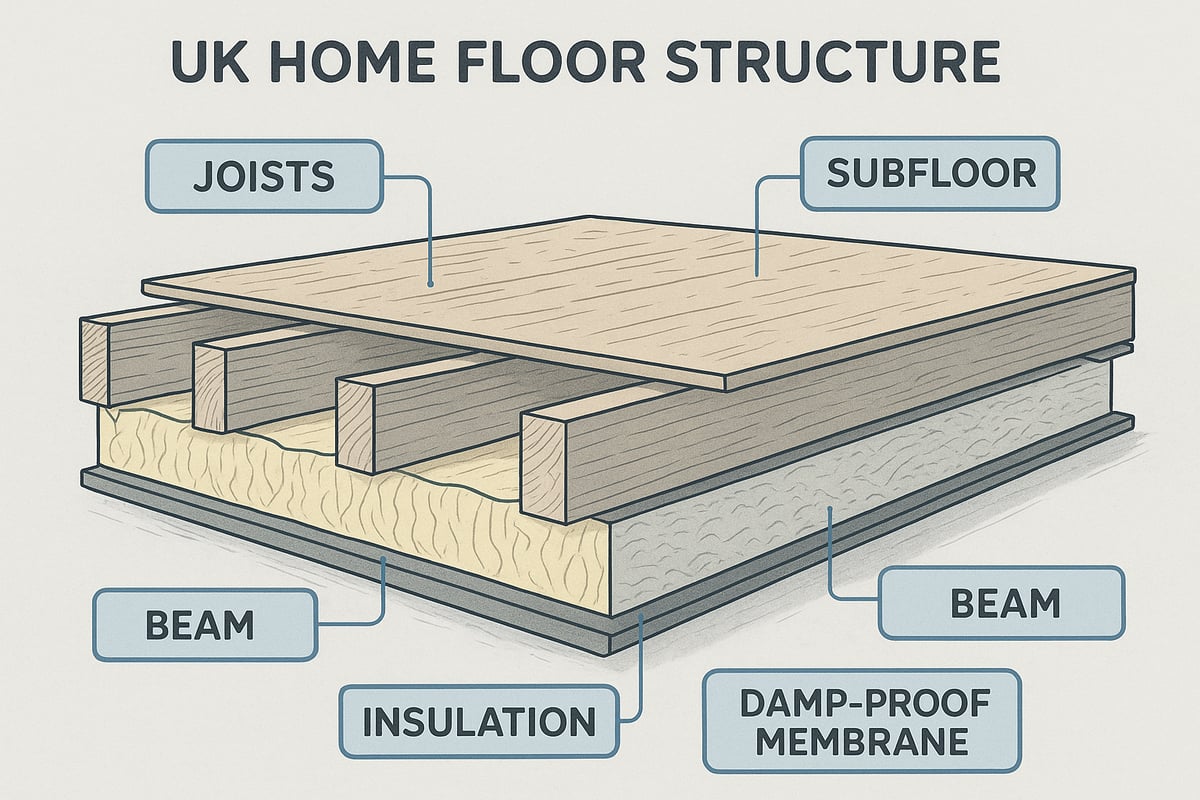
Flooring framing in the UK must comply with several key sections of the Building Regulations. Part A covers structural safety, specifying minimum strength and stability for all floor systems. Part C addresses moisture resistance, requiring protection against rising damp and condensation. Part E focuses on sound insulation, especially important in multi-storey buildings.
Recent updates highlight the importance of proper insulation and vapour barriers, as detailed in the official Building Regulations for Floor Insulation. For example, domestic floors must meet specific load-bearing requirements and achieve set U-values for energy efficiency. Following these codes helps prevent costly failures, such as sagging or moisture-damaged floors.
Documentation and Approvals
Every flooring framing project must be properly documented. You will need detailed drawings, structural calculations, and proof of materials’ compliance with British Standards. These documents are reviewed by building control officers, who inspect work both during and after installation.
Notifying local authorities at the right stages is crucial. For example, a new suspended timber floor requires an inspection before the subfloor is fixed. Failing to provide the right paperwork can delay approvals or even halt your project. Early preparation and clear records streamline the process and ensure your flooring framing meets all legal requirements.
Common Compliance Pitfalls
Many flooring framing issues stem from overlooked regulations or inadequate documentation. Common mistakes include using non-approved materials, failing to install a vapour barrier, or neglecting to meet minimum joist sizes. These errors can lead to failed inspections, fines, and expensive remedial work.
One case saw a project delayed after missing a damp-proof membrane, a required element for ground floors. To avoid such setbacks, engage with building control early and double-check specifications against current codes. Staying organised and proactive is key to smooth compliance and a trouble-free build.
Future-Proofing for 2025 Standards
Building regulations are evolving, with increasing focus on sustainability, insulation, and airtightness. Future flooring framing projects will need to meet stricter requirements for energy efficiency and environmental impact. For example, new homes may soon require even lower U-values and enhanced airtightness to help achieve national carbon reduction targets.
Embracing these changes not only ensures compliance but also adds long-term value to your property. By building beyond the minimum, you safeguard against costly upgrades and future-proof your flooring framing for years to come. Stay informed on regulatory trends to keep your project ahead of the curve.
Innovations and Trends in Flooring Framing for 2025
The flooring framing landscape is rapidly evolving, driven by new materials, digital technologies, and an urgent focus on sustainability. As 2025 approaches, staying ahead of these innovations is essential for anyone involved in construction or renovation. Here, we explore the key trends redefining flooring framing and what they mean for the future of building.
Advances in Engineered Timber and Hybrid Systems
Engineered timber products are transforming flooring framing, offering greater strength, consistency, and flexibility than traditional solid wood. Cross-laminated timber (CLT) and hybrid steel-timber systems are increasingly popular for their speed of installation and structural performance. These solutions not only reduce onsite labour but also lower the carbon footprint of construction.
Recent projects in the UK have showcased CLT floors in multi-residential buildings, highlighting both environmental and economic benefits. According to the UK Timber Construction Market Outlook, usage of engineered wood in flooring framing has grown significantly, reflecting a market shift towards sustainable and efficient solutions.
Digital Tools and Prefabrication
Digital technologies are reshaping flooring framing by improving precision and reducing waste. Building Information Modelling (BIM) enables detailed design and clash detection before construction even begins, minimising costly errors. Prefabricated floor cassettes and modular construction methods allow for offsite assembly, ensuring higher quality control and faster project timelines.
For contractors and developers, adopting these digital tools means fewer mistakes and smoother coordination between trades. Prefabrication also means that flooring framing components arrive onsite ready to install, reducing disruption and improving efficiency. This integration of digital planning and factory-built systems is setting a new standard for the industry.
Smart Materials and Sensors
Smart technology is finding its way into flooring framing, with sensors now being embedded directly into structural elements. These sensors monitor moisture levels, detect movement, and measure loads in real time. Early detection of issues such as excessive moisture or shifting joists enables proactive maintenance, helping to avoid costly repairs and safety hazards.
Pilot projects in the UK have demonstrated the value of smart flooring framing in both new builds and renovations. Homeowners and facility managers benefit from real-time alerts and data-driven decision-making, ensuring long-term building health and resilience. This trend is likely to become a key feature in future-ready homes.
Sustainability and Circular Construction
Sustainability is now at the heart of flooring framing trends. Builders are increasingly selecting recycled materials, designing for disassembly, and conducting life cycle assessments to minimise environmental impact. Government incentives are encouraging the use of low-carbon and renewable products, pushing the industry towards greener practices.
Circular construction approaches are influencing flooring framing design, with a focus on materials that can be reused or recycled at the end of a building’s life. This shift is not only good for the planet but also adds long-term value for property owners. Flooring framing is emerging as a central driver for the next generation of sustainable buildings.
Troubleshooting and Expert Tips for Flooring Framing Success
Even with the best planning, flooring framing can present unexpected challenges on site or over time. Knowing how to identify, address, and prevent common issues will safeguard your investment, keep your project on track, and ensure long-term performance. Here’s a comprehensive troubleshooting guide for 2025 builds and renovations.
Diagnosing Common Issues (Squeaks, Sagging, Moisture)
Spotting problems early is essential for maintaining your flooring framing’s integrity. Typical warning signs include floor squeaks, uneven or bouncy areas, and visible damp patches or mould.
- Squeaks often result from loose fixings or friction between subfloor panels and joists.
- Sagging can indicate undersized joists or excessive spans.
- Moisture issues may surface as staining, warping, or a musty odour.
A systematic inspection helps pinpoint the root cause before minor issues escalate. If you notice persistent squeaks or sagging, check for missing fixings or signs of decay. Addressing these quickly protects your flooring framing from more serious structural failures.
Repair and Reinforcement Techniques
When your flooring framing shows signs of distress, several effective repair methods are available. Strengthening joists with ‘sistering’—attaching an additional timber alongside the existing member—can restore load capacity. For more significant weaknesses, steel plates or resin injections may be necessary, especially in older or heavily loaded floors.
- Use joist hangers or brackets for added support.
- Replace decayed sections with properly graded timber.
- Reinforce beams under high-stress areas, such as kitchens.
For a step-by-step approach to tackling structural repairs, see the Timber Frame Home Construction Guide, which covers essential techniques relevant to both new builds and retrofits. Always ensure repairs meet current standards for flooring framing.
Preventative Maintenance Best Practices
Routine maintenance is the key to extending the lifespan of your flooring framing. Schedule annual inspections to check for loose fixings, signs of moisture, and any unusual movement in the floor. Early detection of issues allows for simpler, more cost-effective solutions.
Maintenance checklist:
- Inspect for gaps or movement in subfloor panels.
- Monitor moisture levels using a moisture meter.
- Tighten or replace fixings where needed.
Keep a record of all inspections and repairs. Proactive care will save you the inconvenience and expense of major remedial work, keeping your flooring framing performing at its best.
When to Consult a Structural Engineer
Not all flooring framing challenges can be solved with DIY fixes. If you encounter significant sagging, extensive rot, or plan major alterations—such as removing load-bearing walls or adding heavy fixtures—it’s time to seek professional advice.
A structural engineer can:
- Assess the adequacy of existing framing.
- Specify reinforcement or replacement strategies.
- Certify compliance with UK Building Regulations.
Ignoring serious warning signs may put your safety and legal compliance at risk. Always err on the side of caution and consult a qualified expert when in doubt about your flooring framing.
Cost-Saving Strategies Without Compromising Quality
Balancing budget and build quality is possible with smart planning. Source materials from reputable suppliers and consider group purchases for discounts, especially on large projects. For minor repairs or routine maintenance, a DIY approach can be cost-effective, provided you have the right skills and tools.
- Compare prices for C24 timber and engineered wood.
- Reuse or recycle materials where permitted by code.
- Invest in quality fasteners to prevent future issues.
Remember, cutting corners on flooring framing often leads to greater expense in the long run. Prioritise quality at every stage for lasting value.
Flooring Framing FAQs for 2025
Q: Can I use reclaimed timber for floor joists?
A: Reclaimed timber may be used if it is graded and meets UK standards for strength and durability.
Q: What’s the most common cause of squeaky floors?
A: Most squeaks result from movement between the subfloor and joists due to loose fixings or inadequate spacing.
Q: Are there new regulations for insulation in flooring framing?
A: 2025 standards continue to evolve, with increased emphasis on energy efficiency and airtightness.
For more detail on compliance and best practices, consult resources like the Timber Extension Building Advice page, which addresses both regulations and practical solutions for flooring framing in UK homes.
Now that you have a solid understanding of flooring framing fundamentals, materials, regulations, and expert tips, you’re well-equipped to tackle your next project with confidence. Whether you’re planning a bespoke oak structure or looking to enhance your home’s value with precision-crafted framing, Acorn to Oak Framing is here to help you bring your vision to life. Our team combines traditional expertise with modern techniques, ensuring every detail meets the highest standards for quality and durability. If you’re ready to start building a foundation that stands the test of time, let’s take the next step together—BUILD NOW.


