
Energy efficiency and sustainability are now at the forefront of building in 2026, making insulating timber frame walls more crucial than ever. Rising energy prices and stricter regulations mean that how you insulate your home can have a real impact on comfort, costs, and the environment.
This expert guide is designed for homeowners, self-builders, and construction professionals who want to achieve the highest standards of comfort, reduced energy bills, and full regulatory compliance. Inside, you will discover everything from how timber frame walls are built, to the latest insulation materials, step-by-step installation advice, the regulations you must follow, and future trends shaping the industry.
By following the latest techniques for insulating timber frame walls, you can enjoy a warmer, more efficient home, peace of mind on compliance, and a clear path to long-term savings.
Understanding Timber Frame Wall Construction
Timber frame wall construction lies at the heart of energy-efficient homes in the UK. Understanding the structure, performance, and innovations is vital for anyone considering insulating timber frame walls. This section demystifies the anatomy, thermal performance, challenges, and future trends shaping timber frame walls in 2026.
Anatomy of a Timber Frame Wall
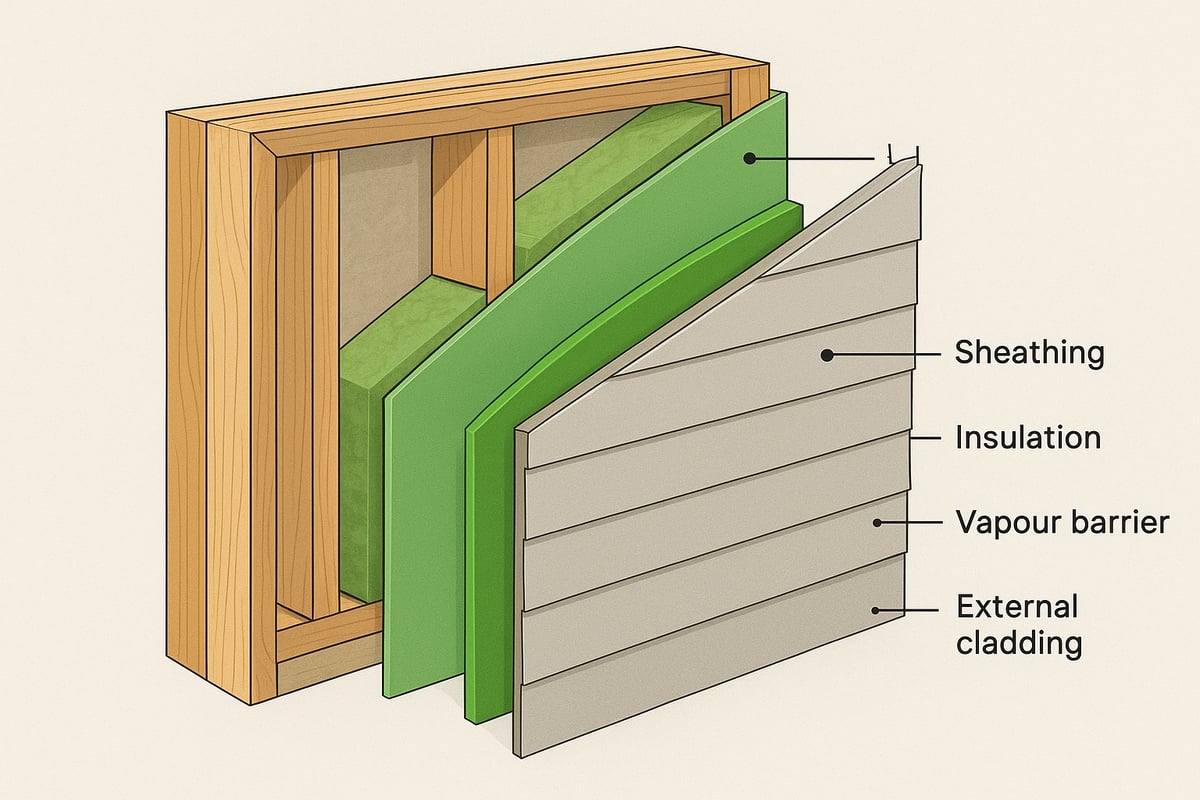
A typical timber frame wall is a composite of carefully layered materials, each fulfilling a vital role. The basic structure consists of:
- Structural timber studs and rails, forming the load-bearing frame
- Sheathing boards, providing rigidity and bracing
- Insulation, fitted between and/or over the studs for thermal performance
- Vapour control layers or membranes, managing moisture movement
- External cladding, offering weather protection and aesthetic appeal
Traditional timber frames often use larger, widely spaced posts and beams, while modern systems rely on closely spaced studs and engineered panels for precision and speed. The cavity between studs allows for efficient insulating timber frame walls, with airtightness achieved through meticulous sealing of joints and penetrations.
The importance of cavity design cannot be overstated. Properly detailed cavities prevent moisture ingress and thermal bridging, both essential for longevity and performance. For a visual breakdown of construction layers and techniques, see timber frame wall construction methods.
In a standard UK wall cross-section, you will find insulation sandwiched between timber studs, sheathing on the exterior, a vapour barrier internally, and cladding on the outside. This build-up supports both structural integrity and optimal conditions for insulating timber frame walls.
Thermal Performance and Why Insulation Matters
Thermal performance is measured by U-values, which indicate how much heat passes through a wall. For timber frames, a lower U-value means less heat loss and greater comfort. Uninsulated timber frame walls can lose up to 30% of a home's heat, compared to well-insulated masonry.
This heat loss translates directly into higher energy bills and a larger carbon footprint. Retrofitting or upgrading insulation in timber frame walls can reduce heating costs by hundreds of pounds per year. For example, a semi-detached home that upgraded to high-performance insulation saw annual savings of up to 25% on heating bills.
Insulating timber frame walls is not just about cost. It also supports the UK's commitment to reducing carbon emissions. Improved insulation means less reliance on fossil fuels, making homes greener and more sustainable.
Common Challenges in Timber Frame Insulation
Insulating timber frame walls comes with unique challenges. Moisture management is critical, as timber is sensitive to prolonged dampness. Improper vapour control can lead to condensation within the wall, risking rot and mould.
Thermal bridging, where heat escapes through poorly insulated structural elements, can undermine performance. Careful detailing and use of continuous insulation help address this issue. Air leakage is another concern, as gaps or poorly sealed membranes reduce the effectiveness of even the best insulation.
Longevity and maintenance must be considered. Timber frames, if not protected from moisture or pests, can deteriorate over time. For example, a poorly insulated wall with gaps in the vapour barrier may show early signs of decay, leading to costly repairs. Regular inspections and prompt repairs are vital for maintaining the benefits of insulating timber frame walls.
Innovations in Timber Frame Design for 2026
The landscape of timber frame construction is rapidly evolving. Advances in prefabrication and modular design mean entire walls, complete with insulation and membranes, can be assembled in factories for rapid onsite installation. This approach improves quality control and consistency in insulating timber frame walls.
Smart membranes with built-in vapour control adapt to changing humidity, reducing condensation risk. Sustainable timber sourcing ensures compatibility with modern, eco-friendly insulations, supporting a circular economy.
A recent UK project showcased walls built with integrated insulation, smart moisture sensors, and responsibly sourced timber. The result was a highly efficient, durable structure that set new standards for insulating timber frame walls in residential construction.
Choosing the Right Insulation Materials for Timber Frame Walls
Selecting the best insulation materials is crucial for achieving high performance when insulating timber frame walls. The right choice will impact not only comfort and energy efficiency, but also compliance with UK building standards and long-term sustainability. Let us take a closer look at the leading options and what to consider for your project.
Overview of Insulation Options
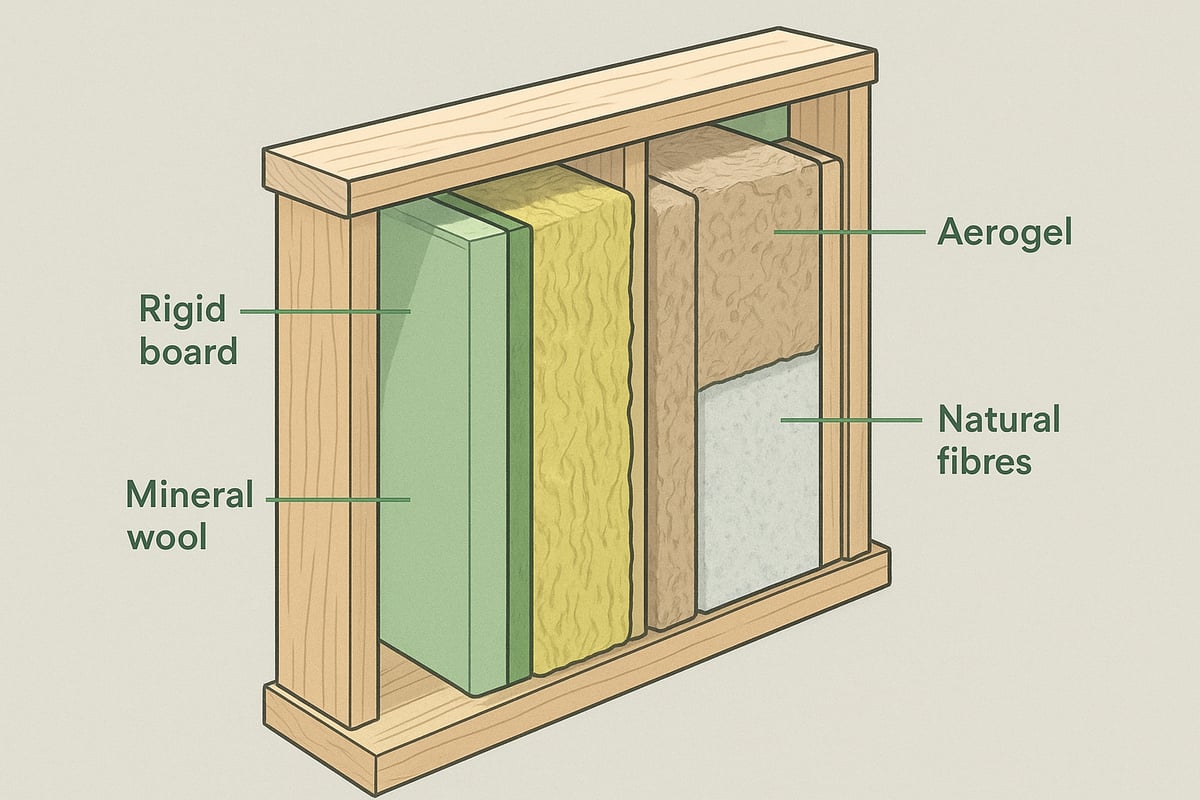
When it comes to insulating timber frame walls, several material types are commonly used. Each offers unique benefits and fits different wall build-ups. The main options include rigid boards (such as PIR, phenolic, and EPS), mineral wool, natural fibre products like sheep’s wool or wood fibre, and spray foam.
Here is a quick comparison to help you understand the key attributes:
| Insulation Type | Thermal Conductivity (W/mK) | Typical Cost (£/m²) | Suitability for Timber Frames |
|---|---|---|---|
| PIR Board | 0.022–0.028 | Medium–High | Excellent |
| Phenolic Board | 0.018–0.022 | High | Very Good |
| Mineral Wool | 0.032–0.040 | Low–Medium | Excellent |
| Wood Fibre | 0.038–0.045 | High | Good |
| Spray Foam | 0.025–0.038 | High | Good (specialist) |
Each material interacts differently with the timber frame, especially in terms of vapour control, fire resistance, and ease of installation. For a detailed review of options and advice on suitability, see the Timber Frame Wall Insulation Overview.
Pros and Cons of Popular Materials
PIR boards are prized for their high thermal performance and slim profile, making them ideal for space-limited applications in insulating timber frame walls. However, they can be costly and require careful fire detailing.
Mineral wool is valued for its fire resistance, sound absorption, and easy fit between studs. The downside is that thicker layers are needed to achieve low U-values.
Natural fibres, such as sheep’s wool or wood fibre, are eco-friendly and help buffer moisture in timber frames. These options can be more expensive and sometimes less readily available.
Spray foam provides excellent airtightness and can fill awkward spaces, but it may be challenging in retrofit projects and can have a higher environmental impact.
Material Selection Criteria for 2026
In 2026, choosing the right insulation for insulating timber frame walls means balancing thermal performance, safety, and sustainability. Consider these criteria:
- U-value targets: New builds in the UK typically aim for wall U-values below 0.18 W/m²K, while retrofits may have higher thresholds.
- Moisture and vapour permeability: Avoid interstitial condensation by selecting materials compatible with the wall’s vapour control strategy.
- Fire safety: Ensure compliance with the latest UK Building Regulations, especially for multi-storey or high-risk buildings.
- Sustainability: Look for products with recycled content, low embodied carbon, and good end-of-life recyclability.
Some projects may require a hybrid approach, combining materials to optimise performance. For example, mineral wool between studs and PIR externally can deliver both fire resistance and slim wall profiles in insulating timber frame walls.
Emerging and Future-Ready Insulation Products
Looking ahead, advanced materials are shaping the future of insulating timber frame walls. Vacuum insulated panels (VIPs) and aerogel blankets offer ultra-low thermal conductivity, allowing for thinner wall assemblies without sacrificing performance.
Smart insulation products with integrated sensors are being trialled in new builds, enabling real-time monitoring of temperature and humidity inside wall cavities. This technology helps ensure long-term performance and early detection of issues.
In 2025 and 2026, pilot projects have showcased the use of these materials in high-performance homes, suggesting that mainstream adoption is on the horizon. Homeowners and professionals should watch for these innovations, especially as regulations and expectations for energy efficiency continue to rise.
Step-by-Step Guide: How to Insulate Timber Frame Walls
Enhancing the performance of your home starts with a methodical approach to insulating timber frame walls. Whether you are working on a new build or upgrading an existing property, this guide walks you through each essential stage for optimal results.
Planning and Preparation
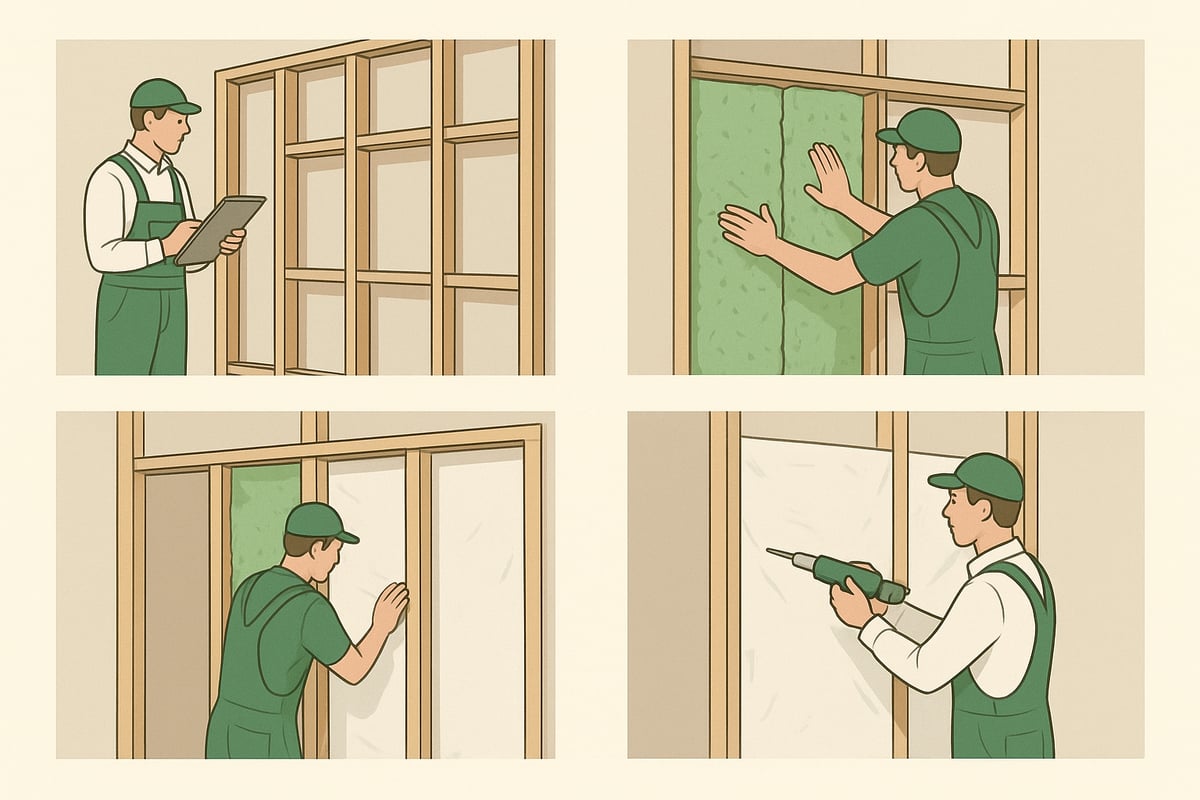
Before starting insulating timber frame walls, thorough planning is crucial. Begin by assessing your existing wall structure. Identify if you are dealing with a new build or a retrofit, as this will shape your approach. Use online U-value calculators to determine the specific thermal performance required for your project.
Next, evaluate the risk of moisture build-up. Timber frames are especially sensitive to condensation, so consider ventilation needs and the presence of existing vapour barriers. Gather all necessary materials, including insulation boards or batts, membranes, and personal protective equipment.
For a comprehensive checklist and further technical advice, refer to the Insulating a Timber Frame Guide. This resource ensures you are aligned with best practices and current UK building regulations.
Careful preparation at this stage reduces the risk of future issues and sets the foundation for a successful insulation project.
Installation Steps for New Builds
When insulating timber frame walls in new builds, precision is key. Start by fitting insulation between the timber studs, ensuring a snug fit with no gaps. This is vital to prevent thermal bridging, which can undermine wall performance.
Follow these steps:
- Place insulation boards or flexible batts tightly between studs.
- Use continuous layers to avoid cold spots.
- Install a vapour control layer on the warm side of the insulation.
- Fit breather membranes on the exterior, allowing water vapour to escape.
Secure all layers carefully, paying attention to manufacturer guidelines. Fix insulation boards with appropriate mechanical fasteners, or friction-fit mineral wool between studs. Double-check for any gaps or compression.
A typical wall build-up may include: external cladding, breather membrane, sheathing board, insulation between studs, vapour control layer, and internal plasterboard. Each layer contributes to the overall thermal and moisture control.
Consistent attention to detail at every stage ensures that insulating timber frame walls achieves both comfort and compliance.
Retrofitting Insulation to Existing Timber Frame Walls
Retrofitting insulating timber frame walls requires a tailored approach, as existing structures often present hidden challenges. First, decide whether to insulate internally or externally. Internal wall insulation is more common in the UK, but it can reduce room size and may reveal structural issues when finishes are removed.
Inspect the wall for damp or rot before proceeding. Carefully remove internal linings, then fit insulation and a vapour barrier while ensuring the timber frame remains dry and protected. Take extra care to route electrical wiring and plumbing without compromising the insulation layer.
If opting for external insulation, check planning requirements and ensure that the new layers do not trap moisture against the timber. Each retrofit project is unique, so adapt your methods as necessary.
Homeowners often report significant energy savings and improved comfort after retrofitting insulating timber frame walls, making the investment worthwhile.
Detailing Around Openings and Junctions
Properly insulating timber frame walls means giving attention to windows, doors, and wall-floor junctions. These areas are prone to cold bridging, where heat escapes through poorly insulated or continuous structural elements.
To address this:
- Use proprietary insulated lintels and closers around openings.
- Extend insulation fully into corners and edges.
- Overlap vapour control layers to maintain airtightness.
Carefully cut and fit insulation around service penetrations, such as pipes and cables, to avoid gaps. Poor detailing at junctions is a common mistake, often leading to draughts, condensation, and reduced energy performance.
Learning from real-world examples, it is clear that meticulous work in these areas is essential for maximising the benefits of insulating timber frame walls.
Quality Assurance and Common Pitfalls
Maintaining high standards throughout the process of insulating timber frame walls is vital for long-term performance. Use inspection checklists at each stage, from material delivery to final finish.
Test for airtightness using blower door tests, and consider thermal imaging to detect any cold spots or gaps. Address common pitfalls such as compressing insulation, missing small areas, or poorly sealed vapour barriers.
Regularly inspect the condition of vapour control layers and insulation, especially in high-risk areas. Long-term maintenance includes checking for signs of moisture or pest ingress, ensuring that the insulation continues to protect the timber frame.
By taking a methodical approach and verifying each step, you can be confident that insulating timber frame walls will deliver lasting comfort, energy savings, and compliance.
UK Building Regulations and Compliance for Timber Frame Wall Insulation
Staying compliant with UK regulations is essential when insulating timber frame walls. Regulatory requirements not only ensure the safety and performance of your build, but also protect your investment and keep you on the right side of the law. Understanding the latest standards, certifications, and incentives will help you deliver a project that is efficient, comfortable, and future-proof.
Relevant Regulations and Standards in 2026
The UK government regularly updates building regulations to drive higher energy efficiency. For insulating timber frame walls, the 2025 update to Approved Document L sets out the minimum required U-values for new builds and renovations. Most projects in England and Wales must now achieve a wall U-value of 0.18 W/m²K or better, while Scotland may require even stricter standards.
Fire safety is another critical consideration, especially for timber structures. Compliance with standards such as BS 8414 for fire performance and NHBC requirements is mandatory. For a comprehensive breakdown of external timber-framed wall regulations and best practices, consult the NHBC Standards 2025 Chapter 6.2.
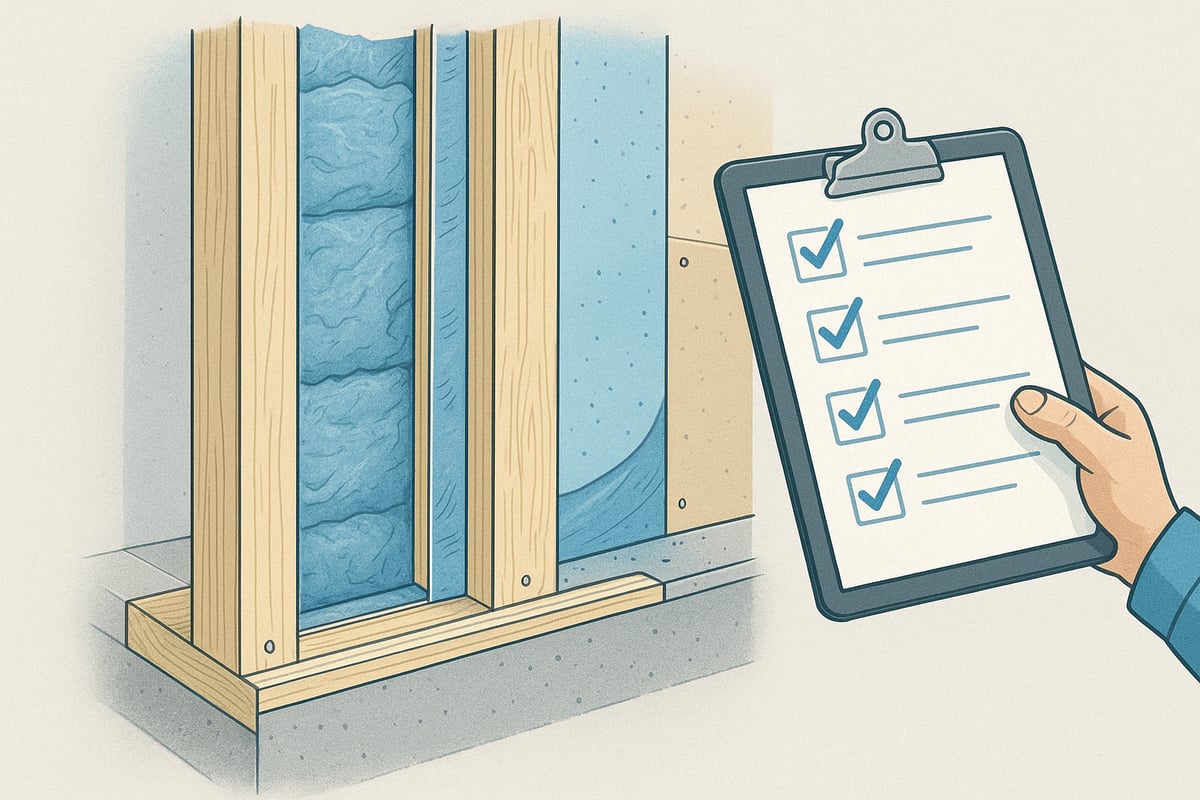
A typical compliance checklist for insulating timber frame walls includes:
- Meeting U-value targets for the project type
- Using approved fire-resistant insulation materials
- Installing appropriate vapour and breather membranes
- Detailing around junctions to prevent thermal bridging
Certification, Accreditation, and Documentation
Certifications help ensure that both products and workmanship meet the highest standards. The British Board of Agrément (BBA) and the National House Building Council (NHBC) play leading roles in verifying insulation products and installers for insulating timber frame walls.
When planning your project, always check that chosen insulation materials carry valid BBA certificates or equivalent. Accredited installers offer additional reassurance, as their work is regularly audited for quality and compliance.
Documentation is key for both building control and warranty providers. Your compliance file should include:
- Product certificates (BBA, CE markings)
- Installer accreditations
- U-value calculations and design details
- Photographic evidence of installation stages
This paperwork streamlines approvals and may be needed for future property transactions.
Navigating Planning and Building Control
Before you start insulating timber frame walls, it is vital to notify your local building control body. Most insulation upgrades, especially those affecting external envelopes, require approval.
Inspectors will usually visit at key stages:
- After insulation is installed but before vapour barriers are covered
- At completion, to check airtightness and detailing
Common compliance issues include inadequate vapour control, poor insulation continuity, and missed areas around openings. Addressing these early avoids costly remedial work later.
Funding, Grants, and Incentives
There are several financial incentives available to support insulating timber frame walls. Government schemes like ECO4 and local authority grants can offset upfront costs, especially for energy efficiency improvements.
Eligibility typically depends on property type, location, and household income. For the latest information on available grants and application processes in 2026, consult your local council and national energy advice services.
Accessing these schemes not only improves affordability, but also helps ensure your project meets the highest standards of sustainability and comfort.
Cost, Sustainability, and ROI of Insulating Timber Frame Walls
Improving your home’s efficiency begins with understanding the balance of investment and return. When it comes to insulating timber frame walls, homeowners and professionals alike want to know: What will it cost, how much will I save, and how sustainable is the solution? This section explores costs, environmental impact, property value, and long-term durability, giving you a clear roadmap for smart decision-making.
Upfront Costs and Long-Term Savings
The initial outlay for insulating timber frame walls typically covers materials, labour, and any necessary preparatory works. For a standard three-bedroom UK house, costs can vary widely depending on insulation type and wall complexity.
| Insulation Type | Material Cost (per m²) | Labour (per m²) | Total (per m²) |
|---|---|---|---|
| PIR Board | £18–£25 | £12–£20 | £30–£45 |
| Mineral Wool | £10–£14 | £10–£16 | £20–£30 |
While PIR boards offer higher thermal performance in thinner profiles, mineral wool is more affordable and easier to install. Payback periods for insulating timber frame walls generally range from five to ten years, depending on energy prices and the building’s starting efficiency. Many homeowners report annual savings of £250–£400 on energy bills after upgrading. For further details on wall construction and insulation placement, read timber framed panels explained.
Environmental Benefits and Carbon Reduction
Insulating timber frame walls is not just about comfort or energy bills, but also about reducing your home’s carbon footprint. Well-insulated walls lower operational carbon by decreasing the energy needed for heating and cooling. The embodied carbon of insulation materials also matters: mineral wool and natural fibres generally have lower impacts than synthetic foams.
Timber, as a renewable resource, works synergistically with eco-friendly insulation to further reduce a building’s overall carbon footprint. Life cycle assessments reveal that homes with optimised timber frame insulation can cut annual CO₂ emissions by up to 40%. For comprehensive advice on methods and environmental considerations, consult the Insulating Timber-Framed Walls Guidance.
Enhancing Property Value and Comfort
A well-executed upgrade in insulating timber frame walls can significantly boost a property’s Energy Performance Certificate (EPC) rating. Higher EPC scores are linked to increased marketability and property value, making your home more attractive to energy-conscious buyers.
Beyond financial gains, properly insulated timber frame walls improve indoor air quality and thermal comfort throughout the year. Homeowner surveys consistently highlight improved satisfaction after insulation upgrades, with many noting reduced draughts and more stable indoor temperatures. These comfort gains are especially valuable in the context of rising energy costs and heightened expectations for modern living standards.
Maintenance, Durability, and Future-Proofing
The longevity of insulation in timber frame walls depends on material choice, installation quality, and ongoing maintenance. Mineral wool and PIR boards can last for decades if kept dry and protected from pests, while natural fibre insulations may require periodic inspection in damp-prone areas.
Routine checks for signs of moisture intrusion or air leakage are advised to protect your investment. Preparing for the future, many new systems support easy upgrades, such as adding smart sensors or extra insulation layers. With careful planning, insulating timber frame walls today means lasting performance and adaptability for tomorrow’s innovations.
Future Trends and Innovations in Timber Frame Wall Insulation
The landscape of insulating timber frame walls is evolving rapidly as we approach 2026. Homeowners, architects, and builders are adopting smarter, greener, and more efficient solutions. Let us explore the cutting-edge innovations shaping the future of timber frame insulation.
Smart and Adaptive Insulation Technologies
The next generation of insulating timber frame walls features smart insulation with integrated sensors. These sensors monitor temperature, humidity, and performance in real time, allowing for maintenance before problems arise.
Self-regulating materials are also emerging. They adapt to changes in humidity or temperature, reducing the risk of moisture build up and enhancing comfort. Early adopters in commercial and high specification residential projects are already seeing the benefits of these technologies.
Key advantages include:
- Real time performance data
- Early detection of issues
- Improved energy efficiency
With these innovations, insulating timber frame walls is becoming more proactive and tailored to building needs.
Circular Economy and Sustainable Material Innovations
Sustainability is at the heart of future insulation products. The circular economy approach focuses on using recycled or bio based materials for insulating timber frame walls, reducing waste and embodied carbon.
Modular wall systems are designed for easy disassembly and recycling at the end of their lifespan. UK pilot projects have demonstrated insulation made from reclaimed timber fibres and plant based foams, showing strong thermal performance and lower environmental impact.
Key developments:
- Recycled content in insulation
- Bio based alternatives
- Modular, demountable wall systems
These trends ensure insulating timber frame walls aligns with both environmental goals and long term value.
Offsite Construction and Prefabrication
Offsite manufacturing is revolutionising how we approach insulating timber frame walls. Factory built panels with integrated insulation offer consistent quality, precise fitting, and faster build times.
Developments in prefabrication mean entire wall sections arrive on site ready to install, reducing disruption and waste. This method also allows for better integration of advanced membranes and airtightness layers.
For detailed insights into how modern design and innovation are shaping this sector, see contemporary timber frame houses.
Benefits include:
- Higher build quality
- Reduced on site errors
- Faster project delivery
Prefabrication is setting new standards in insulating timber frame walls for both performance and efficiency.
Preparing for Net Zero and Future Regulations
With the UK committed to net zero carbon targets, insulating timber frame walls will play a crucial role in meeting future regulations. Anticipated updates to building standards will demand even lower U values and stricter airtightness.
Strategies for exceeding current standards include using high performance insulation, smart membranes, and adopting Passivhaus principles. Homes built to these specifications deliver ultra low energy use and outstanding comfort.
Expect to see:
- Stricter U value requirements
- Focus on whole wall performance
- More rigorous compliance checks
By staying ahead of regulations, those insulating timber frame walls can ensure long term compliance and future proof their properties.
After exploring the latest techniques in timber frame wall insulation and understanding how the right approach can improve comfort, energy savings, and compliance with UK regulations, you might be inspired to take the next step for your own project. If you’re ready to bring together expert craftsmanship, sustainable materials, and a tailored design that enhances your home’s value and efficiency, now is the perfect time to act. Let’s turn these insights into a beautifully insulated timber frame structure that stands the test of time—crafted just for you.
BUILD NOW


