
Timber frame walls are making a striking comeback in the UK, setting the stage for a new era of sustainable construction by 2026. Whether you are a homeowner, self-builder, or industry professional, this expert handbook will guide you through every aspect of timber frame walls.
These walls combine traditional craftsmanship with cutting-edge materials, offering speed, versatility, and eco-friendly credentials. As demand for sustainable homes grows, understanding timber frame walls is more important than ever.
Inside, you will discover the fundamentals, design strategies, construction steps, regulations, insulation tips, maintenance advice, and the latest trends. Unlock the benefits and practical insights to make your next project a success—read on to become an informed leader in modern building.
Timber Frame Wall Fundamentals: Structure, Components & Benefits
Timber frame walls have rapidly become a cornerstone of modern UK construction, offering a blend of tradition and innovation. Their unique structure, versatility, and eco-friendly credentials are transforming how homes and buildings are designed and built. In this section, we explore what defines timber frame walls, their key components, the benefits they bring, common uses in UK properties, and important considerations for every project.
Defining Timber Frame Walls
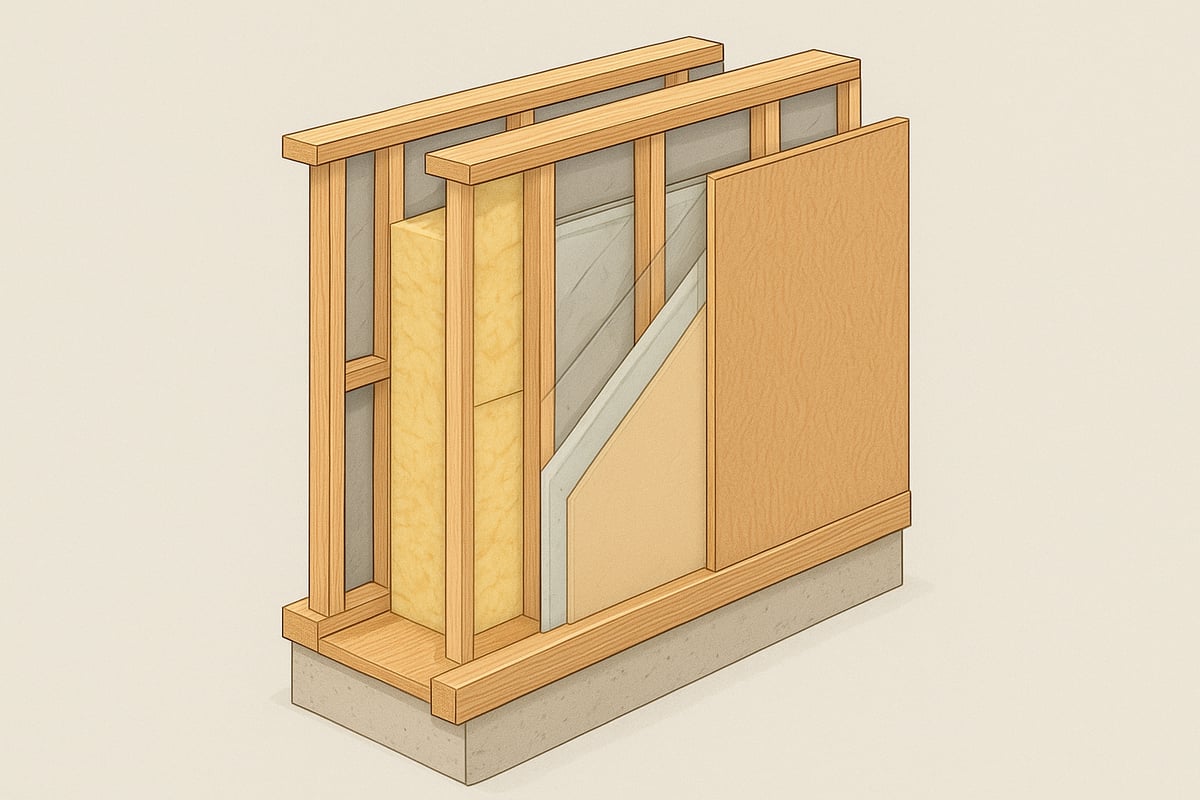
Timber frame walls are structural systems where a skeleton of precisely cut timber provides the main support for a building. This framework typically consists of vertical studs, horizontal rails at the top and bottom, rigid sheathing boards, and insulation infill. The timber frame is engineered to transfer loads safely to the foundations, ensuring stability and durability.
Compared with traditional masonry walls, timber frame walls are lighter and allow for faster construction. While masonry relies on bricks or blocks with cement mortar, timber frames use prefabricated or site-built panels. This approach enables greater flexibility in design and can result in thinner walls with comparable strength.
| Feature | Timber Frame Walls | Masonry Walls |
|---|---|---|
| Primary Material | Timber | Brick/Block |
| Speed of Build | Fast | Slower |
| Wall Thickness | Slimmer | Thicker |
| Environmental Impact | Lower | Higher |
Core Components and Materials
The core of timber frame walls is the timber itself, most commonly softwood such as spruce or pine, but sometimes hardwoods like oak or engineered timber products. These materials are selected for their strength, consistency, and sustainability.
Insulation plays a vital role, filling the spaces between studs to maximise thermal performance. Vapour barriers and sheathing boards are added to manage moisture and enhance rigidity. Fixings, such as metal connectors and fasteners, ensure every joint is secure and robust.
For a more detailed breakdown of panel construction and their performance, see Timber framed panels explained.
Advantages of Timber Frame Walls
One of the standout benefits of timber frame walls is the speed of construction. Prefabricated panels can be manufactured off-site and assembled quickly, reducing overall build time and minimising disruption on site.
Sustainability is another major advantage. Timber is renewable and has a much lower carbon footprint than concrete or brick. In 2023, the UK timber frame market grew by 8%, reflecting increasing demand for greener construction solutions.
Timber frame walls also offer design flexibility, making it easier to adapt buildings for extensions or renovations. Their superior insulation properties contribute to enhanced energy efficiency and improved airtightness, supporting comfortable and cost-effective homes.
Common Applications in UK Homes
Timber frame walls are used in a wide range of residential and commercial projects across the UK. They are particularly popular in new build homes, self-build projects, and sustainable developments. Extensions, garages, and outbuildings often employ this method due to its speed and adaptability.
Beyond housing, timber frame walls are also found in schools, offices, and community centres. Their ability to accommodate various architectural styles makes them suitable for both traditional and contemporary designs.
Limitations and Considerations
Despite their many advantages, timber frame walls require careful attention to certain challenges. Moisture management is critical, as timber is susceptible to rot if exposed to prolonged damp conditions. Fire resistance and acoustic performance can also be concerns, particularly in multi-residential buildings.
To overcome these issues, modern timber frame walls incorporate advanced vapour barriers, fire-resistant linings, and acoustic insulation. Regular inspections and adherence to best practice construction methods ensure long-term performance and safety.
Planning and Designing Timber Frame Walls
Designing timber frame walls requires a careful balance of structure, efficiency, aesthetics, and cost. Whether you are a homeowner or a building professional, understanding the core elements of planning ensures a successful project that meets both performance and visual expectations.
Key Design Principles
The foundation of any successful timber frame walls project lies in robust structural design. Load paths must be continuous from roof to foundation, with adequate bracing to resist wind and lateral forces. Attention to U-values is essential, as UK Building Regulations Part L requires ever-lower thermal transmittance for external walls.
Thermal performance is not just about insulation thickness; detail at junctions, windows, and service penetrations prevents heat loss. Acoustic performance is vital, especially for party walls, where high-density insulation and resilient layers can minimise sound transfer.
For a deeper dive into practical construction aspects, see Timber frame home construction. Early consideration of these principles ensures timber frame walls meet both regulatory and comfort standards.
Material Selection Criteria
Choosing materials for timber frame walls involves comparing oak, softwood, and engineered woods. Each offers different strengths, aesthetics, and costs. Oak is durable and visually striking, while softwoods are more cost-effective. Engineered timbers provide dimensional stability and predictable performance.
Sustainability should be a priority. Look for FSC or PEFC certification, which verifies responsible sourcing. Durability also depends on timber treatment and protection from moisture. Maintenance needs will vary based on exposure, choice of cladding, and detailing.
Insulation, vapour barriers, and sheathing boards all play critical roles. Select products with proven longevity and compatibility with the chosen timber to avoid future issues.
Architectural Styles and Aesthetic Options
Timber frame walls can be designed to suit both traditional and contemporary aesthetics. Exposed frames celebrate craftsmanship and structural honesty, making the timber a visible feature inside or outside the building. Concealed frames, on the other hand, allow for sleek, modern interiors and varied exterior finishes.
Cladding options are diverse: timber boards provide warmth and texture, while brick slips or render can match existing masonry. Composite panels offer low maintenance and modern appeal. Integrating large areas of glazing, bespoke doors, or architectural features is straightforward with timber frame walls, thanks to their flexibility.
Careful planning of these elements ensures architectural harmony and lasting kerb appeal.
Working with Professionals
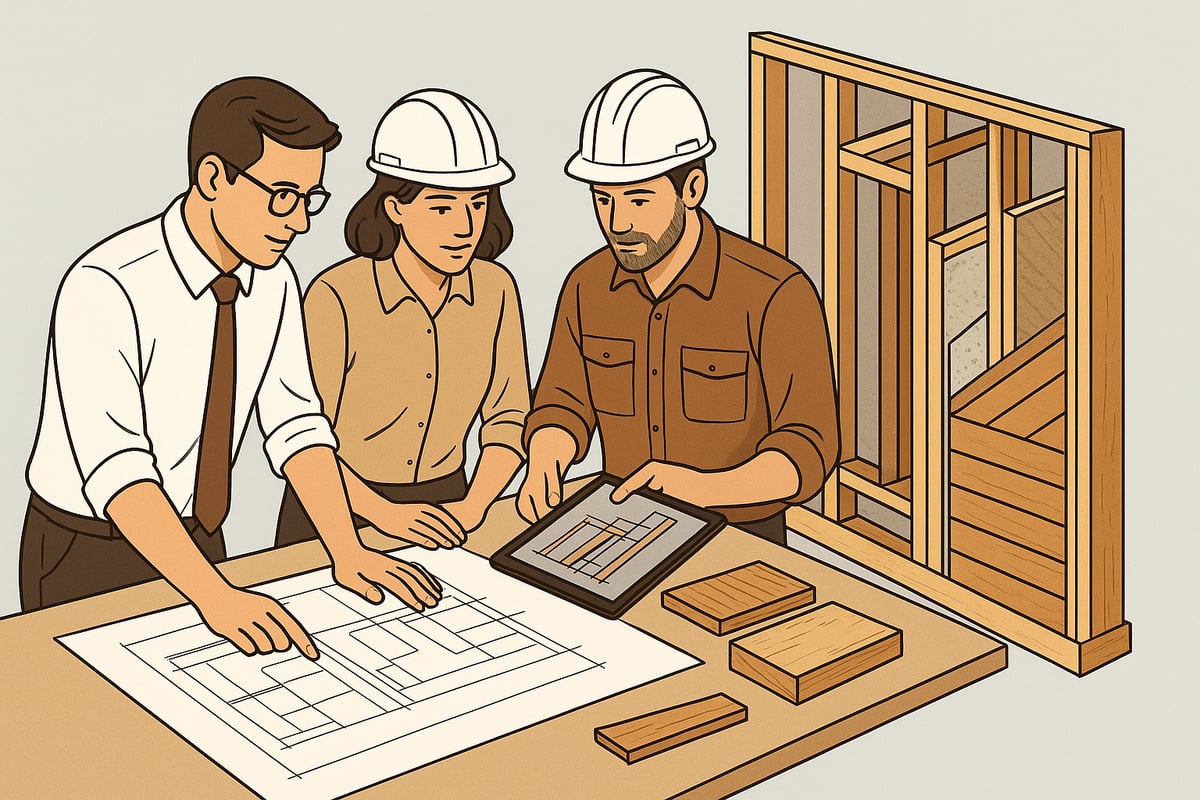
Collaboration is crucial when planning timber frame walls. Architects create the design vision, while structural engineers ensure safety and compliance. Timber frame specialists translate drawings into detailed manufacturing plans, ensuring every component fits together precisely.
Early engagement with all professionals helps identify challenges and opportunities before construction begins. A typical workflow starts with concept design, moves to structural calculations, and ends with detailed fabrication drawings. Regular meetings and clear communication keep the project on track and prevent costly redesigns.
Choosing experienced partners ensures your timber frame walls meet the highest standards and regulatory requirements.
Cost Planning and Budgeting
Budgeting for timber frame walls involves more than just material costs. For bespoke UK homes, expect a range of £1,500 to £2,500 per square metre, depending on complexity and finish. Factors such as wall height, number of openings, and custom details can significantly affect price.
A typical cost breakdown includes timber, insulation, cladding, labour, and professional fees. Value engineering can help optimise spend, for example by simplifying wall layouts, choosing standard window sizes, or selecting cost-effective finishes.
Early and realistic budgeting, with contingency for unexpected site conditions, ensures your timber frame walls project stays on track financially as well as structurally.
Step-by-Step Construction Process for Timber Frame Walls
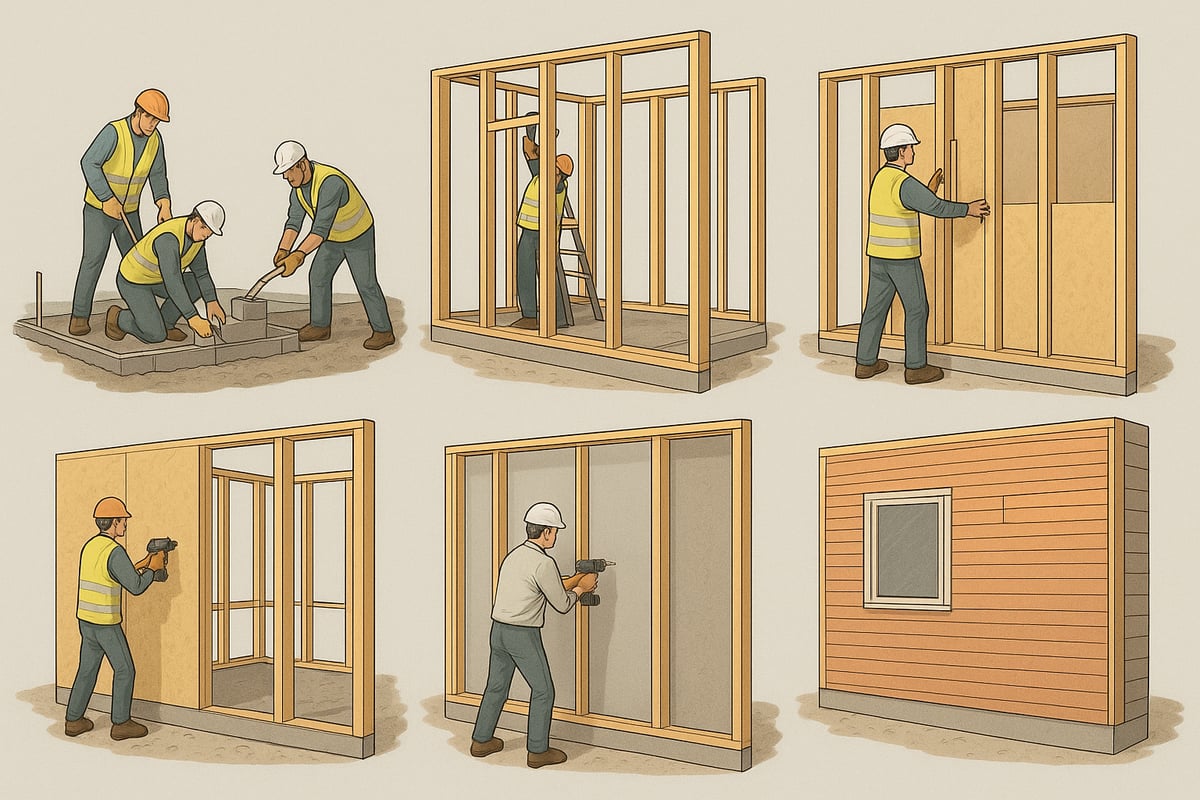
Building timber frame walls requires a methodical approach, precise planning, and a commitment to best practice at every stage. Each step in the process is critical for ensuring the finished structure delivers strength, energy efficiency, and long-term durability. Let us walk through the essential stages involved in constructing timber frame walls, from the first site survey to final handover.
1. Site Preparation and Setting Out
The construction of timber frame walls begins with thorough site preparation. A detailed site survey is performed to assess the land, check boundaries, and identify any potential obstacles. Soil testing is essential to determine the suitable type of foundation, as the stability of the ground directly affects the longevity of timber frame walls.
Next, the setting out process marks the exact location and alignment of the walls. Precision at this stage prevents future issues with wall placement and structural performance. Foundations are constructed to the required specification, ensuring a level, robust base for the timber frame walls to rest upon.
Accurate setting out is particularly important in modern timber frame walls, as even minor errors can compromise airtightness and thermal performance. Surveyors and site managers work closely to ensure all measurements are double-checked before moving forward.
2. Fabrication of Timber Frame Components
The next phase involves fabricating the components that make up timber frame walls. Fabrication may take place off-site in a specialist factory or on-site, depending on the project scale and complexity. Off-site fabrication offers the advantage of controlled conditions, leading to higher precision and consistency, while on-site assembly can allow for more flexibility in bespoke projects.
Key components such as studs, rails, and sheathing are cut and assembled according to detailed technical drawings. Quality control is vital at this stage to ensure that every piece fits perfectly when the timber frame walls are erected. Fasteners and connectors are also selected based on structural requirements and tested for compliance with UK standards.
Choosing the right materials and ensuring accurate fabrication minimises delays during installation and enhances the structural integrity of timber frame walls.
3. Erection of the Timber Frame
With components ready, the erection of timber frame walls begins on-site. Panels or sections are delivered and carefully lifted into position, often using cranes for larger elements. Sequencing is crucial, starting with external walls and progressing to internal partitions, always checking alignment and level with each step.
Wall panels are fixed securely to the foundations and temporarily braced to maintain stability during construction. Health and safety is a top priority, with site teams following strict protocols to prevent accidents and ensure safe lifting and handling of timber frame walls.
As each section is installed, connections are checked for tightness and stability, ensuring the structure is ready for the next phase.
4. Installing Insulation, Vapour Barriers, and Sheathing
Once the frame is up, attention turns to installing insulation and vapour control layers within the timber frame walls. Mineral wool, PIR boards, or natural fibre insulation such as sheep wool are common choices, each offering specific thermal and acoustic benefits.
A vapour barrier or control layer is fitted to manage moisture movement and prevent condensation within the wall structure. Sheathing boards are then fixed to the exterior, adding rigidity and wind resistance. The choice and placement of these layers directly impacts the energy efficiency and longevity of timber frame walls.
For a detailed guide on insulation strategies, see Insulating timber frame walls, which covers material options and best practices for UK homes.
5. Integrating Openings and Services
Timber frame walls are designed with pre-formed openings for windows and doors, ensuring the building envelope is not compromised during installation. These openings are carefully measured and reinforced to maintain structural stability and provide a secure fit for frames.
Routing for electrical, plumbing, and HVAC services is planned in advance. Channels are created within the timber frame walls to allow pipes and cables to pass through without disrupting insulation or airtightness. Attention to detail at this stage prevents cold bridges and helps maintain the high performance of timber frame walls.
Airtightness membranes are sealed around penetrations, and insulation is carefully packed to eliminate gaps. This meticulous approach ensures the finished structure meets both comfort and regulatory standards.
6. External and Internal Finishes
With the structure and services in place, timber frame walls are ready for finishing. Externally, a variety of cladding options can be installed, including timber boards, brick slips, render, or composite panels. Each option offers different aesthetic and weatherproofing qualities.
Internally, linings such as plasterboard, timber panelling, or specialist boards are fitted to achieve the desired look and meet fire and acoustic requirements. Fixings are concealed, and all joints are sealed to maintain airtightness.
Final fix carpentry, including skirting, architraves, and door frames, completes the interior. The choice of finishes can significantly influence the appearance and maintenance needs of timber frame walls, so selections should be made with both function and style in mind.
7. Quality Assurance and Handover
The final stage in constructing timber frame walls is rigorous quality assurance. Comprehensive inspections are carried out to check for any defects, incomplete work, or regulatory non-compliance. Snagging lists are created and addressed before the project is handed over to the client.
Handover includes providing documentation on the construction, materials used, and maintenance guidelines. Clients receive clear instructions on how to care for their timber frame walls, ensuring longevity and ongoing performance.
A structured handover process instils confidence and sets the foundation for the long-term success of any project involving timber frame walls.
Building Regulations, Standards, and Compliance in the UK
Navigating building regulations is essential for anyone working with timber frame walls in the UK. Understanding the standards and compliance process ensures projects are safe, efficient, and eligible for warranties or finance. This section breaks down the key regulations, certification pathways, sustainability benchmarks, and common pitfalls to help you streamline your timber frame walls project.
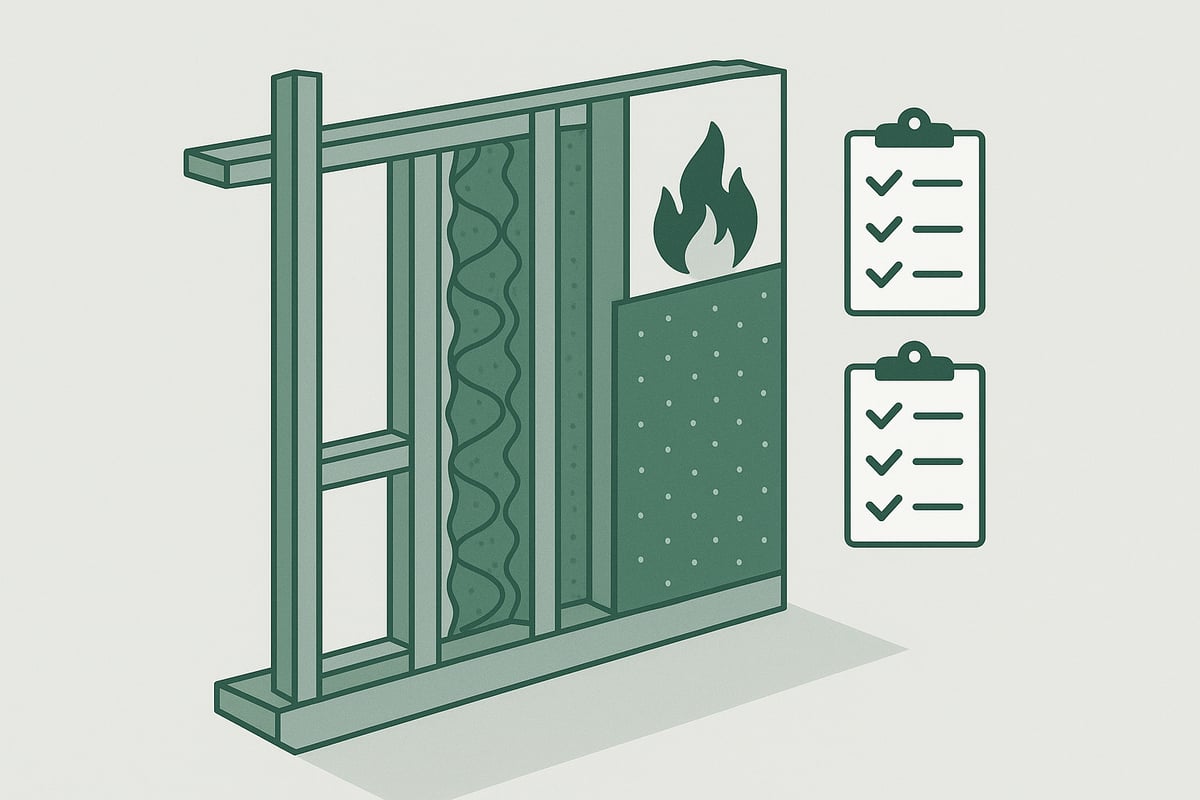
Key UK Building Regulations for Timber Frame Walls
In the UK, timber frame walls must meet stringent requirements set out in Building Regulations. The main parts affecting these structures are:
- Part A (Structure): Ensures timber frame walls safely carry loads and resist wind. Calculations for structural support, bracing, and fixings are mandatory.
- Part B (Fire Safety): Specifies fire resistance periods, mandating the use of fire-rated plasterboard, cavity barriers, and protected escape routes.
- Part L (Energy Efficiency): Requires high thermal performance, airtightness, and minimised cold bridging.
For precise guidance on structural support in timber frame walls, consult the Building Regulations: Structural support. These rules influence wall thickness, insulation, and detailing.
Meeting these regulations is non-negotiable for new builds, extensions, and renovations. Early consideration of compliance saves time and avoids costly redesigns.
Certification and Third-Party Approvals
Certification is critical for projects involving timber frame walls. Most mortgage providers and insurers require third-party approval from recognised bodies, such as the NHBC (National House Building Council) or LABC (Local Authority Building Control).
These organisations review construction details, materials, and site practices. They issue warranties that protect homeowners and developers against structural issues.
Timber frame walls must be designed and installed to the standards set by these bodies. Engaging with them early streamlines the approval process and ensures that your project is insurable and mortgageable.
Project teams should also keep detailed records of materials, calculations, and compliance checks. This documentation supports warranty claims and future sales.
Sustainability and Environmental Standards
Sustainability is a major driver for timber frame walls in the UK. Compliance with frameworks like BREEAM or Passivhaus demonstrates a commitment to low-carbon construction and energy efficiency.
Timber sourcing plays a key role. The use of certified timber (FSC or PEFC) ensures legal, responsible forestry. Environmental Product Declarations (EPDs) provide transparency about the impact of chosen materials.
Timber frame walls are well-suited to meeting ambitious energy targets, especially when combined with high-performance insulation and renewable technologies. These standards add value to properties and support long-term sustainability goals.
Designing for compliance not only benefits the environment but also futureproofs homes against tightening regulations.
Common Compliance Pitfalls and How to Avoid Them
Despite the benefits of timber frame walls, projects can stumble at the compliance stage. Frequent issues include:
- Incomplete or missing documentation for structural calculations and fire details
- Inadequate fire stopping, especially around service penetrations
- Poor detailing at junctions, leading to thermal bridging or air leakage
- Delays in engaging warranty providers or building control
To avoid these pitfalls, plan compliance from day one. Collaborate with professionals, use accredited products, and schedule regular inspections. Keep communication open with certifiers to address issues before they escalate.
A proactive approach ensures your timber frame walls not only pass inspection but also deliver lasting performance and peace of mind.
Insulation, Airtightness, and Energy Efficiency
Ensuring optimal insulation, airtightness, and energy efficiency is fundamental to the long-term performance of timber frame walls. Homeowners and professionals alike must address these aspects to meet evolving UK regulations and achieve a comfortable, low-carbon home.
Insulation Strategies for Timber Frame Walls
Selecting the right insulation is crucial for timber frame walls. Materials such as mineral wool, PIR boards, and natural fibres like sheep wool or hemp are popular options. Each offers unique thermal properties, with mineral wool typically providing a lambda value of 0.035 W/mK.
Continuous insulation and careful detailing at junctions help to prevent cold bridging, which is vital for achieving low U-values. Meeting or exceeding 2026 standards requires a fabric-first approach. For those working with older properties, expert advice on insulating timber-framed walls can be invaluable for balancing energy efficiency and building preservation.
Airtightness Detailing and Testing
Airtightness is a defining feature of high-performance timber frame walls. Detailing at wall junctions, service penetrations, and around openings must be precise to minimise air leakage. Tapes, gaskets, and airtight membranes are all used to seal potential weak points.
UK Building Regulations require air permeability below 3 m³/(h·m²) at 50 Pa for new homes. Blower door testing confirms compliance and highlights any remedial work needed. Achieving excellent airtightness in timber frame walls not only cuts energy bills but also improves indoor comfort.
Moisture Management and Breathability
Moisture control is essential for the durability of timber frame walls. Vapour-permeable membranes allow water vapour to escape while preventing liquid ingress. This breathability reduces the risk of interstitial condensation, which can damage structural timber over time.
Intelligent vapour control layers adapt their permeability based on internal humidity, further protecting the wall build-up. These modern materials enable timber frame walls to remain dry, healthy, and resilient in the UK climate.
Integrating Renewable Technologies
Timber frame walls are highly compatible with renewable technologies. Mechanical Ventilation with Heat Recovery (MVHR) units, solar photovoltaic panels, and heat pumps can be easily integrated into the building envelope.
Smart home systems can monitor and optimise energy use, maximising the benefits of airtight and well-insulated timber frame walls. This holistic approach supports both sustainability and future-proofing for homeowners.
Case Study: High-Performance Timber Frame Home
In a recent UK project, a bespoke home achieved an A-rated EPC by prioritising insulation and airtightness in its timber frame walls. The build used mineral wool insulation, intelligent vapour membranes, and a continuous airtight layer.
Renewable energy systems, including solar panels and MVHR, were seamlessly integrated. This example demonstrates how timber frame walls can deliver exceptional energy efficiency, comfort, and long-term value for modern living.
Maintenance, Longevity, and Future Trends
Timber frame walls require a proactive approach to upkeep, ensuring long-term performance and value. With the right care and an eye on emerging innovations, these structures can deliver outstanding durability, sustainability, and modern adaptability for UK homes. Explore the key aspects of maintenance, longevity, and what the future holds for timber frame walls.
Routine Maintenance for Timber Frame Walls
Regular inspections are essential for timber frame walls. Check external cladding, seals, and fixings every spring and autumn. Clean surfaces to remove dirt and debris, especially after heavy weather. Repainting or re-treating exposed timber preserves appearance and prevents moisture ingress.
- Inspect for cracks or gaps in joints
- Reapply protective finishes as needed
- Clear vegetation around the base
Consistent maintenance maximises the lifespan and thermal efficiency of timber frame walls.
Addressing Common Issues
Moisture ingress is a primary concern for timber frame walls. Look for signs of damp, rot, or insect activity, particularly near ground level and openings. Address leaks promptly by sealing gaps and repairing damaged cladding.
Upgrade insulation and improve airtightness when refurbishing older timber frame walls. This not only enhances comfort but also helps prevent condensation and mould growth. Professional assessment ensures issues are identified early.
Expected Lifespan and Durability
Modern timber frame walls, when properly maintained, can last over 60 years, according to TRADA. Key factors influencing longevity include design quality, material selection, and climate exposure.
| Factor | Impact on Lifespan |
|---|---|
| Design | Structural protection, drainage |
| Materials | Timber type, treatment |
| Maintenance | Regular inspections, repairs |
| Climate | Exposure to moisture, UV |
With routine care, timber frame walls remain robust and reliable for generations.
Innovations and Future Trends (2026 & Beyond)
The future of timber frame walls is shaped by advancements in engineered timber, prefabrication, and smart technologies. Modular wall systems and offsite construction are gaining traction, reducing build times and enhancing quality.
Smart materials can now monitor moisture and structural health, alerting homeowners to maintenance needs before issues escalate. For a deeper look at the evolving landscape, see the timber frame construction trends shaping UK homes.
Sustainability and the Circular Economy
Sustainability is at the heart of modern timber frame walls. Design for disassembly allows components to be reused, minimising waste. Life cycle assessments guide choices that reduce embodied carbon in new builds.
Embracing the circular economy, timber frame systems support eco-friendly construction and a greener built environment for the future.
Now that you've explored the essentials of timber frame walls—from structure and design to sustainability and future trends—you might be considering your own project. With Acorn to Oak Framing, you have a partner committed to quality craftsmanship, modern design, and environmentally responsible sourcing. If you're ready to take the next step, whether it's building your dream home or enhancing your property, we’re here to guide you through every detail and ensure your vision comes to life.
Let’s turn your ideas into reality—BUILD NOW.


