
Timber architecture is making waves worldwide, capturing the imagination of architects and communities alike. Innovative design and a renewed focus on sustainability are driving this global movement.
In this article, we highlight eight extraordinary timber buildings that are poised to inspire and shape the future of construction in 2026. Each project demonstrates the versatility, beauty, and environmental benefits that timber brings to modern architecture.
Timber’s unique qualities enable creative solutions for both urban and rural environments. From soaring towers to cultural landmarks, these buildings reflect a commitment to responsible sourcing and carbon-conscious design.
Explore the stories behind these remarkable structures and discover how they are setting new standards for sustainable building. Prepare to be inspired by the possibilities that timber offers for the built environment.
The Evolution and Appeal of Timber Architecture
Timber buildings have long captured the imagination of architects and communities alike. From ancient timber-framed halls to today’s soaring wooden towers, the material’s journey reflects both tradition and innovation. As the need for sustainable solutions grows, the story of timber buildings is being rewritten for a new era.
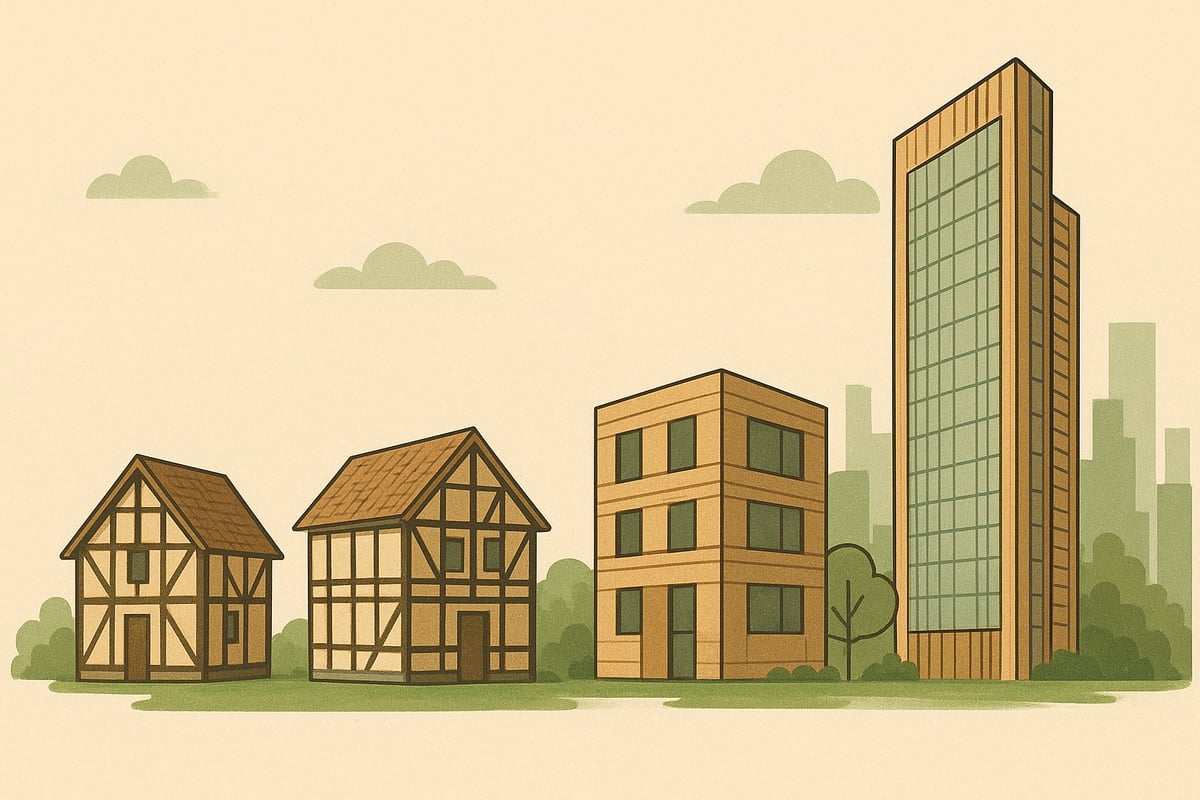
The origins of timber buildings date back thousands of years. Early societies relied on locally sourced wood for dwellings, temples, and gathering spaces. Over centuries, timber craftsmanship evolved, giving rise to distinctive styles across Europe, Asia, and beyond. The warmth and character of timber buildings remain enduring qualities, but today, their significance goes far beyond aesthetics.
A major appeal of timber buildings lies in their environmental advantages. Timber is the only major building material that actively removes carbon dioxide from the atmosphere during tree growth. When used in construction, this carbon stays locked away for decades. For example, Sweden’s Sara Kulturhus Centre stores 9,000 tonnes of CO₂, more than twice the carbon emitted during its construction.
Environmental benefits of timber buildings include:
- Renewable sourcing from responsibly managed forests
- Carbon sequestration and reduced greenhouse gas emissions
- Lower embodied energy compared to steel or concrete
- Biophilic qualities that support occupant wellbeing
Recent decades have seen a revolution in engineered timber. Products such as cross-laminated timber (CLT) and glued laminated timber (glulam) allow for larger, taller, and more complex timber buildings. These innovations have shattered previous height and scale limits, leading to projects like Mjøstårnet in Norway and Dalston Works in London.
Aesthetically, timber buildings offer a unique warmth and versatility. Architects are drawn to timber’s tactile qualities and its ability to create both dramatic structural forms and intimate interiors. Whether expressed as exposed beams or sleek modern panels, timber buildings bring a sense of nature into the urban environment.
Several milestones have shaped the modern timber movement. Austria pioneered mass-timber housing in the late 20th century, while London became a testing ground for high-rise timber buildings. The table below highlights key achievements:
| Year | Milestone | Location |
|---|---|---|
| 1994 | Early mass-timber housing | Austria |
| 2009 | First multi-storey CLT building | London, UK |
| 2019 | Tallest timber tower (Mjøstårnet) | Norway |
| 2021 | Carbon-negative cultural centre | Sweden |
Despite the promise, timber buildings have faced challenges. Fire safety concerns, regulatory barriers, and public misconceptions have sometimes hindered adoption. However, ongoing research and updated building codes are addressing these issues, enabling safer and more widespread use of timber buildings.
The past decade has witnessed explosive growth in mass-timber construction. In the United States alone, there were over 1,600 mass-timber buildings by 2023. According to the Mass Timber Performance Index 2025, global interest and investment in timber buildings continue to accelerate, with performance metrics showing improved safety, efficiency, and sustainability.
The surge in demand for sustainable materials is reshaping the construction industry. Timber buildings are now seen as a vital tool for reducing the sector’s carbon footprint and meeting ambitious climate goals. As technology advances and policy support grows, the appeal of timber buildings is set to become even stronger, inspiring the next generation of architects and developers.
8 Inspiring Timber Buildings to Explore in 2026
The global landscape of timber buildings is evolving rapidly, with innovation, sustainability, and design excellence at the forefront. This curated list celebrates eight trailblazing timber buildings that are set to inspire architects, developers, and communities in 2026. Each project stands out for its unique approach to material use, environmental stewardship, and cultural resonance.
The selection criteria focus on three pillars: sustainability, design ingenuity, and cultural impact. From Scandinavia to Australia, these timber buildings showcase how modern construction can harmonise with tradition while pushing boundaries. The growing momentum in this sector is evident, with reports such as the Mass Timber Construction Industry Report 2025 predicting a significant rise in mass timber projects globally.
Below, you will find a summary table for quick reference, followed by in-depth explorations of each building.
| Building | Location | Height/Size | Function | Year Completed | Architect/Studio |
|---|---|---|---|---|---|
| Sara Kulturhus Centre | Sweden | 20 storeys | Cultural complex | 2021 | White Arkitekter |
| Mjøstårnet | Norway | 85.4 metres | Mixed-use tower | 2019 | Voll Arkitekter |
| Tamedia Office Building | Switzerland | 7 storeys | Office | 2013 | Shigeru Ban |
| Dalston Works | UK | 10 storeys | Residential | 2017 | Waugh Thistleton |
| T3 | USA | 7 storeys | Commercial | 2016 | Michael Green Arch. |
| Forté | Australia | 10 storeys | Residential | 2012 | Lendlease |
| Murray Grove (Stadthaus) | UK | 9 storeys | Residential | 2009 | Waugh Thistleton |
| BTZ at TU Graz | Austria | Varies | Research/Education | 2001 | Nussmüller Architekten |
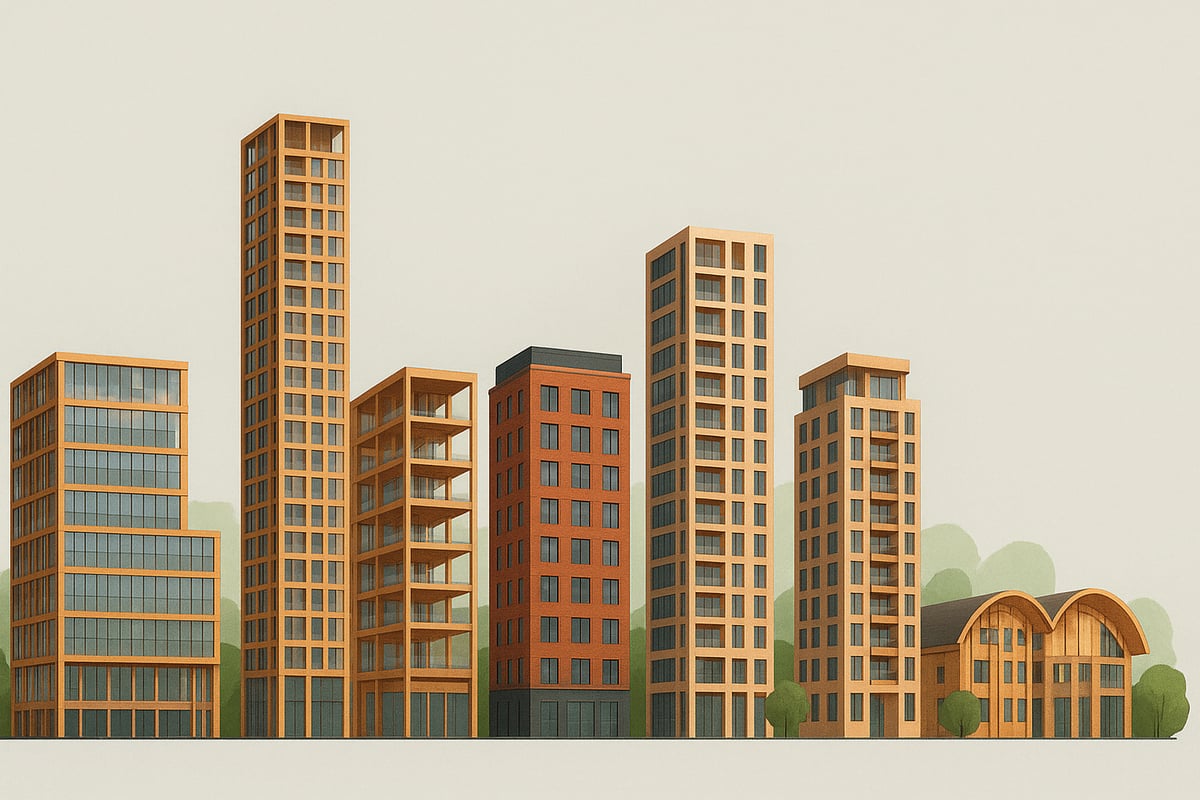
1. Sara Kulturhus Centre, Sweden – White Arkitekter
The Sara Kulturhus Centre in Skellefteå, Sweden, is a beacon for timber buildings worldwide. This 20-storey cultural complex stands just south of the Arctic Circle and boldly addresses the environmental challenges of modern construction. It is built almost entirely from locally sourced timber, with the structure storing twice the carbon emitted during construction, making it a model for carbon-negative design.
The centre brings together a hotel, theatre, museum, and library, demonstrating the versatility of timber buildings in accommodating diverse functions. Advanced cross-laminated timber (CLT) and glulam systems form the backbone of the structure, enabling impressive spans and heights. Despite the harsh climate, the building maintains energy efficiency and resilience, showcasing how timber buildings can thrive even in cold, demanding environments.
One of the most remarkable facts about the Sara Kulturhus Centre is its ability to store around 9,000 tonnes of CO₂, far surpassing many concrete or steel alternatives. The building’s warm, inviting interiors highlight the aesthetic potential of timber buildings, drawing visitors into spaces that feel both modern and rooted in tradition. International recognition has followed, with the centre positioned as a blueprint for sustainable public architecture in the 21st century.
For those seeking inspiration, the Sara Kulturhus Centre is a testament to the innovation possible within timber buildings, setting new standards for climate resilience and cultural integration.
2. Mjøstårnet, Norway – Voll Arkitekter
Mjøstårnet, located beside the largest lake in Norway, is a landmark in the evolution of timber buildings. At 85.4 metres, it was the tallest timber building globally upon completion, pushing the boundaries of what is achievable with engineered wood. The structure is crafted from locally harvested spruce and pine, promoting sustainable forestry and regional economic development.
This mixed-use tower comprises offices, apartments, a hotel, and a swimming pool, exemplifying the adaptability of timber buildings for complex, multi-functional spaces. The use of glulam columns and beams, coupled with innovative construction methods, has set a precedent for future high-rise timber buildings around the world.
Mjøstårnet’s success is rooted in its commitment to environmental stewardship and local craftsmanship. The project demonstrates that timber buildings can rival traditional concrete or steel towers in both scale and performance. Its global influence is evident, inspiring architects and developers to consider timber buildings for ambitious urban projects.
Visitors to Mjøstårnet experience not just an engineering marvel but also a celebration of Norway’s natural resources and design excellence. The tower continues to be a reference point for sustainable construction, proving that timber buildings can reach new heights both literally and figuratively.
3. Tamedia Office Building, Switzerland – Shigeru Ban
The Tamedia Office Building in Zurich is a striking example of innovation in timber buildings. Designed by renowned architect Shigeru Ban, in collaboration with engineer Hermann Blumer, this seven-storey office extension stands out for its unique timber skeleton and meticulous joinery. The structure is assembled using glulam beams joined without any metal fasteners, relying on traditional woodworking techniques adapted for modern requirements.
This approach not only reduces the embodied energy of the building but also highlights the precision and beauty of timber buildings. The prefabricated components allowed for rapid assembly and minimal site disruption, a key advantage in busy urban contexts. Inside, generous daylight and exposed timber create a healthy, uplifting work environment.
The Tamedia Office Building set a new benchmark for commercial timber buildings in Europe, proving that timber can deliver both aesthetic and technical excellence. Its success has encouraged further investment in urban timber buildings, influencing office design trends across the continent.
For professionals and enthusiasts, the Tamedia Office Building is a masterclass in structural innovation and architectural elegance, offering valuable lessons for the next generation of timber buildings.
4. Dalston Works, UK – Waugh Thistleton Architects
Dalston Works in East London is one of the largest residential timber buildings in the world. Comprising over 120 apartments, the development uses 3,852 cubic metres of cross-laminated timber for its structural elements. The choice of timber buildings here was driven by a desire to reduce carbon emissions, limit construction time, and minimise disruption to the local community.
Clad in brick to harmonise with its historic surroundings, Dalston Works exemplifies how timber buildings can blend old and new. Prefabricated panels enabled efficient assembly, with the entire superstructure completed in just a matter of weeks. This approach not only improved site safety but also set a new standard for sustainable urban housing.
Dalston Works is widely recognised for its social and environmental impact. It demonstrates that timber buildings can address the challenges of urban density while delivering comfortable, attractive homes. The project continues to influence policy and inspire similar developments in cities worldwide.
For anyone interested in the future of urban living, Dalston Works is a shining example of what timber buildings can achieve when innovation meets community needs.
5. T3, USA – Michael Green Architecture
T3 in Minneapolis marks a turning point for timber buildings in North America. As the first tall mass-timber office building in the United States, it set the stage for a new era of commercial architecture. The seven-storey structure is built from beetle-kill pine, demonstrating how timber buildings can transform underutilised resources into high-value assets.
One of T3’s standout features is its rapid assembly, with prefabricated panels significantly reducing construction time and environmental impact. The building’s exposed timber interiors provide a warm, inviting atmosphere, attracting tenants who value healthy, sustainable workspaces.
T3’s influence extends far beyond Minneapolis. It paved the way for over 1,600 mass-timber buildings across the country and has helped shift market perceptions regarding timber buildings. The project also contributed to policy changes that support timber buildings as a viable alternative to traditional materials.
Professionals interested in commercial real estate will find T3 a compelling case study in the potential of timber buildings to reshape the industry, offering both environmental and economic benefits.
6. Forté, Australia – Lendlease
Forté in Melbourne is a pioneering example of timber buildings in the southern hemisphere. Standing 10 storeys tall, it was the first mass-timber high-rise in the region, signalling the arrival of timber buildings as a serious contender in residential construction. The project used over 750 cross-laminated timber panels, imported from Austria, to achieve its ambitious goals.
The environmental credentials of Forté are impressive, with the building achieving a significantly lower carbon footprint than conventional concrete alternatives. Prefabrication allowed for faster construction and improved on-site safety, further highlighting the advantages of timber buildings in urban settings.
Forté’s success has catalysed further innovation and investment in timber buildings across the Asia-Pacific region. The project underscores the importance of global collaboration in advancing sustainable building practices.
For developers and policymakers, Forté serves as a blueprint for future timber buildings, illustrating the tangible benefits of embracing timber in high-density housing.
7. Murray Grove (Stadthaus), UK – Waugh Thistleton Architects
Murray Grove, also known as Stadthaus, stands as a seminal project in the history of timber buildings. Completed in London in 2009, this nine-storey residential tower was one of the first multi-storey CLT buildings in the UK. It demonstrated that timber buildings could be both structurally robust and suitable for urban housing.
The use of prefabricated components enabled swift assembly, reducing both programme time and environmental impact. Murray Grove’s innovative approach attracted international attention and contributed to evolving building codes, paving the way for taller timber buildings across Europe.
This project continues to be studied by architects and engineers as a pioneering example of sustainable housing. Its success has inspired a new generation of timber buildings, proving that the material can meet the demands of modern cities.
For those passionate about sustainable development, Murray Grove is a milestone in the evolution of timber buildings, offering enduring lessons in design and construction.
8. BTZ at TU Graz, Austria – Nussmüller Architekten
The Bau Technik Zentrum (BTZ) at Graz University of Technology is a cornerstone in the story of modern timber buildings. As an early mass-timber research and testing centre, BTZ played a crucial role in shaping the methods and technologies that underpin today’s timber buildings.
The building’s most distinctive feature is its curved roof, achieved through pioneering panel-system construction. This innovation provided a template for future educational and research facilities, demonstrating that timber buildings could support complex architectural forms.
BTZ’s impact extends beyond its walls. The centre has been instrumental in advancing engineered timber, influencing everything from building codes to construction practices. Its legacy is evident in the growing adoption of timber buildings across Austria and beyond.
For educators, researchers, and practitioners, BTZ at TU Graz symbolises Austria’s leadership in timber buildings and offers a glimpse into the collaborative spirit driving the industry forward.
Timber Buildings and the Future of Sustainable Construction
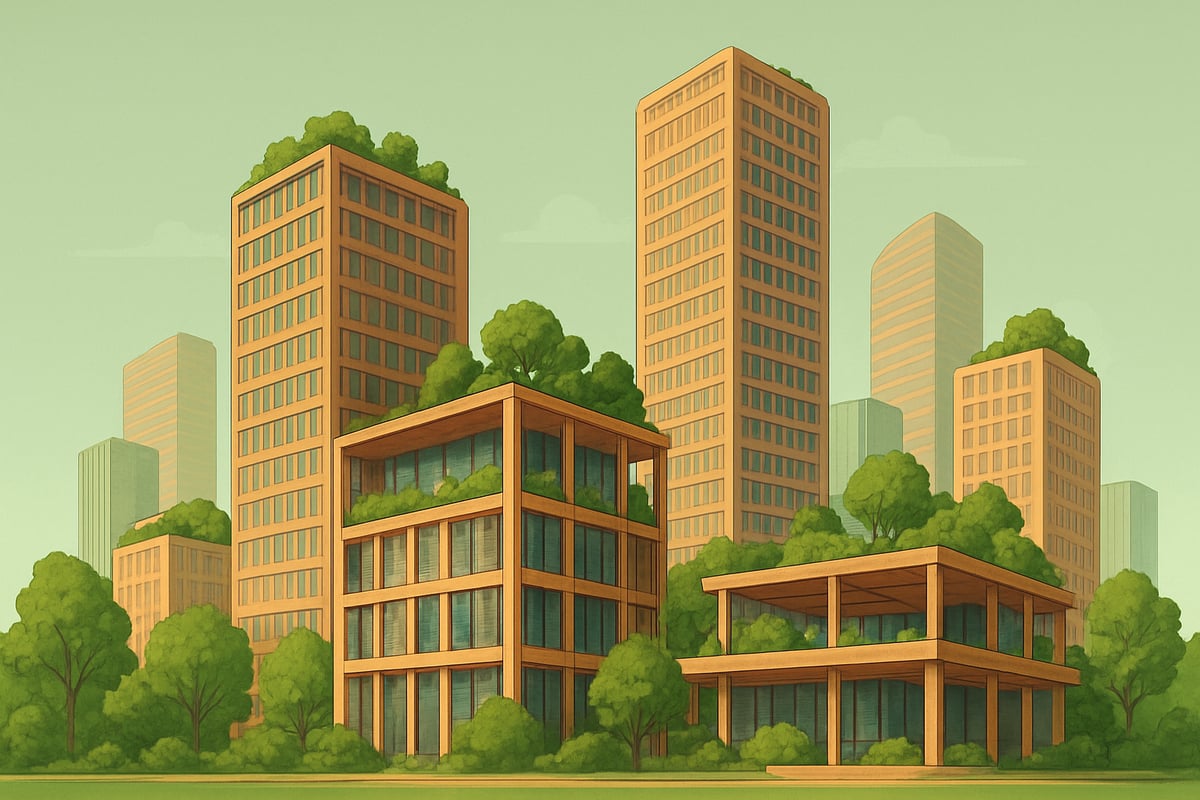
The future of sustainable construction is being redefined by timber buildings. As architects and engineers push boundaries, these structures are not only shaping skylines but also setting powerful precedents for the industry. By examining recent timber buildings, we gain insights into the direction of architectural innovation and environmental responsibility.
Shaping Architectural Trends
Timber buildings have become catalysts for a new wave of design thinking. Projects like the Sara Kulturhus Centre and Mjøstårnet demonstrate how timber can compete with steel and concrete in height and complexity. Their success has inspired architects worldwide to challenge traditional limits.
These landmark timber buildings influence both public and professional perceptions. Their use of exposed wood, natural light, and biophilic design principles fosters healthier environments. The trend is clear: cities are now considering timber buildings as viable solutions for diverse functions, from cultural hubs to residential towers.
A table summarising global adoption:
| Region | Timber Projects (2023) | Notable Trend |
|---|---|---|
| Europe | 1,200+ | High-rise, mixed-use |
| North America | 1,600+ | Commercial offices |
| Asia-Pacific | 300+ | Residential innovation |
Timber’s Role in Sustainable Construction
Timber buildings are vital for achieving sustainability targets. They sequester carbon, reduce embodied emissions, and use renewable resources. The Sara Kulturhus Centre alone stores over 9,000 tonnes of CO₂, highlighting the environmental impact these buildings can have.
Policy makers are responding. Changes in UK and EU building codes now support greater use of timber in mid- and high-rise construction. Industry initiatives, such as the Mass Timber Accelerators Expand for 2025, are driving adoption through research, funding, and regulatory support.
Timber buildings also address urban challenges. Their prefabricated systems speed up construction, minimise disruption, and provide scalable solutions for housing shortages and regeneration projects.
Innovation, Policy, and the Road Ahead
Continuous innovation is strengthening the case for timber buildings. Advances in fire safety, hybrid timber-concrete systems, and digital fabrication are making timber more durable and adaptable. Research centres, such as the BTZ at TU Graz, are at the forefront of developing new techniques and standards.
Global forecasts suggest that timber buildings will play a leading role in urban development over the next decade. Insights from 2025 Predictions for Mass Timber indicate rapid growth in both technology and market acceptance.
As more cities and developers invest in timber-led regeneration, architects and engineers are optimistic. They view timber buildings as essential to creating resilient, low-carbon communities that blend innovation with tradition.
Planning Your Own Timber Building Journey
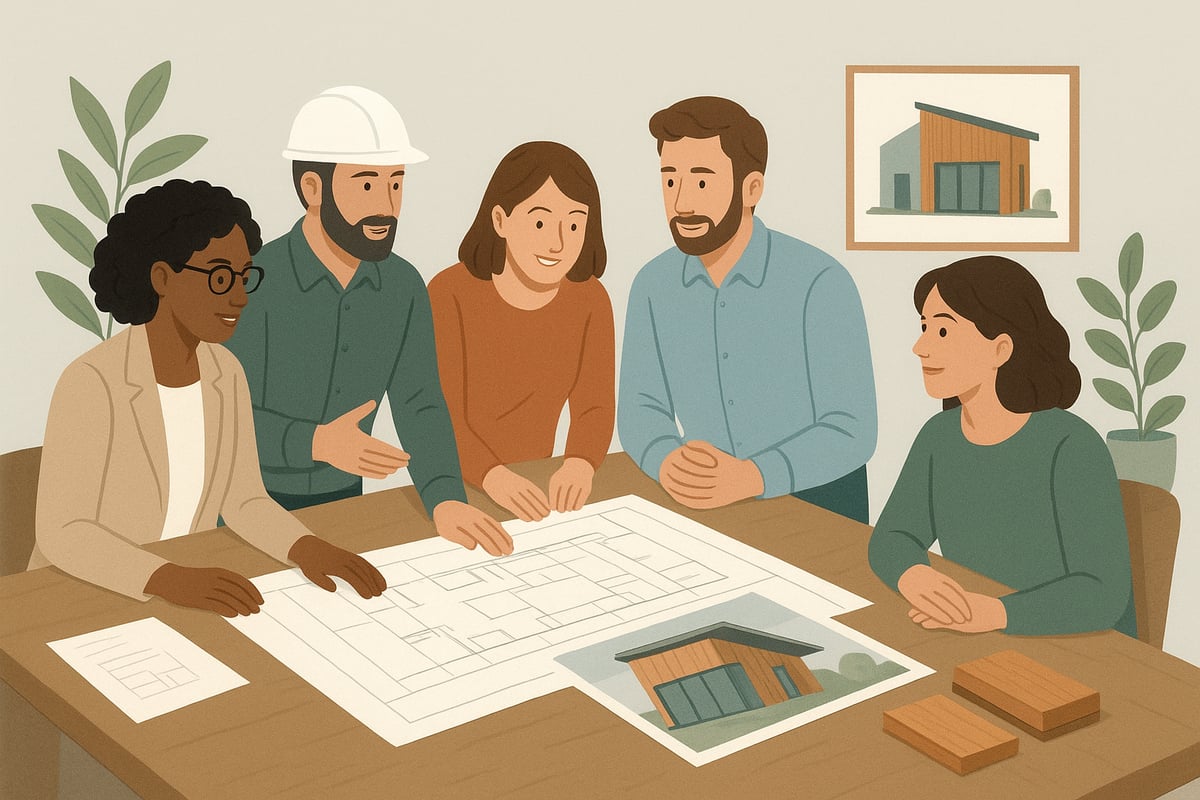
Embarking on your own timber buildings journey is both exciting and rewarding. Whether you are an individual, a developer, or part of an organisation, the path to creating a sustainable timber project starts with clear planning and the right expertise.
Key Steps to Get Started:
- Site Selection: Choose a location that supports sustainable access to timber and meets planning requirements.
- Design Phase: Collaborate with architects experienced in timber buildings. Early involvement ensures your vision aligns with structural possibilities and local regulations.
- Sourcing Sustainable Timber: Work with suppliers who offer certified, responsibly harvested timber. This step is crucial for both environmental impact and compliance.
- Compliance and Approvals: Familiarise yourself with building codes and fire safety regulations. Many regions now provide pathways for timber buildings, but early consultation with local authorities is essential.
Working with Experts
Partnering with the right professionals makes a significant difference. Seek out architects and engineers with a proven track record in timber buildings. Experienced contractors and suppliers will help you navigate the unique challenges of timber construction, from prefabrication to on-site assembly.
For a deeper understanding of practical approaches, reviewing timber frame construction methods can offer valuable insights into how modern timber buildings are realised, from frame assembly to finishing details.
Resources, Grants, and Inspiration
As timber buildings gain momentum, more resources and grants are becoming available. Check local government and industry bodies for financial support, technical guidance, and up-to-date information on sustainable practices.
Visiting exemplary timber buildings in your area can be an excellent way to gather ideas and connect with the community. Observing these structures firsthand offers inspiration and helps translate innovative concepts into your own project.
Join the Timber Revolution
By planning thoughtfully and working with experienced professionals, you can make a meaningful contribution to the future of timber buildings. Every project, no matter the scale, helps shape a more sustainable and resilient built environment.
Having explored how timber is shaping the future of sustainable architecture, you may feel inspired to bring these possibilities closer to home. Whether you are dreaming of a bespoke oak home, a unique outbuilding, or a beautifully crafted community space, the team at Acorn to Oak Framing is here to guide you every step of the way. We combine traditional skills with modern design and sustainability, helping you create a lasting legacy that enhances your lifestyle and property. If you are ready to turn inspiration into action, why not BUILD NOW and start your own timber building journey?


