
Timber remains a cornerstone of modern construction, with a remarkable resurgence in 2026 as more people seek sustainable, stylish, and versatile building solutions. If you want to use timber effectively in your next project, this comprehensive guide is designed for you.
Here, you will find practical advice on selecting the right timber types, sourcing responsibly, applying modern treatments, and exploring innovative applications. We will also cover sustainability practices and expert strategies to maximise the benefits of timber while ensuring its longevity.
Join us as we explore how to use timber to its full potential, meeting today’s demands for eco-friendly and high-performance materials.
Understanding Timber: Types, Properties & Selection
Selecting the right timber is fundamental to project success. To use timber confidently, you must understand its types, properties, and quality indicators. This knowledge ensures you choose materials that balance strength, beauty, cost, and sustainability.
Softwood vs Hardwood: Key Differences
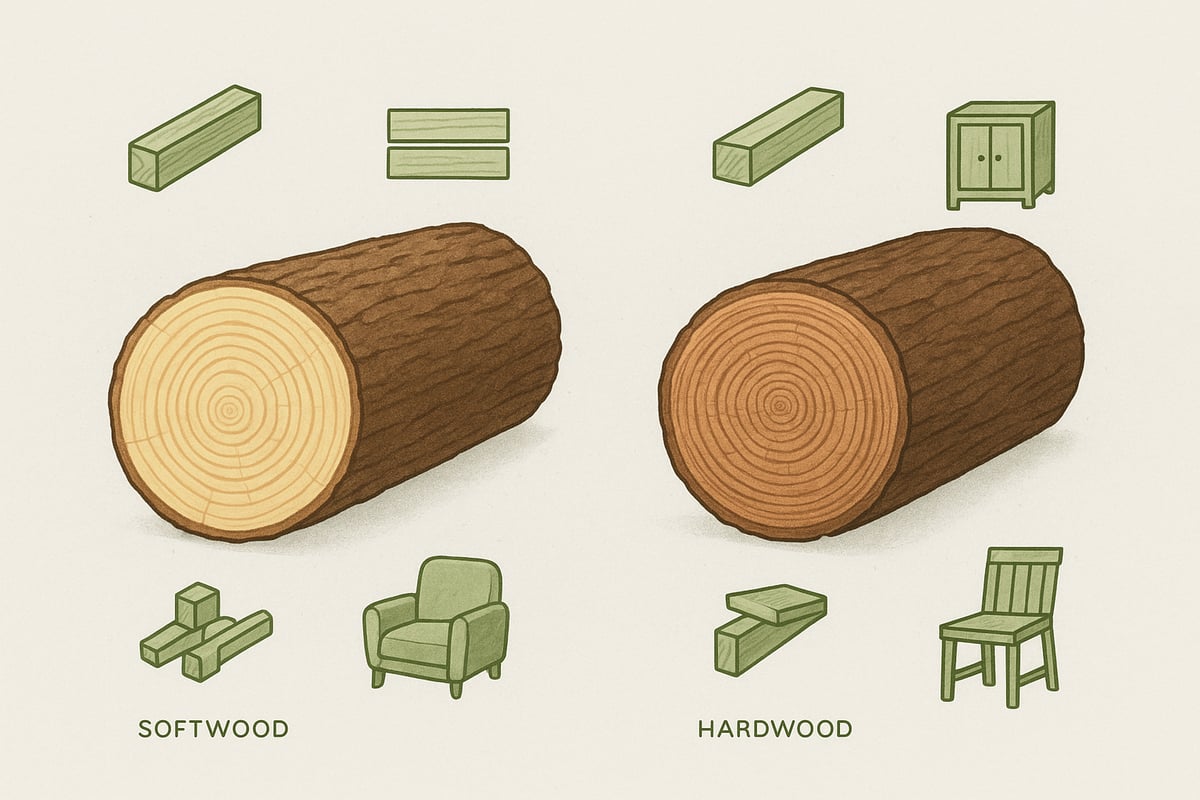
Timber is broadly divided into softwoods and hardwoods. Softwoods, such as pine, fir, spruce, and larch, come from coniferous trees that grow relatively quickly, often reaching maturity in about 40 years. Hardwoods, including oak, ash, and beech, are sourced from deciduous trees, which can take up to 150 years to mature.
Softwoods are generally lighter and less dense than hardwoods. This makes them easier to work with and an economical choice for many construction and joinery tasks. Despite their name, some softwoods can be surprisingly strong, and they are widely used for framing, cladding, and furniture. Hardwoods, on the other hand, tend to be more durable and resistant to wear, making them ideal for flooring, high-end furniture, and heavy structural elements.
Cost is another key difference when you use timber in your project. Softwoods are typically more affordable and readily available, often sourced from managed forests in the UK. Hardwoods are usually costlier due to slower growth rates and more limited supply. Both types can be sustainable if sourced responsibly, but softwoods have a lower carbon footprint when grown and harvested locally.
In the UK, popular softwoods like Scots pine and Douglas fir are chosen for framing and exterior joinery. Hardwoods such as English oak and beech are prized for their strength and visual appeal in furniture and architectural detailing.
Here’s a quick comparison:
| Property | Softwood | Hardwood |
|---|---|---|
| Example Species | Pine, Spruce | Oak, Beech |
| Growth Cycle | ~40 years | Up to 150 years |
| Density | Lower | Higher |
| Durability | Moderate | High |
| Cost | Lower | Higher |
| Common Uses | Framing, Cladding | Flooring, Furniture |
Choosing whether to use timber from softwood or hardwood sources depends on your application, budget, and sustainability goals.
Grading and Quality Assessment
Once you have selected the timber type, grading becomes essential to ensure performance and longevity. Timber is graded visually or mechanically to assess its structural and aesthetic qualities. In the UK, British and European standards define grades for different uses, such as structural (strength) or appearance (visual quality).
Structural grades indicate the timber’s ability to bear loads and resist stress. Appearance grades focus on visual defects like knots, splits, or discolouration. Selecting the correct grade is vital when you use timber in any load-bearing application, as substandard material can compromise safety and durability.
Moisture content and seasoning also play a significant role. Timber must be properly dried to prevent warping, shrinkage, or fungal attack. Seasoned timber is more stable and less likely to develop defects over time.
Defects such as knots, shakes, or insect damage can weaken timber and affect its lifespan. Always inspect for these issues, and choose the highest quality your budget allows. Poor grading or unchecked defects may lead to costly repairs or structural issues later.
To deepen your understanding of quality assessment, refer to resources like Timber Strength Classes and Grading, which detail how to use timber grades effectively for safe construction.
By paying close attention to timber type, grading, and quality, you set the foundation for a successful and sustainable build. Whether you use timber for structure or style, these fundamentals guide your material choices.
Sourcing and Sustainable Timber Practices in 2026
Choosing how you source and use timber in 2026 is crucial for both project success and environmental responsibility. With sustainability at the forefront of UK construction, understanding certification, supply chains, and best practices ensures your timber use is both ethical and future-proof.
Certified Timber: FSC, PEFC & UKWAS
Certification is the foundation for sustainable timber use in any project. The Forest Stewardship Council (FSC), Programme for the Endorsement of Forest Certification (PEFC), and UK Woodland Assurance Standard (UKWAS) all play vital roles in verifying that the timber you choose meets rigorous environmental and social standards.
What does certification mean for you?
- Assurance that forests are managed responsibly, supporting biodiversity and local communities.
- Proof that you use timber sourced legally, reducing the risk of illegal logging.
- Increased eligibility for eco-friendly building schemes and compliance with UK regulations.
You can identify certified timber by looking for logos on delivery notes or product labels. The UK leads Europe in FSC-certified public forests, making it easier than ever to use timber that supports the environment.
| Scheme | Focus | Recognised In UK? | Logo |
|---|---|---|---|
| FSC | Global, social & ecological | Yes |  |
| PEFC | Global, sustainable management | Yes |  |
| UKWAS | UK-specific, woodland management | Yes | N/A |
For more details on how to source timber responsibly and ensure your timber use aligns with sustainability goals, see Sustainable Timber Sourcing.
Responsible Sourcing and Supply Chains
Responsible sourcing is about more than just certification. To use timber effectively and ethically, you must ensure your suppliers maintain full traceability and adhere to legal requirements. Ask for chain-of-custody documentation and always verify the origin of your timber.
Choosing local suppliers reduces your project's carbon footprint and supports UK woodland management. Forestry England exemplifies this approach, managing public forests for both timber production and conservation. When you use timber from reputable sources, you help protect habitats and sequester carbon.
Tips to ensure responsible sourcing:
- Request proof of certification and traceability.
- Compare local versus imported timber for carbon savings.
- Research your supplier's environmental policies.
- Watch for greenwashing—ask for third-party verification.
By following these steps, you make sure you use timber in a way that benefits both your project and the planet.
Timber Treatment, Preservation & Protection
Protecting timber is crucial to ensure your project remains strong, safe, and beautiful for years to come. The way you use timber, from indoor joinery to exterior structures, depends on understanding its vulnerabilities and the right methods for treatment and preservation. This section will help you navigate the essential steps for safeguarding timber, from choosing suitable treatments to meeting the latest UK regulations.
Timber Use Classes and Their Applications
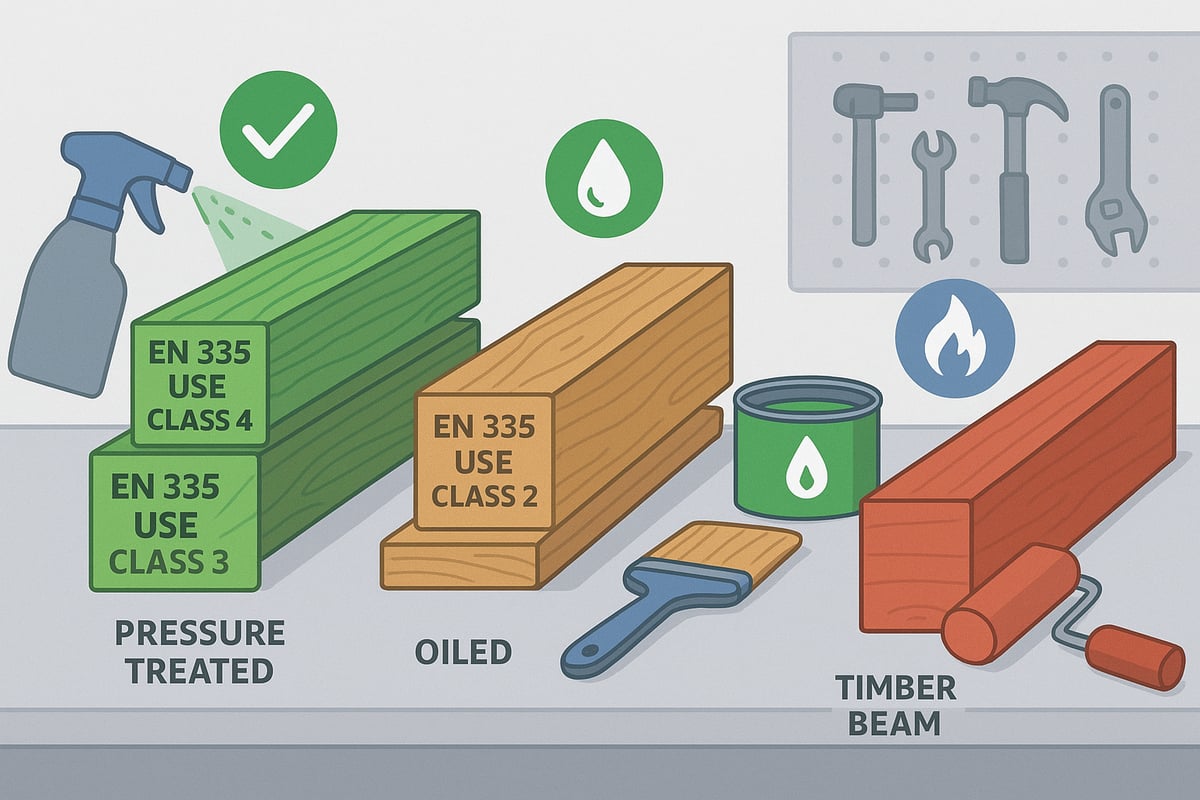
When you use timber, selecting the right type and treatment is essential for long-term performance. The EN 335 standard defines four main use classes, each specifying the risk of decay and insect attack based on where and how the timber is installed.
| Use Class | Environment | Typical Application | Risk Level |
|---|---|---|---|
| 1 | Interior, dry | Flooring, furniture | Low |
| 2 | Interior, humid | Bathroom joinery, kitchen | Moderate |
| 3 | Exterior, above ground | Cladding, fencing | High |
| 4 | Exterior, in ground contact | Decking posts, sleepers | Very High |
Matching the correct timber and treatment to its use class ensures it withstands moisture, fungal decay, and pests. For instance, timber used outdoors above ground (Class 3) requires effective preservative treatment, while ground-contact timber (Class 4) demands the highest protection.
If you use timber in the wrong class, expect issues like early rot, warping, or insect infestation. Always check the intended application and verify the timber’s treatment level before installation. Moisture content is another critical factor; seasoned timber with the right moisture level will resist decay and provide better structural integrity.
Modern Preservation Techniques
Advancements in timber preservation allow you to use timber confidently in a wide range of environments. Pressure treatment remains a trusted method, forcing preservative agents deep into the wood fibres. Vacuum impregnation is another technique, ensuring chemicals penetrate thoroughly, especially important for exterior and structural use.
Eco-conscious builders now favour non-toxic and natural preservatives, such as borates and plant-based oils. These options reduce environmental impact while still offering significant protection. For visible surfaces, natural oils like linseed or tung oil provide a durable and attractive finish, while water-based treatments minimise volatile organic compounds.
Statistics show that correctly treated timber can last up to 30 years outdoors, and even longer with regular care. To maintain timber’s lifespan, follow best practices:
- Inspect surfaces yearly for damage or wear
- Clean with mild solutions and soft brushes
- Reapply protective coatings as recommended
- Address minor splits or surface decay promptly
For example, garden decking and fencing treated to the right standard can resist decay for decades, making it cost-effective and reliable when you use timber for landscaping.
Fire Retardancy and Building Regulations
Fire safety is a top concern when you use timber in construction. The UK has stringent standards for fire resistance, especially in multi-storey and public buildings. Timber products can be specified with factory-applied fire retardant treatments, which are tested to meet British and European fire classifications.
Certification is essential, so always request documentation for treated timber. Modern fire retardants are designed to limit smoke and toxic emissions, contributing to safer environments. As building codes evolve in 2026, expect to see updated requirements for fire performance, particularly in large-scale timber structures.
Compliance with regulations not only ensures occupant safety but also protects your investment. Collaborate with suppliers who understand the latest standards and can provide traceable, certified products. By following up-to-date fire safety measures and integrating them into your project design, you can use timber with confidence in any application.
Innovative Applications of Timber in Modern Construction
Innovative ways to use timber are redefining construction in 2026, blending sustainability with cutting-edge design. Timber’s adaptability now extends far beyond traditional roles, offering solutions that are strong, lightweight, and eco-friendly. By exploring new approaches to use timber, both professionals and homeowners can unlock fresh possibilities for efficient, stylish buildings.
Structural Timber: Framing, Beams & Engineered Products
The structural revolution in construction is powered by advanced ways to use timber. Timber frame construction is gaining traction for its impressive strength-to-weight ratio and rapid assembly. Engineered solutions like cross-laminated timber (CLT) and glulam beams enable architects to span greater distances and create open, flexible spaces. Compared to steel and concrete, these products allow you to use timber for substantial carbon savings, making them ideal for net-zero projects.
A recent case study in the UK housing market revealed that large-scale timber frame buildings can reduce construction time by up to 30 percent and cut embodied carbon significantly. For those keen to learn more about these modern techniques, the Timber frame construction basics guide offers a practical introduction.
Timber in Exterior & Interior Design
Designers increasingly use timber to create visual warmth and natural elegance in both exterior and interior spaces. Timber cladding, decking, fencing, and landscaping elements give buildings a distinctive, organic appeal that stands out in urban and rural settings alike.
Inside, you can use timber for flooring, panelling, staircases, and feature walls, adding texture and depth. The versatility of finishes, grains, and colours enables customisation for any style, from rustic to contemporary. A growing trend is biophilic design, where architects use timber to foster wellbeing by bringing nature indoors, improving comfort and productivity.
Timber in Modular & Prefabricated Construction
In 2026, the drive for sustainable, efficient building methods means more firms use timber in modular and prefabricated construction. Prefabricated timber components are manufactured offsite, ensuring precision and reducing waste. This approach allows for faster site assembly, minimising disruption and cutting costs.
Eco-homes built with modular timber systems benefit from excellent insulation and airtightness, supporting energy efficiency. By choosing to use timber in modular designs, projects can easily meet high sustainability standards while enjoying the flexibility of custom layouts.
Maximising Timber Efficiency: Design & Engineering Tips
To use timber to its full potential, thoughtful design and advanced engineering are essential. Start by designing for minimal waste, optimising spans, and specifying the right timber products for each application. Hybrid structures, combining timber with materials like steel or concrete, can balance performance and cost.
Digital tools such as Building Information Modelling (BIM) and CNC fabrication streamline the process, ensuring accuracy and reducing errors. By planning carefully, you can use timber efficiently, supporting both environmental and economic goals.
Maximising Timber’s Lifespan: Maintenance & Best Practices
Timber is a versatile and sustainable material, but to use timber successfully over the long term, a proactive approach to maintenance is essential. Proper care not only preserves its beauty and structure but also ensures you maximise your investment and minimise environmental impact.
Inspection, Cleaning & Routine Care
Regular inspection is the cornerstone of timber longevity. By establishing a routine, you can spot issues early and address them before they escalate.
Suggested Inspection Schedule:
| Area | Frequency | What to Look For |
|---|---|---|
| Structural beams | Bi-annually | Cracks, warping, rot, pests |
| Decking/Fencing | Quarterly | Surface wear, loose fixings |
| Interior timber | Annually | Stains, swelling, joint gaps |
When you use timber outdoors, cleaning is vital. Gently brush surfaces to remove debris, then wash with a mild detergent suitable for timber. For interior timber, a soft damp cloth helps maintain finishes without introducing excessive moisture.
Early signs of deterioration, such as discolouration or soft spots, should be addressed promptly. This proactive approach to use timber ensures small problems do not become major repairs. Maintaining a log of checks can help track changes over time.
Repair, Restoration & Upcycling
Even with the best care, timber may develop splits, rot, or surface damage. Knowing when to repair, restore, or replace is key to getting the most from your decision to use timber.
Repair Techniques:
- Fill small cracks with specialist wood filler.
- Treat localised rot by removing decayed sections and applying preservative.
- Use sanding and refinishing to restore worn surfaces.
Restoration is ideal for historic or decorative timber, where preserving original features matters. In contrast, severely compromised structural timber may need replacement.
Upcycling is a sustainable way to use timber offcuts and reclaimed wood. Old beams can become shelving, or decking planks can be repurposed as planters. This not only extends the life of timber but also reduces waste and supports circular economy principles.
Weatherproofing & Environmental Protection
The UK climate demands robust weatherproofing for any project that will use timber outdoors. Applying protective coatings, such as oils, stains, or paints, creates a barrier against moisture, UV, and fungal attack.
Best practices include:
- Installing a moisture barrier beneath decking and garden structures.
- Ensuring gaps for ventilation to prevent condensation.
- Sloping surfaces to direct water away from timber.
Proper installation is as important as treatment. Avoid direct ground contact unless using timber rated for Class 4 applications. For more detail on insulation and maintaining timber efficiency, see this guide on insulating timber frame walls.
By following these steps, you can use timber confidently, knowing it will stand up to the elements and deliver lasting value.
Timber and Sustainability: Environmental Impact & Future Trends
Timber is at the heart of the sustainable construction revolution, making it a top choice for those who want to use timber effectively in 2026. Its environmental credentials, lifecycle benefits, and emerging innovations are shaping the future of the industry.
Timber’s Role in Carbon Reduction
Choosing to use timber in construction provides a powerful tool for carbon reduction. Unlike steel and concrete, timber acts as a natural carbon sink, with each cubic metre locking away approximately one tonne of CO₂ for the life of the product.
The table below highlights the carbon impact of common construction materials:
| Material | Carbon Footprint (kg CO₂/m³) | Carbon Storage (kg CO₂/m³) |
|---|---|---|
| Timber | -1000 | +1000 (stored) |
| Concrete | +300 | 0 |
| Steel | +1800 | 0 |
Lifecycle analysis shows that when you use timber, you not only avoid emissions from traditional materials, but also help capture and store carbon. Sustainable forestry ensures that harvested trees are replaced, maintaining this carbon cycle.
Circular Economy & End-of-Life Strategies
A circular approach is central when you use timber for construction. Timber products can be reused, repurposed, or recycled at the end of their initial life. This extends their value and reduces waste.
Innovations in biodegradable and recyclable timber products are gaining ground. Offcuts, sawdust, and bark are finding new uses in:
- Particleboard and MDF
- Biomass energy production
- Landscaping and horticulture
Timber by-products are increasingly used in paper manufacturing and as natural mulches. By designing for disassembly and reuse, you ensure that timber components can be efficiently reclaimed. This circular mindset maximises the value of every piece of timber throughout its lifecycle.
Future Trends: Timber in 2026 and Beyond
Looking ahead, the way we use timber is evolving rapidly. Digital fabrication, CNC machining, and engineered timber solutions are unlocking new design possibilities. Smart timber products, which integrate sensors or advanced coatings, are set to enhance performance and longevity.
Policy and consumer demand are driving greater adoption of timber, with the UK’s Timber in Construction Roadmap 2025 outlining ambitious targets for sustainable building. Expect to see more modular and prefabricated timber systems, as well as innovative materials that balance strength with environmental responsibility.
To use timber most effectively, stay informed about regulatory updates and sustainability certifications. As the sector continues to innovate, those who embrace these trends will be well positioned to lead the way in sustainable construction.
Expert Tips for Using Timber Effectively in 2026
Unlocking the full potential when you use timber in 2026 requires a blend of strategic planning, smart budgeting, technical knowhow, and access to trusted expertise. With sustainability and longevity at the forefront, these expert tips will guide you through each stage, ensuring your timber projects deliver both in performance and aesthetics.
Planning and Design Considerations
To use timber effectively, start design integration early. Engage architects and engineers who specialise in timber, as their insight can optimise your structure for both beauty and strength. Always consider the intended use, exposure, and load requirements.
For legal and sustainable sourcing, ensure your plans comply with the latest building regulations and policies, such as those outlined in the Timber Procurement Policy Guidance. Early compliance avoids costly revisions later.
- Collaborate with timber specialists from concept stage
- Factor in moisture, ventilation, and use class
- Confirm local planning permissions before you use timber
Budgeting and Cost Optimisation
Effective budgeting is crucial when you use timber for construction or renovation. Compare costs between different timber grades, treatments, and suppliers to find the best value. Consider the lifecycle costs, not just the upfront price.
| Cost Factor | Impact on Project | Saving Tips |
|---|---|---|
| Timber Grade | Structural safety | Choose grade fit for purpose |
| Certification | Sustainability | Opt for certified suppliers |
| Treatment | Longevity | Invest in quality preservatives |
| Sourcing | Carbon footprint | Source locally where possible |
Plan for long term maintenance, as this influences the total investment when you use timber.
Common Mistakes to Avoid
Avoiding pitfalls is essential when you use timber in any project. Overlooking treatment requirements or use classes can lead to premature decay or structural failure.
- Not matching timber type to environmental exposure
- Ignoring certified supply chains, risking sustainability claims
- Poor detailing that traps moisture and encourages rot
By understanding these common errors, you can use timber with confidence and ensure your project’s longevity.
Leveraging Professional Expertise
When you use timber for bespoke or structural projects, engaging professionals is invaluable. Timber specialists and experienced craftsmen can identify the best materials, techniques, and finishes for your needs.
For more inspiration on what’s possible, explore timber extension ideas and benefits to see how experts solve design challenges and maximise timber’s versatility.
- Hire a structural engineer for large spans or complex builds
- Choose skilled contractors with a track record in timber projects
- Request references or portfolio examples before you use timber
Resources and Further Learning
Continuous learning is essential as you use timber in new and innovative ways. Stay up to date with technical guides, trade associations, and training courses relevant to timber construction.
- The Timber Trade Federation offers technical resources
- Attend CPD courses on advanced timber engineering
- Use online tools for design and specification
By building your knowledge base, you can use timber more effectively, keeping pace with industry advances and ensuring the best outcomes for your projects.
After exploring the key considerations for sourcing, treating, and designing with timber in 2026, you might be inspired to take the next step for your own project. Choosing the right timber specialist is crucial—quality, sustainability, and expert craftsmanship all play a part in bringing your vision to life. If you’re ready to turn these insights into a bespoke timber structure that enhances your property and stands the test of time, let’s make it happen together.
BUILD NOW


