
Timber framed panels are transforming how the UK builds in 2025, offering a blend of speed, energy efficiency, and sustainability. This handbook cuts through the jargon, guiding homeowners, self-builders, and construction professionals through every stage of working with timber framed panels. Whether you are interested in the types, benefits, installation, costs, or regulations, this comprehensive guide is designed to answer your questions. Discover why these panels are at the heart of modern building trends, how they can make your project more efficient, and what steps to take next. Read on for a clear, step-by-step journey into the world of timber framed panels.
Understanding Timber Framed Panels
Timber framed panels are at the heart of modern construction, offering a fresh approach compared to traditional building techniques. As demand rises for efficient, sustainable solutions, these panels are reshaping how homes and commercial buildings are designed and built across the UK.
What Are Timber Framed Panels?
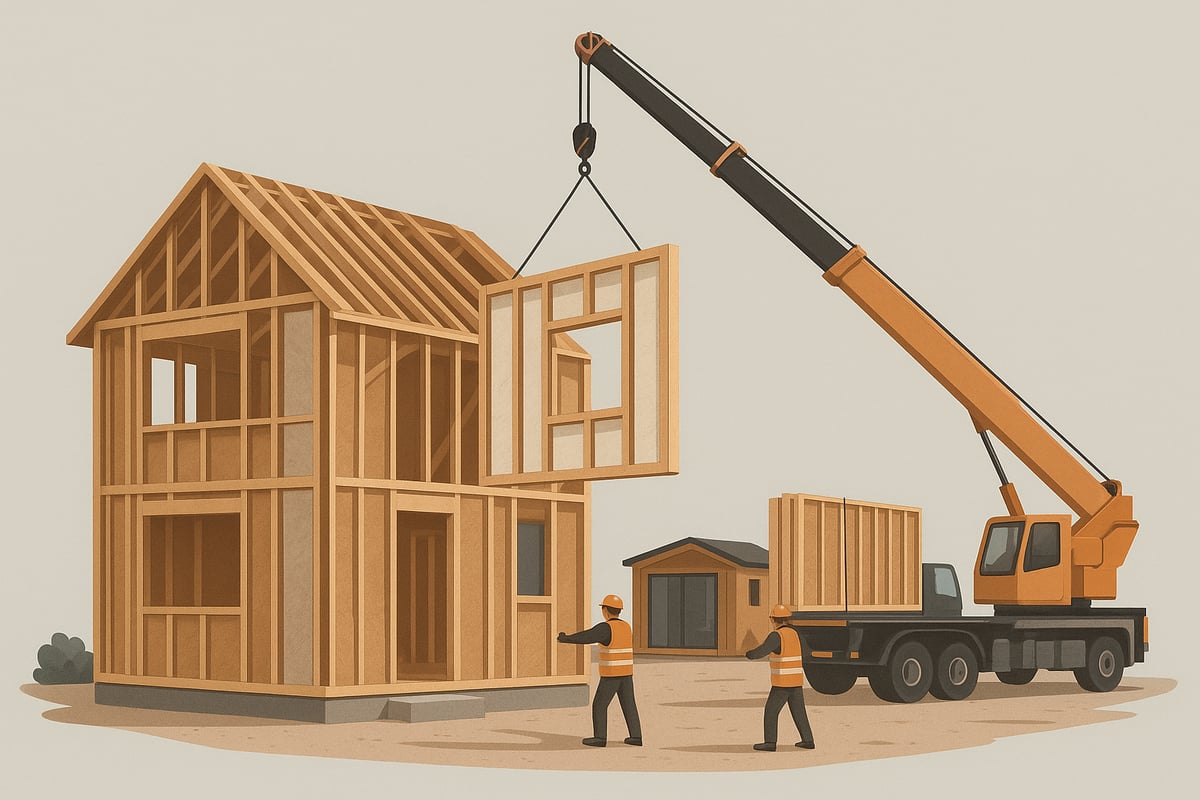
Timber framed panels are prefabricated wall or floor sections constructed from timber studs, insulation, vapour barriers, and sheathing. Unlike traditional timber frame construction, which relies on exposed beams and posts, these panels are engineered for rapid assembly and consistent performance.
Common materials include softwood, engineered timber, and sometimes oak for higher-end projects. Each panel typically contains built-in insulation, a vapour control layer, and external sheathing, forming a high-performance envelope.
For example, many new-build homes in the UK now use timber framed panels to meet energy standards and speed up construction, making this method a popular choice for developers and homeowners alike.
Types of Timber Framed Panels
There are several types of timber framed panels to consider. Open panel systems consist of timber frames with sheathing, leaving insulation and services to be installed on site. Closed panel systems arrive with insulation, vapour barriers, and sometimes windows already fitted, reducing site work.
Structural Insulated Panels (SIPs) integrate insulation between two layers of board, offering excellent thermal performance. Pre-insulated and modular panels are also growing in popularity, especially for off-site construction. For a deeper dive into these systems and their applications, see this helpful guide: Log and timber frame homes explained.
A notable case study is the use of SIPs in energy-efficient housing, where whole developments achieve low energy bills and swift build times.
Advantages and Disadvantages
Timber framed panels offer impressive benefits. They enable rapid construction, often reducing build times by weeks compared to masonry. Their high insulation values translate into exceptional thermal efficiency, and timber is a renewable material, supporting sustainability goals.
However, there are some drawbacks. Upfront costs can be higher than traditional builds, and there can be limits to customisation due to panelised design. Fire regulations must also be carefully managed.
In 2023, timber framed panels accounted for around 28% of the UK construction market. Compared to masonry, panel builds can halve erection times, making them attractive for time-sensitive projects.
Timber Sourcing and Sustainability
Responsible timber sourcing is critical for timber framed panels. Look for FSC or PEFC certification to ensure wood comes from sustainably managed forests. Compared to steel or concrete, these panels offer significant life cycle carbon savings, contributing to a lower environmental impact.
The UK government has set ambitious targets for sustainable building, encouraging the use of timber in construction. Recent low-carbon housing developments demonstrate how timber framed panels can help achieve these goals, combining energy efficiency with reduced embodied carbon.
Common Applications in the UK
Timber framed panels are used in a wide range of UK projects. They are ideal for residential homes, extensions, and garden rooms, thanks to their speed and efficiency. Commercial buildings, schools, and healthcare facilities also benefit from this approach.
Off-site construction trends are accelerating, with panels manufactured in controlled environments before being assembled on site. Notable UK projects include entire housing estates, modular classrooms, and eco-friendly office spaces, all using timber framed panels to meet modern demands.
Planning Your Timber Framed Panel Project
Embarking on a project using timber framed panels requires careful planning, from evaluating your site to choosing a reliable supplier. Each phase shapes the success and longevity of your build. By understanding the practical steps and considerations involved, you can make informed decisions that align with your goals.

Assessing Project Suitability
Before committing to timber framed panels, assess your site’s access, ground conditions, and local climate. These factors influence foundation choice and logistics. Timber framed panels suit self-builds, extensions, and rapid construction projects where speed and efficiency are priorities.
For rural plots, panels can be delivered off-site and assembled quickly, even on uneven ground. Urban sites may face tighter access, but modular panel sizes allow flexibility. Consider plot size and design constraints, as some bespoke shapes may be limited by panel dimensions. For example, a rural self-builder might benefit from minimal disruption, while an urban extension could face restrictions due to neighbouring properties. Evaluating these aspects ensures timber framed panels are the right fit for your project.
Design and Architectural Considerations
Timber framed panels offer remarkable design flexibility. You can integrate them with materials like brick, glass, or steel for unique architectural styles. Working with architects experienced in timber systems helps maximise the creative and structural potential of your build.
Award-winning homes often combine contemporary design with energy efficiency, thanks to panel systems. The Timber frame home construction guide provides valuable insights for collaborating with design professionals and understanding the process from concept to completion. Early engagement with your architect ensures your vision aligns with the technical capabilities of timber framed panels.
Budgeting and Cost Factors
Budgeting for timber framed panels involves understanding typical costs, which range from £1,400 to £2,200 per square metre in 2024. Factors affecting price include your chosen panel type, level of insulation, internal and external finishes, and transport logistics to your site.
Costs for timber framed panels are often competitive with traditional masonry or steel frame builds, especially when considering reduced build times and future energy savings. For a 3-bedroom home, expect a cost breakdown covering panel supply, on-site assembly, and finishing trades. Comparing options at the planning stage helps you balance quality, performance, and affordability.
Timeline and Project Management
Timely delivery and efficient project management are crucial with timber framed panels. Lead times for design, manufacturing, and delivery can vary, so it is wise to confirm schedules early. On-site assembly is typically swift, with frames erected in one to two weeks, drastically reducing overall build time.
Coordination with plumbers, electricians, and other trades is essential for seamless integration of services. A typical self-build timeline might include a few weeks for groundwork, rapid panel assembly, and a phased approach to finishes and inspection. This streamlined process is a major advantage of timber framed panels.
Choosing the Right Supplier or Manufacturer
Selecting a supplier with proven experience in timber framed panels is key. Look for companies with industry accreditations, positive client references, and a strong track record in similar projects. UK-based manufacturers offer greater reliability and shorter lead times, reducing the risk of delays due to supply chain issues.
A reputable supplier will provide guidance from design to completion, ensuring your project meets all technical and regulatory standards. Taking time to vet suppliers pays off in the quality, performance, and longevity of your timber framed panels build.
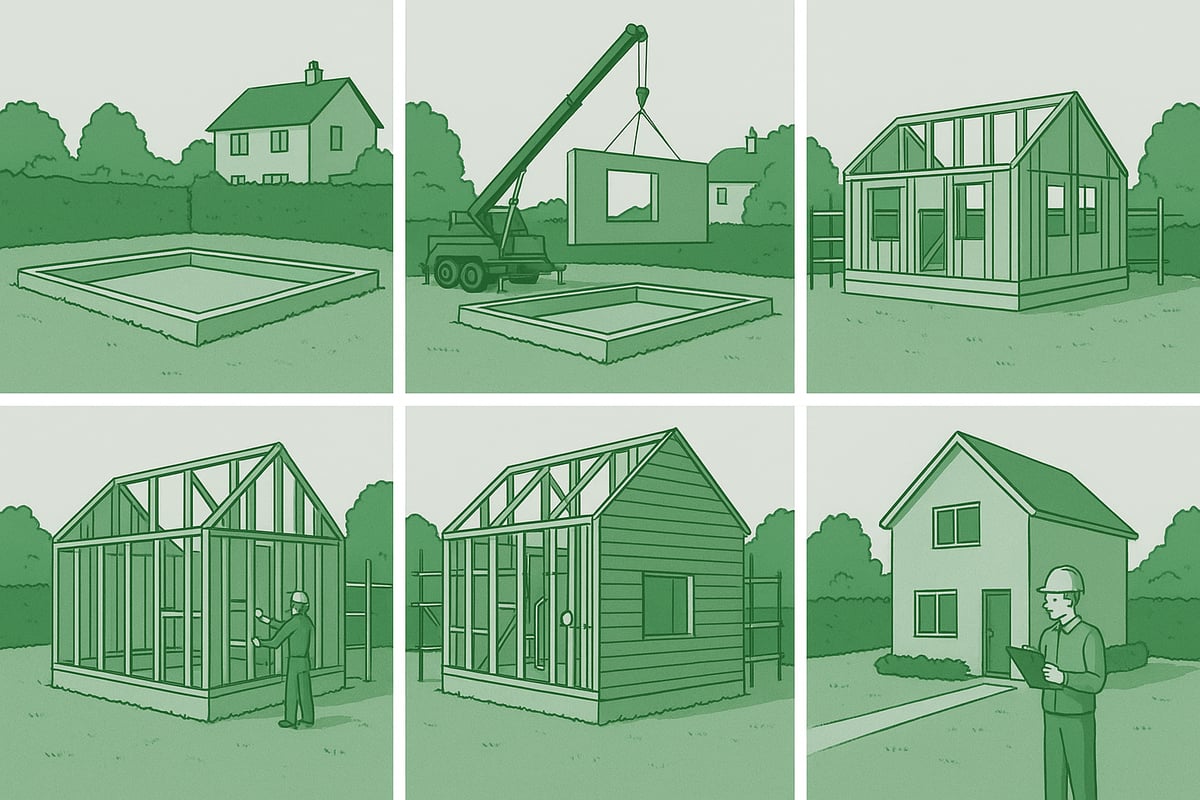
Step-by-Step Timber Framed Panel Installation Process
Embarking on a project with timber framed panels requires a systematic approach to ensure quality, speed, and long-term performance. Each stage of the installation process is crucial, from preparing the site to final inspections. Let’s walk through the steps you’ll encounter on a typical UK build, highlighting practical tips and best practices for every phase.
Step 1: Site Preparation and Foundations
The journey with timber framed panels begins with careful site preparation. Clearing the plot of vegetation, debris, and any old structures sets the stage for a smooth build. Groundworks follow, including setting out the building footprint and excavating for foundations.
There are several foundation types commonly used with timber framed panels. Strip foundations are popular for standard ground conditions, while raft or pile foundations suit sites with poor load-bearing capacity or uneven terrain. Achieving a perfectly level base is essential to ensure the panels fit correctly and maintain structural integrity.
For sloping sites, stepped foundations or adjustable steel supports may be necessary to provide a stable platform for timber framed panels. Early attention to drainage and ground moisture protection helps safeguard the durability of your new structure.
Step 2: Panel Delivery and Handling
Once the foundations are ready, timber framed panels are delivered from the factory. Off-site fabrication means panels arrive pre-cut and assembled, minimising on-site waste and build time. Delivery often requires careful coordination, as panels can be large and heavy.
Proper handling is vital to prevent damage. Panels should be unloaded with cranes or forklifts, avoiding manual lifting where possible. Health and safety protocols must be followed, with clear site access for delivery vehicles and secure storage areas for panels.
Minimising site disruption is a key advantage of timber framed panels. With efficient delivery and handling, you can keep the site tidy and reduce noise, dust, and inconvenience for neighbours.
Step 3: Erecting the Panel Structure
With panels on site, the main structure starts to take shape. Timber framed panels can be lifted into position using cranes for larger builds, or by hand for smaller sections. Each panel is fixed in place using mechanical fasteners, adhesives, or hybrid systems, depending on the manufacturer’s specification.
Weatherproofing is a priority during assembly. As panels are erected, temporary coverings or integrated membranes protect the structure from rain and moisture. This step is crucial for maintaining the performance and longevity of timber framed panels.
The speed of erection is a major benefit. Typically, the structural frame of a standard house can be completed in one to two weeks, keeping your project on track and on budget.
Step 4: Integrating Services and Insulation
A distinctive feature of timber framed panels is the integration of service voids and insulation. Many panels are designed with pre-installed channels for electrical wiring, plumbing, and ventilation systems.
Routing services is straightforward, thanks to these purpose-built voids. Installers can quickly and neatly run cables or pipes without compromising the integrity of the panels. High-performance insulation is often pre-fitted, contributing to airtightness and excellent thermal performance.
Careful attention at this stage ensures that timber framed panels deliver on their promise of energy efficiency and comfort. Achieving a continuous vapour barrier and sealing joints are key steps for maximising airtightness.
Step 5: External and Internal Finishes
Once the structure is secure and services are installed, it’s time to apply finishes. Externally, timber framed panels can be clad in a range of materials, including timber boarding, brick slips, or render to suit your design preferences.
Internally, plasterboard is the most common lining, but timber boarding and other decorative finishes are also popular in UK self-builds. The choice of finishes can influence both the appearance and performance of your home.
Attention to detail at this stage ensures that timber framed panels perform well in terms of weather resistance, fire safety, and overall durability. Finishing touches such as skirting, architraves, and window reveals complete the interior.
Step 6: Final Inspections and Quality Checks
The final step in the installation of timber framed panels involves thorough inspections and quality checks. Building control officers will review the build to ensure compliance with structural, fire, and energy regulations.
Warranty providers such as NHBC or LABC conduct their own inspections, focusing on details like external wall construction. For technical guidance, you can refer to NHBC Standards Chapter 6.2 – External Timber Framed Walls, which outlines best practices for new build homes.
Ensuring every element meets the required standards is essential for the long-term performance and value of timber framed panels. Once approved, your project is ready for the next phase—fit-out and finishing.
Timber Framed Panels: Costs, Savings, and Value
Understanding the costs and value of timber framed panels is essential for anyone considering this modern building method. This section breaks down upfront investment, ongoing savings, available financing, comparisons with other systems, resale value, and long-term maintenance.
Upfront vs. Lifetime Costs
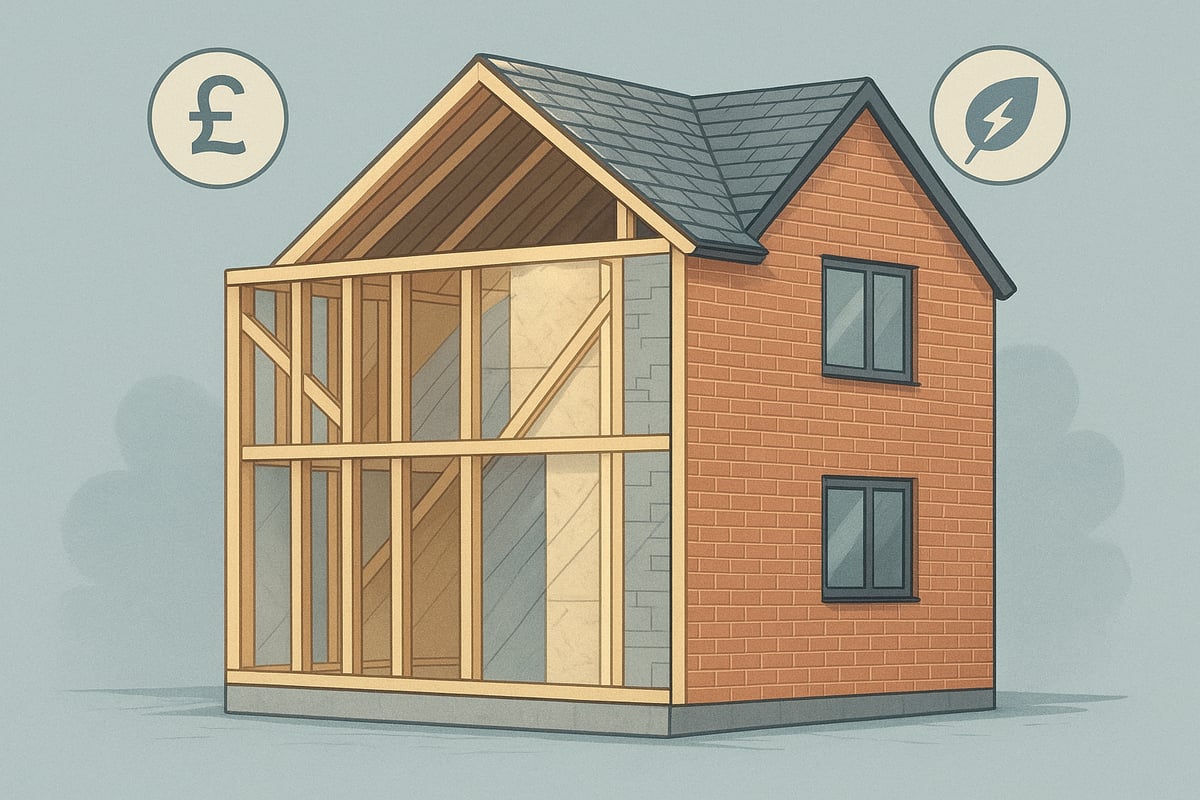
When evaluating timber framed panels, it is important to weigh both the initial investment and the long-term financial benefits. Upfront costs typically range from £1,400 to £2,200 per square metre in 2024, depending on panel type, insulation, and finishes. While this can be similar or slightly higher than masonry or steel frame systems, the superior thermal performance of timber framed panels leads to notable energy savings.
For example, homeowners often report annual heating bill reductions of up to 30 percent compared to traditional builds. These savings accumulate over the lifespan of the home, making timber framed panels a wise long-term investment. The combination of cost-effective construction and lower running expenses is a key reason many are choosing this method.
Financing and Grants
Financing a project with timber framed panels is increasingly straightforward. Many UK lenders now recognise the value and durability of modern timber systems, though some may request additional documentation on fire safety or warranties. Green Homes Grant incentives, or similar schemes expected in 2025, can help offset the initial outlay for high-performance panels and insulation.
It is also worth investigating local authority grants or energy efficiency incentives, which may be available for both new builds and extensions using timber framed panels. Always consult with your mortgage broker to ensure your chosen system meets lender requirements and qualifies for favourable terms.
Comparing Timber Panels to Other Building Methods
How do timber framed panels stack up against brick, block, steel, or SIPs? In terms of speed, timber panels can reduce build times by several weeks, minimising site disruption and overheads. Their off-site manufacture ensures quality and precision, which translates into fewer unexpected costs during assembly.
A recent case study of a UK school built with timber framed panels demonstrated a 20 percent reduction in construction time and significant operational energy savings. The Timber in construction roadmap 2025 highlights these advantages and outlines ongoing industry efforts to further improve cost-effectiveness and performance.
| Method | Typical Cost (£/m²) | Build Time | Energy Efficiency | Disruption |
|---|---|---|---|---|
| Timber Panels | 1,400–2,200 | Fast | Excellent | Low |
| Masonry | 1,300–2,100 | Moderate | Good | Moderate |
| Steel Frame | 1,600–2,400 | Moderate | Variable | Moderate |
| SIPs | 1,500–2,300 | Fast | Excellent | Low |
Resale Value and Insurance
Timber framed panels are increasingly accepted in the UK property market. Modern panel systems, with robust warranties and third-party certifications, help reassure buyers and insurers. While some insurers may request evidence of fire protection and maintenance, premiums are generally comparable to those for masonry homes.
Resale value for homes built with timber framed panels remains strong, especially as buyers prioritise energy efficiency and sustainability. Recent trends show that well-maintained timber panel properties can command prices similar to, or higher than, traditional builds in many regions.
Maintenance and Longevity
With proper care, timber framed panels deliver a lifespan of 60 years or more. Routine maintenance involves checking for moisture ingress, ensuring adequate ventilation, and monitoring for pests. These simple, regular checks protect the structure and preserve energy performance.
Most manufacturers provide detailed guidance on maintenance schedules. By following these recommendations, homeowners can expect their investment in timber framed panels to provide lasting value and comfort.
Meeting UK Building Regulations and Standards
Navigating UK building regulations is essential for any project using timber framed panels. These regulations ensure safety, performance, and sustainability in every build. Homeowners, self-builders, and professionals must understand how these standards apply to timber framed panels to achieve compliance and secure project approvals.
Building Regulations Overview
Timber framed panels must comply with several parts of UK Building Regulations. The three most relevant are:
| Regulation Part | Focus Area | Key Points for Timber Framed Panels |
|---|---|---|
| Part A | Structure | Structural strength and stability |
| Part B | Fire Safety | Fire resistance and compartmentation |
| Part L | Conservation of Fuel/Power | Thermal efficiency and U-values |
Each regulation sets specific requirements for timber framed panels. For example, Part A covers load-bearing capacity, while Part L details insulation standards. Working with an experienced designer ensures your project meets these essential criteria. For more on structural considerations, see Understanding wooden frame construction.
Fire Safety and Timber Framed Panels
Fire safety is a top priority for timber framed panels. UK regulations, particularly Part B, set minimum fire resistance ratings. This often means using fire-retardant treatments and designing for effective compartmentation, especially in multi-storey buildings.
Modern panels can achieve stringent fire performance through careful detailing and product selection. The industry has responded to recent safety concerns by improving both materials and construction practices. For an in-depth discussion of compliance, visit Fire protection of timber frames.
Thermal and Acoustic Performance
Timber framed panels are renowned for their excellent insulation. Part L of the regulations requires external walls to achieve low U-values, often as low as 0.13 W/m²K. These panels typically integrate high-performance insulation, resulting in reduced heat loss and improved energy efficiency.
Acoustic standards are also important, especially in urban or multi-unit settings. Techniques such as double-stud walls and sound-absorbing layers help meet regulatory targets. Many Passivhaus projects in the UK now rely on timber framed panels for both thermal and acoustic excellence.
Sustainability and Environmental Standards
Sustainability is increasingly central to UK building codes. Timber framed panels can help projects achieve certifications like BREEAM or Passivhaus, thanks to their low embodied carbon and renewable sourcing. Calculating the carbon footprint is now standard practice, and panels made with FSC or PEFC certified timber are preferred.
Several UK housing developments have achieved zero-carbon status by combining timber framed panels with renewable energy and efficient design. Environmental standards are set to become even stricter as the UK targets net zero by 2050.
Working with Local Authorities and Inspectors
Securing approvals for timber framed panels requires close cooperation with local authorities. The process includes:
- Submitting detailed plans and calculations
- Scheduling site inspections at key stages
- Providing evidence of compliance (certificates, warranties)
- Engaging with building control for final sign-off
A recent project in England demonstrated the importance of early engagement with inspectors, which streamlined approvals and reduced costly delays. Being proactive ensures your timber framed panels project meets every regulatory requirement.
Future Trends in Timber Framed Panels for 2025 and Beyond
The future of timber framed panels is bright, with innovation and sustainability leading the way in 2025. As construction methods evolve, these panels are set to play an even greater role in meeting the UK's housing and environmental goals. Let us explore the key trends shaping the next generation of timber framed panels.
Innovations in Panel Design and Materials
Timber framed panels are benefiting from remarkable advances in material science and engineering. Cross-laminated timber (CLT) and hybrid panels combine strength with sustainability, allowing for taller structures and more daring architectural designs.
Smart panels, featuring integrated sensors for moisture and temperature, help monitor building health in real time. Modular timber panels are increasingly used in dense urban environments, enabling rapid assembly and minimal disruption.
Research into composite solutions, such as the experimental and numerical analysis of a full-scale timber-concrete-composite beam, is expanding the boundaries of what timber framed panels can achieve. These innovations drive both structural performance and design flexibility, opening new possibilities for developers and architects.
Off-Site Construction and Modular Methods
Off-site construction is transforming the delivery of timber framed panels. Factory-built homes and modules ensure consistent quality, reduce on-site waste, and speed up project timelines. Modern Methods of Construction (MMC), backed by UK government initiatives, are making timber framed panels more accessible for both residential and commercial projects.
Prefabrication allows for precision manufacturing, with panels delivered just in time for assembly. This approach minimises weather-related delays and offers greater control over construction standards. As demand for efficient, sustainable building grows, off-site solutions are set to become the norm for timber framed panels.
Addressing Challenges: Fire, Insurance, and Perception
Fire safety remains a top priority for timber framed panels. The industry is responding with advanced fire-retardant treatments and improved compartmentation techniques. Lessons from past incidents, including Grenfell, have led to stricter standards and innovations in panel technology.
Insurance providers are adapting, offering products tailored for timber construction. As understanding of fire performance improves, misconceptions about timber framed panels are fading. Increased transparency and robust testing are helping to shift public perception, making timber a trusted choice for modern builds.
The Role of Timber Panels in Net Zero and Sustainable Building
Timber framed panels are central to the UK's net zero ambitions. Timber stores carbon throughout its lifecycle, offering a significant reduction in embodied emissions compared to steel or concrete. The circular economy benefits from the recyclability and reusability of timber panels, supporting long-term sustainability.
Government targets for net zero housing by 2050 are accelerating the adoption of timber framed panels. Developers are embracing these systems to meet BREEAM, Passivhaus, and other environmental certifications. With ongoing innovation, timber framed panels will continue to lead the way in creating greener, more resilient buildings for the future.
Now that you have a clear understanding of timber framed panels—their benefits, costs, and what makes them a smart choice for sustainable, modern builds in the UK—you might be considering your own project. At Acorn to Oak Framing, we blend traditional craftsmanship with cutting edge design, always focusing on your needs and regulatory peace of mind. If you are ready to take the first step towards a bespoke timber frame structure that will enhance your property’s value and lifestyle, let’s make your vision a reality.
BUILD NOW


