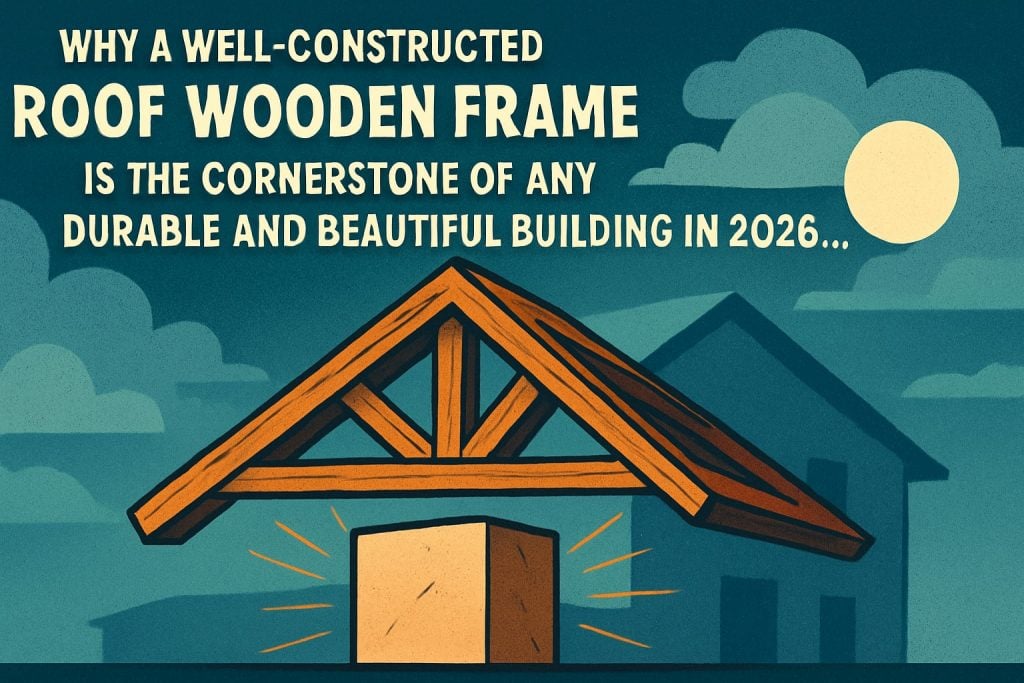
A strong, expertly crafted roof wooden frame is the foundation of every lasting and visually stunning building in 2026. As construction methods evolve, understanding the vital role of a roof wooden frame becomes essential for anyone seeking durability and beauty.
This guide offers expert insights into the essentials, innovations, and best practices for roof wooden frame construction. Homeowners, builders, and architects will gain the knowledge needed to make informed decisions.
Explore everything from timber selection and design principles to construction steps, sustainability, regulations, and ongoing maintenance. Discover why investing in the right roof wooden frame is the key to a secure, efficient, and attractive property.
Understanding Roof Wooden Frames: Types, Functions, and Benefits
The roof wooden frame is at the heart of every well-built property, providing both structural and aesthetic value. As we look towards 2026, understanding the essentials of these frames is increasingly important for anyone involved in construction or renovation. This section offers a comprehensive overview, helping you make informed choices about roof structure and design.
Overview of Roof Wooden Frame Structures
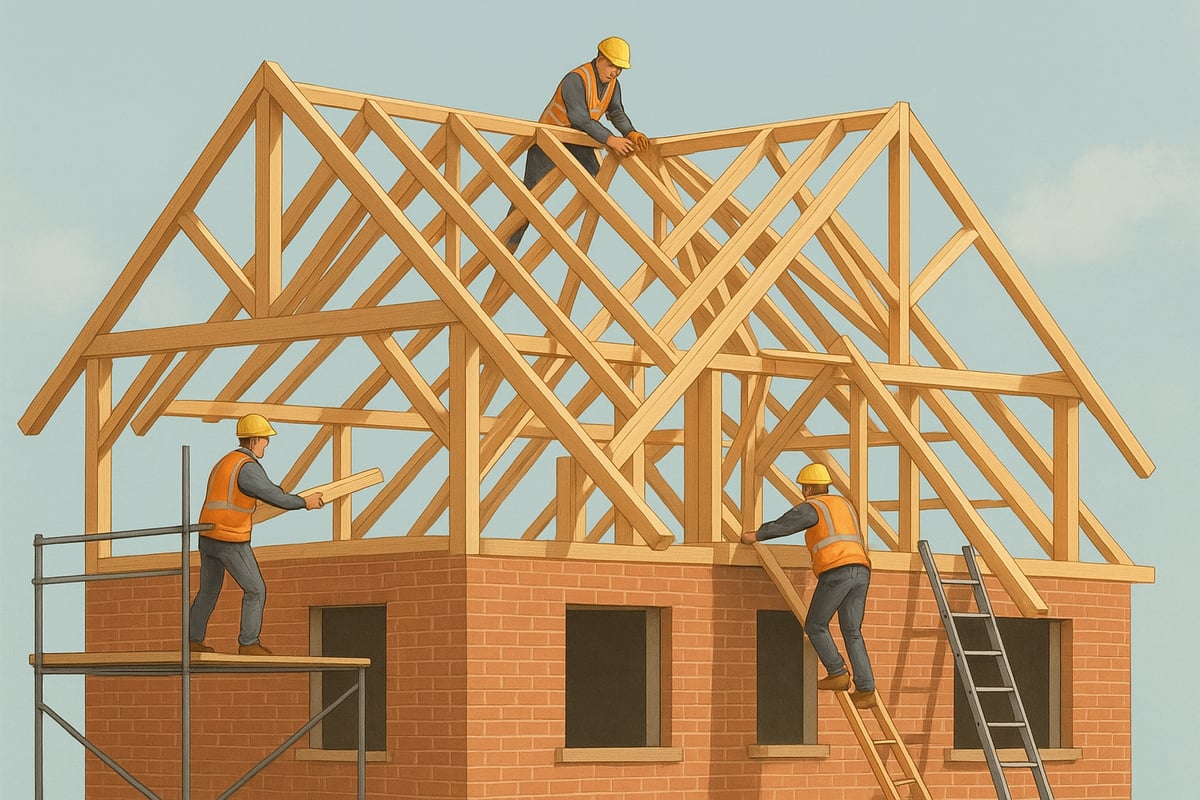
A roof wooden frame is the skeleton of a roof, made from carefully selected timber that supports the entire roofing system. The core components typically include rafters, trusses, purlins, wall plates, and bracing. These elements work together to transfer the roof load safely to the building’s walls.
Compared to steel and concrete alternatives, a roof wooden frame offers natural insulation properties and a lighter weight, making it easier to handle and install. Steel frames can provide higher strength for larger spans, while concrete is often chosen for flat roofs or fire-critical settings. However, timber remains the preferred choice in the UK for its balance of performance, sustainability, and visual appeal.
The main functions of a roof wooden frame are structural support, providing a base for insulation and roofing materials, and defining the architectural style of the building. By choosing the right frame design, you can optimise both performance and aesthetics for your specific project.
Types of Roof Wooden Frames
There are several common types of roof wooden frame designs, each suited to different building requirements. The king post truss features a central vertical post, ideal for simple pitched roofs. Queen post trusses, with two vertical posts, allow for wider spans and are often seen in larger homes. Scissor trusses create dramatic vaulted ceilings and are popular in open-plan spaces. Traditional rafter roofs, using individual beams, offer flexibility for bespoke designs.
Each type has its advantages and limitations. King post trusses are cost-effective but best for smaller spans. Queen post trusses provide more open space but require precise engineering. Scissor trusses deliver visual impact yet can be more complex to install. For a detailed comparison and visual examples, see Types of timber roof trusses.
In the UK, residential properties often use king post or traditional rafter frames, while commercial buildings may opt for queen post or scissor trusses to achieve larger open areas and unique architectural features.
Benefits of Wooden Roof Frames
Choosing a roof wooden frame brings several key benefits. Timber is a renewable resource, with modern forestry practices ensuring minimal environmental impact. Over time, roof wooden frames prove cost-effective due to their durability and lower installation costs compared to steel or concrete.
Aesthetically, timber frames offer warmth and character, fitting both traditional and contemporary styles. The material’s natural insulating properties contribute to energy efficiency, helping to reduce heating costs. Advances in timber treatment have significantly improved fire resistance, making modern roof wooden frames safer than ever before.
Architects and homeowners also appreciate the flexibility of timber, which can be customised to suit intricate roof shapes and design ambitions.
Market Trends and Data for 2026
The UK is witnessing a surge in demand for roof wooden frame construction, driven by the push for sustainable building materials and low-carbon homes. Industry statistics show a steady increase in timber frame adoption, especially in new residential developments. This trend is supported by government policies encouraging the use of renewable materials in construction.
Eco-conscious buyers now prioritise properties with timber elements, recognising the long-term value and positive environmental impact. Case studies from across the country highlight successful projects where roof wooden frames have delivered both performance and striking design.
By staying informed about these trends, you can ensure your project benefits from the latest innovations and best practices in roof wooden frame construction.
Timber Selection and Sourcing: Quality, Sustainability, and Cost
Selecting the right timber is a pivotal decision in any roof wooden frame project. The timber you choose affects the strength, longevity, and sustainability of the entire structure. Let us explore how to make informed choices, from species selection to sourcing, cost, and cutting-edge preservation techniques.
Choosing the Right Timber Species
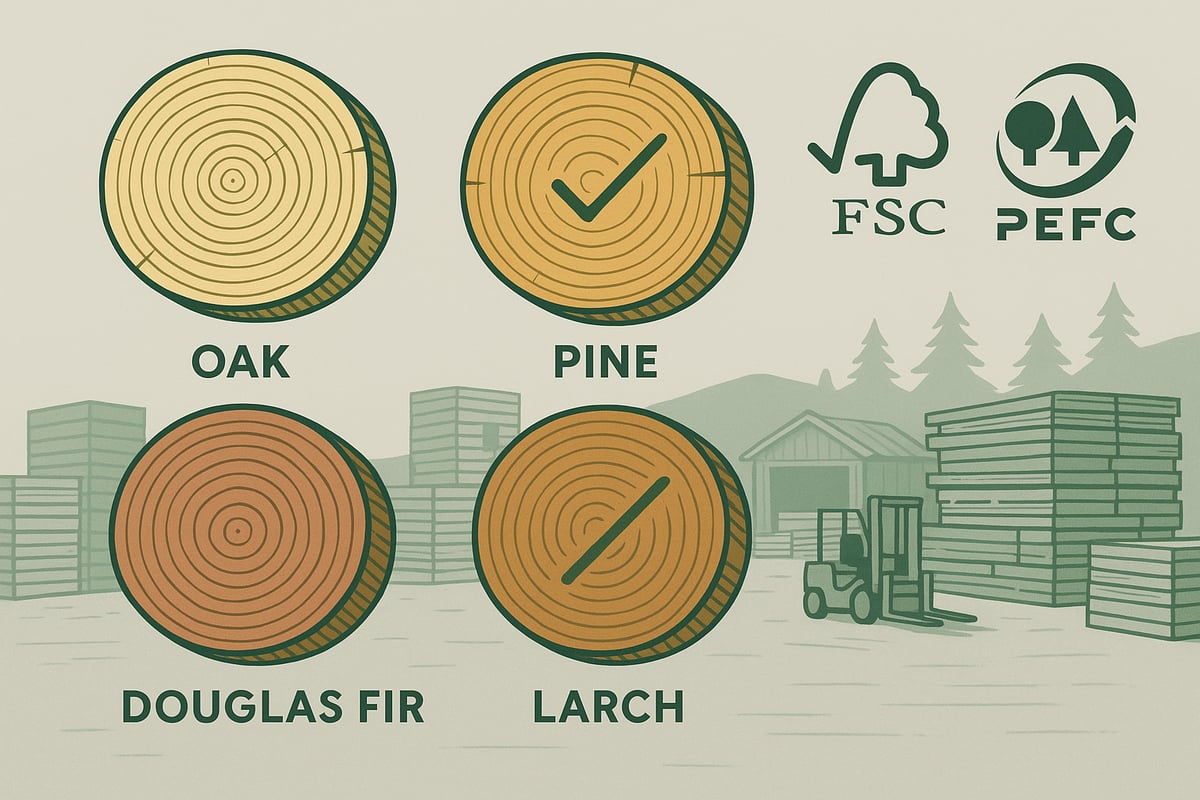
The foundation of a reliable roof wooden frame begins with selecting appropriate timber species. In the UK, oak, pine, Douglas fir, and larch are common choices. Each species offers unique characteristics:
| Species | Strength | Durability | Suitability for UK Climates |
|---|---|---|---|
| Oak | High | Excellent | Ideal |
| Pine | Moderate | Good | Widely used |
| Douglas Fir | High | Very Good | Suitable |
| Larch | Moderate-High | Good | Well-adapted |
Oak and Douglas fir are favoured for their strength, making them excellent for larger spans. Pine is economical and easy to work with, while larch offers natural resistance to decay. Moisture content is another critical factor, as timber must be properly dried and graded for structural use. For further details on timber grading, refer to this Timber selection and grading insights resource.
A well-chosen timber species ensures your roof wooden frame delivers the desired performance and longevity.
Sustainable Sourcing Practices
Sustainability is increasingly shaping the way roof wooden frame projects are planned and executed. Responsible forestry practices, such as those certified by FSC (Forest Stewardship Council) and PEFC (Programme for the Endorsement of Forest Certification), guarantee that timber is sourced with minimal environmental impact.
Opting for locally sourced timber reduces transportation emissions and supports regional forestry industries. This approach also ensures better traceability and often results in fresher, higher-quality wood. Sustainable sourcing not only protects forests but also enhances the reputation and value of the finished roof wooden frame.
When evaluating suppliers, look for transparency regarding origin, certifications, and harvesting methods. This diligence helps maintain ecological balance and meets the growing demand for green building solutions.
Cost Considerations and Budgeting
Budgeting for a roof wooden frame involves more than just the price of timber. Timber prices in 2026 are expected to remain stable, with modest increases due to higher demand for sustainable materials. Balancing upfront costs with long-term value is crucial for homeowners and builders alike.
Breaking down costs can help clarify the investment:
- Timber purchase (species and quantity)
- Treatment and certification
- Delivery and storage
- Labour for installation
For example, a typical UK residential roof wooden frame may allocate 60% of the budget to timber, 20% to treatment and transport, and 20% to labour. Investing in quality materials and treatments reduces maintenance and repair costs over time, ensuring better value for money.
Innovations in Timber Treatment and Preservation
Modern technology has revolutionised how we protect and preserve timber used in roof wooden frame construction. Advanced preservatives now offer enhanced resistance to decay, fungi, and insects, extending the lifespan of the structure.
Fire retardant treatments are increasingly specified, especially in compliance with UK building regulations. These treatments improve the fire resistance of timber without compromising its structural integrity. Many products now offer low-toxicity and environmentally friendly formulas, aligning with sustainability goals.
Technological advances also include treatments that reduce maintenance requirements, such as water repellents and UV protection coatings. By choosing the right combination of species and modern treatments, you can ensure your roof wooden frame remains robust and attractive for decades.
Design Principles and Planning for Roof Wooden Frames
Designing a roof wooden frame requires careful planning, technical insight, and an eye for both structural integrity and aesthetics. Every stage, from calculations to collaboration, shapes the final result. Whether you are building a new home or retrofitting an existing property, understanding these core principles will ensure your project stands the test of time.
Structural Design Considerations
A well-engineered roof wooden frame starts with precise structural planning. Key factors include load calculations for snow, wind, and live loads, each impacting the frame's durability. Span and pitch must balance strength with the desired architectural effect. Adjusting spacing between rafters optimises both stability and material efficiency.
Integrating insulation and ventilation into the roof wooden frame is essential for energy efficiency. Early planning allows for seamless installation of roof windows, skylights, and solar panels, reducing the need for costly adjustments later.
When selecting the type and size of timber, consider local climate and building use. For example, a steep pitch may be ideal in regions with heavy rainfall, while a shallow pitch offers a modern profile. Each design choice affects not just the performance of the roof wooden frame, but also its longevity and maintenance requirements.
Architectural Styles and Visual Impact
The roof wooden frame plays a defining role in a building’s visual character. Traditional designs, such as exposed oak beams and king post trusses, evoke warmth and heritage. Contemporary styles often use clean lines, open-plan layouts, and engineered timber for dramatic, airy spaces.
Choosing the right frame style influences not only the property’s appeal but also its market value. For example, visible timber frameworks in living areas can create a focal point, enhancing both ambience and resale price. Award-winning projects across the UK frequently showcase innovative uses of the roof wooden frame, blending classic craftsmanship with modern materials.
Consider how the frame complements other architectural features. Large windows, vaulted ceilings, and integrated lighting all interact with the roof wooden frame, shaping the overall impression. Good design harmonises function with form, ensuring that the structure is both practical and beautiful.
Planning and Regulatory Compliance
Navigating UK regulations is vital when developing a roof wooden frame. Compliance with building regulations, particularly Parts A (structure), B (fire safety), and L (energy efficiency), is mandatory. Requirements vary depending on the building type and location, so early research avoids costly delays.
Securing planning permission may be necessary for new builds or significant alterations. Local authorities assess factors such as appearance, height, and impact on neighbours. Detailed technical drawings and structural calculations are usually required. For an overview of the statutory requirements, consult the UK building regulations for timber frames.
Engaging with building control officers early in the process can smooth approvals. Keep in mind that rules can evolve, especially regarding fire resistance and energy standards. Proactive planning ensures your roof wooden frame meets all legal obligations and performs reliably for years to come.
Collaboration with Professionals
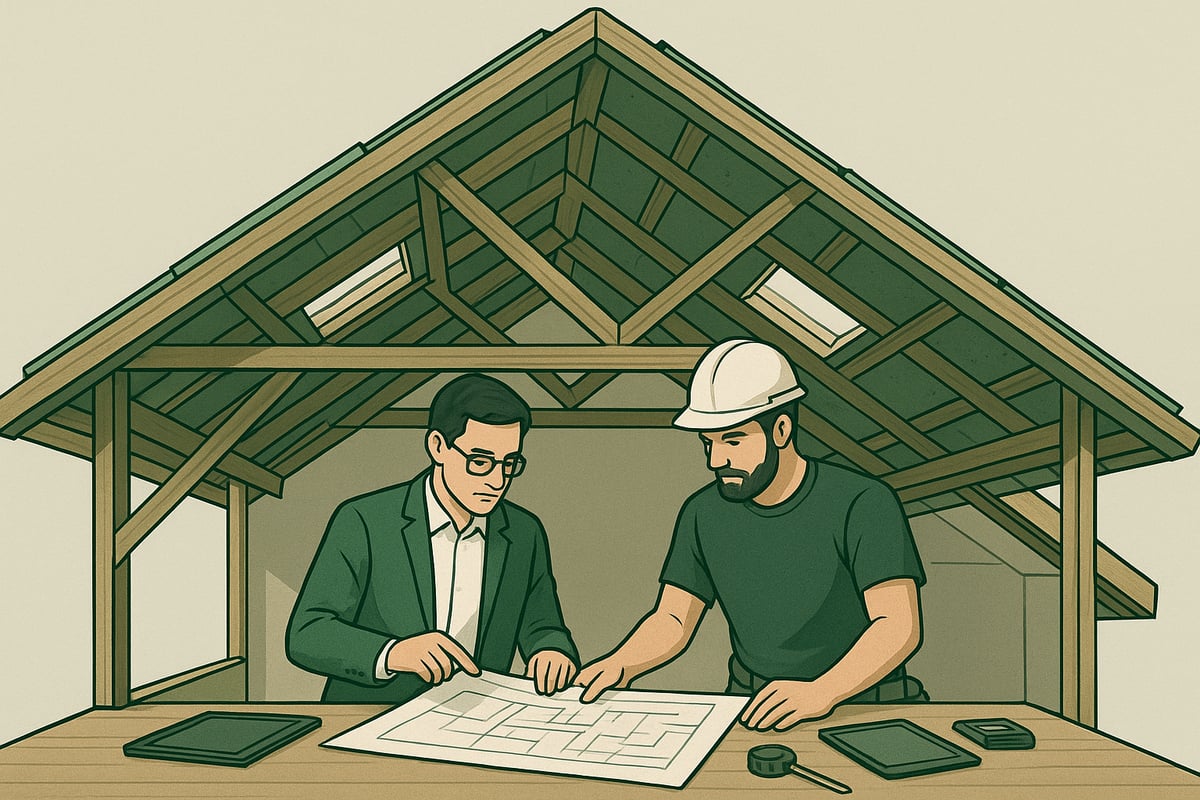
Bringing a roof wooden frame project to life requires teamwork. Architects design the overall form, ensuring the frame complements the building’s purpose and style. Structural engineers calculate loads and specify materials, while specialist timber framers handle fabrication and assembly.
Clear communication between professionals is crucial. Early sharing of drawings and specifications helps identify potential challenges before construction begins. This collaborative approach reduces the risk of errors, delays, and unexpected costs.
Involving experts from the outset ensures that every aspect of the roof wooden frame, from technical details to aesthetic choices, is considered. Their combined experience helps deliver a structure that is safe, efficient, and visually striking. Ultimately, investing in professional support pays dividends in quality and peace of mind.
Step-by-Step Construction Process for Roof Wooden Frames
A successful roof wooden frame project hinges on careful planning, skilled execution, and thorough inspection at every stage. Whether you are overseeing a new build or a renovation, following a methodical process ensures strength, safety, and longevity.
This section walks you through each key phase, from site preparation to final quality checks, helping you avoid common pitfalls and achieve a robust, high-performing structure.
Pre-Construction Preparation
Preparation lays the foundation for a smooth roof wooden frame build. Start by conducting a thorough site assessment to check ground stability, access points, and existing structures. This step is vital to identify any obstacles that could impact the project timeline or safety.
Organise the delivery schedule for all timber and materials. Store timber off the ground, under cover, and with proper airflow to prevent moisture absorption or warping. Inspect for damage before use.
Safety is paramount. Complete a detailed risk assessment, ensuring all workers understand site rules, personal protective equipment requirements, and emergency procedures. Set up barriers and signage to keep the work area secure.
Careful preparation reduces delays, helps control costs, and sets the stage for a durable roof wooden frame.
Frame Fabrication and Assembly
The fabrication stage is where your roof wooden frame takes shape, either off-site in a controlled environment or on-site for bespoke requirements. Off-site fabrication offers greater precision, quality control, and reduced weather delays, while on-site assembly allows for flexibility on unique projects.
Key steps include marking out all components, cutting timbers to exact lengths, and preparing joints such as mortise and tenon or using metal connectors. Each joint must be clean and secure to ensure structural integrity.
For an in-depth look at traditional and modern methods, see this Wooden frame construction techniques resource.
Quality checks at every stage are essential. Measure twice before cutting, and inspect all connections for tightness and alignment. This diligence prevents issues during later stages and maximises the lifespan of the roof wooden frame.
Erection and Installation
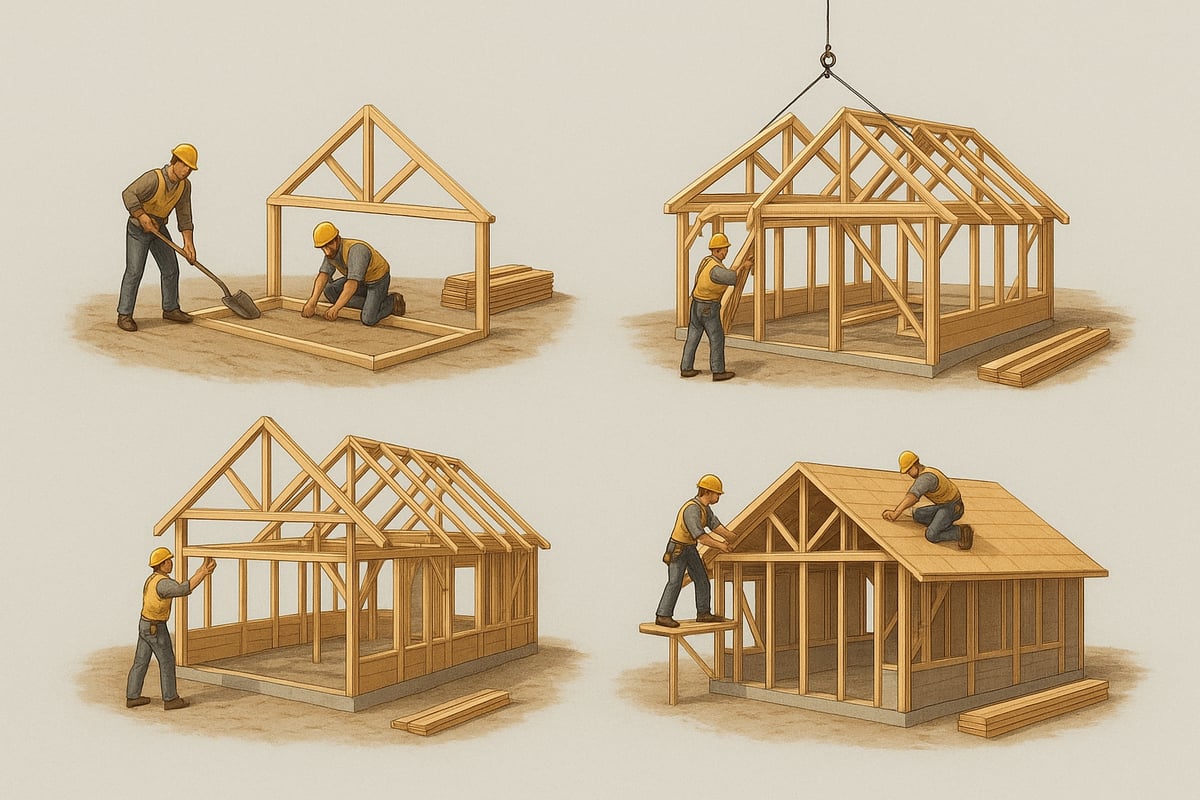
With components ready, the roof wooden frame is assembled on-site. Depending on the project size, use cranes for heavy trusses or manual lifting for smaller assemblies. Always follow safety procedures when handling large timbers.
The typical sequence involves setting the wall plate, followed by positioning trusses, rafters, purlins, and bracing. Each element supports the next, creating a stable framework.
Temporary supports should remain in place until the structure is fully braced and self-supporting. Check alignment frequently using levels and measuring tapes. Proper sequencing and support are crucial to prevent movement or collapse during this stage.
A well-executed erection process ensures the roof wooden frame can bear future loads and withstand the test of time.
Integration with Roof Coverings
Once the frame is secure, integrate sarking boards, breathable membranes, and battens. These layers protect the roof wooden frame from moisture, enhance insulation, and provide a base for tiles or slates.
Choose coverings compatible with your chosen frame design. Clay tiles, natural slate, and modern composite options each have unique requirements for batten spacing and fixings.
Pay careful attention to weatherproofing details, such as flashing around roof windows or chimneys. Ensure adequate ventilation beneath coverings to prevent condensation buildup, which can damage the roof wooden frame over time.
Thorough integration of coverings is vital for both performance and longevity.
Quality Assurance and Inspections
Quality assurance is the final safeguard for your roof wooden frame. Arrange building control inspections at key milestones, such as after frame erection and before roof coverings are applied.
Inspect for common issues:
- Misalignment of trusses or rafters
- Timber splits or cracks
- Inadequate or missing fixings
- Signs of moisture or pest damage
Address any defects promptly before proceeding. Maintain clear records of inspections, corrections, and approvals for future reference.
A rigorous inspection regime not only ensures compliance with UK regulations but also protects the investment in your roof wooden frame for years to come.
Innovations and Future Trends in Roof Wooden Framing (2026 Outlook)
The future of roof wooden frame construction is set to transform the built environment in the UK. As digital tools, sustainability targets, and new regulations converge, both the construction industry and homeowners can expect a wave of innovation shaping how roof wooden frame projects are designed, built, and maintained.
Technological Advancements
Technology is redefining what is possible with a roof wooden frame. In 2026, Building Information Modelling (BIM) and 3D modelling software are now standard tools, allowing architects and engineers to visualise and optimise every aspect of the frame before a single timber is cut.
Prefabrication is increasingly popular. Many roof wooden frame elements are now produced off-site under controlled conditions, ensuring higher precision and reducing waste. This approach allows for rapid on-site assembly, minimising weather-related delays.
Engineered timber products are also advancing. Glulam, Laminated Veneer Lumber (LVL), and Cross-Laminated Timber (CLT) enable complex designs and longer spans that were once only possible with steel. Smart monitoring systems, embedded in the roof wooden frame, track moisture and movement, enabling proactive maintenance and extending the frame’s lifespan.
- BIM for precise design and coordination
- Off-site prefabrication for speed and quality
- Engineered timber for strength and flexibility
- Smart sensors for ongoing frame health
These innovations make the roof wooden frame a forward-thinking choice for both residential and commercial buildings.
Sustainability and Net Zero Construction
Sustainability lies at the heart of the roof wooden frame’s appeal in the UK. Timber is renewable, stores carbon, and supports low-carbon construction targets. The government’s Timber in Construction Roadmap 2025 sets a clear strategy for increasing sustainable timber use, with incentives for net zero projects.
Circular economy principles are gaining traction. Designers now prioritise reusing and recycling timber from old structures, reducing waste and environmental impact. Responsible sourcing, including FSC and PEFC certification, is becoming standard.
As the industry moves toward net zero, the roof wooden frame remains a cornerstone of eco-friendly design, offering both performance and environmental benefits.
Evolving Building Standards
Building standards for the roof wooden frame are evolving rapidly. Updates to UK regulations are expected to further promote safety, efficiency, and sustainability in timber construction.
Fire safety is a priority, especially for multi-storey buildings. Modern treatments and construction techniques have improved the fire resistance of timber frames, making them suitable even for complex projects. Insurance providers and warranty schemes are adapting, recognising the reliability and performance of advanced roof wooden frame systems.
Navigating new regulations will require close collaboration with architects and building control officers. Early planning and compliance checks ensure that every roof wooden frame meets the latest standards for safety and sustainability.
Market Forecasts and Consumer Preferences
The outlook for the roof wooden frame market in 2026 is highly positive. According to the UK timber construction market forecast, demand for timber frames is set to rise as more homeowners, developers, and architects seek sustainable and visually striking solutions.
Open-plan layouts, exposed beams, and natural finishes are increasingly popular, influencing both new builds and renovations. Innovative projects, such as low-energy homes and commercial developments, showcase the versatility and enduring appeal of the roof wooden frame.
As market confidence grows and technology advances, the roof wooden frame is poised to become the preferred choice for future-focused construction across the UK.
Maintenance, Longevity, and Common Issues with Roof Wooden Frames
Regular maintenance is essential for the longevity and performance of any roof wooden frame. Proactive care not only preserves structural integrity but also ensures the roof remains safe, efficient, and attractive for decades. Understanding what to look for, how to address common challenges, and when to seek professional help can make all the difference for homeowners and property managers.
Routine Maintenance Tasks
A roof wooden frame requires regular attention to prevent deterioration and costly repairs. Begin each year with a comprehensive inspection, focusing on all visible timber elements, connections, and coverings.
Annual Maintenance Checklist:
- Examine all timber for signs of moisture, mould, or staining
- Check for splits, cracks, or warping in the wood
- Look for evidence of insect activity, such as small holes or frass
- Inspect joints, fixings, and metal connectors for corrosion or movement
- Ensure all insulation and ventilation pathways remain clear and effective
Cleaning is equally important. Remove dust, cobwebs, and debris from the roof wooden frame, especially in hard-to-reach corners. If the timber is exposed, consider applying a suitable preservative or re-painting as needed. Preventing insect and fungal attacks is crucial. Use products approved for timber protection, and always follow manufacturer recommendations for application and re-treatment intervals.
Addressing Common Problems
Even with diligent care, a roof wooden frame may develop occasional issues. Early detection and prompt repairs can prevent minor problems from escalating into major structural defects.
Common Issues Table:
| Issue | Signs to Watch For | Recommended Action |
|---|---|---|
| Splits or Cracks | Visible gaps in timber | Fill with specialist wood filler, monitor |
| Warping | Bowed or twisted beams | Assess cause, replace if structural risk |
| Rot | Soft, discoloured areas | Remove affected timber, treat surrounding |
| Condensation/Moisture | Damp patches, mould | Improve ventilation, check insulation |
| Pests (woodworm etc.) | Tiny holes, powder | Apply insecticide, replace damaged areas |
When splits or warping appear in a roof wooden frame, assess whether they compromise load-bearing capacity. Minor splits can often be filled, but extensive damage may need timber replacement. Rot typically results from moisture ingress, so addressing leaks and improving ventilation is vital. Condensation can be managed by upgrading insulation and ensuring air circulation. For pest infestations, specialist treatments and sometimes partial replacement of timber are required.
Longevity: How to Maximise Service Life
The lifespan of a roof wooden frame depends on initial build quality, ongoing maintenance, and timely upgrades. Proper installation, using graded and treated timber, is the foundation for durability.
To maximise longevity:
- Ensure the roof wooden frame was installed by qualified professionals
- Upgrade insulation and ventilation as building standards evolve
- Apply modern preservatives to exposed wood, especially after repairs
- Schedule regular inspections, particularly after severe weather
If you notice persistent issues, such as repeated moisture problems or widespread timber decay, consider whether partial or full replacement is needed. Sometimes, targeted upgrades—like adding vapour barriers or installing new ventilation systems—can significantly extend the service life of the structure. Always weigh the benefits of repair versus replacement based on the age, condition, and design of your roof wooden frame.
Cost of Repairs and Upkeep
Understanding the costs associated with maintaining a roof wooden frame helps with budgeting and planning. Typical repair costs in 2026 can range from £150 for minor crack filling to over £2,000 for extensive timber replacement or treatment of widespread rot.
DIY vs. Professional Maintenance Table:
| Task | DIY Feasible? | When to Call an Expert |
|---|---|---|
| Cleaning and minor painting | Yes | If working at height or unsure |
| Small split repairs | Sometimes | For structural timbers |
| Pest treatment | No | Always, due to health/safety |
| Major timber replacement | No | Always, requires expertise |
For simple cleaning and repainting, many homeowners can manage the work themselves. However, structural repairs, pest treatment, and major upgrades should always be handled by professionals to guarantee safety and compliance. Real-life maintenance schedules often include annual inspections, re-treatment every 3–5 years, and budget allowances for unexpected repairs. By planning ahead, property owners can ensure their roof wooden frame remains robust and reliable for years to come.
After exploring the essentials of roof wooden frames, from timber selection to the latest innovations and long term maintenance, you might be considering how to bring your own vision to life. Whether you are planning a bespoke oak garage, a striking new home, or simply want to ensure your next project is structurally sound and sustainable, partnering with true specialists makes all the difference. If you are ready to discuss your ideas or need expert guidance tailored to your requirements, we are here to help.
CONTACT US
Let us work together to create something exceptional for 2026 and beyond.


