
As we move towards 2026, energy efficiency and sustainability are becoming essential priorities for UK homeowners. Insulating a timber frame is now at the forefront of eco-friendly construction, offering a pathway to lower bills, greater comfort, and reduced carbon footprints. This comprehensive guide is designed for both homeowners and self-builders, providing the latest advice on insulating a timber frame to ensure optimal comfort, efficiency, and compliance with upcoming regulations. Discover why timber frames are gaining popularity, explore insulation options, follow a step-by-step process, and learn from expert tips to future-proof your home. Ready to create a warm, efficient, and sustainable living space? Let’s get started.
Understanding Timber Frame Construction and Its Insulation Needs
Timber frame buildings are rapidly gaining ground in the UK, thanks to their sustainability and flexibility. To fully appreciate why insulating a timber frame is essential, it helps to understand the unique structure and challenges these buildings present.
The Anatomy of a Timber Frame Structure
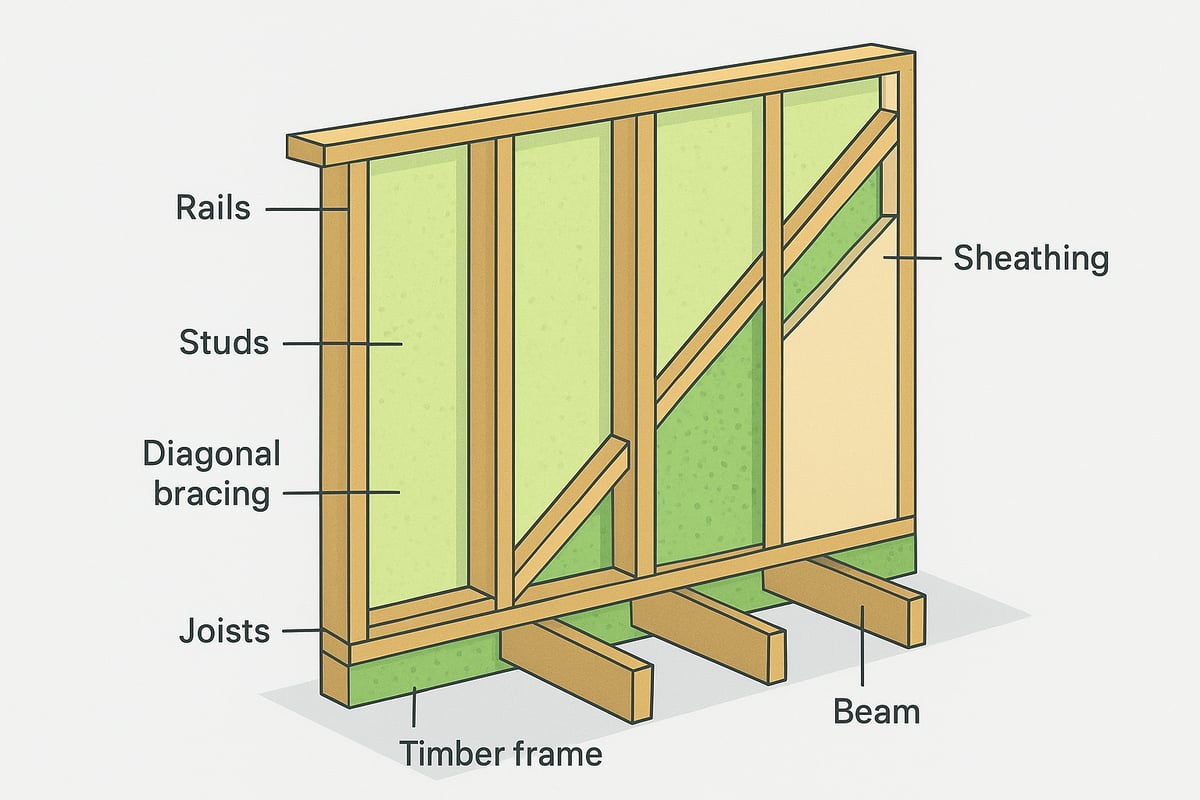
A timber frame consists of several key elements working together. Studs form the vertical support, while rails and joists provide horizontal stability. Beams help distribute loads, and diagonal bracing prevents movement. Sheathing is fixed on the outside, adding rigidity and helping to seal the structure.
Within these frames, insulation cavities are intentionally created. These spaces between studs and joists are where most of the insulating a timber frame process takes place. Unlike masonry construction, where insulation is often applied to solid walls, timber frames rely on well-planned cavities for thermal performance.
Modern UK self-builds now use advanced timber frame techniques, enhancing both structural integrity and insulation potential. For a deeper dive into these components, the Timber frame construction basics guide offers a comprehensive overview.
Why Insulation Is Critical for Timber Frames
Insulating a timber frame is vital because even small gaps between timber elements can lead to major heat loss. These gaps act as cold bridges, allowing heat to escape and reducing energy efficiency. Additionally, timber’s natural soundproofing is lower than masonry, so insulation also improves acoustic comfort.
Moisture is another significant concern. Timber is susceptible to damp and rot if not properly protected. Insulation acts as a barrier, helping to regulate humidity and prevent condensation inside the frame. Poor insulation can quickly lead to issues like mould growth and timber decay, as seen in cases where insufficient vapour control allowed moisture to accumulate.
Competitor data shows that effective insulation can reduce energy bills and a home’s carbon footprint significantly. This means that insulating a timber frame is not just about comfort, but also about protecting your investment and the environment.
Advances in Timber Frame Design for 2026
Looking ahead to 2026, the landscape for insulating a timber frame is evolving rapidly. New construction methods are emerging, with prefabricated panels and high-performance materials becoming standard. These advances make it easier to achieve airtightness and thermal efficiency.
Smart home integration is also influencing timber frame design. Energy monitoring systems can now track temperature and humidity inside walls, helping homeowners maintain optimal conditions and spot problems early. This technology supports proactive maintenance and ensures that insulating a timber frame delivers long-term benefits.
Expect future regulations to demand even higher insulation standards, making it crucial to stay informed about the latest techniques and materials. Embracing innovation today will help ensure your timber frame home remains comfortable, efficient, and compliant for years to come.
Key Insulation Materials for Timber Frame Buildings
Selecting the right materials is vital when insulating a timber frame. The choice impacts comfort, energy bills, and compliance with future regulations. Each insulation material offers unique benefits, so it is important to understand your options.
Fibreglass and Mineral Wool: The Traditional Choice
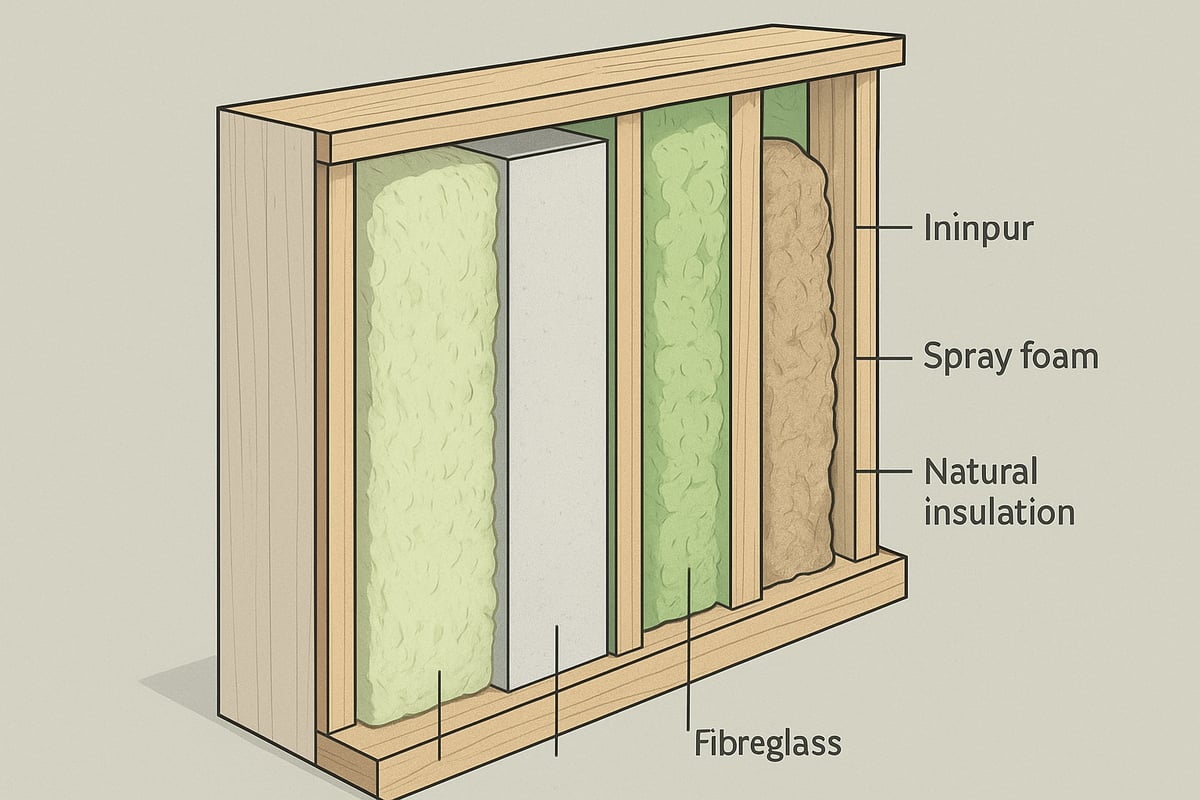
Fibreglass and mineral wool are established favourites for insulating a timber frame. Both materials come as batts or rolls, fitting snugly between timber studs to reduce thermal bridging. They are cost-effective and widely available across the UK.
Proper installation is essential with these materials. Any gaps or compression can undermine thermal performance, so care is critical. Mineral wool, in particular, offers good fire resistance and reliable acoustic insulation. Many UK homes use mineral wool in wall cavities for consistent results. If you are insulating a timber frame with these products, ensure a tight fit to maximise their effectiveness.
Rigid Foam Boards: Maximising Thermal Value
Rigid foam boards, such as PIR (polyisocyanurate) and XPS (extruded polystyrene), have become popular for insulating a timber frame due to their high insulation value per thickness. These boards can be used within the frame or as an external layer to boost overall performance.
They offer a slim profile, making them ideal where wall space is limited. However, handling and fire safety are important considerations, especially during installation. Boards must be cut accurately to avoid gaps, and any exposed foam should be protected according to building regulations. Many new UK builds rely on PIR boards to achieve excellent thermal efficiency when insulating a timber frame.
Spray Foam Insulation: Achieving Airtightness
Spray foam insulation is increasingly chosen for insulating a timber frame, especially in projects aiming for airtightness and high energy performance. There are two main types: open-cell and closed-cell. Open-cell offers excellent sound absorption, while closed-cell provides superior moisture resistance and strength.
The application process involves spraying the foam between studs, where it expands to fill gaps and hard-to-reach areas. This makes it an excellent solution for retrofits or awkward spaces. Although spray foam is more expensive, it can resolve draughts and improve airtightness dramatically. Many UK retrofit projects report significant comfort improvements after insulating a timber frame with spray foam.
Natural and Sustainable Insulation Options
For those prioritising sustainability, natural materials are a strong choice for insulating a timber frame. Options include sheep’s wool, cellulose, and wood fibre insulation. These materials are highly breathable, which helps regulate humidity and protect timber from moisture-related issues.
Sheep’s wool is naturally fire-retardant and easy to handle, while cellulose (made from recycled paper) offers good thermal and acoustic performance. Wood fibre boards are increasingly used in UK Passivhaus projects for their low embodied carbon and breathability. If you are aiming for an eco-friendly approach, these options pair well with modern timber frame designs.
Comparing Performance: U-Values and Environmental Impact
When insulating a timber frame, it is important to compare materials for thermal performance and environmental impact. U-values measure how well a material resists heat flow—the lower the value, the better the insulation.
| Material | Typical U-Value (W/m2K) | Embodied Carbon | Sustainability |
|---|---|---|---|
| Mineral Wool | 0.18–0.22 | Moderate | Good |
| PIR/XPS Boards | 0.13–0.18 | Higher | Moderate |
| Spray Foam | 0.16–0.20 | High | Variable |
| Wood Fibre | 0.14–0.19 | Low | Excellent |
Natural insulations like wood fibre and sheep’s wool tend to have lower embodied carbon than synthetic alternatives. For detailed advice on material selection and installation, the Timber frame wall insulation guide provides further insights for UK homeowners.
Step-by-Step Guide: How to Insulate a Timber Frame in 2026
Insulating a timber frame is a multi-stage process that requires careful planning, the right materials, and attention to detail. Follow this step-by-step guide to ensure your timber frame home meets the latest standards for warmth, energy efficiency, and longevity.
Step 1: Assessing Your Timber Frame and Planning the Insulation
Begin by thoroughly inspecting your timber frame. Look for any signs of moisture, gaps, or structural weaknesses that could compromise insulation. Use a checklist:
- Examine for water stains, rot, or mould on timber elements.
- Check all joints, corners, and service penetrations for air leaks.
- Use thermal imaging or an energy audit tool to spot cold bridges or existing insulation voids.
Assess any existing insulation and identify places where heat loss is most likely. When insulating a timber frame, planning is crucial for meeting 2026 Building Regulations. Determine the required insulation thickness for each wall, roof, and floor area. Consider using a simple table to record U-value targets and planned material thickness.
| Area      | U-Value Target (W/m²K) | Planned Insulation Thickness (mm) |
|-----------|------------------------|-----------------------------------|
| External Wall | 0.18                   | 140                               |
| Roof      | 0.13                   | 250                               |
| Floor     | 0.15                   | 120                               |
Careful assessment and planning at this stage will help avoid costly mistakes and ensure the best results when insulating a timber frame.
Step 2: Choosing the Right Insulation Material
Selecting the ideal insulation for your project depends on climate, budget, and sustainability goals. Options include:
- Mineral wool or fibreglass for cost-effective, reliable performance.
- Rigid PIR or XPS foam boards for maximum insulation in slim profiles.
- Natural materials like wood fibre or sheep’s wool for eco-friendly, breathable builds.
- Spray foam for achieving airtightness in complex areas.
When insulating a timber frame, always consider compatibility with vapour barriers and airtightness systems. For example, if you want a thin wall build-up, PIR boards are often preferred. For a low-carbon home, wood fibre may be the best fit.
Check the insulation’s fire safety, handling requirements, and environmental impact before making your choice. A good match ensures high thermal performance and future compliance.
Step 3: Preparing the Frame and Creating an Airtight Layer
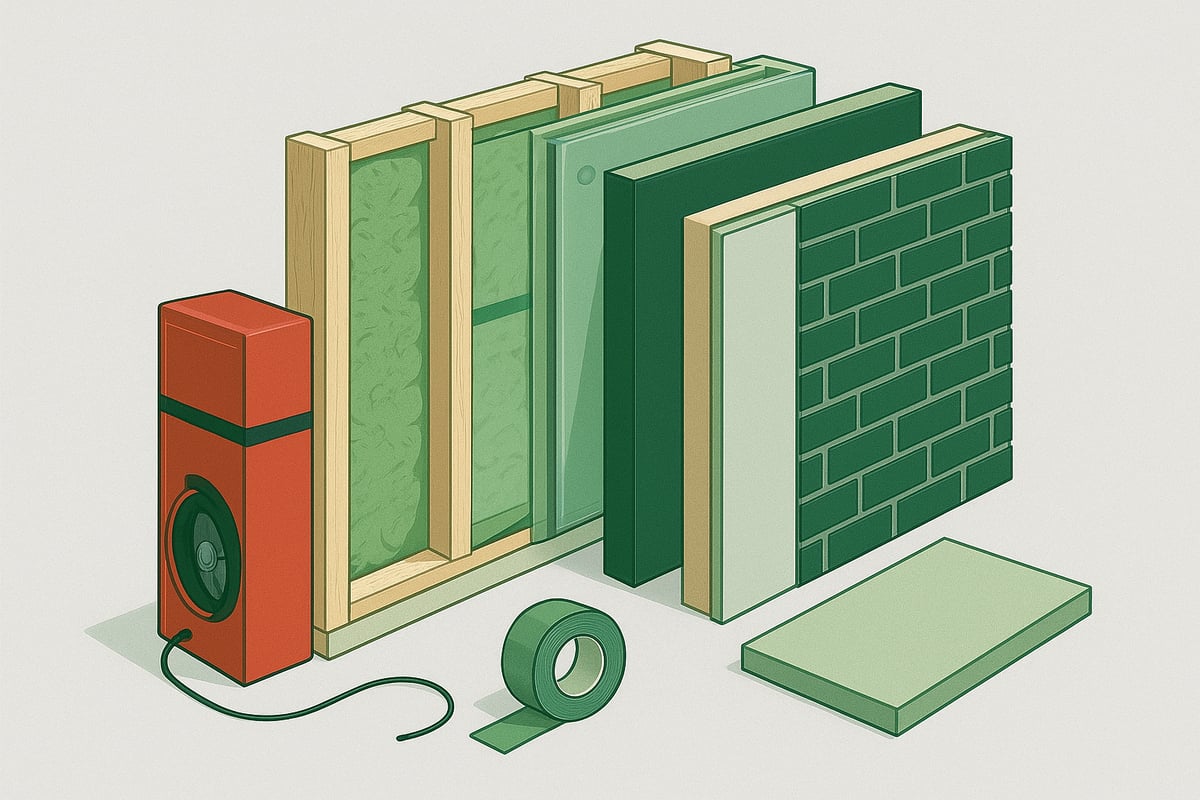
Before installing any insulation, it is essential to seal all gaps and service penetrations. Use expanding foam, airtight tape, or gaskets around windows, doors, and cable or pipe entries. This step is vital for insulating a timber frame effectively.
Install an airtightness membrane, making sure it is continuous across all elements. Overlap and tape all joints, corners, and connections with care. Sequencing is important: complete this airtightness layer before adding insulation.
Airtightness not only helps prevent heat loss but also protects against moisture problems. Take your time to get this stage right, as it lays the foundation for the rest of the process.
Step 4: Installing Insulation within the Frame
With your frame sealed and airtight, move on to fitting insulation snugly between the studs. The method depends on the material:
- Mineral wool: Friction-fit between studs, avoiding compression.
- Rigid boards: Cut to size and fix tightly, sealing edges with tape or foam.
- Spray foam: Applied by professionals to fill every gap.
When insulating a timber frame, pay close attention to detail around electrical boxes, pipes, and other services. Avoid leaving any gaps or compressing the insulation, as this reduces effectiveness. Where possible, stagger joints between layers for better coverage.
Take regular measurements, and use offcuts to fill small spaces. Consistent, gap-free installation is key for both thermal and acoustic performance.
Step 5: Adding Additional Layers (External/Internal)
To achieve higher energy standards, consider adding further insulation layers. External insulation boards can be fixed to the outside of the timber frame, followed by weatherproof cladding. This method improves thermal performance and reduces cold bridging.
Internally, insulated plasterboard or a service void filled with additional insulation can boost performance. Use insulated connectors and thermal breaks at junctions to limit heat loss.
When insulating a timber frame for 2026 standards, layering is often necessary to reach target U-values. Plan each layer to ensure compatibility and a continuous insulation envelope.
Step 6: Installing Vapour Barriers and Managing Moisture
Once insulation is in place, install a vapour barrier on the warm side of the wall or roof. This prevents moisture from the living space reaching the cold side and causing condensation. Use a high-quality membrane and tape all joints, overlaps, and penetrations meticulously.
Address risk areas such as wall/floor junctions or around windows, where cold spots can develop. Proper vapour control is essential when insulating a timber frame, especially in the UK’s damp climate.
If using natural insulation, ensure the system remains breathable. Some eco-materials work best with vapour-open membranes, so always check compatibility.
Step 7: Final Checks and Quality Assurance
Before finishing, carry out a blower door test to check the airtightness of your insulated timber frame. Inspect all insulation for continuity and check that vapour barriers are sealed everywhere.
Refer to industry guidelines such as the NHBC Standards for External Timber Framed Walls to verify compliance with UK regulations. This step is vital for ensuring long-term performance and warranty coverage.
Common mistakes include missing insulation at wall or floor junctions, poorly taped membranes, or gaps in the insulation. Double-check every detail. Taking the time now guarantees a warm, energy-efficient, and future-proof home.
Building Regulations and Energy Standards for Timber Frame Insulation in 2026
As the UK accelerates towards a low-carbon future, building regulations for insulating a timber frame are evolving rapidly. The next wave of standards, set for 2026, will significantly impact how homeowners and self-builders approach energy efficiency. Understanding these changes is crucial for anyone planning to build or upgrade a timber frame home.
UK Building Regulations: Current and Upcoming Changes
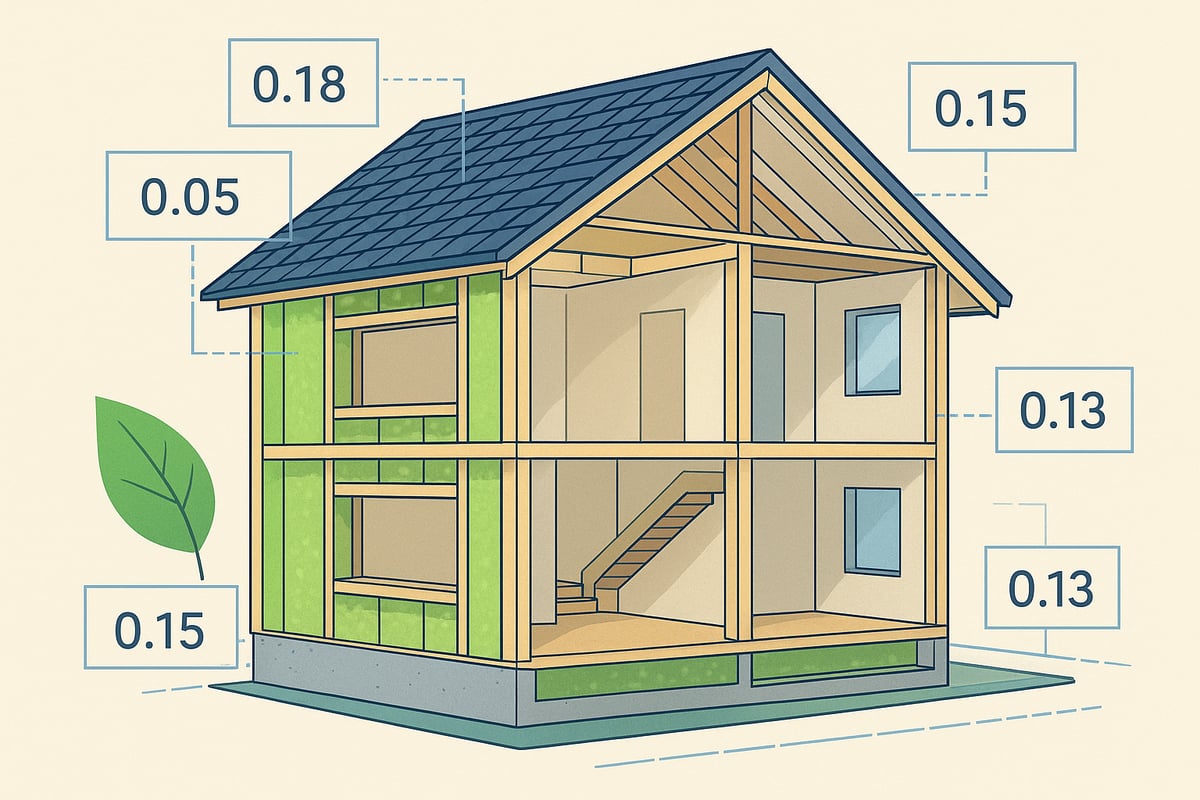
The current UK Building Regulations, specifically Part L, set out strict demands for thermal performance in new homes. For insulating a timber frame, these rules dictate maximum U-values for each building element. By 2026, these U-value limits are expected to become even tougher, challenging self-builders to deliver better insulation and airtightness.
A summary of anticipated U-value targets:
| Element | Current U-value (W/m²K) | 2026 Target (W/m²K) |
|---|---|---|
| Walls | 0.18 | 0.15 |
| Roofs | 0.13 | 0.11 |
| Floors | 0.18 | 0.13 |
These tightening standards reflect the government’s ambitions under the Future Homes Standard. For a detailed look at what this means for timber frame construction and insulation, see Future Homes Standard and Timber Frame Buildings.
Insulating a timber frame to meet these new requirements means careful specification of materials and installation methods, as well as planning for future upgrades as regulations continue to evolve.
Compliance Strategies for Self-Builders and Renovators
For those insulating a timber frame, demonstrating compliance is as important as achieving high performance. All new and renovated homes must provide evidence to Building Control that insulation meets or exceeds the 2026 standards.
Key steps include:
- Completing SAP calculations to model energy use and heat loss.
- Documenting insulation type, thickness, and installation details.
- Providing product certifications and installer credentials.
- Using energy modelling software to assess performance before and after works.
Modern timber frame homes already employ these strategies, often exceeding minimum requirements by integrating advanced materials and smart energy monitoring. Retrofitting existing frames also demands careful attention—thermal imaging can help identify cold spots and verify the effectiveness of upgrades.
Insulating a timber frame to these levels not only ensures compliance but also enhances comfort, reduces bills, and future-proofs the property against further regulatory tightening.
Navigating Certification and Warranties
Certification and warranties are vital safeguards when insulating a timber frame. Third-party certifications, such as BBA or NHBC, provide assurance that materials and systems meet rigorous standards. These certificates are often required by Building Control and mortgage lenders for both new builds and major renovations.
When selecting insulation products, always check for valid certification. For new timber frame homes, a structural warranty typically covers defects in materials and workmanship, including insulation. Retrofit projects may also qualify for specialist warranties, particularly if using approved installers.
Proper documentation of certification and warranty details is essential. This not only protects your investment but also supports resale value and simplifies future upgrades. Insulating a timber frame with certified systems is a key step towards long-term energy efficiency and regulatory compliance.
Common Mistakes and How to Avoid Them When Insulating Timber Frames
Insulating a timber frame offers great energy efficiency, but poor execution can lead to costly problems. Even small errors can undermine comfort and long-term performance. Let’s look at the most frequent pitfalls and how to avoid them for a robust, future-proof result.
Overlooking Airtightness and Vapour Control
One of the leading mistakes when insulating a timber frame is neglecting airtightness. If joints and service penetrations are not sealed, warm air escapes and moisture can enter the structure. Missing or incorrectly placed vapour barriers often lead to condensation, which promotes mould and rot. Always place the vapour barrier on the warm side and tape all seams thoroughly. For more insights, see Avoiding common timber frame mistakes. Proper planning and attention to detail at this stage are essential for a healthy, durable home.
Poor Installation and Gaps in Insulation
Even the highest quality materials fail if not installed correctly. Gaps, compression, or loosely fitted insulation between studs allow cold spots and heat loss. Mineral wool must be friction-fit, while rigid boards require tight joints. Use thermal imaging to spot missed areas. When insulating a timber frame, always double-check for consistent coverage, especially around windows, doors, and service runs. Regular site checks help prevent costly rework and ensure your investment pays off.
Ignoring Thermal Bridging
Thermal bridging occurs when heat bypasses insulation via structural elements like metal fasteners or timber studs. If not addressed, these bridges create cold spots and reduce overall efficiency. To avoid this when insulating a timber frame, consider using insulated connectors and adding a continuous insulation layer externally or internally. Detailing at junctions, such as wall-to-floor connections, is crucial. Always follow design guidance to minimise bridges and maintain consistent thermal performance.
Incompatible Materials and Moisture Traps
Mixing insulation types with different vapour permeability can trap moisture inside the wall, risking timber decay. For historic or sensitive properties, consult trusted resources like Historic England’s Guide on Insulating Timber-Framed Walls. When insulating a timber frame, select materials with compatible breathability and ensure moisture can escape safely. Check that all layers are suitable for your building’s construction and local climate.
Not Planning for Services and Future Upgrades
A common oversight is failing to coordinate insulation with plumbing and electrical runs. Cutting or compressing insulation to fit services leaves gaps that compromise performance. When insulating a timber frame, plan service voids and allow space for future upgrades, such as additional cabling or smart technology. Document all installations and keep as-built records to simplify future improvements and avoid accidental damage.
Expert Tips and Innovations for Future-Proof Timber Frame Insulation
Future-proofing your approach to insulating a timber frame means staying ahead of regulations and technology. The next wave of innovation will help you achieve comfort, efficiency, and long-term value for your home.
Embracing Smart Home Integration and Monitoring
Smart home technology is reshaping how we manage energy in timber frame buildings. By integrating sensors for temperature, humidity, and air quality, you can gain real-time insights into your home's performance. This allows precise adjustments, optimising comfort and efficiency.
For those insulating a timber frame, smart systems help detect areas of heat loss or moisture build-up early. These tools also support compliance with evolving standards, ensuring your insulation remains effective as regulations tighten. Monitoring systems can notify you of any issues, helping maintain the integrity of your investment.
Advanced Insulation Systems and Prefabrication
Innovative construction methods like Structural Insulated Panels (SIPs) and prefabricated wall systems are transforming timber frame insulation. These solutions combine structure and insulation in a single, highly efficient layer. Hybrid systems, which pair traditional frames with advanced panels, offer flexibility and superior performance.
Modular timber frame builds are also gaining ground, with factory-installed insulation reducing site work and minimising errors. If you are insulating a timber frame using these methods, you benefit from consistent quality and speedier build times. For inspiration and best practices, explore Modern timber frame home design to see how UK projects are embracing these innovations.
Designing for Passive House and Net Zero
Achieving ultra-low U-values and airtightness is essential for Passive House or Net Zero certification. Insulating a timber frame to these standards means careful detailing, robust vapour control, and continuous insulation. Typical Passivhaus projects in the UK target U-values below 0.15 W/m²K, demanding high-performance materials and installation precision.
Recent research, such as the Experimental Verification of Thermal Insulation in Timber Framed Walls, highlights how material choice impacts thermal performance. Use these insights to select products that deliver both energy savings and occupant comfort. Always verify compatibility with your chosen construction approach.
Sustainable Materials and Circular Construction
Sustainability is at the forefront of modern building practices. When insulating a timber frame, consider bio-based and recycled materials like sheep’s wool, cellulose, or wood fibre boards. These options regulate humidity naturally and often have lower embodied carbon compared to synthetic alternatives.
Circular construction techniques focus on materials that can be reused or recycled at the end of their life. Sourcing wood fibre insulation from UK forestry by-products supports local industry and reduces environmental impact. Evaluate lifecycle benefits when making your insulation choices.
Maintenance and Longevity of Insulated Timber Frames
Regular maintenance is vital for ensuring ongoing performance. After insulating a timber frame, schedule annual inspections to check for signs of moisture ingress, settlement, or damage to vapour barriers.
Address any issues promptly to prevent long-term deterioration. Over time, you may need to upgrade insulation as standards evolve. Keeping detailed records of your insulation system makes future improvements easier and helps with warranty claims if needed.
Cost vs Value: Investment Payback and Property Value
Investing in high-quality insulation pays off quickly. Insulating a timber frame can reduce energy bills by up to 40 percent, according to industry data. While upfront costs may be higher for advanced materials or systems, the long-term savings and improved comfort are significant.
High-performance insulation also increases your property’s resale value. Prospective buyers increasingly seek homes meeting or exceeding future energy standards, making your investment more attractive in a competitive market.
| Insulation Type | Upfront Cost | Energy Savings | Environmental Impact |
|---|---|---|---|
| Mineral Wool | Low | Moderate | Moderate |
| PIR/XPS Boards | Medium | High | Moderate |
| Wood Fibre/Cellulose | Medium | High | Low |
| Spray Foam | High | High | Variable |
Working with Timber Frame Experts
Collaborating with experienced professionals is crucial. When insulating a timber frame, consult designers, insulation specialists, and timber framers with a proven track record. Their expertise ensures compliance with regulations and helps avoid common pitfalls.
Experts can advise on the best materials and techniques for your specific needs. This collaboration guarantees a robust, future-proof solution that stands the test of time. Engaging professionals early in the process leads to better outcomes and peace of mind.
As you look ahead to making your timber frame home warmer, more efficient, and ready for the evolving standards of 2026, remember that expert guidance can make all the difference. With so many insulation materials, regulations, and techniques to consider, having a specialist by your side ensures every detail is covered—from airtightness to long term durability. At Acorn to Oak Framing, we combine traditional craftsmanship with the latest sustainable solutions, so your bespoke build isn’t just beautiful—it’s built to last. If you’re ready to take the next step, let’s start planning your project together: BUILD NOW


