
A timber frame porch represents far more than a simple entrance to your home. It serves as an architectural statement piece that combines traditional British craftsmanship with contemporary functionality, creating a welcoming transition between outdoor and indoor living spaces. Whether you're considering adding character to a new build or enhancing the kerb appeal of an established property, understanding the design principles, construction methods, and long-term benefits of timber frame porches enables you to make informed decisions that will elevate your property for decades to come.
Understanding Timber Frame Porch Construction
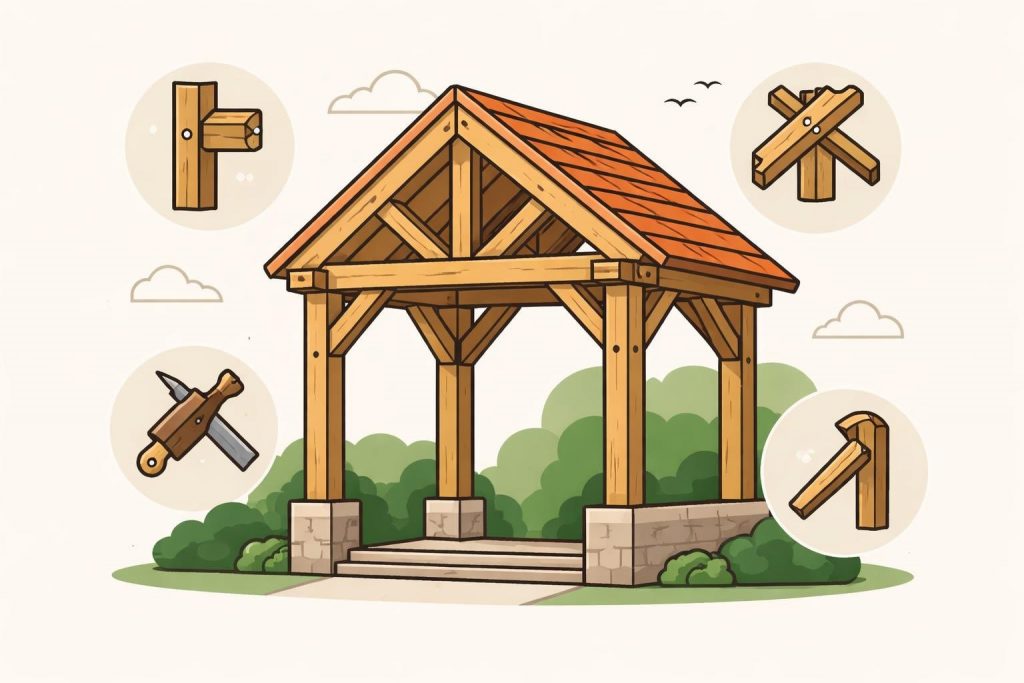
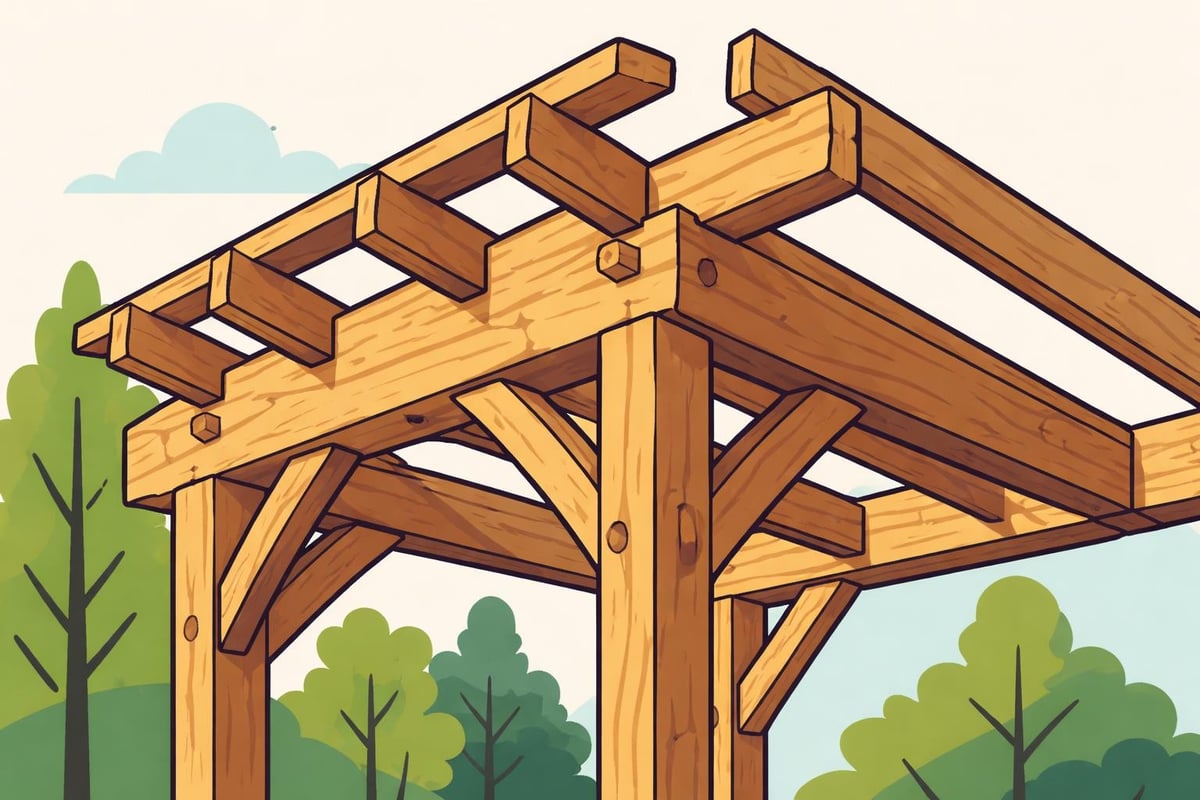
The fundamental appeal of a timber frame porch lies in its structural honesty. Unlike modern construction methods that conceal load-bearing elements, timber framing proudly displays the posts, beams, and braces that support the structure. This approach creates visual interest whilst demonstrating exceptional engineering principles perfected over centuries.
Traditional timber frame construction relies on mortise and tenon joints, secured with oak pegs rather than metal fixings. These joints allow the timber to expand and contract naturally with seasonal changes, ensuring structural integrity regardless of weather conditions. The absence of metal connectors means there's no risk of corrosion, contributing to the remarkable longevity these structures achieve.
Primary Structural Components
Every timber frame porch comprises several essential elements working in harmony:
- Principal posts: vertical load-bearing timbers anchored to foundation pads
- Head plates: horizontal beams connecting the tops of posts
- Tie beams: cross-members that prevent outward spread
- Braces: diagonal members providing lateral stability
- Rafters: roof support timbers that distribute weight evenly
- Ridge beam: the uppermost horizontal timber supporting the roof apex
The sizing of these components depends on the porch dimensions and anticipated loads. A typical domestic porch might use 150mm × 150mm posts, whilst larger structures require 200mm × 200mm or greater sections.
Design Considerations for Your Timber Frame Porch
Planning a timber frame porch requires careful thought about both aesthetic preferences and practical requirements. The structure should complement your existing architecture whilst fulfilling specific functional needs.
Scale and Proportion
Matching the porch scale to your property prevents the addition from appearing awkwardly oversized or disappointingly diminutive. As a general guideline, porch width should relate to the door opening it shelters. A standard front door (900mm wide) typically suits a porch between 2.4m and 3.0m wide, allowing comfortable passage whilst maintaining visual balance.
Height considerations prove equally important. The roof pitch should harmonise with existing building angles, and overall porch height must provide adequate headroom (minimum 2.1m) whilst respecting the proportions of adjacent windows and architectural features. Understanding ceiling heights and spatial relationships ensures your porch enhances rather than overwhelms your property's character.
| Design Element | Recommended Dimension | Purpose |
|---|---|---|
| Minimum width | 2.4m | Comfortable access |
| Standard depth | 1.5m – 2.5m | Weather protection |
| Headroom clearance | 2.1m minimum | Comfortable passage |
| Post spacing | 2.0m – 3.0m | Structural stability |
| Roof overhang | 300mm – 450mm | Water deflection |
Roof Design Options
The roof significantly influences both appearance and performance. Common configurations include:
Gable roofs create traditional symmetry, shedding water effectively to both sides. This design works particularly well for wider porches where a single-pitched roof might appear visually heavy.
Lean-to roofs attach directly to the main building, offering simplicity and cost-effectiveness. They suit narrower porches and maintain clean lines against the existing facade.
Hipped roofs incorporate slopes on all sides, providing superior weather protection and an elegant, finished appearance from every angle. This option requires more complex carpentry but delivers exceptional durability.
Timber frame roof design considerations encompass factors like snow load capacity, ventilation requirements, and insulation specifications that affect long-term performance.
Material Selection and Specifications
Timber species selection fundamentally impacts both appearance and longevity. British oak remains the premium choice for timber frame porches, offering unmatched durability and distinctive grain patterns that develop rich patina over time.
Oak Characteristics
Green oak arrives freshly cut with high moisture content (approximately 40-60%). As it seasons naturally within the completed structure, the timber shrinks, tightening joints and creating an extraordinarily strong frame. This movement forms part of the timber's character, with surface checking (small splits) appearing as a natural consequence of the drying process without compromising structural integrity.
Air-dried oak reduces moisture content through extended storage (typically 18-24 months), minimising movement after installation. This option suits situations where dimensional stability takes priority over initial cost savings.
Sustainability credentials make oak particularly appealing for environmentally conscious homeowners. Responsibly sourced British oak comes from managed woodlands where selective harvesting promotes forest health. Each tree removed creates space for younger specimens to flourish, ensuring continuous timber production for future generations.
Treatment and Finishing
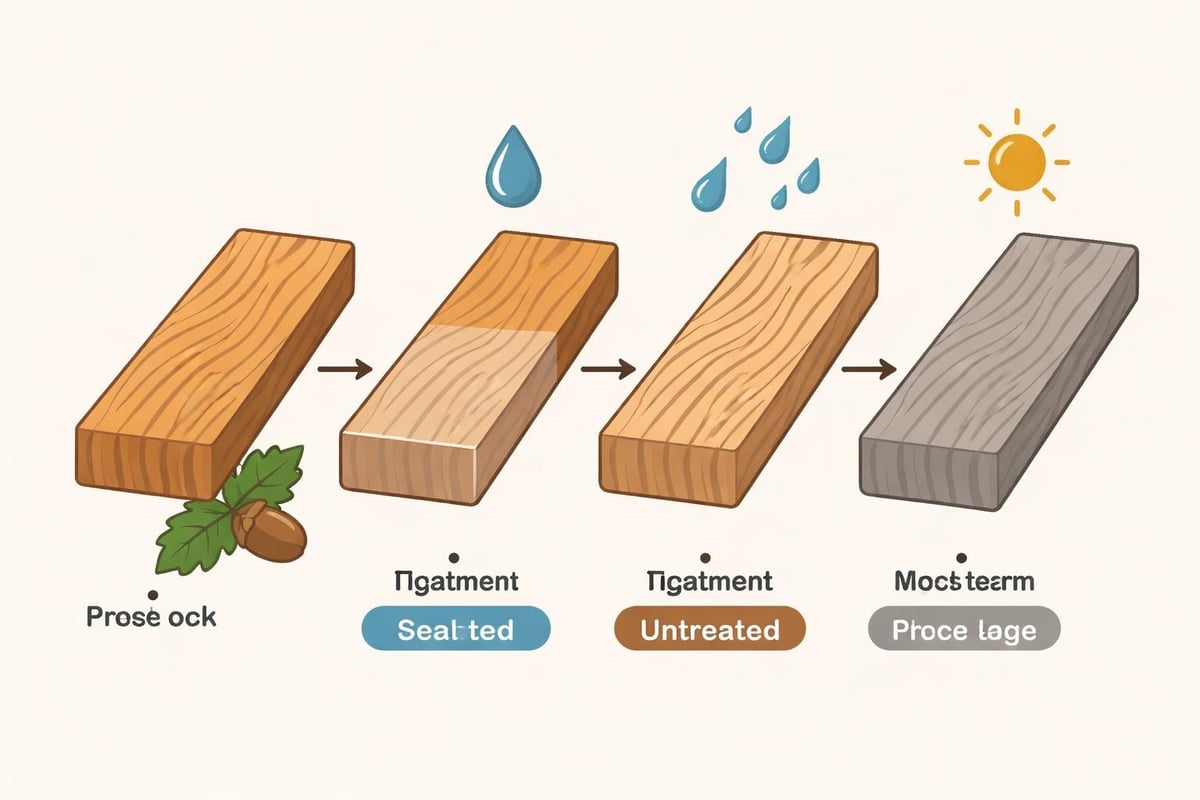
Opinions differ regarding oak treatment. Many traditionalists prefer leaving oak untreated, allowing natural weathering to develop a silver-grey patina that many find attractive. This approach requires no maintenance and demonstrates oak's inherent resistance to decay.
Alternatively, applying specialist wood treatments preserves the golden honey tones associated with freshly sawn oak. These products require reapplication every 2-3 years but maintain the timber's original colouration indefinitely.
The decision ultimately reflects personal preference, though both approaches deliver exceptional service life when proper detailing prevents water accumulation in joints and on horizontal surfaces.
Construction Process and Timeline
Building a timber frame porch follows a methodical sequence ensuring structural soundness and weather-tight performance. Professional installation typically requires 3-5 days for standard designs, though bespoke configurations may extend this timeframe.
Foundation Preparation
Proper foundations prove critical for long-term stability. Most timber frame porches utilise concrete pad foundations positioned beneath each post location. These pads distribute loads into the ground whilst remaining independent from the main building foundation, preventing differential settlement issues.
Foundation depth varies according to ground conditions but typically extends 450mm-600mm below finished ground level, positioned below the frost line to prevent heave during cold weather. Each pad incorporates a steel dowel or post base connector, providing secure anchorage whilst elevating timber clear of ground moisture.
Frame Assembly Methods
Two principal assembly approaches exist:
- On-site construction: craftsmen cut and fit joints at your property, assembling the frame piece by piece
- Pre-fabrication: the frame is assembled, numbered, and test-fitted at the workshop before disassembly, transport, and final installation
Pre-fabrication offers several advantages including weather-independent joinery work, reduced on-site disruption, and quality control through test assembly. This method particularly suits complex designs where precise fitting requires controlled workshop conditions. Companies like Acorn to Oak Framing often utilise this approach to ensure exceptional quality standards.
Roofing Installation
Once the timber frame stands complete, roofing work commences. Installing timber frame porch roofs involves several sequential steps:
- Installing roof decking (typically tongue-and-groove boarding or OSB sheathing)
- Applying breathable membrane for weather protection
- Installing battens to create ventilation space
- Fixing chosen roof covering (tiles, slate, or alternative materials)
- Installing fascias, soffits, and guttering systems
Proper ventilation within the roof structure prevents condensation accumulation that could compromise timber or insulation performance. This typically requires 25mm air gaps maintained throughout the roof void.
Benefits of Choosing a Timber Frame Porch
Investing in a timber frame porch delivers advantages extending well beyond simple weather protection at your entrance. These benefits encompass practical, aesthetic, and financial considerations that justify the initial investment many times over.
Durability and Longevity
Properly constructed timber frame porches routinely exceed 100-year service lives. Medieval timber frame buildings throughout Britain demonstrate oak's exceptional longevity, with many structures approaching their 600th year whilst remaining structurally sound. Your porch represents a permanent addition rather than a temporary improvement requiring eventual replacement.
This durability stems from oak's natural resistance to biological decay. The timber contains tannins that deter insect attack and fungal growth, particularly when detailing ensures moisture sheds rapidly from all surfaces. Unlike materials requiring periodic replacement, timber frames actually strengthen over time as the oak seasons and joints tighten.
Enhanced Property Value
Estate agents consistently report that well-designed porches significantly enhance perceived property value, often generating returns exceeding the installation cost. Multiple compelling reasons support timber frame porch investment, including immediate kerb appeal improvement and the desirability of traditional craftsmanship in today's property market.
Beyond monetary value, timber frame porches deliver lifestyle benefits. The sheltered space creates a transition zone perfect for removing muddy boots, storing outdoor equipment, or enjoying morning coffee whilst protected from light rain. This functional middle ground between garden and home proves invaluable throughout the British climate's varied conditions.
Maintenance Requirements and Care
One particularly appealing aspect of timber frame porches involves their minimal maintenance demands. Unlike painted wooden structures requiring regular repainting, or uPVC components that become brittle and discoloured, oak frames largely care for themselves.
Annual Inspection Tasks
Conducting brief annual checks ensures early detection of any issues requiring attention:
- Clear debris: remove leaves and vegetation from timber surfaces and joints
- Check drainage: ensure gutters flow freely and downpipes discharge away from foundations
- Inspect joints: verify no water pooling occurs in horizontal surfaces
- Assess movement: confirm no posts have shifted or settled unevenly
These inspections typically require 15-30 minutes annually, representing negligible effort compared to maintenance demands of alternative construction methods.
Long-Term Preservation
Surface checking (fine cracks appearing parallel to grain) occurs naturally as oak seasons. These splits rarely exceed 25mm depth and don't compromise structural performance. Resist temptations to fill these checks, as movement continues and any filler will simply crack and detach.
If you've applied protective treatments, reapplication becomes necessary when water no longer beads on timber surfaces. This typically occurs every 2-4 years depending on exposure and product selection. Treatment application requires only basic equipment: a brush, some product, and 2-3 hours for an average-sized porch.
Planning Permission and Building Regulations
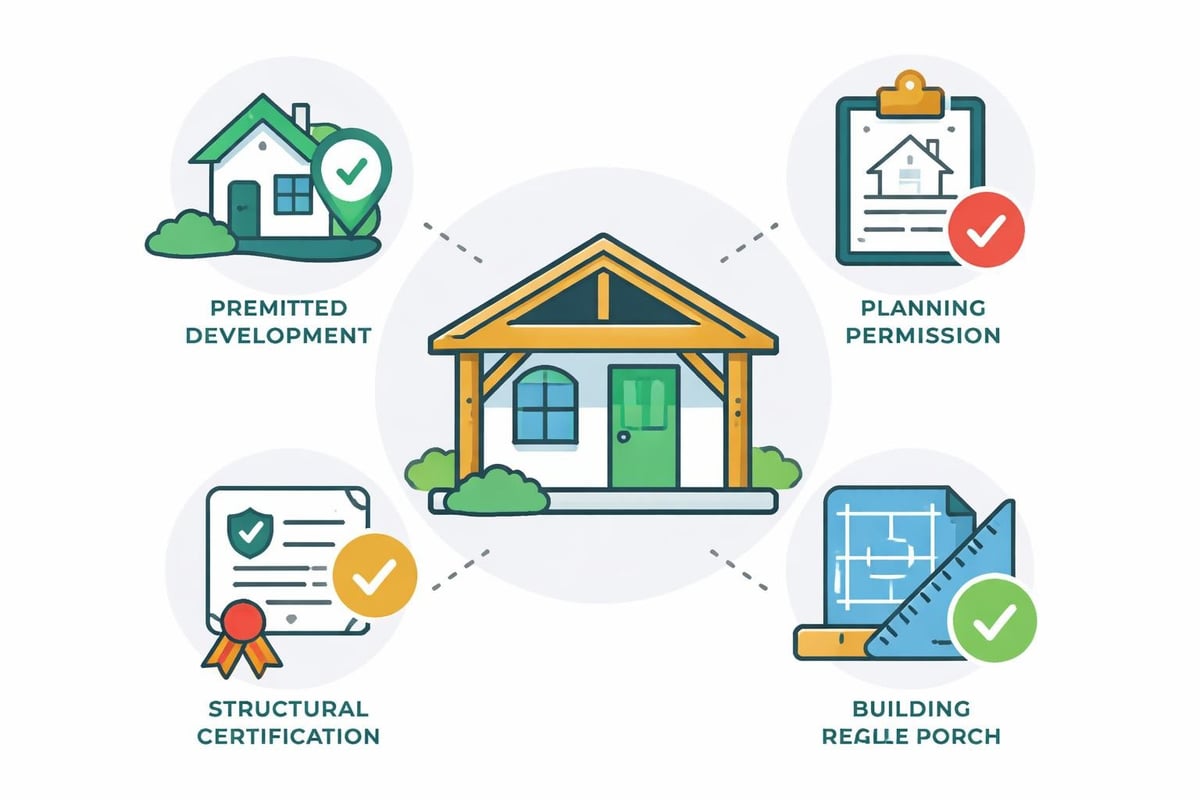
Understanding regulatory requirements prevents costly mistakes and ensures your porch complies with all applicable standards. In England, many porches qualify as "permitted development," avoiding formal planning permission requirements.
Permitted Development Criteria
A porch typically avoids planning permission when meeting these conditions:
- Ground floor area not exceeding 3 square metres
- No part exceeds 3 metres height above ground level
- Located more than 2 metres from any boundary adjoining a highway
- Not on a listed building or within conservation area restrictions
Exceeding these thresholds doesn't necessarily prevent construction, but requires submitting a planning application to your local authority. This process typically requires 8-12 weeks and involves fees varying by council.
Building Regulations Compliance
Even when planning permission proves unnecessary, Building Regulations often apply. These standards ensure structural safety, weatherproofing, and appropriate foundation design. Your timber frame supplier or builder typically handles Building Control notifications, submitting structural calculations and construction details for approval.
Key regulatory areas include:
- Structural integrity: ensuring adequate load-bearing capacity
- Drainage: preventing water ingress to the main building
- Glazing safety: if incorporating windows or doors
- Thermal performance: if the porch creates a new heated space
Working with established specialists familiar with Building Regulations streamlines this process considerably. Experienced companies maintain relationships with Building Control departments and understand documentation requirements thoroughly.
Customisation Options and Enhancements
The beauty of timber frame construction lies in its adaptability to individual preferences and specific requirements. Numerous customisation options allow your porch to reflect personal style whilst fulfilling particular functional needs.
Enclosed vs. Open Designs
Open porches showcase timber framing fully, creating covered outdoor space whilst maintaining visual connection with surroundings. This configuration suits properties where architectural display takes priority and the porch primarily provides weather protection rather than enclosed storage.
Enclosed porches incorporate walls (typically timber boarding, glazing, or combinations thereof) creating a transitional room between outdoors and interior spaces. This option delivers superior weather protection, provides secure storage, and can incorporate heating for year-round comfort. Case studies of timber frame porch additions demonstrate various approaches to balancing openness with weather protection.
Decorative Elements
Traditional timber framing accommodates numerous decorative features:
Curved braces replace straight diagonal members with gracefully arched alternatives, adding visual sophistication whilst maintaining structural function. These components require specialist craftsmanship but create distinctive character that elevates standard designs.
Chamfered edges involve planing 45-degree angles along timber arrises (corners), creating subtle shadow lines that emphasise the frame's geometry. This traditional detailing technique adds refinement without significant cost implications.
Exposed joinery can be highlighted through careful placement, turning functional connections into decorative features. Contrasting oak pegs against darker weathered timber creates striking visual interest celebrating traditional construction methods.
For those exploring various building configurations, examining different bay building options provides inspiration regarding how timber frame structures can be tailored to specific spatial requirements.
Integrating Modern Amenities
Contemporary timber frame porches often incorporate modern features enhancing functionality without compromising traditional aesthetic appeal.
Lighting Solutions
Well-planned lighting extends porch usability into evening hours whilst enhancing security. Options include:
- Wall-mounted lanterns flanking the entrance
- Recessed downlights within soffits providing ambient illumination
- Motion-sensor activation for automatic operation
- Low-voltage LED systems minimising energy consumption
Electrical installations must comply with current wiring regulations, requiring qualified electrician involvement. Plan cable routes during construction to avoid visible surface-mounted conduits detracting from timber frame appearance.
Heating Considerations
For enclosed porches intended as year-round living spaces, heating installation transforms functionality. Underfloor heating systems prove particularly effective, delivering gentle warmth without requiring wall-mounted radiators that interrupt visual clean lines. Electric systems suit porch applications, avoiding complicated wet system extensions from existing central heating.
Alternatively, wall-mounted infrared panels provide targeted heating whilst occupying minimal space. These systems heat surfaces and occupants directly rather than warming air, delivering efficient comfort in spaces with high ceilings or limited insulation.
| Enhancement | Installation Complexity | Approximate Cost Impact | Benefits |
|---|---|---|---|
| Basic lighting | Low | £200-£500 | Safety and visibility |
| Automated lighting | Moderate | £400-£800 | Convenience and security |
| Underfloor heating | High | £800-£1,500 | Year-round comfort |
| Glazed enclosure | Moderate-High | £2,000-£5,000 | Weather protection |
| Decorative features | Variable | £300-£2,000 | Enhanced aesthetics |
Cost Considerations and Investment
Understanding the financial aspects of timber frame porch projects enables realistic budgeting and prevents unexpected expenses derailing your plans. Multiple factors influence total investment requirements.
Price Variables
Timber frame porch costs vary significantly based on:
Size and complexity: larger structures requiring more materials and labour naturally cost more, whilst complex roof geometries or intricate joinery details increase fabrication time and skill requirements.
Timber specification: green oak typically costs less than air-dried alternatives, though both deliver excellent performance. Premium grades with minimal knots and defects command higher prices than standard structural timber.
Enclosure level: open porches require less material and labour than fully enclosed designs incorporating walls, windows, and doors.
Foundation requirements: ground conditions affecting foundation complexity influence costs. Challenging sites with poor bearing capacity or sloping terrain require more substantial (and expensive) foundation solutions.
Location: accessibility affects delivery and installation costs, with remote locations incurring additional charges for transport and potentially requiring accommodation for installation teams.
Typical Investment Ranges
For reference purposes (2026 pricing), expect these approximate ranges:
- Basic open porch (2.5m × 1.5m, green oak, simple gable roof): £4,500-£7,000
- Standard enclosed porch (3.0m × 2.0m, part-glazed, tiled roof): £8,000-£12,000
- Premium bespoke porch (4.0m × 2.5m, air-dried oak, decorative features, full glazing): £15,000-£25,000+
These figures typically include design, materials, fabrication, delivery, installation, and roofing. Additional costs arise from groundworks, electrical installations, decorative finishes, and any necessary planning applications.
Whilst representing significant investment, quality timber frame porches deliver exceptional value through longevity, minimal maintenance requirements, and property value enhancement. Unlike many home improvements that depreciate immediately, timber frames appreciate as they age and develop character.
Self-Care and Wellbeing During Projects
Undertaking significant home improvements generates considerable stress through disruption, decision-making, and budget management. Maintaining personal wellbeing throughout the process ensures you enjoy the journey toward your enhanced property.
Taking brief moments for self-care proves invaluable. Whether enjoying a quiet morning coffee whilst reviewing plans or maintaining grooming routines that preserve confidence during contractor meetings, small acts of self-maintenance matter. For gentlemen seeking quality grooming products that support skin, hair, and beard health through natural formulations, One Society offers comprehensive solutions designed specifically for men's needs, ensuring you look and feel your best throughout your project timeline.
Working with Specialist Timber Frame Companies
Selecting the right company significantly influences project success, affecting everything from design quality to installation precision and long-term satisfaction.
Evaluation Criteria
When assessing potential suppliers, consider:
Portfolio and experience: review completed projects demonstrating capability with designs similar to your requirements. Established companies maintain extensive galleries showcasing previous work, allowing assessment of craftsmanship quality and design versatility.
Construction methodology: understand whether they utilise traditional joinery techniques or modern alternatives. Companies committed to authentic timber framing employ mortise-and-tenon joints with oak pegs rather than metal fixings.
Timber sourcing: enquire about timber origins and sustainability credentials. Reputable suppliers specify British-grown oak from managed woodlands, supporting local forestry whilst minimising environmental impact.
Support services: comprehensive companies handle design, planning assistance, fabrication, delivery, and installation, providing single-point accountability. This integrated approach prevents coordination issues between multiple contractors.
Aftercare provision: established businesses stand behind their work through guarantees and remain available for any post-installation questions or guidance requirements.
Questions to Ask
During initial consultations, gather information through targeted questions:
- What foundation types do you recommend for my specific site conditions?
- How long will fabrication require, and what's your current lead time?
- Do you handle Building Regulations submissions, or must I arrange separately?
- What warranty coverage applies to materials and workmanship?
- Can you provide references from recent clients with similar projects?
Companies demonstrating patience with questions, providing detailed answers, and offering transparent pricing inspire confidence regarding professional standards and customer service commitment.
Exploring specialist timber frame building options, such as those offered for gazebos and various bay configurations, reveals the breadth of possibilities available when working with experienced craftsmen.
Environmental Benefits of Timber Frame Construction
Beyond aesthetic and practical advantages, timber frame porches deliver significant environmental benefits aligning with growing sustainability awareness among homeowners.
Carbon Sequestration
Trees absorb carbon dioxide during growth, storing carbon within their timber. This carbon remains locked within the wood throughout the structure's service life. A typical timber frame porch sequesters approximately 500-800kg of CO2, actively removing greenhouse gases from the atmosphere.
This contrasts sharply with materials like concrete and steel, whose manufacture generates substantial carbon emissions. Choosing timber construction represents a positive environmental decision with measurable climate impact.
Renewable Resource
Properly managed woodlands produce timber indefinitely. British forestry operates under strict sustainability standards ensuring replanting exceeds harvesting, meaning woodland coverage actually increases despite ongoing timber production. Supporting domestic timber industries strengthens this virtuous cycle whilst reducing transport emissions associated with imported materials.
Energy Efficiency
Timber provides natural insulation superior to masonry or metal alternatives. This thermal performance reduces heat loss through the porch structure, particularly relevant for enclosed designs incorporating heating. Lower energy consumption translates to reduced carbon emissions throughout the building's operational life.
Additionally, timber processing requires far less energy than producing alternative building materials. From forest to finished frame, the embodied energy in timber construction remains a fraction of that in concrete, brick, or steel equivalents.
A timber frame porch transforms your property entrance through traditional craftsmanship that delivers lasting value, minimal maintenance, and distinctive character impossible to replicate with modern construction methods. Whether pursuing simple weather protection or creating an enclosed transitional space, understanding design principles, construction techniques, and customisation possibilities ensures your investment perfectly matches your requirements. Acorn to Oak Framing combines centuries-old joinery traditions with contemporary project management, delivering bespoke timber frame structures throughout the UK that enhance properties and lifestyles for generations to come.


