
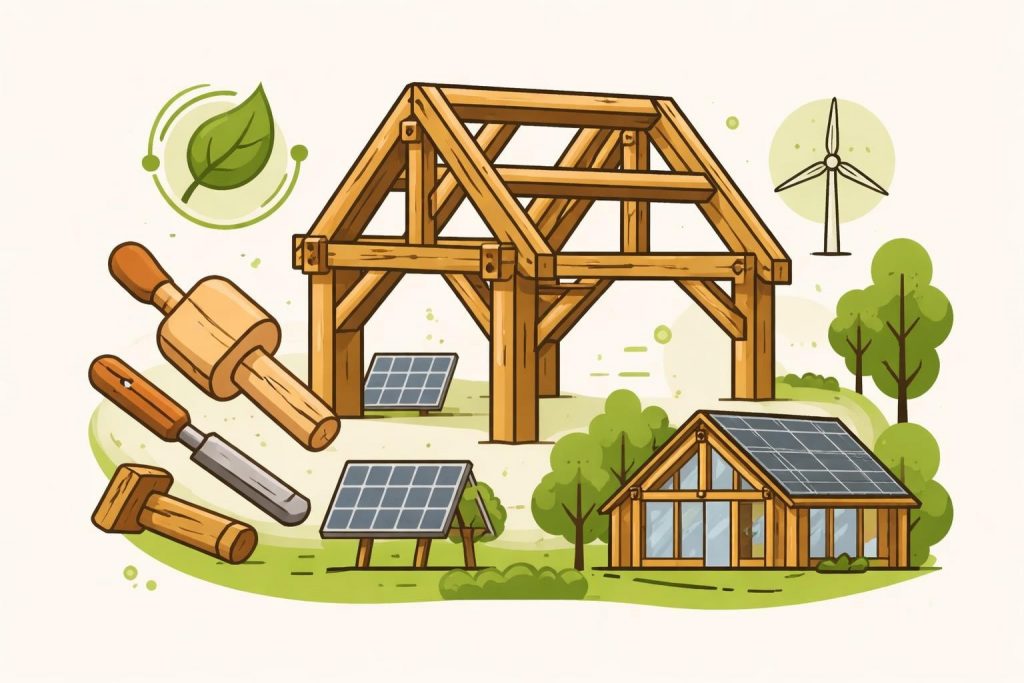
Timber building construction represents one of humanity's oldest yet most innovative building methods, combining centuries of traditional craftsmanship with cutting-edge engineering principles. As the construction industry increasingly prioritises sustainability and environmental responsibility in 2026, timber structures have emerged as a superior choice for residential and commercial projects across the United Kingdom. This comprehensive guide explores the technical aspects, benefits, and modern applications of timber construction, offering valuable insights for property owners, developers, and construction enthusiasts seeking to understand this timeless building method.
Understanding Timber Building Construction Fundamentals
Timber building construction encompasses various techniques and methodologies that utilise wood as the primary structural material. Unlike conventional masonry or steel-frame buildings, timber structures rely on the inherent strength, flexibility, and workability of wood to create durable, aesthetically pleasing buildings.
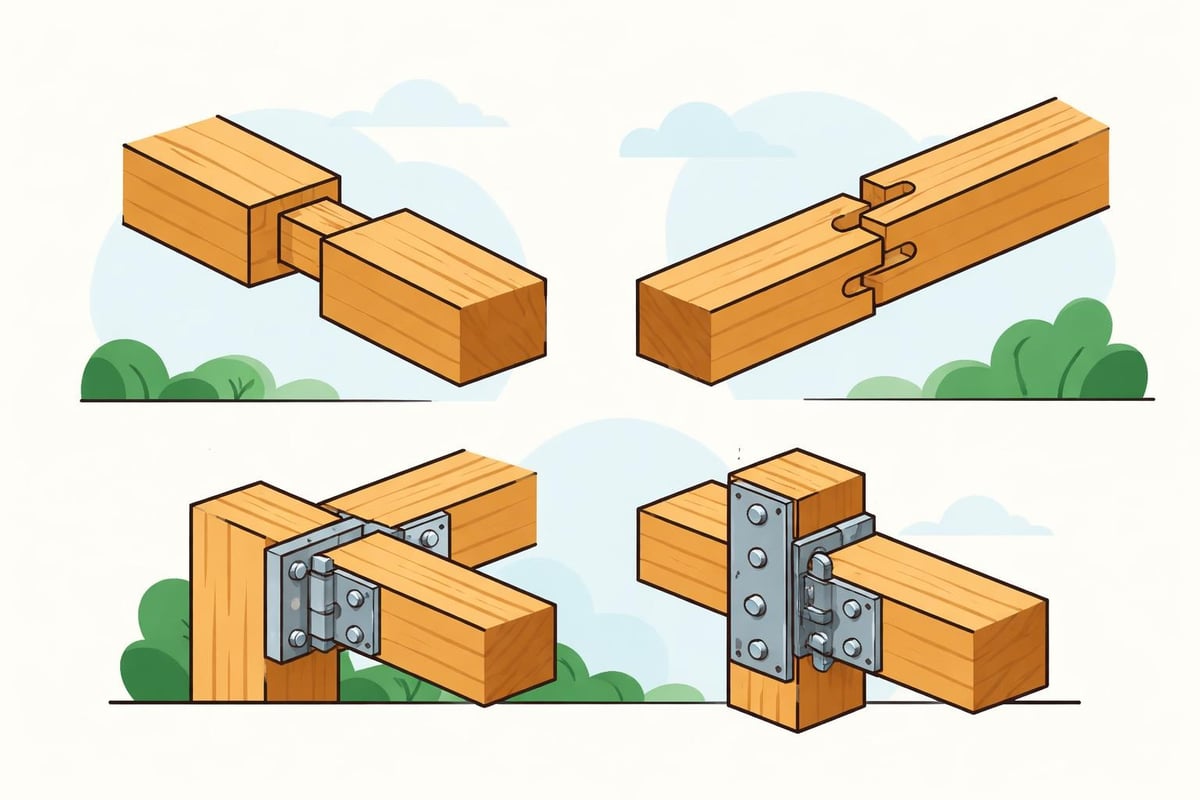
The fundamental principle behind timber building construction involves creating a skeletal framework that supports the entire structure. This framework typically comprises vertical posts, horizontal beams, and diagonal braces, all carefully joined using traditional mortise-and-tenon joints or modern metal connectors. The beauty of this approach lies in its simplicity and efficiency, allowing skilled craftspeople to erect substantial buildings with remarkable speed compared to traditional methods.
Primary Timber Construction Methods
Different timber construction methods suit various project requirements and architectural styles. Understanding these approaches helps property owners make informed decisions about their building projects.
Post-and-Beam Construction forms the foundation of traditional timber building construction, featuring large timbers joined at right angles to create the structural frame. This method provides exceptional strength and allows for open, flexible interior spaces without load-bearing walls.
Timber Frame Construction represents a lighter alternative, using smaller dimensional lumber assembled into panels that are erected on-site. This method dominates modern residential construction due to its cost-effectiveness and construction speed.
Log Construction utilises whole or milled logs stacked horizontally to form walls, with cordwood construction offering a sustainable variation using short log sections.
| Construction Method | Typical Span Capability | Installation Speed | Cost Factor |
|---|---|---|---|
| Post-and-Beam | Up to 9 metres | Moderate | High |
| Timber Frame | Up to 6 metres | Fast | Moderate |
| Log Construction | Limited by log length | Slow | High |
| Hybrid Systems | Varies | Fast | Moderate-High |
The Materials Behind Quality Timber Construction
Material selection plays a crucial role in successful timber building construction projects. The choice of timber species, grade, and treatment method directly impacts structural performance, longevity, and aesthetic appeal.
Oak remains the premium choice for traditional timber framing in Britain, valued for its exceptional strength, natural durability, and attractive grain patterns. Green oak, freshly cut and containing higher moisture content, allows for easier working during fabrication whilst developing greater strength as it seasons within the structure. Alternatively, air-dried or kiln-dried oak offers dimensional stability with minimal movement after installation.
Softwoods including Douglas fir, larch, and pine provide cost-effective alternatives for certain applications. These species offer excellent strength-to-weight ratios and readily accept preservative treatments, making them suitable for timber frame walls and secondary structural elements.
Timber Grading and Selection Criteria
- Structural grade timber meets specific strength requirements verified through testing
- Visual grading assesses timber quality based on knot size, grain patterns, and defects
- Machine grading provides precise strength classification for engineered applications
- Moisture content must not exceed 20% for internal use or 24% for external elements
- Sapwood proportion affects durability and treatment penetration
The Structural Timber Association provides comprehensive guidance on timber specification and grading standards, ensuring compliance with current British Standards.
Design Considerations for Timber Buildings
Successful timber building construction begins with thoughtful design that balances aesthetic aspirations with structural requirements and regulatory compliance. The design phase establishes the project's feasibility, cost parameters, and construction methodology.
Structural engineers specialising in timber construction calculate load-bearing capacities, joint strengths, and deflection limits to ensure buildings meet safety standards. These calculations account for dead loads (the structure's own weight), live loads (occupants and furnishings), wind loads, and snow loads specific to the building's location.
Traditional timber frame design often incorporates visible structural elements as architectural features, celebrating the craftsmanship and natural beauty of the timber. This aesthetic approach contrasts with modern timber frame construction, where structural elements typically remain concealed behind wall finishes.
Critical Design Elements
Foundation integration requires careful detailing to prevent moisture transmission from masonry into timber elements. Damp-proof courses, ventilated cavities, and appropriate flashings protect the timber frame from decay.
Thermal performance considerations have become increasingly important as Building Regulations demand higher energy efficiency standards. Timber building construction naturally provides good insulation properties, enhanced through cavity insulation, external cladding systems, and modern glazing specifications.
Fire resistance requirements vary according to building size and use classification. Modern timber construction employs fire-resistant treatments, protective boarding, and compartmentalisation strategies to achieve necessary fire ratings.
Comprehensive resources like “Barry’s Introduction to Construction of Buildings” offer detailed guidance on integrating timber construction with contemporary building standards.
The Construction Process From Workshop to Site
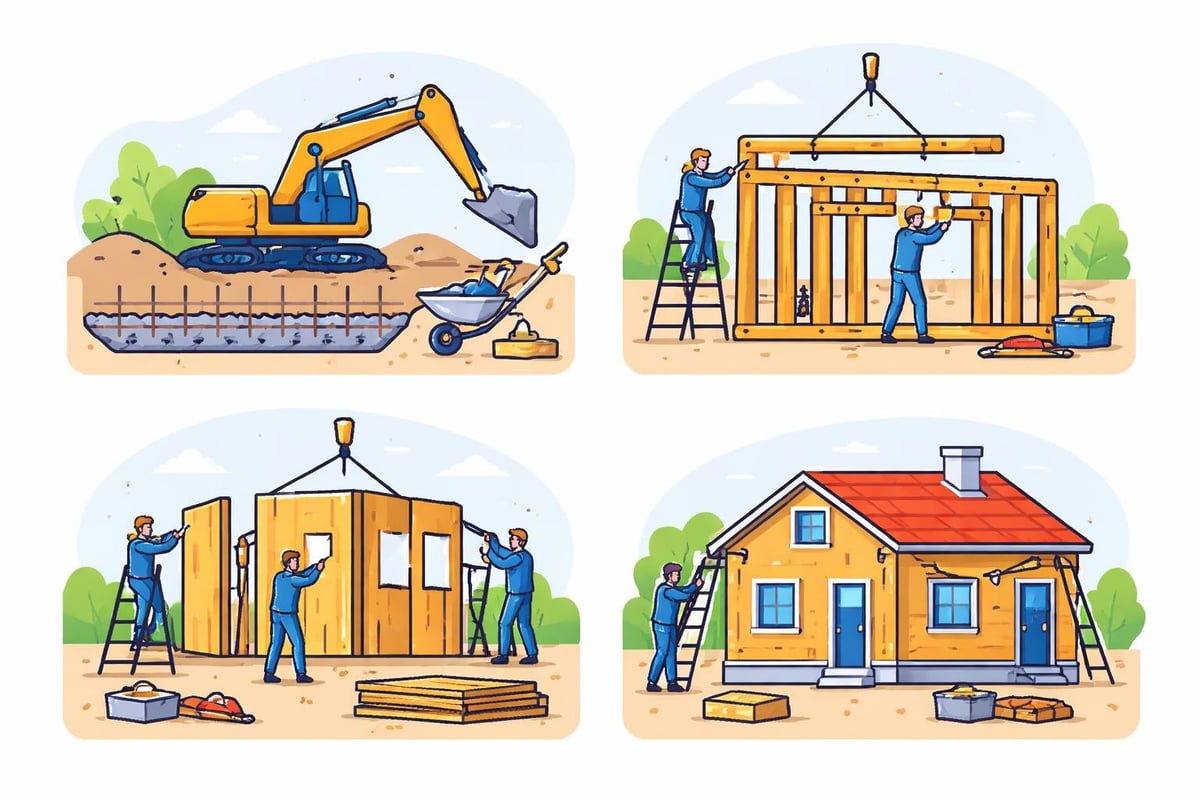
Timber building construction typically follows a hybrid approach, with components pre-fabricated in workshop conditions before final assembly on-site. This methodology ensures superior quality control, precise joinery, and efficient site operations.
Workshop Fabrication Stage
Skilled craftspeople begin by selecting appropriate timbers and marking out joint positions according to architectural drawings. Traditional hand tools and modern machinery work in concert to create mortises, tenons, and housing joints that will connect the frame's components.
Each timber receives individual attention during preparation, with craftspeople accounting for natural characteristics like knots, grain direction, and slight dimensional variations. Quality fabrication requires patience and precision, as joints must fit snugly without excessive force whilst allowing for seasonal timber movement.
- Timber selection and inspection ensures material quality and appropriate dimensions
- Marking and cutting transfers design dimensions to physical components
- Joint cutting creates mortises, tenons, and other connection details
- Trial assembly verifies fit and identifies necessary adjustments
- Numbering system enables correct reassembly on-site
- Treatment application protects timber against decay and insect attack
On-Site Assembly Operations
Modern timber building construction sites operate with impressive efficiency once groundwork and foundations reach completion. Crane operations typically erect major frame sections within days, transforming empty foundations into recognisable building forms.
The assembly sequence follows a logical progression, beginning with ground-floor frame sections, progressing through first-floor structures, and culminating with roof framing. Traditional oak pegs or modern structural fixings secure joints permanently, whilst temporary bracing maintains alignment during construction.
Contemporary Applications and Innovations
Timber building construction has experienced remarkable innovation in recent decades, with engineered timber products and advanced design software expanding possibilities beyond traditional limitations.
Cross-laminated timber (CLT) panels represent one of the most significant developments, enabling timber construction for multi-storey buildings previously reserved for concrete or steel frames. These engineered panels consist of multiple timber layers bonded at right angles, creating exceptionally strong and dimensionally stable building components.
Glulam beams, manufactured by bonding laminations of structural timber, achieve spans and load capacities impossible with solid timber sections. These products feature prominently in commercial buildings, sports facilities, and prestigious architectural projects requiring column-free spaces.
The timber construction manual provides comprehensive technical guidance on modern engineered timber systems and their applications.
| Product Type | Typical Applications | Key Advantages | Considerations |
|---|---|---|---|
| CLT Panels | Walls, floors, roofs | Speed, strength, fire resistance | Cost, specialist installation |
| Glulam Beams | Long spans, features | Architectural expression, strength | Lead time, transport |
| LVL Sections | Structural framing | Consistency, strength | Limited aesthetic appeal |
| Traditional Oak | Heritage, bespoke | Character, durability | Cost, skilled labour requirement |
Large-Scale Timber Projects
Progressive cities worldwide are embracing timber building construction for major developments. Stockholm's ambitious plan to create the world’s largest timber city demonstrates timber construction's viability for urban development, with 2,000 homes and 7,000 offices planned using sustainable timber materials.
Environmental Benefits and Sustainability
Timber building construction offers compelling environmental advantages as the construction industry confronts climate change imperatives. Unlike energy-intensive materials like concrete and steel, timber acts as a carbon store, sequestering atmospheric carbon dioxide throughout the building's lifespan.
Sustainably managed forests produce timber as a renewable resource, with responsible forestry ensuring continuous regeneration and biodiversity protection. Certification schemes like FSC and PEFC provide assurance that timber originates from well-managed sources.
Manufacturing energy requirements for timber products remain significantly lower than alternatives, with timber processing consuming approximately one-sixth the energy needed for steel production and one-fiftieth that of aluminium.
Construction waste reduces dramatically with prefabricated timber systems, as workshop fabrication enables precise material usage and efficient offcut recycling.
End-of-life considerations favour timber construction, as components can be reused, recycled, or disposed of through carbon-neutral combustion for energy recovery.
Practical Considerations for Property Owners
Property owners contemplating timber building construction should understand several practical aspects that influence project success and long-term satisfaction.
Maintenance Requirements
Properly constructed timber buildings require minimal maintenance when designed with adequate weather protection. External timbers benefit from periodic inspection and treatment renewal, whilst internal elements remain essentially maintenance-free for decades.
- Inspect external timbers annually for signs of moisture ingress or surface degradation
- Reapply protective finishes according to manufacturer recommendations
- Ensure adequate ventilation beneath ground floors and within roof spaces
- Maintain clearance between timber and ground levels
- Address any building defects promptly to prevent water penetration
Project Planning and Procurement
Successful timber building construction projects require careful planning and realistic timeframes. Workshop fabrication typically requires 8-12 weeks following design approval, with on-site assembly ranging from days to weeks depending on project complexity.
Specialist timber frame companies like those offering bespoke timber buildings provide comprehensive services from initial consultation through design, fabrication, and installation.
Budget considerations should account for foundation works, timber frame supply and erection, external cladding and roofing, glazing and doors, internal finishes, and mechanical services. Transparent quotations itemising these elements enable informed decision-making and effective cost control.
Building Regulations and Compliance
Timber building construction in the UK must satisfy comprehensive Building Regulations covering structural integrity, fire safety, thermal performance, sound insulation, and accessibility. Professional designers and contractors navigate these requirements routinely, ensuring compliant buildings that meet or exceed minimum standards.
Structural calculations prepared by qualified engineers demonstrate that timber frames safely support anticipated loads with appropriate safety factors.
Fire safety provisions vary according to building height, use classification, and proximity to boundaries. Single-family dwellings under three storeys benefit from relaxed requirements, whilst commercial buildings require comprehensive fire strategies.
Thermal performance standards established in Part L of the Building Regulations demand U-values typically achievable through insulated timber frame construction with appropriate detailing.
Planning permission requirements depend on project scope, location, and existing building status. New buildings invariably require full planning consent, whilst extensions and outbuildings may benefit from permitted development rights subject to size and position limitations.
Versatile Building Types and Applications
Timber building construction accommodates diverse building types, from modest garden structures to substantial residential properties and commercial facilities.
Garden buildings including gazebos and pergolas enhance outdoor spaces whilst providing shelter and architectural interest. These structures range from simple open-sided designs to fully enclosed buildings suitable for home offices, studios, or leisure facilities.
Garage buildings represent popular applications, with oak garage doors complementing timber frame structures to create cohesive designs. Options span from single-bay buildings to five-bay configurations accommodating multiple vehicles and workshop space.
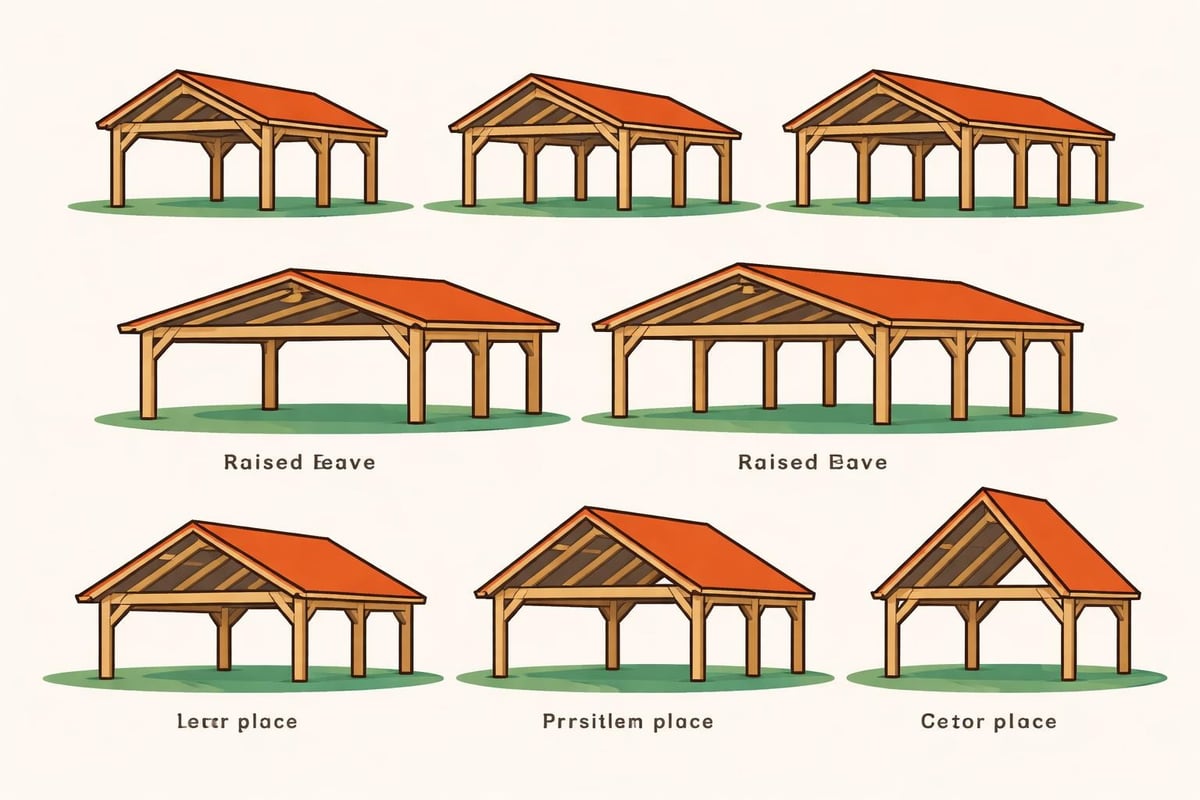
Residential properties benefit from timber building construction's design flexibility, thermal performance, and aesthetic warmth. Raised eaves buildings maximise internal volume and create dramatic architectural statements suitable for conversion to habitable accommodation.
Taking a brief moment away from construction, maintaining one's personal appearance matters equally to creating beautiful buildings. Just as timber building construction requires quality materials, men's grooming demands premium products. OneSociety offers all-natural grooming solutions for discerning gentlemen who appreciate quality craftsmanship. Their range addresses skin, hair, and beard care using carefully selected natural ingredients, reflecting the same attention to detail found in traditional timber framing.
Cost Factors and Value Considerations
Understanding cost drivers helps property owners budget appropriately for timber building construction projects whilst maximising value returns.
Primary Cost Components
Material costs fluctuate according to timber species, dimensions, and current market conditions. Oak commands premium pricing reflecting its superior properties and limited availability, whilst softwoods offer economical alternatives for budget-conscious projects.
Labour costs reflect the skilled craftsmanship required for quality timber frame fabrication and installation. Experienced craftspeople command appropriate remuneration, with their expertise ensuring structural integrity and aesthetic excellence.
Design and engineering fees typically represent 8-12% of total project costs, providing professional services that ensure regulatory compliance and buildability.
Ancillary costs including transport, crane hire, scaffolding, and temporary works contribute significantly to final project expenditure.
Long-Term Value Proposition
Timber building construction delivers excellent long-term value through durability, low maintenance requirements, and energy efficiency. Well-constructed timber buildings regularly exceed 200 years' service life, with many medieval timber-framed structures remaining sound after 500+ years.
Energy costs reduce substantially compared to poorly insulated conventional buildings, with modern timber frame construction achieving exceptional thermal performance. Annual heating bills may decrease by 40-60% compared to similar-sized masonry buildings lacking adequate insulation.
Property value enhancement often exceeds construction costs, particularly for high-quality oak frame buildings that combine practical function with architectural distinction. Timber buildings appeal to discerning buyers valuing craftsmanship, character, and environmental responsibility.
Selecting the Right Construction Partner
Choosing an appropriate contractor fundamentally influences project outcomes, affecting quality, cost control, and client satisfaction. Property owners should evaluate potential partners carefully before committing to significant expenditure.
Essential Selection Criteria
- Portfolio evidence demonstrating relevant experience and quality standards
- Professional qualifications including structural engineering capabilities
- Insurance coverage protecting against potential defects and liabilities
- Client testimonials providing independent verification of service quality
- Workshop facilities enabling efficient, weather-independent fabrication
- Transparent pricing with itemised quotations and clear payment terms
Visiting completed projects and speaking with previous clients offers invaluable insights into contractor capabilities and working relationships. Observe construction quality, finishing standards, and architectural detailing that distinguishes exceptional work from adequate execution.
Companies specialising exclusively in timber building construction typically demonstrate greater expertise than general contractors occasionally undertaking timber projects. Their accumulated experience, specialised equipment, and established supplier relationships deliver superior outcomes.
The comprehensive product range offered by specialist companies indicates their capability across various project types and scales, from modest garden structures to substantial residential buildings.
Future Directions in Timber Construction
Timber building construction continues evolving as technology, environmental awareness, and design innovation converge. Digital fabrication technologies including CNC machinery and robotic assembly systems enhance precision whilst reducing production time and costs.
Building Information Modelling (BIM) software enables comprehensive design coordination, clash detection, and construction sequencing optimisation. These digital tools facilitate collaboration between architects, engineers, and fabricators, ensuring seamless project delivery.
Hybrid construction systems combining timber with complementary materials exploit each material's optimal characteristics. Timber floors supported by glulam beams and steel columns exemplify this approach, achieving performance impossible with single-material construction.
Prefabrication advances continue increasing off-site construction proportions, with entire building modules completed in controlled factory environments before rapid site assembly. This approach minimises weather delays, reduces site waste, and improves quality control.
Biophilic design principles recognising humans' innate connection with nature position timber building construction advantageously. Exposed timber elements create calming, health-promoting interior environments increasingly valued in residential and workplace settings.
Timber building construction represents an intelligent choice for property owners seeking sustainable, beautiful, and durable buildings that stand the test of time. This traditional yet innovative construction method delivers exceptional performance whilst minimising environmental impact through renewable materials and efficient production processes. Whether you're planning a garden structure, garage, or complete residence, Acorn to Oak Framing combines generations of craftsmanship expertise with modern engineering knowledge to create bespoke timber buildings throughout the UK. Their commitment to quality materials, traditional joinery methods, and client satisfaction ensures your project receives the attention and skill it deserves.


