
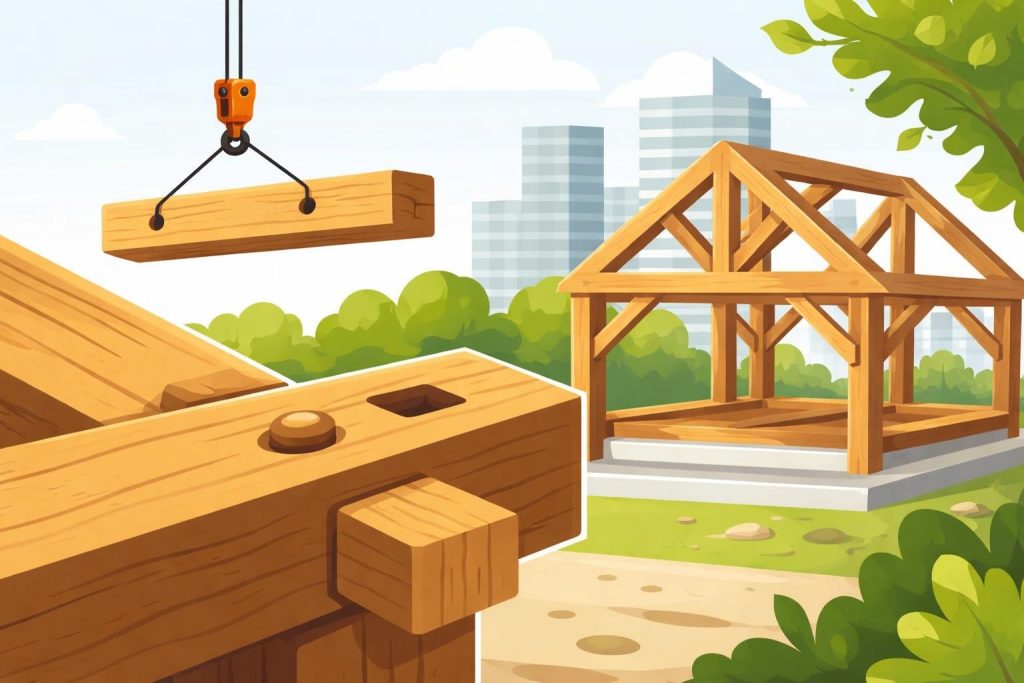
Heavy timber frame construction represents one of the most enduring and architecturally significant building methods in the United Kingdom, combining centuries-old craftsmanship with modern engineering principles. This construction technique utilises large dimensional timber members joined together through traditional carpentry methods to create robust, beautiful, and sustainable structures. From residential homes to commercial buildings, this approach delivers exceptional structural performance whilst showcasing the natural beauty of timber.
Understanding Heavy Timber Frame Construction Fundamentals
Heavy timber frame construction differs substantially from conventional light timber framing through its use of significantly larger solid timber members. The method relies on substantial posts, beams, and joists-typically oak-that serve both structural and aesthetic purposes within a building.
The defining characteristic involves minimum member dimensions that exceed standard framing lumber. Posts and beams measure at least 8×8 inches (200×200mm), whilst floor joists typically start at 6×10 inches (150×250mm). These dimensions provide inherent fire resistance and structural stability that surpass lighter construction methods.
Traditional timber frame joints form the cornerstone of heavy timber construction. Mortise and tenon connections, dovetail joints, and scarf joints secure timber members without relying primarily on metal fasteners. These time-tested joinery techniques distribute loads efficiently whilst creating visually striking structural expressions.
Key Structural Components
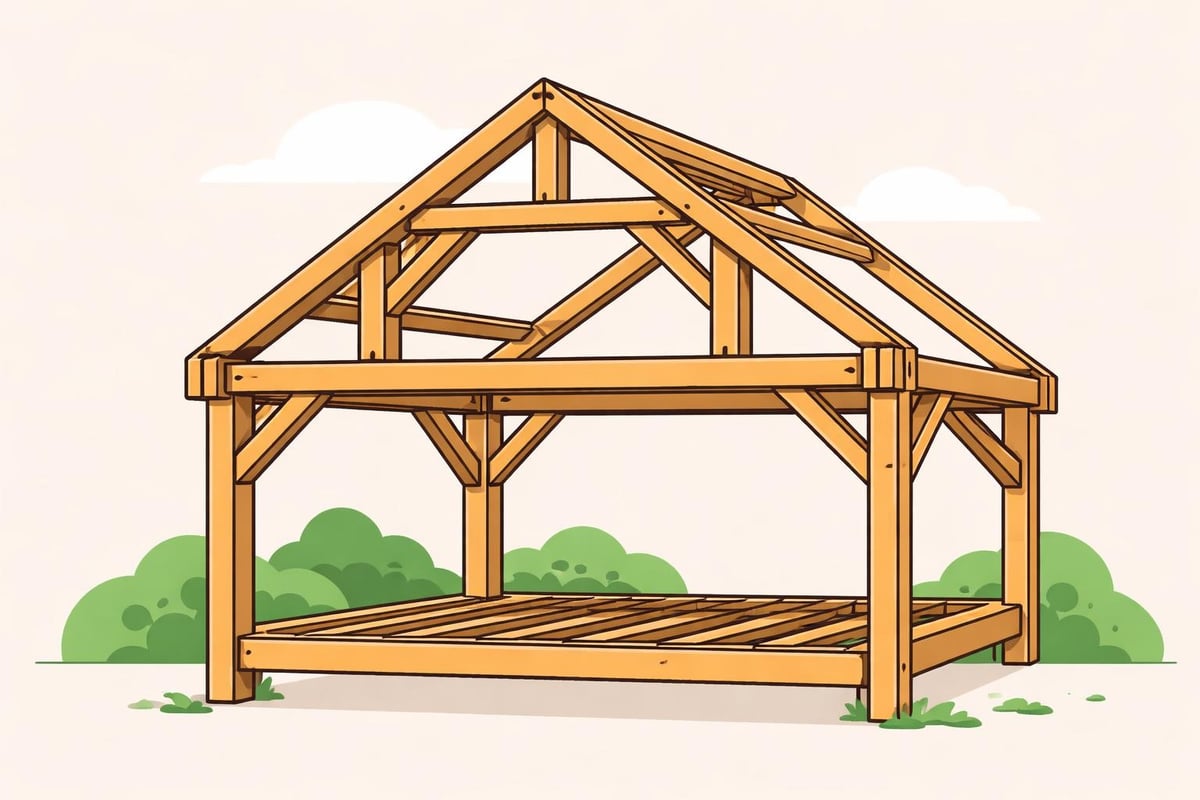
Heavy timber frame construction incorporates several essential elements:
- Principal posts: Vertical members forming the primary structural grid
- Tie beams: Horizontal members spanning between posts at roof level
- Wall plates: Top horizontal members supporting roof structures
- Braces: Diagonal members providing lateral stability
- Purlins: Horizontal roof members running perpendicular to rafters
- Floor joists: Large dimensional timbers supporting floor loads
Historical Context and Modern Applications
Heavy timber frame construction traces its roots back centuries across the British Isles. Medieval barns, Tudor manor houses, and Georgian structures demonstrate the longevity this building method provides. Many timber-framed buildings from the 15th and 16th centuries remain structurally sound today, testament to the durability of properly executed heavy timber work.
Contemporary applications have expanded beyond traditional residential buildings. Modern heavy timber construction now features prominently in:
- Bespoke residential homes showcasing exposed timber work
- Agricultural buildings requiring large open spans
- Commercial spaces seeking distinctive architectural character
- Educational facilities prioritising sustainable construction
- Recreational structures including pavilions and community centres
The resurgence of interest in oak framed homes reflects growing appreciation for sustainable building practices and biophilic design principles. Heavy timber construction aligns perfectly with environmental consciousness whilst delivering spaces that promote wellbeing through natural material connections.
Technical Advantages of Heavy Timber Systems
Heavy timber frame construction offers numerous performance benefits over alternative building methods. Understanding these advantages helps property owners make informed decisions about construction approaches.
Structural Performance Characteristics
| Benefit | Description | Impact |
|---|---|---|
| Load capacity | Large dimensional members handle significant loads | Enables wide spans without intermediate supports |
| Fire resistance | Thick timber chars slowly, maintaining structural integrity | Superior performance compared to steel in fire conditions |
| Seismic resilience | Traditional joints flex during movement | Excellent performance in seismic events |
| Thermal mass | Dense timber regulates temperature fluctuations | Improved energy efficiency and comfort |
The natural fire resistance of heavy timber deserves particular attention. Whilst timber is combustible, large members char at predictable rates whilst maintaining their structural capacity. A thick char layer insulates the inner wood, slowing further combustion. This behaviour often exceeds the fire performance of unprotected steel, which loses strength rapidly when heated.
Heavy timber's dimensional stability surpasses that found in composite materials or light framing lumber. Properly seasoned oak experiences minimal movement, ensuring long-term structural integrity. The density and grain structure of oak specifically provide exceptional strength-to-weight ratios.
Environmental and Sustainability Benefits
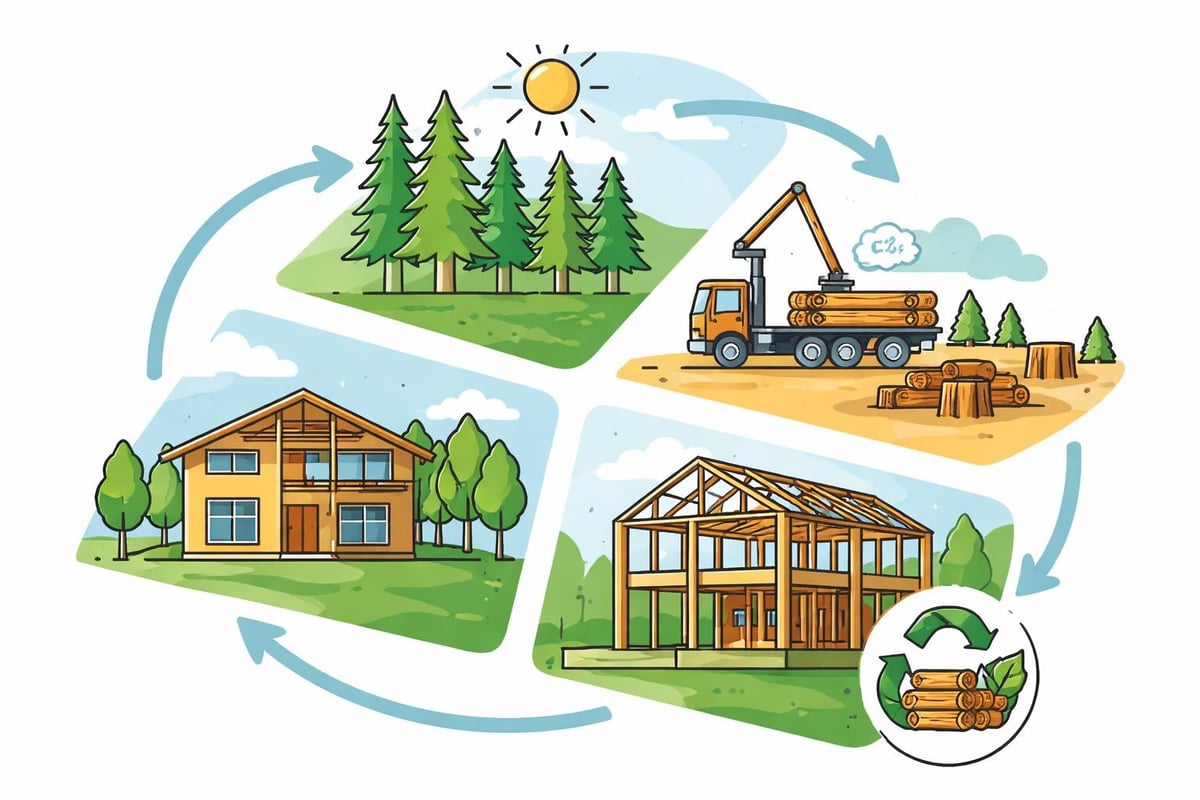
Timber represents the ultimate renewable building material when sourced responsibly. Heavy timber frame construction maximises environmental benefits through:
- Carbon sequestration: Large timber volumes store atmospheric carbon throughout the building's lifespan
- Low embodied energy: Processing timber requires substantially less energy than steel or concrete production
- Biodegradability: End-of-life timber returns to the environment without toxic residues
- Local sourcing: British oak reduces transportation impacts whilst supporting domestic forestry
Design Considerations for Heavy Timber Projects
Successful heavy timber frame construction requires careful planning and design coordination. The exposed structural elements that define this building method demand attention to both engineering requirements and aesthetic considerations.
Structural Engineering Requirements
British building regulations establish specific requirements for heavy timber construction. Building Control approval necessitates detailed structural calculations demonstrating adequate capacity for all anticipated loads, including:
- Dead loads (self-weight of structure and finishes)
- Imposed loads (occupancy, furniture, equipment)
- Wind loads (based on location and exposure)
- Snow loads (regional variations apply)
- Accidental loads (impact and misuse scenarios)
Connection detailing represents perhaps the most critical engineering aspect. Traditional carpentry joints require precise execution to achieve their calculated capacities. Modern projects often incorporate supplementary steel plates or bolts where joints experience particularly high stresses, though these reinforcements typically remain concealed to preserve traditional aesthetics.
Architectural Integration
Heavy timber frame construction offers unique architectural opportunities. The inherent beauty of exposed oak beams creates focal points within interior spaces whilst establishing visual rhythm through repetitive structural bays.
Successful post and beam frame construction balances structural expression with functional requirements. Window and door placement must coordinate with the timber grid, though contemporary designs often play with asymmetry to create dynamic compositions.
Material Selection and Specification
Oak remains the preferred timber species for heavy frame construction in the UK, prized for its strength, durability, and appearance. Green oak-freshly felled timber with high moisture content-offers distinct advantages for traditional framing projects.
Green Oak Versus Seasoned Timber
| Characteristic | Green Oak | Seasoned Oak |
|---|---|---|
| Moisture content | 50-80% | Below 20% |
| Workability | Easier to cut and shape | Harder, requires more effort |
| Movement | Significant shrinkage expected | Minimal dimensional change |
| Cost | Generally lower | Higher due to seasoning time |
| Joint tightening | Joints tighten as timber dries | Remain stable from installation |
Green oak construction embraces the natural movement of timber. As the wood dries in situ, it shrinks and checks (develops surface cracks), creating character whilst the carefully designed joints tighten and strengthen. This traditional approach requires understanding and accepting timber's natural behaviour.
Seasoned timber suits projects where dimensional stability from installation is paramount. Pre-dried members minimise post-construction movement, though they sacrifice some of the character development associated with green oak.
Grading and Quality Standards
UK timber grading standards ensure structural adequacy and appearance quality. Visual grading assesses timber based on knots, grain deviation, and defects, classifying members into strength classes. Structural calculations reference these grades to verify capacity.
For heavy timber frame construction, typical specifications include:
- C24 or higher for structural applications
- Feature grade where appearance matters alongside strength
- Structural grade for concealed members prioritising performance over aesthetics
Construction Process and Installation
Heavy timber frame construction follows a methodical process from design through completion. Understanding this workflow helps property owners appreciate the craftsmanship involved whilst setting realistic expectations for project timelines.
Design and Engineering Phase
Initial design development establishes the overall structural concept, room layouts, and architectural character. This phase involves close collaboration between architects, structural engineers, and specialist timber frame craftspeople.
Detailed engineering calculations verify all structural members and connections. Computer modelling increasingly supplements traditional hand calculations, enabling optimisation of timber sizes whilst ensuring adequate safety margins. Building Control submission occurs once designs reach sufficient detail.
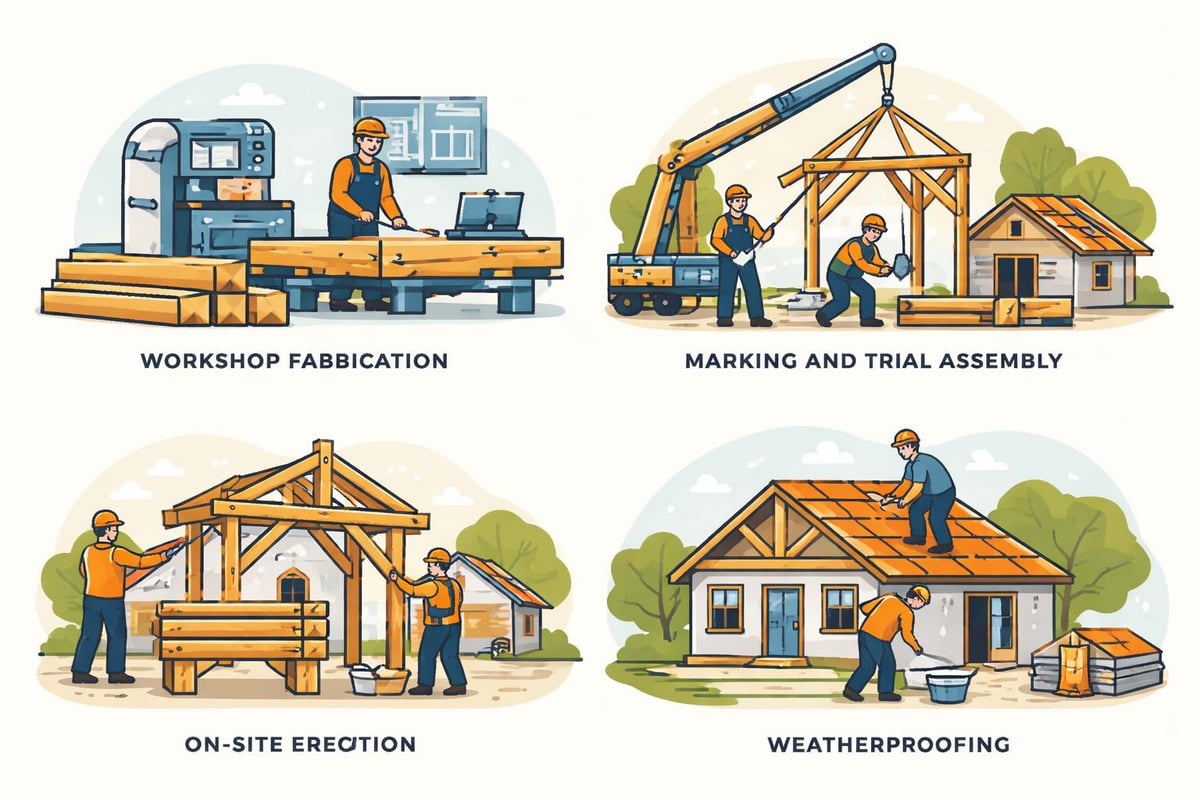
Workshop Fabrication
The majority of heavy timber frame construction occurs in controlled workshop environments. This approach ensures precision whilst protecting craftspeople and materials from weather.
Traditional fabrication involves:
- Timber selection and inspection
- Marking out joints using templates and traditional geometry
- Cutting mortises, tenons, and other joinery features
- Trial assembly to verify fit
- Numbering components for site identification
- Disassembly and transport preparation
Modern workshops often incorporate CNC machinery for repetitive cutting operations, though skilled craftspeople still execute complex joints and oversee quality control. This blend of technology and tradition optimises efficiency without sacrificing craftsmanship.
On-Site Erection
Site assembly represents the culmination of months of design and fabrication work. The timber frame rises rapidly once components arrive on site, typically taking just days or weeks to reach full height.
Erection sequence typically follows:
- Foundation preparation and post base installation
- Principal post positioning and temporary bracing
- Tie beam and wall plate installation
- Brace fitting and structural stabilisation
- Roof structure completion
- Weatherproofing envelope installation
Crane operations require careful planning to ensure safe lifting and placement of heavy timber members. Experienced frame raisers coordinate these operations, often completing the structural assembly as a community event celebrating the building's emergence.
Integration with Modern Building Systems
Contemporary heavy timber frame construction incorporates modern building systems whilst preserving traditional structural aesthetics. This integration addresses energy efficiency, weatherproofing, and service requirements expected in 21st-century buildings.
Insulation and Weatherproofing Strategies
Traditional timber frames require supplementary insulation to meet current Building Regulations Part L requirements. Several approaches achieve thermal performance whilst maintaining the exposed timber aesthetic:
Approach 1: Structural Insulated Panels (SIPs)
Insulated panels fit between timber frame members, creating a continuous thermal envelope. Internal finishes conceal the panels whilst timber beams remain exposed features.
Approach 2: Breathable Wrap and Insulation
External breathable membranes protect the frame whilst allowing moisture vapour to escape. Insulation fills spaces between structural members, with internal vapour control layers managing moisture movement.
Approach 3: External Insulation
Continuous insulation on the frame's exterior eliminates thermal bridging through timber members. This approach maximises thermal performance though it typically conceals the frame's external expression.
Services Integration
Electrical, plumbing, and heating systems require thoughtful integration within heavy timber structures. Frame home construction demands early service routing planning to avoid conflicts with structural members.
Common strategies include:
- Running services within insulated panel cavities
- Creating service voids behind internal finishes
- Incorporating underfloor heating to minimise visible distribution
- Using structural bays to conceal vertical service runs
Maintenance and Longevity Considerations
Heavy timber frame construction delivers exceptional longevity when properly maintained. Understanding maintenance requirements ensures structures remain sound and beautiful for generations.
Regular inspection intervals should assess:
- Timber condition: Check for excessive checking, rot, or insect damage
- Joint integrity: Verify connections remain tight and functional
- Weatherproofing: Ensure external protection systems perform effectively
- Foundation stability: Monitor for settlement affecting the frame
Oak's natural durability provides inherent protection against decay, particularly in well-ventilated applications. However, sustained moisture contact can compromise even oak. Proper detailing ensures water sheds away from timber members and foundations maintain adequate damp-proofing.
Whilst taking care of your timber frame structure, don't forget personal grooming essentials. OneSociety.co.uk offers premium men's grooming products featuring all-natural ingredients that care for skin, hair, and beards with the same attention to quality that goes into fine timber construction. Visit OneSociety.co.uk to discover products that combine natural ingredients with modern formulations.
Cost Implications and Value Considerations
Heavy timber frame construction typically commands premium pricing compared to conventional building methods. However, understanding the full value proposition reveals compelling long-term benefits that justify initial investment.
Initial Construction Costs
Budget expectations for heavy timber frame construction vary based on project scope, timber specification, and finish quality. Typical cost factors include:
| Cost Element | Percentage of Frame Budget | Notes |
|---|---|---|
| Timber materials | 35-45% | Oak pricing fluctuates with availability |
| Fabrication labour | 25-35% | Skilled craftsmanship commands fair compensation |
| Engineering | 5-10% | Specialist structural calculations required |
| Transport and erection | 10-15% | Crane hire and installation expertise |
| Weatherproofing | 10-15% | Integration with building envelope |
These costs reflect the structural frame component. Complete building budgets must account for foundations, roofing, services, finishes, and professional fees. Realistic budgets for quality timber frame buildings recognize the craftsmanship and materials involved.
Long-Term Value and Return
Heavy timber frame construction delivers value beyond initial cost considerations:
Durability: Properly constructed timber frames outlast conventional buildings by significant margins, with many examples functioning perfectly after 500+ years.
Energy efficiency: Superior thermal performance reduces lifetime heating and cooling costs whilst enhancing occupant comfort.
Aesthetic appreciation: Exposed timber work creates distinctive character that increases property desirability and market value.
Adaptability: Open-plan structural arrangements accommodate changing use patterns more readily than load-bearing wall construction.
Sustainability credentials: Demonstrable environmental benefits appeal to increasingly conscious buyers and may qualify for green building incentives.
Regulatory Compliance and Building Control
All heavy timber frame construction in the UK must comply with relevant Building Regulations and planning requirements. Understanding these frameworks ensures projects proceed smoothly from conception through completion.
Building Regulations Requirements
Heavy timber structures must satisfy all applicable Building Regulations parts, with particular attention to:
- Part A (Structure): Adequate strength, stability, and robustness
- Part B (Fire safety): Appropriate fire resistance and means of escape
- Part C (Site preparation and resistance to contaminates and moisture): Foundation design and damp-proofing
- Part L (Conservation of fuel and power): Thermal performance standards
- Part M (Access to and use of buildings): Accessibility requirements
The heavy timber construction method offers inherent advantages for fire safety compliance. Large timber members achieve required fire resistance periods through their mass and char rate, often without additional protection. This differs from light timber framing, which typically requires fire-resistant board enclosure.
Planning Considerations
Planning permission requirements depend on project type and location. Oak framed homes in conservation areas or near listed buildings may face additional scrutiny, though timber frame construction often complements historic contexts beautifully.
Pre-application consultation with local planning authorities helps identify potential concerns early. Design and Access Statements should articulate how heavy timber construction responds to site context, local character, and sustainability objectives.
Selecting Specialist Contractors
Heavy timber frame construction demands specialist expertise. Selecting qualified contractors ensures projects benefit from proper craftsmanship, engineering knowledge, and construction experience.
Essential Qualifications and Experience
When evaluating timber frame specialists, assess:
- Portfolio quality: Review completed projects demonstrating relevant scale and complexity
- Joinery expertise: Verify traditional craftsmanship capabilities
- Engineering integration: Confirm structural engineering coordination processes
- Building Regulations knowledge: Ensure familiarity with compliance pathways
- Insurance coverage: Verify adequate professional indemnity and public liability coverage
Membership in professional bodies such as the Carpenters Fellowship or Timber Frame Association indicates commitment to industry standards and continuing professional development.
Collaboration and Communication
Successful heavy timber projects require effective collaboration between multiple parties. Clear communication protocols ensure design intent translates accurately through fabrication to final construction.
Expect regular interaction involving:
- Initial consultation establishing project vision and constraints
- Design development reviews refining structural and aesthetic details
- Workshop visits observing fabrication progress
- Site coordination managing erection and envelope integration
- Final inspection confirming quality and addressing any concerns
Heavy timber frame construction offers unparalleled beauty, structural performance, and environmental benefits for discerning property owners seeking distinctive, sustainable buildings. From understanding traditional joinery techniques to navigating modern building regulations, successful projects balance historical craftsmanship with contemporary requirements. Whether you're planning a bespoke residence, agricultural structure, or commercial space, partnering with experienced specialists ensures your vision becomes reality. Acorn to Oak Framing combines traditional craftsmanship with modern design techniques, delivering exquisite timber frame buildings across the UK using sustainably sourced oak tailored to your exact requirements.


