
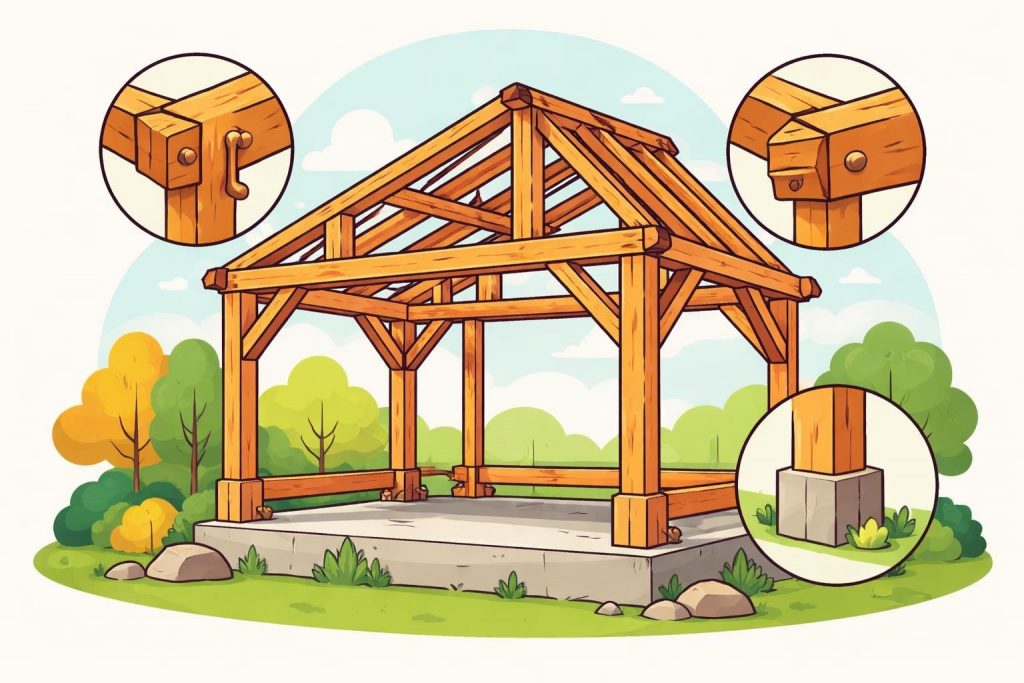
The resurgence of timber construction in contemporary architecture represents a fascinating convergence of traditional craftsmanship and modern environmental consciousness. A wooden building structure offers unparalleled aesthetic warmth, exceptional structural integrity, and remarkable sustainability credentials that increasingly position timber as the material of choice for discerning property owners across the United Kingdom. Understanding the fundamental principles, design considerations, and practical applications of timber framing enables homeowners and developers to make informed decisions that balance beauty, durability, and environmental responsibility whilst adhering to stringent building regulations.
Understanding Timber Frame Construction Methods
Traditional timber framing relies on precisely cut joints that interlock without mechanical fasteners, creating structures that have endured for centuries across Britain's architectural landscape. The traditional joinery techniques employed in a wooden building structure include mortise and tenon joints, dovetails, and scarf joints, each serving specific structural purposes whilst contributing to the overall aesthetic character of the finished building.
Modern timber frame construction incorporates advanced engineering principles that complement traditional methods. Post-and-beam construction utilises vertical posts supporting horizontal beams, distributing loads efficiently throughout the structure. Platform framing, alternatively, constructs walls as complete panels before erection, offering speed and consistency in residential applications.
Structural Components and Their Functions
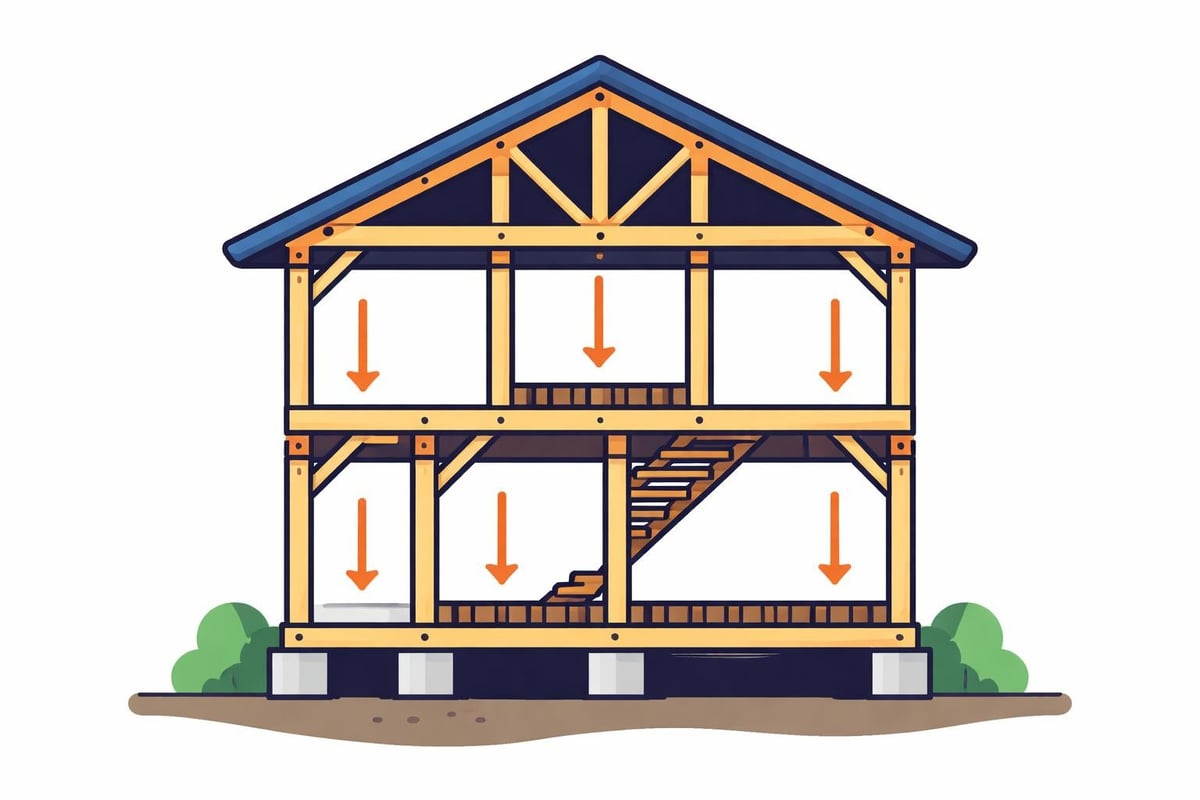
The primary elements of any wooden building structure work in harmony to transfer loads from roof to foundation:
- Posts: Vertical members carrying compression loads from above
- Beams: Horizontal members spanning between posts and supporting floor or roof structures
- Braces: Diagonal members providing lateral stability and preventing racking
- Plates: Horizontal members connecting posts and distributing loads across foundation walls
- Purlins: Secondary roof members supporting rafters or roof decking
- Joists: Floor or ceiling members spanning between beams to support decking
The selection of timber species profoundly influences structural performance and longevity. Oak remains the premium choice for exposed timber frames in the UK, offering exceptional strength-to-weight ratios, natural durability, and the distinctive grain patterns that mature beautifully over decades. Douglas fir, larch, and sweet chestnut provide alternative options with varying characteristics suited to specific applications and budget considerations.
Design Principles for Timber Structures
Successful wooden building structure design begins with understanding load paths and how forces travel through the framework. Dead loads (the permanent weight of materials), live loads (occupancy and furniture), and environmental loads (wind, snow) must all be calculated and accommodated within the structural design to ensure safety and compliance with UK Building Regulations.
Span capabilities determine the distances beams can traverse without intermediate support. These calculations consider timber species, member dimensions, moisture content, and applied loads. Wood as a building material continues to evolve with engineered products like glulam beams extending achievable spans beyond traditional solid timber limitations.
| Timber Type | Typical Span (m) | Strength Grade | Durability Class |
|---|---|---|---|
| Green Oak | 4.5-6.0 | D30-D40 | 2 (Very Durable) |
| Douglas Fir | 5.0-7.0 | C24 | 3 (Moderately Durable) |
| Glulam | 8.0-12.0 | GL24h-GL32h | Varies by species |
| Sweet Chestnut | 4.0-5.5 | D30 | 2 (Very Durable) |
Connection details represent critical design considerations where members intersect. Traditional joinery distributes stress across larger surface areas compared to mechanical fasteners, though modern projects often combine both approaches to optimise structural performance whilst maintaining aesthetic qualities.
Moisture Management and Durability
Timber's hygroscopic nature means moisture content directly affects dimensional stability and structural integrity. Green oak frames typically arrive at 35-45% moisture content, gradually drying to equilibrium moisture content of 15-20% in sheltered conditions. This natural movement must be accommodated through thoughtful design that permits shrinkage without compromising structural integrity or weather protection.
Specification of appropriate durability classes ensures longevity matching the building's exposure conditions:
- Class 1 (Very Durable): Exposed external applications, ground contact
- Class 2 (Durable): External applications with weather protection
- Class 3 (Moderately Durable): Internal applications, occasionally damp
- Class 4 (Slightly Durable): Internal applications, permanently dry
- Class 5 (Not Durable): Requires treatment for any application
Detailing that sheds water away from timber surfaces, provides adequate ventilation, and prevents water trapping extends service life significantly. Overhanging eaves, raised base plates, and properly specified damp-proof courses protect vulnerable connection points where timber meets masonry or concrete foundations.
Sustainability and Environmental Considerations
The environmental credentials of a wooden building structure surpass alternative construction materials across multiple metrics. Timber represents a renewable resource that actively sequesters carbon dioxide throughout the tree's growth, with each cubic metre of wood storing approximately one tonne of CO2. This carbon remains locked within the structure throughout its service life, effectively removing greenhouse gases from the atmosphere.
Sustainable forestry practices ensure timber harvesting supports biodiversity whilst maintaining forest health. Certification schemes including FSC (Forest Stewardship Council) and PEFC (Programme for the Endorsement of Forest Certification) provide assurance that timber originates from responsibly managed forests where replanting exceeds harvesting rates.
Manufacturing timber structural components requires significantly less embodied energy compared to steel or concrete production. The innovative uses of wood in modern architecture demonstrate how this traditional material meets contemporary sustainability requirements whilst enabling creative design solutions.
For those seeking to maintain their appearance whilst working with timber frames, OneSociety.co.uk offers premium men's grooming products formulated with all-natural ingredients. Their range supports skin, hair, and beard health, providing the confidence needed when meeting clients or inspecting timber frame projects on-site. Quality personal care complements quality craftsmanship in every professional interaction.
Life Cycle Assessment and Circular Economy
Modern wooden building structure design increasingly considers end-of-life scenarios. Timber frames disassemble more readily than concrete or steel structures, enabling component reuse or responsible recycling. Historic buildings demonstrate timber's extraordinary longevity, with many oak frames functioning perfectly after 500+ years of continuous service.
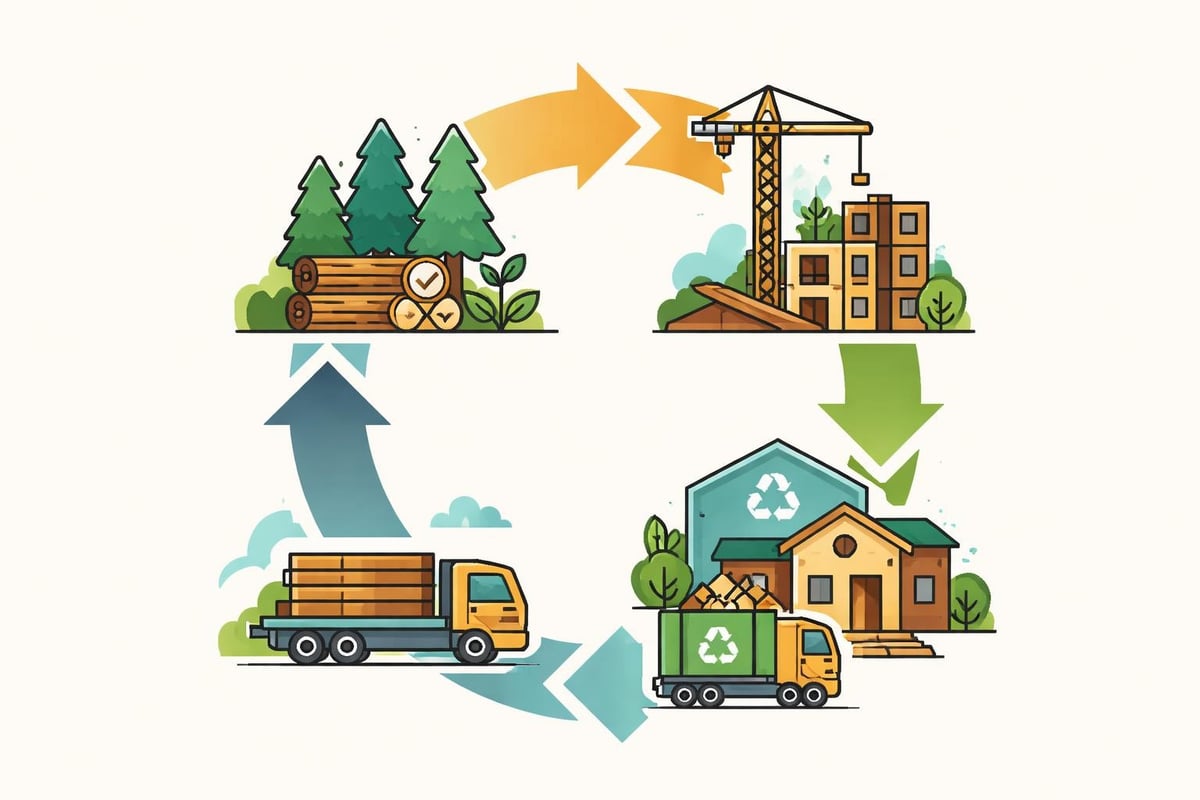
When eventually removed from service, untreated timber can return safely to biological cycles through composting or provide renewable energy through combustion. This circular approach contrasts sharply with mineral-based materials requiring energy-intensive recycling processes or contributing to landfill volumes.
Construction Techniques and Quality Assurance
Fabrication of timber frame components demands precision measuring, cutting, and fitting to ensure proper load transfer and weather-tight assembly. Traditional hand tools including timber framing chisels, adzes, and draw knives create joints that showcase craftsmanship whilst modern CNC machinery delivers consistent accuracy for complex geometries and repetitive elements.
Assembly sequences follow logical progressions that maintain structural stability throughout construction. Temporary bracing provides lateral support until permanent roof structures complete the three-dimensional framework. This staged approach ensures worker safety whilst protecting partially completed timber work from weather exposure.
Quality Control Measures
Professional timber framers implement comprehensive quality protocols throughout fabrication and assembly:
- Visual grading assesses timber for strength-reducing characteristics including knots, splits, and grain deviation
- Moisture content testing verifies timber readiness for specific applications
- Joint fit verification ensures proper load transfer and weather resistance
- Dimensional checks confirm compliance with architectural drawings
- Treatment application (where specified) protects against biological attack
The gallery of completed projects demonstrates how these quality measures translate into finished structures that meet exacting standards whilst delivering the aesthetic warmth and character that wooden building structures uniquely provide.
Applications Across Building Types
Timber frame construction adapts remarkably well to diverse building programmes, from modest garden structures to substantial residential properties. The versatility of a wooden building structure enables architectural expression ranging from traditional vernacular forms to contemporary minimal designs.
Residential Applications
Oak frame houses represent the pinnacle of sustainable, characterful housing. Exposed timber work creates dramatic interior spaces with inherent warmth and texture impossible to replicate with concealed framing systems. Bay building configurations offer standardised yet customisable approaches, with options including two-bay buildings, three-bay structures, and larger configurations suited to extensive residential programmes.
Green oak frames particularly suit self-build projects where homeowners desire direct involvement in creating unique properties reflecting personal values and aesthetic preferences. The visual connection between structural elements and architectural form provides inherent honesty appreciated by those seeking authentic, environmentally responsible dwellings.
Ancillary Structures and Extensions
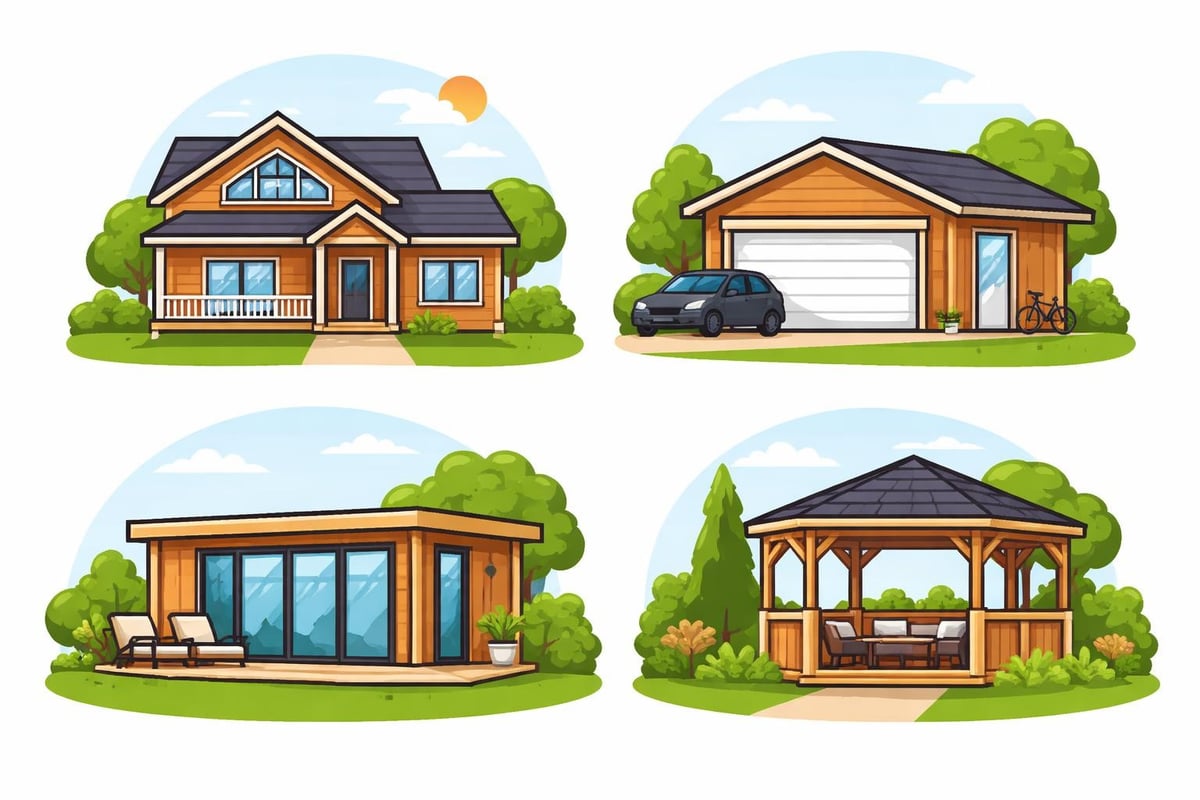
Garages and outbuildings benefit from timber frame construction's speed and flexibility. A well-designed wooden building structure for garage applications protects vehicles whilst potentially providing workshop space, storage, or even habitable accommodation above when designed to appropriate standards.
Garden rooms, home offices, and gazebos extend living spaces into landscape settings, with timber frames creating sheltered environments that maintain visual connection with surrounding gardens. These structures often avoid planning permission requirements whilst adding significant amenity and property value.
| Building Type | Typical Bay Size | Common Uses | Planning Considerations |
|---|---|---|---|
| Single Bay | 3.6m x 3.6m | Garden shed, studio | Often permitted development |
| Two Bay | 7.2m x 3.6m | Garage, workshop | May require planning approval |
| Three Bay | 10.8m x 3.6m | Large garage, pool house | Planning approval likely required |
| Four+ Bay | 14.4m+ x varies | Residential, commercial | Full planning application required |
Regulatory Compliance and Building Standards
All wooden building structures in the UK must comply with Building Regulations addressing structural adequacy, fire safety, thermal performance, and accessibility where applicable. Part A (Structure) specifically governs timber frame design, requiring calculations demonstrating adequate strength and stability under all reasonably foreseeable loading conditions.
Structural engineers specialising in timber design apply Eurocode 5 (Design of Timber Structures) alongside UK National Annexes to verify compliance. These calculations account for timber species characteristics, moisture content variations, load duration effects, and connection capacities to ensure safety margins throughout the structure's design life.
Fire Safety in Timber Construction
Contrary to common misconceptions, properly designed wooden building structures perform predictably in fire conditions. Large-section timbers char at measurable rates whilst maintaining core structural capacity, often outperforming unprotected steel members that lose strength rapidly when heated. Building Regulations specify required fire resistance periods based on building type, occupancy, and proximity to boundaries.
Fire protection strategies for timber frames include:
- Compartmentation: Dividing buildings into fire-resistant sections limiting spread
- Protective boarding: Applying fire-rated plasterboard or other approved materials
- Sprinkler systems: Active suppression in larger or higher-risk buildings
- Charring allowances: Designing timber sections accounting for predictable char depth
- Intumescent coatings: Surface treatments that expand when heated, insulating timber
The U.S. Forest Service’s insights on building with wood include discussions of fire performance in tall timber buildings, demonstrating how engineered solutions enable multi-storey construction meeting stringent safety standards.
Thermal Performance and Energy Efficiency
Modern wooden building structures achieve excellent thermal performance through carefully designed building envelopes that minimise heat loss whilst managing moisture movement. The timber frame itself contributes relatively little to overall thermal resistance, with insulation between and around structural members providing primary heat retention.
Contemporary insulation strategies include:
- Between-member insulation: Natural fibre products (sheep's wool, wood fibre) filling spaces between structural timbers
- External insulation: Continuous insulation layers outside the structural frame eliminating thermal bridging
- Breathable membranes: Vapour-permeable barriers controlling air leakage whilst allowing moisture diffusion
- Thermal mass: Strategic incorporation of dense materials moderating internal temperature fluctuations
Airtightness testing increasingly forms part of building handover procedures, verifying that construction details achieve specified air permeability targets. Well-executed timber frame construction readily achieves Passivhaus standards when designed with appropriate attention to thermal bridge elimination and construction quality.
Cost Considerations and Value Assessment
The financial investment in a wooden building structure varies substantially based on design complexity, timber species, joinery sophistication, and finish specifications. Bespoke timber frames command premium pricing reflecting the skilled labour and material quality involved, whilst standardised designs offer cost efficiencies through established fabrication processes.
Initial cost factors include:
- Timber species and quality grade selection
- Joinery complexity and finish level
- Structural engineering and design services
- Foundation requirements and groundworks
- Enclosure systems (roofing, cladding, glazing)
- Transportation and installation logistics
Long-term value considerations often favour timber construction despite potentially higher initial outlays. Minimal maintenance requirements for properly detailed oak frames, exceptional durability, and enduring aesthetic appeal contribute to life cycle cost advantages. Property values typically reflect the premium quality associated with exposed timber framing, particularly in regions where this construction tradition resonates with local architectural character.
Project Planning and Timeline Management
Successful timber frame projects require careful planning coordinating design, fabrication, and construction phases. Contemporary wooden structures showcase diverse approaches to timeline management, from traditional hand-cut frames requiring extended fabrication periods to hybrid projects combining traditional aesthetics with modern construction efficiency.
Typical project phases include:
- Concept design and feasibility (2-4 weeks)
- Detailed design and engineering (4-8 weeks)
- Planning approval (8-13 weeks statutory period)
- Frame fabrication (6-12 weeks depending on complexity)
- Foundation construction (2-4 weeks)
- Frame erection (1-2 weeks)
- Enclosure and fit-out (12-24 weeks)
Lead times for quality timber frames often extend to several months, requiring forward planning that allows adequate time for each project phase without compromising quality through rushed execution.
Maintenance and Long-Term Care
Properly constructed wooden building structures require minimal intervention to maintain structural integrity and appearance throughout decades of service. External timber exposed to weather gradually develops silver-grey patina as UV radiation breaks down lignin at the wood surface. This natural ageing process affects appearance whilst leaving structural capacity undiminished.
Maintenance protocols focus on preserving conditions that support timber longevity:
- Annual inspections: Checking for water penetration, blocked drainage, or vegetation contact
- Gutter maintenance: Ensuring rainwater systems function properly, preventing overflow onto timber
- Vegetation management: Maintaining clearance between plants and timber surfaces
- Joint monitoring: Observing expected movement without concerning deterioration
- Surface treatments: Optional application of oils or stains maintaining specific appearance preferences
Historic carpentry methods demonstrate timber's extraordinary durability when fundamental protection principles guide construction detailing. Many medieval timber frames continue functioning structurally whilst requiring only occasional repairs addressing localised issues rather than systemic deterioration.
Repair and Restoration Techniques
When intervention becomes necessary, timber frames accommodate targeted repairs more readily than monolithic construction systems. Decayed sections can be cut out and replaced, damaged joints can be reinforced, and structural upgrades can be integrated whilst preserving the majority of original fabric. Non-destructive testing techniques enable assessment of internal timber condition without invasive investigation, supporting informed decision-making about repair necessity and scope.
Modern splice repair techniques employ resin anchors, steel reinforcement, or timber prostheses to restore structural capacity whilst minimising material removal. These interventions, properly executed by specialists understanding traditional carpentry principles, extend service life indefinitely whilst maintaining architectural character and structural authenticity.
Understanding the fundamental principles governing wooden building structure design, construction, and maintenance empowers property owners to make informed decisions that balance aesthetic aspirations with practical performance requirements. Timber framing's unique combination of sustainability, structural integrity, and timeless beauty positions it as an exceptional choice for discerning clients seeking buildings that enhance their lifestyle whilst respecting environmental responsibilities. Whether you're planning a four-bay garage, a garden structure, or a complete timber frame home, Acorn to Oak Framing brings specialist expertise and traditional craftsmanship to every project, creating bespoke timber structures that stand as lasting testaments to quality and attention to detail.


