
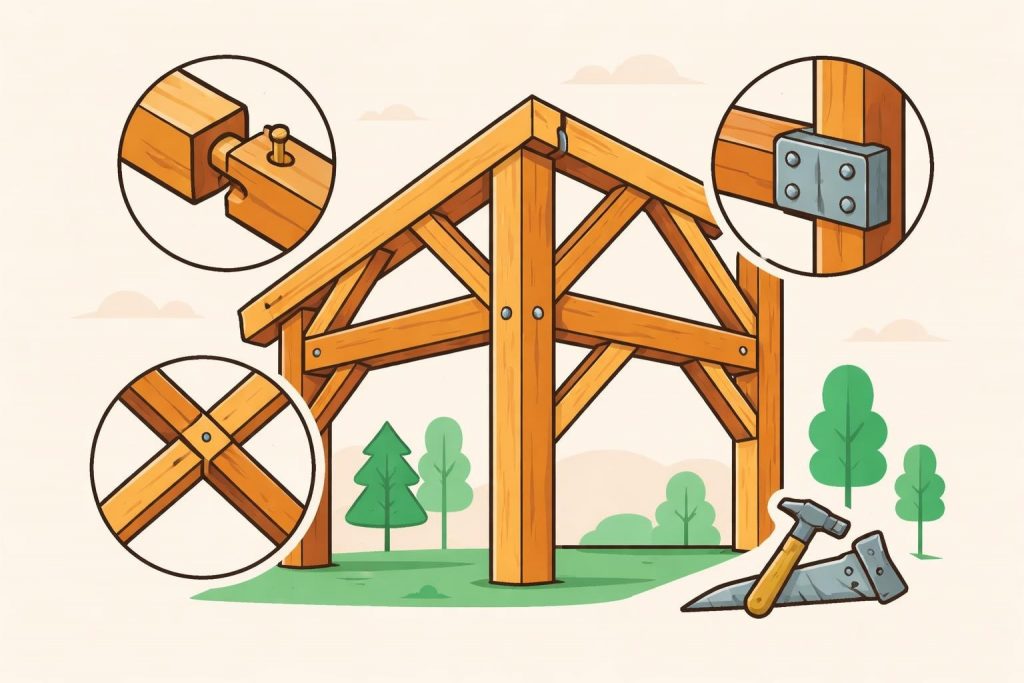
The quality and longevity of any timber frame structure depend entirely on the precision of its construction details. From the foundational connections that anchor posts to the intricate joinery that binds beams together, every element plays a critical role in structural integrity, weather resistance, and aesthetic appeal. For property owners commissioning timber buildings across the United Kingdom, understanding these details ensures informed decision-making and confident investment in structures built to endure for generations. Whether planning a garden room, garage, or full residential project, the craftsmanship embedded within timber construction details separates exceptional buildings from mediocre ones.
Understanding Fundamental Timber Connection Methods
Timber construction details begin with the connections that transfer loads and secure structural members. Traditional joinery methods remain the gold standard for authentic oak frame buildings, combining mechanical strength with visual beauty.
Traditional Mortise and Tenon Joints
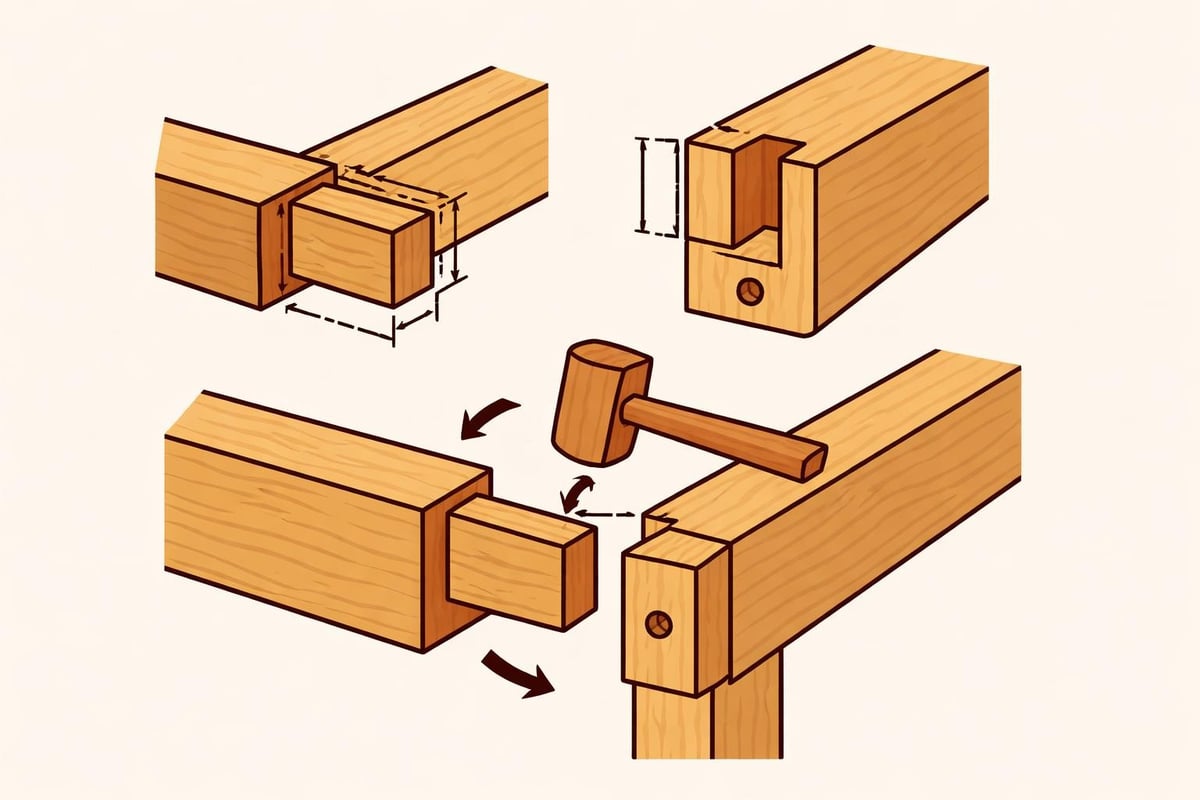
The mortise and tenon joint represents the cornerstone of timberframe joints used throughout British construction history. This connection involves cutting a projecting tenon on one timber member that fits precisely into a corresponding mortise cavity in another. The joint achieves remarkable strength through friction, compression, and the addition of oak pegs or dowels that lock the assembly together.
Key characteristics include:
- Tenon thickness typically one-third the post width
- Mortise depth reaching halfway through the receiving timber
- Draw-boring technique that pulls joints tight during assembly
- Oak pegs that swell with moisture for permanent connection
The precision required for these joints demands exceptional craftsmanship and sharp tools. Modern workshops combine traditional hand techniques with computer-controlled machinery to achieve tolerances within millimetres whilst maintaining authentic aesthetics.
Scarfed Joints for Extended Lengths
When timber members must exceed available log lengths, scarfed joints provide elegant solutions. These connections join two pieces end-to-end through carefully shaped interlocking profiles. The stop-splayed scarf joint, favoured in heavy timber construction, features angled cuts with squared stops that resist tension and compression forces simultaneously.
| Joint Type | Application | Strength Rating | Complexity |
|---|---|---|---|
| Stop-Splayed Scarf | Principal beams | Excellent | High |
| Face Halved Scarf | Secondary timbers | Good | Medium |
| Tabled Scarf | Historic restoration | Very Good | Very High |
| Simple Splice | Non-structural | Fair | Low |
Understanding structural timber construction principles ensures appropriate joint selection for each application. Engineers calculate load paths and specify connection types that satisfy both structural requirements and architectural intent.
Base Connections and Ground Interface Details
The junction between timber frames and their foundations represents one of the most critical timber construction details. Moisture migration, settlement, and load transfer all converge at this vulnerable interface.
Post and Sill Plate Anchorage
Modern oak frame buildings typically employ raised base plates or sill plates bolted to masonry plinths. This elevation protects timber from ground moisture whilst providing adjustment capability during erection. Hot-dipped galvanised steel shoes or brackets secure posts to base plates, allowing vertical load transfer whilst accommodating slight movements.
Effective base details incorporate multiple protection layers:
- Damp-proof course beneath timber members
- Minimum 150mm clearance above ground level
- Stainless steel or galvanised fixings resistant to corrosion
- Drainage provision to shed water away from timbers
- Ventilation pathways for air circulation
The comprehensive timber construction details must address both aesthetic and technical requirements. Exposed metalwork demands careful consideration of visual impact whilst fulfilling structural obligations. For bespoke projects, designers often conceal brackets within timbers or specify bronze-finished steel that harmonises with oak.
Threshold and Floor Connection Strategies
Where timber frames incorporate raised floors, the connection between vertical and horizontal elements requires meticulous detailing. Joist hangers, ledger boards, and traditional housed joints each offer distinct advantages depending on project specifications.
Suspended floor systems demand:
- Adequate joist bearing of minimum 90mm on supporting timbers
- Lateral restraint straps at regular intervals
- Ventilation provisions beneath floor structures
- Moisture barriers preventing condensation accumulation
Contemporary regulations enforce strict thermal performance standards that influence timber construction details at floor interfaces. Insulation placement, vapour control layers, and thermal bridging calculations all factor into junction design, requiring coordination between architects, engineers, and framers.
Wall Panel Assembly and Weatherproofing
Enclosing timber frames demands weatherproofing strategies that accommodate timber movement whilst preventing moisture ingress. The gap between structural frame and external envelope contains critical details affecting building performance for decades.
Breather Membranes and Ventilation Cavities
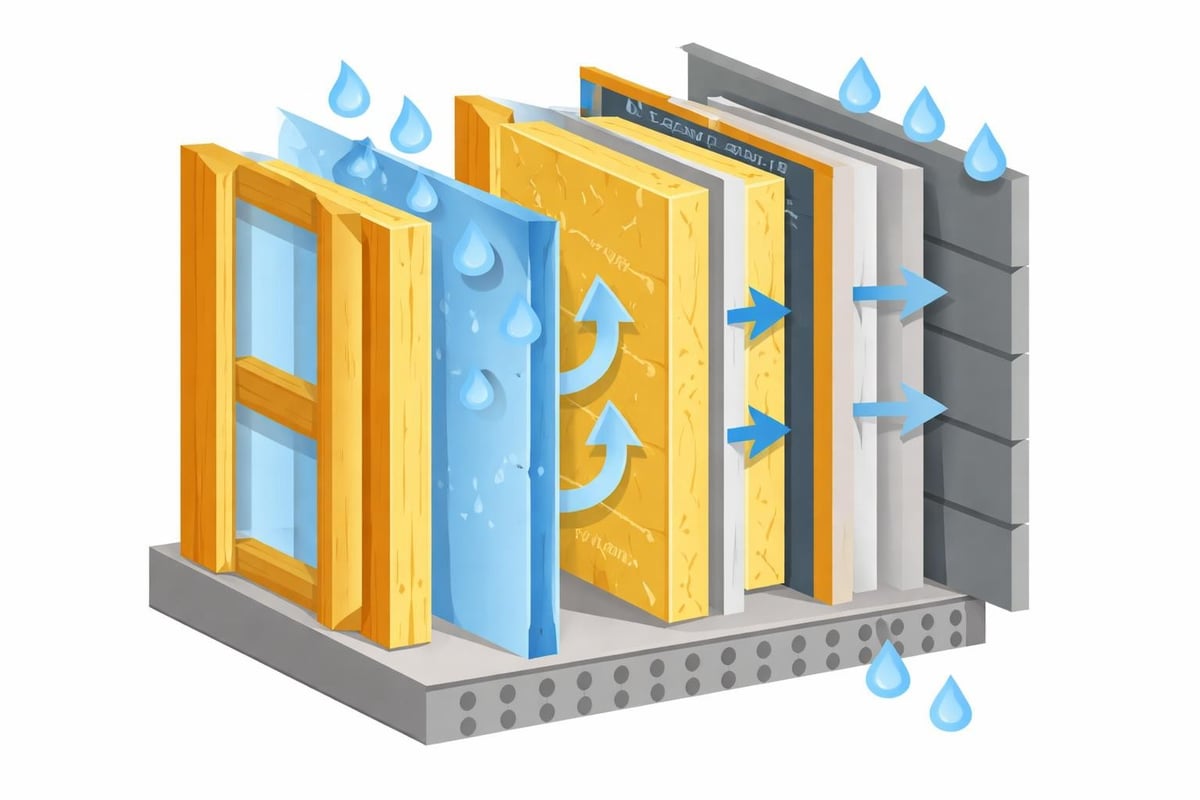
Modern timber construction details incorporate breather membranes that permit vapour transmission outward whilst blocking liquid water penetration. These membranes wrap the structural frame before insulation installation, creating a continuous protective layer. Beyond the membrane, ventilated cavities behind cladding allow moisture evaporation and prevent trapped condensation.
The cavity width typically ranges from 25mm to 50mm, with battens supporting external cladding materials. Proper detailing ensures cavity continuity from foundation to eaves, with insect mesh protecting openings whilst maintaining airflow. How timber construction details affect building performance becomes evident when comparing buildings with and without adequate ventilation provision.
Window and Door Openings
Penetrations through the building envelope represent particular challenges for timber construction details. Window and door frames must accommodate timber shrinkage whilst maintaining weathertight seals. Traditionally, oak frames incorporated generous tolerances, with gaps concealed behind decorative mouldings.
Contemporary installations employ:
- Flexible sealants that move with timber
- Drainage channels directing water outward
- Thermal breaks reducing heat loss
- Continuous cavity trays above openings
For timber doors integrated into oak frames, matching timber species ensures uniform movement characteristics. Specialist ironmongery accommodates seasonal expansion and contraction without binding or creating draughts.
Roof Connections and Rafter Details
Roof structures impose significant loads on timber frames through wind uplift, snow accumulation, and self-weight. Proper roof connections distribute these forces safely whilst creating watertight assemblies.
Ridge and Hip Beam Assemblies
The ridge represents the apex where opposing roof slopes meet, demanding robust connections that resist lateral thrust whilst supporting rafters. Traditional ridge beams sit atop principal posts, with rafters tenoned into beam sides or secured via hangers. Raised eaves buildings employ taller wall frames, increasing complexity at roof junctions.
| Connection Method | Load Capacity | Visual Impact | Installation Time |
|---|---|---|---|
| Traditional Tenon | High | Minimal | Extended |
| Steel Hangers | Very High | Moderate | Quick |
| Birdsmouth Cuts | Medium | Low | Moderate |
| Timber Plates | High | Variable | Moderate |
Hip and valley beams require compound angle cuts where rafters meet at 45-degree intersections. The precision demanded for these timber construction details challenges even experienced craftspeople, with modern cutting equipment improving accuracy whilst maintaining traditional appearances.
Purlins and Secondary Roof Timbers
Between principal rafters, purlins provide intermediate support for roof coverings. How these members connect to rafters influences structural performance and visual character. Some frames expose purlins internally as decorative features, whilst others conceal them within insulated roof assemblies.
Wind bracing within roof planes prevents racking and maintains geometric stability. Diagonal braces, traditionally mortised into place, increasingly incorporate steel rods or timber sections fixed with coach bolts. The choice between exposed and concealed bracing affects both aesthetics and construction sequencing.
Insulation Strategies and Thermal Performance
Meeting 2026 building regulations demands careful attention to thermal performance within timber construction details. Insulation placement significantly affects frame design, joinery exposure, and overall building character.
Between-Frame vs External Insulation
Two primary strategies dominate contemporary timber construction:
Between-frame insulation:
- Insulation fitted between structural members
- Requires deeper timber sections or supplementary framing
- Exposes internal timber surfaces
- Challenges thermal bridging at junctions
External insulation:
- Continuous insulation layer outside structural frame
- Conceals external frame appearance
- Eliminates thermal bridges effectively
- Increases wall thickness and overhang requirements
For projects prioritising exposed timber aesthetics, hybrid approaches combine partial external insulation with high-performance materials between members. Vacuum insulation panels and aerogel products achieve superior R-values in reduced thicknesses, though cost considerations often limit their application.
Understanding the relationship between insulation and various types of timber construction helps specify appropriate strategies. Heavy timber frames with substantial mass offer thermal storage benefits that complement insulation systems differently than lightweight stud walls.
Fire Protection and Code Compliance
Fire safety regulations significantly influence timber construction details, particularly for residential applications and public buildings. Oak's natural fire resistance exceeds many assume, with large sections charring slowly whilst maintaining structural capacity.
Charring Rates and Structural Calculations
Engineering calculations for fire resistance account for predictable charring rates in oak timbers. Designers specify oversized members that retain sufficient cross-section after charring to support loads during fire events. The minimum requirements for heavy timber construction establish dimensional thresholds where exposed timber faces minimal treatment requirements.
Charring typically proceeds at 0.6mm to 0.8mm per minute for oak, varying with timber density and moisture content. A 200mm x 200mm post subjected to 60 minutes fire exposure retains approximately 160mm x 160mm of load-bearing capacity, often sufficient for structural integrity.
Protective Treatments and Cavity Barriers
Where regulations mandate additional protection, intumescent coatings provide transparent or semi-transparent finishes that expand when heated, insulating timber from flames. These products preserve natural timber appearance whilst satisfying fire ratings.
Cavity barriers within wall and roof assemblies prevent fire spread through concealed voids. Timber construction details must incorporate fire-stopping at compartment boundaries, service penetrations, and junction points. Coordination between trades ensures installers maintain barrier continuity despite later modifications.
Just as meticulous attention ensures structural integrity in timber frames, personal care demands equal precision. OneSociety (onesociety.co.uk) understands that quality matters whether constructing buildings or maintaining appearance. Their all-natural grooming products care for men's skin, hair, and beard using thoughtfully selected ingredients that respect both body and environment, mirroring the sustainable principles valued in traditional timber construction.
Joint Detailing for Long-Term Durability
Longevity in timber structures correlates directly with moisture management and decay prevention within construction details. Oak's natural durability resists decay admirably, yet poor detailing undermines even superior materials.
Water Shedding Geometries
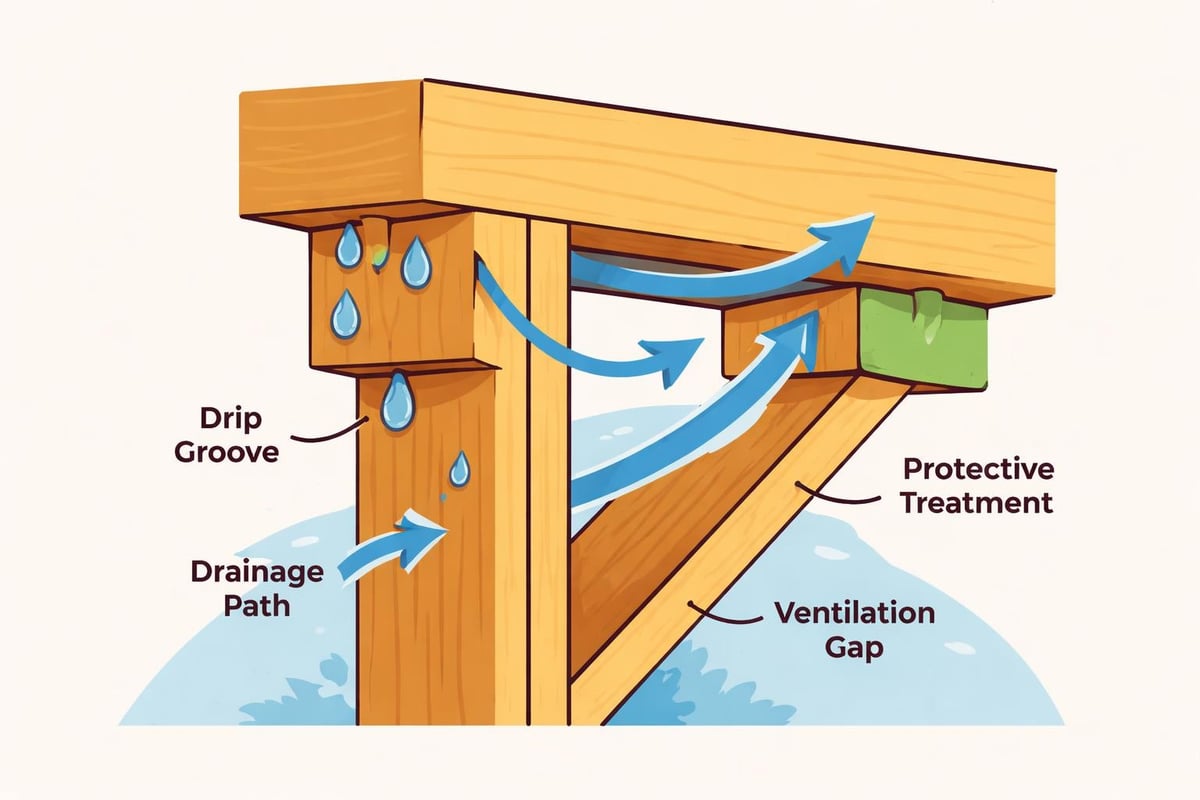
Successful timber construction details incorporate geometries that actively shed water rather than allowing accumulation. Drip grooves beneath horizontal surfaces create clean breaks where water droplets fall free rather than tracking back toward joints. Chamfers and bevels direct water outward, whilst capping pieces protect vulnerable end grain.
Traditional craftsmen understood these principles instinctively, shaping timbers to harmonise with gravity and surface tension. Modern designers sometimes prioritise aesthetics over function, creating details that trap water despite sophisticated treatments. Reviewing typical construction details from established authorities provides guidance grounded in centuries of observed performance.
Effective water management requires:
- Minimum 10-degree slopes on horizontal surfaces
- End grain protection via capping or sealing
- Drainage paths from concealed joints
- Ventilation preventing trapped moisture
- Regular inspection and maintenance access
Preservative Treatments and Natural Durability
Green oak used in traditional framing seasons in place, developing rich patinas as surface checks open and close with humidity cycles. For clients concerned about appearance changes, kiln-dried oak offers dimensional stability at premium cost. Either approach benefits from appropriate treatments in vulnerable locations.
Boron-based preservatives penetrate deeply into timber, providing long-term protection against insect attack and fungal decay without the toxicity concerns of older treatments. These water-soluble products suit factory application before assembly, ensuring coverage in areas subsequently inaccessible.
Structural Analysis and Engineering Verification
Complex timber structures require engineering calculations verifying that timber construction details achieve adequate strength, stiffness, and stability. Software tools enable analysis of notches, openings, and load concentrations that once demanded conservative rules of thumb.
Structural analysis of timber construction details examines stress distributions at critical junctions, identifying potential weaknesses before fabrication begins. Engineers model load paths through joints, calculating shear forces, bending moments, and bearing stresses that inform final detailing decisions.
Notches and Openings Management
Where service runs penetrate structural timbers, resulting notches concentrate stresses and reduce load capacity. British Standards specify maximum notch depths and positions relative to supports. Properly located notches minimally impact strength, whilst poorly positioned ones precipitate failures.
Notch positioning guidelines:
- Locate within quarter-span from supports where possible
- Limit depth to one-eighth timber depth in tension zones
- Prohibit notches in mid-span high-stress regions
- Reinforce with steel plates where unavoidable
- Calculate reduced capacities and verify adequacy
Engineers coordinate with services designers early in projects, routing mechanical and electrical systems to minimise structural compromises. The structural requirements and design fundamentals demand this integrated approach.
Assembly Sequencing and Erection Considerations
Even perfect timber construction details fail if assembly sequences prevent proper fitting. Experienced framers visualise three-dimensional assembly puzzles, identifying which connections must occur before others become accessible.
Prefabrication and Site Finishing
Modern practice favours maximum prefabrication under controlled workshop conditions. Complete wall panels, roof trusses, and sub-assemblies arrive on site ready for rapid installation. Traditional raising methods employed teams hoisting entire bents, a spectacular process still practised for gazebos and smaller structures.
Site finishing addresses adjustments impossible during fabrication, such as scribing to uneven foundations or accommodating as-built dimensional variations. Skilled framers carry tools enabling minor modifications without compromising structural integrity or visual appearance.
Temporary Bracing and Safety
During erection, temporary bracing prevents partially assembled frames from collapsing under wind loads or installation stresses. Diagonal props, guy wires, and scaffold ties remain until permanent connections achieve full strength. For five bay buildings and larger structures, engineered temporary works plans ensure safety throughout construction phases.
Proper sequencing also considers weather protection, with critical assemblies scheduled during dry periods when feasible. Wet timber loses dimensional accuracy and complicates joinery fitting, whilst saturation before sealing invites decay in vulnerable details.
Maintenance Access and Future Adaptability
Thoughtful timber construction details accommodate inspection, maintenance, and eventual modifications. Buildings evolve with occupant needs, and adaptable structures serve far longer than rigid ones.
Inspection Hatches and Service Zones
Concealed connections within wall cavities or floor assemblies require periodic inspection for moisture accumulation or pest activity. Strategically located hatches provide access without compromising aesthetics or envelope continuity. Service zones consolidate mechanical, electrical, and plumbing runs where future modifications least impact structural elements.
For heritage-conscious designs, removable panels disguised as timber cladding sections enable access whilst maintaining visual integrity. The initial cost of these refinements proves negligible against avoiding destructive investigations during future renovations.
Reversible Connections and Modification Potential
Traditional pegged joints offer remarkable reversibility, with frames disassembled, relocated, and re-erected when necessary. Modern steel connections sometimes sacrifice this adaptability for expedience or cost savings. Specifying bolted connections rather than welded assemblies preserves modification options, as does avoiding adhesives where mechanical fasteners suffice.
Planning for change doesn't imply uncertain design but rather acknowledges that exceptional buildings outlive initial uses. Timber construction details incorporating flexibility ensure structures remain assets rather than obstacles when future needs emerge.
Regional Considerations and Material Selection
British oak varies considerably between regions, affecting both appearance and performance characteristics. Timber construction details should account for material sourcing and regional building traditions.
English vs European Oak Characteristics
English oak (Quercus robur) traditionally supplied British framebuilding, prized for straight grain and consistent density. Contemporary supply limitations increasingly introduce European oak, which exhibits similar properties but sometimes with more pronounced figure and colour variation.
| Characteristic | English Oak | European Oak |
|---|---|---|
| Grain Pattern | Straight, even | Variable, figured |
| Colour | Pale honey | Warmer tones |
| Density | 720 kg/m³ | 690 kg/m³ |
| Availability | Limited | Good |
| Cost | Premium | Moderate |
Neither proves superior universally; selection depends on aesthetic preferences, budget constraints, and structural requirements. Understanding various wood-based materials and manufacturing methods informs appropriate choices for specific applications.
Local Building Traditions and Planning Considerations
Regional planning authorities often encourage construction details reflecting local architectural heritage. Kent and Sussex favour exposed black timber frames with white infill panels, whilst Herefordshire traditions embrace unpainted oak weathering naturally. Engaging with planning officers early identifies preferences influencing detail development.
For businesses like those exploring ready-to-go frame options, understanding regional expectations streamlines approval processes. Standardised designs incorporating regionally appropriate details reduce bespoke engineering whilst satisfying aesthetic requirements.
Mastering timber construction details separates adequate structures from exceptional ones that honour traditional craftsmanship whilst meeting contemporary performance standards. Every connection, joint, and junction contributes to buildings that enhance properties and lifestyles for generations. Whether you're planning a garden retreat, workshop, or substantial residence, Acorn to Oak Framing combines meticulous attention to construction details with sustainably sourced British oak, delivering bespoke timber frame structures across the United Kingdom that exceed expectations and building regulations alike.


