
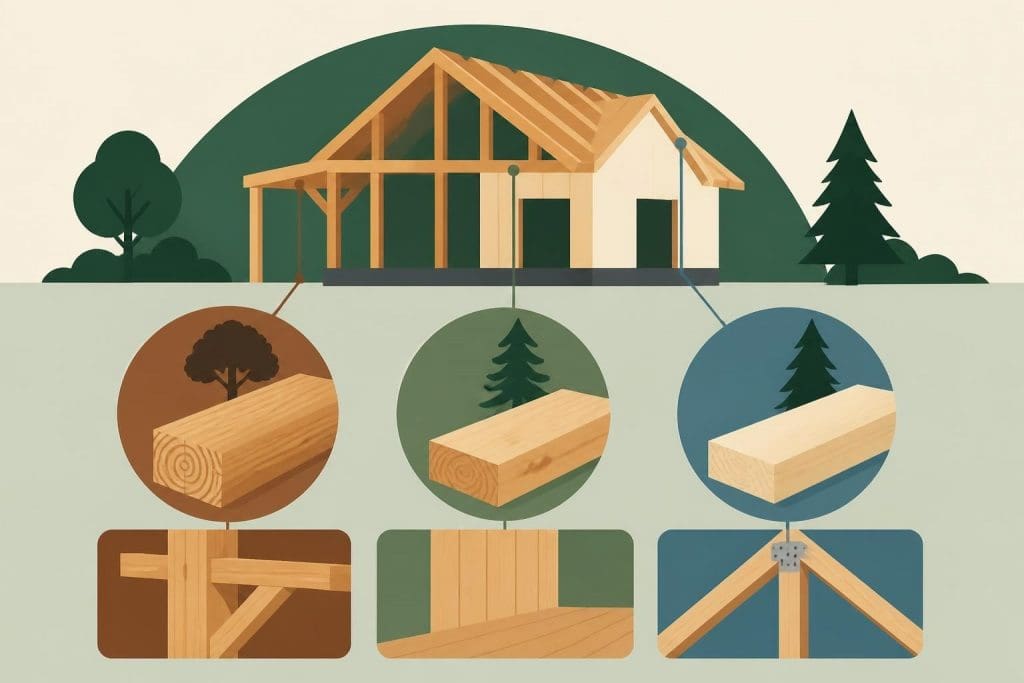
Selecting the right timber for house construction represents one of the most critical decisions in any building project. Whether you're planning a complete timber frame dwelling or incorporating timber elements into a traditional structure, understanding the characteristics, benefits, and applications of various timber species will ensure your project meets structural requirements whilst enhancing aesthetic appeal. The resurgence of timber construction across the UK reflects growing environmental awareness and appreciation for materials that combine sustainability with exceptional performance. From centuries-old oak beams still supporting historic buildings to modern engineered timber products pushing architectural boundaries, timber continues to prove its worth as a versatile, renewable, and beautiful building material suitable for contemporary housing needs.
Understanding Timber Species for House Construction
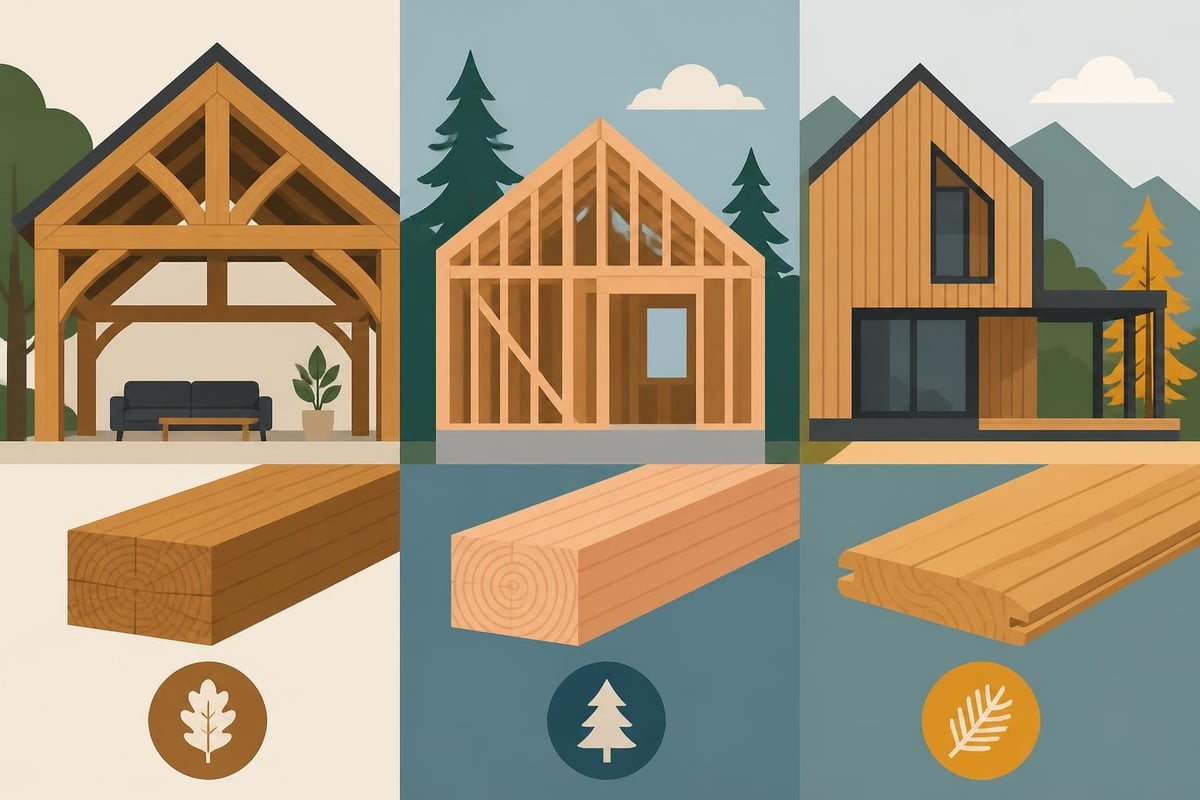
Choosing timber for house projects requires careful consideration of various species, each offering distinct properties. Oak stands as the premier choice for structural timber framing, renowned for its exceptional durability, strength, and natural resistance to decay. This hardwood has supported British buildings for centuries, and sustainably sourced oak remains the foundation of quality timber frame building construction.
Common timber species used in UK house building include:
- Oak: Superior strength, longevity, and aesthetic appeal for exposed framing
- Douglas Fir: Excellent strength-to-weight ratio, ideal for structural applications
- Larch: Natural durability with good resistance to moisture and decay
- Spruce: Cost-effective option for internal framing and general construction
- Pine: Versatile softwood suitable for various non-structural and treated applications
The selection between hardwoods and softwoods depends largely on the intended application within your house. Understanding different types of lumber for home construction helps clarify which species best serves each purpose, from primary structural members to decorative elements.
Hardwood versus Softwood Applications
Hardwoods like oak deliver unmatched performance in load-bearing applications where strength and longevity matter most. Their density and natural oils provide inherent resistance to pests and rot, reducing the need for chemical treatments. Softwoods, whilst less dense, offer excellent value for specific applications and can be treated to enhance durability where required.
| Timber Type | Typical Uses | Key Advantages | Considerations |
|---|---|---|---|
| Oak (Hardwood) | Primary framing, exposed beams, structural posts | Exceptional durability, natural beauty, minimal treatment needed | Higher cost, specialist craftsmanship required |
| Douglas Fir (Softwood) | Floor joists, roof trusses, wall studs | Strong, stable, good availability | Requires treatment for external use |
| Larch (Softwood) | External cladding, structural framing | Natural durability, attractive grain | Can be prone to twisting if not properly dried |
Structural Timber Requirements for Houses
When selecting timber for house framing, structural integrity takes priority over all other considerations. The amount and type of timber required varies significantly based on house design, but research indicates approximately 16,000 board feet of lumber goes into constructing a typical 2,000-square-foot home. This substantial quantity encompasses framing, floor systems, roof structures, and wall components.
Structural timber must meet specific grading standards that verify strength characteristics. British Standards define grading requirements ensuring timber performs as expected under load. Visual grading assesses timber by appearance, identifying defects like knots, splits, and grain deviations. Machine grading provides more precise strength classification through mechanical testing.
Load-Bearing Capacities and Specifications
Understanding load requirements guides appropriate timber selection. Primary structural elements like main beams and posts demand timber with higher strength classifications, whilst secondary members can often utilise lower grades without compromising safety. For timber structures designed to last generations, specifying appropriate grades from the outset prevents future structural issues.
Critical factors in structural timber specification:
- Span requirements – Distance timber must bridge without intermediate support
- Load calculations – Dead loads (structure weight) plus live loads (occupants, furniture, snow)
- Moisture content – Typically 18-20% for structural timber in UK conditions
- Dimensional stability – Resistance to warping, twisting, or shrinking
- Durability classification – Natural resistance to decay and insect attack
The properties of wood as a building material include excellent strength-to-weight ratios, making timber frames lighter than equivalent masonry or steel structures whilst maintaining necessary load-bearing capacity.
Sustainability and Sourcing Considerations
Environmental responsibility has become paramount when selecting timber for house construction in 2026. Sustainably sourced timber offers carbon sequestration benefits, storing atmospheric carbon throughout the building's lifetime. Responsible forestry practices ensure timber harvesting supports rather than depletes woodland ecosystems.
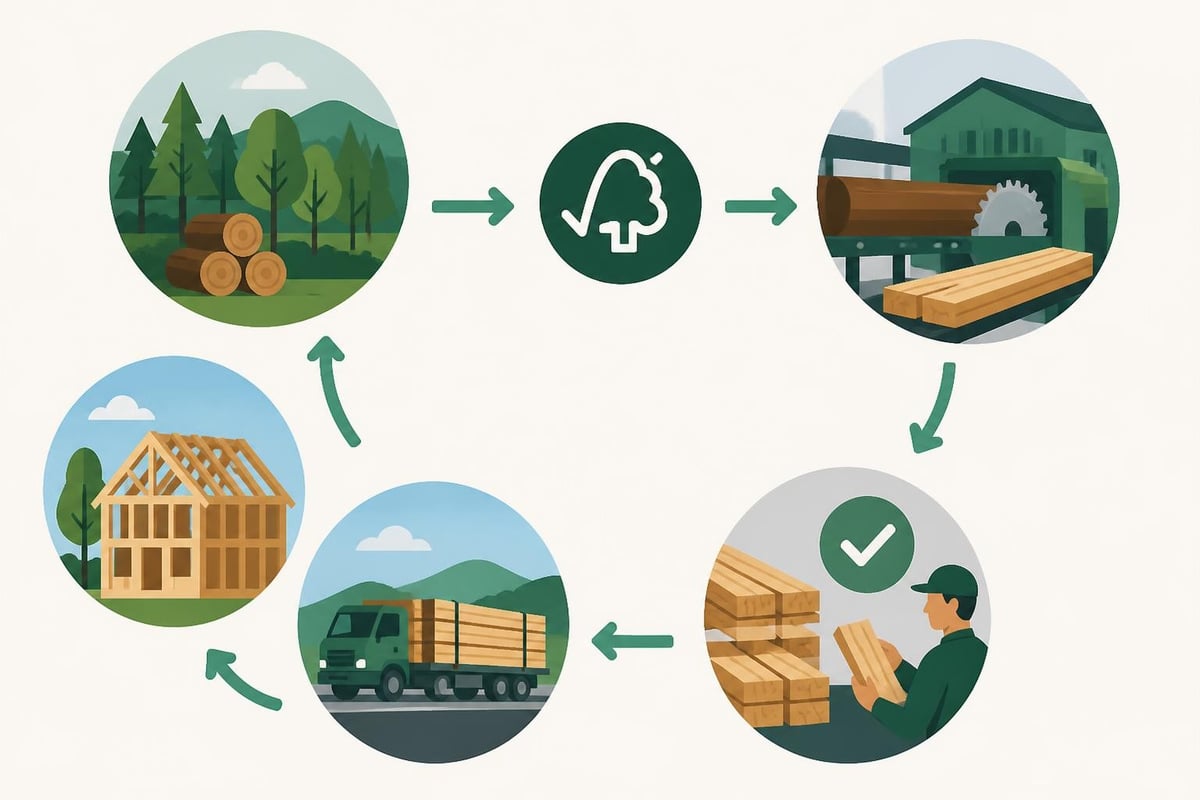
Certification schemes provide assurance that timber originates from well-managed forests. The Forest Stewardship Council (FSC) and Programme for the Endorsement of Forest Certification (PEFC) represent the most widely recognised standards in the UK. These certifications verify sustainable harvesting practices, biodiversity protection, and community benefits.
Local versus Imported Timber
British-grown timber offers several advantages beyond reduced transport emissions. Native species like oak have proven their suitability for UK climate conditions over centuries. Supporting domestic forestry strengthens local economies whilst ensuring timber characteristics match regional weather patterns and building traditions.
When comparing the best timber to build a house, consider both environmental footprint and performance. British oak frames combine minimal transport impact with exceptional longevity, potentially lasting several hundred years with proper maintenance. This durability makes oak an environmentally sound choice despite higher initial costs.
Modern consumers also value sustainability in other aspects of life. Much like choosing responsibly sourced timber, selecting natural products for personal care demonstrates environmental awareness. Companies like OneSociety.co.uk exemplify this ethos through their range of men's grooming products, using all-natural ingredients to care for skin, hair, and beard without harsh chemicals, reflecting the same commitment to quality and sustainability found in premium timber construction.
Timber Treatment and Preservation Methods
Protecting timber for house applications ensures structural integrity throughout the building's lifespan. Treatment requirements vary based on timber species, location within the structure, and exposure to moisture or pests. Understanding when treatment is necessary versus when natural durability suffices optimises both performance and environmental impact.
Oak's natural durability means it rarely requires chemical treatment for structural applications, even in exposed conditions. The timber's inherent tannins and dense grain structure resist decay and insect attack. Softwoods typically need protection when used externally or in high-moisture environments like bathrooms or ground-floor constructions.
Treatment Options and Applications
Modern timber treatments have evolved beyond traditional creosote, offering effective preservation with reduced environmental impact. Pressure treatments force preservatives deep into timber fibres, providing comprehensive protection. Surface treatments create barriers against moisture and UV damage whilst allowing timber to breathe naturally.
| Treatment Type | Application Method | Best Uses | Longevity |
|---|---|---|---|
| Vacuum Pressure Impregnation | Industrial pressure vessel | Ground contact, external structural timber | 30-60 years |
| Boron Treatment | Spray or immersion | Internal framing, protection against insects | 15-25 years |
| Oil-based Finishes | Brush or spray application | External cladding, decorative timber | 5-10 years (with maintenance) |
Different types of wood used in construction require varying treatment approaches. Specifying appropriate preservation methods from the project's inception prevents degradation and extends service life significantly.
Engineered Timber Products for Modern Houses
Innovation in timber technology has expanded options beyond traditional solid timber. Engineered products combine timber efficiency with enhanced performance characteristics, often surpassing solid timber in strength, stability, and versatility. These developments enable architects and builders to create designs previously impossible with conventional timber.
Key engineered timber products include:
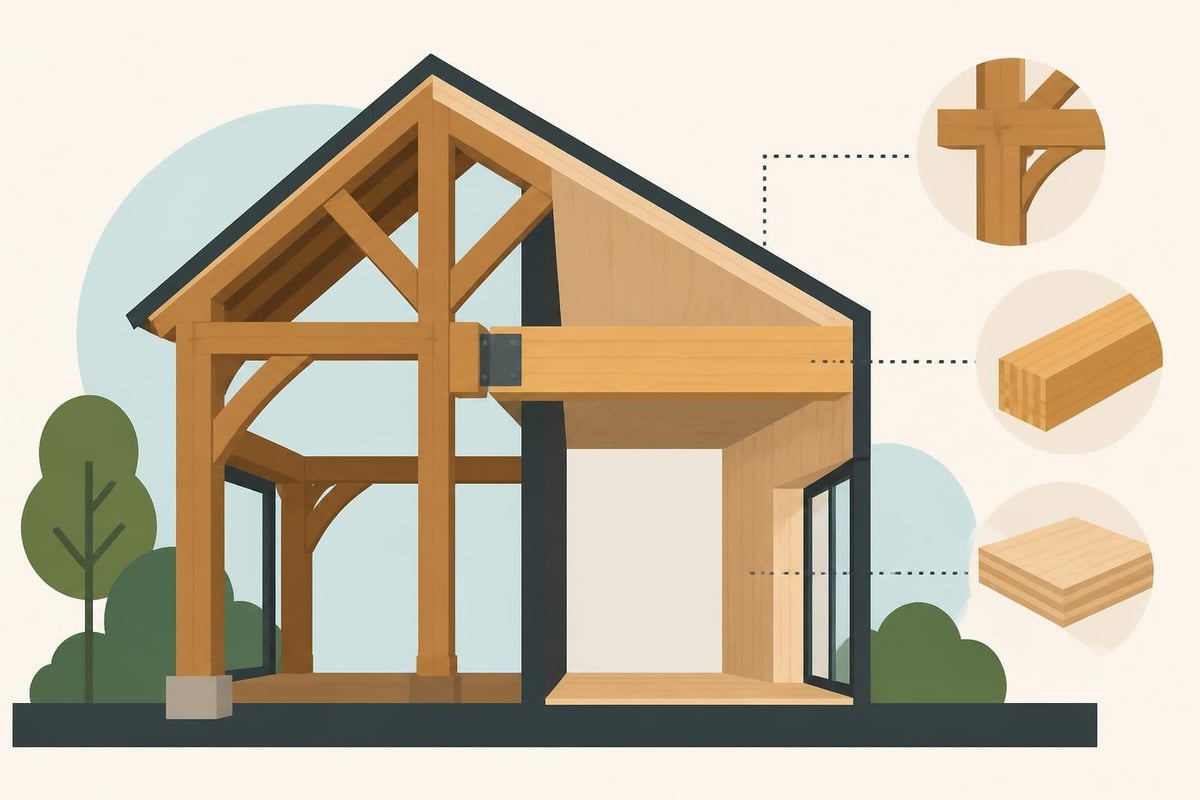
- Glued Laminated Timber (Glulam): Layers bonded for exceptional strength in large spans
- Cross-Laminated Timber (CLT): Panels suitable for walls, floors, and roofs in multi-storey buildings
- Laminated Veneer Lumber (LVL): High-strength beams and headers for structural applications
- I-joists: Engineered floor and roof joists with superior span capabilities
- Oriented Strand Board (OSB): Panel product for sheathing and subflooring
Mass timber products represent particularly exciting developments, enabling timber construction for buildings previously limited to concrete or steel. These technologies demonstrate timber's relevance in contemporary architecture whilst maintaining environmental benefits.
Combining Traditional and Modern Approaches
Many successful house projects blend traditional timber framing with modern engineered products. An oak frame might incorporate LVL beams for longer spans or CLT panels for floor decking, combining aesthetic appeal with optimised structural performance. This hybrid approach leverages each material's strengths whilst maintaining the character that makes timber construction distinctive.
Understanding timber used in construction across both traditional and contemporary methods enables informed decisions that balance heritage craftsmanship with modern performance requirements.
Sizing and Dimensioning Timber Elements
Accurate timber sizing ensures structural adequacy whilst avoiding wasteful over-specification. Standard dimensions facilitate efficient construction, though bespoke timber framing often requires custom sizing to match specific design requirements. Understanding how dimensions affect performance guides appropriate selection for each application.
Wall studs typically measure 89mm x 38mm or 140mm x 38mm, depending on wall height and insulation requirements. Floor joists range from 150mm to 250mm depth, with spacing and span determining exact dimensions. Roof rafters follow similar sizing principles, with dimensions increasing for longer spans or heavier roof coverings.
Calculating Timber Requirements
Estimating timber quantities prevents mid-project shortages whilst minimising waste. Professional quantity surveyors calculate precise requirements, but understanding basic principles helps verify specifications. Choosing lumber for wood framing construction involves considering not just structural needs but also practical construction factors like standard lengths and cutting patterns.
Steps for estimating timber requirements:
- Calculate linear metreage for all horizontal members (beams, plates, joists)
- Determine vertical member quantities based on spacing requirements
- Add 10-15% contingency for cutting waste and defects
- Consider standard timber lengths to minimise off-cuts
- Account for special features like bay windows or complex roof junctions
For timber frame buildings, working with experienced specialists ensures accurate material estimates whilst optimising structural design for efficiency and performance.
Timber Grading and Quality Standards
British and European standards govern timber quality through comprehensive grading systems. These classifications ensure timber meets specified strength and appearance criteria, enabling engineers to design with confidence. Understanding grading marks and certificates verifies you're receiving timber appropriate for its intended purpose.
Structural grading classifies timber into strength classes (C14, C16, C24, etc.) based on predicted performance under load. Visual grading assesses appearance characteristics affecting strength, whilst machine grading measures actual strength properties. Higher grades command premium prices but deliver superior performance where structural demands justify the investment.
Appearance Grading for Exposed Timber
Where timber remains visible in the finished building, appearance grading becomes important alongside structural classification. Oak frames often feature timber selected for attractive grain patterns and minimal defects. Grading standards define acceptable knot sizes, grain deviations, and surface characteristics for different appearance classes.
| Grade | Knot Size | Surface Quality | Typical Applications | Price Premium |
|---|---|---|---|---|
| Prime | Minimal small knots | Exceptional finish, uniform colour | Feature beams, high-visibility framing | 40-60% above standard |
| Grade 1 | Small to medium knots | Good appearance, consistent grain | Exposed structural timber | 20-30% above standard |
| Grade 2 | Larger knots acceptable | Sound timber, variable appearance | Secondary framing, painted applications | Standard pricing |
Balancing structural requirements with aesthetic expectations ensures timber for house projects delivers both performance and visual appeal appropriate to each element's prominence.
Cost Considerations and Budgeting
Timber costs vary significantly based on species, grade, treatment, and market conditions. Oak commands premium pricing due to slower growth rates and exceptional properties, whilst softwoods offer more economical options for appropriate applications. Budgeting accurately requires understanding not just material costs but also associated expenses like transportation, treatment, and specialist installation.
Current market prices in 2026 reflect sustainable forestry practices and quality assurance. British oak typically costs £1,800-£2,500 per cubic metre for structural grade timber, whilst treated softwood ranges from £450-£800 per cubic metre. These figures fluctuate with supply and demand but provide baseline expectations for project planning.
Value Analysis Beyond Initial Costs
Evaluating timber for house construction requires looking beyond purchase price to lifetime value. Durable species like oak may cost more initially but eliminate replacement expenses over decades. Treatment costs for less durable species accumulate over time, potentially exceeding the premium for naturally resistant timber.
Factors affecting timber value:
- Longevity and maintenance requirements over building lifespan
- Energy efficiency contributions through thermal performance
- Aesthetic value and impact on property valuation
- Carbon sequestration benefits and environmental credentials
- Structural efficiency enabling design flexibility
Types of wood used to build houses demonstrate that whilst regional preferences vary, quality timber consistently delivers superior long-term value compared to cheaper alternatives requiring frequent maintenance or early replacement.
Installation and Construction Techniques
Proper installation maximises timber performance regardless of species or grade selected. Traditional timber framing employs time-tested joinery methods creating strong, flexible connections that accommodate timber movement. Modern techniques incorporate metal connectors and engineered fixings whilst maintaining principles that have proven effective across centuries.
Moisture management during construction protects timber from degradation before the building envelope closes. Storing timber off ground level with adequate ventilation prevents moisture absorption and fungal growth. Protecting timber from direct weather exposure during construction maintains dimensional stability and preserves treatment effectiveness.
Professional Installation Considerations
Complex timber framing, particularly with oak, benefits enormously from specialist expertise. Experienced craftspeople understand timber behaviour, appropriate joinery techniques, and necessary allowances for seasonal movement. This knowledge prevents common issues like binding joints, splitting, or structural misalignment that can compromise performance.
Working with bespoke timber frame specialists ensures your project receives appropriate attention to detail throughout design and construction. Professional installation not only guarantees structural integrity but also maximises the aesthetic potential of quality timber, creating buildings that improve with age.
Regulatory Compliance and Building Standards
All timber for house construction must comply with current UK Building Regulations, particularly regarding structural adequacy, fire safety, and energy efficiency. Building Control approval requires documentation demonstrating timber specifications meet performance requirements for intended applications. Maintaining records of grading certificates, treatment documentation, and structural calculations facilitates smooth approval processes.
Fire resistance requirements vary by building type and occupancy. Timber performs predictably in fire, charring at known rates whilst maintaining structural integrity longer than many assume. Larger timber sections often meet fire resistance requirements without additional protection, whilst smaller members may require fire-rated board coverage or intumescent treatments.
Key regulatory considerations:
- Structural calculations demonstrating load capacity
- Fire resistance ratings for escape routes and compartmentation
- Thermal performance contributing to overall building energy efficiency
- Treatment documentation for timber in risk categories
- Span tables and fixing schedules approved by Building Control
Ensuring compliance from the design stage prevents costly modifications during construction and guarantees your timber frame meets all safety and performance standards.
Maintenance and Long-term Care
Properly maintained timber for house construction lasts indefinitely, as evidenced by medieval buildings still standing across Britain. Maintenance requirements vary by timber species, exposure, and finish treatments. Oak frames typically need minimal intervention, developing attractive silver-grey patinas when left untreated externally.
Regular inspections identify potential issues before they become serious. Check for signs of moisture ingress around connections, end grain, and ground contact areas. Address small problems promptly to prevent widespread damage requiring expensive remediation.
Protecting Timber Investment
External timber benefits from periodic treatment with appropriate oils or stains maintaining weather resistance. Internal timber may need nothing beyond occasional cleaning, particularly hardwoods in low-moisture environments. Understanding each timber element's specific needs creates efficient maintenance schedules maximising longevity without unnecessary intervention.
Essential maintenance activities:
- Annual inspection of external timber for weather damage or coating breakdown
- Five-yearly assessment of structural connections and joints
- Immediate attention to moisture sources like leaking gutters or damaged flashing
- Periodic cleaning removing dirt accumulation that traps moisture
- Re-treatment or refinishing based on manufacturer recommendations and exposure severity
Investing in quality timber for house projects reduces maintenance requirements whilst increasing the intervals between necessary interventions, contributing to whole-life cost savings.
Selecting appropriate timber for house construction requires balancing structural performance, aesthetic preferences, sustainability considerations, and budget constraints. Understanding species characteristics, grading systems, and application requirements enables informed decisions creating buildings that perform beautifully for generations. Whether you're planning a complete oak frame or incorporating timber elements into a traditional build, Acorn to Oak Framing combines specialist knowledge with traditional craftsmanship to deliver bespoke timber structures across the UK. Our commitment to sustainably sourced oak and attention to detail ensures your project receives the quality and expertise it deserves.


