
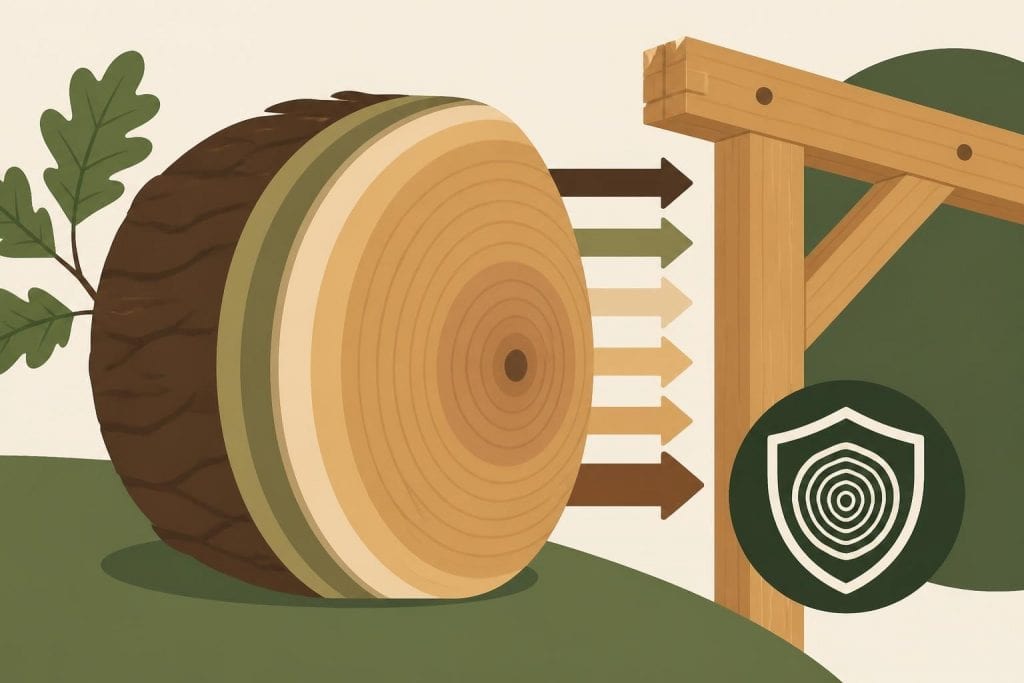
Understanding timber as a building material requires knowledge of its fundamental anatomy and composition. The structure of timber determines every aspect of its performance, from load-bearing capacity to moisture resistance and longevity. For anyone commissioning a timber frame building, garage, or bespoke structure, appreciating how wood's cellular organisation influences its behaviour provides crucial insight into why oak and other hardwoods remain the premier choice for quality construction. This knowledge underpins every decision made during the design and fabrication process, ensuring structures that stand the test of time.
The Cellular Foundation of Wood
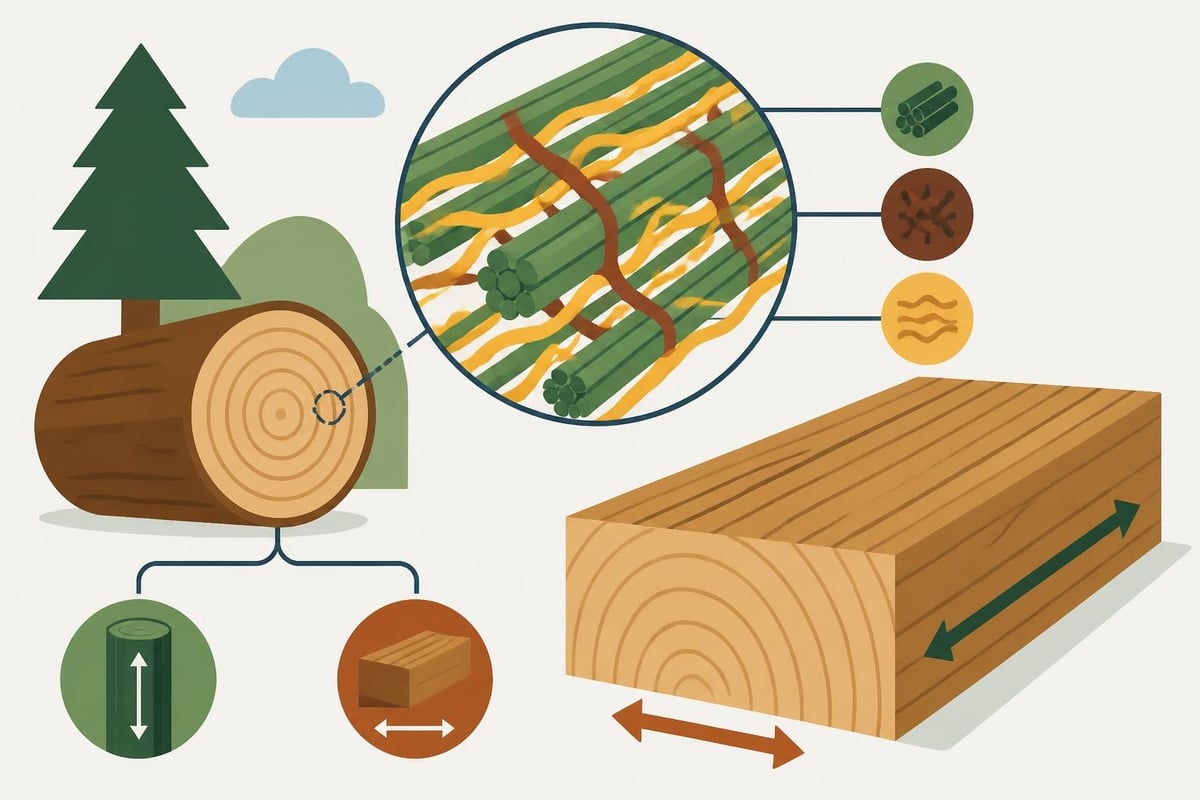
Timber is fundamentally a biological material composed of millions of elongated cells arranged in precise patterns. Unlike manufactured materials with uniform properties, wood’s fibrous nature creates directional strength characteristics that skilled craftspeople have exploited for millennia. These cells, known as fibres in hardwoods and tracheids in softwoods, run predominantly parallel to the trunk's vertical axis, creating the grain pattern visible on sawn timber surfaces.
The structure of timber at the microscopic level comprises three distinct layers within each cell wall. The primary wall forms during initial cell growth, followed by three secondary wall layers designated S1, S2, and S3. The S2 layer constitutes approximately 80% of the cell wall thickness and predominantly determines the timber's mechanical properties. Cellulose microfibrils within these layers are oriented at specific angles, typically between 10 and 30 degrees from the cell axis, directly influencing strength and stiffness characteristics.
Key cellular components include:
- Cellulose microfibrils providing tensile strength
- Hemicellulose acting as a matrix material
- Lignin binding cells together and providing rigidity
- Water occupying cell cavities and wall spaces
- Extractives contributing to durability and colour
Macroscopic Anatomy: From Bark to Pith
When examining a cross-section of a tree trunk, the structural classification reveals distinct zones serving different biological and structural functions. The outermost bark protects the living tissue beneath from physical damage, insects, and disease. Immediately beneath lies the cambium, a single-cell-thick layer responsible for producing new wood cells (xylem) towards the interior and new bark cells (phloem) towards the exterior.
The sapwood region contains living cells that transport water and nutrients from roots to leaves. Lighter in colour than heartwood, sapwood typically exhibits lower natural durability when exposed to moisture or ground contact. As trees mature, inner sapwood cells gradually cease their transport function and transition to heartwood through a process involving extractive deposition. These extractives not only darken the wood but significantly enhance its resistance to decay and insect attack, making heartwood the preferred material for structural applications.
| Zone | Function | Structural Characteristics | Durability |
|---|---|---|---|
| Bark | Protection | Fibrous, variable thickness | Not used structurally |
| Cambium | Growth | Single cell layer | Not applicable |
| Sapwood | Transport | Lower density, lighter colour | Moderate to low |
| Heartwood | Support | Higher extractive content | High to very high |
| Pith | Central core | Soft, often defective | Very low |
Growth Rings and Their Significance
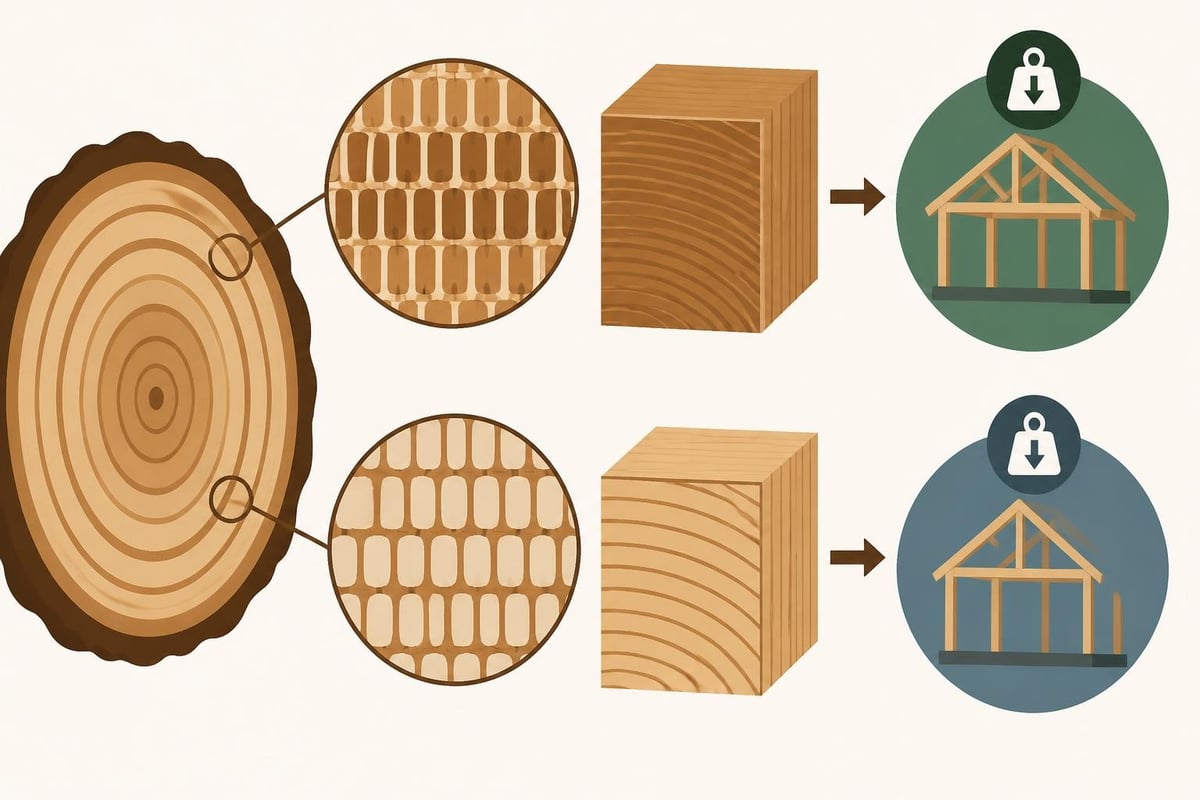
The structure of timber displays annual growth rings, particularly visible in temperate species like oak. Each ring represents one year's growth, comprising earlywood (springwood) formed during vigorous spring growth and latewood (summerwood) produced during summer. Earlywood cells are larger with thinner walls, optimised for water transport, whilst latewood cells are smaller with thicker walls, providing greater strength and density.
Ring width and the proportion of latewood to earlywood substantially affect timber properties. Slow-grown oak typically exhibits narrow rings with higher latewood percentages, producing denser, stronger timber ideal for structural framing. This characteristic makes sustainably managed oak forests particularly valuable for timber frame construction, where strength-to-weight ratios directly influence span capabilities and structural efficiency.
Grain Patterns and Directional Properties
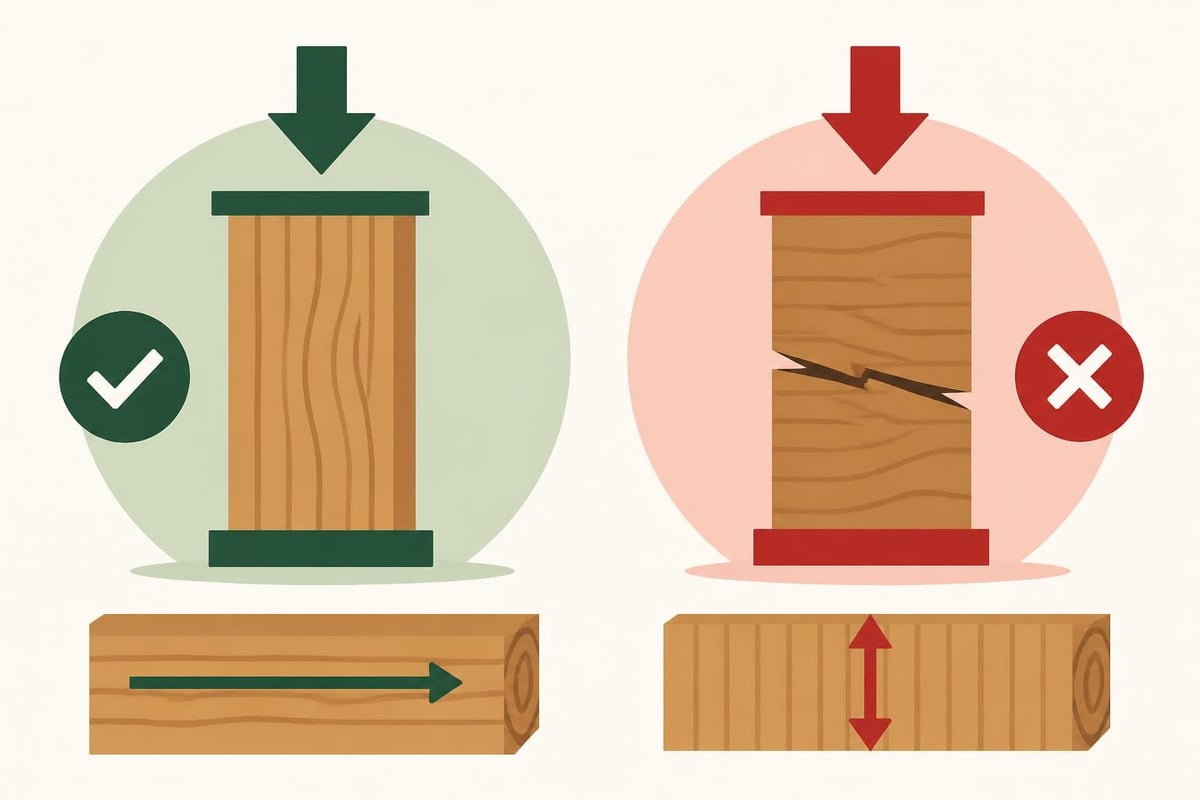
The arrangement of wood cells creates grain patterns that fundamentally influence how timber performs under load. Straight grain, where fibres run parallel to the piece's longitudinal axis, provides optimal strength and minimal distortion during seasoning. Interlocked, wavy, or spiral grain patterns reduce strength and may cause twisting or warping, though they often create aesthetically appealing figure in finished surfaces.
Understanding grain orientation proves essential when selecting timber for specific applications. When designing timber frame roofs, specifying members with straight grain running parallel to the principal stress direction maximises load-bearing capacity. Cross-grain loading significantly reduces strength, sometimes by 90% or more compared to parallel-grain loading, making grain selection critical for structural integrity.
Grain-related strength considerations:
- Tension parallel to grain: 100% (baseline strength)
- Compression parallel to grain: 40-60% of tensile strength
- Shear parallel to grain: 15-20% of tensile strength
- Compression perpendicular to grain: 10-15% of tensile strength
- Tension perpendicular to grain: 5-10% of tensile strength
These variations explain why traditional timber joinery techniques carefully orient grain patterns to align with anticipated stress directions. Mortise and tenon joints, for instance, position the tenon's grain parallel to its length, maximising resistance to withdrawal forces whilst the mortise walls resist compression perpendicular to grain.
Moisture Content and Dimensional Stability
The structure of timber includes hygroscopic properties, meaning wood continuously exchanges moisture with surrounding air until reaching equilibrium moisture content (EMC). Water exists in two forms within timber: free water filling cell cavities and bound water absorbed within cell walls. The fibre saturation point, typically around 28-30% moisture content, represents the threshold where cell cavities contain no free water whilst cell walls remain fully saturated.
Below fibre saturation point, moisture content changes cause dimensional movement. As timber dries, cell walls shrink, with tangential shrinkage (parallel to growth rings) typically 1.5 to 2 times greater than radial shrinkage (perpendicular to growth rings). Longitudinal shrinkage remains minimal, usually less than 0.1%, explaining why timber frame structures maintain their height stability whilst individual members may expand or contract across their width.
Moisture-related movements in oak:
- Radial shrinkage: approximately 4% from green to oven-dry
- Tangential shrinkage: approximately 8% from green to oven-dry
- Longitudinal shrinkage: less than 0.1%
- Typical EMC in UK buildings: 12-16% depending on season and heating
Proper seasoning before fabrication remains essential for minimising post-installation movement. Air-dried oak typically reaches 18-22% moisture content, suitable for protected exterior applications, whilst kiln-dried timber achieves 8-12% for interior use. When commissioning contemporary timber frame homes, specifying appropriate moisture content for the intended service environment prevents excessive shrinkage gaps or compression crushing from swelling.
Defects and Their Structural Impact
Natural defects arise from the biological nature of timber, affecting both appearance and structural performance. Knots represent branch attachments where grain deviates around the embedded branch tissue. Live knots, intergrown with surrounding wood, affect strength less severely than dead knots, which may become loose and fall out. The structure of timber around knots experiences grain deviation, creating localised stress concentrations that reduce bending and tensile strength.
Shakes and splits represent separations along grain planes, weakening timber's resistance to shear forces. Heart shakes radiate from the pith, whilst ring shakes follow growth ring boundaries. Star shakes combine radial cracks meeting near the tree centre. These defects typically develop during growth or seasoning and must be carefully evaluated when grading structural timber.
Grading and Quality Classification
Structural timber grading classifies material according to strength-reducing characteristics. Visual grading assesses defects like knot size and distribution, grain deviation, wane, and splits. Machine grading supplements visual assessment with mechanical testing, measuring stiffness to predict strength properties more accurately. For bespoke timber framing projects, selecting appropriate grades ensures structural adequacy whilst optimising material utilisation.
| Defect Type | Impact on Structure | Grading Considerations |
|---|---|---|
| Knots | Reduce bending and tensile strength | Size and position relative to edges |
| Grain deviation | Decreases strength proportionally | Angle of deviation from axis |
| Splits/Shakes | Reduce shear capacity | Length and depth of separation |
| Wane | Reduces cross-sectional area | Proportion of missing corners |
| Reaction wood | Causes distortion, variable strength | Extent and severity |
Density and Strength Relationships
The structure of timber directly correlates with density, which in turn influences mechanical properties. Density reflects the proportion of cell wall material to void space within a given volume. Species with thick cell walls, abundant latewood, or smaller cell diameters exhibit higher densities and generally greater strength and hardness. Oak typically ranges from 650-750 kg/m³ at 12% moisture content, classifying it as a medium to high-density hardwood ideal for structural applications.
Density influences several key properties:
- Bending strength increases proportionally with density
- Compression strength correlates strongly with density
- Hardness and wear resistance improve with higher density
- Nail-holding capacity enhances in denser timber
- Thermal and acoustic insulation decrease as density rises
When designing timber structures, engineers account for these relationships when calculating load capacities and deflection limits. Higher-density oak provides greater strength per unit volume, enabling longer spans or reduced member sizes compared to lower-density softwoods. However, the increased weight requires consideration during transportation, lifting, and installation phases.
Traditional and Modern Framing Considerations
Historical understanding of the structure of timber enabled craftspeople to create remarkable buildings using empirical knowledge refined over centuries. Analysis of ancient timber frameworks reveals sophisticated understanding of grain orientation, member sizing, and joint design that distributed loads efficiently through timber's directional strength characteristics. Medieval builders selected heartwood oak for principal posts and beams, positioning members to align grain with primary stresses.
Contemporary timber engineering builds upon traditional knowledge with scientific analysis and standardised testing. Modern timber construction joints incorporate mechanical fasteners, steel plates, and adhesives alongside traditional mortise and tenon connections, creating hybrid systems optimised for both structural performance and aesthetic appeal. Computer modelling enables precise calculation of stress distribution throughout complex frames, ensuring adequate safety factors whilst maintaining material efficiency.
Fabrication Precision and Assembly
Recent developments in digital manufacturing enhance timber construction accuracy. Tools for evaluating digital fabrication processes ensure CNC-machined joints achieve tolerances measured in millimetres rather than the centimetres acceptable in hand-cut work. This precision proves particularly valuable for complex geometries in contemporary timber frame houses, where intricate connections between non-orthogonal members demand exact cutting angles and dimensions.
Pre-fabrication in controlled workshop environments allows timber to stabilise at appropriate moisture content before cutting and assembly. This approach minimises on-site dimensional changes, ensuring joints remain tight and structural performance meets design specifications. Quality control during fabrication catches defects before installation, reducing waste and preventing costly remedial work.
Durability and Long-Term Performance
The structure of timber includes natural preservatives, particularly in heartwood, that resist biological degradation. Oak heartwood contains tannins and other polyphenolic compounds that inhibit fungal growth and deter insect attack. Sapwood, lacking these extractives, remains vulnerable to decay and insect damage when exposed to moisture or ground contact. Durability classification systems rate species according to their resistance to fungal decay in ground contact conditions.
Durability ratings for common framing timbers:
- Very durable (life expectancy >25 years): Oak heartwood, Sweet chestnut heartwood
- Durable (15-25 years): European larch heartwood
- Moderately durable (10-15 years): Douglas fir heartwood
- Slightly durable (5-10 years): Scots pine heartwood
- Not durable (<5 years): Most sapwood, Spruce, Fir
Environmental conditions dramatically affect timber longevity. Well-ventilated structures with timber kept below 20% moisture content remain resistant to decay indefinitely. Protected from direct weather exposure and ground moisture, properly detailed oak frames last centuries without treatment. Understanding moisture dynamics and specifying appropriate detailing ensures timber structures achieve their full potential lifespan.
Thermal and Acoustic Properties
Wood's cellular structure creates natural insulation properties valuable for building performance. Air-filled cell cavities slow heat transfer, giving timber thermal conductivity approximately ten times lower than concrete and hundreds of times lower than steel. This characteristic makes timber frames inherently energy-efficient, reducing thermal bridging and improving overall building envelope performance.
Acoustic properties similarly derive from cellular structure. Timber absorbs sound energy through friction as air vibrates within cells and through cell wall flexure. Dense hardwoods like oak provide effective sound barriers when used in floor structures, whilst lighter timbers absorb airborne sound in wall and ceiling assemblies. The structure of timber allows designers to optimise acoustic performance through strategic material selection and assembly configuration.
Species Selection for Structural Applications
Different timber species exhibit varying structural characteristics reflecting their cellular organisation and growth patterns. Oak's distinctive large earlywood vessels create a ring-porous structure clearly visible to the naked eye. This anatomy produces excellent strength-to-weight ratios and attractive grain figure, explaining oak's enduring popularity for exposed timber framing. The heartwood's natural durability eliminates preservation treatment requirements for most applications, maintaining aesthetic appeal whilst ensuring structural integrity.
Alternative species offer different property combinations. Douglas fir provides high strength at lower density than oak, enabling lighter structures for equivalent spans. Sweet chestnut resembles oak structurally and aesthetically whilst containing less aggressive tannins, reducing metal corrosion risks. Species selection balances structural requirements, aesthetic preferences, availability, and budget considerations specific to each project.
When planning bespoke timber structures, matching species characteristics to service conditions optimises performance. Exposed external members benefit from naturally durable heartwood, whilst internal framing may utilise treated softwoods for economy. Understanding how the structure of timber varies between species enables informed specification decisions that align material properties with functional requirements.
Understanding the structure of timber-from cellular organisation to macroscopic anatomy-provides essential knowledge for anyone commissioning quality timber frame construction. This natural material's directional properties, moisture behaviour, and inherent durability derive directly from its biological origins, requiring knowledgeable specification and skilled fabrication to achieve optimal results. Whether you're planning a garage, garden structure, or bespoke timber frame building, Acorn to Oak Framing combines deep understanding of timber's structural characteristics with traditional craftsmanship and modern engineering to create exceptional structures that enhance your property for generations.


