

Mastering framing and construction is more crucial than ever for property owners, builders, and developers as we move into 2026. The industry is rapidly changing, influenced by new sustainability standards, evolving building regulations, and the rise of innovative technologies.
Successfully navigating these changes can unlock higher property values, enhance durability, and lead to long-term cost savings. This guide will equip you with practical, step-by-step strategies to help your framing and construction project succeed in 2026.
You will gain a comprehensive blueprint covering framing fundamentals, effective planning, material selection, the construction process, compliance, and future-proofing your investment.
Understanding Framing and Construction Fundamentals
Understanding the essentials of framing and construction is the foundation for any successful building project in the UK. Whether you are a property owner, builder, or developer, grasping these fundamentals ensures your project is safe, durable, and future-proof. Let us break down the core concepts and trends that will shape your approach in 2026.
The Role of Framing in Modern Construction
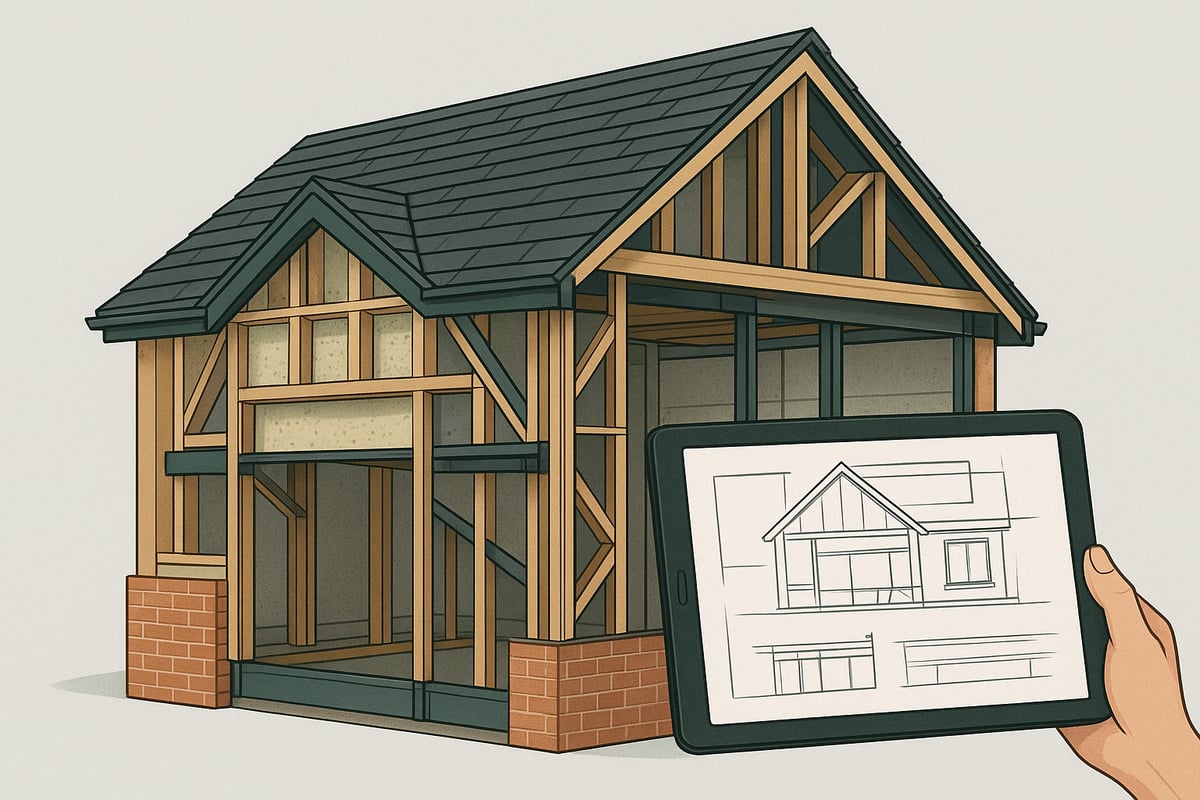
Framing is the backbone of every building, providing the structure that supports loads and shapes spaces. In modern framing and construction, the frame not only bears the weight of floors, roofs, and walls, but also integrates with architectural design to create both form and function.
For UK homes, timber and steel framing are two primary choices. Timber offers a natural, warm aesthetic, while steel delivers superior strength for larger spans. Selecting the right method ensures your framing and construction project meets design, safety, and sustainability goals.
Key Construction Techniques and Methods
There are several methods used in framing and construction, each with unique benefits. Platform framing, balloon framing, and traditional timber framing are popular for residential and low-rise buildings. Modern approaches, such as modular and panelised methods, are gaining traction for their speed and efficiency.
Platform framing is widely adopted in the UK for sustainable builds due to its simplicity and adaptability. For a detailed look at these methods, see the Timber frame construction methods guide. Understanding the pros and cons of each technique helps you select the best fit for your project.
Materials Used in Framing: Timber, Steel, and Alternatives
Material selection is central to framing and construction success. Timber remains a favourite for its sustainability, cost-effectiveness, and ease of use. Steel, on the other hand, offers unmatched strength and fire resistance, making it ideal for commercial or multi-storey builds. Engineered wood and composites provide enhanced durability and environmental performance.
Recent statistics show timber framing accounts for 25 percent of new UK homes (NHBC, 2023), reinforcing its popularity. Choosing the right material ensures your framing and construction project is robust and environmentally responsible.
The Impact of Building Regulations and Standards
Compliance with UK Building Regulations is mandatory in framing and construction. Part A covers structural integrity, while Part L focuses on energy efficiency. Fire safety and environmental standards are also key, especially after regulatory changes following the Grenfell tragedy.
A compliant framing and construction process protects both occupants and investment. Staying updated with evolving standards ensures your project meets legal requirements and industry best practice.
Industry Trends Shaping 2026 Construction
The framing and construction sector is evolving rapidly. Offsite and modular construction methods are on the rise, offering reduced build times and improved quality control. Digital tools like BIM and 3D modelling are transforming the way projects are designed and managed.
Sustainability is now at the forefront, with net-zero targets influencing material choices and methods. Notably, 40 percent of UK construction firms have adopted modular techniques (Construction News, 2024), signalling a shift towards innovation in framing and construction.
Planning Your Framing and Construction Project
Careful planning is the backbone of every successful framing and construction project. Whether you are building a new home or expanding an existing property, a methodical approach ensures efficiency, compliance, and long-term value. Let us break down the essential steps you will need to take to lay the groundwork for a robust and future-ready build.
Setting Project Goals and Budgeting
Establishing clear objectives is the first step in framing and construction planning. Define the purpose of your project, whether it is a new build, extension, or renovation. Determine your desired outcomes, including energy efficiency, design preferences, and future adaptability.
Budgeting is equally critical. Begin with a realistic cost estimate by researching average build costs. For example, a typical UK timber frame house might cost between £1,400 and £2,000 per square metre. Account for site-specific variables, contingency funds, and professional fees. A detailed budget will help avoid surprises and keep your framing and construction project on track.
Site Assessment and Preparation
A thorough site assessment is crucial before any framing and construction work begins. Start with soil testing to evaluate ground conditions and ensure the foundation will be stable. Use topographical surveys to identify slopes, boundaries, and existing features.
Consider access for equipment, drainage solutions, and environmental factors. For instance, in southeast England, flood risk assessments are often mandatory. Addressing these aspects early helps prevent costly delays and ensures your framing and construction project meets local requirements.
Choosing the Right Framing System
Selecting the correct framing system is vital for achieving your project goals. Consider whether your build is residential, commercial, or an extension, as each may benefit from different systems like timber, steel, or hybrid frames. Rural self-builds often favour timber for its sustainability and speed.
Hybrid solutions are gaining traction, especially for projects needing larger spans or enhanced durability. For a comprehensive look at these options, the Hybrid timber frame houses guide offers valuable insights into combining timber and steel for modern UK builds. Your framing and construction choice will impact cost, performance, and environmental footprint.
Navigating Planning Permission and Building Regulations
Understanding the difference between planning permission and building regulations is essential for any framing and construction project. Planning permission addresses how your build fits within the local area, while building control ensures safety and compliance with technical standards.
Research your local authority’s submission requirements and typical approval timelines. Documentation will often include detailed plans, site surveys, and energy performance calculations. Proactive engagement with authorities helps avoid delays and ensures your framing and construction meets all legal obligations.
Assembling Your Project Team
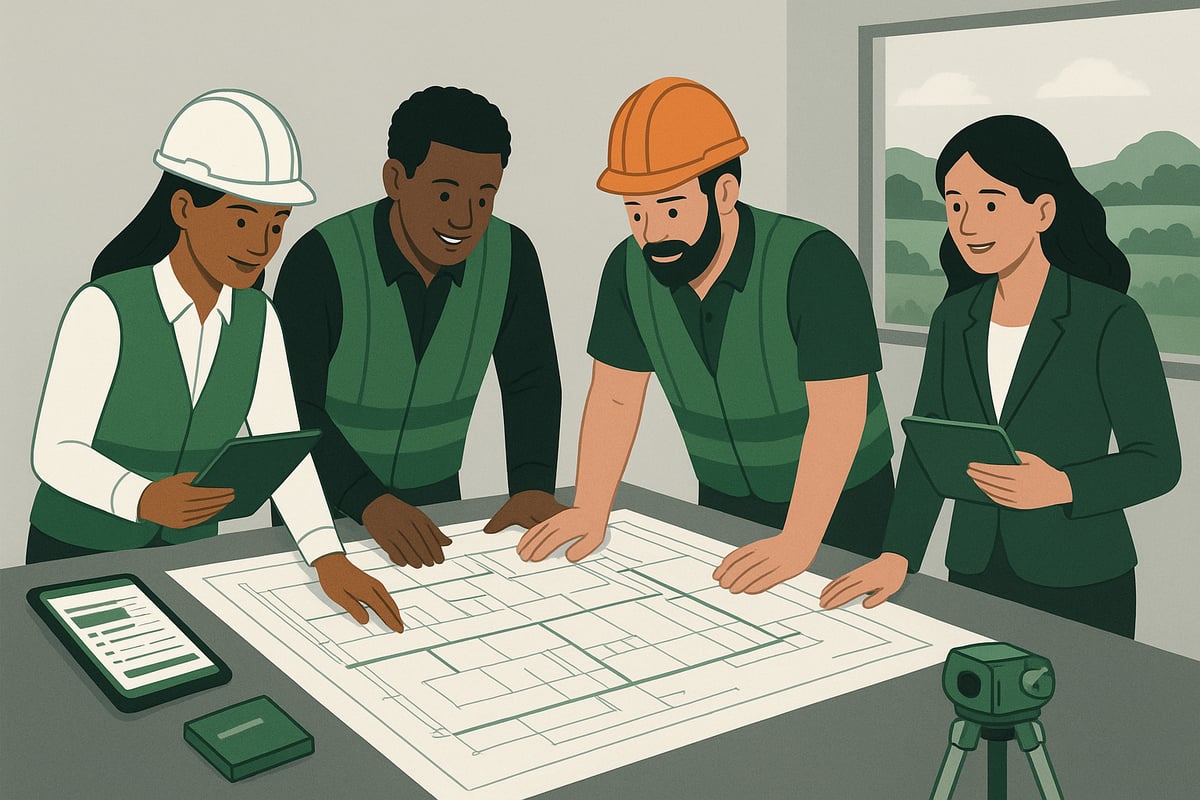
The success of your framing and construction project depends on assembling a skilled team. Key roles include an architect for design, a structural engineer for safety, and a contractor for execution. Select professionals with proven experience and relevant accreditations, such as RIBA for architects or CIOB for construction managers.
Membership of recognised bodies demonstrates commitment to quality and adherence to industry standards. Clear roles and open communication within your team are vital for delivering your framing and construction project on time and to specification.
Timeline and Project Management Tools
Organised project management is essential for keeping your framing and construction on schedule. Use Gantt charts to visualise milestones and dependencies. Digital project management tools such as Buildertrend or Microsoft Project help coordinate tasks, track progress, and manage documentation.
Critical path analysis identifies activities that could delay completion if not managed effectively. According to recent data, 70 percent of UK builds now use digital tools for project management, reflecting their value in streamlining framing and construction from start to finish.
Step-by-Step Framing and Construction Process
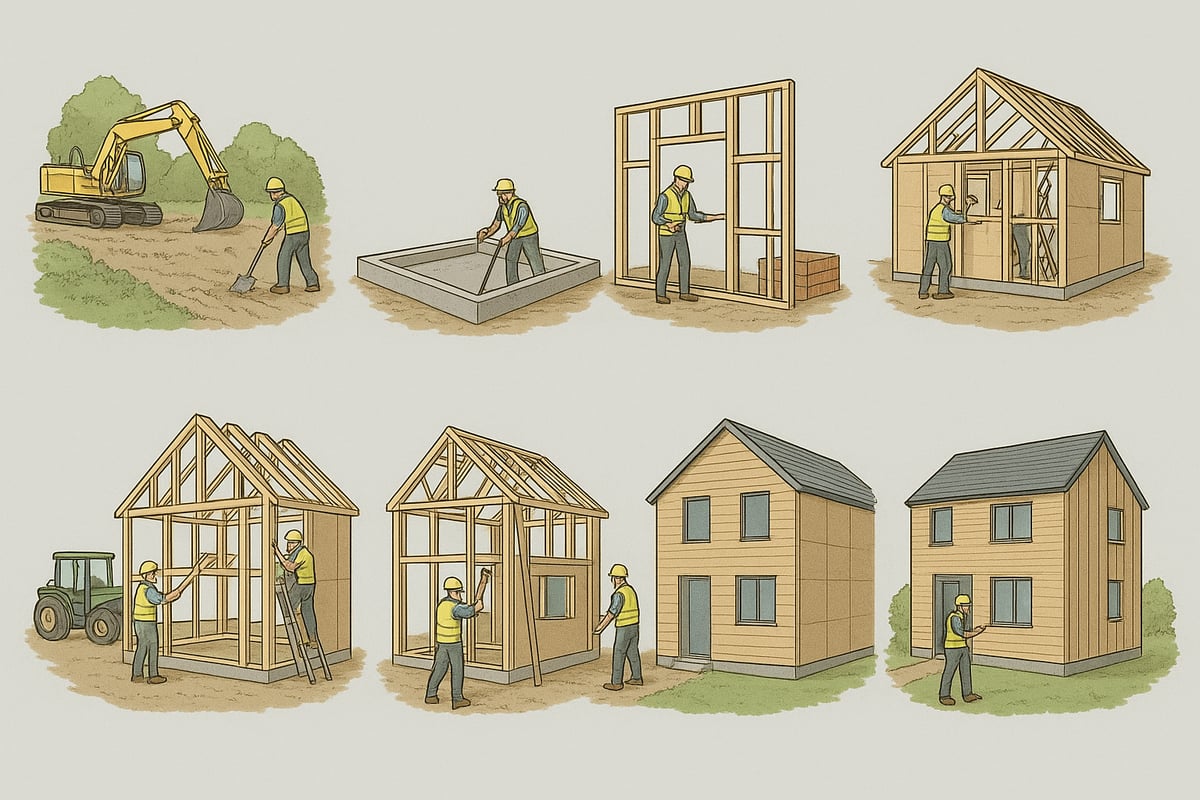
Embarking on a successful framing and construction project in 2026 requires a methodical, step-by-step approach. Each stage builds the foundation for the next, ensuring your structure is robust, energy efficient, and compliant with UK regulations. Let us guide you through each crucial phase so you can deliver outstanding results, whether you are a homeowner, developer, or contractor.
Step 1: Foundation and Groundworks
Every framing and construction journey begins with the groundwork. The choice of foundation depends on soil conditions, building size, and load requirements. Common types in the UK include strip, raft, and pile foundations.
Start with thorough site clearance, removing vegetation and debris. Next, conduct excavation to the required depth and install drainage as needed. For timber frame builds, foundations must provide a level, moisture-resistant base to prevent future movement.
Key tasks:
- Site survey and soil testing
- Excavation and levelling
- Laying damp-proof membranes
A solid start here is essential for the integrity of your framing and construction project.
Step 2: Erecting the Frame
Once foundations are set, the main structure takes shape. The process typically starts with wall plates, followed by vertical studs, floor joists, and roof rafters. Temporary bracing is vital to maintain alignment and stability while the frame is assembled.
Precision in measuring and fixing ensures structural safety and compliance with design specifications. For bespoke projects, oak or softwood frames are often hand-assembled on site, while modular components may be craned into position.
For an in-depth overview of this stage, see Understanding wooden frame construction.
This step is at the heart of framing and construction, laying the framework for what follows.
Step 3: Sheathing, Insulation, and Weatherproofing
The next layer in framing and construction involves enclosing the structure. Install structural sheathing, such as oriented strand board (OSB), to provide racking strength and a base for external finishes. Apply vapour barriers to control moisture ingress.
Insulation is critical—properly installed, it prevents up to 80% of heat loss (Energy Saving Trust, 2023). Mineral wool, rigid foam, or natural fibre insulations offer different benefits for thermal and acoustic performance.
Checklist:
- Fix sheathing panels securely
- Apply vapour control layers
- Fit insulation between studs and rafters
This step ensures long-term energy efficiency and comfort.
Step 4: Roof Construction and Truss Installation
Roof construction is a pivotal phase in framing and construction. Select the truss type—fink, attic, or mono—based on span and design. Prefabricated trusses are now widely used in modular and offsite builds for speed and accuracy.
Install trusses onto wall plates, secure with metal fixings, and check for correct pitch. Waterproof the roof using breathable membranes and ensure adequate ventilation to prevent condensation.
Key considerations:
- Truss spacing and alignment
- Fixing details
- Eaves ventilation
A well-built roof protects your investment for decades.
Step 5: Openings—Windows and Doors
Creating structural openings is a defining aspect of modern framing and construction. Accurately frame window and door spaces using lintels and sills to distribute loads and prevent sagging.
Install triple-glazed windows for superior energy efficiency, reducing heat loss and external noise. Fit doors with robust frames and draught-proofing.
Steps:
- Mark and cut openings in the frame
- Insert lintels and reinforce as necessary
- Position and fix windows and doors
Attention to detail here impacts both appearance and performance.
Step 6: External Cladding and Finishes
The external envelope of your building not only protects but defines its character. Choose from timber, brick, render, or composite cladding to suit your design and local context.
Timber cladding, especially in rural projects, offers natural aesthetics and sustainability. Attach cladding with appropriate fixings, leaving ventilation gaps to prevent moisture build-up.
Considerations:
- Material compatibility with frame type
- Weather resistance
- Maintenance requirements
This phase of framing and construction brings your vision to life.
Step 7: Internal Fit-Out and Final Inspection
With the exterior secure, attention turns inside. Erect partition walls, install internal insulation, and complete plastering for a smooth finish. Building control inspections are mandatory at key stages, with most UK builds requiring at least two (NHBC, 2023).
Complete a thorough snagging process to identify and rectify defects before handover. Final certification ensures your framing and construction project meets all regulations and quality standards.
Tasks:
- Internal wall construction
- Final fix of electrics and plumbing
- Building control sign-off
A well-managed finish secures long-term satisfaction and compliance.
Material Selection and Sustainable Construction
Selecting the right materials for framing and construction is crucial for building performance, long-term value, and environmental impact. In 2026, property owners and builders are prioritising sustainability, durability, and compliance. This section explores the leading choices, their benefits, and how they contribute to efficient, future-ready projects.
Timber Framing: Benefits and Considerations
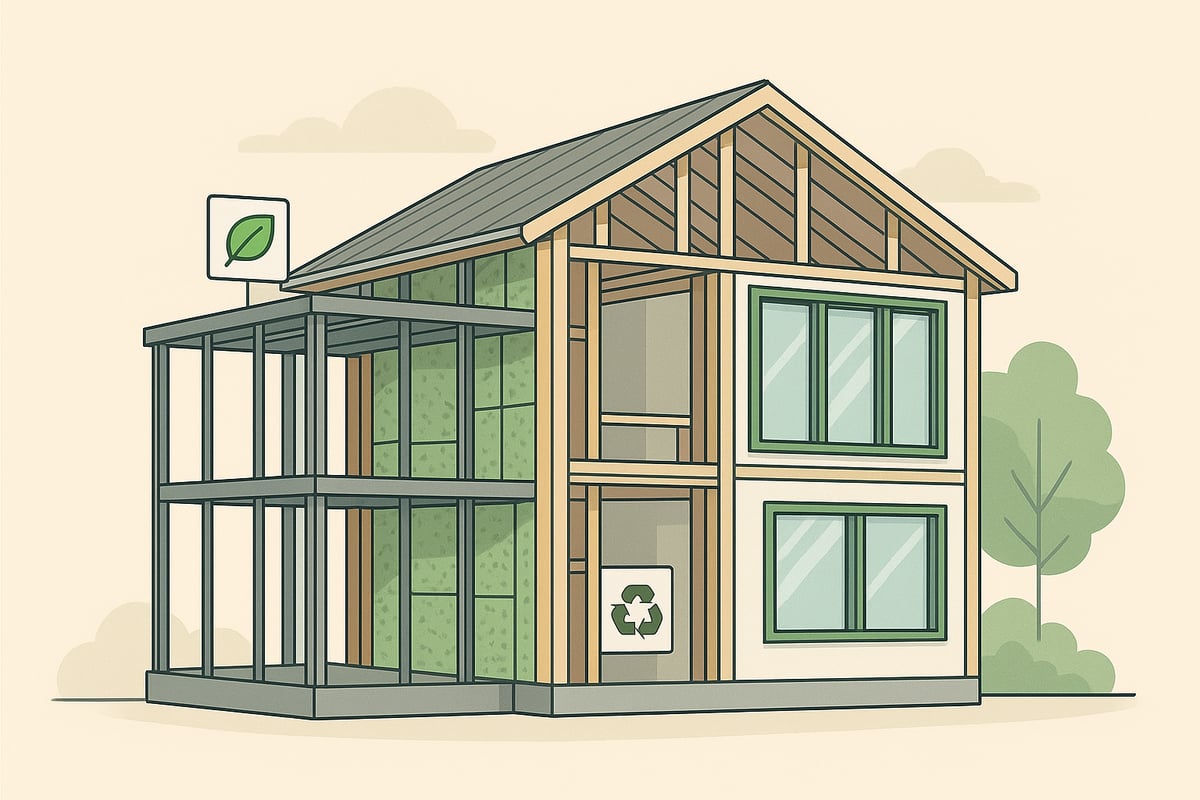
Timber remains a top choice in framing and construction for its renewability and low embodied carbon. Sourced responsibly, it offers design flexibility and rapid build times, making it ideal for both bespoke homes and modular projects. Timber’s thermal performance further boosts energy efficiency. The UK government’s Timber in Construction Roadmap highlights increased timber use as a key strategy for reducing emissions and supporting domestic supply chains. Always seek FSC or PEFC certification to ensure sustainability and regulatory compliance.
Steel and Hybrid Solutions
Steel is valued in framing and construction for its exceptional strength, longevity, and resistance to pests and fire. It is particularly suited for structures requiring large open spans or commercial spaces. Hybrid systems, which combine steel with timber, deliver both flexibility and structural integrity. These hybrids are increasingly popular in complex builds, where they balance the benefits of both materials. Steel is also recyclable, supporting circular construction principles. However, sourcing steel can involve higher costs and longer lead times, especially for bespoke elements.
Insulation, Windows, and Energy Efficiency
Effective insulation and high-performance glazing are essential in framing and construction projects aiming for energy efficiency. Quality wall and roof insulation minimises heat loss, while triple-glazed windows significantly improve airtightness and comfort. According to the UKGBC, advanced insulation can reduce energy consumption by up to 25 percent. For best practices on achieving optimal thermal performance, see guidance on insulating timber frame walls. Investing in these components not only lowers running costs but also future-proofs your property against changing regulations.
Sourcing and Supply Chain Considerations
Material sourcing plays a vital role in framing and construction project timelines and budgets. Local materials often offer better availability and lower carbon footprints, especially for timber. Imported materials may present quality or price advantages but can be subject to delays, particularly since Brexit. Builders must factor in lead times and plan orders well in advance. Recent years have seen increased demand for sustainable products, leading to occasional supply bottlenecks. Transparent supply chains help ensure project reliability and support environmental goals.
Environmental Certifications and Green Building Standards
Achieving recognised certifications is a powerful way to demonstrate the sustainability of your framing and construction. Standards such as BREEAM, Passivhaus, and UKGBC benchmarks focus on energy use, material sourcing, and occupant health. Certified projects often command higher resale values and attract eco-conscious buyers. In the UK, BREEAM “Excellent” is a common target for timber frame developments, reflecting strong performance in both environmental and regulatory metrics. Early integration of certification requirements streamlines compliance and maximises project value.
Waste Reduction and Circular Construction
Modern framing and construction increasingly adopts modular and offsite methods to minimise waste. Prefabrication enables precise material use and reduces on-site errors, supporting a circular economy. Recycling and reusing offcuts or surplus materials further cuts landfill contributions. According to WRAP, modular construction can reduce site waste by around 30 percent. Choosing adaptable designs allows for future upgrades and easier deconstruction, extending material life cycles. Sustainable construction is not just about materials, but also about responsible management throughout the project.
Compliance, Quality Control, and Future-Proofing Your Build
Meeting compliance and ensuring quality are essential for any successful framing and construction project. Future-proofing your build not only delivers long-term value but also sets the foundation for adaptability and innovation.
Meeting UK Building Regulations and Standards
Compliance with UK Building Regulations is a cornerstone of framing and construction. Key areas include Part A (structure), Part L (energy performance), and fire safety. Projects require clear documentation, from initial design to final sign-off. A SAP assessment ensures your build meets energy efficiency targets.
Post-Grenfell, regulations now demand stricter fire and safety standards, particularly in framing and construction using timber. For further insight into residential sector standards and market share, consult the Structural Timber Association market research. Staying current with these standards minimises risk and ensures lasting compliance.
Quality Assurance and Inspections
Quality assurance is vital throughout the framing and construction process. Building control officers and warranty providers oversee inspections at key stages, such as foundations, structural framing, and final fit-out.
A typical UK build requires at least two inspections, with many projects exceeding this for complex or innovative techniques. Snagging lists help identify and rectify defects early, saving time and cost. Third-party inspections now cover 85% of new builds, reflecting the sector’s focus on quality.
Health and Safety Best Practices
Health and safety must be embedded into every framing and construction site. This includes comprehensive risk assessments, use of personal protective equipment, and regular safety briefings. CDM Regulations apply to both contractors and self-builders, making legal compliance essential.
Clear site signage, safe access routes, and emergency plans are non-negotiable. Proactive safety management not only protects workers but also enhances project reputation and reduces costly incidents.
Future-Proofing: Adaptability and Smart Technology
Future-proofing your framing and construction project means designing for change. Consider open-plan layouts, adaptable spaces, and pre-installed conduits for smart home systems. Integrating renewable technology, such as pre-wiring for solar panels and EV chargers, supports long-term sustainability.
Adopting modular methods and digital tools is reshaping the sector. The Prefabricated construction market report highlights the NHS’s leadership in modular building, underlining the trend toward flexible, tech-enabled construction.
Common Pitfalls and How to Avoid Them
Delays, cost overruns, and compliance failures are common pitfalls in framing and construction. Clear communication, detailed documentation, and proactive problem-solving are your best defences.
Learn from recent UK case studies: projects that prioritised early engagement and transparent contracts consistently delivered better results. By following best practices, you can safeguard your investment and achieve a successful outcome.
As you’ve seen throughout this guide, mastering every stage of framing and construction is key to creating a property that’s not just beautiful but also durable, sustainable, and future ready. Whether you’re planning a bespoke home, a garage, or a unique structure, the right decisions today will shape your success in 2026 and beyond. If you’re ready to turn the blueprint into reality, let’s make your vision happen together. Explore bespoke timber framing solutions with a team that combines traditional skill with modern innovation—BUILD NOW.


