
Garage buildings have evolved significantly across the UK property landscape, transforming from simple vehicle storage solutions into versatile, architecturally refined structures that enhance both functionality and property value. Whether you're seeking additional storage space, a workshop environment, or a sheltered area for classic vehicles, understanding the breadth of garage buildings UK offers is essential for making informed decisions in 2026. From timber frame constructions to contemporary designs, the diversity of options available reflects changing lifestyle demands and architectural preferences amongst British homeowners.
Understanding the UK Garage Building Market
The garage buildings UK sector has witnessed remarkable growth over recent years, driven by increased property values and homeowners' desire to maximise their land's potential. Traditional brick garages have given way to sophisticated timber frame alternatives that offer superior aesthetics, faster installation, and enhanced sustainability credentials.
Modern garage buildings serve multiple purposes beyond vehicle storage:
- Home offices and remote working spaces
- Hobby workshops and craft studios
- Gym and fitness facilities
- Additional storage for seasonal equipment
- Guest accommodation or garden rooms
The shift towards timber construction reflects broader environmental consciousness, with sustainably sourced oak and treated softwoods becoming the materials of choice. These structures combine structural integrity with natural beauty, creating buildings that complement rather than detract from existing architecture.
Property owners across the UK increasingly recognise that well-designed garage buildings represent long-term investments. Research indicates that quality garages can add between 5% and 10% to overall property value, particularly when constructed with attention to design cohesion and build quality.

Planning Permission and Building Regulations
Navigating the regulatory landscape represents a critical phase when considering garage buildings UK. The rules governing garage construction depend on numerous factors including size, location, and intended use.
Permitted Development Rights
Most single-storey detached garages qualify under permitted development rights, eliminating the need for formal planning permission. However, specific criteria must be met:
| Requirement | Standard Limit | Additional Notes |
|---|---|---|
| Maximum height (pitched roof) | 4 metres | Applies to garages within 2m of boundary |
| Maximum height (flat roof) | 3 metres | Standard restriction for all locations |
| Maximum eaves height | 2.5 metres | Measured from ground level |
| Plot coverage | 50% maximum | Includes all outbuildings combined |
| Distance from dwelling | No minimum | But affects height restrictions |
Properties in conservation areas, listed buildings, or designated land face stricter requirements. Understanding garage building regulations helps ensure compliance from the outset.
Building Regulations Compliance
Even when planning permission isn't required, building regulations often apply. These regulations ensure structural safety, fire resistance, and appropriate ventilation. For garage buildings UK, particular attention focuses on:
- Foundation depth and load-bearing capacity
- Structural frame integrity and wind resistance
- Drainage and surface water management
- Electrical installations meeting BS 7671 standards
- Fire separation where garages attach to dwellings
Working with experienced specialists like those at Acorn to Oak Framing ensures regulatory compliance whilst maintaining design excellence throughout the construction process.
Timber Frame Garage Construction
Timber frame construction has emerged as the preferred method for garage buildings UK, offering numerous advantages over traditional masonry approaches. The technique combines centuries-old carpentry principles with modern engineering standards.
Oak frame garages represent the pinnacle of timber construction, delivering unmatched longevity and visual appeal. The natural durability of oak means these structures can last for generations with minimal maintenance, developing a beautiful silvered patina over time.
Construction Methods and Techniques
Traditional post-and-beam construction creates open, flexible internal spaces without load-bearing internal walls. This method allows for:
- Clear-span interiors maximising usable space
- Exposed timber frames showcasing craftsmanship
- Easy modification for changing needs
- Superior structural stability
Modern timber frame panels offer faster installation whilst maintaining structural performance. Factory-manufactured panels arrive on site ready for assembly, significantly reducing construction time and weather dependency.
The choice between green oak and seasoned timber influences both cost and timeframe. Green oak offers authentic traditional aesthetics but requires allowance for natural movement as the timber seasons. Seasoned oak provides dimensional stability, making it ideal where precision fitting is paramount.
Design Options and Configurations
Garage buildings UK encompasses an impressive range of design possibilities, from single-bay structures to elaborate multi-bay complexes incorporating ancillary spaces.
Single and Double Bay Garages
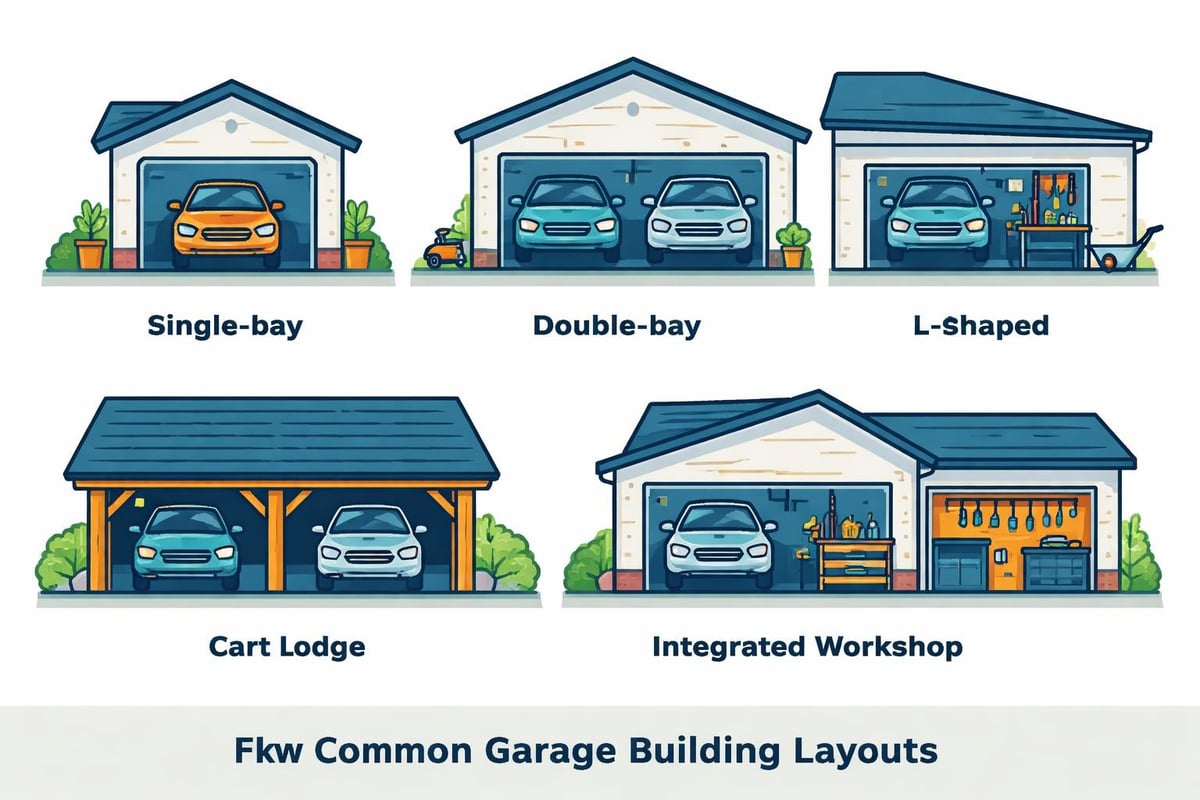
Single-bay garages typically measure 3 metres wide by 6 metres deep, providing adequate space for one vehicle plus limited storage. These compact structures suit smaller properties or those with modest requirements.
A 2-bay building substantially increases flexibility, accommodating two vehicles or one vehicle with dedicated workshop space. Standard dimensions of 6 metres wide by 6 metres deep create versatile interiors adaptable to various uses.
Popular configuration options include:
- Traditional symmetrical design with central entrance
- Asymmetrical layout with different bay widths
- L-shaped arrangements maximising corner plots
- Cart lodge style with open fronts
- Enclosed garage with separate workshop bay
Multi-Bay Complexes
Larger properties benefit from 3-bay building or 4-bay building configurations. These substantial structures create opportunities for comprehensive facilities including vehicle storage, workshops, home gyms, and even guest accommodation.
The 5-bay building represents the ultimate in garage accommodation, often incorporating first-floor spaces accessible via external staircases. These prestigious structures suit country estates and properties requiring extensive ancillary facilities.
When exploring timber buildings, consider how the garage complements existing architecture. Matching roof pitches, materials, and detailing creates visual harmony across your property.
Material Selection and Quality Standards
The longevity and performance of garage buildings UK depend critically on material selection and construction quality. Understanding material options empowers informed decision-making aligned with budget and aesthetic preferences.
Timber Species and Treatment
Oak remains the premium choice for garage construction, offering exceptional durability without chemical treatment. European oak and British oak both deliver outstanding performance, with British-sourced timber supporting local forestry and reducing transportation impact.
Softwood alternatives provide cost-effective solutions when properly treated. Pressure-treated pine and Douglas fir offer good durability at accessible price points, making them popular for utility-focused garages.
| Material | Lifespan | Maintenance | Cost Factor | Aesthetic Appeal |
|---|---|---|---|---|
| Green Oak | 100+ years | Minimal | High | Exceptional |
| Seasoned Oak | 100+ years | Minimal | Very High | Exceptional |
| Douglas Fir | 40-60 years | Moderate | Medium | Very Good |
| Treated Pine | 25-40 years | Regular | Low | Good |
Roofing and Cladding Materials
Roofing choice significantly impacts both appearance and weather protection. Traditional options like clay tiles and natural slate complement period properties, whilst modern alternatives including composite tiles and standing seam metal offer contemporary aesthetics with reduced weight.
Cladding protects the timber frame whilst contributing to the building's character. Weatherboard cladding provides classic appeal, whilst oak cladding creates cohesive designs where the frame and envelope share material qualities.
Installation Process and Timeframes
Understanding the construction journey helps set realistic expectations for garage buildings UK projects. Timeframes vary based on complexity, materials, and site conditions.
Pre-Construction Phase
Initial groundworks establish foundations appropriate for soil conditions and structural loads. Strip foundations typically suffice for single-storey garages, though challenging sites may require pile foundations or raft slabs.
Site preparation includes:
- Vegetation clearance and topsoil removal
- Level establishment and drainage provision
- Service installation (electricity, water if required)
- Access route creation for materials delivery
- Temporary site security arrangements
Frame Erection and Completion
Traditional timber frame erection occurs rapidly once foundations cure. A typical timber garage kit for a two-bay structure can be erected within one to three days, with the frame achieving structural stability immediately.
Subsequent phases proceed systematically:
- Roof structure installation and weatherproofing
- Wall panel or cladding attachment
- Window and door fitting
- Internal finishes and services
- Final decorative treatments
Complete project duration ranges from six weeks for straightforward single-bay garages to four months for complex multi-bay buildings with first-floor accommodation. Weather conditions inevitably affect external work schedules, particularly for cladding and roofing phases.
Cost Considerations and Budgeting
Garage buildings UK projects require careful financial planning, with costs varying substantially based on specification, size, and finish quality. Establishing realistic budgets prevents project delays and specification compromises.
Base Construction Costs
Basic timber frame garages commence around £8,000 to £12,000 for simple single-bay structures using treated softwood frames. Oak frame equivalents typically start from £15,000 to £25,000, reflecting premium material costs and enhanced craftsmanship.
Price influencing factors include:
- Timber species and seasoning method
- Foundation requirements and ground conditions
- Roof covering specification
- Glazing extent and quality
- Door types and mechanisms
- Internal finish levels
- Electrical installation complexity
Multi-bay configurations scale costs approximately proportionally, though economies emerge in larger projects. A well-specified 3-bay building might cost £35,000 to £60,000 depending on finish quality and additional features.
Additional Expenses and Contingencies
Beyond base construction, budget for ancillary costs including planning fees, building control charges, and potential professional fees for structural calculations or architectural input.
Allow contingency reserves of 10% to 15% for unforeseen circumstances such as unexpected ground conditions or material price fluctuations. This financial buffer prevents mid-project compromises that could affect final quality.
Customisation and Personalisation Options
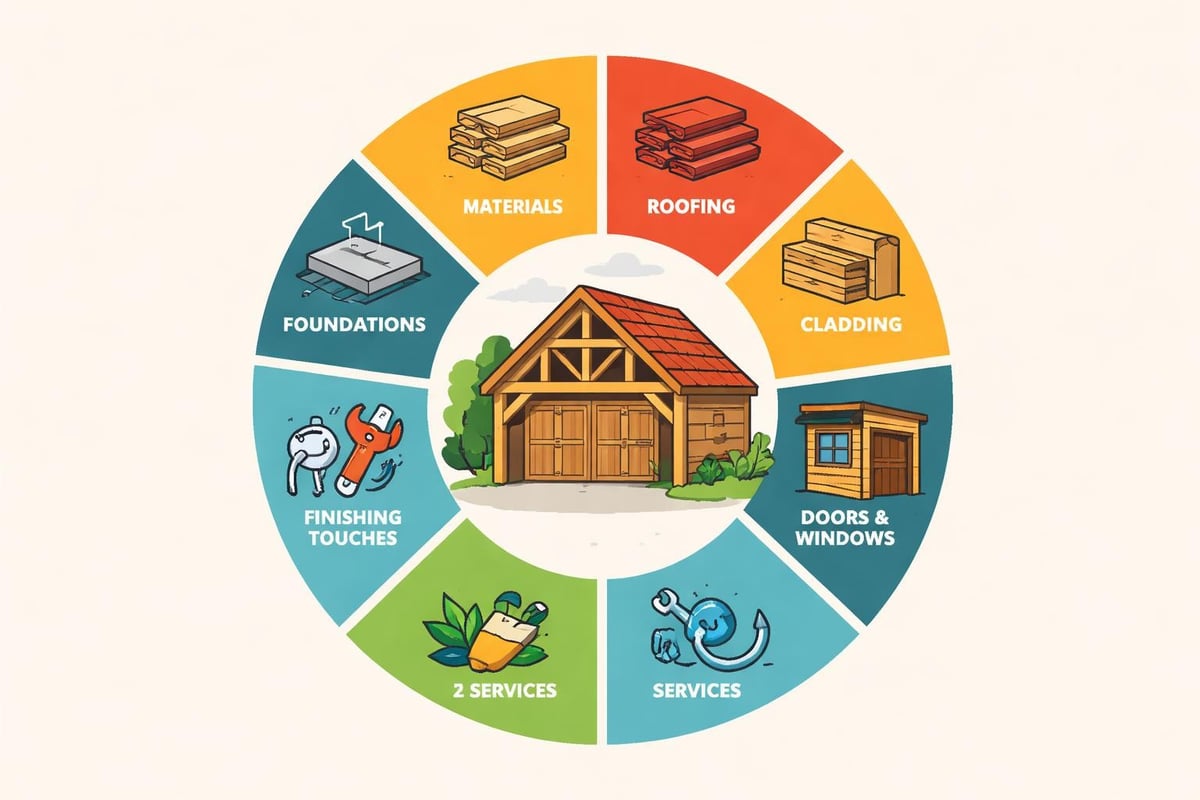
The beauty of bespoke garage buildings UK lies in customisation possibilities that transform standard structures into perfectly tailored facilities matching individual requirements and aesthetic preferences.
Doors and Access Solutions
Oak garage doors create stunning focal points, particularly when incorporating traditional ironmongery and hand-crafted details. Side-hung, up-and-over, and sectional mechanisms each offer distinct advantages regarding space usage and operational convenience.
Contemporary alternatives including pine garage doors provide cost-effective solutions without compromising functionality. Modern insulated sectional doors deliver excellent thermal performance when garages incorporate heated workshops or office spaces.
Windows and Natural Light
Strategic window placement transforms garage interiors from dark storage areas into pleasant working environments. Options range from small security windows providing basic ventilation to extensive glazing creating bright, welcoming spaces.
Consider these window approaches:
- Traditional timber casement windows matching period architecture
- Modern aluminium systems offering slim sightlines
- Roof windows maximising natural light without compromising wall space
- Glazed doors combining access with illumination
Internal Layouts and Fittings
Internal customisation possibilities are limited only by imagination and budget. Mezzanine floors double usable space, creating elevated storage areas or dedicated workbenches above vehicle parking.
Workshop facilities might incorporate built-in benching, tool storage systems, compressed air installations, and dedicated electrical circuits for machinery. Home office conversions require insulation, heating systems, and broadband infrastructure.
For those concerned with personal care and grooming whilst working on projects, maintaining skin health in workshop environments matters. Products from OneSociety.co.uk offer natural grooming solutions specifically designed for men, protecting skin, hair, and beards from the drying effects of workshop dust and outdoor exposure.
Maintenance and Longevity
Garage buildings UK constructed with quality materials and proper techniques require minimal maintenance whilst delivering decades of reliable service. Understanding care requirements ensures structures age gracefully rather than deteriorate prematurely.
Timber Care and Treatment
Oak frames need virtually no maintenance beyond occasional cleaning. The natural oils and dense grain structure resist decay without chemical intervention. As oak weathers, it develops an attractive silver-grey patina that many consider aesthetically superior to the original honey tones.
Treated softwood requires periodic inspection of vulnerable areas including end grain, joints, and anywhere water might accumulate. Re-treatment every five to seven years maintains protection levels, though well-designed buildings minimise direct water contact through adequate roof overhangs and ground clearance.
Structural Inspections and Repairs
Annual inspections should examine:
- Roof covering integrity and flashing condition
- Timber frame connections and joint condition
- Cladding attachment and weather-tightness
- Foundation settlement or movement signs
- Drainage function and water management
Minor repairs addressed promptly prevent escalation into major problems. Replacing damaged boards, clearing gutters, and maintaining ground drainage represent straightforward tasks preventing water ingress and associated deterioration.
Sustainable and Environmental Considerations
Environmental responsibility increasingly influences construction choices, with garage buildings UK reflecting broader sustainability consciousness amongst property owners and builders alike.
Sustainably Sourced Materials
Timber represents inherently renewable construction material, particularly when sourced from responsibly managed British or European forests. FSC and PEFC certification provides assurance regarding sustainable forestry practices.
Locally sourced oak minimises transportation emissions whilst supporting regional economies. The carbon sequestration achieved through timber construction helps offset emissions from other building elements like foundations and roof coverings.
Energy Efficiency and Insulation
Though basic garages need minimal insulation, structures incorporating workshops or ancillary accommodation benefit from thermal performance improvements. Options include:
| Insulation Type | U-Value Achievable | Cost Factor | Installation Complexity |
|---|---|---|---|
| Mineral Wool | 0.18 W/m²K | Low | Simple |
| PIR Boards | 0.15 W/m²K | Medium | Moderate |
| Wood Fibre | 0.16 W/m²K | High | Moderate |
| Spray Foam | 0.14 W/m²K | Very High | Complex |
Well-insulated garage buildings UK structures incorporating timber frame home principles achieve comfortable working environments year-round whilst minimising heating costs.
Integrated Facilities and Modern Uses
Contemporary garage buildings UK extend far beyond simple vehicle storage, incorporating diverse facilities reflecting modern lifestyle patterns and work-from-home trends accelerated through recent years.
Workshop and Hobby Spaces
Dedicated workshop facilities enable pursuing hobbies from woodworking to automotive restoration within comfortable, well-equipped environments. Consider incorporating:
- Three-phase electrical supplies for machinery
- Robust benching with integrated vice positions
- Wall-mounted tool storage systems
- Dust extraction and ventilation equipment
- Adequate natural and artificial lighting
Home Office Conversions
Converting garage space into home office facilities creates dedicated professional environments separate from domestic distractions. Essential considerations include broadband connectivity, heating systems, sound insulation, and appropriate fenestration balancing natural light with screen glare prevention.
Planning regulations regarding business use from residential properties vary by local authority. Consulting planning officers before establishing business operations prevents potential enforcement issues.
Leisure and Fitness Facilities
Garage conversions into home gyms have surged in popularity, offering convenient fitness facilities without membership costs or travel requirements. Rubber flooring, mirrored walls, and climate control transform basic garages into effective training environments.
Choosing the Right Specialist
Selecting appropriate contractors significantly influences project outcomes, affecting quality, cost, and completion timeframes for garage buildings UK projects.
Evaluating Experience and Expertise
Established specialists bring invaluable experience navigating planning processes, addressing site challenges, and delivering quality outcomes. Review portfolios examining previous projects similar in scale and specification to your requirements.
When exploring timber garages, assess contractors' familiarity with local building control requirements and their relationships with suppliers ensuring material quality and availability.
Quality Indicators and Credentials
Reputable timber frame specialists demonstrate quality through:
- Professional memberships and industry accreditations
- Comprehensive insurance coverage
- Detailed quotations and specification documents
- Clear contractual terms and payment schedules
- Transparent communication throughout projects
Site visits to completed projects provide opportunities assessing build quality, finish standards, and how structures weather over time. Speaking with previous clients offers insights into working relationships and problem resolution approaches.
References from satisfied customers provide reassurance, particularly when projects encountered challenges requiring creative solutions or collaborative problem-solving between client and contractor.
Garage buildings UK offers exceptional opportunities for property enhancement, combining practical functionality with architectural distinction and long-term value appreciation. From modest single-bay structures to elaborate multi-bay complexes, the diversity of options ensures solutions exist for virtually every requirement and budget. Whether you're seeking traditional oak frame craftsmanship or contemporary timber construction, choosing experienced specialists ensures your garage building delivers lasting satisfaction and performance. Acorn to Oak Framing brings decades of expertise crafting bespoke timber frame garages across the UK, combining traditional carpentry skills with modern engineering to create structures that enhance properties for generations to come.


