
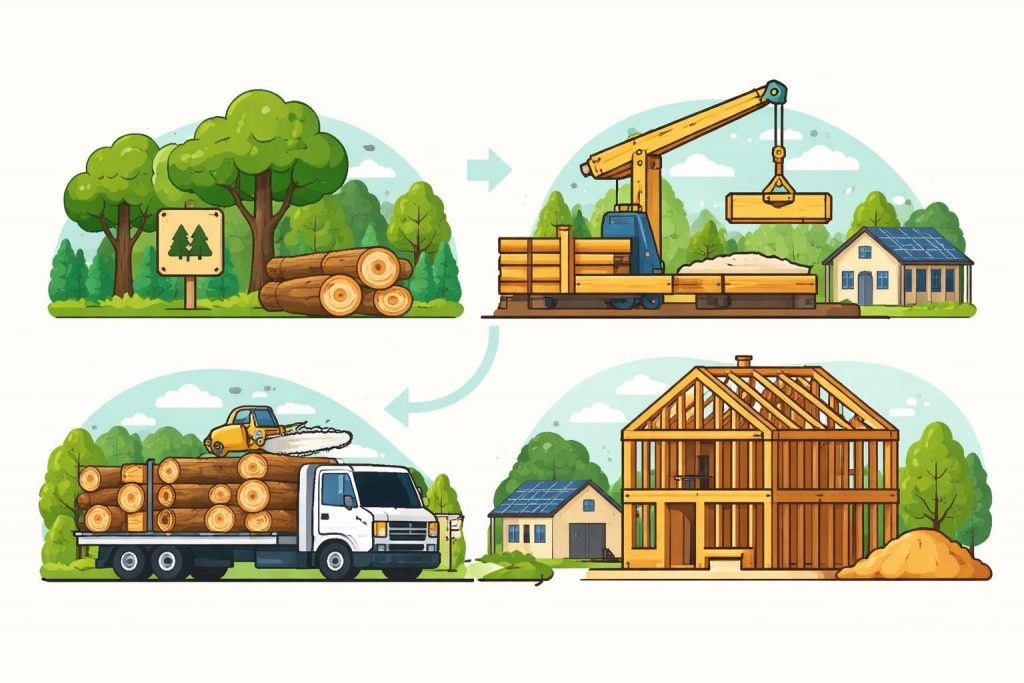
House timber has experienced a remarkable renaissance in modern construction, evolving from traditional building material into a sophisticated, engineered solution for contemporary homes. In 2026, timber framing represents not merely a nod to heritage craftsmanship but a forward-thinking approach to sustainable, durable, and aesthetically pleasing residential construction. The UK construction industry has witnessed growing demand for timber-framed structures, driven by environmental concerns, design flexibility, and superior performance characteristics that rival conventional building methods.
Understanding House Timber Fundamentals
House timber serves as the primary structural framework in timber-framed buildings, providing both load-bearing capabilities and architectural character. Unlike conventional brick and block construction, timber frames utilise carefully selected wood species engineered to specific dimensions and treated for longevity.
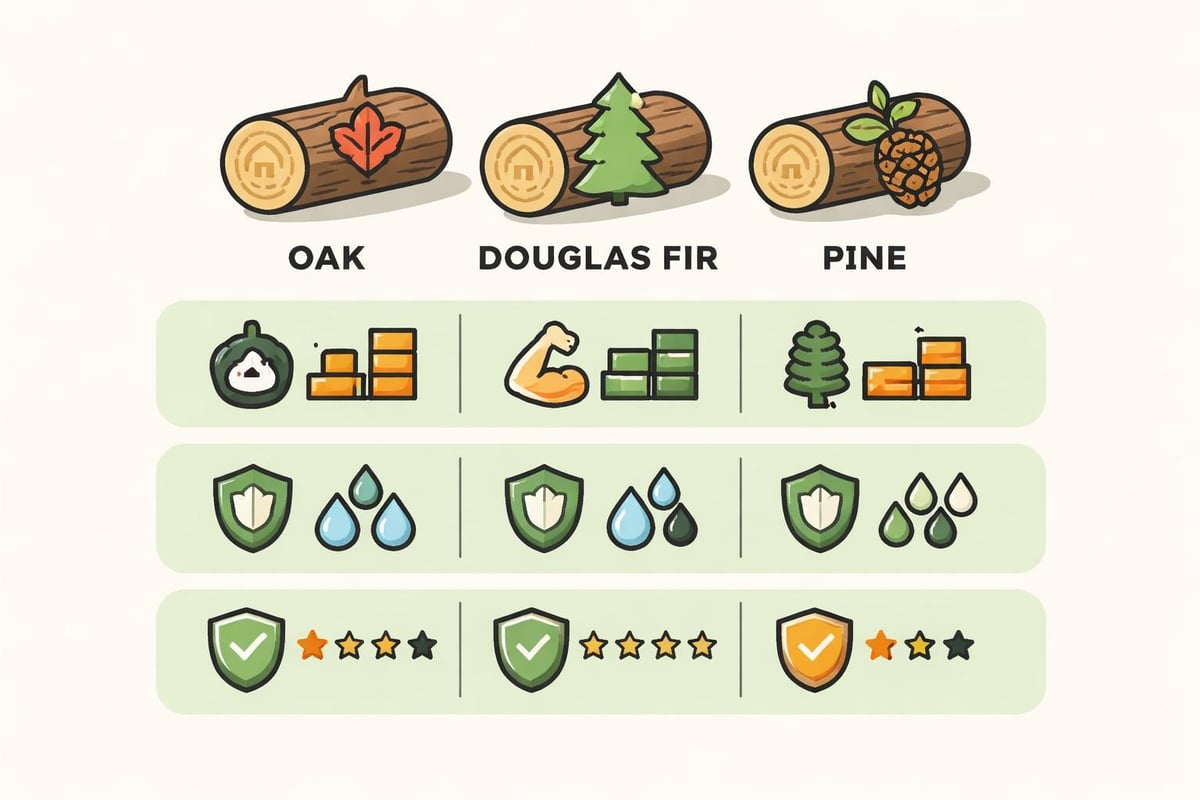
The selection of appropriate house timber depends on several critical factors: structural requirements, environmental exposure, aesthetic preferences, and budget considerations. Oak remains the premium choice for high-quality timber frames, prized for its exceptional strength-to-weight ratio and natural durability. This hardwood develops increasing strength over decades, making it ideal for structures intended to stand for generations.
Key Properties of Construction-Grade Timber
When evaluating house timber for residential projects, understanding wood properties becomes essential:
- Density and strength: Hardwoods like oak offer superior load-bearing capacity
- Moisture content: Properly seasoned timber prevents warping and structural movement
- Grain structure: Straight grain provides better structural integrity
- Natural durability: Resistance to decay, insects, and environmental degradation
- Workability: Ease of cutting, shaping, and joinery formation
Softwoods such as Douglas fir and pine present cost-effective alternatives for certain applications, though they require additional treatment for exterior exposure. The best wood for timber framing varies according to specific project requirements and regional availability.
Modern Applications in Residential Construction
Contemporary house timber construction has expanded far beyond traditional cottage-style buildings. Innovative engineering techniques now enable timber to compete with steel and concrete in multi-storey residential developments.
Mass timber products like cross-laminated timber (CLT) and glue-laminated timber (glulam) have revolutionised possibilities for timber construction. Stockholm’s ambitious wood city project demonstrates timber's viability for large-scale urban development, whilst Brock Commons Tallwood House showcases timber's potential in high-rise construction.
Traditional Post and Beam Methods
Post and beam construction represents the foundational technique for timber framing, utilizing heavy timbers joined through mortise-and-tenon connections. This method creates open, flexible interior spaces whilst maintaining exceptional structural integrity.
The aesthetic appeal of exposed timber frames adds significant value to residential properties. Heavy oak beams provide visual warmth and character impossible to replicate with modern materials. Many homeowners specifically request visible timber elements to create statement features in living spaces.
Selecting the Right Species for Your Project
| Timber Species | Density | Durability | Cost | Best Applications |
|---|---|---|---|---|
| English Oak | Very High | Exceptional | Premium | Primary frames, exposed beams |
| European Oak | High | Excellent | High | Structural elements, features |
| Douglas Fir | Medium | Good | Moderate | Secondary framing, joists |
| Sweet Chestnut | High | Excellent | High | Alternative to oak |
| Larch | Medium | Good | Moderate | External cladding, structures |
The choice between species requires balancing performance requirements against project budgets. Whilst oak commands premium pricing, its longevity and minimal maintenance requirements often justify the initial investment. Comparing different timber types reveals significant variations in performance characteristics.
For those exploring bespoke timber solutions, understanding species-specific properties ensures optimal material selection. Projects ranging from gazebos to substantial residential frames benefit from informed timber choices.
Grading and Certification Standards
UK house timber must comply with rigorous grading standards ensuring structural adequacy and safety. Timber grading classifies wood according to strength, appearance, and defect limitations.
Structural grading categories include C16 and C24 for softwoods, whilst hardwoods follow different classification systems. Grade stamps verify timber meets British Standards and European norms, providing assurance for building control approval.
Sustainable sourcing certifications like FSC and PEFC indicate responsible forestry practices. These certifications trace house timber back to well-managed forests, supporting environmental conservation whilst providing quality materials.
Sustainability and Environmental Considerations
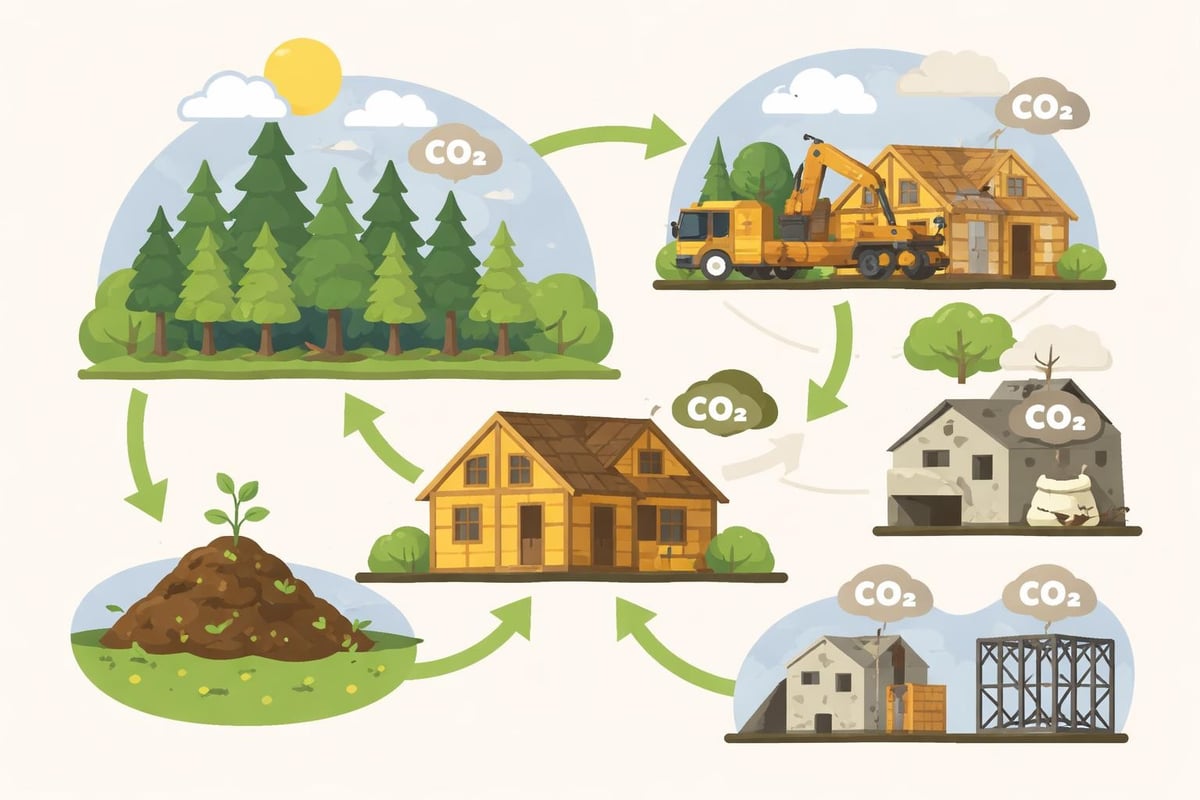
House timber stands as the most environmentally responsible structural material available for residential construction in 2026. Unlike concrete and steel, timber actively sequesters carbon dioxide throughout its lifecycle, creating carbon-negative buildings when sustainably sourced.
Each cubic metre of house timber stores approximately one tonne of CO2, removing greenhouse gases from the atmosphere for the structure's lifetime. This carbon storage capability positions timber construction as a crucial tool for addressing climate change.
Energy consumption during timber processing remains significantly lower than alternatives. Timber requires minimal industrial processing compared to steel smelting or cement production, reducing embodied energy in construction projects.
Lifecycle Performance Benefits
- Renewable resource: Properly managed forests regenerate continuously
- Biodegradable: End-of-life timber returns to natural cycles
- Energy efficiency: Natural insulation properties reduce heating costs
- Low embodied carbon: Minimal processing energy requirements
- Carbon sequestration: Active removal of atmospheric CO2
The benefits of timber frame homes extend beyond environmental performance to include superior thermal efficiency and reduced construction timelines. Modern timber frames achieve excellent U-values, minimising heat loss whilst maintaining comfortable interior environments.
Design Flexibility and Architectural Possibilities
House timber offers unparalleled design freedom, accommodating diverse architectural styles from traditional vernacular to ultra-modern contemporary aesthetics. The material's versatility enables architects and designers to realise ambitious visions whilst maintaining structural integrity.
Open-plan layouts become readily achievable with timber frames, as strategic beam placement eliminates the need for load-bearing internal walls. This flexibility allows homeowners to adapt spaces throughout the building's life without compromising structural performance.
Configuration Options for Timber Buildings
Timber framing accommodates various building configurations, from simple single-bay structures to complex multi-bay designs. One-bay buildings provide compact solutions for garages and workshops, whilst five-bay buildings create substantial residential spaces.
The modular nature of timber construction enables staged development. Homeowners can commence with modest structures, expanding as requirements and budgets allow. This scalability proves particularly valuable for rural properties and phased development projects.
Extensions and modifications to existing timber structures integrate seamlessly, maintaining architectural coherence whilst adding functionality. Unlike masonry construction, timber additions blend naturally with original frameworks.
Technical Specifications and Building Standards
UK building regulations impose specific requirements on house timber construction, ensuring safety, durability, and performance. Compliance with these standards remains mandatory for approval and insurance purposes.
Structural calculations must verify timber dimensions adequately support dead loads, live loads, wind forces, and snow accumulation. Professional engineers assess frame designs, confirming structural adequacy before construction commences.
Fire resistance requirements vary according to building type and occupancy. Treated timber achieves necessary fire ratings, with heavy timber sections offering surprising fire resistance through char layer formation that protects inner wood.
Treatment and Preservation Methods
- Kiln drying: Reduces moisture content to optimal levels (typically 12-18%)
- Pressure treatment: Impregnates preservatives deep into timber structure
- Natural seasoning: Traditional air-drying methods for premium oak
- Surface treatments: Protective coatings against UV damage and moisture
- Regular maintenance: Inspection and refinishing schedules
Properly treated house timber withstands British weather conditions for decades without significant degradation. Oak's natural tannins provide inherent protection, though surface treatments enhance longevity and appearance.
Understanding different types of wood helps homeowners make informed decisions about treatment requirements and maintenance expectations.
Installation and Construction Processes
House timber construction follows established methodologies refined over centuries. Modern techniques combine traditional joinery with contemporary engineering principles, optimising both aesthetic and structural performance.
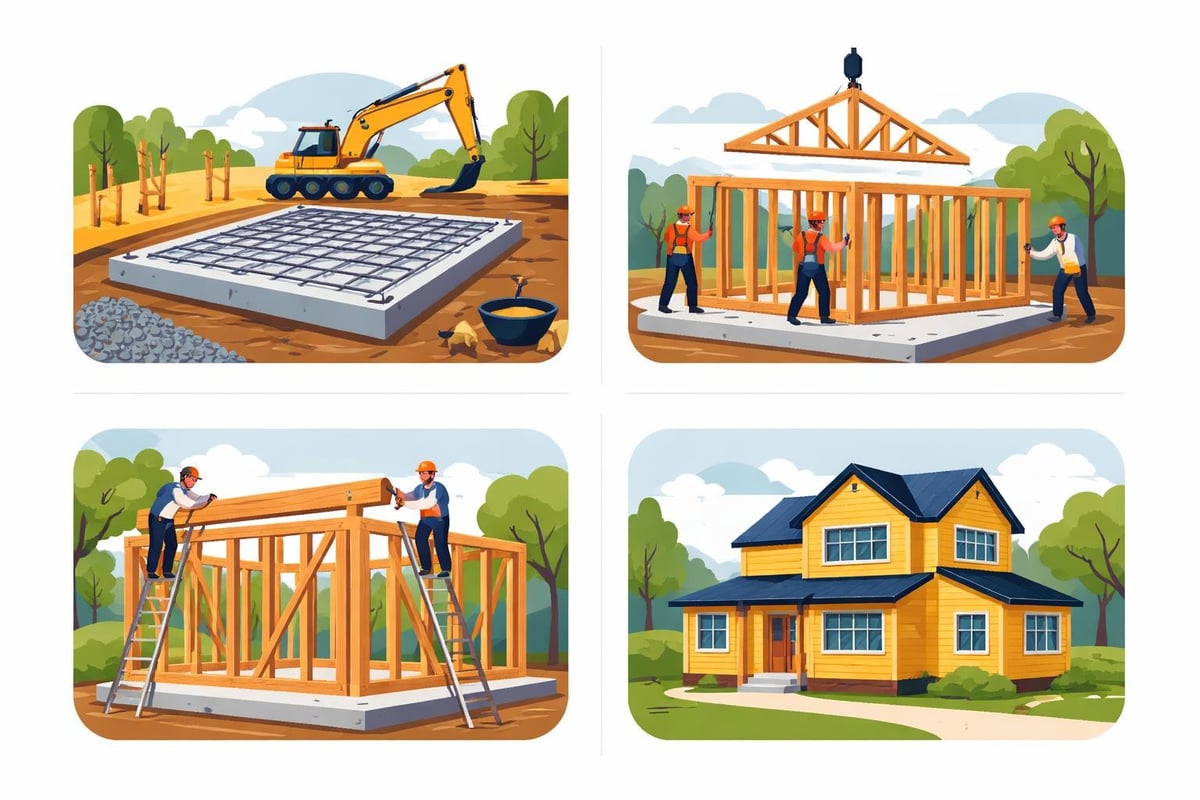
Foundation preparation proves critical for timber frame buildings. Whilst timber structures weigh considerably less than masonry equivalents, foundations must provide stable, level platforms preventing structural movement.
Step-by-Step Frame Erection
- Prepare foundations with appropriate damp-proof courses
- Position sole plates, securing to foundation structures
- Raise principal posts and temporary bracing
- Install connecting beams and joinery
- Add secondary framing elements and roof structure
- Complete weatherproofing and external cladding
- Install insulation and internal finishes
Frame raising often occurs in remarkably short timeframes. Pre-fabricated timber frames can be erected within days, dramatically reducing construction schedules compared to traditional building methods.
Quality joinery remains paramount for structural integrity and longevity. Traditional mortise-and-tenon joints, secured with oak pegs, create connections that strengthen over time as timber seasons.
Cost Considerations and Value Propositions
House timber construction presents competitive pricing compared to conventional building methods when considering total project costs and long-term value. Initial material costs vary significantly based on species selection and project complexity.
Premium oak frames command higher upfront investment than softwood alternatives or masonry construction. However, lifecycle analysis reveals timber's superior value proposition through reduced maintenance, energy efficiency, and property value enhancement.
| Cost Factor | Timber Frame | Masonry Equivalent |
|---|---|---|
| Material costs | Higher (oak) / Similar (softwood) | Moderate |
| Labour costs | Lower (faster build) | Higher (extended timeline) |
| Foundation costs | Lower (lighter structure) | Higher (heavier loads) |
| Insulation costs | Lower (better performance) | Higher (thicker requirements) |
| Maintenance (50 years) | Low | Moderate |
Construction speed reduces labour costs substantially. Projects completing in weeks rather than months generate significant savings in preliminary costs, site facilities, and financing charges.
Maintenance and Longevity Expectations
Well-constructed house timber frames require minimal maintenance whilst delivering exceptional longevity. Medieval timber buildings throughout the UK demonstrate the material's durability when properly designed and maintained.
Regular inspections identify potential issues before they develop into significant problems. Annual checks focus on moisture ingress points, joint integrity, and surface condition of exposed timber.
External timber elements benefit from periodic refinishing, protecting against UV degradation and moisture penetration. Modern coatings provide long-lasting protection with minimal maintenance requirements.
Maintenance Schedule Recommendations
- Annually: Visual inspection of all timber elements
- Every 3-5 years: Surface treatment refresh on external timber
- Every 10 years: Comprehensive structural assessment
- As required: Joint tightening and minor repairs
- Every 25+ years: Major refurbishment if necessary
Interior timber frames require virtually no maintenance beyond occasional cleaning. The natural patina developing on oak beams enhances character without compromising structural performance.
Integration with Modern Building Systems
Contemporary house timber construction seamlessly integrates with modern building services, heating systems, and technology infrastructure. The flexibility of timber frames accommodates electrical wiring, plumbing, and data cabling within structural cavities.
Thermal performance optimisation combines timber framing with advanced insulation materials. Natural insulation products like sheep's wool, wood fibre, and hemp complement timber's sustainable credentials whilst delivering excellent thermal efficiency.
Renewable energy systems integrate readily with timber structures. Solar panels, heat pumps, and battery storage systems install without structural complications, supporting net-zero energy aspirations.
Smart home technology finds easy accommodation within timber frames. Concealed wiring and sensor integration proceed without the complications encountered in solid masonry construction.
For those interested in maintaining not just their timber frames but also their personal grooming standards, OneSociety.co.uk offers premium men's grooming products. Their all-natural range cares for skin, hair, and beards, complementing the natural aesthetic many timber frame homeowners appreciate.
Regional Variations and Traditional Methods
Different regions throughout the UK developed distinctive timber framing traditions, reflecting local timber availability and cultural preferences. These regional variations continue influencing contemporary designs.
Different types of log houses demonstrate international approaches to timber construction, whilst British methods emphasise exposed frame aesthetics and sophisticated joinery techniques.
Wealden houses, cruck frames, and box frames represent distinct regional approaches. Understanding these traditions informs modern interpretations that respect heritage whilst embracing contemporary performance standards.
Contemporary projects often reference traditional styles, creating buildings that sit comfortably within established communities whilst meeting 2026 building standards. This balance between tradition and innovation defines quality timber framing.
Future Trends in Timber Construction
The house timber industry continues evolving, with innovations addressing performance, sustainability, and design possibilities. Mass timber products expand timber's application range, enabling larger and taller structures than previously achievable.
Digital design and manufacturing technologies revolutionise timber construction. Computer-aided design and CNC machining produce complex joinery with unprecedented precision, whilst 3D modelling optimises structural performance.
Hybrid construction combining timber with other materials creates optimised solutions. Timber frames with glazed infill panels, for instance, maximise natural light whilst maintaining structural efficiency.
Bio-based treatments and finishes eliminate chemical preservatives, creating healthier buildings with minimal environmental impact. Research into modified timber produces materials with enhanced durability without traditional treatment processes.
The growing emphasis on circular economy principles positions house timber advantageously. Its renewable nature, carbon storage capability, and biodegradability align perfectly with sustainable construction imperatives shaping 2026's building industry.
House timber represents a sophisticated, sustainable, and versatile solution for residential construction in 2026, combining centuries of proven performance with modern engineering innovations. Whether you're planning a compact garden structure or an expansive residential frame, selecting appropriate timber and construction methods ensures lasting value and performance. Acorn to Oak Framing specialises in creating bespoke timber frame buildings that combine traditional craftsmanship with contemporary design, delivering structures tailored to your specific requirements whilst adhering to the highest quality standards.


