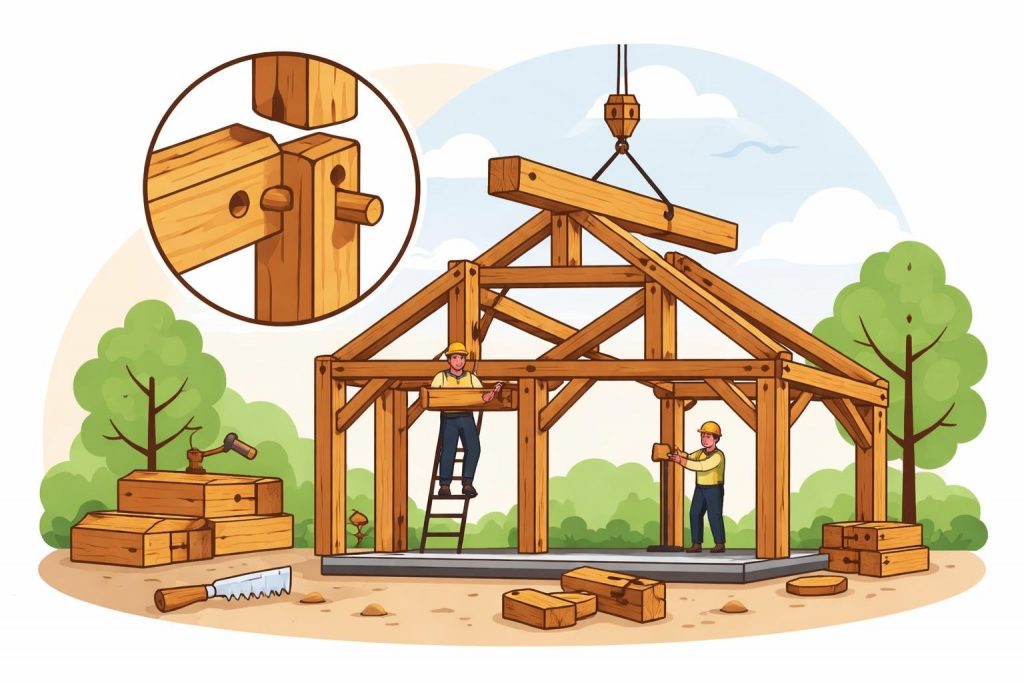
Timber barns represent a perfect blend of heritage craftsmanship and modern functionality, offering property owners across the United Kingdom a versatile solution for storage, workshops, agricultural use, and even residential conversions. These structures have evolved significantly from their agricultural origins, now serving diverse purposes whilst maintaining the aesthetic appeal and structural integrity that oak and other quality timbers provide. Understanding the construction methods, benefits, and design considerations of timber barns helps property owners make informed decisions when investing in these enduring structures that can add substantial value to any estate.
The Heritage and Evolution of Timber Barn Construction
The construction of timber barns has roots stretching back centuries, with timber framing techniques refined over generations of craftsmen. Traditional methods employed mortise and tenon joints, wooden pegs, and carefully selected oak timbers to create structures that could withstand the test of time. Many original timber barns from the 16th and 17th centuries remain standing today, testament to the durability of properly constructed timber frames.
Modern timber barns honour these traditional techniques whilst incorporating contemporary innovations. Today's builders utilise advanced timber treatments, precision engineering, and sustainable forestry practices to create structures that meet current building regulations without sacrificing the character of traditional designs. The evolution has seen timber barns transition from purely functional agricultural buildings to multi-purpose structures that serve as workshops, garages, entertaining spaces, and even luxury residential conversions.
Traditional vs Modern Construction Methods
The contrast between historical and contemporary approaches reveals how timber barn construction has adapted whilst preserving essential principles:
| Aspect | Traditional Method | Modern Approach |
|---|---|---|
| Joint Techniques | Hand-cut mortise and tenon | CNC-precision cutting with traditional joints |
| Timber Treatment | Natural seasoning over years | Controlled kiln drying and eco-friendly treatments |
| Foundation | Stone plinths | Engineered concrete bases with damp-proof courses |
| Roofing | Thatch or clay tiles | Cedar shingles, slate, or modern weatherproof tiles |
| Assembly | On-site construction | Pre-fabricated frame sections for efficient installation |
Design Considerations for Contemporary Timber Barns
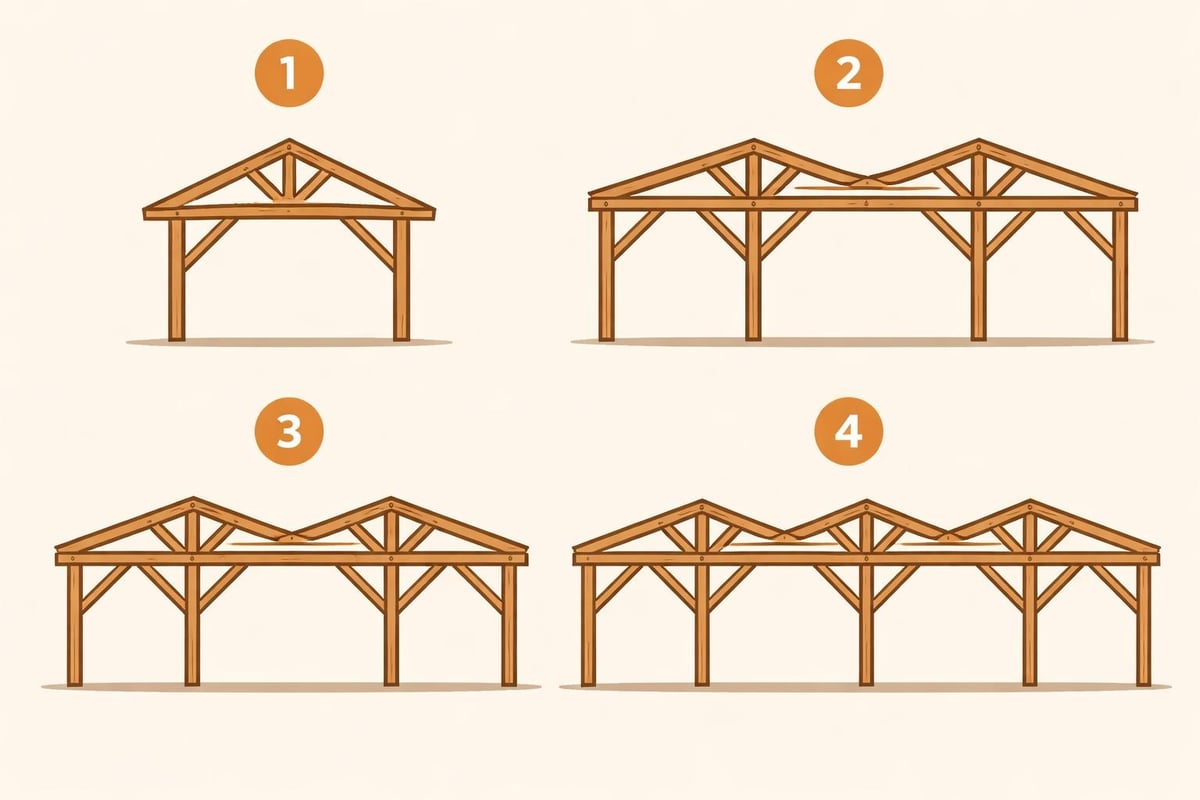
Planning a timber barn requires careful consideration of intended use, site conditions, and aesthetic preferences. The design process begins with assessing how the structure will function within your property and what specific requirements it must meet. Whether you're seeking a two-bay building for vehicle storage or a larger four-bay building for workshop and storage combined, the bay system offers flexible scaling to suit various needs.
Key design elements include:
- Bay configuration and overall dimensions
- Roof pitch and covering material selection
- Door and window placement for optimal natural light
- Floor specifications based on intended use
- Integration with existing property aesthetics
The choice between open-sided and fully enclosed designs significantly impacts both functionality and planning requirements. Open-sided timber barns provide excellent ventilation for agricultural purposes and equipment storage, whilst fully enclosed structures offer weather protection and security. Many property owners opt for hybrid designs featuring removable panels or large sliding doors that provide adaptability across seasons.
Planning Permission and Building Regulations
Understanding UK planning requirements prevents costly delays in timber barn projects. Whilst some agricultural timber barns may benefit from permitted development rights, most residential applications require formal planning permission. The specifics depend on proximity to boundaries, overall height, and intended use of the structure.
Building regulations compliance ensures structural safety, adequate foundations, and appropriate drainage. Working with experienced timber frame specialists who understand these requirements streamlines the approval process. Documentation typically includes detailed structural calculations, site plans, and elevation drawings that demonstrate how the timber barn integrates with surrounding buildings and landscape features.
Construction Methods and Structural Integrity
Modern timber barns employ several construction approaches, each offering distinct advantages. Traditional post-and-beam construction remains popular for its visual appeal and structural clarity, with vertical posts supporting horizontal beams in a framework that distributes loads efficiently. This method showcases the beauty of exposed timber whilst creating spacious interiors free from load-bearing internal walls.
Pole building framing represents an alternative approach particularly suited to agricultural applications. This technique embeds vertical posts directly into the ground or concrete foundations, reducing material costs whilst maintaining structural strength. However, traditional timber frame construction typically offers superior longevity and greater design flexibility for property owners seeking premium structures.
Timber Selection and Quality Considerations
Oak remains the premier choice for timber barns in the UK, prized for its exceptional strength, natural resistance to decay, and distinctive grain patterns that develop rich patina over time. Green oak (freshly cut and naturally seasoned) offers cost advantages and traditional aesthetics as it dries and settles into place, creating characteristic gaps and movement joints. Air-dried oak provides greater dimensional stability with less movement, suitable for projects requiring precise tolerances.
- Structural grade assessment ensures timbers meet required strength specifications
- Moisture content testing verifies appropriate seasoning levels for intended use
- Visual grading identifies natural characteristics that enhance aesthetic appeal
- Sustainably sourced certification confirms responsible forestry practices
Alternative timber species including Douglas fir, larch, and sweet chestnut offer different aesthetic qualities and price points. Each species brings unique characteristics in terms of durability, workability, and appearance. The selection process balances budget constraints with performance requirements and visual preferences.
Sustainability and Environmental Benefits
Timber barns represent one of the most environmentally responsible construction choices available. Timber acts as a carbon store throughout the structure's lifespan, sequestering atmospheric CO2 that trees absorbed during growth. This contrasts sharply with steel and concrete alternatives that generate substantial carbon emissions during production. Sustainable timber building practices contribute to reduced environmental impact across the construction industry.
The renewable nature of timber, particularly when sourced from responsibly managed forests, ensures minimal environmental depletion. Modern forestry practices maintain forest coverage through replanting programmes that exceed harvest rates, creating a sustainable cycle. Property owners increasingly prioritise these environmental credentials when selecting construction materials, recognising that sustainable choices enhance long-term property value.
Environmental advantages include:
- Carbon sequestration throughout the timber's lifecycle
- Renewable resource with responsible forest management
- Lower embodied energy compared to steel or concrete
- Biodegradable end-of-life disposal options
- Minimal waste during construction with recyclable off-cuts
Whilst exploring premium timber frame construction, it's worth noting that quality extends across all aspects of lifestyle. For gentlemen seeking exceptional grooming products crafted with the same attention to natural materials, OneSociety offers an outstanding range of beard, hair, and skincare products formulated from all-natural ingredients that deliver professional results. Their commitment to quality and sustainability mirrors the values found in traditional timber craftsmanship.
Modern Applications and Versatile Usage
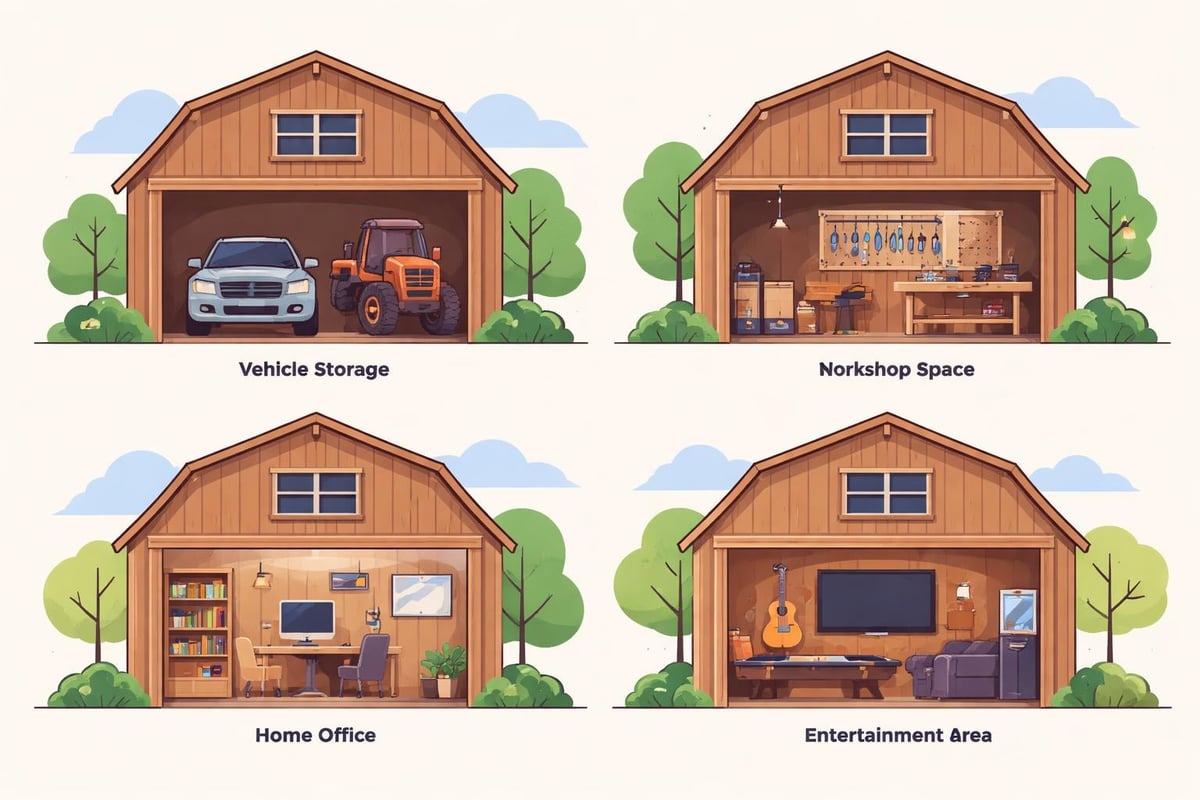
Contemporary timber barns serve far beyond traditional agricultural purposes, adapting to modern lifestyle requirements whilst retaining structural elegance. The versatility of timber frame construction allows these buildings to function as workshops, studios, home offices, entertainment spaces, vehicle storage, and even annexe accommodation. This adaptability makes timber barns an intelligent investment that can evolve alongside changing family needs.
Converting timber barns into residential space has gained considerable popularity, with many examples showcasing how traditional agricultural structures transform into stunning homes. These conversions preserve historic character whilst incorporating modern amenities including insulation, heating systems, and contemporary fixtures. Planning authorities often view sympathetic barn conversions favourably, recognising their role in preserving rural heritage whilst meeting housing needs.
Workshop and Commercial Applications
Timber barns provide exceptional workshop environments for craftspeople, artists, and small businesses. The spacious interiors accommodate machinery, storage, and work areas without the claustrophobic feel of conventional buildings. Natural light integration through strategically placed windows and roof lights creates inspiring workspaces that promote productivity and wellbeing.
Many professionals choose timber barns for their studios and offices, appreciating the acoustic properties of timber construction and the connection to natural materials. The structures maintain comfortable temperatures year-round when properly insulated, with timber's thermal mass helping to moderate temperature fluctuations. This creates energy-efficient working environments that reduce heating and cooling costs.
Advanced Engineering and Modern Innovations
Whilst traditional craftsmanship forms the foundation of quality timber barns, contemporary projects benefit from engineering innovations that enhance performance and longevity. Glued laminated timber (glulam) enables longer spans and more complex geometries than solid timber alone, opening new architectural possibilities. These engineered products combine multiple timber layers bonded with structural adhesives to create beams that exceed natural timber limitations.
Cross-laminated timber (CLT) represents another advancement, particularly valuable for floor panels and wall sections in converted timber barns. The alternating grain direction in CLT panels provides exceptional dimensional stability and strength, creating solid surfaces that perform reliably in demanding applications. These materials complement traditional timber framing, allowing designers to optimise each component for specific structural and aesthetic requirements.
| Feature | Traditional Solid Timber | Engineered Timber Products |
|---|---|---|
| Maximum Span | Limited by tree size | Extended spans up to 30+ metres |
| Dimensional Stability | Natural movement expected | Minimal movement and warping |
| Strength-to-Weight Ratio | Excellent | Superior with optimised grain direction |
| Customisation | Standard section sizes | Precise manufacturing to specification |
| Cost Implications | Variable by availability | Consistent pricing with longer lead times |
Joinery Techniques and Structural Connections
The joints connecting timber frame members represent critical structural elements that determine overall barn integrity. Traditional mortise and tenon joints remain the gold standard, creating mechanical connections that strengthen over time as timber seasons. These joints distribute forces efficiently whilst allowing controlled movement that prevents stress concentrations.
Modern projects often incorporate steel reinforcement at key connection points, particularly where frames attach to foundations or support significant loads. These hybrid approaches combine the aesthetic appeal of exposed timber with the engineering certainty of steel fixings, creating structures that satisfy both visual and performance requirements. The gallery at Acorn to Oak Framing showcases various joinery details and structural solutions employed in completed projects.
Maintenance Requirements and Longevity
Properly constructed timber barns require minimal maintenance whilst delivering decades of reliable service. The natural durability of oak and appropriate timber treatments protect against decay, insect damage, and weathering. Regular inspections identify minor issues before they escalate, with particular attention to roof integrity, drainage, and timber treatment condition.
Essential maintenance activities include:
- Annual roof inspections checking for damaged tiles or shingles
- Gutter cleaning to prevent water overflow and timber saturation
- Timber treatment renewal every 5-10 years depending on exposure
- Foundation drainage verification ensuring proper water dispersal
- Joint inspection identifying any movement or gap development
The comparison between pole barns and timber frame barns highlights maintenance differences, with traditional timber frames often proving more durable and requiring less frequent intervention. The exposed nature of timber frame construction allows easy visual inspection, enabling property owners to monitor condition without invasive investigations.
Weather Protection and Timber Treatment
Oak's natural tannin content provides inherent rot resistance, though external surfaces benefit from protective treatments that enhance weather resistance. Modern timber treatments have evolved considerably, with eco-friendly options replacing older chemical preservatives. These treatments penetrate timber fibres without forming surface films, allowing the wood to breathe whilst repelling moisture.
The choice between leaving oak to weather naturally versus applying protective finishes depends largely on aesthetic preferences. Untreated oak develops an attractive silver-grey patina over years of exposure, a characteristic many property owners find appealing. Those preferring to maintain original timber colouration can apply specialist oils or stains that preserve natural tones whilst providing UV protection.
Cost Considerations and Investment Value
Timber barn costs vary significantly based on size, specification, and finish quality. A basic single-bay building provides economical storage solutions, whilst larger five-bay buildings with premium finishes represent substantial investments. Understanding the factors influencing cost helps property owners budget appropriately and make informed specification decisions.
Primary cost drivers include timber quality and species selection, structural complexity, foundation requirements, and finish specifications. Green oak typically costs less than kiln-dried alternatives, though both offer excellent value considering lifespan and minimal maintenance requirements. Working with specialists like Acorn to Oak Framing ensures accurate quotations that reflect true project costs without hidden extras.
Return on Investment and Property Value Enhancement
Quality timber barns consistently add value to properties, with well-designed structures commanding premiums during sales. The versatility of these buildings appeals to prospective buyers, who recognise the potential for various uses. Agricultural properties particularly benefit from functional storage and workshop space, whilst residential properties gain valuable ancillary accommodation or hobby spaces.
The aesthetic appeal of traditional timber construction enhances property character, creating visual interest that distinguishes estates from neighbouring properties. This distinctive quality proves especially valuable in competitive property markets where unique features command attention. Further insights on maximising timber barn value appear in energy efficiency and future-proofing guidance.
Bespoke Design Options and Customisation
Every property presents unique opportunities and constraints that influence optimal timber barn design. Bespoke construction addresses specific requirements that standardised designs cannot accommodate, from unusual site dimensions to particular functional needs. The bespoke design service enables property owners to create truly customised structures that integrate seamlessly with existing buildings and landscape features.
Customisation extends across all aspects of timber barn specification, including bay configuration, roof style, cladding materials, and internal fittings. Roof options range from traditional gable designs to more contemporary mono-pitch arrangements, each creating different internal volumes and external aesthetics. Cladding choices include horizontal boarding, vertical featheredge, or leaving frames exposed for maximum visual impact.
Internal configurations adapt to specific uses, with partition walls, mezzanine floors, and service installations incorporated during construction or added later as requirements evolve. This flexibility ensures timber barns accommodate changing needs without requiring major structural alterations. The modular nature of bay construction facilitates future expansion, with additional sections seamlessly integrated with original structures.
Professional Installation and Project Management
Successful timber barn projects require skilled craftsmen who understand both traditional techniques and modern building standards. Professional installation ensures structural integrity, weather-tightness, and compliance with building regulations. The complexity of timber frame construction, particularly regarding joint cutting and frame assembly, demands expertise that only experienced specialists possess.
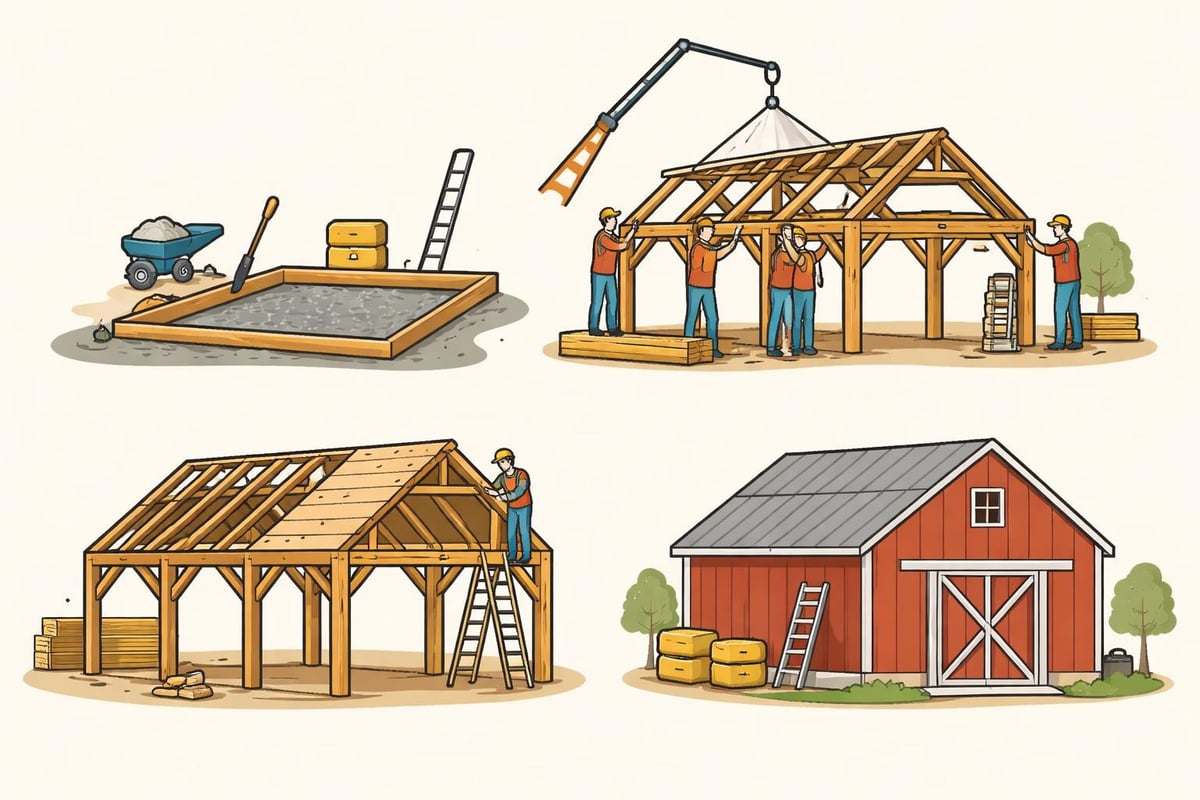
Project timelines typically span several months from initial design through to completion, with weather conditions influencing outdoor work scheduling. Pre-fabrication of frame components in controlled workshop environments ensures precision joinery regardless of weather, with on-site assembly proceeding rapidly once foundations cure. This approach minimises weather exposure during construction whilst maintaining quality standards.
Detailed project management coordinates trades including groundwork contractors, electricians, plumbers, and finishers. Clear communication throughout ensures each phase completes on schedule without compromising quality. Exploring optional extras during planning allows property owners to incorporate desired features without disrupting construction flow.
Reclaimed Timber and Character Features
Many property owners appreciate the unique character that reclaimed timber brings to new construction projects. Salvaged beams and posts from dismantled agricultural buildings carry histories visible in their weathered surfaces, nail holes, and tool marks. Incorporating these materials creates instant heritage appeal whilst supporting circular economy principles through material reuse.
Reclaimed timber requires careful assessment to verify structural suitability, with grading ensuring adequate strength for intended applications. The patina and character marks that make reclaimed timber aesthetically appealing don't compromise structural performance when properly selected. Combining reclaimed features with new sustainably sourced timber creates compelling visual contrasts that celebrate both heritage and contemporary craftsmanship.
Timber barns offer exceptional versatility, sustainability, and aesthetic appeal that enhance properties whilst providing practical functional space for generations. Whether you're considering agricultural storage, workshop facilities, or unique living space, professional timber frame construction delivers enduring value. Acorn to Oak Framing combines traditional craftsmanship with modern expertise to create bespoke timber barns throughout the UK, ensuring your project benefits from meticulous attention to detail and commitment to quality that defines exceptional timber frame construction.


