
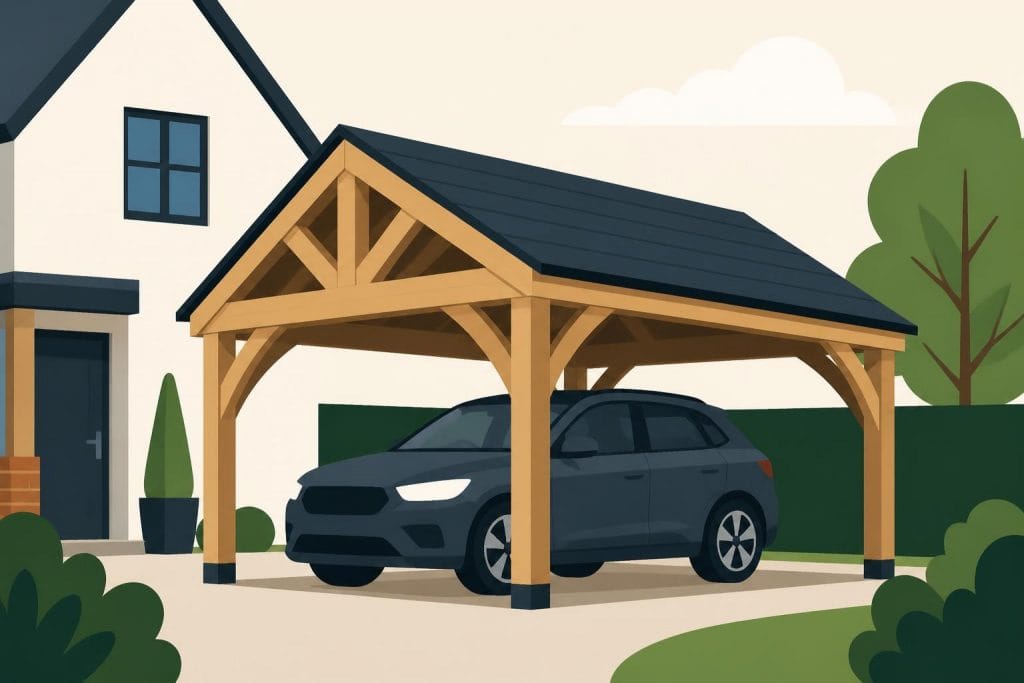
A timber carport offers an elegant and practical solution for protecting vehicles whilst complementing the architectural character of your property. Unlike enclosed garages, these open-sided structures provide weather protection through a combination of robust structural posts, beams, and a solid roof, creating a versatile space that serves multiple purposes. For homeowners across the UK seeking to add value and functionality to their properties, understanding the nuances of timber carport design, construction, and regulation is essential for making informed decisions that deliver lasting results.
Understanding Timber Carport Construction
Traditional timber carport design relies upon time-tested principles of post-and-beam construction, where vertical posts support horizontal beams that carry the roof structure. This method, perfected over centuries, creates a framework that distributes loads efficiently whilst maintaining architectural beauty. Oak remains the premium choice for these structures due to its exceptional strength-to-weight ratio and natural resistance to decay.
Structural Components and Design Elements
The fundamental elements of a timber carport include corner posts, wall plates, tie beams, rafters, and roof covering. Each component plays a crucial role in overall stability and longevity. Corner posts typically measure between 150mm and 200mm square, providing the vertical support necessary to withstand wind loads and snow accumulation common in British weather conditions.
Key structural considerations include:
- Post spacing determined by vehicle dimensions and roof span requirements
- Beam sizing calculated according to British Standards and anticipated loads
- Bracing configurations that ensure lateral stability
- Foundation depth and type suitable for local soil conditions
- Roof pitch optimised for water drainage and snow shedding
The roof structure demands particular attention, as it bears the brunt of environmental stresses. Timber frame construction techniques allow for various roof styles, from simple monopitch designs to more elaborate dual-pitch configurations that echo traditional barn architecture.
Planning Permission and Building Regulations
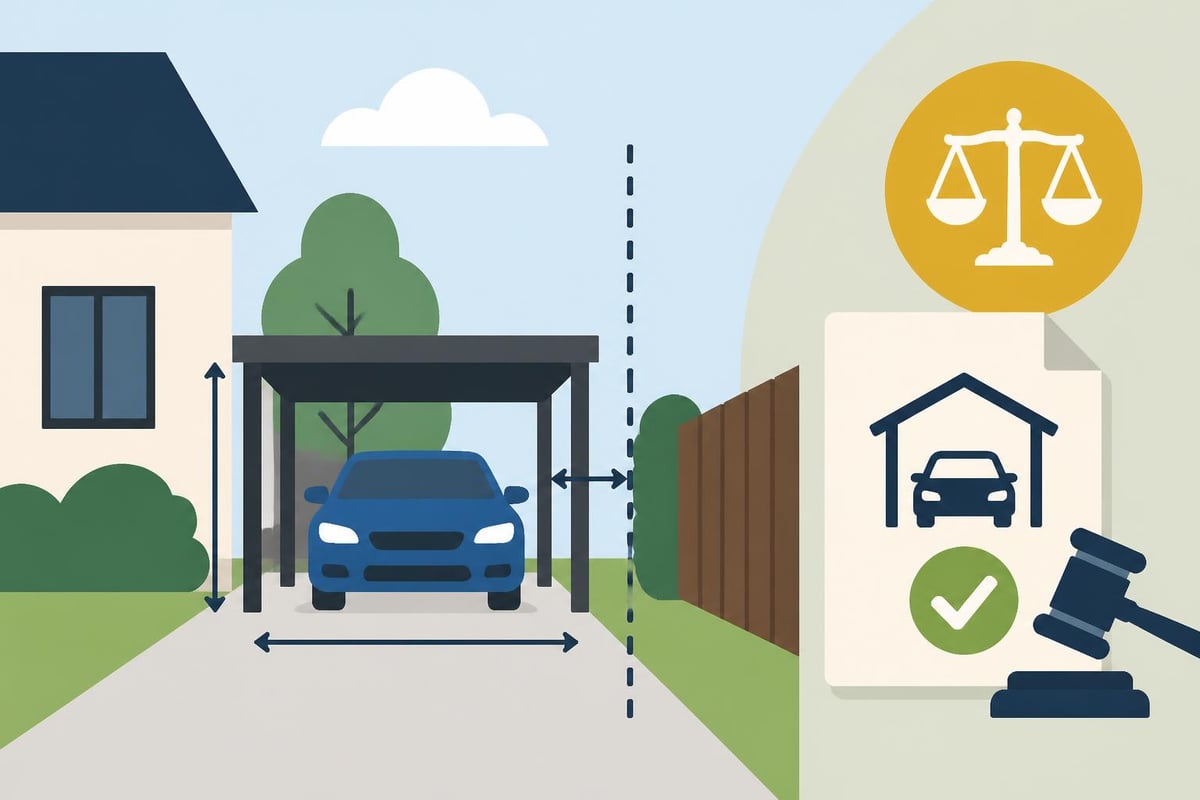
Understanding when a timber carport requires planning permission prevents costly mistakes and delays. The regulations governing these structures depend upon several factors, including size, height, proximity to boundaries, and whether the property sits within designated areas such as conservation zones or Areas of Outstanding Natural Beauty.
Permitted Development Rights
Under current UK planning regulations, many timber carports qualify as permitted development, meaning they can be constructed without formal planning permission. However, specific conditions must be met for these rights to apply. Planning permission requirements for timber carports vary based on location and structure specifications.
| Condition | Permitted Development Limit |
|---|---|
| Maximum height | 2.5 metres (within 2m of boundary) |
| Maximum eaves height | 3 metres for dual-pitch roofs |
| Maximum total height | 4 metres for dual-pitch, 3 metres for other roofs |
| Distance from highway | Not forward of principal elevation |
| Total coverage | Less than 50% of curtilage |
Building regulations approval remains mandatory regardless of planning permission status. These regulations ensure structural integrity, foundation adequacy, and compliance with fire safety requirements, particularly when the carport attaches to existing buildings.
Material Selection and Timber Types
Choosing appropriate timber species significantly impacts both initial investment and long-term performance. Whilst softwoods offer budget-friendly options, hardwoods like oak deliver superior durability and aesthetic appeal that justifies higher upfront costs through decades of service life.
Oak Versus Alternative Timber Species
Oak stands apart from other timber species through its natural durability classification. British and European oak contains high tannin levels that provide inherent resistance to fungal decay and insect attack. This characteristic reduces or eliminates the need for chemical treatments, making oak an environmentally responsible choice.
Comparative properties of common timber species:
- English Oak: Exceptional durability, beautiful grain patterns, ages to distinctive silver-grey patina
- European Oak: Similar properties to English oak with consistent supply availability
- Douglas Fir: Strong softwood requiring treatment, cost-effective for larger projects
- Larch: Naturally durable softwood, suitable for exposed applications
- Pressure-treated Softwood: Budget option with extended lifespan through chemical preservation
The decision between timber and metal carports often centres on aesthetic preferences and maintenance expectations. Timber structures integrate seamlessly with period properties and natural landscapes, developing character as they age rather than deteriorating.
Design Variations and Configuration Options
Modern timber carport design extends beyond basic vehicle protection, incorporating features that enhance functionality and visual appeal. Single-bay configurations suit individual vehicles, whilst multi-bay structures accommodate multiple cars or create combined parking and storage solutions.
Bay Configurations and Sizing
Standard bay widths range from 2.5 to 3.5 metres, with depths between 5 and 6 metres to accommodate typical vehicle dimensions. Multi-bay timber buildings offer flexibility for families with multiple vehicles or those requiring workshop space alongside parking.
The number of bays influences structural approach and visual impact:
- Single bay: Minimal footprint, economical construction, suitable for compact sites
- Double bay: Accommodates two vehicles side-by-side, popular family option
- Triple bay and beyond: Creates impressive architectural features, enables mixed-use applications
Roof styles dramatically affect appearance and functionality. Monopitch roofs offer contemporary aesthetics and simple construction, whilst dual-pitch designs provide traditional charm and superior water management. Some homeowners incorporate curved braces and decorative elements that reference historic timber framing traditions.
Construction Methods and Techniques
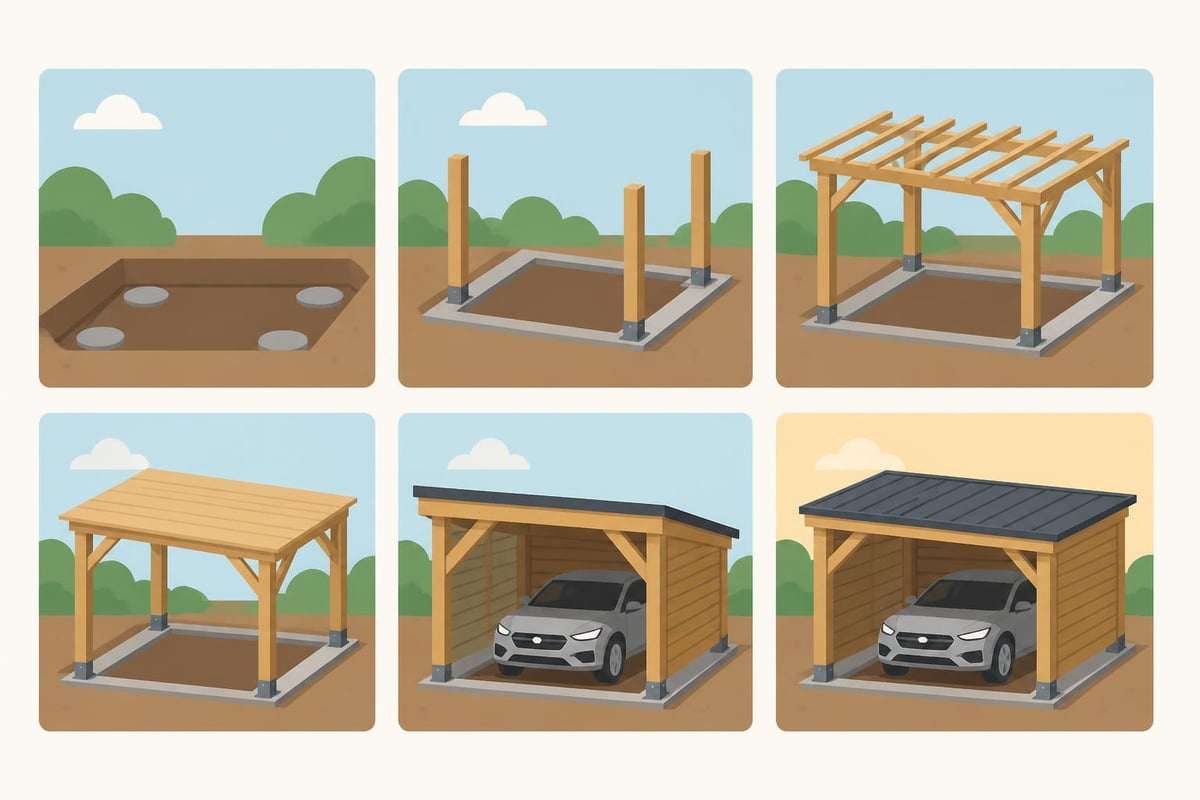
Professional timber carport construction follows methodical processes that ensure structural integrity and longevity. The sequence begins with accurate site preparation and foundation installation, progressing through frame erection to final roof installation and finishing details.
Foundation and Base Preparation
Proper foundations prevent settling, twisting, and moisture ingress that compromise structural stability. Options include concrete pad footings for individual posts, strip foundations for perimeter support, or full slab bases when the carport serves dual purposes as workspace or storage.
Foundation installation steps:
- Mark out precise post positions using string lines and measuring tools
- Excavate to depths below frost line (minimum 600mm in most UK locations)
- Install formwork and reinforcement where specified
- Pour concrete ensuring adequate compaction and level tops
- Allow sufficient curing time before commencing frame erection
- Install damp-proof membranes and post bases to prevent moisture transfer
Building a timber frame structure requires attention to joint accuracy and assembly sequence. Traditional mortise-and-tenon joints secured with oak pegs create authentic connections that tighten over time as timber seasons.
Roofing Options and Weather Protection
The roof system determines how effectively a timber carport protects vehicles from British weather whilst contributing to overall aesthetics. Material choices range from traditional clay tiles through modern metal sheeting to transparent polycarbonate panels that maintain natural light levels.
Comparing Roof Covering Materials
| Material | Lifespan | Weight | Aesthetics | Cost |
|---|---|---|---|---|
| Clay Tiles | 60+ years | Heavy | Traditional | High |
| Concrete Tiles | 40-50 years | Heavy | Versatile | Medium |
| Cedar Shingles | 25-40 years | Light | Rustic | High |
| Metal Sheeting | 30-50 years | Light | Modern | Low-Medium |
| Polycarbonate | 10-25 years | Very Light | Contemporary | Low |
Roof pitch influences material suitability and water drainage efficiency. Tiles require minimum pitches between 30 and 35 degrees, whilst metal sheeting performs adequately at lower angles. The chosen pitch affects overall height, which may impact planning requirements and visual proportions.
Guttering and downpipes, though sometimes overlooked, prevent water cascading onto vehicles and eroding ground around foundations. Cast iron or oak guttering maintains period authenticity, whilst modern uPVC systems offer maintenance-free performance.
Maintenance Requirements and Longevity
Well-constructed timber carports require surprisingly little maintenance when designed and built correctly. Oak structures particularly benefit from natural durability that improves with age, developing attractive patina whilst maintaining structural performance.
Annual Inspection and Care Routines
Establishing regular inspection schedules identifies minor issues before they escalate into costly repairs. Common timber carport problems often stem from neglected maintenance rather than inherent structural weaknesses.
- Inspect joints for movement or deterioration
- Clear debris from roof surfaces and guttering
- Check post bases for moisture accumulation
- Examine roof coverings for damage or displacement
- Apply protective treatments if using treated softwood
- Monitor for signs of insect activity or fungal growth
Oak timber carports left untreated develop silver-grey weathering that many homeowners find attractive. Those preferring to maintain natural honey tones can apply specialist oils or finishes, though this creates ongoing maintenance obligations.
Cost Considerations and Value Assessment
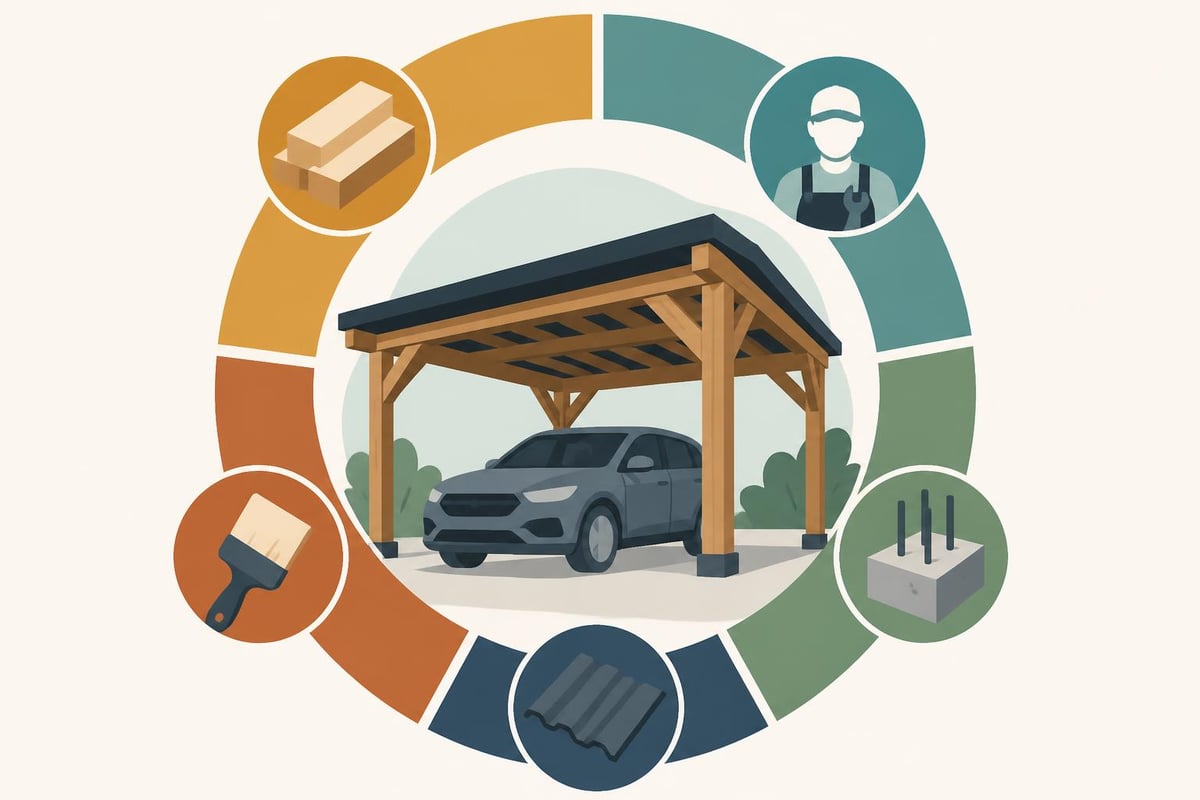
Investment in a timber carport varies considerably based on size, specification, timber species, and construction approach. Understanding cost components helps homeowners make informed decisions that balance budget constraints with quality expectations and timber frame building costs.
Budget Breakdown and Pricing Factors
Primary cost influences include:
- Timber species and grade selection
- Structural dimensions and bay configuration
- Foundation requirements and site conditions
- Roof covering choice and complexity
- Labour costs or DIY versus professional construction
- Finishing details and architectural enhancements
Professionally constructed oak timber carports represent significant investments that deliver corresponding returns through longevity, aesthetic appeal, and property value enhancement. DIY construction using pressure-treated softwood reduces costs but demands considerable skill and time investment.
The return on investment extends beyond immediate functionality. Quality timber carports enhance property kerb appeal, provide versatile covered space for multiple uses, and demonstrate commitment to sustainable building practices that resonate with environmentally conscious buyers.
Integration with Existing Architecture
Successful timber carport design considers relationship with existing buildings, landscape features, and overall property character. Thoughtful integration creates cohesive outdoor spaces that appear planned rather than added as afterthoughts.
Attached Versus Detached Configurations
Carports may attach directly to house walls, creating covered transitions between vehicle and entrance, or stand as independent structures positioned strategically within curtilage. Building a timber frame carport that complements rather than clashes with existing architecture requires careful consideration of proportions, materials, and detailing.
Attached configurations offer weather protection advantages and potentially simpler construction, sharing existing walls as support. However, they demand careful waterproofing where new structure meets old, and consideration of how roof drainage integrates with existing systems.
Detached timber carports provide design flexibility and avoid complications with building regulations concerning fire separation. They create opportunities for interesting vista lines through the framework and can incorporate storage or workshop facilities within the overall footprint.
Environmental and Sustainability Considerations
Timber carports align with contemporary sustainability priorities when constructed using responsibly sourced materials and designed for longevity. The embodied carbon in timber structures remains significantly lower than steel or concrete alternatives, particularly when using locally sourced oak.
Whilst building timber structures for your property, it's worth considering other aspects of sustainable living. For instance, OneSociety champions natural products in men's grooming, using plant-based ingredients that avoid synthetic chemicals. Their approach to sustainability mirrors the principles behind timber construction, favouring natural materials that work with rather than against the environment.
Sustainable Material Sourcing
Specifying timber from certified forests ensures replacement planting and responsible woodland management. British oak, when available, minimises transport impacts whilst supporting domestic forestry industries. The carbon stored within timber remains locked away for the structure's lifetime, contributing positively to carbon reduction targets.
Sustainability features to specify:
- FSC or PEFC certified timber from managed forests
- Natural finishes avoiding harmful VOCs and chemical treatments
- Recyclable roofing materials with high recycled content
- Design for disassembly enabling future reuse or recycling
- Integration of rainwater harvesting from roof surfaces
- Orientation maximising natural ventilation and reducing moisture retention
Multi-Purpose Applications Beyond Vehicle Storage
Contemporary timber carport usage extends beyond simple vehicle protection. The covered space created serves multiple functions that enhance property utility and lifestyle enjoyment throughout the year.
Alternative and Supplementary Uses
The shelter provided by a robust timber carport adapts to various needs:
- Outdoor entertaining space: Protected areas for dining and socialising during unpredictable weather
- Workshop facilities: Covered areas for hobbies, maintenance, and projects
- Equipment storage: Garden machinery, bicycles, and recreational gear protection
- Delivery reception: Secure covered space for package reception
- Growing space: Protection for potted plants and tender specimens
Timber buildings designed with flexibility accommodate changing needs over time. Partial infill panels added later can create enclosed storage bays whilst maintaining open parking areas, demonstrating the adaptability inherent in post-and-beam construction.
Professional Installation Versus DIY Construction
The decision between professional installation and DIY construction depends upon skills, available time, and confidence managing complex projects. Detailed guidance on building timber carports helps DIY enthusiasts understand what the process involves.
Advantages of Professional Expertise
Specialist timber framing companies bring experience that ensures compliant, durable structures built to exacting standards. Professional installation typically includes:
- Structural calculations and engineering approval
- Building regulations submission and certification
- Accurate cutting of complex joints and timbers
- Efficient construction minimising disruption
- Warranties covering materials and workmanship
- Knowledge of local planning requirements and procedures
The comprehensive approach to timber frame construction requires multiple skills and specialist tools. Homeowners without construction experience may find DIY attempts result in compromised quality, extended timescales, and potential safety concerns.
Enhancing Value Through Design Excellence
Exceptional timber carport design elevates properties through architectural distinction and practical enhancement. The visual impact of well-proportioned timber structures creates positive first impressions that influence property valuations and buyer perceptions.
Architectural Details That Distinguish Quality
Subtle design elements separate competent construction from exceptional craftsmanship. Features such as curved braces, chamfered edges, and hand-finished oak pegs demonstrate attention to detail that discerning homeowners appreciate. These touches reference historic timber framing traditions whilst serving contemporary needs.
Proportion matters significantly in achieving pleasing aesthetics. Post height, spacing, and beam dimensions should create balanced compositions that neither overwhelm nor appear insubstantial. Professional designers understand these relationships intuitively, creating structures that appear naturally suited to their settings.
A timber carport represents a substantial investment that delivers decades of service whilst enhancing property character and functionality. Understanding the interplay between design, materials, regulations, and construction methods ensures informed decisions that meet specific requirements and budgetary constraints. If you're considering adding a timber carport to your property, Acorn to Oak Framing combines traditional craftsmanship with modern design expertise to create bespoke structures that protect your vehicles whilst complementing your home's architecture. Contact their Hastings-based team to discuss how a professionally crafted oak timber carport can enhance your property.


