
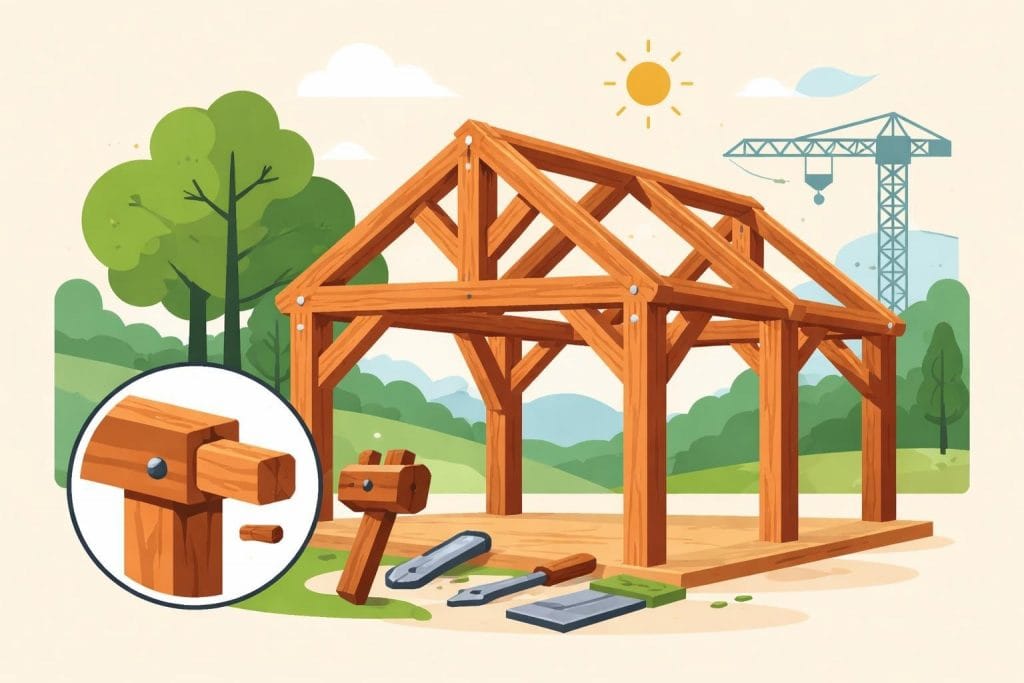
Timber frame building construction represents one of the oldest and most enduring building methods known to humanity, combining centuries of traditional craftsmanship with contemporary engineering principles. This construction technique uses heavy timber posts and beams joined together with precise woodworking joints, creating structures that are not only aesthetically striking but also incredibly durable and sustainable. As the construction industry increasingly focuses on environmental responsibility and carbon reduction, timber frame building construction has experienced a remarkable resurgence, offering architects, builders, and homeowners a viable alternative to conventional steel and concrete methods. Understanding the principles, techniques, and advantages of this construction approach enables informed decision-making for anyone considering a timber-framed project.
The Fundamental Principles of Timber Frame Construction
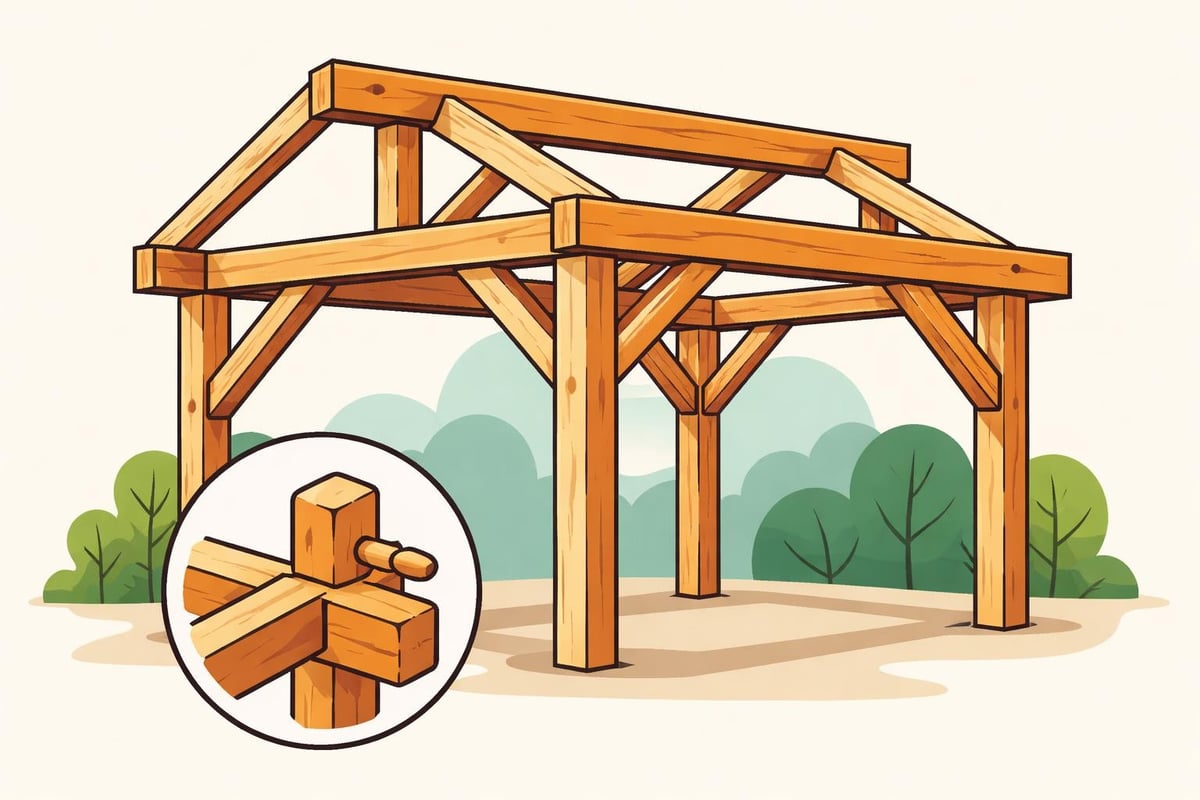
Timber frame building construction differs fundamentally from conventional stud framing, which uses numerous smaller dimensional lumber pieces. Instead, this method employs large-section timbers connected through traditional joinery techniques such as mortise and tenon joints, dovetails, and scarf joints. These joints rely on precise cutting and fitting, often secured with wooden pegs rather than metal fasteners, creating an inherently strong structural skeleton.
The structural integrity of timber frame building construction comes from the triangulated framework created by posts, beams, and braces. Posts serve as vertical supports, beams span horizontally to carry loads, and braces provide diagonal reinforcement that prevents racking and maintains structural rigidity. This arrangement distributes loads efficiently throughout the framework, allowing for open floor plans and fewer interior load-bearing walls.
Traditional craftsmen understood the importance of wood selection and orientation within timber frame building construction. Oak, particularly English oak, remains the preferred species due to its exceptional strength, durability, and resistance to decay. The Timber Framers Guild continues to preserve and promote these traditional techniques whilst embracing modern engineering advances.
Material Selection and Preparation
Choosing appropriate timber represents a critical decision in timber frame building construction. Oak dominates British timber framing due to its superior properties, but Douglas fir, chestnut, and larch also find application in specific contexts. The timber must be properly seasoned to prevent excessive movement after construction, though green oak framing intentionally uses unseasoned timber that shrinks and tightens joints as it dries.
Sustainable sourcing has become increasingly important, with responsible timber frame building construction prioritising locally harvested materials from well-managed forests. This approach reduces transportation emissions whilst supporting regional economies and ensuring traceability. Companies like Acorn to Oak Framing exemplify this commitment by using sustainably sourced oak throughout their projects.
Quality timber selection involves examining grain patterns, checking for defects such as shakes or knots in critical stress areas, and ensuring consistent moisture content. Proper storage and handling before fabrication prevent damage and maintain the timber's structural integrity.
Design Considerations and Planning
Successful timber frame building construction begins with meticulous planning and design. Unlike conventional construction where adjustments can be made on-site, timber framing requires precise pre-fabrication of all components. Each timber must be cut, shaped, and fitted before arriving at the construction site, making accurate initial design paramount.
Architectural Integration
Timber frame building construction offers remarkable architectural flexibility. The structural frame can remain exposed internally, creating dramatic cathedral ceilings and showcasing the craftsmanship, or it can be concealed within walls and ceilings for a more contemporary aesthetic. This versatility allows architects to balance traditional character with modern design requirements.
The Timber Frame Engineering Council standards provide comprehensive guidance for designing timber frame structures that meet current building codes whilst preserving the craft's integrity. These standards address load calculations, span limitations, connection details, and integration with modern building systems.
Building regulations compliance remains essential in timber frame building construction. Structures must satisfy requirements for structural stability, fire safety, thermal performance, and accessibility. Modern timber frames typically incorporate insulated panels between structural members, achieving excellent energy efficiency ratings whilst maintaining the aesthetic appeal of exposed timbers.
| Design Aspect | Traditional Approach | Contemporary Integration |
|---|---|---|
| Joint Type | Mortise and tenon, wooden pegs | Mortise and tenon with steel reinforcement |
| Insulation | Limited, primarily infill | High-performance SIPs or natural insulation |
| Glazing | Small windows, limited openings | Large glazed sections, curtain walls |
| Fire Protection | Inherent mass, calculated charring rates | Intumescent coatings, fire-rated assemblies |
Construction Methods and Techniques
The construction process for timber frame building construction follows a distinct sequence that differs markedly from conventional building methods. Understanding this workflow helps project managers coordinate trades effectively and maintain schedules.
Fabrication and Pre-Assembly
All timber components undergo fabrication in a controlled workshop environment. Craftsmen use traditional hand tools alongside modern CNC machinery to cut joints with precision measured in millimetres. Each piece receives identification marks indicating its position within the frame, a practice dating back centuries that ensures correct assembly on site.
Pre-assembly, or a trial fit, allows the team to verify that all components fit correctly before transportation to the building site. This critical step identifies any issues whilst corrections remain straightforward, preventing costly delays during the raising process. Raised eaves buildings and other configurations benefit particularly from thorough pre-assembly verification.
Modern timber frame building construction often incorporates advanced engineering analysis using computer modelling. These tools calculate load paths, stress concentrations, and deflection limits, ensuring structures meet or exceed required safety factors whilst optimising material usage.
The Raising Process
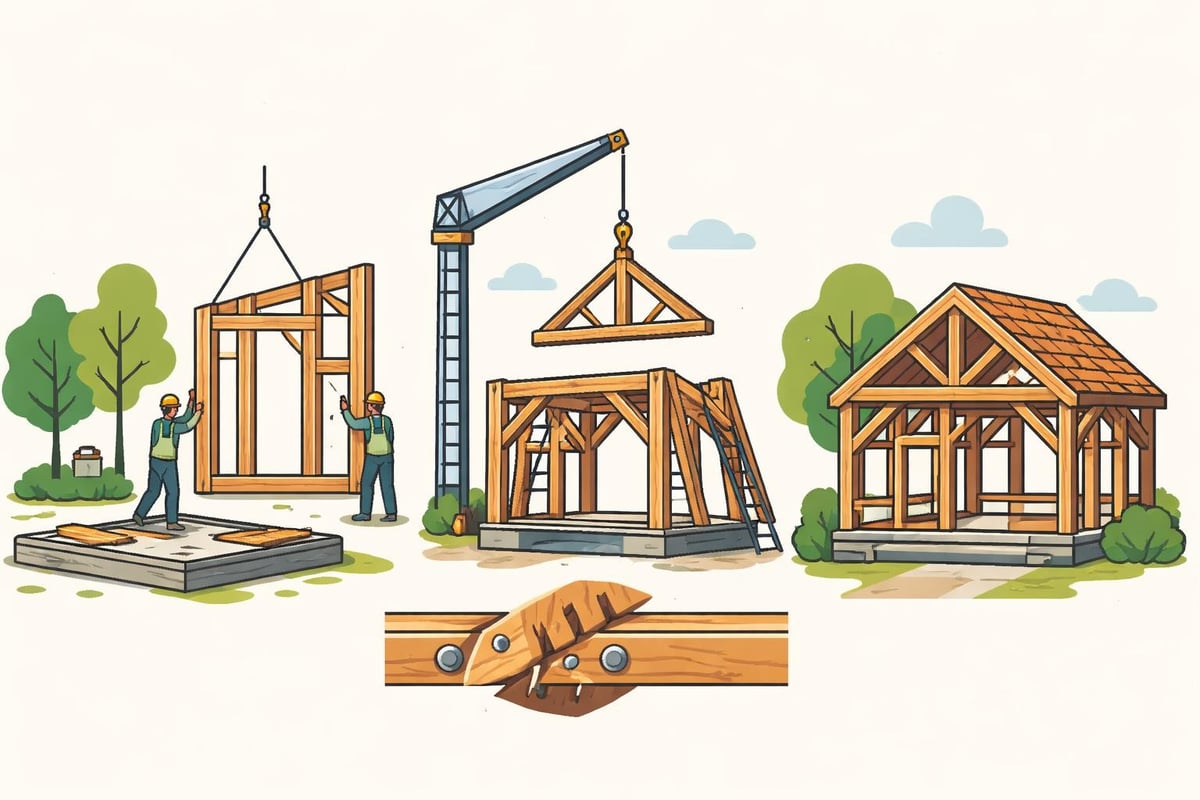
Raising the timber frame represents the most dramatic phase of timber frame building construction. A completed frame typically rises from foundation to full height within days, sometimes just hours for smaller structures. This rapid assembly relies on meticulous preparation, experienced crews, and often crane assistance for larger projects.
The raising sequence follows a logical progression:
- Foundation preparation – ensuring level, accurate bearing surfaces
- Sill beam installation – establishing the base of the frame
- Bent assembly – raising pre-assembled wall sections (bents)
- Connection of bents – installing connecting girts and beams
- Roof structure installation – positioning purlins, rafters, and ridge beams
- Bracing and stabilisation – securing diagonal braces and temporary supports
- Final tightening – driving pegs fully home and checking plumbness
Safety considerations during timber frame building construction require comprehensive planning. Working at height, handling heavy timbers, and coordinating crane operations all present significant risks that proper training, equipment, and procedures must mitigate. Following Health and Safety Executive guidelines ensures worker protection throughout the construction process.
Structural Performance and Longevity
Timber frame building construction delivers exceptional structural performance when properly designed and executed. Historical examples spanning centuries demonstrate the method's inherent durability, with many medieval timber-framed buildings remaining structurally sound today. Understanding the factors contributing to this longevity helps ensure modern projects achieve similar lifespans.
Load Distribution and Engineering
The post-and-beam configuration inherent to timber frame building construction creates clear load paths from roof to foundation. Gravity loads transfer through beams to posts, whilst lateral loads from wind and seismic activity are resisted by diagonal bracing forming rigid triangles. This structural clarity simplifies engineering analysis and provides inherent redundancy.
Eurocode 5 design standards govern timber frame building construction throughout Europe, establishing calculation methods for strength, serviceability, and fire resistance. These standards account for timber's orthotropic nature, acknowledging that wood exhibits different properties along and across the grain.
Modern computational tools enable precise analysis of complex timber frame building construction geometries. Finite element modelling identifies stress concentrations, whilst connection design software ensures joints possess adequate capacity for anticipated loads. This engineering rigour delivers structures that combine traditional aesthetics with contemporary performance expectations.
Environmental Benefits and Sustainability
Timber frame building construction aligns exceptionally well with sustainable building objectives. Wood represents the only major structural material that is renewable, biodegradable, and carbon-negative when sourced from responsibly managed forests. Each cubic metre of timber used in construction sequesters approximately one tonne of carbon dioxide, offsetting emissions from other building activities.
Carbon Storage and Lifecycle Analysis
The embodied carbon advantage of timber frame building construction becomes increasingly significant as the construction industry seeks to reduce its environmental impact. Compared to steel or concrete alternatives, timber requires substantially less energy to process from raw material to finished structural component. This reduced embodied energy translates directly to lower carbon emissions during the manufacturing phase.
Lifecycle assessments demonstrate that timber frame building construction maintains environmental advantages throughout a building's operational phase. The excellent thermal mass of heavy timbers moderates internal temperature fluctuations, reducing heating and cooling demands. When combined with high-performance insulation systems, timber-framed buildings achieve impressive energy efficiency ratings.
End-of-life considerations further favour timber frame building construction. Timber components can be carefully dismantled and reused in new projects, repurposed for different applications, or returned to the biosphere through composting. This contrasts sharply with concrete and steel structures, which typically proceed to landfill or require energy-intensive recycling processes.
| Environmental Metric | Timber Frame | Steel Frame | Concrete Frame |
|---|---|---|---|
| Embodied Carbon (kg CO2/m²) | 50-80 | 150-200 | 180-250 |
| Renewable Resource | Yes | No | No |
| Carbon Sequestration | ~1 tonne CO2/m³ | None | None |
| Recyclability | High (reuse/repurpose) | Moderate (energy-intensive) | Low (downcycling) |
Digital tools and technologies now support sustainable timber frame building construction practices. One Society, a platform dedicated to connecting conscious consumers with sustainable businesses, helps homeowners discover craftsmen and companies committed to environmental responsibility in construction and beyond, fostering community around shared values of sustainability and ethical practice.
Applications and Building Types
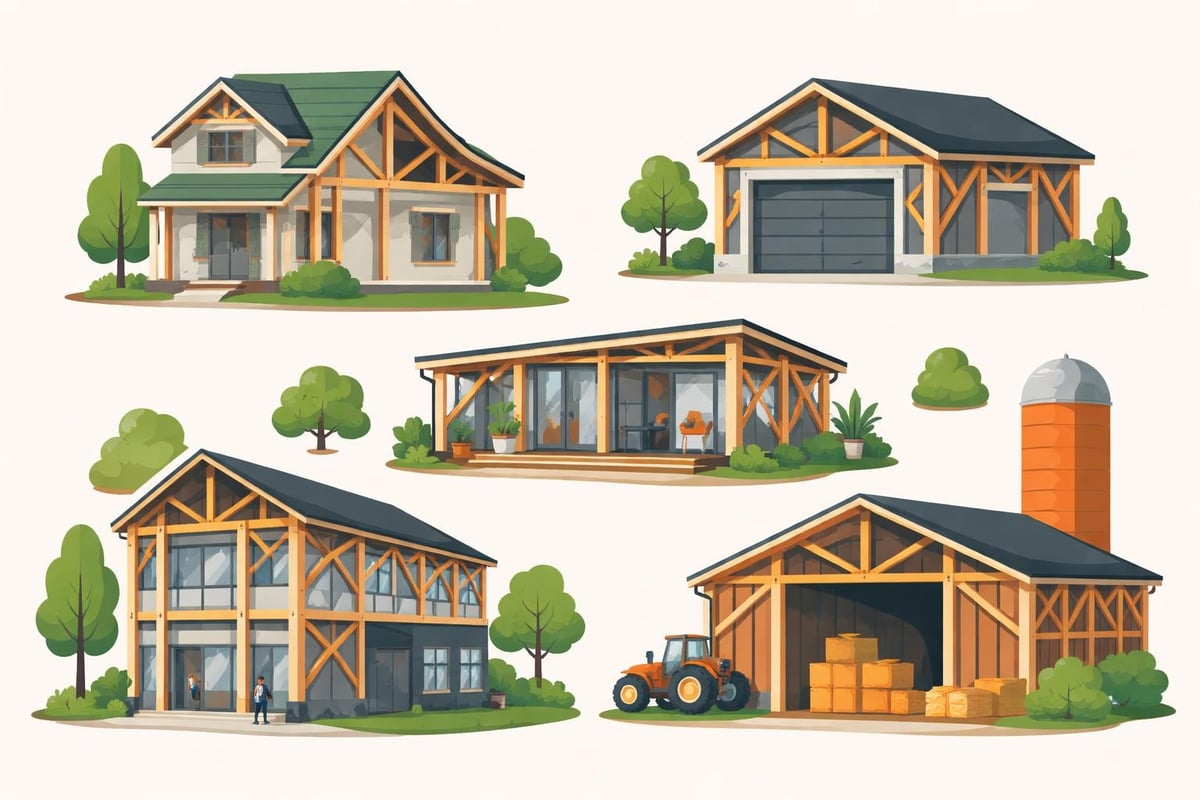
Timber frame building construction adapts readily to diverse building types and scales. From compact garden structures to substantial residential homes and even commercial buildings, the fundamental principles remain consistent whilst details vary according to specific requirements.
Residential Applications
Housing represents the primary application for timber frame building construction in the UK. Self-build projects particularly favour this method, as the clear structural system and rapid enclosure timeline appeal to owner-builders managing construction themselves. Multi-bay buildings offer scalable solutions, with configurations ranging from single-bay structures to expansive five-bay designs accommodating larger floor plans.
The aesthetic appeal of exposed timber frames enhances residential interiors, creating focal points that celebrate craftsmanship and natural materials. Open-plan living spaces benefit particularly from the structural clarity of timber frame building construction, as fewer interior load-bearing walls enable flexible room arrangements.
Extensions and additions to existing properties frequently employ timber frame building construction due to minimal foundation requirements and rapid construction timelines. A timber-framed extension can be fabricated off-site with minimal disruption, then raised and enclosed within days, significantly reducing the inconvenience period for occupants.
Ancillary Structures
Garages, workshops, and storage buildings represent ideal applications for timber frame building construction. These structures benefit from the method's open interior spans, which eliminate the need for internal columns that would impede vehicle access or workspace flexibility. Oak garage doors complement timber-framed garages, maintaining aesthetic consistency throughout the structure.
Garden rooms and gazebos create outdoor living spaces that blur the boundary between architecture and landscape. The visual lightness of timber frame building construction, particularly when combined with extensive glazing, integrates these structures sympathetically into garden settings whilst providing weather protection and year-round usability.
Agricultural buildings have employed timber frame building construction for centuries, with traditional barns showcasing the method's suitability for large, open structures. Modern agricultural applications continue this tradition, with livestock housing, machinery storage, and equestrian facilities benefiting from the generous clear spans and natural ventilation timber framing facilitates.
Maintenance and Care
Proper maintenance ensures timber frame building construction achieves its potential lifespan measured in centuries rather than decades. Understanding timber's characteristics and implementing appropriate care regimes prevents deterioration and preserves both structural integrity and aesthetic appeal.
Protecting Timber from Decay
Moisture management represents the most critical aspect of maintaining timber frame building construction. Wood exposed to persistent dampness becomes susceptible to fungal decay and insect attack, both of which compromise structural performance. Effective detailing prevents water ingress, ensures adequate ventilation, and incorporates drainage paths for any moisture that does penetrate the structure.
Regular inspections identify emerging issues before they develop into significant problems. Checking for signs of water staining, examining joint tightness, and monitoring for insect activity allows early intervention when remedial work remains straightforward. Annual inspections typically suffice for well-designed timber frame building construction, though structures in particularly exposed locations may warrant more frequent attention.
Treatment options for timber frame building construction range from traditional approaches using linseed oil finishes to modern systems incorporating water-repellent stains and preservatives. Internal exposed timbers typically require minimal treatment, developing a natural patina that enhances their character. External timbers benefit from finishes that protect against weathering whilst allowing the wood to breathe and shed moisture.
Long-term Performance
The heritage of timber framing demonstrates that properly maintained structures survive for many generations. Medieval examples throughout Britain and Europe prove that timber frame building construction, when protected from persistent moisture and maintained appropriately, outlasts alternative construction methods by substantial margins.
Structural movement in timber frame building construction occurs primarily during the first few years following construction, as timbers adjust to their equilibrium moisture content. Green oak framing intentionally harnesses this movement, with joints tightening as the timber dries and shrinks. Understanding these natural processes prevents misinterpretation of normal behaviour as structural deficiency.
Modern timber frame building construction benefits from centuries of accumulated knowledge combined with contemporary materials science. Engineered connections, advanced preservatives, and improved weather protection systems enhance durability whilst respecting traditional principles. This synthesis of old and new ensures timber-framed buildings continue serving occupants for generations to come.
Cost Considerations and Value
Evaluating the economics of timber frame building construction requires examining both initial capital costs and long-term value propositions. Whilst per-square-metre construction costs may exceed basic conventional methods, the overall value equation frequently favours timber framing when comprehensive factors receive consideration.
Initial Investment
Material costs for timber frame building construction typically represent a significant portion of the overall budget. Quality structural timber, particularly oak, commands premium pricing reflecting its superior properties and the time required for proper seasoning. However, the longevity and minimal maintenance requirements of properly executed timber framing offset these higher initial material costs over the structure's lifetime.
Labour costs vary considerably depending on project complexity and the level of traditional craftsmanship involved. Exposed joinery requiring hand-cutting and fitting demands skilled craftsmen whose expertise justifies appropriate compensation. Projects where the frame remains concealed may employ more mechanised fabrication methods, reducing labour costs whilst maintaining structural performance.
The rapid enclosure timeline of timber frame building construction delivers indirect cost savings by reducing financing charges and enabling earlier occupation. A structure progressing from foundation to weather-tight enclosure within weeks rather than months translates to tangible financial benefits through reduced interest payments and earlier rental income or owner occupation.
| Cost Factor | Timber Frame | Conventional Build | Comparative Notes |
|---|---|---|---|
| Material Cost | Higher | Lower | Quality timber commands premium |
| Labour Cost | Variable | Standard | Depends on joinery complexity |
| Construction Duration | Shorter | Longer | Rapid frame erection |
| Energy Efficiency | Excellent | Good | Lower operating costs |
| Maintenance | Low | Moderate | Durable materials |
| Longevity | Exceptional (centuries) | Good (decades) | Generational timeframes |
Property Value Enhancement
Timber frame building construction contributes positively to property values through multiple mechanisms. The distinctive character of exposed timber frames creates unique architectural features that differentiate properties in competitive markets. Buyers increasingly value sustainable construction methods, environmental credentials, and craftsmanship quality, all attributes timber framing embodies.
Energy efficiency improvements resulting from well-designed timber frame building construction reduce operating costs and enhance Energy Performance Certificate ratings. These factors influence buyer decisions and support higher asking prices, particularly as energy costs rise and environmental awareness increases amongst purchasers.
The flexibility inherent to timber frame building construction facilitates future modifications and extensions. The clear structural system simplifies adaptation as family requirements evolve, protecting property value by ensuring the building remains fit for purpose throughout changing lifecycles. This adaptability represents a significant advantage over construction methods where structural modifications prove prohibitively complex or expensive.
Integration with Modern Building Systems
Contemporary timber frame building construction seamlessly incorporates advanced building systems whilst preserving traditional structural principles. This integration enables timber-framed buildings to meet stringent modern performance standards for energy efficiency, fire safety, and occupant comfort.
Thermal Performance and Insulation
Achieving excellent thermal performance in timber frame building construction typically involves insulated panel systems installed between structural members. Structural insulated panels (SIPs), natural insulation materials such as wood fibre or sheep's wool, and high-performance synthetic insulations all find application depending on project requirements and preferences.
The American Wood Council provides resources explaining how timber frame construction achieves superior thermal performance through careful detailing of the building envelope. Minimising thermal bridging, ensuring airtightness, and optimising insulation thickness create highly efficient building envelopes that reduce heating and cooling demands substantially.
Ventilation strategies in timber frame building construction balance fresh air provision with energy conservation. Mechanical ventilation with heat recovery (MVHR) systems complement the airtight envelopes typical of high-performance timber frames, recovering warmth from exhaust air whilst ensuring adequate indoor air quality. This integration exemplifies how traditional structural methods accommodate cutting-edge building science.
Fire Safety and Protection
Fire safety in timber frame building construction addresses both regulatory compliance and genuine risk mitigation. Modern understanding of timber's fire performance recognises that large-section timbers resist fire better than many assume. The outer surface chars at predictable rates, forming an insulating layer that protects the inner core and maintains structural capacity for extended periods.
Engineered timber frame building construction calculates residual cross-sections after specified fire exposure durations, ensuring adequate capacity remains to support loads during evacuation and fire service operations. This approach, supported by extensive testing and research, demonstrates that properly designed timber structures achieve required fire resistance ratings without compromising architectural expression.
Compartmentation, fire-resistant cladding, and detection systems provide additional layers of protection within timber frame building construction. These measures work synergistically with the inherent fire performance of structural timbers, creating buildings that satisfy stringent safety requirements whilst celebrating wood's natural beauty.
Craftsmanship and Quality Standards
Excellence in timber frame building construction demands high levels of craftsmanship, precision, and attention to detail. The visible nature of many timber-framed projects means workmanship quality directly influences aesthetic success alongside structural performance.
Traditional Skills and Modern Training
Timber framing craftsmanship combines hand skills passed down through generations with contemporary techniques and tools. Apprenticeships and specialist training programmes preserve traditional knowledge whilst incorporating modern engineering principles and digital fabrication capabilities. This synthesis ensures the craft evolves without losing connection to its historical roots.
Quality control in timber frame building construction begins with material selection and continues through every fabrication and assembly stage. Experienced craftsmen read timber grain patterns, anticipate movement, and adjust techniques to accommodate wood's natural variability. This intuitive understanding, developed over years of practice, distinguishes truly skilled practitioners from those merely following procedures.
Documentation and quality assurance processes support consistent excellence in timber frame building construction. Workshop drawings, cutting lists, and assembly sequences provide clear guidance whilst allowing craftsmen to apply their expertise where it matters most. Regular inspections, measurement verification, and pre-assembly trials catch errors before they become problematic.
Timber frame building construction offers an exceptional combination of sustainability, structural performance, aesthetic appeal, and longevity that few alternative methods can match. Whether you're considering a garden structure, garage, extension, or complete dwelling, understanding these principles enables informed decision-making throughout your project. Acorn to Oak Framing brings together traditional craftsmanship, sustainable practices, and modern engineering to create bespoke timber-framed structures across the UK, ensuring your investment delivers lasting value and enhances your property for generations to come.


