
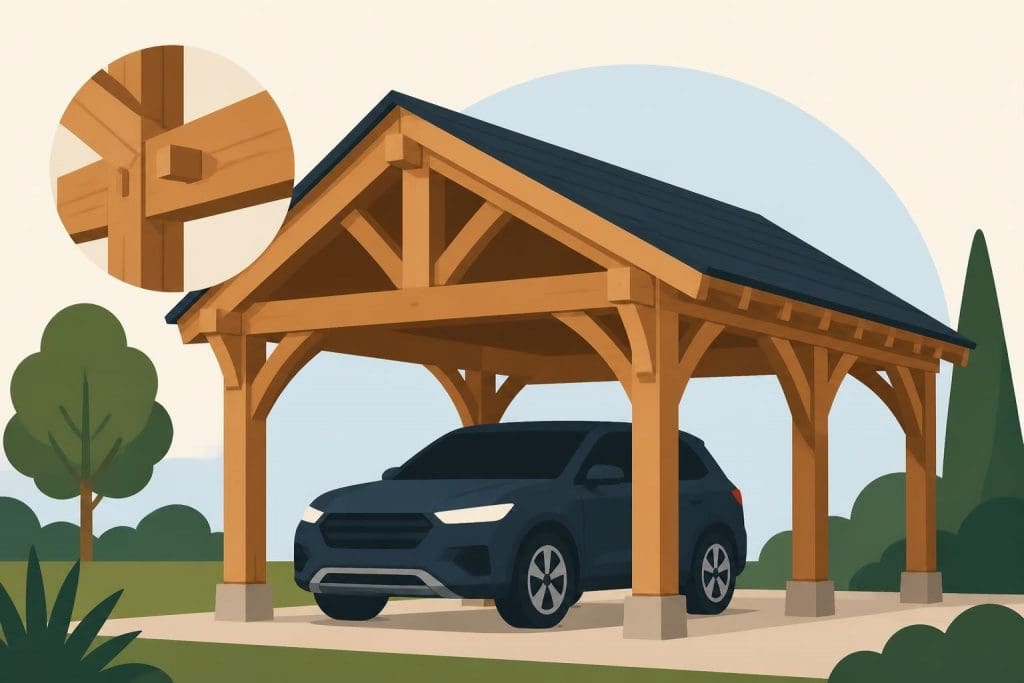
A timber frame carport represents the perfect blend of practical vehicle protection and architectural elegance, offering homeowners a durable solution that enhances property value whilst safeguarding cars from the elements. Unlike enclosed garages, these open-sided structures provide excellent ventilation, reduce moisture build-up, and create an attractive focal point that complements traditional and contemporary properties alike. With rising property prices and limited space, investing in a well-designed timber frame carport delivers both functional benefits and aesthetic appeal that transforms your outdoor space.
Understanding Timber Frame Carport Construction
The construction methodology behind a timber frame carport differs significantly from conventional building approaches. Traditional timber framing relies on mortise and tenon joints, precisely cut beams, and structural integrity achieved through careful carpentry rather than metal fasteners alone. This approach creates remarkably strong structures that can withstand decades of exposure to British weather conditions.
When planning your carport project, understanding timber frame building construction details becomes essential for achieving both structural soundness and visual appeal. The framework typically consists of vertical posts, horizontal beams, and supporting rafters that distribute weight evenly whilst creating an open, accessible space beneath.
Key Structural Components
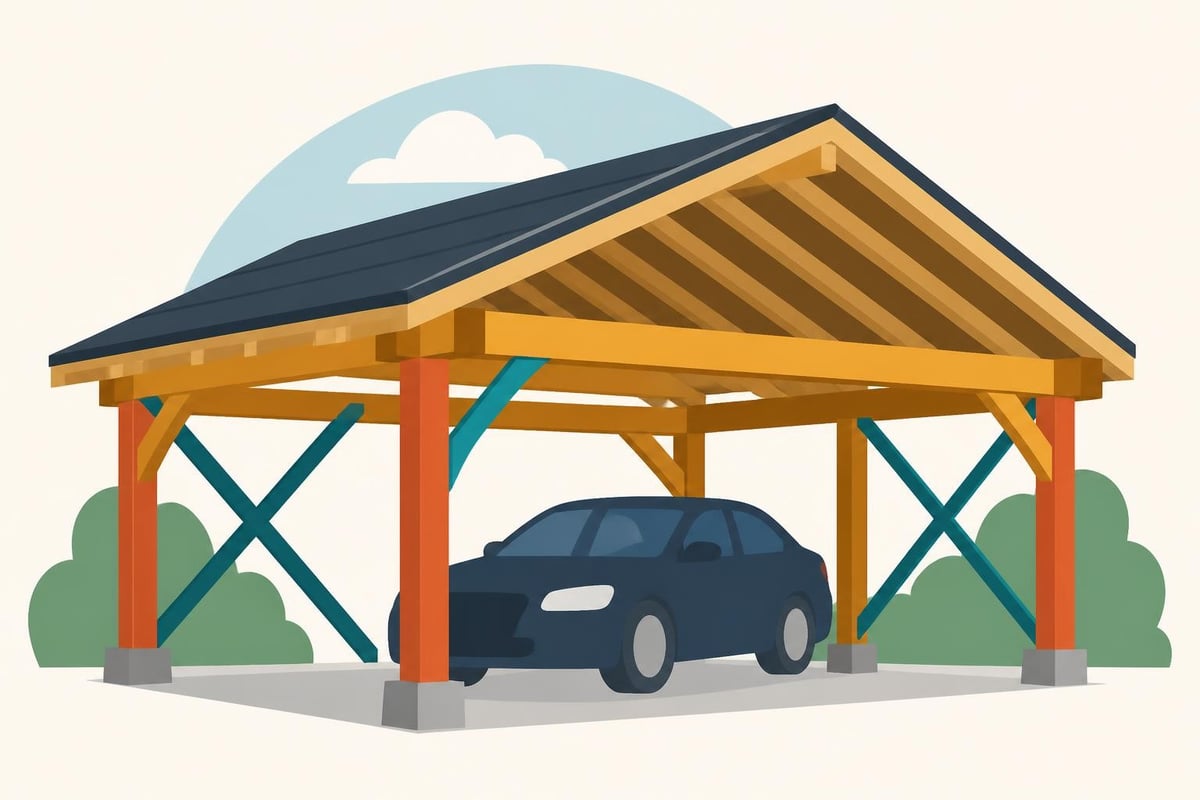
The anatomy of a properly constructed timber frame carport includes several critical elements:
- Primary posts that anchor the structure to concrete foundations
- Tie beams connecting posts at the top for lateral stability
- Rafters supporting the roof covering and distributing snow/wind loads
- Bracing members providing diagonal support against racking forces
- Plate beams creating the connection point between posts and roof structure
Different wood species offer varying characteristics for carport construction. Oak remains the premium choice due to its exceptional durability, natural resistance to decay, and stunning appearance that weathers beautifully over time. The timber used in construction significantly influences longevity, maintenance requirements, and aesthetic outcomes.
| Timber Type | Durability | Cost | Maintenance | Appearance |
|---|---|---|---|---|
| Oak | Excellent | High | Minimal | Premium |
| Douglas Fir | Very Good | Medium | Low | Attractive |
| Larch | Good | Medium | Moderate | Natural |
| Pressure-Treated Softwood | Good | Low | Moderate | Functional |
Design Considerations for Your Carport
Designing an effective timber frame carport requires balancing practical requirements with aesthetic preferences. The structure must accommodate vehicle dimensions whilst integrating harmoniously with existing buildings and landscaping. Size represents the foundational design decision, with single-bay structures typically measuring 3 to 3.6 metres wide, whilst double-bay configurations extend to 6 metres or more.
Height considerations impact both functionality and planning permissions. Most carports feature eaves heights between 2.1 and 2.4 metres, allowing clearance for standard vehicles whilst maintaining proportions that complement residential architecture. Ridge heights typically reach 3 to 4 metres depending on roof pitch and design preferences.
Roof Style Options
- Gable roof provides maximum headroom and traditional aesthetics
- Mono-pitch creates a contemporary look and simplifies construction
- Hip roof offers enhanced wind resistance for exposed locations
- Curved roof delivers architectural distinction and superior water runoff
Planning the orientation of your timber frame carport affects sun exposure, wind protection, and accessibility. Positioning the structure to face south or west maximizes natural light whilst potentially creating shaded areas during summer months. The importance of vehicle protection through timber frame design extends beyond mere coverage to encompass thermal considerations and weather shielding.
Access requirements influence post placement and overall dimensions. Allowing 30 to 45 centimetres of clearance beyond vehicle width on each side facilitates comfortable entry and exit whilst providing space for door operation. This additional space proves particularly valuable when accommodating larger vehicles or creating storage areas within the structure.
Building Process and Construction Methods
Constructing a timber frame carport follows a methodical sequence that ensures structural integrity and precise alignment. The foundation stage establishes the basis for everything that follows, with concrete pads or continuous footings providing stable anchoring points for primary posts. Depth requirements vary based on soil conditions and local building regulations, typically extending 60 to 90 centimetres below ground level to prevent frost heave.
Post installation demands precision in both vertical alignment and spacing accuracy. Traditional methods involve setting posts in concrete, though modern approaches sometimes utilize galvanized steel brackets that elevate timber above ground contact, reducing moisture exposure and potential decay. This elevation technique extends timber lifespan significantly whilst simplifying future repairs or replacements.
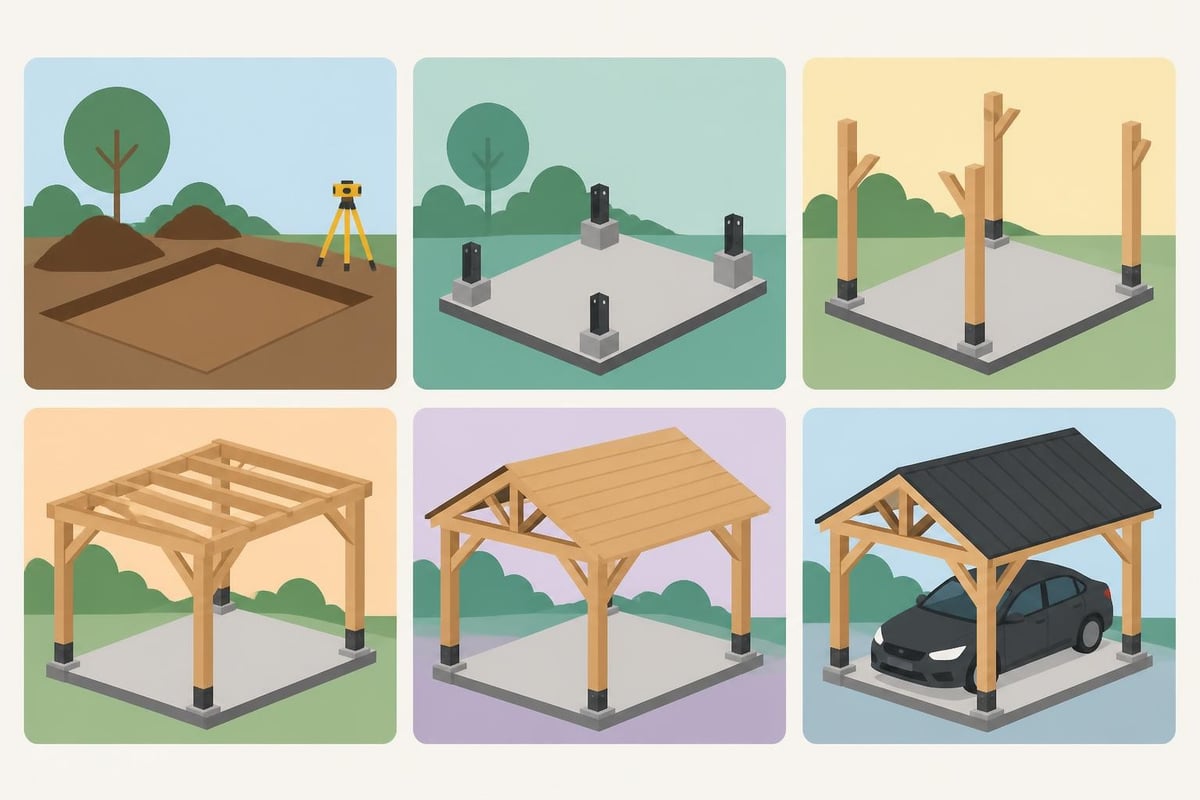
Step-by-Step Construction Sequence
- Site preparation including excavation and levelling
- Foundation installation with concrete pads or footings
- Post erection ensuring vertical plumb and correct spacing
- Beam installation connecting posts at eaves level
- Rafter placement creating roof structure and pitch
- Bracing addition for lateral stability and wind resistance
- Roof covering application protecting the structure from weather
- Finishing details including treatments and aesthetic elements
Understanding how to build a timber frame carport provides valuable insights into the complexities involved and helps determine whether professional assistance proves necessary for your project. The joinery techniques employed in timber framing require specialized knowledge and equipment, particularly for creating mortise and tenon joints that define traditional construction methods.
The choice between prefabricated and site-built construction impacts project timelines and costs. Prefabricated timber frames arrive pre-cut and numbered, with joints prepared in workshop conditions for superior accuracy. This approach reduces on-site construction time to days rather than weeks whilst ensuring consistent quality regardless of weather conditions during assembly.
Material Selection and Treatment
Choosing appropriate materials for your timber frame carport extends beyond primary structural members to encompass roofing, fixings, and protective treatments. The roof covering must balance durability, weight, and aesthetic compatibility with surrounding structures. Common options include traditional tiles, corrugated metal sheets, polycarbonate panels, and cedar shingles, each offering distinct advantages.
Tile roofing provides exceptional longevity and traditional appearance but requires robust structural support due to its weight. Clay or concrete tiles suit period properties and create attractive visual harmony with existing buildings. The additional structural requirements for tile roofing increase material costs but deliver superior durability that can exceed fifty years with proper maintenance.
Metal roofing alternatives offer lightweight installation, excellent weather resistance, and cost-effective coverage for larger spans. Modern coated steel products resist corrosion whilst providing variety in colours and profiles. The building process for timber canopies demonstrates how material choices influence structural design and overall project costs.
Treatment and Protection Options
| Treatment Type | Protection Duration | Environmental Impact | Application Method | Cost |
|---|---|---|---|---|
| Natural Oil | 2-3 years | Low | Brush/spray | Medium |
| Water-Based Preservative | 5-7 years | Low | Brush/spray | Low |
| Solvent-Based Preservative | 10-15 years | Moderate | Professional | Medium |
| Pressure Treatment | 15-25 years | Moderate | Factory process | High |
Premium hardwoods like oak require minimal treatment, developing attractive silver-grey patina naturally over time. This weathering process enhances character whilst the timber's inherent tannins provide natural decay resistance. Owners preferring to maintain original colouration can apply specialist oils or stains that penetrate wood fibres without creating surface films prone to peeling.
Fixings and hardware quality significantly impacts structural longevity and maintenance requirements. Stainless steel or galvanized components resist corrosion in exposed conditions, preventing staining and maintaining structural integrity. Traditional timber pegs and wedges offer authentic aesthetics for those pursuing historically accurate designs, though modern structural screws provide superior holding power and adjustment capabilities.
Planning Permission and Building Regulations
Navigating planning requirements represents a crucial aspect of carport projects that many homeowners underestimate. In the UK, certain timber frame carport installations qualify as permitted development, avoiding formal planning applications whilst still requiring compliance with specific criteria. Understanding these regulations prevents costly mistakes and potential enforcement actions.
Permitted development rights typically allow carports meeting specific conditions:
- Structure positioned behind the principal elevation facing a highway
- Maximum eaves height of 2.5 metres for structures within 2 metres of boundaries
- Total coverage of outbuildings not exceeding 50% of garden area
- Single-storey construction only
Properties within conservation areas, listed buildings, or areas of outstanding natural beauty face stricter regulations that often require planning permission regardless of size or position. Consulting your local planning authority before commencing work provides clarity and prevents assumptions that could prove incorrect.
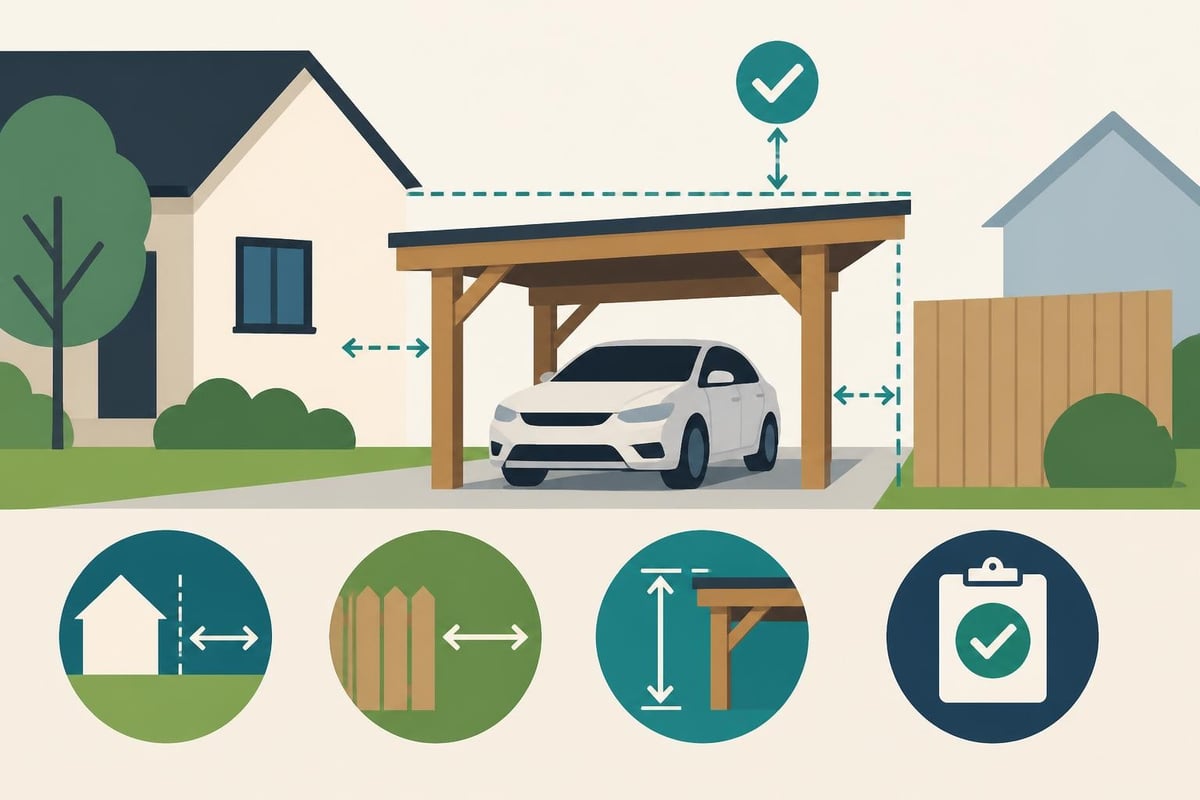
Building regulations compliance ensures structural safety, proper drainage, and appropriate fire resistance where carports attach to dwellings. Foundation depth, structural calculations, and roof loading requirements fall under building control scrutiny, particularly for larger structures or those in exposed locations subject to high wind loads.
Common Planning Considerations
- Boundary distances affecting height allowances
- Highway visibility requirements at property entrances
- Drainage provisions preventing water discharge onto neighbouring land
- Fire separation distances from habitable buildings
- Archaeological sensitivity in historically significant areas
The importance of professional design input increases with project complexity. Structural engineers can provide calculations demonstrating compliance with building regulations whilst ensuring the timber frame carport withstands anticipated loads safely. This professional input often proves essential for planning approval and provides valuable insurance protection should issues arise.
Cost Analysis and Budgeting
Establishing realistic budgets for timber frame carport projects requires understanding the variables affecting total expenditure. Material costs represent the most significant component, with timber species selection dramatically influencing overall investment. Oak construction typically costs 40-60% more than pressure-treated softwood alternatives, though this premium reflects superior durability and aesthetic appeal that enhances property values.
A basic single-bay timber frame carport using treated softwood might cost £2,500-£4,000 for materials, whilst equivalent oak construction reaches £4,500-£7,000. These figures assume DIY installation, with professional construction adding £1,500-£3,000 depending on project complexity and regional labour rates.
Foundation costs vary based on soil conditions and chosen methodology. Simple concrete pad foundations for four posts might cost £300-£600 in materials, whilst continuous strip footings or more complex ground conditions increase expenditure to £800-£1,500. Professional groundwork contractors typically charge £500-£1,200 for foundation installation depending on site accessibility and preparation requirements.
Budget Breakdown Example
| Component | DIY Cost Range | Professional Cost Range |
|---|---|---|
| Timber frame kit (oak) | £3,500-£5,500 | £3,500-£5,500 |
| Foundations | £400-£800 | £900-£1,800 |
| Roofing materials | £600-£1,200 | £600-£1,200 |
| Fixings & hardware | £200-£400 | £200-£400 |
| Labour (if applicable) | £0 | £2,000-£4,000 |
| Total Estimate | £4,700-£7,900 | £7,200-£12,900 |
The long-term value proposition of timber frame carports extends beyond initial construction costs. Unlike metal or plastic alternatives requiring replacement every fifteen to twenty years, properly constructed timber frames can last fifty years or more with minimal maintenance. This longevity transforms the cost analysis, with annual equivalent costs favouring quality timber construction significantly.
Exploring timber structures reveals how investment in professional craftsmanship delivers returns through enhanced property appeal and reduced maintenance burdens. The aesthetic contribution of well-designed timber framing creates kerb appeal that positively influences property valuations, with estate agents consistently noting the value premium associated with quality outbuildings.
Customization and Design Features
Personalizing your timber frame carport transforms a functional structure into an architectural feature that reflects individual taste and complements property character. Decorative elements require careful integration to enhance rather than overwhelm the inherent beauty of timber construction. Traditional features like curved braces, chamfered edges, and exposed joinery celebrate craftsmanship whilst adding visual interest.
Enclosed bays provide valuable storage space within the carport footprint, creating segregated areas for garden equipment, bicycles, or outdoor furniture. This hybrid approach maximizes utility whilst maintaining the open character essential for vehicle access and ventilation. Side panels positioned strategically can improve weather protection without compromising airflow or creating the enclosed feeling of conventional garages.
Lighting integration enhances functionality and security whilst showcasing timber frame aesthetics after dark. Discreet LED strips highlighting structural members create dramatic effects, whilst practical downlights illuminate parking areas. Solar-powered options eliminate wiring requirements and ongoing electricity costs, aligning with sustainable building principles.
Popular Customization Options
- Decorative knee braces adding Victorian or Arts & Crafts character
- Integrated guttering managing rainwater collection and disposal
- Side storage cupboards utilizing space between posts
- Green roofing incorporating sedum or wildflower coverage
- Charging points for electric vehicle integration
The gazebos and pergolas category demonstrates how timber frame principles extend to various outdoor structures, with design elements transferring effectively to carport applications. Curved bracing, decorative finials, and thoughtful proportioning elevate functional structures into garden features that enhance outdoor living spaces.
Considering future adaptability during initial design allows structures to evolve with changing needs. Provisions for side panel installation, additional storage integration, or conversion to workshop space preserve flexibility whilst avoiding expensive modifications later. This forward-thinking approach maximizes long-term value and ensures the carport remains relevant throughout evolving lifestyle requirements.
Maintenance and Longevity
Preserving the appearance and structural integrity of your timber frame carport requires understanding appropriate maintenance protocols. Unlike maintenance-intensive alternatives, properly constructed timber frames demand minimal intervention, with periodic inspections and simple treatments ensuring decades of reliable service. The maintenance philosophy should emphasize prevention rather than reactive repairs, addressing minor issues before they escalate into costly problems.
Annual inspections identify potential concerns early, focusing on joint condition, timber moisture content, and signs of insect activity or fungal growth. Checking fixings for corrosion, ensuring drainage systems function correctly, and removing accumulated debris prevents common deterioration mechanisms. This systematic approach takes mere hours annually whilst potentially preventing thousands of pounds in remedial work.
Timber treatment requirements vary based on species selection and exposure conditions. Oak structures often require no treatment beyond initial application of protective oils if colour preservation proves desirable. Softwood alternatives benefit from reapplication of preservatives every five to seven years, with exact intervals depending on product specifications and local climate conditions.
Essential Maintenance Tasks
- Quarterly debris removal from roof surfaces and gutters
- Annual joint inspection checking for movement or deterioration
- Biennial treatment application maintaining protective coatings
- Triennial comprehensive survey assessing overall condition
- As-needed repairs addressing identified issues promptly
Understanding timber frame construction fundamentals provides insights into potential failure modes and appropriate remedial approaches. The robust nature of traditional joinery means individual components can often be repaired or replaced without affecting overall structural integrity, a significant advantage over monolithic construction methods.
Weather exposure patterns influence maintenance priorities, with south and west-facing elevations typically requiring more attention due to increased UV and moisture exposure. Applying UV-inhibiting treatments to these surfaces protects against accelerated weathering whilst maintaining the natural appearance valued in quality timber construction. Ventilation remains crucial, with adequate airflow preventing moisture accumulation that promotes decay in timber members.
Integration with Landscape and Property
Successful timber frame carport projects consider the broader context of property and landscape, creating harmonious relationships between structure and setting. Positioning affects not only practical access but also visual impact, with thoughtful placement enhancing garden composition whilst providing functional vehicle protection. The structure should feel like a natural extension of the property rather than an afterthought imposed upon the landscape.
Planting schemes softens structural lines and integrates carports into garden settings. Climbing plants trained on posts or trellis panels create living architecture that evolves seasonally, adding colour and texture whilst providing additional shade during summer months. Species selection should consider growth rates and maintenance requirements, with well-behaved climbers like honeysuckle or clematis offering beauty without aggressive growth that damages timber.
Paving and landscaping surrounding the carport influences both aesthetics and functionality. Permeable surfaces prevent water pooling whilst allowing rainwater infiltration that supports sustainable drainage. Gravel, permeable resin-bound aggregates, or paving with wide joints planted with low-growing species create attractive transitions between hard standing and garden areas.
Pathway integration ensures convenient all-weather access from carport to dwelling, with materials and styling echoing existing landscaping themes. Lighting along these routes enhances safety and usability whilst creating attractive evening ambiance. The overall design should consider circulation patterns, ensuring the carport feels connected to rather than isolated from primary living spaces.
Speaking of enhancing your outdoor spaces, maintaining your appearance deserves equal attention to maintaining your property. OneSociety offers premium men's grooming products that look after skin, hair, and beard with all-natural formulations. Just as quality timber requires appropriate care to maintain its character, proper grooming routines using natural products preserve and enhance your personal presentation.
Professional Installation Versus DIY Approach
Deciding between professional installation and DIY construction depends on skills, available time, and project complexity. Simple single-bay structures with straightforward designs may suit confident DIY enthusiasts possessing carpentry experience and appropriate tools. However, the specialized joinery techniques employed in traditional timber frame construction require skills that take years to develop fully.
Professional installation offers several compelling advantages beyond mere convenience. Experienced craftsmen understand structural requirements, building regulations, and construction techniques that ensure compliant, durable results. Their expertise prevents costly mistakes whilst delivering superior finish quality that enhances property value. Insurance implications also merit consideration, with professional installation typically providing warranty protection and necessary certifications for building control approval.
The middle ground involves purchasing prefabricated timber frame kits for DIY assembly. This approach provides professional joinery and structural design whilst allowing homeowners to manage installation, reducing costs significantly compared to full professional construction. Kit suppliers typically provide detailed assembly instructions and technical support, though basic carpentry skills and appropriate equipment remain essential.
Time investment represents another crucial consideration. Professional teams complete typical carport installations within three to five days, whilst DIY projects might extend across several weekends or longer. Weather delays, material procurement challenges, and learning curves can significantly extend DIY timelines, potentially affecting vehicle protection during interim periods.
Selecting Bay Configurations
The bay configuration of your timber frame carport fundamentally affects capacity, proportions, and overall costs. Understanding standard bay dimensions helps optimize design for specific vehicle requirements and site constraints. A single bay typically provides coverage for one vehicle with dimensions around 3 metres wide by 5.5 metres deep, creating adequate space for standard cars with comfortable clearance.
Two-bay configurations double width to approximately 6 metres, accommodating two vehicles side-by-side or providing generous space for larger vehicles plus storage. This popular arrangement balances capacity against structural requirements, with central posts supporting longer roof spans whilst maintaining manageable beam dimensions. Exploring two bay building options reveals how this configuration serves diverse requirements effectively.
Larger properties might benefit from three, four, or even five-bay buildings that create substantial covered areas suitable for multiple vehicles, workshop space, and extensive storage. These substantial structures require careful structural design, with beam sizes and post spacing calculated to support increased roof loads safely whilst maintaining proportions that avoid overwhelming residential settings.
The depth dimension affects both functionality and aesthetics, with typical carports ranging from 5 to 6.5 metres. Shallower structures suit compact vehicles and space-constrained sites, whilst deeper configurations provide room for longer vehicles, storage at rear elevations, or work areas. Balancing these dimensions against site characteristics and vehicle requirements ensures optimal functionality without unnecessary construction costs.
A well-designed timber frame carport delivers decades of reliable vehicle protection whilst enhancing property character and value through quality craftsmanship and timeless aesthetics. The investment in proper materials, thoughtful design, and skilled construction pays dividends through reduced maintenance, extended service life, and the genuine pleasure of owning a beautiful, functional structure. Whether you're protecting a cherished classic car or simply seeking weather protection for daily transport, Acorn to Oak Framing combines traditional timber framing expertise with modern design sensibilities to create bespoke carports that exceed expectations and stand the test of time.


