
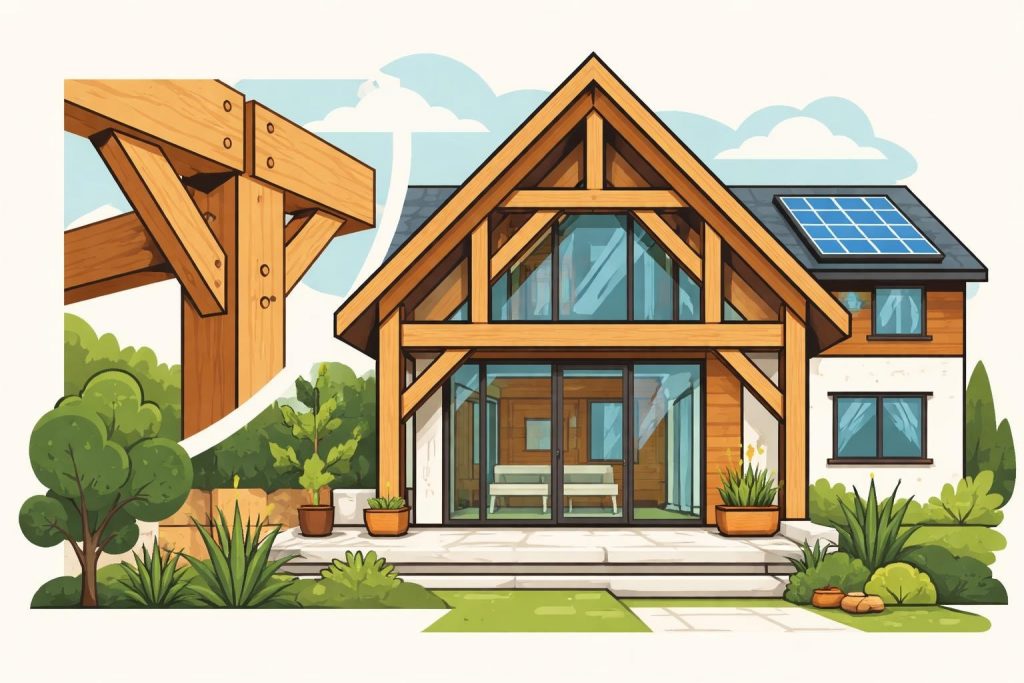
Timber frame contemporary houses represent a remarkable fusion of age-old construction methods and cutting-edge architectural innovation. These structures combine the warmth and authenticity of natural timber with the clean lines, open spaces, and energy efficiency demanded by modern living. As sustainability becomes increasingly important in the UK housing market, timber frame construction has emerged as a preferred choice for homeowners seeking both environmental responsibility and aesthetic excellence. The versatility of timber framing allows architects and designers to create bespoke residences that honour traditional craftsmanship whilst embracing the principles of contemporary design.
The Evolution of Timber Frame Contemporary Houses
The journey from traditional timber framing to contemporary applications showcases remarkable architectural progression. Historically, timber frame construction dominated British architecture for centuries, with oak frames forming the structural backbone of homes, barns, and public buildings. Today's timber frame contemporary houses retain the structural integrity and beauty of these historical methods whilst incorporating modern materials, insulation technologies, and design philosophies.
Contemporary timber framing differs significantly from its historical predecessor in several key aspects. Modern designs prioritise open-plan living, abundant natural light, and seamless indoor-outdoor transitions. The exposed timber framework, once purely functional, now serves as a striking design feature that creates visual interest and architectural character. Timber construction is rapidly becoming the future of contemporary architecture due to its sustainability credentials and design flexibility.
Structural Innovation in Modern Timber Frames
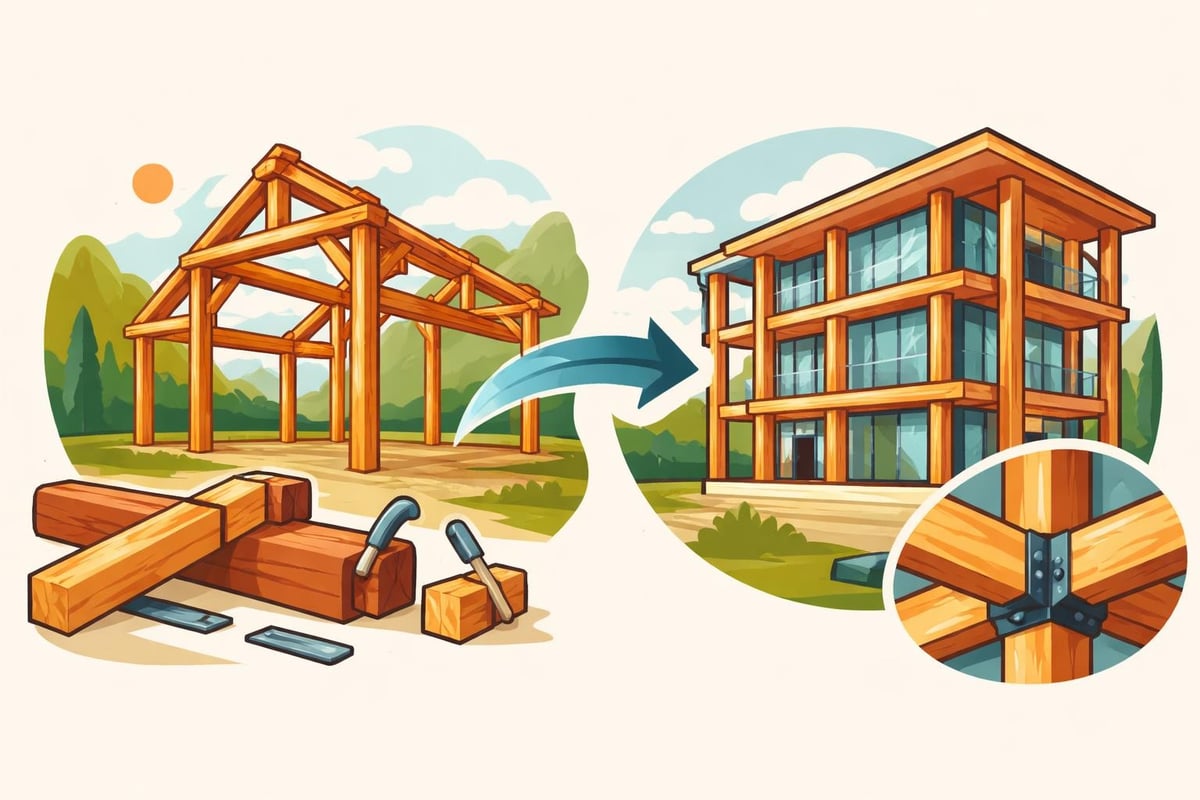
Contemporary timber frame construction employs sophisticated engineering techniques that enhance both performance and aesthetics. The integration of structural insulated panels (SIPs), advanced moisture barriers, and high-performance glazing systems transforms timber frames into highly efficient building envelopes. These innovations allow timber frame contemporary houses to exceed current building regulations whilst maintaining the authentic character of exposed timber.
Specialist companies like Acorn to Oak Framing combine traditional joinery methods with modern structural calculations to ensure buildings meet contemporary safety standards. The use of sustainably sourced oak timber provides exceptional durability, with properly maintained timber frames lasting for centuries. Modern treatments and finishes protect the timber from environmental factors whilst preserving its natural beauty and grain patterns.
Design Principles for Contemporary Timber Frame Architecture
Creating successful timber frame contemporary houses requires careful consideration of several fundamental design principles. The exposed structural frame must work harmoniously with modern architectural elements, creating spaces that feel both timeless and thoroughly current. This balance demands thoughtful planning from the earliest design stages through to final finishing details.
Key design considerations include:
- Structural expression: Showcasing the timber frame as a defining architectural feature
- Light optimisation: Maximising natural light through strategic window placement and glazing solutions
- Spatial flow: Creating open-plan layouts that enhance the sense of space
- Material contrast: Balancing timber warmth with contemporary materials like glass, steel, and concrete
- Energy performance: Integrating insulation and environmental systems without compromising aesthetics
The versatility of timber framing allows for diverse architectural expressions. Contemporary timber frame homes can adapt to various styles, from minimalist Scandinavian-inspired designs to bold, statement-making structures. This adaptability makes timber framing suitable for everything from compact urban dwellings to expansive rural estates.
Glazing and Natural Light Integration
One hallmark of timber frame contemporary houses is the generous use of glazing. Floor-to-ceiling windows, glazed gable ends, and strategic skylights flood interiors with natural light whilst framing views of the surrounding landscape. The structural strength of timber frames permits large openings without compromising building integrity, enabling architects to create dramatic visual connections between interior and exterior spaces.
Modern glazing technologies complement timber construction beautifully. Triple-glazed units provide exceptional thermal performance, reducing heat loss whilst maintaining transparency. Thermally broken frames prevent cold bridging, ensuring the entire building envelope performs efficiently. The combination of traditional timber framing techniques, such as those explored in traditional timber frame joinery, with contemporary glazing creates homes that are both beautiful and energy-efficient.
Material Selection and Sustainability Considerations
The choice of timber species significantly impacts both the aesthetic and performance characteristics of contemporary timber frame houses. Oak remains the premium choice for exposed structural frames due to its exceptional strength, durability, and visual appeal. As it ages, oak develops a rich patina that enhances the character of the building, creating a living material that evolves over time.
| Timber Species | Characteristics | Best Applications | Sustainability Rating |
|---|---|---|---|
| Oak | Exceptional durability, beautiful grain, darkens with age | Primary structural frames, feature beams | Excellent (sustainably sourced) |
| Douglas Fir | Strong, stable, attractive reddish tone | Secondary framing, internal structures | Very good |
| Larch | Naturally durable, good weather resistance | External cladding, exposed elements | Excellent (UK-grown available) |
| Sweet Chestnut | Similar to oak, lighter colour, excellent durability | Structural frames, exposed beams | Very good |
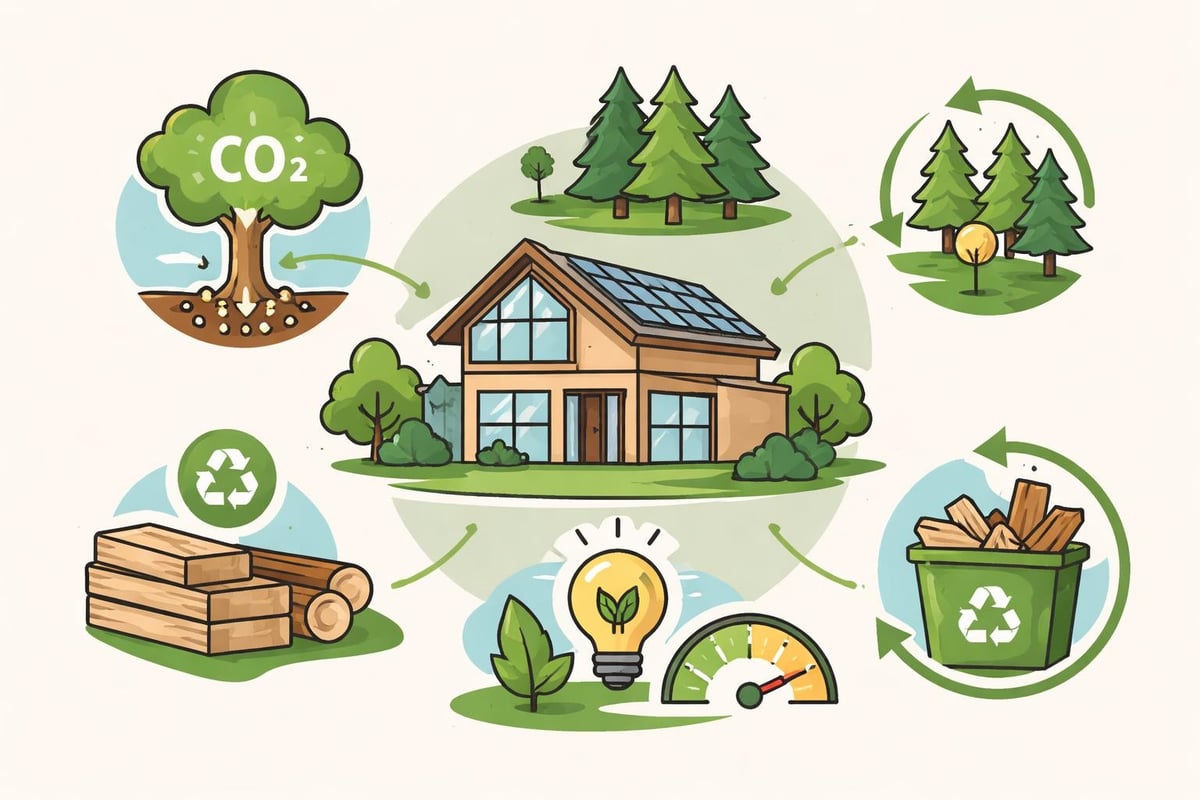
Sustainability extends beyond timber selection to encompass the entire construction process. The cultural and environmental importance of timber frame houses reflects broader ecological considerations that resonate with contemporary homeowners. Responsible forestry practices, minimal processing requirements, and carbon sequestration properties make timber one of the most environmentally friendly building materials available.
Modern timber frame contemporary houses often incorporate additional sustainable features that enhance their environmental credentials. Solar panels integrate seamlessly into roof designs, while ground-source heat pumps provide efficient heating and cooling. Rainwater harvesting systems, green roofs, and natural ventilation strategies further reduce environmental impact whilst creating healthy, comfortable living environments.
Customisation and Bespoke Design Opportunities
One of the most compelling advantages of timber frame contemporary houses is the extraordinary degree of customisation they permit. Unlike conventional construction methods that rely heavily on standardised components, timber framing allows virtually unlimited design freedom. Every project can be tailored precisely to site conditions, client preferences, and specific functional requirements.
The bespoke nature of timber framing extends across multiple dimensions:
- Structural configuration: Frame layouts designed specifically for intended use patterns
- Spatial proportions: Room sizes, ceiling heights, and volumes customised to individual needs
- Joinery details: Traditional or contemporary joint types selected for visual and structural impact
- Finish specifications: Surface treatments, stains, and protective coatings matched to aesthetic preferences
- Architectural features: Galleries, mezzanines, vaulted ceilings, and other distinctive elements
- Integration systems: Seamless incorporation of mechanical, electrical, and plumbing infrastructure
Companies specialising in bespoke timber frame construction work closely with clients throughout the design process, translating visions into buildable realities. This collaborative approach ensures every detail reflects the homeowner's lifestyle, aesthetic sensibilities, and practical requirements. The result is a truly unique residence that cannot be replicated through standard construction methods.
Adapting Timber Frames to Challenging Sites
Contemporary timber frame construction proves particularly valuable on difficult or constrained building sites. The relatively lightweight nature of timber frames reduces foundation requirements compared to masonry construction, making them suitable for sites with challenging ground conditions. Modular construction techniques allow frames to be pre-fabricated off-site and erected rapidly, minimising disruption and construction timeframes.
Sloping sites, narrow plots, and locations with restricted access all benefit from timber frame construction methodologies. The precision of modern timber engineering ensures components fit together perfectly, even when dealing with complex geometries or irregular site constraints. This adaptability makes timber frame contemporary houses viable in locations where conventional construction might prove prohibitively difficult or expensive.
Interior Design and Aesthetic Possibilities
The interior character of timber frame contemporary houses sets them distinctly apart from conventional modern homes. Exposed timber beams create architectural rhythm and visual interest, drawing the eye upward and emphasising spatial volumes. The natural warmth of timber softens the potentially austere quality of contemporary minimalist design, creating interiors that feel inviting rather than clinical.
Contemporary interior design approaches to timber frame homes vary widely. Some homeowners prefer showcasing the structural frame prominently, treating it as sculptural art that defines the space. Others incorporate the timber more subtly, using plasterboard or other finishes to conceal certain structural elements whilst highlighting selected beams or posts as accent features.
Popular interior design strategies include:
- Creating contrast between natural timber and smooth white walls
- Combining exposed timber with industrial materials like steel and concrete
- Integrating timber frames with Scandinavian-inspired minimalism
- Pairing traditional oak beams with ultra-modern furnishings and technology
- Using lighting to emphasise timber grain and structural details
Timber frame homes that blend traditional craftsmanship with modern design create interiors with timeless appeal that transcends fleeting design trends. The natural character of timber ensures these homes age gracefully, developing patina and character that enhance their beauty over time.
For those focused on maintaining both their homes and personal appearance with natural products, companies like onesociety.co.uk offer excellent men's grooming solutions. Their all-natural products for skin, hair, and beard care align with the same appreciation for authentic, sustainable materials that drives the choice of timber frame construction, demonstrating how quality natural products enhance both living spaces and personal wellbeing.
Technical Performance and Building Regulations Compliance
Achieving compliance with UK building regulations represents a critical consideration in any contemporary construction project. Timber frame contemporary houses must meet stringent requirements regarding structural integrity, fire safety, thermal performance, acoustic insulation, and accessibility. Properly designed and constructed timber frames readily exceed these standards whilst offering superior comfort and efficiency.
Thermal Performance and Energy Efficiency
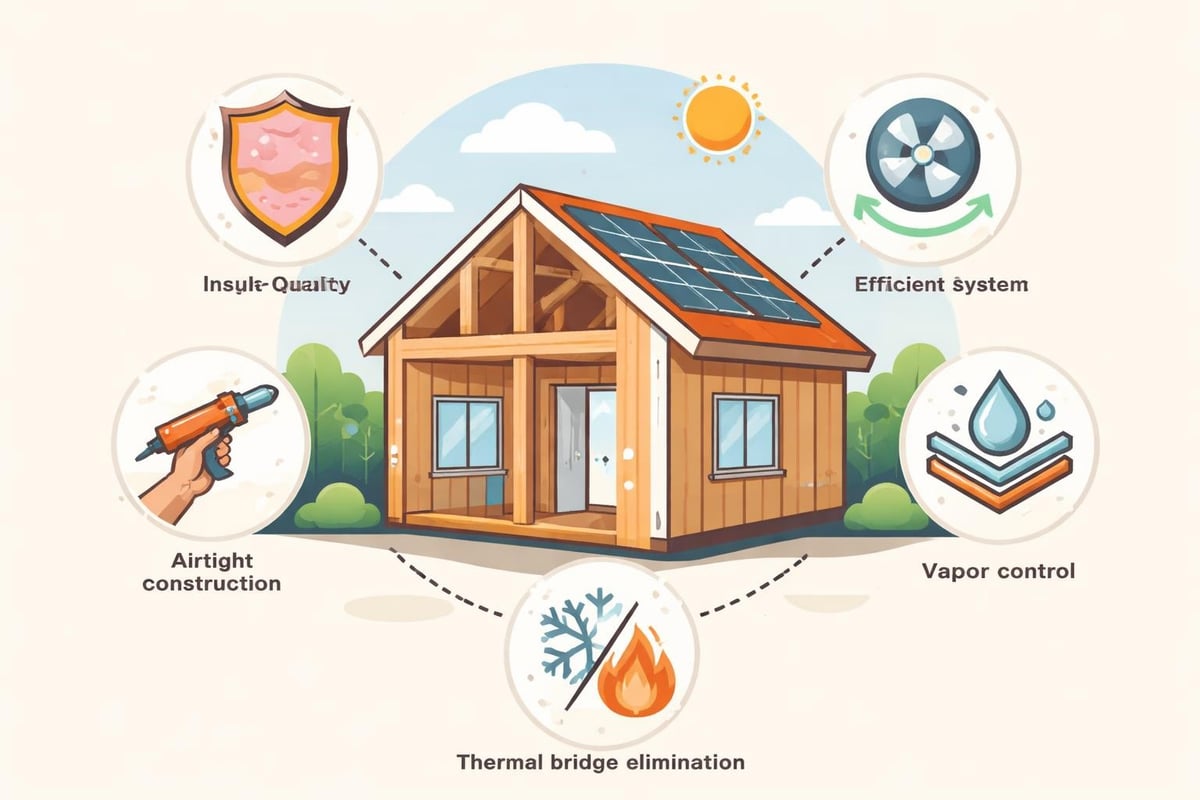
Modern timber frame construction achieves exceptional thermal performance through careful design and material selection. The combination of structural timber, insulation materials, and vapour control layers creates highly efficient building envelopes that minimise heat loss and reduce energy consumption. Airtight construction techniques prevent draughts and thermal bridging, ensuring consistent internal temperatures and reduced heating costs.
| Performance Metric | Timber Frame Standard | UK Building Regs Requirement | Performance Advantage |
|---|---|---|---|
| U-value (walls) | 0.15 W/m²K | 0.28 W/m²K | 46% better than minimum |
| U-value (roof) | 0.13 W/m²K | 0.16 W/m²K | 19% better than minimum |
| Airtightness | 3.0 m³/h/m² @ 50Pa | 10.0 m³/h/m² @ 50Pa | 70% more airtight |
| Thermal bridging | Minimised through design | Compliance required | Significantly reduced |
The thermal mass characteristics of timber frames differ from masonry construction but offer distinct advantages. While timber provides less thermal mass than brick or concrete, modern timber frame contemporary houses compensate through superior insulation and airtightness. This combination creates comfortable, stable internal environments with lower energy demands for heating and cooling.
Fire Safety and Structural Protection
Fire safety considerations are paramount in timber frame construction. Modern building regulations require comprehensive fire protection strategies that ensure occupant safety and structural integrity. Contrary to common misconceptions, properly designed timber frames perform excellently in fire conditions due to the predictable charring behaviour of large-section timbers.
Contemporary timber frame houses employ multiple fire safety measures. Plasterboard linings provide tested fire resistance ratings, compartmentalising spaces and preventing fire spread. Intumescent coatings can be applied to exposed timbers where additional protection is required. Fire stops within wall and floor cavities prevent vertical fire spread, whilst fire-resistant doors and glazing systems maintain compartmentation.
The structural performance of heavy timber frames during fire events often exceeds that of steel-framed buildings. Large oak beams char at predictable rates, maintaining structural capacity even when exposed to flames. This characteristic provides valuable evacuation time and reduces the risk of catastrophic structural collapse, a significant safety advantage recognised by contemporary timber construction experts worldwide.
Construction Process and Project Timelines
The construction process for timber frame contemporary houses differs significantly from traditional masonry building methods. Understanding this process helps homeowners appreciate the efficiency and precision that characterises modern timber frame construction. From initial design through to completion, timber frame projects follow a structured pathway that minimises delays and ensures quality outcomes.
Typical project stages include:
- Consultation and design development: Collaborative planning to establish requirements and preferences
- Structural engineering: Detailed calculations ensuring compliance and performance
- Frame fabrication: Precision cutting and joinery in controlled workshop conditions
- Site preparation: Foundation installation and groundwork completion
- Frame erection: Rapid assembly of pre-fabricated components on-site
- Envelope completion: Installation of roofing, cladding, and glazing systems
- First fix: Integration of mechanical, electrical, and plumbing services
- Insulation and finishing: Completion of thermal envelope and internal finishes
- Second fix: Final installations, decorating, and quality inspections
- Handover: Client orientation and project completion documentation
The workshop fabrication phase allows precise joinery work to proceed regardless of weather conditions. This controlled environment ensures consistently high quality whilst protecting valuable materials from environmental exposure. When the frame arrives on-site, erection typically takes just days, dramatically reducing the construction programme compared to conventional building methods.
Homeowners considering timber frame contemporary houses can explore various options through specialist suppliers. Ready-to-go timber frame buildings provide excellent starting points, whilst fully bespoke designs allow complete creative freedom. Understanding the range of possibilities helps clients make informed decisions that balance budget, timeline, and design aspirations.
Cost Considerations and Investment Value
The financial aspects of timber frame contemporary houses encompass both initial construction costs and long-term value considerations. While timber frame construction can command premium pricing compared to conventional building methods, the investment delivers substantial benefits that justify the additional expenditure. Understanding these cost factors enables informed decision-making and realistic budget planning.
Initial costs for timber frame contemporary houses vary considerably based on numerous factors. Building size, design complexity, specification levels, site conditions, and finish quality all influence final pricing. As a general principle, bespoke timber frame houses cost more than volume-built properties but deliver significantly higher quality, uniqueness, and long-term performance.
Primary cost factors include:
- Timber species and quality grade selection
- Structural complexity and design intricacy
- Glazing specifications and quantity
- Insulation performance levels
- Mechanical and electrical system sophistication
- External cladding materials and finishes
- Internal finish specifications
- Site access and foundation requirements
The long-term value proposition of timber frame contemporary houses proves compelling. Superior energy efficiency translates directly into reduced utility costs, with well-designed timber frame homes achieving heating bills 40-60% lower than conventional properties. Minimal maintenance requirements reduce ongoing ownership costs, particularly when using naturally durable timbers like oak that require no preservative treatments.
Property values for distinctive timber frame contemporary houses typically appreciate faster than standard housing stock. The uniqueness, quality, and sustainability credentials appeal strongly to discerning buyers, creating robust demand in the resale market. Additionally, the timeless aesthetic quality ensures these properties remain desirable across changing design trends, protecting long-term investment value.
Regional Adaptations and Architectural Contexts
Timber frame contemporary houses adapt beautifully to diverse regional contexts throughout the UK. From coastal locations to rural countryside settings and urban infill sites, timber framing proves remarkably versatile. The key to successful regional adaptation lies in respecting local architectural traditions whilst embracing contemporary design principles that reflect modern lifestyles.
In rural settings, timber frame contemporary houses often reference traditional agricultural buildings through form and proportion whilst incorporating modern amenities and comforts. Gable-ended designs, generous overhangs, and natural cladding materials help new builds harmonise with existing rural architecture. The authentic character of oak framing resonates particularly strongly in countryside locations, creating visual connections to historical barn conversions and traditional farmsteads.
Coastal environments present specific challenges that timber frame construction addresses effectively. The corrosion resistance of timber frames contrasts favourably with steel alternatives in salt-laden atmospheres. Proper specification of external cladding materials, protective finishes, and drainage details ensures long-term durability in demanding maritime conditions. The structural flexibility of timber framing accommodates wind loading requirements whilst maintaining architectural elegance.
Urban contexts demand different approaches, with timber frame contemporary houses often serving as infill developments or replacement dwellings. Compact footprints, vertical emphasis, and creative use of natural light help timber frames succeed in constrained urban sites. The rapid erection process minimises disruption to neighbours, whilst the sustainable credentials align with progressive urban planning policies.
Case Studies and Practical Applications
Examining successful timber frame contemporary houses provides valuable insights into design possibilities and practical considerations. Projects across the UK demonstrate how timber framing adapts to various requirements, budgets, and aesthetic preferences. From compact single-bay structures to expansive five-bay residences, the scalability of timber frame construction accommodates diverse needs.
Specialist timber frame companies maintain extensive galleries showcasing completed projects that illustrate the breadth of design possibilities. These examples demonstrate how traditional timber framing techniques combine with contemporary architectural vision to create exceptional homes. Studying these projects helps prospective clients visualise possibilities for their own builds whilst understanding the practical realities of timber frame construction.
Future Trends in Timber Frame Contemporary Architecture
The evolution of timber frame contemporary houses continues as new technologies, materials, and design philosophies emerge. Several trends are shaping the future direction of timber frame architecture, promising even more sustainable, efficient, and aesthetically refined buildings. Understanding these developments helps homeowners make forward-thinking decisions that ensure their homes remain relevant and desirable for decades.
Digital design and manufacturing technologies are revolutionising timber frame production. Computer-aided design (CAD) and building information modelling (BIM) enable unprecedented precision in structural calculations and component fabrication. CNC machinery cuts complex joints with micron-level accuracy, ensuring perfect fit and maximum structural efficiency. These technologies reduce material waste whilst enabling increasingly sophisticated design geometries.
Cross-laminated timber (CLT) and other engineered wood products are expanding architectural possibilities for timber frame contemporary houses. These materials provide exceptional strength-to-weight ratios, enabling longer spans and more dramatic cantilevers. The combination of traditional oak framing with engineered timber components creates hybrid structures that optimise both aesthetic and structural performance.
Biophilic design principles are increasingly influencing timber frame architecture. This approach recognises the psychological benefits of connection to nature, using natural materials, organic forms, and abundant greenery to enhance occupant wellbeing. Timber frames inherently support biophilic design through their use of natural materials, whilst contemporary interpretations incorporate living walls, internal courtyards, and seamless garden integration.
Smart home technologies integrate seamlessly into timber frame contemporary houses, with services concealed within structural cavities or incorporated discreetly into design details. Home automation systems control lighting, heating, security, and entertainment whilst maintaining the authentic character of exposed timber frames. This integration of traditional craftsmanship and cutting-edge technology creates homes that honour the past whilst embracing the future.
Timber frame contemporary houses represent an exceptional choice for discerning homeowners who value sustainability, craftsmanship, and architectural distinction. The combination of traditional timber framing techniques with modern design principles creates residences that are simultaneously timeless and thoroughly contemporary, offering unmatched character alongside superior performance. If you're considering a timber frame project that reflects your unique vision whilst delivering lasting quality, Acorn to Oak Framing brings expertise, craftsmanship, and dedication to every build, transforming aspirations into beautifully crafted reality.


