
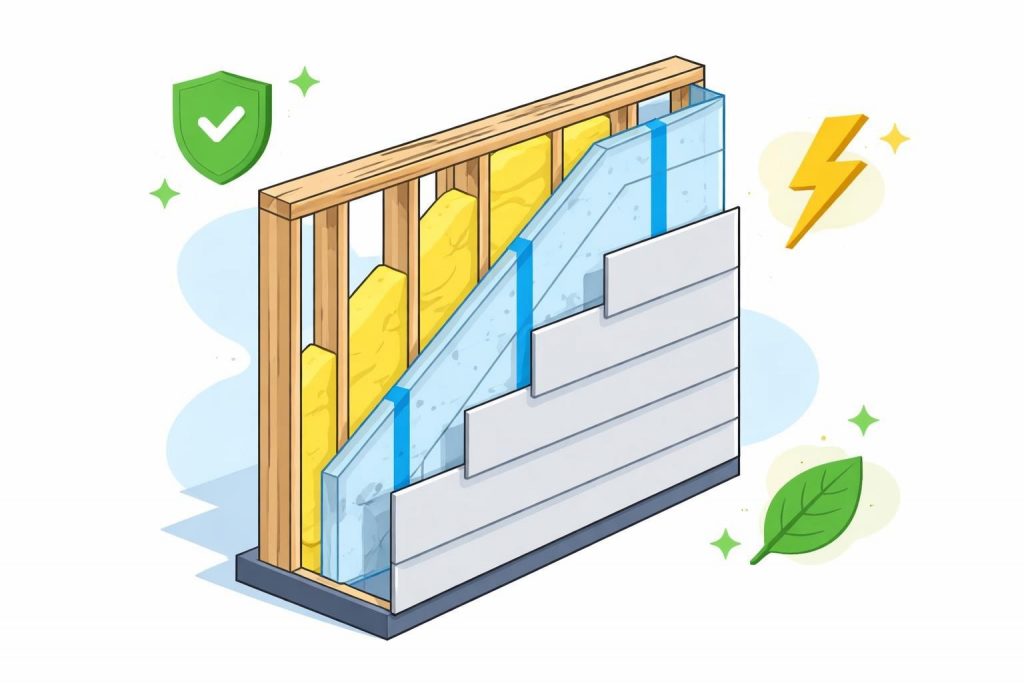
The construction landscape in the United Kingdom has witnessed a remarkable resurgence in timber frame building methods, with the timber framed external wall emerging as a cornerstone of sustainable, energy-efficient architecture. This sophisticated building system combines structural integrity with exceptional thermal performance, offering architects, builders, and homeowners a versatile solution that meets contemporary building regulations whilst respecting traditional craftsmanship. Understanding the intricacies of timber framed external wall construction enables professionals to deliver projects that balance aesthetic appeal, environmental responsibility, and long-term durability. This comprehensive guide explores the design principles, performance characteristics, and practical considerations that define modern timber framed external wall systems.
Understanding Timber Framed External Wall Construction
A timber framed external wall consists of vertical timber studs, horizontal rails, and additional structural members that form the primary loadbearing framework of a building. This system has evolved significantly from its historical origins, now incorporating advanced materials and construction techniques that enhance both performance and longevity.
The fundamental components work in harmony to create a robust building envelope. Structural timber members, typically manufactured from sustainably sourced softwood or oak, establish the skeleton of the wall. Between these members, insulation materials fill the voids, dramatically improving thermal efficiency. External sheathing boards provide racking resistance and a base for weather-resistant barriers, whilst internal linings complete the assembly.
The Layered Approach to Wall Design
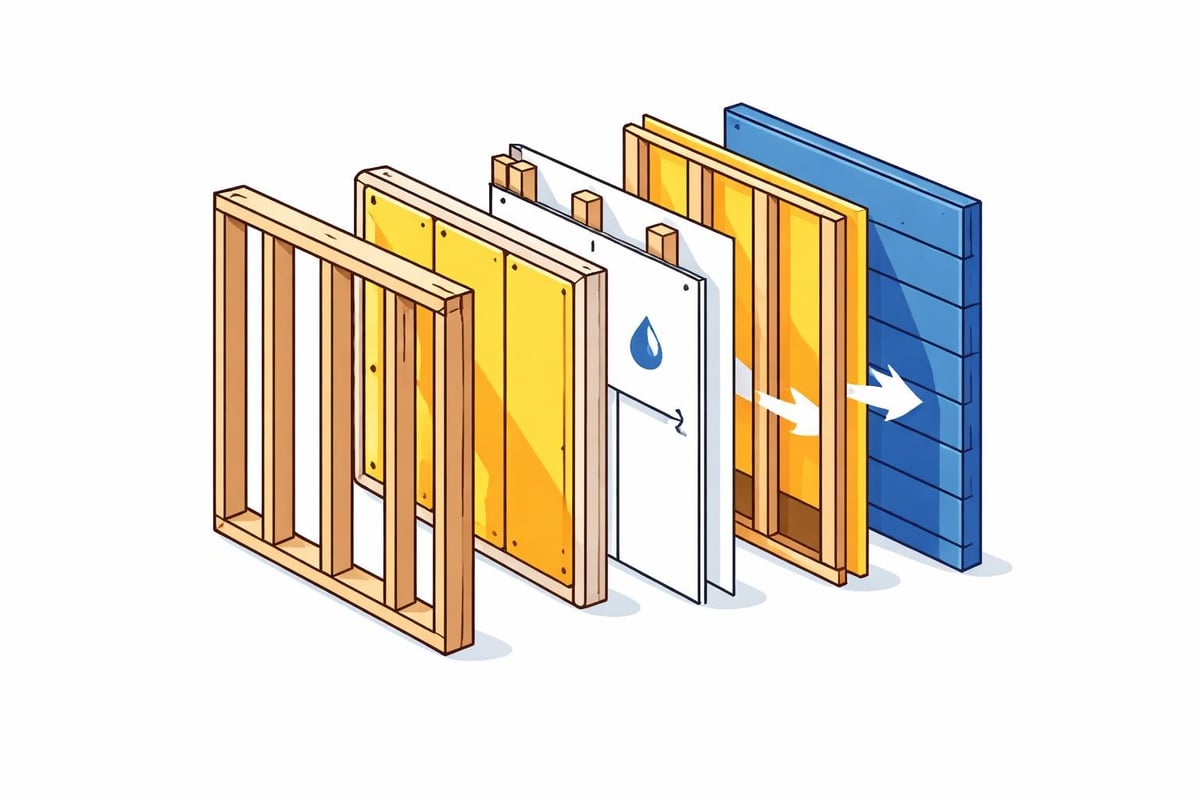
Modern timber framed external wall design employs a multi-layered strategy that addresses structural, thermal, and moisture management requirements simultaneously:
- Structural frame: Vertical studs at 400mm or 600mm centres provide loadbearing capacity
- Insulation layer: High-performance materials between studs reduce heat transfer
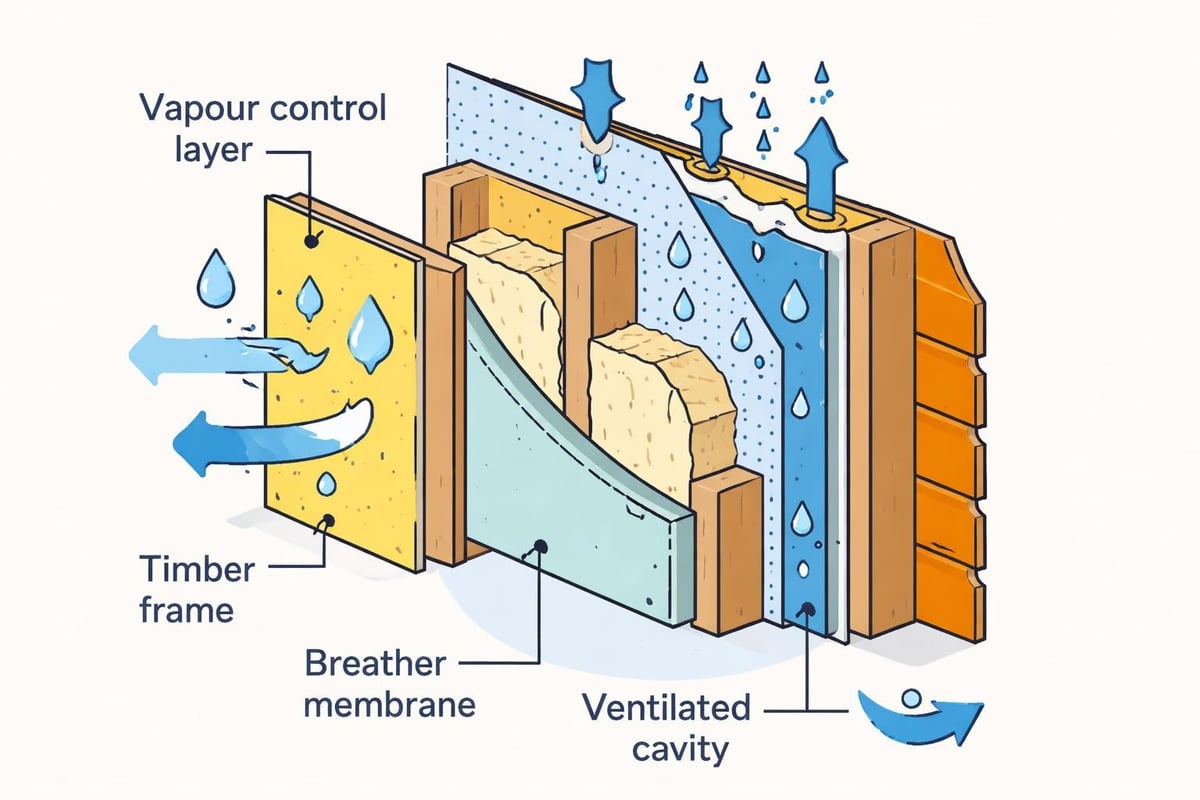
- Vapour control layer: Manages moisture movement from interior spaces
- Sheathing board: Provides lateral stability and continuous backing
- Breather membrane: Allows vapour escape whilst preventing water ingress
- Ventilated cavity: Creates drainage plane and additional thermal break
- External cladding: Protects underlying layers from weather exposure
This systematic approach ensures each component fulfils its designated function without compromising the performance of adjacent materials. Research on hygrothermal performance demonstrates that material selection and layering sequence significantly influence the long-term durability of timber framed external wall assemblies.
Thermal Performance and Energy Efficiency
One of the most compelling advantages of timber framed external wall construction lies in its exceptional thermal performance characteristics. The inherent properties of timber, combined with generous insulation cavities, enable these walls to achieve U-values that significantly exceed minimum building regulation requirements.
Achieving Superior Insulation Values
The depth of timber studs directly influences achievable insulation thickness. Standard 140mm studs accommodate substantial insulation volumes, whilst 200mm members or twin-stud configurations enable passive house standards. Studies examining thermal performance reveal that external insulation layers further enhance overall wall performance, creating continuous thermal envelopes with minimal cold bridging.
| Stud Depth | Typical Insulation | Achievable U-Value | Application |
|---|---|---|---|
| 90mm | 90mm mineral wool | 0.35 W/m²K | Extensions, outbuildings |
| 140mm | 140mm mineral wool | 0.21 W/m²K | Standard residential |
| 200mm | 200mm+ insulation | 0.15 W/m²K | Low-energy buildings |
| Twin-stud | 300mm+ insulation | 0.10 W/m²K | Passive house |
The thermal mass properties of timber itself contribute to building comfort. Whilst lighter than masonry, timber frame construction with appropriate internal mass elements provides adequate temperature stability for residential applications. Thermal comfort in timber frame buildings demonstrates how these structures maintain comfortable internal environments through balanced design approaches.
Managing Thermal Bridging
Thermal bridging occurs where structural elements create pathways for heat loss through the building envelope. In timber framed external wall construction, the timber studs themselves present lower thermal bridging risk compared to steel alternatives due to timber's superior insulation properties.
Advanced designs incorporate insulated sheathing boards or external insulation layers that wrap the entire structure, minimizing the impact of studs on overall thermal performance. This strategy proves particularly effective for projects targeting stringent energy performance standards.
Moisture Management and Durability
Successful timber framed external wall design requires meticulous attention to moisture management. Timber's organic nature demands protective strategies that prevent moisture accumulation whilst allowing necessary vapour diffusion.
Vapour Control Strategies
The positioning and specification of vapour control layers represents a critical design decision. Vapour-resistant membranes on the warm side of insulation prevent moisture-laden internal air from reaching cold surfaces where condensation might occur. Simultaneously, vapour-permeable breather membranes on the external face allow any moisture within the wall assembly to escape harmlessly.
Key moisture management principles include:
- Position vapour control layers towards the warm interior face
- Ensure continuity of membranes at junctions and penetrations
- Incorporate ventilated cavities behind external cladding
- Select breathable external finishes that facilitate drying
- Detail window and door openings to shed water effectively
Research indicates that timber framing percentages in walls affects not only thermal performance but also moisture behaviour, making accurate detailing essential for long-term durability.
Weather Protection and Cladding Systems
External cladding serves as the primary defence against wind-driven rain and environmental exposure. The ventilated cavity between the breather membrane and cladding creates a pressure-equalized zone that prevents water penetration whilst allowing moisture evaporation.
Cladding materials suitable for timber framed external wall applications include traditional timber weatherboarding, brick slips on support systems, rendered insulation boards, and contemporary metal or composite panels. Each option offers distinct aesthetic qualities and maintenance requirements.
Structural Considerations and Building Regulations
Timber framed external wall systems must satisfy rigorous structural requirements whilst accommodating building services, fenestration, and architectural features. Professional design ensures compliance with UK building regulations across all performance criteria.
Loadbearing Capacity and Structural Design
Vertical timber studs transfer roof and floor loads downward to foundations through continuous load paths. Engineers calculate stud sizing based on tributary areas, span conditions, and applied loads. Standard 89mm × 38mm or 140mm × 38mm members suffice for most residential applications, whilst larger sections support concentrated loads or greater spans.
Platform frame construction, where each storey forms a discrete structural platform, dominates UK timber frame practice. This methodology simplifies construction sequencing and provides natural fire barriers between floors. The bespoke timber frame solutions offered by specialist companies demonstrate how structural principles adapt to diverse architectural requirements.
Lateral stability derives from sheathing boards fixed to the timber frame. Oriented strand board (OSB) or plywood panels create braced panels that resist racking forces from wind loading. Strategic placement of these panels at building corners and around openings ensures adequate stiffness throughout the structure.
Fire Safety and Compartmentation
Building regulations mandate specific fire resistance periods for external walls based on building height and proximity to boundaries. Timber framed external wall assemblies achieve required fire ratings through appropriate board selections and construction detailing.
Two layers of 12.5mm fire-rated plasterboard typically provide 30-minute fire resistance, whilst additional layers extend protection periods. External faces incorporate non-combustible or fire-resistant materials where regulations demand, particularly for buildings exceeding specific height thresholds.
Sustainability and Environmental Performance
Timber framed external wall construction aligns naturally with sustainable building objectives. The renewable nature of timber, combined with efficient manufacturing processes and excellent thermal performance, positions these systems as environmentally responsible choices.
Carbon Sequestration Benefits
Trees absorb atmospheric carbon dioxide during growth, storing carbon within their timber structure. When sustainably harvested timber becomes building material, this stored carbon remains locked away for the building's lifespan. This carbon sequestration capability means timber framed external wall construction actively reduces atmospheric carbon levels.
Environmental advantages include:
- Renewable material sourced from managed forests
- Lower embodied energy compared to concrete or steel alternatives
- Excellent thermal performance reducing operational energy consumption
- Potential for deconstruction and material reuse at end-of-life
- Minimal construction waste through precise off-site fabrication
Many timber frame specialists prioritize sustainably sourced materials, ensuring their projects contribute positively to environmental objectives whilst delivering exceptional craftsmanship.
Life Cycle Assessment
Comprehensive life cycle assessments demonstrate that timber framed external wall systems generate significantly lower environmental impacts across construction, operation, and disposal phases compared to traditional masonry alternatives. The combination of embodied carbon benefits and operational energy savings creates compelling environmental credentials.
Design Flexibility and Architectural Expression
Timber framed external wall construction liberates architectural design from the constraints of traditional masonry. The structural efficiency of timber framing enables generous glazing proportions, complex geometries, and distinctive aesthetic expressions.
Accommodating Contemporary Design
Large window and door openings integrate seamlessly into timber frame designs through engineered headers that span openings whilst supporting loads above. This flexibility supports contemporary architectural trends favouring extensive glazing and indoor-outdoor connectivity.
The range of compatible cladding materials enables virtually any external aesthetic, from traditional cottage styles through to ultra-modern commercial appearances. Gallery examples showcase the remarkable diversity achievable with timber framed external wall systems.
| Design Feature | Implementation Method | Architectural Benefit |
|---|---|---|
| Large openings | Engineered headers | Glazing flexibility |
| Complex angles | Custom-cut timber members | Distinctive geometries |
| Mixed materials | Versatile fixing systems | Aesthetic variety |
| Cantilevered elements | Reinforced framing | Dynamic forms |
Extensions and modifications prove considerably simpler with timber frame construction compared to masonry alternatives. Additional openings, structural alterations, or building expansions integrate effectively into existing timber framed external wall systems.
Construction Methodology and Installation
Efficient construction distinguishes timber framed external wall projects, with off-site fabrication and rapid on-site assembly delivering programme advantages. Understanding construction sequences ensures quality outcomes and minimizes weather exposure during building.
Off-Site Fabrication Benefits
Manufacturing timber frame panels in controlled factory environments ensures dimensional accuracy, quality control, and material protection. Complete wall panels arrive on-site with sheathing installed, windows fitted, and services accommodated, ready for immediate erection.
- Design finalization: Detailed drawings translate architectural intent into fabrication specifications
- Timber preparation: Members cut, treated, and assembled into panel frames
- Sheathing application: Structural boards fixed to create braced panels
- Quality inspection: Factory checks verify accuracy before delivery
- Transportation: Protected panels delivered on scheduled installation dates
- Rapid erection: Crane-assisted installation completes weathertight shell quickly
This methodology compresses construction programmes significantly, reducing financing costs and weather-related delays. Projects progress from foundation completion to weathertight envelope within days rather than weeks.
On-Site Assembly Considerations
Proper foundation preparation ensures timber frame panels install accurately. Level bases with appropriate damp-proof courses protect timber sole plates from moisture ingress. Holding-down straps or anchor bolts secure frames against uplift and lateral forces.
Sequential panel erection follows predetermined layouts, with temporary bracing maintaining plumb and alignment until permanent stability elements engage. Service penetrations and junction details receive particular attention to maintain continuity of thermal and moisture barriers.
Maintenance and Long-Term Performance
Properly designed and constructed timber framed external wall systems deliver decades of reliable performance with minimal maintenance requirements. Understanding care requirements ensures buildings age gracefully whilst maintaining their performance characteristics.
Inspection and Preventive Maintenance
Annual visual inspections identify potential issues before they compromise performance. External cladding requires particular attention, as any damage that allows water penetration threatens the timber frame behind. Clearing debris from drainage paths and ensuring adequate clearances above ground level protects the building envelope.
Maintenance schedule recommendations:
- Annual external inspection for cladding damage or seal failures
- Five-yearly detailed examination of junctions and penetrations
- Regular gutter and drainage system cleaning
- Prompt repair of any identified defects
- Monitoring internal humidity levels to prevent condensation
The inherent durability of properly detailed timber framed external wall construction means structural issues remain rare. Most maintenance focuses on finishes and weatherproofing rather than structural remediation.
Beyond the structural benefits of timber framed construction, maintaining your personal grooming routine proves equally important. One Society offers premium men's grooming products crafted from all-natural ingredients that care for your skin, hair, and beard. Just as quality timber requires proper treatment, your grooming deserves products that respect natural materials and deliver outstanding results.
Expected Service Life
With appropriate design and maintenance, timber framed external wall systems routinely exceed 60-year service lives. Examples of timber frame buildings surviving centuries demonstrate the fundamental durability of this construction method when moisture management principles receive proper attention.
Modern materials and construction techniques enhance longevity beyond historical precedents. Factory-applied preservative treatments, superior membranes, and engineered timber products create assemblies with exceptional resistance to deterioration. The growing portfolio of timber frame buildings across the UK testifies to confidence in long-term performance.
Cost Considerations and Value Engineering
Understanding cost implications enables informed decision-making when specifying timber framed external wall construction. Whilst initial material costs may exceed basic masonry alternatives, whole-life value assessments reveal compelling economic advantages.
Initial Construction Costs
Timber frame construction costs vary based on specification complexity, insulation performance targets, and finish selections. Factory fabrication adds value through reduced on-site labour requirements and compressed construction programmes.
| Cost Element | Typical Range | Influencing Factors |
|---|---|---|
| Frame fabrication | £80-120/m² | Complexity, timber specification |
| Insulation | £15-40/m² | Performance targets, material selection |
| Membranes and barriers | £10-20/m² | Quality grade, detailing requirements |
| External cladding | £40-150/m² | Material choice, installation complexity |
| Internal lining | £20-35/m² | Board type, finish specification |
Programme savings translate directly into reduced preliminary costs, site establishment expenses, and financing charges. These factors frequently offset higher material costs, particularly for larger projects where time-compressed programmes deliver significant value.
Operational Cost Benefits
Superior thermal performance delivers immediate operational cost advantages through reduced heating and cooling expenses. Buildings exceeding minimum insulation standards achieve lower energy consumption, translating into annual savings that accumulate throughout the building's lifespan.
Future-proofing considerations enhance long-term value. Generous insulation specifications accommodate increasingly stringent energy regulations without costly retrofitting. Adaptable internal layouts facilitated by non-loadbearing partitions support changing space requirements without structural intervention.
Timber framed external wall construction represents a sophisticated building methodology that delivers exceptional performance across thermal, structural, environmental, and aesthetic criteria. By understanding the design principles, material selections, and construction techniques that define successful projects, building professionals can specify timber frame solutions with complete confidence. Whether you're planning a bespoke oak frame structure, a traditional garage building, or a contemporary residential project, Acorn to Oak Framing combines time-honoured craftsmanship with modern engineering to create timber framed external wall systems that enhance your property's value, performance, and aesthetic appeal for generations to come.


