
Timber stud framing is making a strong comeback in UK construction, driven by the growing demand for sustainable and energy-efficient buildings in 2026. Its adaptability and cost-effectiveness make it a top choice for both residential and commercial projects, fitting a wide range of design requirements.
Understanding timber stud framing is essential for anyone aiming to achieve structural integrity, meet UK building regulations, and maximise energy performance. This guide offers a clear, step-by-step approach tailored for builders, architects, and self-builders.
You will find practical advice on timber selection, framing standards, detailed planning, construction methods, compliance, and the latest innovations, ensuring your next project is both robust and future-ready.
Timber Stud Framing: Fundamentals and Benefits
Timber stud framing is at the heart of modern sustainable construction in the UK. Its adaptability, efficiency, and eco-friendly credentials have made it a popular choice for new builds and renovations alike. Understanding the essentials of timber stud framing ensures that your projects meet both structural and regulatory standards.
What is Timber Stud Framing?
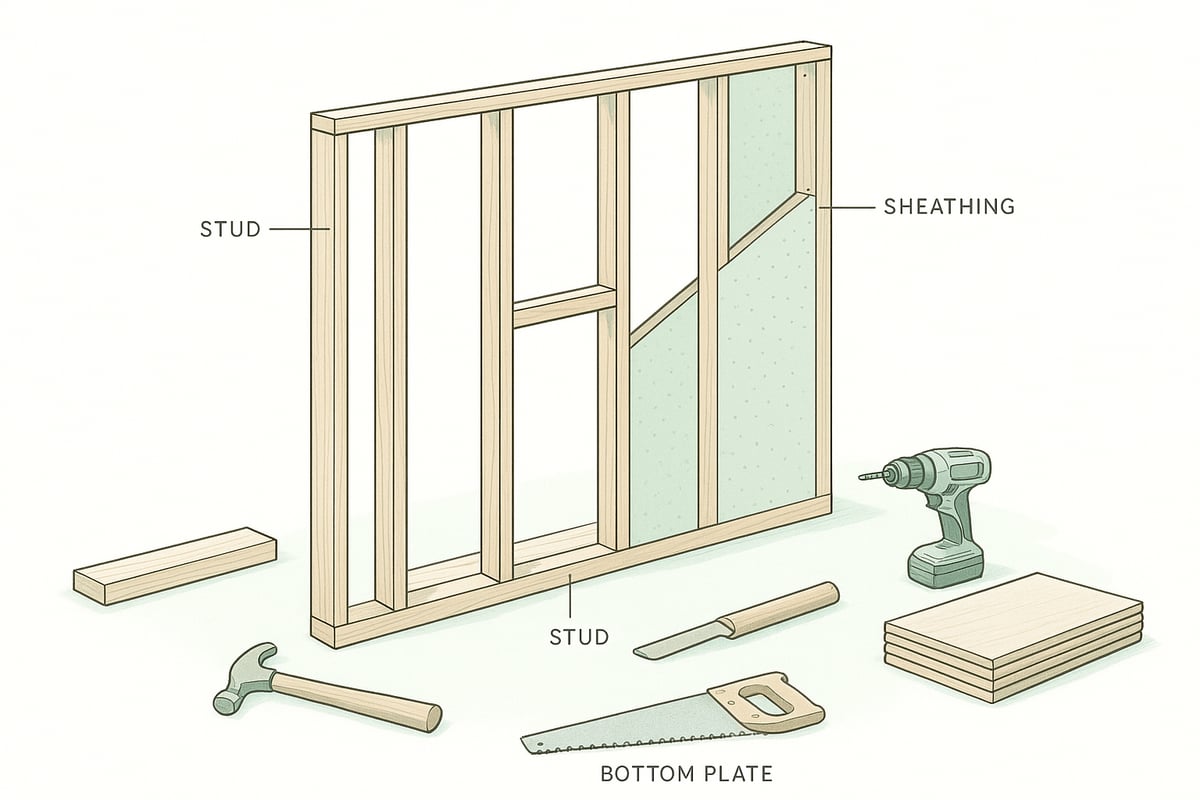
Timber stud framing is a construction method where vertical timber elements, called studs, form the skeleton of walls. These are joined by horizontal plates at the top and bottom, with noggins fitted between studs for extra rigidity. Sheathing boards are fixed to one or both sides, creating a strong yet lightweight structure.
Compared to steel or masonry, timber stud framing offers a faster, more flexible approach. Studs, noggins, plates, and sheathing are the main terms to know. Stud framing is used in internal partitions, external walls, and extensions, making it a versatile solution.
In the UK, timber stud framing evolved from traditional timber frame houses to the precision-engineered systems seen today. Its history reflects a shift towards efficiency and sustainability in construction.
Why Choose Timber Stud Framing in 2026?
Sustainability is a leading reason for choosing timber stud framing. Timber is a renewable resource, and products with FSC certification ensure responsible sourcing. When compared to steel or concrete, timber framing is often more cost-effective, offering savings in both material and labour.
The speed of timber stud framing reduces construction time, while the system’s flexibility allows for bespoke designs. Timber stud walls excel in thermal and acoustic performance, supporting energy-efficient and comfortable spaces.
Aesthetically, timber stud framing adapts to both modern and traditional projects. Its natural finish can be left exposed or easily integrated with other materials, offering endless design possibilities.
Types of Timber Used for Stud Framing
The most common timber for stud framing in the UK is CLS (Canadian Lumber Standard) softwood. Its smooth, rounded edges and consistent sizing make it ideal for quick installation. Timber can be treated or untreated; treated timber resists decay and insects, making it suitable for high-moisture areas.
Grades such as C16 and C24 define strength and quality, with C24 offering higher load-bearing capacity. Typical stud sizes include 38x89mm and 38x140mm. Moisture content is crucial; kiln-dried timber prevents warping and ensures stability.
Here’s a quick comparison:
| Timber Type | Best Use | Treatment |
|---|---|---|
| CLS Softwood | Internal/external walls | Usually untreated, sometimes treated |
| Douglas Fir | High strength areas | Untreated or treated |
| Treated Joists | Floors, damp locations | Always treated |
Selecting the right timber ensures the long-term success of your timber stud framing.
Key Benefits Supported by Data
Timber stud framing now accounts for over 25% of new homes in the UK, reflecting its growing popularity. Timber walls outperform masonry in energy efficiency, providing lower U-values and better insulation. They also sequester carbon, reducing the overall environmental impact compared to steel or concrete.
A recent UK housing development using timber stud framing achieved a 15% reduction in build time and improved EPC ratings for all units. For more on current adoption rates and the latest benefits, see this Timber Frame Construction Trends 2025 update.
These figures highlight why timber stud framing remains a top choice for sustainable building in 2026.
Common Myths and Misconceptions
Despite its advantages, timber stud framing faces a few myths:
- Timber frames are less durable than masonry (modern treatments ensure longevity).
- Timber burns easily (fire-resistant designs and treatments meet strict UK standards).
- Maintenance is difficult (routine checks and proper protection keep frames in top condition).
Understanding the facts helps you make informed decisions and ensures your projects stand the test of time.
Planning and Preparing for Timber Stud Framing Projects
Effective planning and preparation are the foundation of any successful timber stud framing project. Before you lift a hammer or order materials, it is essential to understand the regulatory landscape, select the right products, and ensure your site and workflow are optimised.
Understanding Building Regulations and Standards
Every timber stud framing project in the UK must meet strict building regulations to ensure safety, durability, and energy efficiency. You need to consider requirements under Part A (structure), Part L (energy efficiency), and Part E (sound insulation). Timber grading and certification, such as FSC or PEFC, are crucial for sustainability and compliance.
Fire resistance, thermal performance, and acoustic standards set by building regulations dictate your design and material choices. Structural calculations are needed to confirm that load-bearing elements can support intended weights. For comprehensive guidance, the NHBC Standards 2025 Chapter 6.2 offers detailed instructions on external timber framed walls and compliance.
Ignoring these standards can result in costly delays, failed inspections, or unsafe structures. Prioritising compliance from the outset ensures your timber stud framing project stands the test of time.
Choosing the Right Timber and Materials
Selecting appropriate timber and materials is vital for the performance and longevity of timber stud framing. Choose the correct timber grade and size to suit your project's structural needs, such as C16 or C24 for most UK applications. Always opt for sustainably sourced timber with recognised certification.
Consider whether you need treated or untreated timber, depending on exposure to moisture or risk of decay. Moisture barriers, insulation, and sheathing options must be compatible with your framing system. Hardware choices, including screws, nails, and brackets, should match the timber type and comply with UK standards.
Compare costs and benefits from several suppliers, focusing on quality, certification, and delivery reliability. The right material selection directly impacts the success of your timber stud framing work.
Site Assessment and Preparation
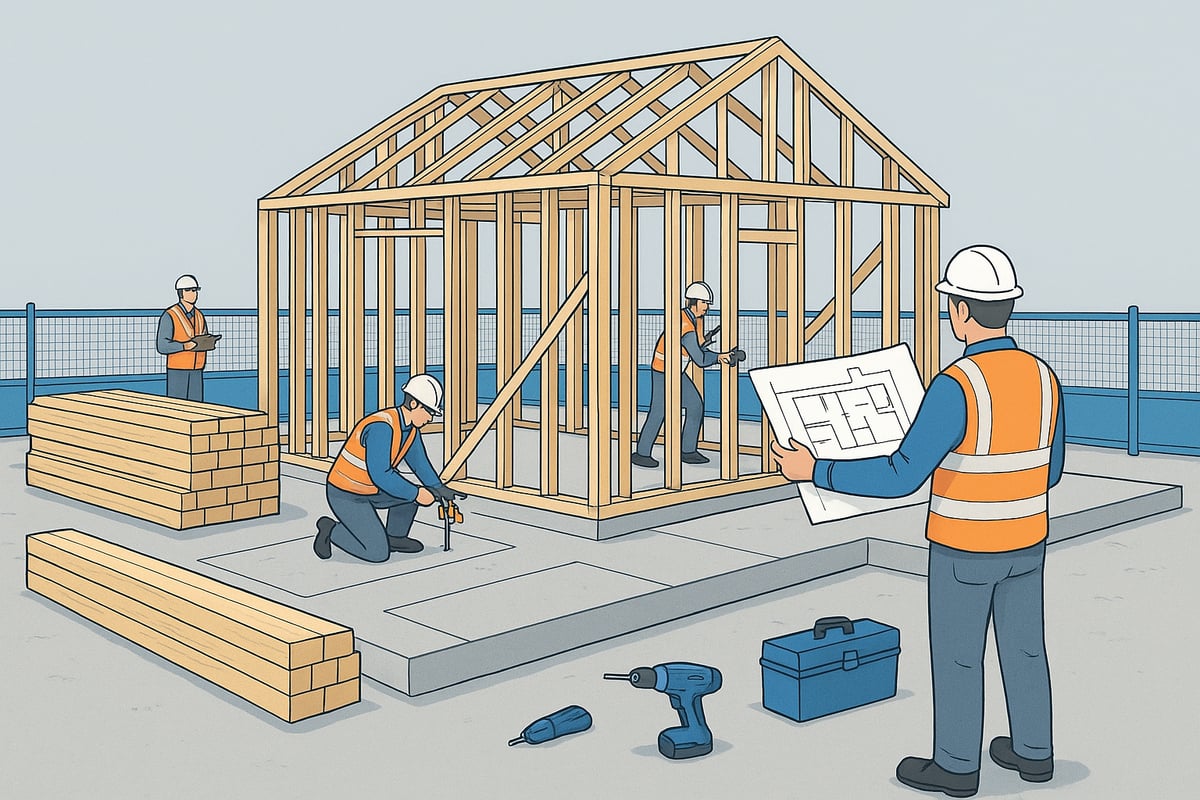
A thorough site assessment is a prerequisite for efficient timber stud framing. Start by surveying and measuring the build area to confirm dimensions and identify potential issues. Ensuring a level, stable foundation is critical for structural integrity.
Plan site access for material delivery and storage, keeping timber off the ground and protected from the weather. Safety is paramount, so establish clear protocols, including PPE requirements, hazard identification, and safe storage of tools and chemicals.
A pre-construction checklist should include:
- Accurate site survey
- Foundation checks
- Material protection measures
- Health and safety briefings
Proper preparation reduces delays and ensures your timber stud framing project proceeds smoothly.
Tools and Equipment Checklist
Equipping your team with the right tools boosts productivity and precision in timber stud framing. Essential hand tools include tape measures, saws, hammers, and chisels. Power tools such as cordless drills, nail guns, and circular saws are invaluable for speed and consistency.
Modern innovations, like laser levels and cordless nail guns, enhance accuracy and efficiency. All equipment should be maintained and calibrated regularly to guarantee reliable results. Personal Protective Equipment (PPE) like gloves, eye protection, and hard hats is non-negotiable for site safety.
Consider these time-saving tools:
- Laser levels for precise layouts
- Cordless nail guns for rapid fixing
- Dust extractors to maintain a clean workspace
Having the right equipment supports quality timber stud framing from start to finish.
Budgeting and Project Timeline
Careful budgeting and scheduling are essential for keeping your timber stud framing project on track. Estimate material and labour costs accurately, factoring in delivery, potential waste, and contingency funds. Account for lead times when ordering timber and other materials to prevent delays.
Develop a realistic project timeline, detailing each construction phase from site preparation to final inspection. For a single-storey partition wall, allocate time for measuring, cutting, assembly, and installation. Regularly review the budget and progress to catch issues early.
To avoid common pitfalls:
- Get multiple supplier quotes
- Build in extra time for unforeseen delays
- Track spend against the initial budget
Effective planning ensures your timber stud framing is delivered on time and within budget.
Step-by-Step Guide to Timber Stud Framing Construction
Embarking on a timber stud framing project requires precision and a clear understanding of each construction stage. Whether you are a professional builder or a self-builder, following a systematic approach helps ensure structural integrity and compliance. Below, you will find a detailed, step-by-step guide designed for 2026 standards.
Laying Out and Marking the Frame
The first step in timber stud framing is accurate layout and marking. Begin by thoroughly reviewing the architectural plans. Identify the exact locations for all walls, partitions, and structural openings.
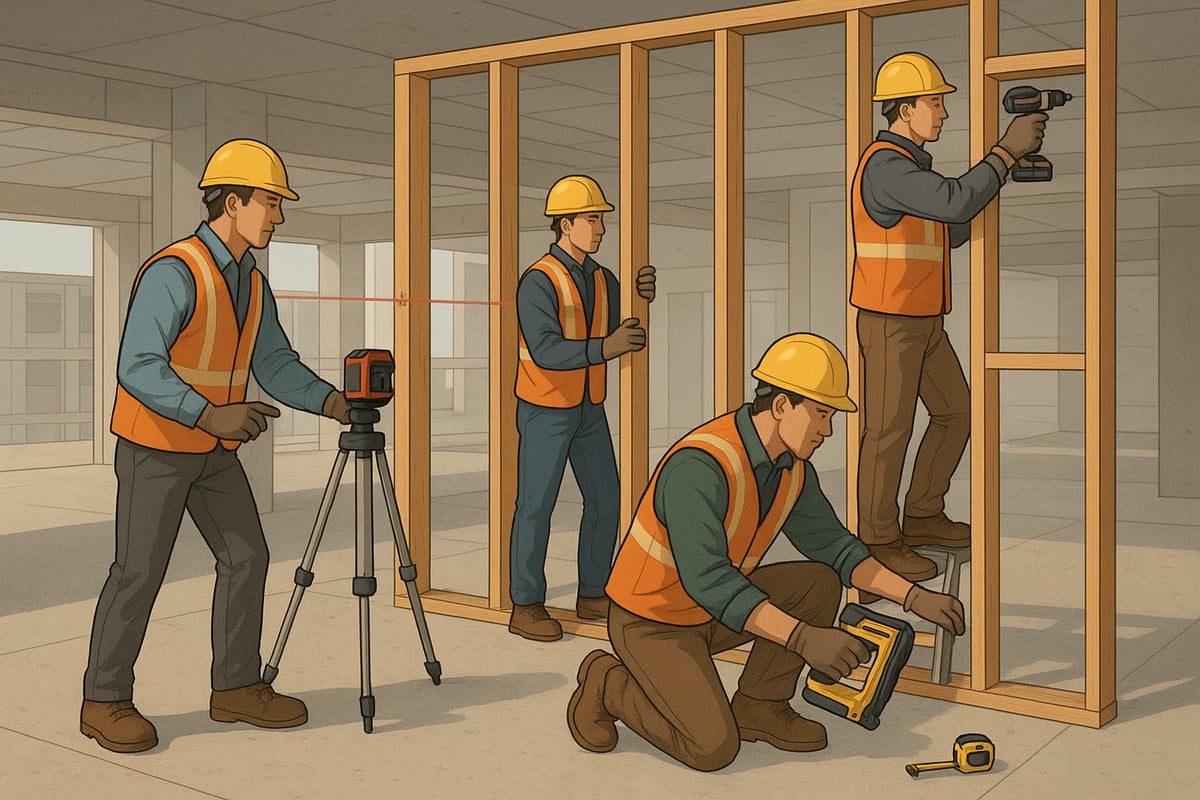
Use a tape measure and chalk lines to transfer dimensions from plans to the building site. Mark the positions of sole plates on the floor and head plates on the ceiling. Laser levels are invaluable for ensuring lines are perfectly straight and true across the entire build area.
It is essential to double-check all measurements before fixing anything in place. Mark out door and window openings, as well as service runs for future installation. This meticulous preparation is the foundation of a successful timber stud framing project.
- Read and interpret plans carefully
- Use chalk lines and laser levels for accuracy
- Clearly mark all openings and service routes
Accurate layout prevents costly errors and guarantees the rest of your timber stud framing process flows smoothly.
Cutting and Preparing Timber Studs
With the layout marked, move on to preparing your timber components. Measure and cut studs, plates, and noggins to the precise lengths required. Always allow for minor expansion or shrinkage, especially with freshly delivered timber.
Use a mitre saw or circular saw for clean, square cuts. When using treated timber, re-treat any cut ends to maintain durability and resistance to moisture. Pre-drill holes for screws or fixings if required, particularly in dense or engineered timber.
Batch cutting several studs at once can save time and ensure consistency. Lay out all cut members and check them against your layout before assembly begins.
- Measure twice, cut once to avoid waste
- Re-treat cut ends for longevity
- Pre-drill for fixings as needed
This preparation stage is crucial in achieving the tight tolerances expected in modern timber stud framing.
Assembling the Frame
Begin assembly by fixing the sole (bottom) and head (top) plates to the marked positions. Use appropriate fixings for the floor and ceiling substrates. Position vertical studs at standard centres, typically 400mm or 600mm, depending on load requirements and design.
Install noggins between studs to add rigidity and prevent twisting. These horizontal members also support sheathing and fixtures. Temporary bracing is vital at this stage to maintain alignment and prevent movement before the frame is fully secured.
Follow a logical sequence, starting at one end and working your way along the wall. Keep checking for plumb and level at each stage. If you are new to this process, the Timber frame construction guide provides additional context and diagrams that may be useful.
- Fix plates securely to substrates
- Ensure studs are vertical and evenly spaced
- Add noggins for extra strength
A systematic assembly process is the backbone of reliable timber stud framing.
Fixing and Securing the Frame
Once the frame is assembled, it must be fixed securely to the structure. Use suitable fixings for the specific substrate – timber, masonry, or steel. Anchor the frame to floors, ceilings, and adjacent walls, ensuring all connections are robust and compliant with UK building regulations.
At each stage, use a spirit level or laser level to check that the frame remains plumb and true. Adjust as needed before final tightening. Pay particular attention to junctions and corners, as these are common points for misalignment.
Common mistakes include under-fixing, which can compromise stability, and over-driving screws, which may split the timber. Take time to inspect each connection as you work.
- Select the right fixings for each substrate
- Check plumb and level throughout
- Avoid over-driving or under-fixing
Properly secured frames are essential for safety and the long-term performance of timber stud framing.
Installing Openings and Services
Framing for doors, windows, and service penetrations is a critical step in timber stud framing. Begin by marking the exact locations for all openings, ensuring these align with both the architectural plans and the marked layout.
Install reinforced lintels or headers above each opening to support loads from above. Double or even triple studs are often used at the sides of larger openings for added strength. Allow for sufficient clearance for door and window frames, as well as for any required insulation or vapour barriers.
When planning for services such as electrical wiring or plumbing, leave appropriate gaps and install noggins or pattresses where fixtures will be mounted. Always follow best practices to avoid compromising the structural integrity of the frame.
- Reinforce all openings with appropriate headers
- Double-check clearances for frames and insulation
- Plan for service runs early
Thoughtful integration of openings and services ensures your timber stud framing remains robust and adaptable.
Sheathing, Insulation, and Vapour Control
The final construction stage involves sheathing the frame and providing insulation and vapour control. Fix sheathing boards, such as plywood, OSB, or plasterboard, to the frame using appropriate screws or nails. Boards should be tightly butted and fixed at regular intervals for maximum stability.
Install insulation between the studs, choosing materials that meet or exceed Part L requirements for energy efficiency. Mineral wool, PIR boards, or multi-layer systems are common options. Add vapour barriers or breather membranes as specified by the design, ensuring overlaps and seals are tight to prevent moisture ingress.
For more detailed guidance on achieving optimal insulation and air tightness, see this Insulating timber frame walls guide. Correct sheathing and insulation not only improve performance but also contribute to the longevity and comfort of the finished building.
- Fix sheathing securely and evenly
- Choose insulation to meet energy targets
- Install vapour barriers with care
With these steps complete, your timber stud framing is ready for final inspection and finishing.
Innovations and Trends in Timber Stud Framing for 2026
As construction evolves, timber stud framing continues to lead with innovative solutions that blend tradition and technology. In 2026, the industry is seeing rapid change, driven by sustainability goals, digital advancements, and emerging design trends. Builders, architects, and self-builders are embracing these shifts to deliver projects that are smarter, more efficient, and environmentally responsible.

Advances in Timber Technology
Engineered timber products are redefining the possibilities for timber stud framing. Laminated veneer lumber (LVL) and glued laminated timber (glulam) offer superior strength, consistency, and dimensional stability compared to traditional sawn timber. Prefabricated and modular timber framing systems are now common, enabling precise production and rapid on-site assembly. These systems reduce waste and speed up construction, making timber stud framing a top choice for both large-scale and bespoke builds.
Smart treatments are also enhancing timber durability and fire resistance, addressing concerns about longevity and safety. Recent UK projects, such as modular housing developments, showcase how advanced timber technologies deliver both performance and aesthetic value. Timber stud framing is benefiting directly from these technological leaps, ensuring it remains a future-proof solution.
Sustainability and Environmental Impact
Sustainability is a core driver behind timber stud framing’s resurgence. Timber is a renewable resource, and when sourced responsibly, it significantly reduces the embodied carbon of construction projects. Lifecycle analysis reveals that timber stud framing outperforms steel and concrete in terms of environmental impact, as it stores carbon throughout its lifespan.
The UK government is actively promoting increased timber use through its Timber in Construction Roadmap 2025, aiming for lower emissions and a greener built environment. The circular economy is gaining traction, with more projects reusing and recycling timber components. Eco-housing developments using FSC-certified timber exemplify how timber stud framing aligns with the highest sustainability standards.
Digital Tools and Offsite Construction
Digital technology is transforming how timber stud framing projects are designed and delivered. Building Information Modelling (BIM) allows for detailed planning, clash detection, and precise material scheduling. CNC machining and digital fabrication are now standard, enabling complex designs and minimising human error.
Offsite prefabrication is reducing construction waste and time on site. UK companies specialising in digital timber frame solutions are setting benchmarks for efficiency and quality. The integration of these digital tools ensures that timber stud framing remains at the forefront of modern construction methods, supporting both mainstream and specialist projects.
Design Trends and Aesthetic Possibilities
Design trends in 2026 are elevating the visual appeal of timber stud framing. Exposed timber studs are increasingly used as architectural features, adding warmth and character to contemporary spaces. There is a strong movement towards integrating timber with materials like glass, steel, and brick, allowing for striking contrasts and creative layouts.
Customisation is easier than ever, with timber stud framing adaptable for both modern open-plan homes and traditional renovations. Architects are experimenting with new forms and finishes, ensuring that timber stud framing remains versatile and relevant across diverse project types. The flexibility in design supports both functional and aesthetic goals.
Health, Safety, and Future-proofing
Innovations in health and safety are improving conditions for those working with timber stud framing. Ergonomic tools and advanced site protocols are reducing the risk of injury and enhancing productivity. Future-proofing is also a key focus, with adjustable stud systems enabling easy reconfiguration of interiors to meet changing needs.
Designing for adaptability ensures that buildings constructed with timber stud framing can evolve over time, supporting both current and future requirements. This commitment to safety and flexibility cements timber stud framing’s reputation as a robust and enduring choice for UK construction.
Ensuring Quality, Compliance, and Longevity
Achieving lasting success with timber stud framing relies on a robust approach to quality, compliance, and ongoing care. Each project benefits from careful checks, targeted improvements, and working with the right professionals. Let us explore the key aspects that ensure your timber stud framing stands the test of time.
Quality Assurance and Inspection
Quality assurance is fundamental in timber stud framing, starting with initial material checks and continuing throughout construction. Regular site inspections at each key stage help catch issues early. Common defects include misaligned studs, inadequate fixings, or improper moisture protection.
A typical inspection checklist includes:
| Stage | Key Checks |
|---|---|
| Foundation | Level, stability, damp proofing |
| Frame Assembly | Stud spacing, fixings, bracing |
| Openings | Lintels, headers, accurate sizing |
| Sheathing | Secure fixing, moisture barriers |
| Final Inspection | Plumb, level, compliance certificates |
Third-party certification and warranties provide extra peace of mind. By systematically following an inspection process, you can ensure your timber stud framing meets all UK standards and delivers lasting performance.
Fire, Acoustic, and Thermal Performance
Meeting Part E, Part L, and Part B of the Building Regulations is essential for timber stud framing. Fire protection can be enhanced with fire-retardant treatments and plasterboard linings. Acoustic insulation, such as mineral wool, helps achieve sound performance targets, while careful detailing reduces noise transfer.
Thermal performance is optimised by using high-quality insulation and vapour barriers. This creates airtight, energy-efficient walls, reducing heating costs and environmental impact. Data from recent studies shows that timber stud framing, when properly detailed, can outperform traditional masonry in both energy ratings and acoustic comfort.
Specifying the right materials and installation techniques safeguards fire safety, sound insulation, and energy efficiency, ensuring your timber stud framing meets all regulatory demands.
Maintenance and Upkeep of Timber Stud Frames
Timber stud framing delivers impressive durability, provided it is well maintained. Protecting timber from moisture is critical, as dampness can lead to decay or pest infestation. Regular inspections, especially after periods of heavy weather, help identify issues early.
A simple maintenance schedule might include:
| Task | Frequency |
|---|---|
| Visual check for moisture | Twice a year |
| Pest inspection | Annually |
| Reapply finishes/treatments | Every 5 years |
| Tighten fixings | Every 2 years |
Modern timber stud framing systems can last several decades with routine care. Addressing minor repairs promptly preserves structural integrity and extends the lifespan of your investment.
Timber Stud Framing in Extensions and Retrofits
Integrating new timber stud framing with existing buildings requires careful planning. Challenges often include uneven substrates, damp issues, or matching insulation levels. In older properties, upgrading thermal and acoustic performance is a priority.
When working on listed buildings or heritage projects, it is vital to respect original features while improving structural and energy standards. For more detailed guidance, see this comprehensive timber extension advice resource.
Timber stud framing offers flexibility for retrofits, allowing you to add or reconfigure spaces with minimal disruption, making it an ideal choice for both modern and traditional properties.
Working with Timber Framing Specialists
Consulting structural engineers or timber framing specialists is recommended for complex or load-bearing projects. Professionals bring expertise in design, compliance, and installation, reducing the risk of costly errors.
When selecting contractors, look for third-party certification, experience with similar projects, and a clear understanding of UK regulations. Reputable suppliers can also help you choose the right materials. For more information on available products and their applications, visit these timber framing product explanations.
Engaging specialists ensures your timber stud framing achieves high standards of quality, efficiency, and longevity, providing confidence and value throughout your project.
Timber Stud Framing Products and Material Selection Guide
Selecting the right products and materials is crucial for any timber stud framing project. Quality choices impact structural strength, environmental performance, and long-term durability.
Overview of Timber Stud Framing Materials
Timber stud framing commonly uses CLS (Canadian Lumber Standard) softwood, prized for its smooth finish and rounded edges. CLS is ideal for wall studs, partitions, and internal framing, available in standard sizes such as 38x89mm and 38x63mm.
Treated timber is used where moisture or insect risk is higher, offering added protection. Engineered timber, like LVL or glulam, provides enhanced strength for demanding applications. Finishes range from rough-sawn to planed. The choice between C16 and C24 grades depends on load requirements—C24 offers higher strength and is favoured for demanding structural work.
| Timber Type | Common Use | Strength Grade | Comments |
|---|---|---|---|
| CLS Softwood | Internal framing | C16, C24 | Versatile, popular |
| Treated | External, damp | C16 | Moisture-resistant |
| Engineered | High load areas | Varies | Superior strength |
Choosing the right timber stud framing material ensures safe, compliant builds.
Sheathing, Insulation, and Associated Materials
Sheathing provides rigidity and surface for finishing. Options include plywood, OSB, and plasterboard. For insulation, mineral wool is popular for its acoustic and fire performance, while PIR boards offer superior thermal efficiency in tight spaces.
Multi-layer insulation combines reflective and fibrous layers for improved thermal resistance. Vapour barriers and breather membranes are essential to regulate moisture, especially in the UK’s damp climate.
Cost-Benefit Table:
| Insulation Type | Cost (£/m²) | Thermal (λ W/mK) | Acoustic | Notes |
|---|---|---|---|---|
| Mineral Wool | 7–12 | 0.035 | High | Fire safe |
| PIR Board | 15–25 | 0.022 | Medium | Compact |
| Multi-layer Foil | 10–18 | 0.030 | Low | Thin, flexible |
Careful selection of sheathing and insulation enhances timber stud framing performance.
Fixings, Connectors, and Hardware
The right fixings are vital for robust timber stud framing. Use galvanised or stainless-steel screws and nails to avoid corrosion, especially with treated timber or in humid environments.
Essential hardware includes brackets, joist hangers, and angle plates. In coastal or high-humidity sites, opt for marine-grade fixings to prevent rust and ensure longevity.
- Corrosion-resistant screws for treated timber
- Heavy-duty brackets for load points
- Joist hangers for secure floor connections
- Angle plates for reinforcing corners
Selecting suitable fixings supports long-term stability in timber stud framing projects.
Sourcing Sustainable and Certified Timber
Sustainability is a key driver in modern timber stud framing. Always choose timber with FSC or PEFC certification to ensure responsible sourcing. Reputable UK merchants provide certificates and traceability, helping you meet both building regulations and environmental goals.
To verify chain of custody, request documentation from suppliers and check batch numbers. Choosing certified timber reduces your project’s carbon footprint, supporting the UK’s efforts to lower emissions. For more on timber’s environmental impact, see the Defra Study on Timber Use in Construction.
Prioritising certified timber ensures compliance and supports sustainable construction practices.
Cost Comparison and Supplier Selection
Timber stud framing material prices vary by grade, treatment, and length. C24 timber costs more than C16 but delivers greater strength. Treated timber is slightly pricier due to the preservation process.
Local suppliers may offer competitive rates and faster delivery, while national chains provide wider selection and bulk discounts. Always compare quotes and check supplier credentials before purchasing.
Example: For a typical 38x89mm C24 stud, expect to pay £4.50–£6.00 per metre. Sourcing materials wisely balances cost, quality, and sustainability.
As you’ve seen throughout this guide, timber stud framing is a smart, sustainable choice that blends traditional skill with modern efficiency—perfect for new builds, extensions, or retrofits in 2026. If you’re ready to put these insights into practice and want a structure that’s tailored to your needs, it’s worth working with specialists who truly understand the craft and the latest UK regulations. At Acorn to Oak Framing, we bring your vision to life with expertly crafted, bespoke timber frames designed for lasting value. Take the next step towards your project and BUILD NOW.


