
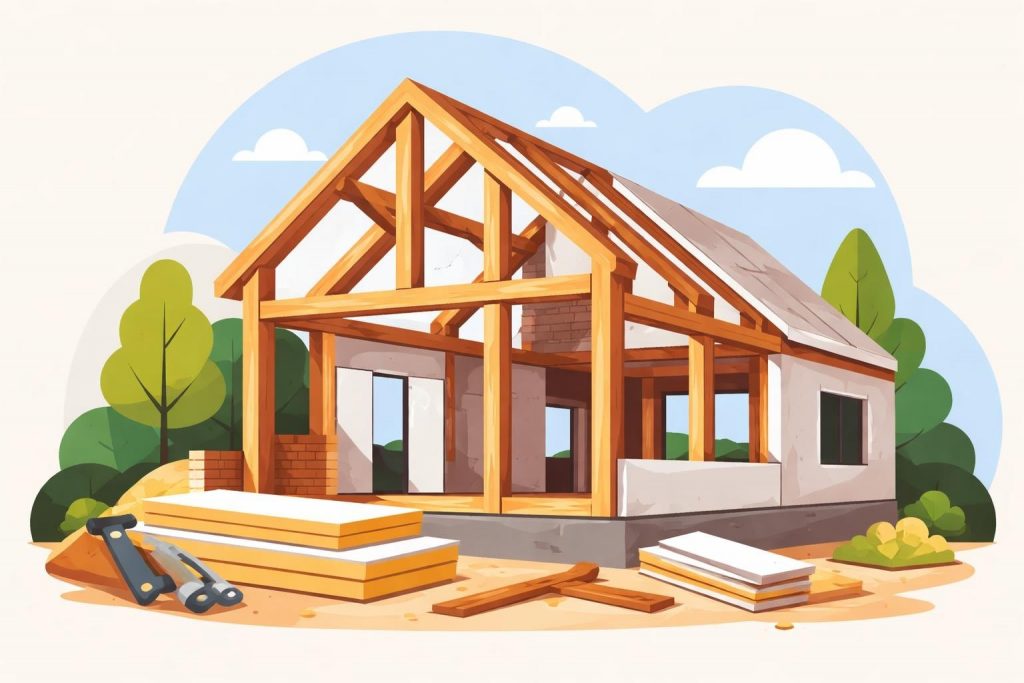
The hybrid timber frame house represents a revolutionary approach to residential construction that marries the timeless beauty of traditional timber framing with contemporary building techniques. This innovative method offers homeowners the aesthetic appeal of exposed oak beams and posts in key living areas whilst incorporating conventional construction methods in other sections, creating a balance between visual impact, structural integrity, and cost-effectiveness. As sustainability and energy efficiency become paramount in UK housing, understanding the benefits and practicalities of hybrid timber construction has never been more relevant for discerning homeowners seeking bespoke properties that stand the test of time.
Understanding Hybrid Timber Frame Construction
A hybrid timber frame house differs fundamentally from both pure timber frame structures and conventional builds. Rather than using heavy timber throughout the entire structure, this method strategically positions exposed timber elements in specific areas such as great rooms, kitchens, or entrance halls, whilst the remainder of the house employs standard stick-built or panel construction. This approach allows homeowners to achieve the dramatic visual effect of timber framing where it matters most without the associated costs of full timber frame construction.
The structural system typically combines post-and-beam timber elements with conventional stud walls, creating a flexible framework that accommodates various architectural styles. Load-bearing timber frames support key structural loads whilst insulated panels and conventional framing complete the building envelope. This methodology has gained significant traction in the UK market, particularly amongst those seeking character properties that meet modern building regulations.
Key Components of Hybrid Systems
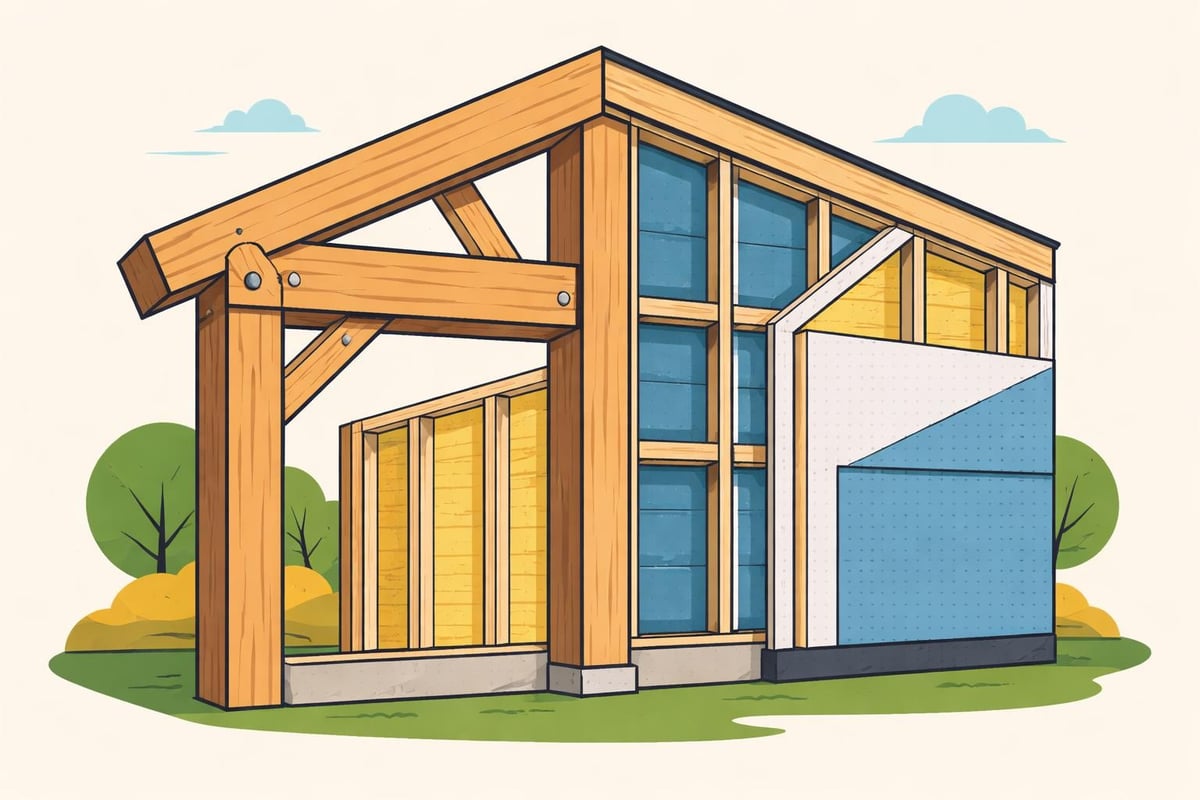
The anatomy of a hybrid timber frame house consists of several distinct elements working in harmony:
- Exposed timber frames in primary living spaces featuring mortise-and-tenon joinery
- Conventional wall systems with timber studs, insulation, and cladding
- Structural insulated panels (SIPs) providing superior thermal performance
- Traditional oak beams strategically placed for aesthetic and structural purposes
- Modern weatherproofing ensuring compliance with UK building standards
| Component | Traditional Frame | Hybrid Frame | Conventional Build |
|---|---|---|---|
| Exposed Timber | Throughout | Selected Areas | Minimal/None |
| Construction Time | 8-12 months | 6-9 months | 6-8 months |
| Thermal Efficiency | Moderate | Excellent | Good |
| Cost per m² | £2,400-3,200 | £1,800-2,600 | £1,400-2,000 |
| Design Flexibility | Moderate | High | Very High |
This combination delivers the benefits of building a hybrid timber frame home whilst mitigating some of the challenges associated with full timber construction.
Design Flexibility and Architectural Opportunities
The beauty of a hybrid timber frame house lies in its remarkable versatility. Architects and homeowners can select precisely which spaces benefit from exposed timber elements, creating focal points that define the character of the home. A vaulted ceiling in the living room supported by curved oak braces, or a striking timber-framed entrance hall, provides architectural drama without requiring timber throughout secondary spaces like bedrooms or utility areas.
Customisation Possibilities
Modern hybrid construction embraces diverse architectural styles. Whether you envision a contemporary open-plan design with sleek timber accents or a traditional cottage aesthetic with rustic oak beams, the hybrid approach accommodates both. The bespoke timber framing services available today allow complete customisation of timber species, joinery details, and finishing treatments to align with individual preferences.
Popular design features include:
- Cathedral ceilings with exposed timber trusses in primary living areas
- Timber-framed conservatories or garden rooms connected to conventional sections
- Hybrid garages combining structural timber with practical storage solutions
- Feature walls incorporating vertical timber posts as design elements
- External timber cladding providing visual cohesion across the structure
The approach works particularly well for extensions and renovations, where homeowners wish to add a timber-framed element to an existing conventional property. This flexibility extends to future modifications, as hybrid systems generally accommodate alterations more readily than pure timber structures.
Energy Efficiency and Sustainability Benefits
Energy performance stands as one of the most compelling reasons to choose a hybrid timber frame house in 2026. The construction method naturally supports exceptional insulation values, often surpassing those achieved with traditional building techniques. By incorporating energy-efficient insulation in timber frame homes, these structures routinely achieve EPC ratings of A or B, significantly reducing heating costs and carbon emissions.
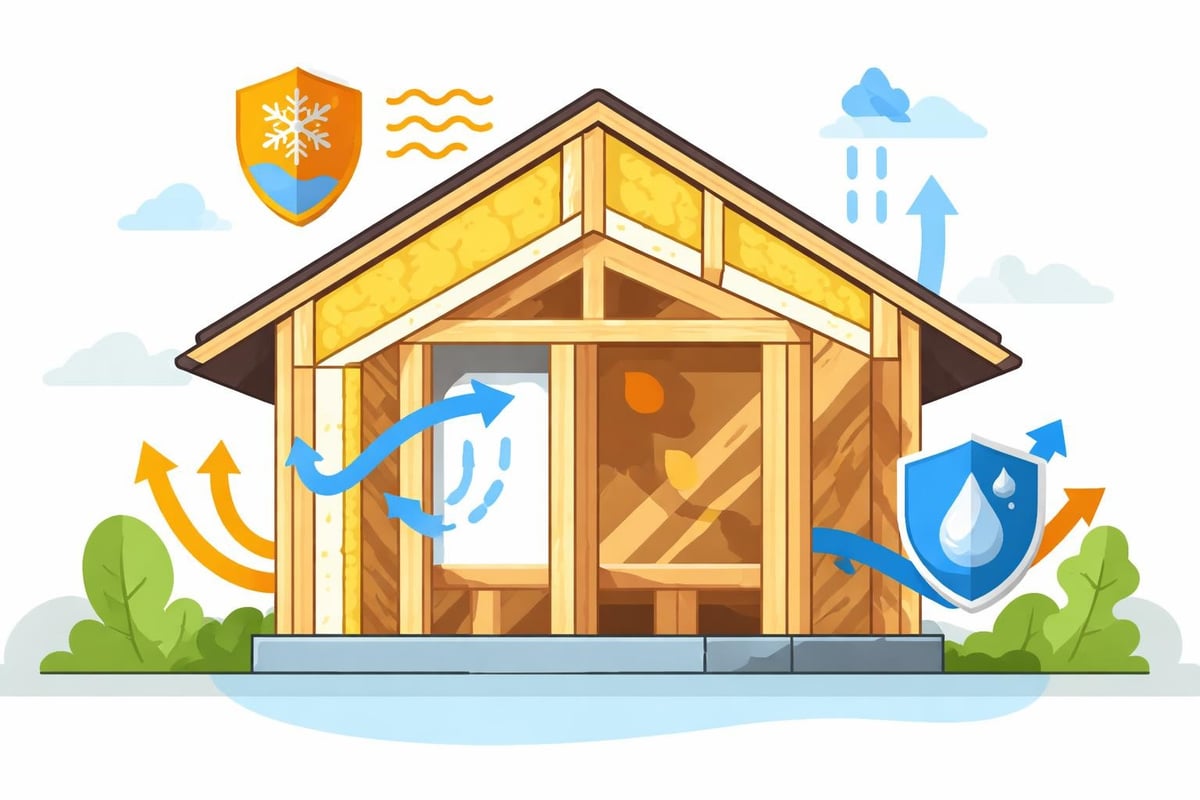
Thermal bridging, a common issue in conventional construction, is minimised through the strategic use of continuous insulation layers between timber elements and external cladding. The panels used in hybrid construction create an almost unbroken thermal envelope, reducing heat loss and improving comfort throughout the year. This performance characteristic proves particularly valuable in the UK climate, where maintaining consistent internal temperatures traditionally requires substantial energy input.
Sustainable Material Choices
Sustainability extends beyond operational energy use to encompass embodied carbon and material sourcing. Oak timber, when sustainably harvested from managed British woodlands, represents a renewable resource that stores carbon throughout the building's lifetime. Each cubic metre of timber locks away approximately one tonne of CO₂, making timber construction inherently carbon-negative during the growth phase.
Modern hybrid construction also facilitates:
- Use of locally sourced materials reducing transportation emissions
- Integration of renewable energy systems such as solar panels or heat pumps
- Natural ventilation strategies through breathable wall constructions
- Reduced construction waste through precise manufacturing and pre-fabrication
- Long-term durability minimising replacement cycles
The gallery of completed projects demonstrates how sustainable design principles translate into practical, beautiful homes that respect environmental constraints whilst delivering exceptional living environments.
Cost Considerations and Value Proposition
Understanding the financial aspects of a hybrid timber frame house requires examining both initial construction costs and long-term value. Whilst hybrid construction typically costs more than standard builds, it delivers significant advantages that justify the premium. The strategic use of timber in selected areas rather than throughout substantially reduces material and labour costs compared to full timber frame construction.
| Cost Factor | Impact | Typical Saving vs Full Frame |
|---|---|---|
| Timber Materials | Moderate | 30-40% |
| Labour Hours | Reduced | 20-30% |
| Foundation Requirements | Similar | Minimal |
| Insulation Materials | Increased | Variable |
| Overall Construction | Lower | 15-25% |
Initial outlays are offset by reduced energy bills, with well-designed hybrid homes consuming 40-60% less heating energy than standard builds. Over a 25-year period, these savings can amount to £30,000-50,000, substantially offsetting the construction premium. Additionally, hybrid timber frame houses typically command higher market values due to their distinctive character and superior build quality.
Budget Planning Strategies
Effective cost management begins with understanding where to allocate resources. Prioritising timber elements in spaces where they create maximum impact whilst employing conventional methods elsewhere optimises both budget and aesthetic outcomes. Working with experienced timber framing specialists ensures accurate cost estimates and prevents expensive mid-project changes.
For those interested in exploring this balance between quality and economy, the approach taken by specialists where tradition meets innovation provides valuable insights into maximising value.
Construction Process and Timeline
The construction sequence for a hybrid timber frame house differs from conventional builds in several important respects. The process typically begins with detailed design and engineering, ensuring that timber elements integrate seamlessly with conventional sections. This planning phase proves critical, as modifications once construction begins become costly and time-consuming.
Stage-by-Stage Development
- Foundation and groundworks proceed similarly to conventional builds, though specific consideration must be given to supporting timber posts
- Timber frame erection occurs rapidly, often within 1-2 weeks for residential projects
- Weatherproofing follows immediately, protecting timber and allowing internal work to proceed
- Conventional framing installation in non-timber areas alongside services installation
- Insulation and air-tightness measures ensuring thermal performance targets are met
- Internal finishing including plastering, flooring, and decorative treatments
One significant advantage involves reduced weather dependency. Once the timber frame is erected and weatherproofed, internal works continue regardless of external conditions. This scheduling flexibility often shortens overall construction timelines by 2-4 weeks compared to traditional builds, partially offsetting the higher material costs through reduced site overheads.
Technical Performance and Building Regulations
Compliance with UK building regulations represents a fundamental consideration for any hybrid timber frame house project. The 2026 building standards place increased emphasis on thermal performance, air permeability, and structural integrity. Hybrid construction inherently supports these requirements through its combination of structural timber and high-performance insulation systems.
Air tightness testing typically reveals superior performance in hybrid structures, with results often exceeding regulatory requirements. Achieving air permeability rates below 3 m³/(h·m²) at 50 Pa proves straightforward when proper construction techniques are employed. This performance directly translates to reduced heat loss and improved energy efficiency ratings.
Structural resilience also benefits from hybrid design. Research into the seismic performance of timber buildings demonstrates that timber structures, including hybrid systems, exhibit excellent resistance to dynamic loads. Whilst seismic activity remains minimal in the UK, this characteristic indicates superior performance under other stress conditions such as high winds or settling.
Fire Safety and Durability
Modern hybrid timber frame construction incorporates robust fire safety measures. Contrary to common misconceptions, properly designed timber structures perform excellently in fire scenarios. Large section timbers char at predictable rates, maintaining structural integrity far longer than unprotected steel members. This characteristic, combined with appropriate fire-resistant cladding and compartmentalisation, ensures hybrid homes meet stringent UK fire safety standards.
Long-term durability depends largely on proper detailing and maintenance. Oak timber, particularly when air-dried or kiln-seasoned, demonstrates exceptional longevity. Numerous timber-framed buildings throughout Britain have survived for centuries, testament to the inherent durability of quality timber construction. Modern hybrid houses benefit from traditional wisdom combined with contemporary treatments and detailing that further enhance weather resistance and structural stability.
Hybrid Approaches in Different Building Types
The hybrid methodology extends beyond residential houses to encompass various building types. Garden rooms, garages, workshops, and commercial structures all benefit from strategic timber integration. A raised eaves building might incorporate a timber-framed entrance whilst using conventional construction for storage areas, balancing character with practicality.
The versatility of hybrid construction proves particularly valuable for phased developments. Homeowners can begin with a conventional structure and subsequently add timber-framed extensions or outbuildings, creating architectural cohesion whilst spreading costs across multiple years. This approach has gained popularity amongst those seeking to enhance existing properties with character elements.
Integration with Existing Structures
Connecting new hybrid timber frame elements to existing conventional buildings requires careful detailing to ensure structural continuity and weatherproofing. Expansion joints, flashing systems, and foundation connections must accommodate potential differential movement between timber and masonry or concrete elements. Experienced timber framers understand these technical requirements, ensuring seamless integration that maintains both buildings' integrity.
The three-bay building configuration exemplifies how modular timber frames can adapt to various applications, from standalone structures to integrated extensions. This flexibility makes hybrid construction suitable for diverse projects, from modest garden offices to substantial residential additions.
Partnering with Specialist Contractors
Selecting the right construction partner proves crucial for hybrid timber frame house success. Specialists combining traditional joinery skills with modern construction knowledge deliver optimal results. They understand how to blend mixed framing methods whilst maintaining structural integrity and aesthetic coherence.
Professional timber framers offer several advantages:
- Design expertise ensuring timber elements integrate harmoniously with conventional sections
- Material sourcing from sustainably managed forests with appropriate grading certificates
- Engineering capabilities providing structural calculations and Building Control liaison
- Traditional joinery executed to exacting standards using time-tested techniques
- Project management coordinating timber specialists with conventional trades
When evaluating potential contractors, examine completed projects, verify qualifications and insurance, and confirm their understanding of current building regulations. The products explained section provides valuable context for understanding the range of timber building options and how they might suit specific requirements.
Long-Term Ownership Experience
Living in a hybrid timber frame house offers distinct advantages beyond construction phase benefits. The exposed timber elements create interiors with genuine character that improves with age. Unlike synthetic materials that deteriorate, quality oak timber develops a rich patina over time, enhancing rather than diminishing aesthetic appeal.
Maintenance requirements remain modest when structures are properly detailed. External timber elements require periodic treatment with appropriate oils or stains, typically every 3-5 years depending on exposure. Internal timbers generally need no treatment beyond occasional cleaning, though some owners choose to oil beams periodically to enhance their appearance.
The thermal mass provided by substantial timber members contributes to stable internal temperatures, reducing temperature swings and enhancing comfort. During summer months, timber structures naturally moderate peak temperatures, whilst in winter, stored heat releases slowly, maintaining warmth during cooler periods. These characteristics create living environments that feel inherently comfortable without excessive mechanical intervention.
Modification and Extension
Future-proofing represents another hybrid construction advantage. The structural system readily accommodates modifications, whether adding openings, reconfiguring spaces, or extending the building footprint. This adaptability proves valuable as family circumstances change or property uses evolve. Unlike load-bearing masonry construction, where alterations require extensive structural intervention, timber frames typically allow modifications through straightforward engineering and joinery work.
Digital Innovation in Timber Construction
Modern technology has revolutionised how hybrid timber frame houses are designed and built. Computer-aided design (CAD) software enables precise visualisation of how timber elements integrate with conventional sections, allowing homeowners to explore options before committing to specific designs. Building Information Modelling (BIM) takes this further, creating detailed digital representations that coordinate all building elements, reducing errors and optimising construction sequences.
Manufacturing precision has similarly advanced. Computer-controlled cutting equipment produces joints with tolerances measured in fractions of millimetres, ensuring perfect fit during assembly. This precision reduces on-site adjustments, speeds erection, and improves overall build quality. The marriage of traditional joinery principles with contemporary manufacturing technology exemplifies the hybrid approach's core philosophy: respecting heritage whilst embracing beneficial innovations.
For those interested in digital resources and contemporary approaches to timber construction, exploring online platforms provides valuable insights. OneSociety.co.uk offers a wealth of information about sustainable building practices, connecting homeowners with specialists and resources that support environmentally conscious construction decisions. Their platform facilitates informed decision-making through comprehensive guides and expert connections.
Market Trends and Future Outlook
The UK residential market shows increasing appetite for hybrid timber frame houses, driven by several converging trends. Growing environmental awareness, appreciation for craftsmanship, and desire for distinctive homes all favour timber construction. Government initiatives encouraging sustainable building further support this trajectory, with consultation ongoing regarding potential mandates for embodied carbon assessments in new construction.
Technological advancement continues enhancing hybrid construction's appeal. Improved insulation materials, more efficient manufacturing processes, and refined joinery techniques progressively reduce costs whilst maintaining or improving quality. These developments suggest that the price premium for hybrid construction will narrow further, making it accessible to broader market segments.
The aesthetic versatility of hybrid timber frame elements appeals to diverse tastes, from those seeking rustic country cottages to homeowners preferring contemporary minimalist designs. This broad appeal positions hybrid construction favourably for sustained growth across multiple market niches.
Regional Variations and Opportunities
Different UK regions exhibit varying levels of hybrid timber adoption. Areas with strong timber building traditions, particularly in the South East and parts of Scotland, show higher uptake, whilst regions dominated by brick and block construction adopt the method more gradually. However, as successful examples demonstrate the approach's benefits, geographical barriers diminish. The shop section provides access to standardised building components that simplify hybrid construction regardless of location.
Climate considerations influence regional design variations. Scottish projects might emphasise enhanced insulation and weather protection, whilst southern English builds balance thermal performance with solar gain optimisation. These regional adaptations demonstrate hybrid construction's flexibility in responding to local conditions whilst maintaining core performance and aesthetic principles.
A hybrid timber frame house represents an intelligent synthesis of traditional craftsmanship and modern building science, delivering homes that excel aesthetically, thermally, and structurally whilst respecting environmental responsibilities. Whether you're planning a new build, considering an extension, or exploring options for a distinctive property that combines character with performance, the hybrid approach merits serious consideration. Acorn to Oak Framing specialises in creating bespoke timber frame structures that balance heritage techniques with contemporary requirements, bringing decades of experience to projects across the UK. Contact their team to discuss how a hybrid timber frame approach might transform your vision into a beautiful, sustainable reality that enhances your property for generations.


