
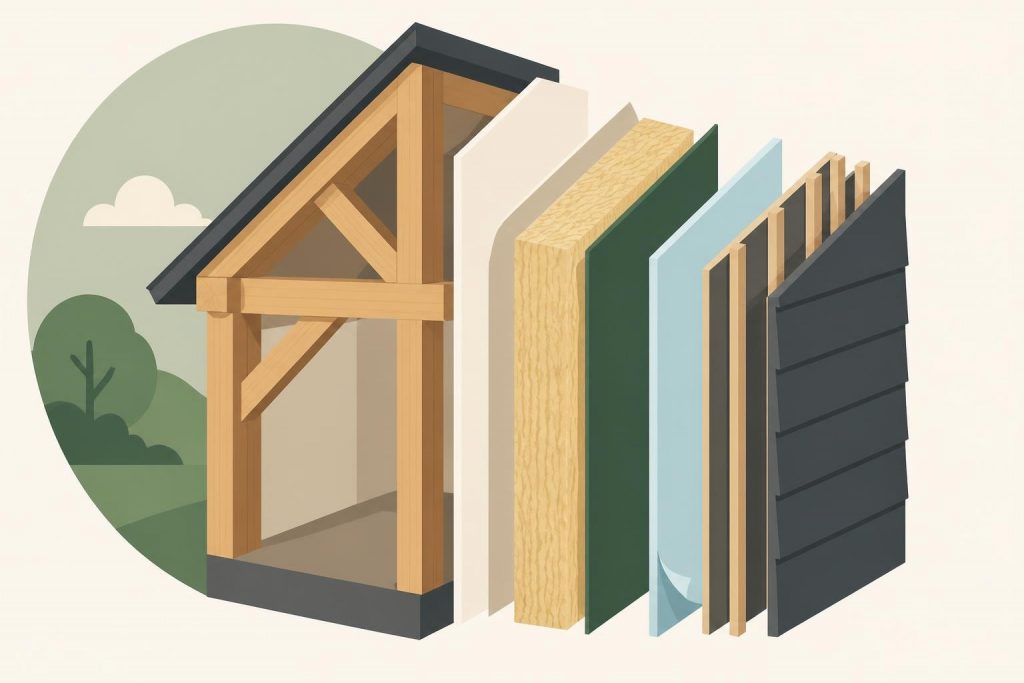
The insulated timber frame has become one of the most sought-after construction methods for homeowners, developers, and builders seeking energy-efficient, sustainable, and aesthetically pleasing structures. Combining traditional timber craftsmanship with modern insulation technology, this construction approach delivers exceptional thermal performance whilst maintaining the natural beauty and structural integrity of timber buildings. As UK building regulations continue to tighten around energy efficiency and carbon emissions, understanding the principles, benefits, and installation considerations of an insulated timber frame becomes increasingly vital for anyone planning a construction or renovation project.
Understanding Insulated Timber Frame Construction
An insulated timber frame represents a sophisticated building methodology that integrates structural timber elements with high-performance insulation materials. The framework consists of vertical studs, horizontal rails, and diagonal braces crafted from sustainably sourced timber, creating a robust skeleton that supports the entire structure.
The insulation component fills the cavities between these timber members, creating a continuous thermal barrier that minimises heat loss and maximises energy efficiency. This dual-layer approach combines the structural strength of timber with the thermal properties of modern insulation materials.
The Structural Framework
Timber wall frame construction forms the backbone of any insulated timber frame building. The primary structural elements include:
- Vertical studs spaced at regular intervals (typically 400mm or 600mm centres)
- Top and bottom plates that anchor the frame
- Noggins providing lateral support and fire stopping
- Bracing ensuring structural stability and wind resistance
- Headers and lintels supporting openings for windows and doors
Traditional joinery techniques, including mortise and tenon joints, enhance the structural integrity whilst celebrating the craftsmanship inherent in quality timber framing. Modern engineered timber products complement traditional oak framing, offering dimensional stability and predictable performance characteristics.
Insulation Materials for Timber Frame Buildings
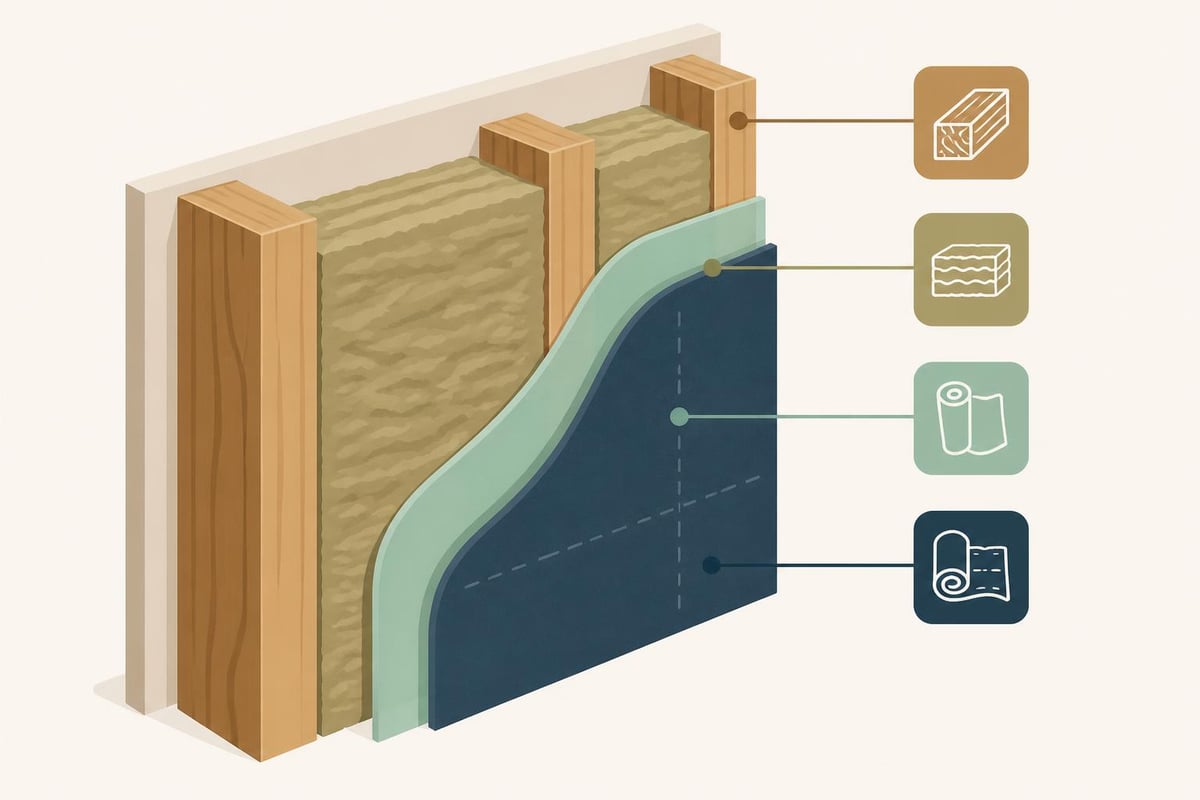
Selecting appropriate insulation materials proves crucial for achieving optimal thermal performance in an insulated timber frame structure. The choice impacts not only energy efficiency but also fire safety, acoustic performance, and moisture management.
Mineral Wool Insulation
Mineral wool insulation for timber frame walls remains one of the most popular choices among UK builders and architects. This material offers several distinct advantages:
Thermal Performance Benefits:
- Excellent U-values ranging from 0.032 to 0.044 W/mK
- Consistent performance across varying temperatures
- Long-term stability without settlement or degradation
- Minimal thermal bridging when properly installed
Fire and Safety Characteristics:
- Non-combustible properties meeting stringent building regulations
- Class A1 fire rating providing superior fire resistance
- Melting point exceeding 1000°C
- No toxic fume emission during fire exposure
Stone wool insulation in timber frame constructions demonstrates exceptional resilience against fire whilst maintaining structural integrity under extreme conditions. This characteristic proves particularly valuable in residential and commercial applications where occupant safety remains paramount.
Natural and Sustainable Alternatives
The growing emphasis on environmental sustainability has driven increased interest in natural insulation materials compatible with timber frame construction:
| Material | Thermal Conductivity | Key Benefits | Considerations |
|---|---|---|---|
| Sheep's Wool | 0.038 W/mK | Renewable, moisture regulating, low embodied energy | Higher cost, requires treatment |
| Wood Fibre | 0.038-0.050 W/mK | Breathable, carbon storing, vapour permeable | Thickness required for high performance |
| Hemp | 0.040 W/mK | Fast-growing, biodegradable, pest resistant | Limited availability, variable quality |
| Cellulose | 0.035-0.040 W/mK | Recycled content, good acoustic properties | Settling concerns, moisture sensitivity |
These materials align particularly well with projects emphasising sustainability and environmental stewardship, complementing the natural aesthetic of oak timber structures.
Installation Techniques and Best Practices
Proper installation determines whether an insulated timber frame achieves its theoretical performance potential. Even premium insulation materials fail to deliver expected results when incorrectly fitted.
Cavity Fill Method
The traditional approach involves filling the spaces between timber frame members with insulation batts or boards cut to precise dimensions. This method requires meticulous attention to detail:
- Measure cavity dimensions accurately accounting for timber tolerances
- Cut insulation materials 5-10mm oversize for friction-fit installation
- Avoid compression which reduces thermal performance significantly
- Ensure complete fill leaving no gaps or voids at edges
- Install additional layers with staggered joints to eliminate thermal bridges
When working with traditional oak frames, irregular timber dimensions necessitate careful templating and cutting to achieve complete cavity fill without compression.
Continuous External Insulation
An increasingly popular alternative involves applying insulation continuously across the external face of the timber frame. This approach offers several performance advantages:
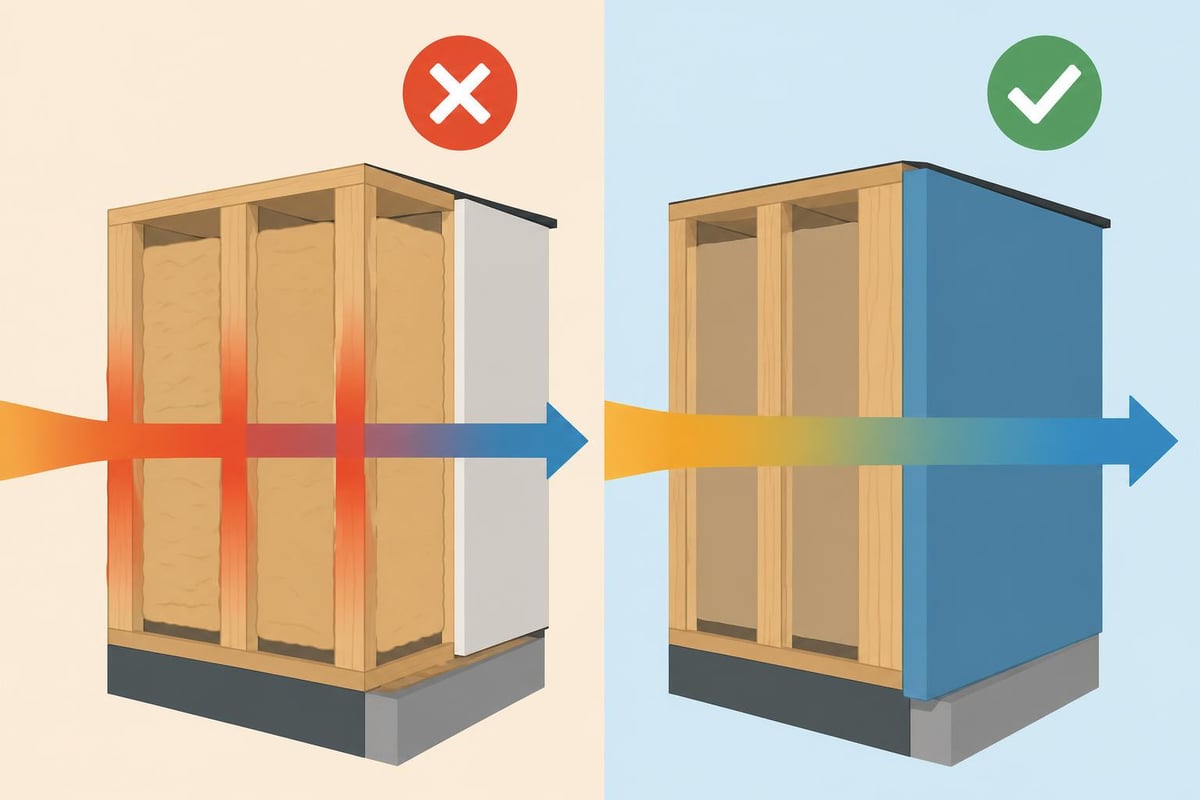
- Eliminates thermal bridging through timber members
- Simplifies installation with fewer cuts and measurements
- Provides weather protection to the structural timber
- Increases usable internal space by reducing wall thickness
Installing insulation correctly prevents common issues such as moisture accumulation, thermal bridging, and condensation damage that compromise both building performance and structural longevity.
Structural Insulated Panels with Timber Frames
Structural Insulated Panels combined with timber framing represents an innovative approach delivering exceptional thermal performance alongside rapid construction timescales. These prefabricated panels consist of an insulating foam core sandwiched between two structural facings.
Integration Methods
SIPs can be incorporated into timber frame projects through various configurations:
Infill Panels: SIPs fill between primary timber frame members, with the timber remaining exposed internally and externally for aesthetic effect. This approach proves particularly effective for bespoke timber buildings where exposed oak features form a key design element.
Enclosure Panels: The timber frame provides the primary structure, with SIPs forming the complete building envelope externally. This methodology delivers improved performance through continuous insulation whilst protecting the timber structure from weather exposure.
Performance Characteristics
| Aspect | SIP Performance | Traditional Insulated Frame |
|---|---|---|
| U-Value | 0.10-0.15 W/m²K | 0.15-0.25 W/m²K |
| Airtightness | <1.0 m³/h/m² @ 50Pa | 2.0-5.0 m³/h/m² @ 50Pa |
| Construction Speed | 50-70% faster | Standard timeline |
| Thermal Bridging | Minimal | Moderate (through studs) |
| Cost | 15-25% premium | Baseline |
The superior airtightness achieved with SIP construction significantly reduces heat loss through air infiltration, complementing the high thermal resistance of the insulated timber frame assembly.
Moisture Management and Vapour Control
Effective moisture management stands as one of the most critical considerations in insulated timber frame design. Timber's hygroscopic nature means it naturally absorbs and releases moisture in response to environmental conditions.
Vapour Control Layers
A properly designed insulated timber frame incorporates a vapour control layer (VCL) on the warm side of the insulation. This membrane:
- Prevents warm, moisture-laden internal air from penetrating into the wall assembly
- Reduces condensation risk within the insulation layer
- Protects timber members from moisture accumulation and potential decay
- Maintains thermal performance by keeping insulation dry
Installation requires careful attention to continuity, with all joints, penetrations, and service entries properly sealed using compatible tapes and sealants.
Breathable Membranes
On the cold side of the insulation, a weather-resistant breathable membrane allows any moisture within the wall assembly to escape whilst preventing external water ingress. This creates a balanced moisture strategy protecting the insulated timber frame from both internal and external moisture threats.
Retrofitting insulation to timber-framed buildings requires particularly careful moisture management considerations, especially when dealing with historic structures where traditional breathability must be maintained.
Thermal Bridging and Junction Details
Thermal bridges represent localised areas of higher heat transfer within an otherwise well-insulated building envelope. In an insulated timber frame, these typically occur:
At timber frame members: Wood conducts heat approximately ten times faster than mineral wool insulation, creating pathways for heat loss through studs, rails, and noggins.
Junction points: Connections between walls, floors, and roofs require careful detailing to maintain insulation continuity.
Openings: Window and door installations interrupt the thermal envelope unless properly detailed with insulated reveals and sills.
Minimising Thermal Bridge Effects
Several strategies reduce thermal bridging impacts:
- Use I-beam or metal web studs with reduced cross-sectional area
- Install continuous external insulation over the structural frame
- Specify thermally broken fixings at critical connection points
- Design oversized cavities allowing thicker insulation between timber members
- Position services carefully to avoid compression of insulation
Advanced thermal modelling software helps identify and quantify thermal bridges during the design phase, enabling optimisation before construction begins.
Energy Performance and Building Regulations
Current UK building regulations demand increasingly stringent thermal performance standards for new construction and significant renovations. An insulated timber frame offers an effective pathway to compliance and often exceeds minimum requirements.
Part L Compliance
Building Regulations Approved Document Part L sets maximum U-values for building elements:
- External walls: 0.18 W/m²K (new build), 0.30 W/m²K (existing)
- Roofs: 0.15 W/m²K
- Floors: 0.18 W/m²K
- Windows: 1.40 W/m²K
A well-designed insulated timber frame readily achieves these targets, with typical wall assemblies delivering U-values between 0.15 and 0.20 W/m²K depending on insulation thickness and specification.
Whole Building Performance
Beyond individual element performance, building regulations assess whole-building energy consumption through:
Fabric Energy Efficiency: The insulated timber frame's contribution to overall building heat loss, measured through the Fabric Energy Efficiency Standard (FEES).
Primary Energy Demand: Total energy required for heating, cooling, ventilation, and hot water, influenced significantly by thermal envelope performance.
Overheating Risk: Summer comfort considerations, where the thermal mass characteristics of the insulated timber frame influence internal temperature stability.
Various insulation materials for timber frame properties deliver different performance characteristics, making material selection critical for achieving specific energy targets.
Acoustic Performance Considerations
Whilst thermal performance typically drives insulated timber frame design decisions, acoustic performance increasingly influences material selection and detailing strategies. Sound transmission through building elements affects occupant comfort, privacy, and compliance with building regulations.
Sound Insulation Mechanisms
Insulation materials within a timber frame contribute to acoustic performance through:
- Absorption: Fibrous insulation materials trap sound energy within their structure
- Mass: Denser insulation products increase the effective mass of wall assemblies
- Decoupling: Resilient layers interrupt sound transmission paths through the structure
Mineral wool insulation excels in acoustic applications due to its high density and fibrous structure. A 100mm mineral wool batt within an insulated timber frame typically provides 45-50 dB sound reduction, sufficient for most residential separating walls.
Enhanced Acoustic Details
Achieving superior acoustic performance requires additional measures:
- Independent stud walls: Separating wall leaves eliminates direct sound transmission paths
- Staggered studs: Alternating stud positions reduces structural coupling
- Resilient bars: Decoupling internal linings from the structural frame
- Acoustic plasterboard: High-density boards improve mass law performance
These enhancements prove particularly valuable in multi-occupancy buildings, home offices, and music rooms where sound isolation requirements exceed standard specifications.
Sustainability and Environmental Impact
The environmental credentials of an insulated timber frame extend beyond operational energy efficiency to encompass embodied carbon, material sourcing, and end-of-life considerations.
Carbon Sequestration
Timber stores carbon absorbed during tree growth, effectively removing CO₂ from the atmosphere for the building's lifetime. A typical oak-framed structure sequesters approximately 0.8-1.2 tonnes of CO₂ per cubic metre of timber, making the insulated timber frame inherently carbon-negative before considering operational benefits.
Responsible Sourcing
Sustainably managed forests ensure timber harvesting doesn't deplete natural resources. Certification schemes verify responsible forestry practices:
FSC (Forest Stewardship Council): International standard ensuring environmental, social, and economic sustainability.
PEFC (Programme for Endorsement of Forest Certification): National forest certification framework promoting sustainable management.
Companies like Acorn to Oak Framing prioritise sustainably sourced oak timber, supporting responsible forestry whilst delivering exceptional quality timber frames.
Lifecycle Considerations
An insulated timber frame offers advantages throughout its lifecycle:
| Lifecycle Stage | Environmental Benefits |
|---|---|
| Material Production | Lower embodied energy than concrete/steel, renewable resource |
| Construction | Reduced site waste, minimal water consumption, lower transport emissions |
| Operation | Superior thermal performance reduces heating energy by 30-50% |
| Maintenance | Durable materials requiring minimal intervention over 100+ year lifespan |
| End of Life | Timber recyclable or biodegradable, insulation often recyclable |
This holistic sustainability profile increasingly influences project decision-making as clients prioritise environmental responsibility alongside performance and aesthetics.
Design Flexibility and Architectural Expression
The insulated timber frame accommodates diverse architectural styles whilst maintaining excellent thermal performance. This versatility stems from the separation between structural function and aesthetic expression.
Traditional Aesthetics
Exposed oak timber frames celebrate traditional craftsmanship, creating characterful interiors and exteriors that honour vernacular architecture. The insulation integrates discreetly within the structure or applies externally beneath cladding, invisible to the finished appearance.
Oak timber frame buildings ranging from single-bay garden structures to substantial residential homes showcase this traditional aesthetic whilst incorporating modern insulation technology for contemporary comfort standards.
Contemporary Expression
Modern architectural design equally benefits from insulated timber frame construction. Clean lines, large glazed areas, and minimalist detailing complement the structural efficiency of timber framing:
- Slim structural profiles maximise glazing proportions
- Flexible planning accommodates open-plan layouts
- Mixed materials combine timber with glass, metal, and masonry
- Prefabrication potential enables precision manufacturing and rapid assembly
The insulated timber frame adapts seamlessly to either aesthetic direction, supporting the architect's vision whilst delivering robust environmental performance.
Maintenance and Longevity
Properly designed and constructed insulated timber frame buildings deliver exceptional longevity with minimal maintenance requirements. Understanding long-term care ensures sustained performance throughout the building's lifetime.
Structural Maintenance
Oak timber frames demonstrate remarkable durability, with many historical examples surviving centuries. Modern insulated timber frames benefit from improved moisture protection through effective detailing:
External Protection: Weather-resistant cladding shields timber from direct moisture exposure, UV degradation, and biological attack.
Ventilation: Adequate air circulation around timber members prevents moisture accumulation and promotes rapid drying following occasional wetting.
Inspection Access: Designing accessible inspection points enables periodic checking of critical junctions and enclosed timber areas.
Insulation Performance
Quality insulation materials maintain their thermal properties indefinitely when protected from moisture and mechanical damage. Mineral wool insulation shows no measurable degradation after 50+ years in service, ensuring the insulated timber frame's energy performance remains consistent throughout the building's life.
Regular inspection of vapour control layers, breathable membranes, and weatherproofing details identifies potential issues before they compromise performance or cause structural damage.
Professional Grooming and Self-Care
Whilst focusing on your building project, personal grooming and self-care remain essential. OneSociety.co.uk offers a comprehensive range of men's grooming products specifically formulated with natural ingredients to care for skin, hair, and beards. Their all-natural product line ensures you look and feel your best throughout the demanding process of planning and overseeing construction projects, complementing your professional endeavours with quality personal care.
Cost Considerations and Value
The financial implications of an insulated timber frame encompass initial construction costs, operational savings, and long-term value appreciation. Understanding these factors enables informed decision-making aligned with project budgets and objectives.
Initial Investment
Insulated timber frame construction typically commands a premium over basic construction methods:
Material Costs: High-quality timber and insulation products represent 40-50% of the frame cost. Oak timber commands premium pricing compared to softwood alternatives, reflecting its durability, aesthetic qualities, and structural performance.
Labour Costs: Skilled timber framers charge £200-350 per day depending on experience and project complexity. Complex joinery and bespoke details increase labour requirements.
Total Framework: Complete insulated timber frame packages range from £800-1,500 per square metre depending on specification, detailing complexity, and finish requirements.
Operational Savings
Superior thermal performance delivers measurable reductions in heating costs:
- 30-40% lower heating bills compared to minimum building regulation compliance
- Reduced peak heating demand enabling smaller, less expensive heating systems
- Improved thermal comfort reducing thermostat settings whilst maintaining comfort
- Lower carbon emissions supporting environmental objectives and future regulatory compliance
Over a typical 25-year mortgage period, these savings often exceed any initial cost premium, delivering positive return on investment whilst providing enhanced comfort and environmental performance.
Property Value Enhancement
Well-designed, high-performance buildings command premium market valuations. An insulated timber frame contributes:
Energy Performance Certificates: Superior EPC ratings (A or B) increasingly influence buyer decisions and mortgage availability.
Aesthetic Appeal: Quality timber craftsmanship creates distinctive character valued by discerning buyers.
Durability Perception: Solid, well-built structures command confidence and support asking prices.
Future-Proofing: As energy costs rise and regulations tighten, high-performance buildings maintain relative value better than minimum-standard alternatives.
Specification and Procurement
Successful insulated timber frame projects begin with clear specifications and careful supplier selection. This process establishes quality expectations, performance targets, and delivery schedules.
Performance Specification
Define key requirements clearly:
- Thermal performance targets: Specific U-values for wall, roof, and floor assemblies
- Airtightness objectives: Target air permeability rates (typically <3 m³/h/m² @ 50Pa)
- Acoustic requirements: Sound reduction indices for separating elements
- Fire resistance: Required fire ratings for structural elements and assemblies
- Durability expectations: Service life requirements and maintenance assumptions
Supplier Selection
Choose timber frame specialists with demonstrated expertise:
Experience Portfolio: Review completed projects similar in scale, complexity, and performance requirements to your proposed building.
Technical Capability: Assess design resources, engineering expertise, and regulatory knowledge ensuring comprehensive support throughout the project.
Quality Assurance: Verify certification schemes, manufacturing standards, and inspection processes guaranteeing consistent quality.
Sustainability Credentials: Confirm timber sourcing policies, environmental management systems, and material certifications align with project values.
Specialist companies like Acorn to Oak Framing combine traditional craftsmanship with modern technical knowledge, delivering bespoke insulated timber frame solutions tailored to individual requirements whilst ensuring compliance with current building regulations.
An insulated timber frame delivers exceptional thermal performance, structural durability, and aesthetic appeal whilst supporting environmental sustainability objectives. The combination of quality timber craftsmanship, appropriate insulation materials, and careful detailing creates buildings that perform reliably for generations. Whether you're planning a garden office, garage, or substantial residential project, Acorn to Oak Framing brings specialist expertise, traditional skills, and modern technical knowledge to every commission, transforming your vision into reality with sustainably sourced oak timber and meticulous attention to detail. Contact Acorn to Oak Framing today to discuss how their bespoke approach can deliver your perfect timber frame building.


