
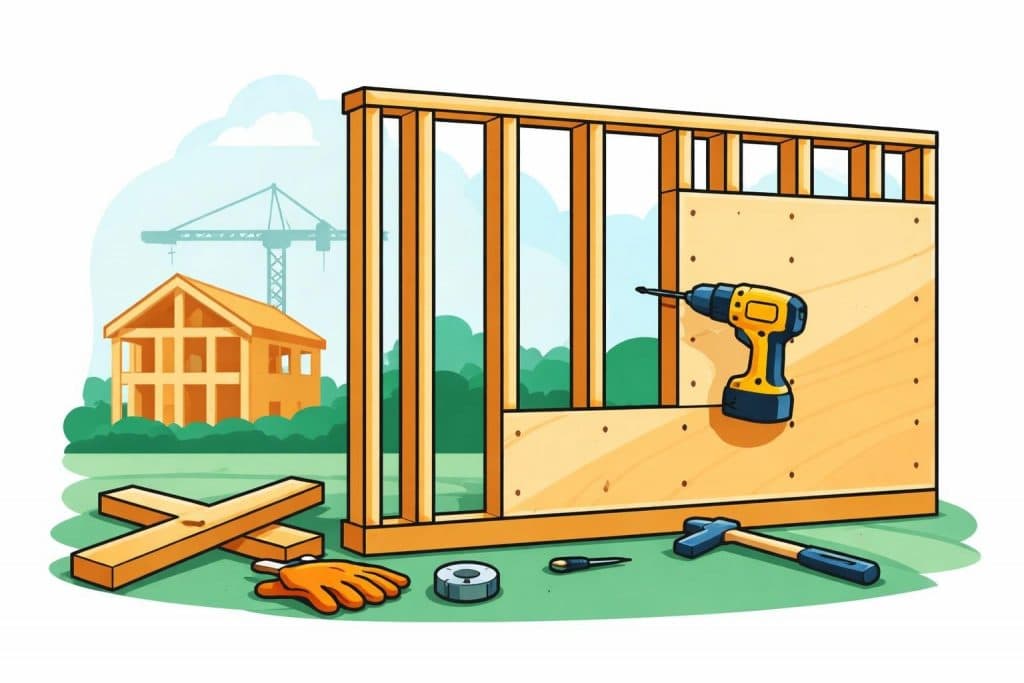
Timber wall frame construction represents one of the most versatile and sustainable building methods available in the United Kingdom today. This construction technique has evolved from centuries-old traditions whilst incorporating modern engineering principles, making it suitable for everything from residential homes to commercial structures and agricultural buildings. Whether you're planning a new build, extension, or bespoke structure, understanding the fundamentals of this construction approach enables better decision-making throughout your project. The method combines structural efficiency with design flexibility, allowing architects and builders to create spaces that meet contemporary performance standards whilst respecting traditional craftsmanship values.
Understanding Timber Wall Frame Construction Fundamentals
Timber wall frame construction involves creating vertical load-bearing walls using timber studs, plates, and various sheathing materials. The framework provides both structural support and a cavity for insulation, services, and moisture management.
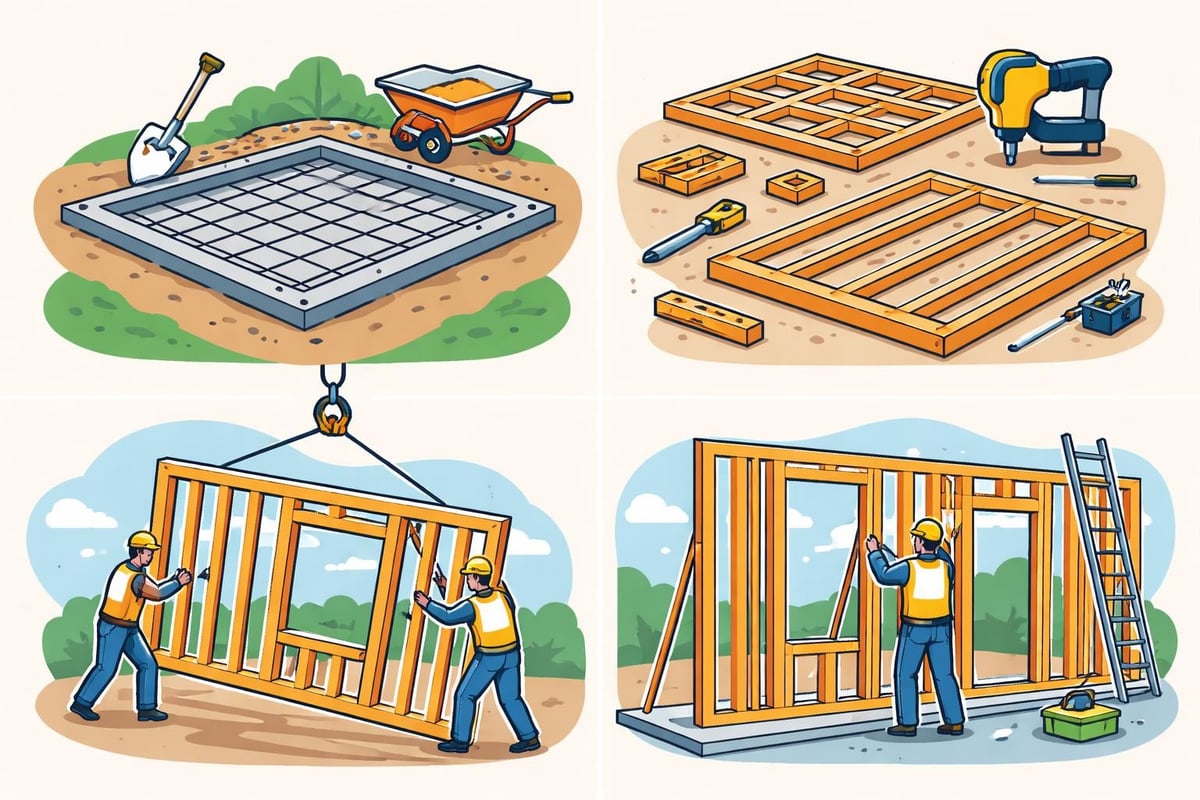
Platform frame construction dominates modern UK timber building projects. This system builds each storey as a separate platform, with walls assembled horizontally before being lifted into position. The method offers substantial advantages for site safety and construction speed compared to older techniques.
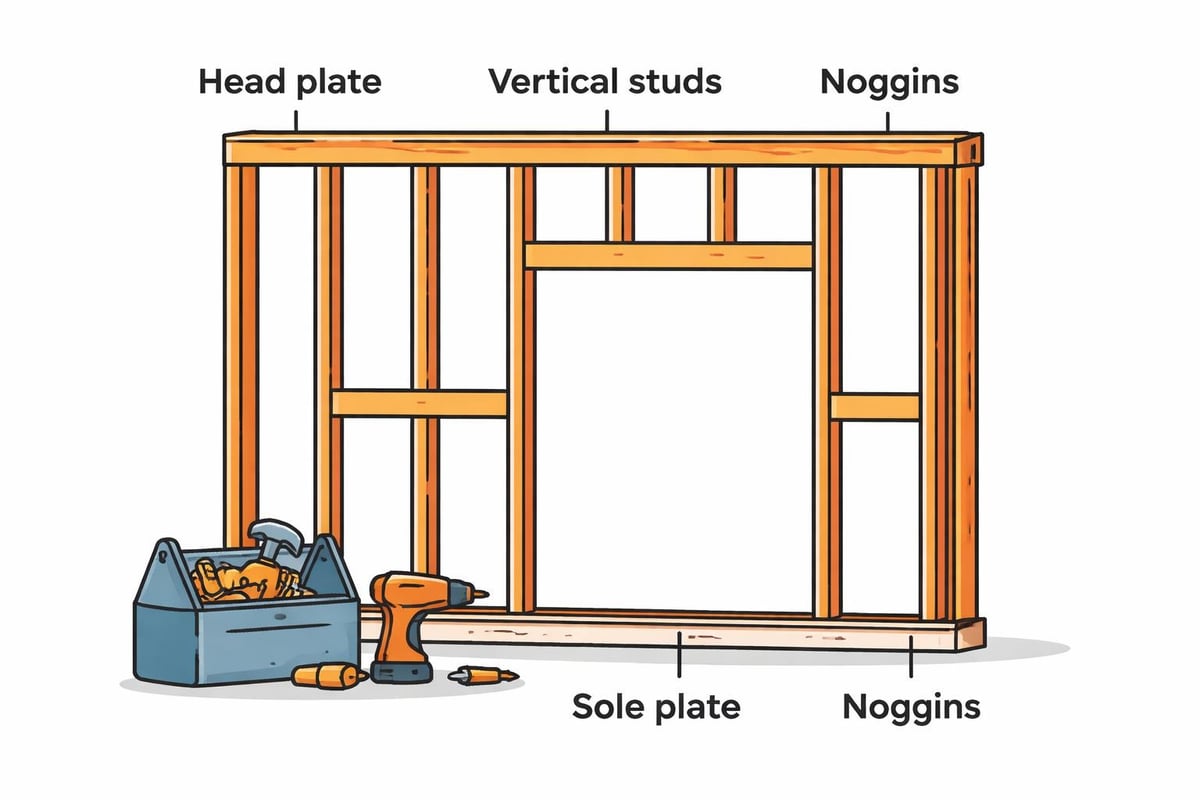
The structural components work together as an integrated system:
- Sole plates anchor the frame to foundations or floor platforms
- Vertical studs transfer loads from above whilst providing fixing points
- Head plates distribute loads across the top of the wall
- Noggins provide lateral stability and additional fixing points
- Sheathing adds racking resistance and weather protection
Modern timber wall frame construction differs significantly from traditional post-and-beam methods. The distributed load paths through multiple smaller members create redundancy and allow for larger openings without substantial structural complications.
Material Selection and Grading
Choosing appropriate timber grades ensures structural integrity and longevity. UK projects typically specify C16 or C24 graded softwood for studs, with C24 offering higher strength characteristics for more demanding applications.
| Timber Grade | Bending Strength | Typical Applications | Cost Comparison |
|---|---|---|---|
| C16 | 16 N/mm² | Standard residential walls | Baseline |
| C24 | 24 N/mm² | Engineered designs, longer spans | +15-25% |
| Engineered | Varies by product | High-load scenarios, large openings | +40-100% |
Moisture content critically affects performance. Timber should arrive on site at 18-20% moisture content maximum, with protected storage essential to prevent warping and dimensional changes before installation.
Design Considerations and Structural Requirements
Proper design integrates structural calculations, thermal performance, and regulatory compliance. Building Control approval requires detailed specifications demonstrating adherence to current Building Regulations, particularly Parts A (Structure) and L (Conservation of Fuel and Power).
Wall thickness varies according to insulation requirements and structural demands. Standard 140mm studs provide adequate depth for basic insulation, whilst 200mm sections accommodate enhanced thermal performance necessary for contemporary energy efficiency standards.
Load Calculations and Span Tables
Vertical loads transfer through studs to foundations, requiring careful calculation of dead loads (permanent structure) and imposed loads (occupancy, snow, wind). Structural design principles guide spacing decisions, with 400mm or 600mm centres being standard in UK construction.
Critical design factors include:
- Point loads from roof trusses or floor joists
- Wind loading on exposed elevations
- Racking forces requiring adequate bracing
- Opening sizes and lintel requirements
- Floor-to-floor height affecting slenderness ratios
Engineered solutions become necessary when standard span tables don't accommodate your requirements. For complex projects involving contemporary timber frame houses, specialist structural calculations ensure safety margins whilst optimising material usage.
Thermal Performance and Insulation Strategy
The cavity between studs accommodates substantial insulation depth. Modern timber wall frame construction typically achieves U-values of 0.18 W/m²K or better, comfortably exceeding minimum regulatory requirements.
Continuous insulation layers prevent thermal bridging through timber members. Hybrid approaches combine cavity insulation with external insulation boards, creating robust thermal envelopes suitable for Passivhaus standards.
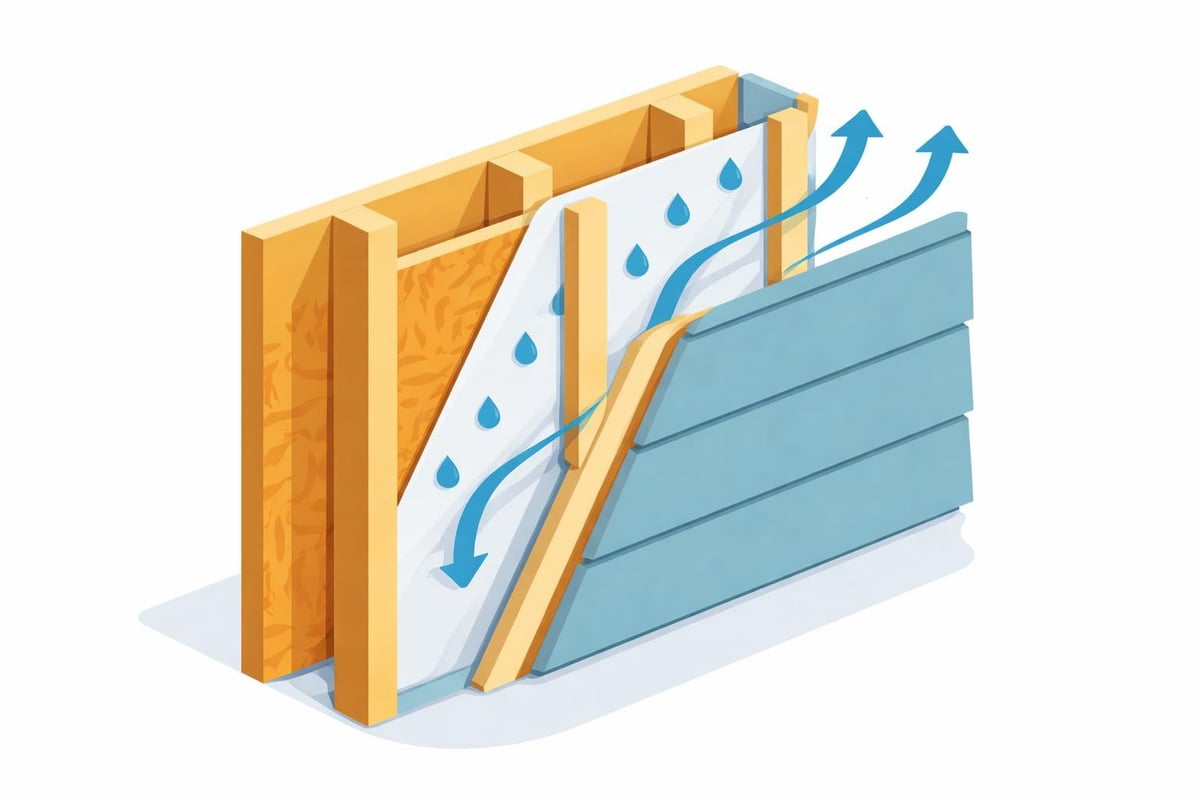
Vapour control layers positioned on the warm side of insulation prevent interstitial condensation. Breathable membranes on the cold side allow moisture vapour to escape whilst blocking liquid water ingress.
Construction Methodology and Assembly Techniques
Modern timber wall frame construction employs factory prefabrication wherever practical. Controlled workshop environments ensure dimensional accuracy and quality control impossible to achieve on exposed building sites.
Panels arrive on site with windows installed, first-fix services complete, and insulation fitted. This approach dramatically reduces programme duration whilst improving build quality and weather-tightness.
Site Preparation and Foundation Interface
The junction between masonry or concrete foundations and timber frames requires careful detailing. A damp-proof course prevents moisture migration, whilst anchor bolts or straps provide lateral restraint against wind uplift and horizontal forces.
Foundation preparation checklist:
- Level sole plate position to within 3mm over 3 metres
- Install continuous DPC with 150mm minimum overlap at joints
- Position holding-down fixings at specified centres
- Create mortar bed for even bearing across sole plate width
- Verify dimensional accuracy before panel installation
Temporary bracing maintains plumb and alignment during early construction stages. Diagonal braces from base to head plate prevent racking until permanent sheathing provides stability.
Essential Connections and Fixing Details
Joints between timber members require appropriate fixings to develop full structural capacity. Nails, screws, and engineered connectors each serve specific purposes within the overall assembly.
Stud-to-plate connections traditionally use two 3.35mm diameter nails per junction. Modern practice increasingly specifies structural screws offering superior withdrawal resistance and reduced splitting risk.
Opening Formation and Lintel Installation
Windows and doors interrupt the regular stud pattern, concentrating loads onto adjacent members. Trimmer studs flanking openings transfer loads to cripple studs below and above the opening.
| Opening Width | Lintel Type | Typical Section | Support Requirements |
|---|---|---|---|
| Up to 1.2m | Solid timber | 75×225mm | Standard trimmer studs |
| 1.2m to 2.4m | Engineered timber | 90×265mm | Double trimmer studs |
| 2.4m to 4.0m | Steel section | 152×89mm UB | Engineered support columns |
| Over 4.0m | Bespoke design | Calculated | Structural engineer specification |
Lintels require adequate bearing at each end, typically 150mm minimum for standard spans. Avoiding common framing errors prevents structural deficiencies and simplifies inspection processes.
The relationship between different timber framing approaches influences detailing requirements. Post-and-beam frames transfer loads differently from stud walls, requiring distinct connection strategies.
Sheathing Systems and Racking Resistance
External sheathing provides lateral stability whilst forming a substrate for weather protection layers. Oriented strand board (OSB) dominates UK timber wall frame construction due to its structural properties and cost-effectiveness.
Minimum 9mm OSB thickness suits most applications, with 11mm or 12mm boards specified for enhanced racking resistance or when fixing requirements demand greater holding power.
Installation and Fixing Patterns
Board edges must bear fully on framing members. Stagger vertical joints between successive board courses, maintaining minimum 50mm offset between joints on adjacent studs.
Nail spacing follows manufacturer specifications but typically requires:
- 150mm centres along panel edges bearing on framing
- 300mm centres to intermediate supports
- Minimum 10mm edge distance to prevent splitting
- Ring-shank or helical nails for superior withdrawal resistance
Breather membranes overlay the sheathing, creating a second line of defence against water penetration. Taping or overlapping joints maintains continuity, with particular attention to vulnerable areas around openings.
Regulatory Compliance and Building Control
UK Building Regulations impose specific requirements for timber wall frame construction. Part A (Structure) demands adequate strength, stability, and resistance to disproportionate collapse.
Fire resistance becomes critical in multi-storey construction. Type IV fire-rated plasterboard on the internal face typically provides 30 or 60 minutes fire resistance depending on specification thickness and number of layers.
Acoustic Performance Standards
Part E (Resistance to Sound) sets minimum standards for separating walls between dwellings. Timber frame party walls require careful design incorporating:
- Two independent frames with isolation gap
- Dense mineral wool within cavities
- Multiple layers of acoustic plasterboard
- Resilient bars separating boards from studs
- Acoustic sealant at all penetrations and junctions
Laboratory testing validates proposed constructions, with site testing confirming installed performance. Code requirements and best practices continue evolving as building standards advance.
Structural warranties require compliance with NHBC standards where applicable. These specifications often exceed minimum Building Regulations, reflecting insurance industry risk assessments.
Advanced Techniques and Hybrid Systems
Contemporary projects increasingly combine different construction methods within a single building. Timber wall frame construction works effectively with masonry facades, steel elements, and engineered timber products.
Hybrid construction advantages include:
- Aesthetic flexibility through varied external finishes
- Optimised structural solutions for complex geometries
- Enhanced thermal mass from strategic masonry placement
- Cost balancing between different material costs
- Programme efficiency through parallel construction sequences
Timber frame hybrid approaches allow traditional external appearance whilst benefiting from modern performance characteristics internally. A masonry outer leaf provides familiar aesthetics, with the timber frame delivering superior insulation and airtightness.
Integration with Services and MEP
Early coordination between structural and services designers prevents conflicts and ensures efficient installation. Timber wall frame construction accommodates services within the structural depth, eliminating additional space requirements.
Vertical services typically run within partition walls or dedicated service zones. Horizontal distribution occurs within floor voids or ceiling spaces rather than penetrating external walls unnecessarily.
Notching or drilling studs weakens structural capacity. Where penetrations prove unavoidable, Building Control approval requires verification that remaining section adequately transfers loads.
Quality Control and Site Management
Systematic inspection at critical stages ensures compliance with specifications and maintains build quality. Factory-built panels arrive with quality assurance documentation, but site assembly requires equal rigour.
Inspection points include:
- Foundation level and dimensional accuracy
- DPC continuity and condition
- Panel plumb and alignment after installation
- Fixing type, quantity, and positioning
- Sheathing board installation and joint treatment
- Breather membrane integrity and detailing
- Service penetration sealing
- Internal lining fire rating and fixing
Weather protection throughout construction prevents moisture ingress affecting timber performance. Temporary coverings shield incomplete sections, with permanent weatherproofing installed progressively as construction advances.
Material storage requires elevation above ground level and protective sheeting. Timber exposure to sustained moisture causes dimensional changes complicating later installation and potentially encouraging decay organisms.
Sustainability and Environmental Considerations
Timber wall frame construction offers substantial environmental advantages over alternative methods. Sustainably managed forests provide renewable construction materials whilst sequestering atmospheric carbon throughout the tree's growth.
Responsible timber sourcing ensures forest regeneration exceeds harvesting rates. FSC or PEFC certification provides assurance regarding sustainable forest management practices.
Manufacturing energy requirements for timber products sit substantially below those for concrete, steel, or masonry alternatives. The resulting embodied carbon reductions contribute significantly towards net-zero construction targets.
Environmental performance factors:
| Aspect | Timber Frame Benefit | Comparison to Traditional Build |
|---|---|---|
| Embodied Carbon | Lower material production emissions | 25-40% reduction |
| Thermal Performance | Enhanced insulation depth | Superior U-values achievable |
| Construction Waste | Precision manufacturing reduces offcuts | 30-50% less waste to landfill |
| Transport Impact | Lighter materials reduce fuel consumption | Lower delivery emissions |
| End-of-Life | Recyclable or biodegradable materials | Reduced demolition burden |
Lifecycle analysis considers performance across decades rather than focusing solely on initial construction impacts. The enhanced thermal performance from timber wall frame construction delivers ongoing operational carbon savings throughout the building's lifespan.
Maintenance and Long-Term Performance
Properly constructed timber wall frame buildings deliver exceptional longevity with minimal maintenance requirements. The structural timber remains protected within the building envelope, shielded from weathering and biological attack.
External treatments depend on cladding selection. Traditional render, brick slips, timber boarding, or modern composite panels each present different maintenance profiles and aesthetic qualities.
Internal finishes typically involve plasterboard directly fixed to studs or mounted on resilient bars for acoustic performance. Standard decoration techniques apply, with no special considerations beyond those for any plastered surface.
Common Issues and Preventative Measures
Moisture ingress represents the primary threat to timber wall frame construction longevity. Robust initial detailing around vulnerable areas prevents the majority of potential problems:
- Window and door reveals with proper flashing integration
- Roof-to-wall junctions sealed and lapped correctly
- Penetrations for services adequately sealed
- Ground clearance maintaining minimum 150mm to external timber
- Ventilated cavities behind impermeable claddings
Regular visual inspections identify developing issues before they become significant. Looking for staining, distortion, or gaps in external finishes allows early intervention preventing expensive remediation.
Specialist Applications and Bespoke Solutions
Timber wall frame construction adapts readily to diverse project types beyond standard residential development. Timber buildings encompass agricultural structures, commercial premises, educational facilities, and leisure complexes.
Agricultural applications benefit from the method's flexibility and cost-effectiveness. Timber frame workshops, storage facilities, and livestock housing employ similar principles adapted to functional requirements rather than habitable space standards.
Design adaptations for specialist uses include:
- Modified stud spacing accommodating equipment mounting
- Enhanced floor loading capacity for machinery or storage
- Simplified insulation strategies where thermal performance matters less
- Industrial cladding systems prioritising durability over aesthetics
- Increased opening sizes for vehicle or equipment access
Oak framed homes represent the premium end of timber construction, combining structural and decorative functions. Exposed oak frames create dramatic interior spaces whilst the surrounding wall panels provide contemporary thermal performance.
The integration of traditional joinery techniques with modern timber wall frame construction delivers buildings respecting heritage whilst meeting current performance expectations. This synthesis particularly suits timber extensions to period properties, maintaining architectural sympathy whilst introducing modern comfort standards.
Understanding timber wall frame construction empowers informed decision-making throughout your building project, from initial concept through to long-term maintenance. Whether you're planning a residential extension, new home, or specialist structure, this construction method delivers exceptional performance, sustainability, and design flexibility. Acorn to Oak Framing combines traditional craftsmanship with contemporary engineering to create bespoke timber frame buildings throughout the UK, ensuring every project meets exacting standards whilst reflecting individual client requirements.


