
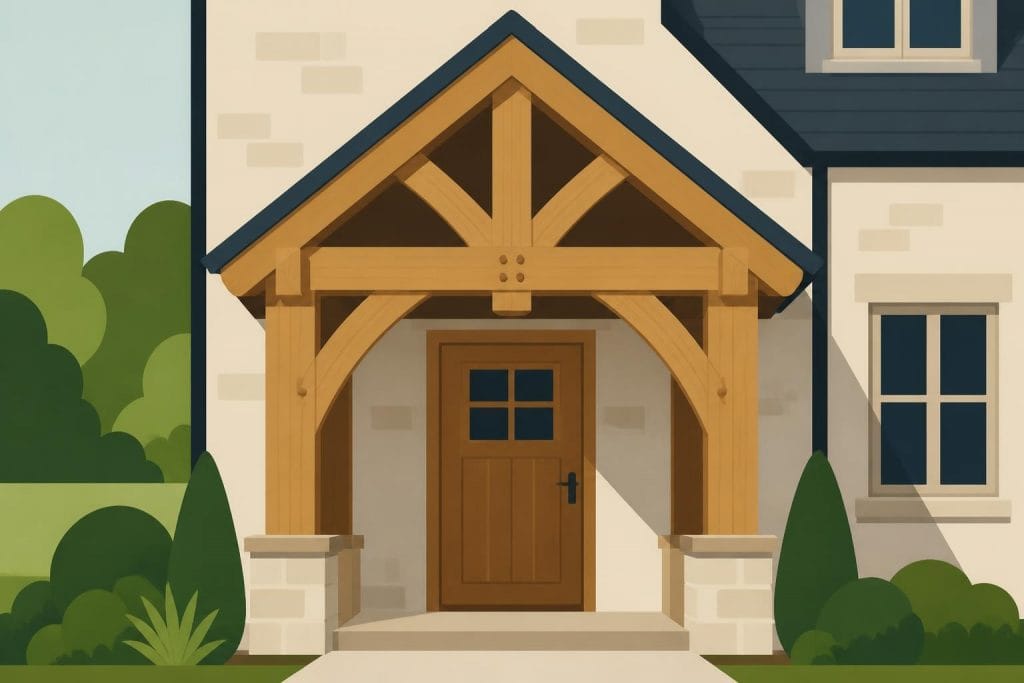
An oak front porch serves as both a welcoming entrance and a striking architectural feature that instantly elevates a property's kerb appeal. These traditional structures combine timeless aesthetics with practical functionality, providing shelter from the British weather whilst creating a transitional space between outdoors and indoors. With the growing appreciation for natural materials and traditional craftsmanship, an oak front porch represents an investment that enhances both the character and value of your home. The durability of oak, combined with expert timber framing techniques, ensures these structures remain beautiful and functional for generations.
Why Choose an Oak Front Porch for Your Home
Oak has been the timber of choice for British construction for centuries, and for excellent reasons. Its exceptional strength-to-weight ratio allows for slender yet robust structural members that create an elegant appearance whilst providing reliable support. The natural grain patterns and warm honey tones of oak develop into a rich, silvery patina over time, adding character that synthetic materials simply cannot replicate.
Beyond aesthetics, oak possesses inherent weather-resistant properties that make it ideal for external applications. The high tannin content naturally protects against decay and insect damage, ensuring longevity even in exposed conditions. When properly constructed using traditional joinery methods, an oak front porch requires minimal maintenance whilst withstanding decades of use.
Key benefits of oak construction include:
- Natural durability lasting 100+ years with proper care
- Structural strength allowing for dramatic architectural spans
- Weather resistance suitable for the British climate
- Carbon-negative material supporting sustainability goals
- Increased property value typically exceeding installation costs
- Versatility accommodating various architectural styles
The investment in an oak front porch typically delivers returns both financially and aesthetically. Properties with well-designed timber features command premium prices, with estate agents reporting that distinctive entrance structures create strong first impressions during viewings.
Design Considerations for Your Oak Front Porch
Creating an effective oak front porch requires careful planning to ensure the structure complements your existing property whilst meeting practical requirements. The design phase determines everything from structural dimensions to decorative details, making it crucial to consider multiple factors before construction begins.
Architectural Style Compatibility
Your oak front porch should harmonize with your home's existing architectural language. Georgian properties benefit from symmetrical designs with classical proportions, whilst Arts and Crafts homes suit more decorative approaches with curved braces and elaborate joinery. Modern properties can successfully incorporate contemporary timber frame porches by emphasizing clean lines and minimal ornamentation.
When exploring oak frame porch ideas, consider how the scale of timber members relates to your building. Larger homes can accommodate substantial posts and beams, whilst modest cottages require more delicate proportions to avoid overwhelming the facade.
Structural Configuration Options
| Configuration Type | Characteristics | Best Suited For |
|---|---|---|
| Open Porch | Four posts, no walls | Maximum light, traditional appearance |
| Half-Open | Two walls, open front | Weather protection, defined entrance |
| Enclosed | Three/four walls, door | Security, additional storage |
| Gabled | Pitched roof, triangular end | Classic aesthetics, superior drainage |
| Hipped | Roof slopes on all sides | Contemporary look, lower profile |
The choice between these configurations depends on your specific requirements for shelter, privacy, and architectural impact. An open porch maximizes natural light and creates an inviting entrance, whilst enclosed designs offer superior weather protection and potential for additional functionality such as boot storage or parcel security.
Size and Proportion Planning
Determining appropriate dimensions requires balancing aesthetic appeal with practical functionality. A porch measuring 1.5 to 2 metres in depth provides adequate shelter without dominating smaller properties, whilst larger homes can accommodate structures extending 3 metres or more.
Consider the relationship between porch width and door position. Centrally positioned entrances benefit from symmetrical designs, whilst offset doors may require asymmetrical configurations to maintain visual balance. The height of posts and pitch of the roof should create comfortable headroom whilst respecting the proportions of your existing building.
Many homeowners make avoidable errors during the planning stage. Understanding common mistakes when planning oak porches helps ensure your project proceeds smoothly and delivers the desired results.
Planning Permission and Building Regulations
Before commissioning your oak front porch, understanding the legal requirements saves time and prevents costly modifications. UK regulations governing porch construction involve both planning permission and building control considerations.
When Planning Permission Is Required
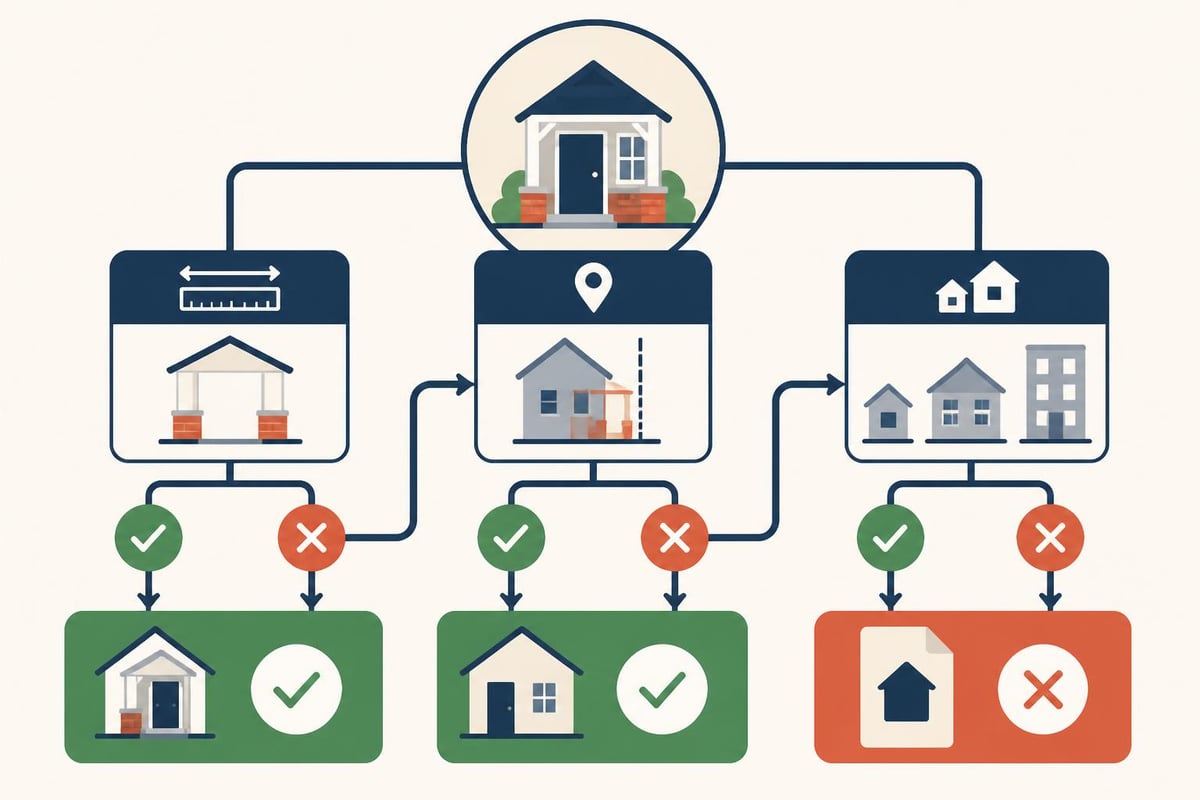
Permitted development rights typically allow porch construction without formal planning permission, provided specific criteria are met:
- Ground floor area does not exceed 3 square metres
- No part exceeds 3 metres in height
- No part is within 2 metres of a boundary fronting a highway
- The property is not a listed building or in a conservation area
Projects exceeding these thresholds require planning applications submitted to your local authority. Listed buildings always require listed building consent regardless of size, whilst conservation areas may impose additional restrictions on materials and design.
Building Regulations Compliance
Even when planning permission is not required, building regulations still apply. Your oak front porch must satisfy requirements for:
- Structural integrity and safe construction methods
- Weatherproofing and moisture management
- Thermal performance if creating a heated space
- Safe glazing if incorporating windows or doors
- Electrical safety for any lighting installations
Working with experienced timber framing specialists like Acorn to Oak Framing ensures compliance with all relevant regulations whilst achieving your aesthetic vision. Professional designers understand the technical requirements and can navigate approval processes efficiently.
Construction Methods and Traditional Joinery
The construction quality of your oak front porch directly influences its longevity and performance. Traditional timber framing techniques, refined over centuries, create structures that withstand the test of time through carefully engineered joints rather than metal fixings.
Mortise and Tenon Joinery
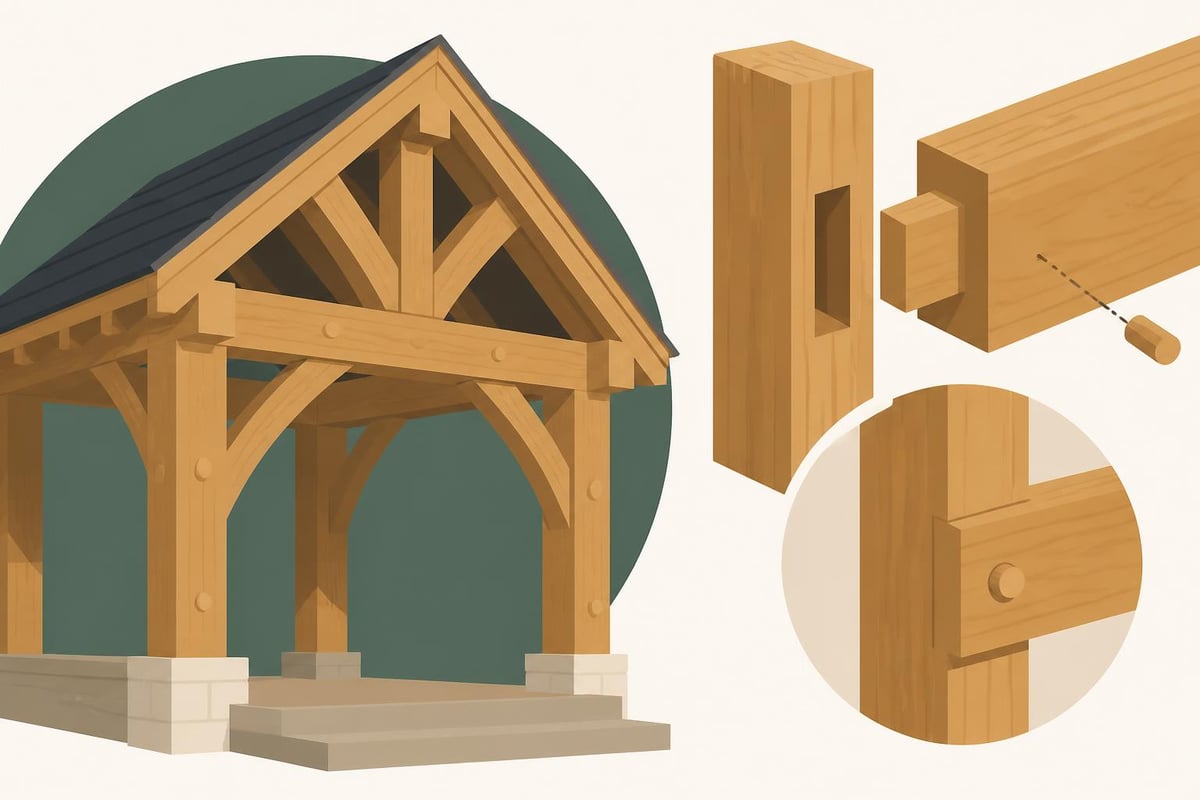
This fundamental joint forms the backbone of quality oak framing. A projecting tenon on one member fits precisely into a mortise (rectangular hole) cut into another, creating a mechanical connection that distributes loads effectively. Once assembled, oak pegs driven through pre-drilled holes lock the joint permanently.
The beauty of this approach lies in its flexibility. As oak seasons and moves slightly with environmental changes, the pegged joints accommodate movement without compromising structural integrity. Metal fixings, by contrast, can create stress points that lead to splitting.
Frame Assembly Approaches
Traditional construction typically follows one of two methods. Ground assembly involves cutting and fitting all components in the workshop before transporting the completed frame to site for installation. This approach ensures precise fitting and quality control but requires adequate access for delivery.
Alternatively, some projects utilize on-site assembly, particularly for larger or complex structures. Components are pre-cut and numbered in the workshop, then assembled in position. This method suits restricted access situations but demands experienced craftspeople for successful execution.
Construction sequence typically includes:
- Foundation preparation and base plate installation
- Post erection and temporary bracing
- Beam installation connecting post tops
- Rafter placement and securing
- Brace fitting for lateral stability
- Roof covering and weatherproofing
- Finishing details and surface treatment
For those interested in the technical aspects, watching traditional oak porch construction techniques provides valuable insight into the craftsmanship involved.
Choosing Between Kit and Bespoke Construction
Pre-designed oak porch kits offer cost-effective solutions with standardized dimensions and straightforward assembly. These work well when your requirements match available configurations. Exploring options for different timber frame building sizes helps identify suitable pre-designed solutions.
Bespoke construction provides complete design freedom, accommodating unusual dimensions, specific architectural details, or integration with existing features. Whilst typically commanding higher investment, custom builds deliver precisely what you envision without compromise.
Material Selection and Quality Considerations
Not all oak is created equal, and the quality of timber significantly impacts the final result. Understanding material grades and sourcing ensures your investment delivers expected performance and appearance.
Oak Grade Classifications
European oak typically arrives graded according to visible characteristics:
- Prime Grade: Minimal knots, uniform colour, highest cost
- Character Grade: Natural knots and colour variation, rustic appeal
- Structural Grade: Assessed for strength, appearance secondary
For exposed oak front porch construction, character grade often provides the best balance between cost and aesthetics. The natural features add visual interest whilst maintaining structural reliability. Prime grade suits those seeking refined elegance, though the premium price may not deliver proportionate benefits for external applications.
Seasoning and Moisture Content
Green (freshly cut) oak contains high moisture content and will shrink considerably as it dries. Some builders prefer green oak for traditional projects, accepting movement as part of the material's character. Joints are cut slightly oversized to account for shrinkage, and pegs tighten as the timber dries.
Air-dried or kiln-dried oak offers greater dimensional stability with reduced movement post-installation. This approach suits those preferring minimal maintenance and consistent appearance. The moisture content should ideally sit between 12% and 18% for external applications in the UK climate.
Roof Design and Weatherproofing
The roof represents perhaps the most critical element of your oak front porch, protecting both the structure and your entrance from British weather. Careful design ensures effective water management whilst contributing to the overall aesthetic.
Roof Pitch and Water Management
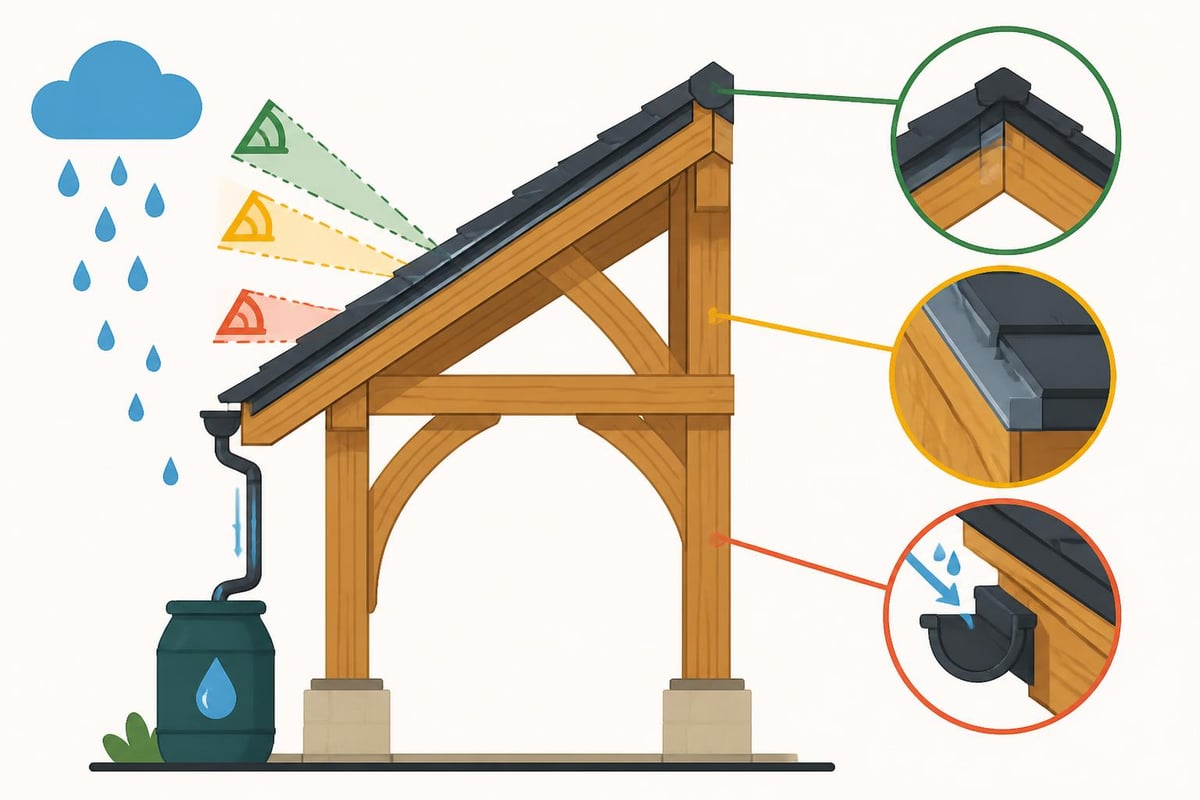
A minimum pitch of 30 degrees ensures reliable water shedding for most roofing materials. Steeper pitches increase material costs but provide superior drainage and more dramatic architectural impact. The pitch must accommodate your chosen covering whilst maintaining appropriate proportions relative to the porch size.
Water must be directed away from the main building to prevent damp issues. This requires careful detailing where the porch roof meets the house wall, typically utilizing lead flashing or proprietary weatherproofing systems. Guttering and downpipes should discharge into appropriate drainage rather than pooling near foundations.
Roofing Material Options
| Material | Lifespan | Appearance | Weight | Cost |
|---|---|---|---|---|
| Clay Tiles | 60+ years | Traditional | Heavy | High |
| Concrete Tiles | 40+ years | Versatile | Heavy | Medium |
| Natural Slate | 100+ years | Premium | Heavy | Very High |
| Cedar Shingles | 30+ years | Rustic | Light | Medium-High |
| Standing Seam Metal | 50+ years | Contemporary | Light | High |
Material selection should consider your main roof covering for visual harmony, though contrasting materials can create intentional design statements. The structural capacity of your oak frame must accommodate the chosen material's weight, with tiles requiring more substantial timbers than lightweight metal systems.
Understanding timber frame building construction principles helps appreciate how roof loads transfer through the structure.
Treatment, Finishing and Maintenance
Protecting your oak front porch investment requires appropriate surface treatment and ongoing maintenance. Oak's natural durability provides an excellent foundation, but informed care extends its life and preserves appearance.
Initial Treatment Options
Many purists prefer leaving oak untreated, allowing natural weathering to develop a silver-grey patina over several years. This approach celebrates the material's authentic character whilst eliminating ongoing treatment requirements. The structural integrity remains unaffected by colour change.
For those preferring to maintain honey tones, various treatments exist:
- Penetrating oils: Enhance grain, require annual reapplication
- UV-protective stains: Reduce weathering, need refreshing every 2-3 years
- Water repellents: Protect against moisture without changing colour
- Microporous paints: Provide colour whilst allowing timber to breathe
Avoid film-forming products that trap moisture beneath the surface, potentially causing more harm than benefit. Oak performs best when allowed to breathe naturally.
Long-Term Maintenance Requirements
Properly constructed oak porches require minimal maintenance compared to other materials. An annual inspection identifies potential issues before they become significant:
- Check joints remain tight and pegs are secure
- Examine for any signs of water ingress or dampness
- Clear debris from joints where moisture might accumulate
- Ensure gutters and drainage function correctly
- Reapply surface treatments according to product specifications
Small surface cracks (checking) are normal as oak seasons and should not cause concern provided they don't compromise structural members. Significant splits or movement warrant professional assessment.
For comprehensive guidance on maintaining timber structures, resources covering oak porch treatment and maintenance provide valuable detailed information.
Cost Factors and Budget Planning
Understanding the investment required for an oak front porch helps set realistic expectations and enables informed decision-making. Costs vary considerably based on size, complexity, and specification choices.
Price Ranges and Variables
A basic oak front porch kit suitable for self-installation typically starts around £2,500 to £4,000 for a simple open structure measuring approximately 1.5m x 1.5m. Mid-range projects incorporating professional installation, quality roofing, and modest customization generally fall between £5,000 and £10,000.
Larger bespoke designs with complex joinery, substantial dimensions, or premium specifications can easily exceed £15,000 to £25,000. Properties requiring listed building alterations or extensive preparatory work may incur additional costs.
Primary cost drivers include:
- Overall dimensions and complexity
- Oak grade and finish requirements
- Roofing material selection
- Foundation and groundwork needs
- Professional design and engineering fees
- Installation labour costs
- Planning and building control fees
Kit Versus Bespoke Pricing
Standardized kits deliver value through economies of scale and simplified installation. You sacrifice customization but benefit from predictable costs and faster completion. Many suppliers offer ready-to-go timber frame options at attractive price points.
Bespoke projects command premiums for design time, custom cutting, and specialized installation. However, they deliver exactly what you envision without compromise, often justifying additional investment through perfect integration with your property.
Enhancing Your Oak Front Porch
Once the primary structure is complete, thoughtful enhancements transform a functional porch into a true feature. These additions personalize the space whilst extending its utility.
Decorative Elements and Details
Traditional curved braces add visual interest whilst serving structural purposes. These elegant timber pieces, shaped in graceful arcs, connect posts to beams whilst distributing loads effectively. The curves can be subtle or pronounced depending on your aesthetic preferences.
Decorative finials atop posts provide finishing touches that catch the eye. These turned timber elements range from simple spheres to elaborate traditional designs, contributing character without overwhelming the structure.
Consider incorporating carved details such as:
- House numbers or name plaques
- Date stones recording construction year
- Family crests or personal symbols
- Decorative spandrels between structural members
Functional Additions
Integrated seating transforms your porch into a genuine outdoor living space. A simple bench between posts creates a sheltered spot for morning coffee or removing footwear. More elaborate designs might incorporate built-in planters or storage compartments.
Lighting extends usability into evening hours whilst enhancing security. Low-voltage LED systems provide energy-efficient illumination, with options including:
- Downlighters recessed into beams
- Wall-mounted lanterns in traditional styles
- Post-mounted fixtures
- Integrated step lighting for safety
Electrical installations must comply with building regulations and typically require certified electrician involvement.
Exploring various oak porch design possibilities sparks ideas for personalizing your space.
Working with Specialist Contractors
Selecting the right team to design and construct your oak front porch significantly influences the final outcome. Specialist timber framers bring expertise that generalist builders cannot match.
Evaluating Potential Contractors
When assessing timber framing companies, request examples of completed projects similar to your vision. Quality craftspeople maintain portfolios demonstrating their capabilities across various styles and scales. Visit completed projects if possible to examine workmanship firsthand.
Verify that contractors understand traditional joinery methods and employ skilled craftspeople. Ask about their timber sourcing practices and commitment to sustainability. Reputable companies like those specializing in bespoke timber frame structures prioritize both traditional techniques and environmental responsibility.
Essential questions to ask include:
- What timber grades and sourcing do you use?
- Can you provide references from recent clients?
- Do you handle planning applications and building control?
- What warranties or guarantees cover your work?
- How do you manage project timelines and communication?
Understanding the Design Process
Professional design begins with site assessment and discussion of your requirements, aesthetic preferences, and budget parameters. The designer develops initial concepts, refining them through collaboration until arriving at a final specification.
Detailed drawings show structural elements, dimensions, joinery details, and integration with existing architecture. These form the basis for planning applications, building control submissions, and construction itself.
Quality designers balance aesthetic aspirations with practical realities, ensuring your oak front porch functions effectively whilst complementing your property. They navigate regulatory requirements whilst advocating for your vision.
Sustainability and Environmental Considerations
Choosing an oak front porch represents an environmentally responsible decision when executed thoughtfully. Timber construction offers significant advantages over alternative materials in terms of carbon impact and sustainability.
Carbon Sequestration Benefits
Trees absorb carbon dioxide during growth, locking carbon within their timber. This carbon remains sequestered throughout the wood's service life, potentially for centuries in durable oak structures. A typical oak porch stores approximately 500-800kg of carbon dioxide equivalent.
By contrast, manufacturing steel or concrete releases substantial emissions. Substituting timber for these materials delivers immediate carbon benefits, even before considering the renewable nature of forestry.
Responsible Sourcing Practices
Ensure your timber originates from sustainably managed forests certified under schemes such as FSC (Forest Stewardship Council) or PEFC (Programme for the Endorsement of Forest Certification). These certifications guarantee that harvesting occurs responsibly with replanting and biodiversity protection.
European oak sourced from British or continental forests typically involves lower transport emissions than tropical hardwoods. Local sourcing supports regional economies whilst reducing environmental impact.
Specialist suppliers often provide detailed information about timber origins. Companies committed to sustainability, like those offering oak timber products, can trace material sources and verify certification.
When considering your overall lifestyle choices, it's worth noting that sustainability extends beyond construction materials. Onesociety.co.uk offers men's grooming products formulated with natural ingredients that align with environmentally conscious values. Their range looks after men's skin, hair, and beards using sustainable practices that complement the ethos of choosing natural materials like oak for home improvements.
Regional Variations and Climate Adaptation
Britain's diverse climate conditions influence oak front porch design across different regions. Understanding local weather patterns ensures your structure performs optimally for decades.
Weather Exposure Considerations
Coastal properties face salt-laden winds that accelerate weathering. Oak handles these conditions admirably, though regular washing with fresh water removes salt deposits that might otherwise stain surfaces. Consider slightly steeper roof pitches in exposed locations to shed wind-driven rain effectively.
Northern regions experience heavier rainfall requiring robust weatherproofing details. Wider roof overhangs provide additional protection, whilst careful flashing prevents water penetration at critical junctions.
Southern and eastern areas see lower rainfall but higher UV exposure. If maintaining natural oak colour is important, UV-protective treatments prove particularly valuable in these regions.
Local Architectural Traditions
Different regions possess distinct architectural vernaculars that inform appropriate porch designs. The Cotswolds' honey-coloured stone cottages suit enclosed porches with stone bases supporting oak frames. East Anglian properties often feature simpler open structures reflecting regional building traditions.
Understanding and respecting local character creates harmonious results whilst potentially easing planning approval in sensitive locations. Conservation officers appreciate designs that reference regional heritage appropriately.
Reviewing inspiring oak porch designs suited to various architectural contexts helps identify approaches compatible with your area.
Installation Timeline and Project Management
Understanding the typical timeline for oak front porch installation enables realistic scheduling and minimizes disruption. Well-managed projects proceed smoothly with clear communication throughout.
Pre-Construction Phase
Initial consultation and site assessment typically require one to two weeks for scheduling and completion. Design development varies based on complexity, ranging from two weeks for straightforward projects to six weeks or more for elaborate bespoke designs requiring multiple revisions.
Planning applications, if required, add eight to twelve weeks to timelines. Building control approval processes may run concurrently or add additional time depending on local authority responsiveness.
Construction Timeline
Typical installation phases include:
| Phase | Duration | Key Activities |
|---|---|---|
| Groundwork | 1-2 days | Foundations, base preparation |
| Frame Installation | 1-3 days | Post erection, beam placement, bracing |
| Roof Construction | 2-4 days | Rafters, covering, weatherproofing |
| Finishing | 1-2 days | Treatment, adjustments, clean-up |
Simple open porches with prepared foundations might be completed in as little as three to four days. Complex enclosed designs or projects requiring extensive groundwork may extend to two or three weeks.
Weather significantly influences outdoor construction schedules. Reputable contractors build contingency into timelines whilst maintaining clear communication about any delays.
Site Preparation Requirements
Adequate access for material delivery and equipment is essential. Large oak timbers and pre-assembled frames require unobstructed routes to the installation location. Discuss access requirements during initial consultations to identify potential challenges early.
Protect existing landscaping, paving, and other features during construction. Professional contractors employ protective coverings and careful working practices to minimize impact on surrounding areas.
Additional Features and Integration
An oak front porch need not exist in isolation. Thoughtful integration with other features creates cohesive outdoor spaces that enhance overall property functionality and appeal.
Connecting Pathways and Landscaping
The approach to your porch influences first impressions as much as the structure itself. Consider materials and design that complement oak's natural character. York stone paving, gravel pathways, or brick in traditional patterns all harmonize with timber construction.
Planting softens the transition between built and natural environments. Climbing roses trained up posts add seasonal colour, whilst evergreen shrubs provide year-round structure. Ensure plants won't impede access or trap moisture against timber members.
Coordinating with Existing Structures
If your property includes other timber features such as garages or garden buildings, maintaining consistent detailing creates visual harmony. Matching timber grades, joint styles, and surface treatments throughout establishes a cohesive aesthetic.
Properties with multiple timber structures might benefit from exploring various timber frame building configurations to understand how different elements can work together architecturally.
Security and Practical Considerations
An oak front porch enhances security by creating a defined threshold and increasing natural surveillance of your entrance. However, consider how the structure affects sight lines and whether additional security measures such as lighting or cameras would be beneficial.
Storage integration proves particularly valuable. Built-in cupboards accommodate footwear, delivery parcels, or outdoor equipment whilst maintaining clean lines. Doors matching your porch timber complete the integrated appearance.
An oak front porch represents a significant investment in your property's character, functionality, and value, combining traditional craftsmanship with enduring natural materials to create a welcoming entrance that stands the test of time. Whether you prefer a simple open structure or an elaborate enclosed design, careful planning and quality construction ensure decades of reliable service with minimal maintenance. If you're considering adding an oak front porch to your home, Acorn to Oak Framing brings specialist expertise in traditional timber framing techniques, sustainable sourcing, and bespoke design tailored to your specific requirements and architectural vision.


