
A wooden garage represents a significant investment that combines practical functionality with aesthetic appeal, offering homeowners a versatile space that enhances both property value and everyday convenience. Unlike conventional concrete or steel structures, timber garages provide natural insulation properties, architectural flexibility, and a timeless charm that complements various property styles across the United Kingdom. Whether you're seeking additional vehicle storage, workshop space, or a combination of uses, understanding the benefits, construction considerations, and maintenance requirements of timber structures ensures you make an informed decision that serves your needs for decades to come.
The Enduring Appeal of Timber Construction
Timber has remained a preferred building material throughout history, and modern wooden garage construction continues this tradition whilst embracing contemporary engineering standards. The natural properties of wood provide exceptional structural integrity when properly treated and maintained, with oak timber particularly renowned for its durability and resistance to the elements.
The aesthetic versatility of timber allows homeowners to create structures that seamlessly integrate with existing architecture. From traditional oak framing that echoes historic barn designs to sleek contemporary profiles, the design possibilities remain virtually limitless. This adaptability makes timber garages suitable for heritage properties, modern developments, and everything in between.
Sustainability credentials represent another compelling advantage:
- Timber acts as a carbon sink, storing CO2 throughout its lifespan
- Responsibly sourced wood from certified forests ensures environmental protection
- Lower embodied energy compared to concrete or steel manufacturing
- Biodegradable at end of life, unlike synthetic alternatives
Design Flexibility and Configuration Options
One of the most significant advantages of choosing a wooden garage lies in the customisation opportunities available during the planning phase. Timber frame construction techniques allow for bespoke dimensions, bay configurations, and internal layouts that precisely match your requirements.
Bay Configurations
The modular nature of timber framing means you can select from various bay configurations depending on your space needs. A 1-bay building suits single vehicle storage or compact workshop requirements, whilst larger households might prefer 2-bay, 3-bay, or even 4-bay structures that accommodate multiple vehicles and additional storage zones.

| Configuration | Typical Width | Best For | Additional Benefits |
|---|---|---|---|
| 1-Bay | 3-4 metres | Single vehicle, motorcycle storage | Cost-effective, minimal footprint |
| 2-Bay | 5.5-7 metres | Two vehicles or vehicle plus workshop | Balanced size, versatile usage |
| 3-Bay | 8-10 metres | Multiple vehicles, extensive storage | Workshop integration, hobby space |
| 4-Bay | 11+ metres | Large families, commercial use | Vehicle collection storage, business premises |
Architectural Features
Beyond basic dimensions, wooden garage designs can incorporate numerous architectural elements that enhance both functionality and visual appeal. Raised eaves provide additional headroom for vehicles with roof racks or taller workshop equipment, whilst raised eaves buildings create impressive interior volumes that transform the space from simple storage to a genuine multi-purpose facility.
Traditional carpentry details such as curved braces, exposed joinery, and hand-crafted trusses add character whilst demonstrating the skill invested in construction. These elements particularly complement period properties where architectural harmony matters.
Foundation Requirements and Site Preparation
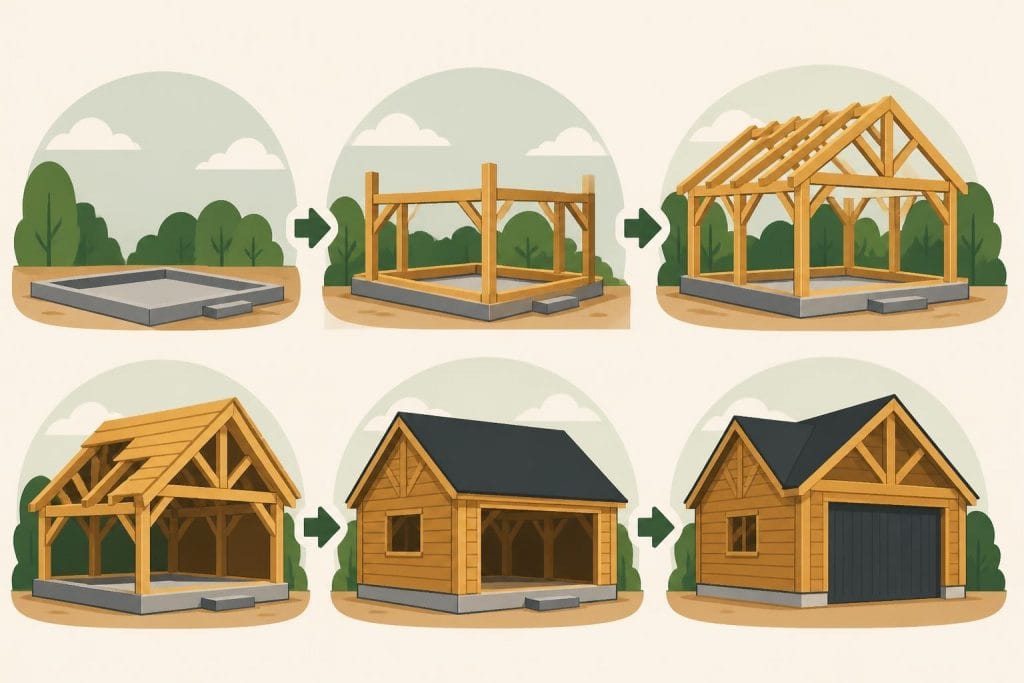
Proper groundwork forms the cornerstone of any successful timber structure, and understanding foundation requirements prevents future complications. Unlike lightweight garden sheds, a proper wooden garage demands substantial foundations that distribute weight evenly and prevent settling or movement over time.
The laying of solid foundations for timber garages involves several critical stages that ensure long-term stability and compliance with building regulations.
Preparation Steps
- Site assessment: Evaluate ground conditions, drainage, and access requirements
- Base excavation: Remove topsoil to reach stable ground, typically 150-200mm depth
- Sub-base installation: Compact hardcore or Type 1 aggregate creates a level platform
- Formwork construction: Build shuttering to contain concrete pour
- Concrete laying: Pour minimum 100mm concrete slab with appropriate reinforcement
- Curing period: Allow 7-14 days for concrete to achieve working strength
Ground conditions vary significantly across the UK, with clay soils requiring particular attention to drainage and potential movement. Professional site surveys identify specific challenges early, preventing expensive remedial work later.
Construction Methods and Timber Selection
The quality of materials directly impacts the longevity and performance of your wooden garage. Oak stands as the premium choice for timber framing, offering exceptional durability, natural resistance to decay, and beautiful grain patterns that develop rich patinas over time.
Traditional timber wall frame construction techniques create robust structures through mortise and tenon joints, wooden pegs, and careful timber selection. These time-honoured methods distribute loads efficiently whilst allowing natural timber movement without compromising structural integrity.
Timber Grades and Treatment
- Green oak: Freshly cut timber that seasons in situ, creating authentic traditional structures
- Air-dried oak: Seasoned naturally over 1-2 years, reducing movement and cracking
- Kiln-dried oak: Accelerated drying for dimensional stability, ideal for enclosed panels
- Pressure-treated softwood: Cost-effective option with enhanced rot resistance
Each timber type brings distinct characteristics, and specialist framers understand how different species and treatments perform in various applications. The choice often balances budget constraints against desired aesthetic outcomes and maintenance expectations.
Door Selection and Integration
The garage doors significantly influence both the functionality and visual impact of your wooden garage. Oak garage doors provide unmatched beauty and coherence when paired with oak framing, creating a harmonious whole that showcases timber's natural elegance.
Alternative door materials include pine, which offers a lighter colour palette and reduced cost whilst maintaining natural timber aesthetics. Understanding the benefits of wood garage doors helps inform decisions about style, operation mechanisms, and long-term maintenance requirements.
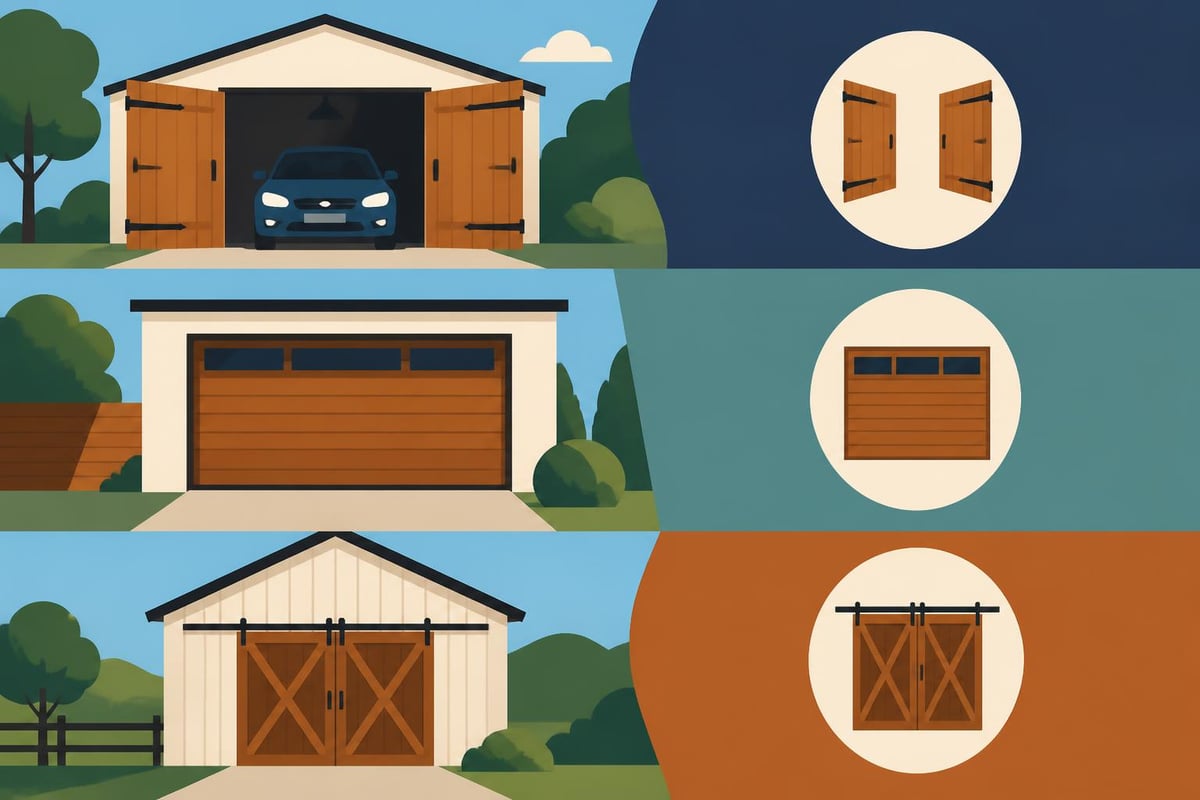
Door operation options include:
- Side-hinged doors for traditional appearance and full-width access
- Up-and-over mechanisms maximising driveway space
- Sectional overhead doors combining modern convenience with timber finishes
- Sliding barn-style doors for rustic charm and space efficiency
Maintenance Essentials for Longevity
Whilst timber structures offer remarkable durability, appropriate maintenance preserves their appearance and structural integrity across generations. Regular attention prevents minor issues escalating into expensive repairs, making maintenance a wise investment rather than an optional extra.
Wooden garage door maintenance represents one of the most critical ongoing tasks, as doors face constant exposure to weather elements whilst enduring mechanical stresses from regular operation.
Annual Maintenance Schedule
| Task | Frequency | Purpose | Time Required |
|---|---|---|---|
| Visual inspection | Monthly | Identify early damage signs | 15 minutes |
| Cleaning surfaces | Quarterly | Remove dirt and biological growth | 1-2 hours |
| Finish inspection | Bi-annually | Check paint/stain condition | 30 minutes |
| Re-staining/painting | 2-4 years | Protect timber from moisture | 1-2 days |
| Hardware lubrication | Annually | Ensure smooth door operation | 30 minutes |
| Structural check | Annually | Verify frame integrity | 1 hour |
Understanding maintenance tips for wooden garage doors ensures you address all critical areas systematically. Particular attention to the base plates and ground contact points prevents moisture ingress that accelerates decay.
Protective Treatments
Timber requires protection from moisture, ultraviolet radiation, and biological attack. High-quality exterior treatments create barriers that allow timber to breathe whilst repelling water. Oil-based stains penetrate deeply, enhancing grain patterns whilst offering substantial protection, whereas paint systems provide opaque coverage that masks timber imperfections.
The choice between staining and painting depends on aesthetic preferences and maintenance tolerance. Stained finishes require more frequent reapplication but showcase timber's natural beauty, whilst painted surfaces last longer between treatments but obscure the wood grain entirely.
Insulation and Climate Control
Modern wooden garage construction can incorporate sophisticated insulation systems that transform basic vehicle storage into comfortable year-round workspace. Understanding insulating timber frame walls reveals how contemporary techniques achieve impressive thermal performance without compromising structural integrity.
The natural cavity within timber frame walls accommodates various insulation materials:
- Mineral wool batts offering excellent thermal and acoustic properties
- Rigid foam boards providing high R-values in minimal thickness
- Natural sheep's wool insulation for sustainable, breathable performance
- Spray foam solutions creating continuous thermal barriers
Proper insulation delivers multiple benefits beyond comfort. Heated garages protect vehicles from frost damage, enable year-round workshop activities, and can even house gym equipment or hobby spaces that demand temperature control.
Planning Permission and Building Regulations
Navigating the regulatory landscape ensures your wooden garage complies with all legal requirements, preventing complications during construction or when selling your property. Most timber garages fall under permitted development rights, allowing construction without formal planning permission, provided specific criteria are met.
Permitted development conditions typically include:
- Structure positioned behind the principal elevation facing the road
- Maximum eaves height of 2.5 metres for buildings within 2 metres of boundaries
- Maximum overall height of 4 metres for dual-pitched roofs
- Total outbuilding coverage not exceeding 50% of garden area
- No raised platforms or balconies above 300mm
Even when planning permission isn't required, Building Regulations often apply, particularly for structures exceeding 15 square metres with sleeping accommodation or 30 square metres without. These regulations ensure structural safety, fire resistance, and appropriate drainage.
Multi-Purpose Applications
The versatility of wooden garage spaces extends far beyond vehicle storage, with many homeowners maximising their investment through creative multi-purpose configurations. The robust timber frame construction easily supports mezzanine floors, creating valuable additional square footage for storage or habitable space.
Similar to garden room timber frame applications, garages can incorporate insulation, heating, and services that enable use as home offices, art studios, or fitness facilities. Zoning regulations and building control requirements vary depending on intended use, so early consultation ensures compliance.
Conversion Possibilities
Converting portions of your wooden garage into alternative uses requires careful planning but delivers exceptional value. Ground floor vehicle storage might coexist with first-floor workshop space, hobby rooms, or even guest accommodation, subject to appropriate approvals and building standards compliance.
The open spans achievable with timber framing provide flexibility that masonry construction struggles to match, allowing internal layouts to evolve as your needs change without expensive structural modifications.
Environmental Considerations and Sustainability
Choosing timber construction demonstrates environmental responsibility, particularly when sourcing materials from certified sustainable forests. The timber industry in the United Kingdom has made significant strides towards responsible forestry management, with certification schemes ensuring new planting exceeds harvesting rates.
A wooden garage constructed from responsibly sourced oak or softwood stores carbon throughout its operational life, offsetting manufacturing emissions from other building materials. This carbon sequestration continues for the structure's entire lifespan, potentially spanning centuries with proper maintenance.
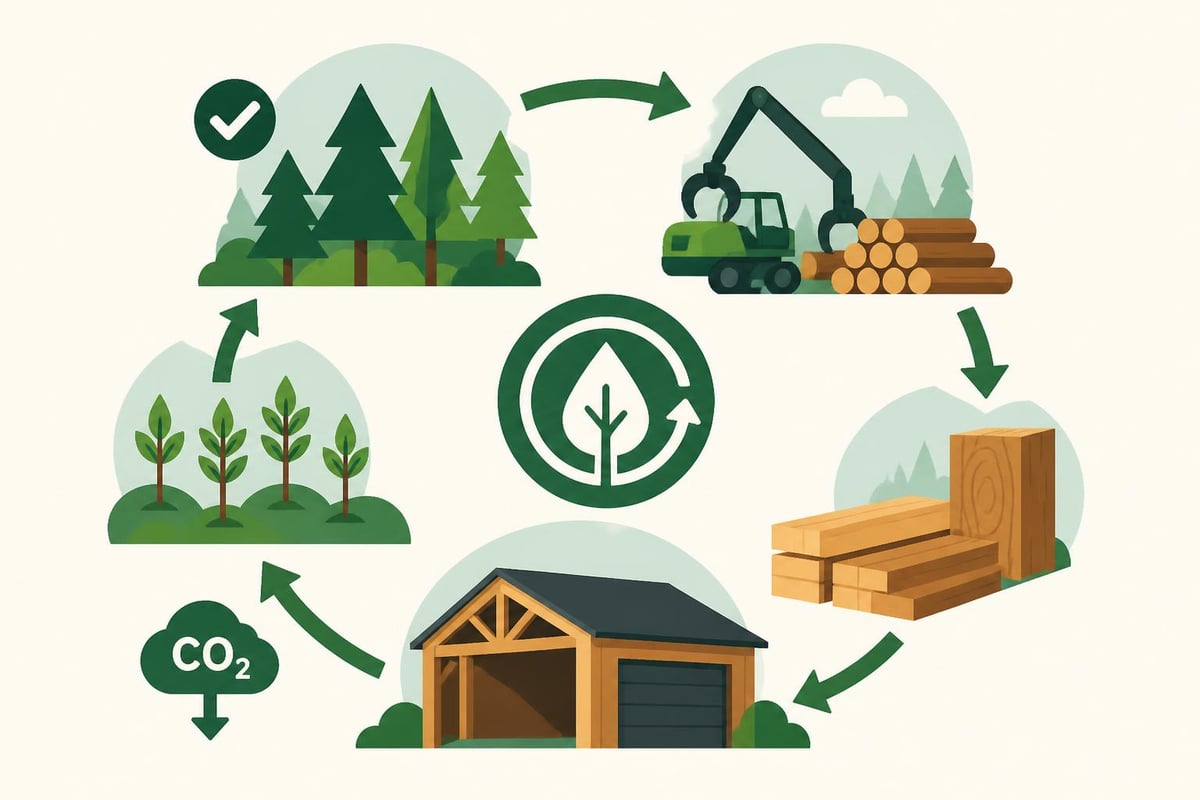
Beyond carbon considerations, timber's lower embodied energy compared to alternatives like steel or concrete reduces the overall environmental footprint. Manufacturing timber products requires significantly less energy than processing metals or firing cement, translating directly into reduced greenhouse gas emissions.
Cost Considerations and Value
Investment in a wooden garage involves various cost factors that influence the total project budget. Material selection, size, design complexity, and site conditions all impact final expenditure, making accurate quotations essential for financial planning.
Primary cost components include:
- Timber frame materials and construction
- Foundation preparation and concrete work
- Roofing materials and installation
- Doors, windows, and hardware
- Protective treatments and finishes
- Professional labour and project management
Whilst initial costs might exceed basic prefabricated alternatives, the longevity, aesthetic appeal, and property value enhancement delivered by quality timber construction justify the investment. Well-maintained wooden garages appreciate alongside the main residence, contributing positively to overall property valuations.
Professional Installation versus DIY
The complexity of timber frame construction makes professional installation advisable for most homeowners, ensuring structural integrity, regulatory compliance, and warranty protection. Specialist companies bring experience, appropriate equipment, and comprehensive insurance that safeguards your investment.
However, enthusiastic DIYers with carpentry experience might consider timber garage kits that provide pre-cut components with detailed assembly instructions. These kits balance cost savings against the satisfaction of hands-on construction, though professional foundation work remains advisable even for DIY builds.
The decision between professional installation and self-build depends on:
- Available time: Typical professional installation completes within days; DIY projects may extend over weeks
- Skill level: Timber framing requires carpentry knowledge and physical capability
- Tool access: Specialist equipment expedites construction and ensures accuracy
- Building regulations: Professional installers navigate compliance requirements efficiently
- Warranty considerations: Manufacturer warranties often require professional installation
Customisation and Personalisation
One of the most rewarding aspects of commissioning a wooden garage involves tailoring every detail to your specific requirements and aesthetic preferences. Unlike mass-produced alternatives, bespoke timber structures accommodate unique dimensions, architectural features, and functional specifications.
Customisation opportunities span from structural elements like roof pitch and overhang depth to decorative details including barge boards, finials, and exposed joinery. These personalised touches transform functional buildings into architectural features that enhance the entire property.
Internal configurations merit equal attention, with options including:
- Workshop benches and tool storage systems
- Vehicle inspection pits for maintenance enthusiasts
- Mezzanine floors doubling available space
- Integrated services including electricity, water, and heating
- Natural lighting through strategically positioned windows or skylights
Taking time to fully consider how you'll use the space ensures the finished structure perfectly matches your lifestyle requirements, delivering satisfaction measured in decades rather than years.
Caring for Timber Throughout the Seasons
The British climate presents unique challenges for timber structures, with seasonal variations demanding different maintenance approaches. Understanding how weather patterns affect wood enables proactive care that prevents damage before it occurs.
Winter considerations focus on moisture management, as persistent dampness encourages fungal growth and accelerates decay. Ensuring adequate ventilation prevents condensation accumulation whilst maintaining protective finishes repels rainwater effectively. Regular gutter clearance prevents overflow that saturates wall plates and base sections.
Spring offers ideal conditions for inspection and maintenance tasks. Warmer temperatures and longer days facilitate thorough examinations of wooden garage door panels, frame joints, and protective finishes. Any damage identified during winter receives prompt attention before summer arrives.
Summer's dry conditions suit refinishing projects, as coatings cure properly without moisture interference. This season provides the best opportunity for comprehensive maintenance including cleaning, repairs, and protective treatment application.
Autumn preparation involves clearing leaves and debris that trap moisture against timber surfaces, checking drainage systems function correctly, and ensuring protective finishes remain intact before winter weather returns.
Just as proper maintenance preserves timber garages, personal care routines protect your own wellbeing. For gentlemen seeking quality grooming solutions, onesociety.co.uk offers an exceptional range of all-natural products specifically formulated to care for men's skin, hair, and beard. These carefully crafted products use natural ingredients that nourish and protect, ensuring you look and feel your best whilst avoiding harsh chemicals found in many conventional grooming brands.
Integration with Existing Architecture
Successfully integrating a wooden garage with existing property architecture requires thoughtful design that respects established visual themes whilst potentially introducing complementary contemporary elements. Period properties particularly benefit from traditional oak framing techniques that echo historical construction methods, creating coherent architectural narratives across the site.
Matching roof pitches, material palettes, and proportional relationships ensures new structures feel intentional rather than afterthoughts. Detailing matters enormously, with elements like fascia profiles, window styles, and door designs tying separate buildings together visually.
Even modern properties gain from timber's natural warmth, which softens stark contemporary designs whilst maintaining clean lines and functional simplicity. The material's versatility means it enhances virtually any architectural style when thoughtfully specified and expertly constructed.
A wooden garage delivers exceptional value through its combination of practical functionality, aesthetic appeal, and environmental responsibility. From careful planning and quality construction through to diligent maintenance and creative customisation, every stage contributes towards a structure that serves your needs whilst enhancing your property for generations. If you're ready to explore how a bespoke timber garage could transform your property, Acorn to Oak Framing brings decades of specialist experience in creating beautiful, durable timber structures across the United Kingdom. Contact their team today to discuss your vision and discover how traditional craftsmanship combined with modern techniques can deliver the perfect solution for your requirements.


