
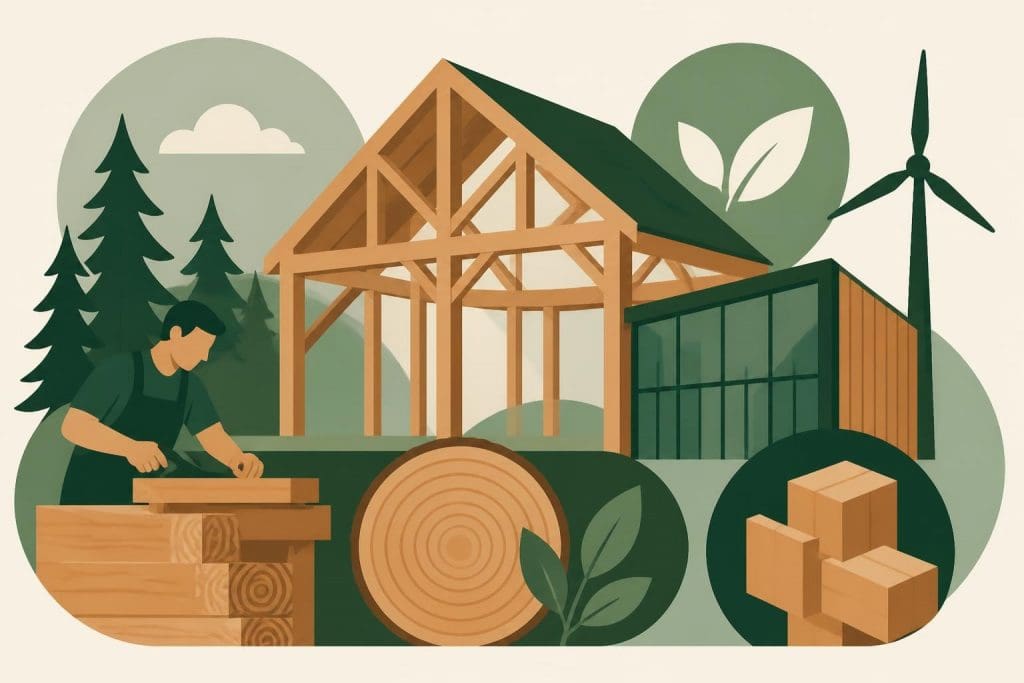
The construction industry faces mounting pressure to reduce its environmental impact whilst maintaining structural integrity and aesthetic appeal. Green framing represents a transformative approach to timber construction that prioritises sustainability without compromising quality or durability. This methodology encompasses material selection, construction techniques, waste reduction, and energy efficiency, creating buildings that respect both environmental limits and client expectations. For timber frame specialists, adopting green framing principles offers competitive advantage whilst contributing to broader environmental goals.
Understanding Green Framing Principles
Green framing extends beyond simply using timber as a renewable resource. It encompasses a holistic approach to construction that considers the entire lifecycle of materials, from sourcing through installation to eventual decommissioning.
The fundamental principle involves maximising structural efficiency whilst minimising material waste. Traditional framing methods often incorporate excess lumber as a safety margin, but advanced house framing techniques demonstrate how optimised designs achieve superior performance with reduced material usage.
Core principles include:
- Sustainable material sourcing from certified forestry programmes
- Efficient structural design that eliminates unnecessary components
- Enhanced thermal performance through strategic framing placement
- Reduced construction waste through precise cutting and planning
- Long-term durability that extends building lifespan
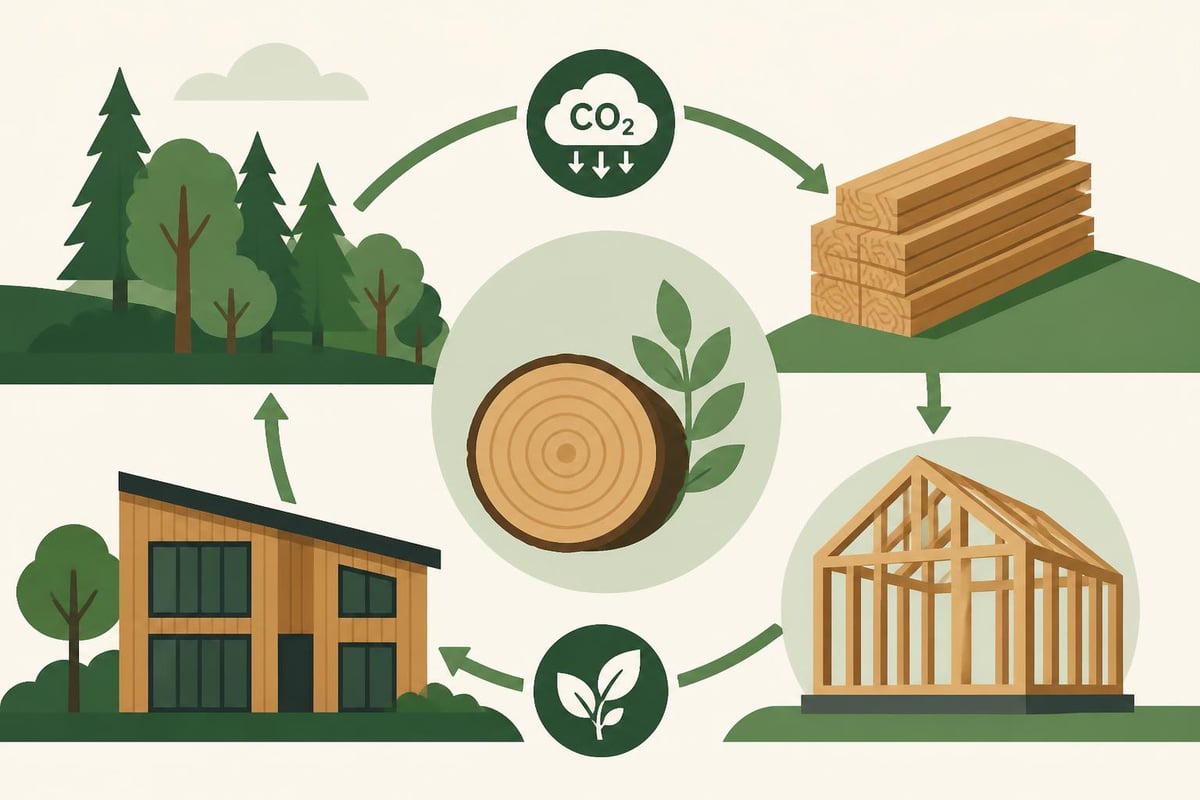
Modern green framing also addresses embodied carbon, the greenhouse gas emissions associated with material production, transportation, and installation. Timber frames inherently offer advantages here, as growing trees sequester carbon dioxide from the atmosphere. Sustainably sourced oak timber used in timber frame homes across the UK continues to store this carbon throughout the building's lifetime.
Material Selection for Environmental Performance
Choosing appropriate materials represents the foundation of green framing success. Not all timber sources offer equal environmental credentials, making informed selection crucial.
Certified timber from programmes like FSC (Forest Stewardship Council) or PEFC (Programme for the Endorsement of Forest Certification) ensures responsible forest management. These certifications verify that harvesting practices maintain biodiversity, protect water resources, and support local communities.
Oak timber offers exceptional durability, reducing replacement frequency over decades. This longevity significantly improves environmental performance compared to materials requiring frequent replacement. When properly treated and maintained, oak framed homes can last centuries, far exceeding conventional construction lifespans.
| Material Type | Durability | Carbon Storage | Renewability | Local Availability (UK) |
|---|---|---|---|---|
| Oak Timber | Exceptional | High | Excellent | Good |
| Softwood | Good | Medium | Excellent | Very Good |
| Engineered Wood | Very Good | Medium-High | Good | Good |
| Recycled Timber | Variable | High | Excellent | Limited |
Beyond primary structural timber, green framing considers supplementary materials. Sustainable building materials including sheep's wool insulation, lime-based mortars, and natural wood finishes complement timber frames whilst maintaining environmental integrity.
Advanced Framing Techniques
Green framing employs specific construction methodologies that reduce material consumption whilst maintaining or improving structural performance. These techniques require skilled craftsmanship and careful planning but deliver substantial environmental and economic benefits.
Optimised Spacing and Alignment
Traditional framing often uses 400mm centre spacing for studs, joists, and rafters. Advanced green framing increases this to 600mm where structural requirements permit, reducing lumber usage by approximately 30%. This approach requires precise calculation to ensure adequate load-bearing capacity.
Aligning framing members vertically throughout the structure creates continuous load paths from roof to foundation. This alignment eliminates redundant structural components whilst improving load distribution. The technique proves particularly effective in timber frame construction where traditional methods might incorporate unnecessary bridging or blocking.
Implementation considerations:
- Conduct thorough structural calculations for increased spacing
- Ensure sheathing and cladding materials suit wider spacing
- Verify compliance with UK building regulations
- Consider thermal bridging implications
- Plan electrical and plumbing integration
Corner and Junction Detailing
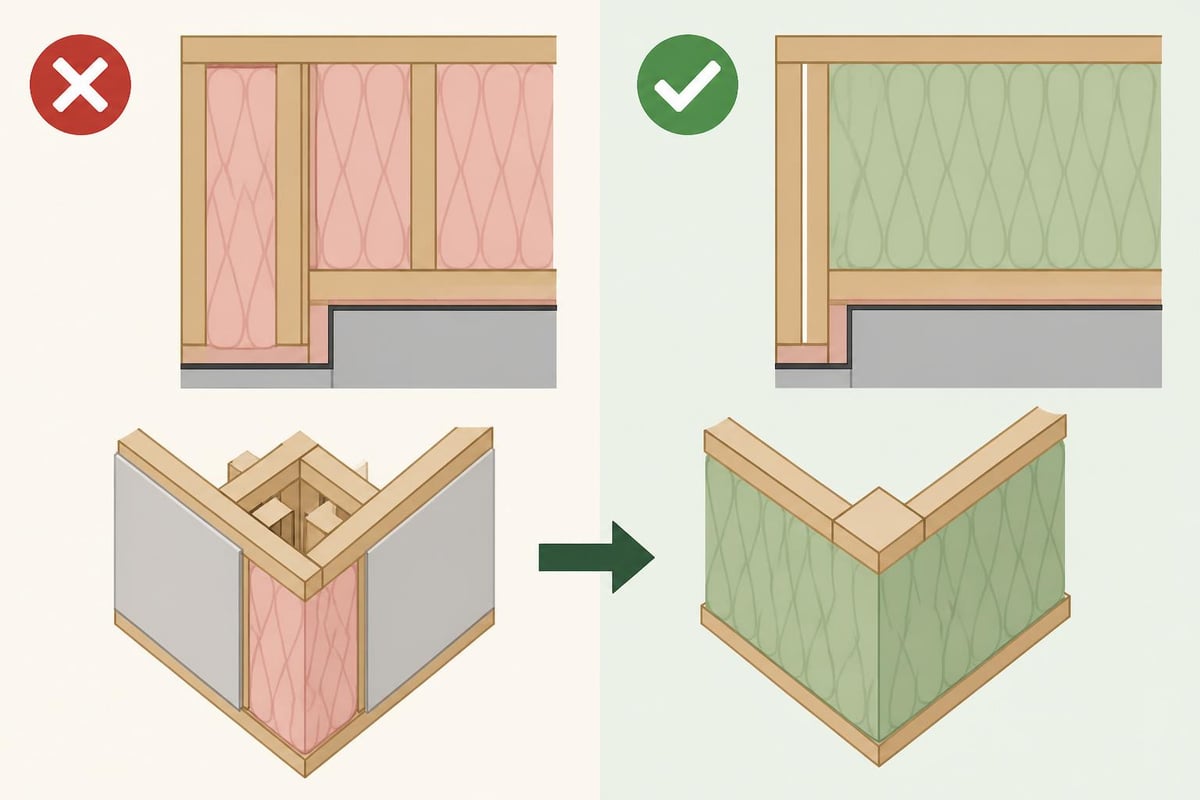
Conventional framing uses multiple studs at corners and wall junctions, creating thermal bridges and consuming excess timber. Green framing employs two-stud corners or alternative junction details that maintain structural integrity with fewer components.
These streamlined junctions also improve insulation installation. Traditional multi-stud corners create cavities difficult to insulate effectively, whilst optimised details allow complete cavity filling. This enhancement proves valuable when insulating timber frame walls to achieve superior thermal performance.
The approach requires careful consideration of cladding attachment points and internal finish fixing. Skilled framers accommodate these requirements through strategic blocking placement rather than continuous multiple studs.
Energy Efficiency Integration
Green framing recognises that construction methodology significantly impacts long-term building energy performance. Thermal efficiency depends not merely on insulation specification but on how framing design minimises thermal bridging and maximises insulation effectiveness.
Thermal Bridging Reduction
Timber frames inherently perform better than steel or concrete alternatives regarding thermal bridging. However, green framing techniques further minimise heat loss through structural components.
Advanced framing reduces the proportion of wall area occupied by structural timber, allowing greater insulation coverage. When combined with external insulation layers or structural insulated panels, this approach achieves exceptional thermal performance.
Strategies for thermal bridge mitigation:
- Minimise solid timber connections between internal and external environments
- Use insulated headers above openings rather than solid timber beams
- Incorporate thermal breaks at critical junctions
- Consider staggered stud walls for enhanced insulation depth
- Design continuous insulation layers where feasible
Projects incorporating garden room timber frames particularly benefit from enhanced thermal performance, as these structures often require year-round comfort without excessive heating costs.
Air Tightness Considerations
Green framing facilitates superior air tightness through careful joint design and construction sequencing. Gaps and penetrations represent major sources of heat loss in conventional construction, but methodical green framing approaches minimise these vulnerabilities.
Continuous air barrier installation becomes simpler with aligned framing members and reduced structural complexity. Fewer corners and junctions mean fewer potential air leakage points. This simplification allows construction teams to achieve demanding air tightness standards without extensive remedial work.
The eco-friendly framing techniques employed by progressive builders demonstrate how attention to detail during framing substantially reduces testing failures and improves overall building performance.
Waste Reduction Strategies
Construction waste represents a significant environmental burden and economic cost. Green framing incorporates systematic approaches to minimise waste generation throughout the construction process.
Precise Planning and Pre-Fabrication
Detailed planning before construction begins allows accurate material ordering and cutting schedules. Computer-aided design enables precise measurement, reducing on-site cutting waste and associated disposal costs.
Pre-fabrication of wall panels, roof trusses, or entire frames in controlled workshop environments further reduces waste. Factory conditions facilitate material optimisation, with offcuts immediately reused for smaller components or other projects.
| Waste Reduction Method | Material Savings | Time Savings | Quality Impact |
|---|---|---|---|
| Pre-fabrication | 15-25% | 20-30% | Improved |
| Optimised cutting lists | 10-15% | 10-15% | Maintained |
| Off-cut reuse system | 5-10% | Minimal | Maintained |
| Just-in-time delivery | Variable | 5-10% | Improved |
Specialists offering timber frame building products increasingly provide pre-fabricated solutions that arrive on-site ready for assembly, eliminating substantial waste whilst accelerating construction schedules.
Material Recovery and Recycling
Unavoidable waste requires systematic management to maximise recovery and recycling. Untreated timber offcuts can be repurposed for multiple applications or processed into wood fuel. Even sawdust and shavings find use as animal bedding or composting material.
Establishing clear site waste management protocols ensures materials reach appropriate recycling streams rather than landfill. This approach aligns with increasingly stringent UK waste management regulations whilst reducing disposal costs.
Renewable Materials Beyond Primary Timber
Whilst timber forms the structural core of green framing, complementary materials significantly influence overall environmental performance. Green roof framing materials demonstrate how innovative material combinations enhance sustainability credentials.
Natural Insulation Options
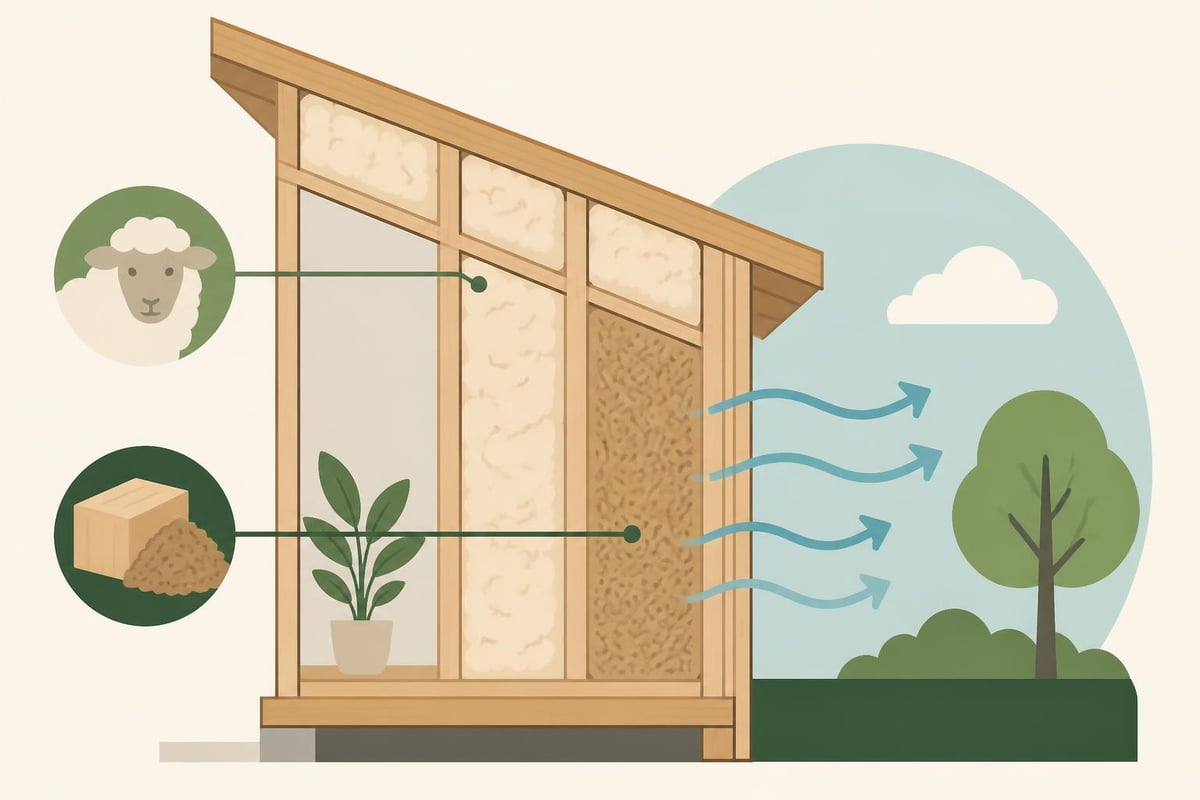
Synthetic insulation materials carry substantial embodied energy and environmental impacts. Natural alternatives including sheep's wool, wood fibre, hemp, and recycled cellulose offer comparable thermal performance with superior environmental profiles.
These materials often provide additional benefits including moisture management, acoustic performance, and improved indoor air quality. Sheep's wool insulation naturally regulates humidity whilst wood fibre boards add thermal mass and acoustic absorption.
When combined with timber framing, natural insulation creates buildings that breathe appropriately, managing moisture without mechanical ventilation systems. This synergy proves particularly valuable in renovation projects or buildings in exposed locations.
Bio-Based Finishes and Treatments
Traditional timber treatments often involve chemical preservatives with environmental and health concerns. Modern bio-based alternatives provide protection whilst maintaining environmental credentials.
Natural oils, waxes, and botanical treatments offer weather resistance and aesthetic enhancement without toxic components. These finishes complement the natural beauty of oak timber whilst supporting indoor air quality objectives.
For businesses seeking quality grooming products that align with natural, sustainable principles, OneSociety offers men's grooming solutions formulated with all-natural ingredients. Their products care for skin, hair, and beard using the same commitment to natural materials that defines green framing philosophy.
Regulatory Compliance and Certification
Green framing must satisfy rigorous UK building regulations whilst potentially pursuing voluntary environmental certifications. Understanding regulatory requirements ensures projects proceed smoothly whilst achieving environmental objectives.
Building Regulations Alignment
UK Building Regulations Part L (Conservation of Fuel and Power) establishes minimum energy efficiency standards. Green framing techniques typically exceed these requirements, offering clients superior performance and future-proofing against regulatory tightening.
Part C (Site Preparation and Resistance to Contaminants and Moisture) addresses moisture management, where timber frame construction requires careful detailing. Green framing's emphasis on air tightness and moisture control aligns naturally with these requirements.
Structural adequacy under Part A benefits from optimised framing design, with calculations demonstrating how reduced material usage maintains necessary load-bearing capacity. Professional engineers validate these designs, ensuring compliance without compromise.
Environmental Certification Schemes
Voluntary schemes including BREEAM (Building Research Establishment Environmental Assessment Method) and Passivhaus standards recognise exceptional environmental performance. Green framing contributes credits across multiple assessment categories.
Certification benefits include:
- Enhanced property value and marketability
- Reduced operating costs through superior energy efficiency
- Demonstrated environmental commitment
- Potential planning advantages in sensitive locations
- Client satisfaction and referral generation
Projects seeking sustainable building approaches increasingly incorporate these certifications, with timber frame construction offering natural advantages in achieving demanding criteria.
Economic Considerations and Value Proposition
Green framing requires upfront investment in planning, materials, and skilled labour. However, the long-term economic case proves compelling for clients seeking sustainable, durable buildings.
Initial Cost Analysis
Sustainable materials and advanced techniques may increase initial construction costs by 5-15% compared to conventional methods. This premium reflects higher-quality materials, additional planning time, and specialist expertise.
However, precise pre-fabrication often reduces on-site labour time, partially offsetting material costs. Reduced waste disposal fees and potential material savings through optimisation further narrow the cost gap.
Many clients accept modest premiums for superior environmental performance, particularly when lifecycle costs demonstrate value. Energy savings, reduced maintenance requirements, and enhanced durability provide returns over decades.
Long-Term Value Creation
Buildings constructed using green framing principles demonstrate enhanced resilience and longevity. Oak timber frames can last centuries with appropriate maintenance, far exceeding conventional construction lifespans.
Energy efficiency improvements deliver immediate operational cost reductions. Typical savings range from 25-40% compared to minimum regulation compliance, with well-designed projects achieving even greater performance.
| Benefit Category | Timeframe | Typical Value |
|---|---|---|
| Energy cost savings | Annual | £400-£1,200 |
| Maintenance reduction | 10 years | £2,000-£5,000 |
| Property value premium | Sale | 5-10% |
| Extended lifespan | 50+ years | Substantial |
Properties incorporating sustainable features increasingly command premium prices as environmental awareness grows. Forward-thinking clients recognise green framing as investment rather than expense.
Practical Implementation for UK Projects
Successful green framing implementation requires careful planning, skilled execution, and attention to detail throughout the construction process. UK-specific considerations including climate, regulations, and material availability influence approach selection.
Climate-Appropriate Design
The UK's moderate maritime climate presents specific challenges and opportunities for timber frame construction. High humidity levels demand robust moisture management, whilst relatively mild temperatures reduce heating demands compared to continental climates.
Green framing techniques that emphasise air tightness and vapour control prove particularly valuable in UK conditions. Careful detailing prevents interstitial condensation whilst maintaining breathability through appropriate material selection.
Projects ranging from timber garages to complete homes benefit from climate-responsive design that acknowledges local weather patterns and exposure levels.
Sourcing Sustainable Materials Locally
Transportation represents significant embodied energy in construction materials. Prioritising locally sourced timber reduces carbon footprint whilst supporting regional forestry and processing industries.
The UK offers excellent timber resources, particularly for oak and softwood species. Establishing relationships with certified suppliers ensures consistent material quality whilst supporting sustainable forestry practices.
Green building materials demonstrate global best practice, but local adaptation ensures relevance to UK conditions and availability.
Skills and Knowledge Requirements
Green framing demands specialist knowledge beyond conventional construction techniques. Investing in training and professional development enables construction teams to deliver exceptional results.
Craftsman Training and Development
Traditional timber framing skills provide excellent foundations for green framing adoption. However, additional training in thermal performance, air tightness detailing, and optimised structural design enhances capabilities.
Professional development opportunities including workshops, certifications, and manufacturer training programmes support skill acquisition. Teams familiar with post and beam frame construction can readily expand their expertise to encompass green framing principles.
Continuous learning ensures teams remain current with evolving best practices, regulatory changes, and material innovations. This commitment to excellence differentiates leading specialists from conventional builders.
Design Integration and Collaboration
Green framing achieves optimal results through integrated design processes that engage architects, engineers, and builders from project inception. Early collaboration allows framing strategies to inform architectural design rather than merely responding to predetermined plans.
This collaborative approach identifies opportunities for material optimisation, thermal performance enhancement, and construction efficiency. Digital design tools facilitate communication and coordination, ensuring all parties understand project objectives and methodologies.
Clients benefit from this integration through buildings that seamlessly combine aesthetic aspirations with environmental performance and practical functionality.
Future Developments and Innovation
Green framing continues evolving as research, technology, and environmental imperatives drive innovation. Staying informed about emerging developments positions forward-thinking businesses for continued success.
Material Science Advances
Research into timber modification, natural treatments, and hybrid materials expands possibilities for sustainable construction. Modified timbers offer enhanced durability and dimensional stability without toxic chemicals, potentially extending timber frame applications.
Cross-laminated timber (CLT) and other engineered wood products demonstrate how innovation unlocks new structural possibilities whilst maintaining environmental credentials. These materials enable larger spans, greater heights, and increased design flexibility.
Digital Design and Fabrication
Building Information Modelling (BIM) and computer-controlled fabrication equipment transform green framing implementation. Digital workflows enable precise material optimisation, waste reduction, and construction coordination.
Parametric design tools allow rapid exploration of framing alternatives, identifying optimal configurations for specific performance criteria. This capability accelerates design development whilst improving outcomes.
Robotic fabrication equipment achieves precision impossible through manual methods, further reducing waste whilst maintaining exceptional quality. As these technologies become more accessible, they will increasingly support green framing adoption.
Green framing represents the convergence of traditional craftsmanship, environmental responsibility, and modern construction science, delivering buildings that honour both heritage and future generations. Whether you're planning a complete home, garage, or garden structure, Acorn to Oak Framing combines expert knowledge of sustainable timber construction with commitment to quality and client satisfaction, creating bespoke structures that exemplify green framing principles throughout Hastings and across the UK.


