
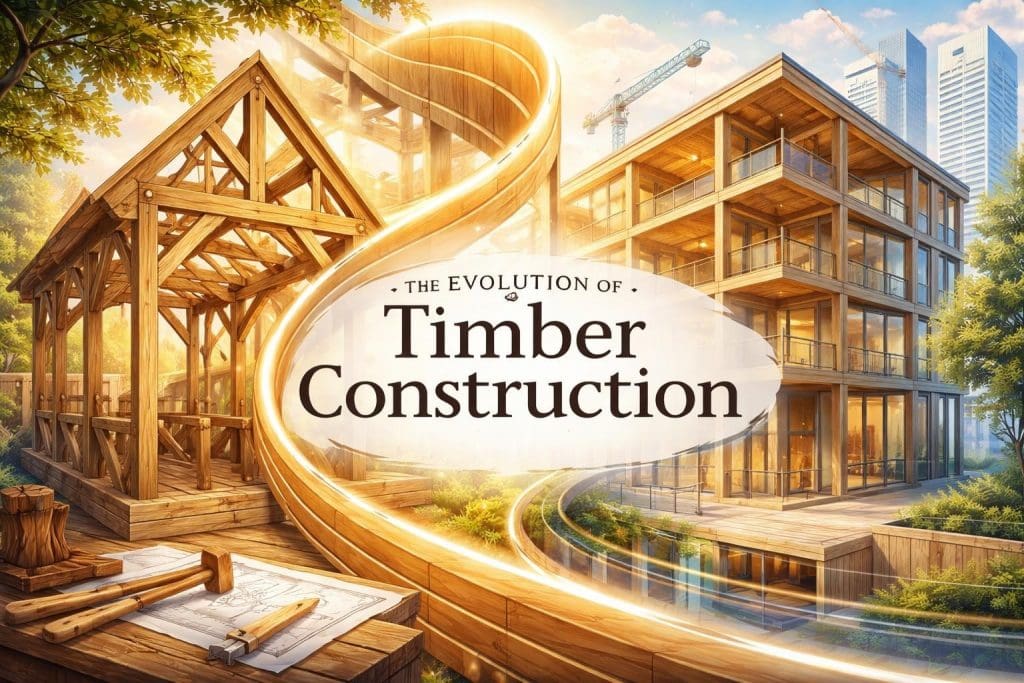
Building with timber represents one of the most sustainable and versatile approaches to construction in 2026, combining centuries-old craftsmanship with cutting-edge engineering. As environmental concerns drive the construction industry towards renewable materials, timber has emerged as the material of choice for projects ranging from bespoke garden structures to multi-storey residential developments. The natural beauty, structural integrity, and carbon-sequestering properties of timber make it an exceptional choice for discerning property owners seeking quality and sustainability in equal measure.
The Fundamentals of Timber Construction
Understanding the core principles of building with timber begins with recognising the material's unique characteristics. Timber offers an exceptional strength-to-weight ratio, making it suitable for structures that require both durability and flexibility. Unlike concrete or steel, timber continues to sequester carbon throughout its lifespan, actively contributing to environmental sustainability.
Key advantages of timber construction include:
- Natural insulation properties that reduce energy consumption
- Rapid construction times compared to traditional masonry
- Flexibility in design and architectural expression
- Minimal environmental impact during extraction and processing
- Aesthetic warmth and character that enhances property value
The choice between different timber species significantly impacts project outcomes. Oak, particularly when sustainably sourced, provides exceptional durability and resistance to decay. Softwoods offer cost-effectiveness for certain applications, whilst engineered timber products expand structural possibilities beyond traditional limitations.
Traditional versus Modern Timber Framing
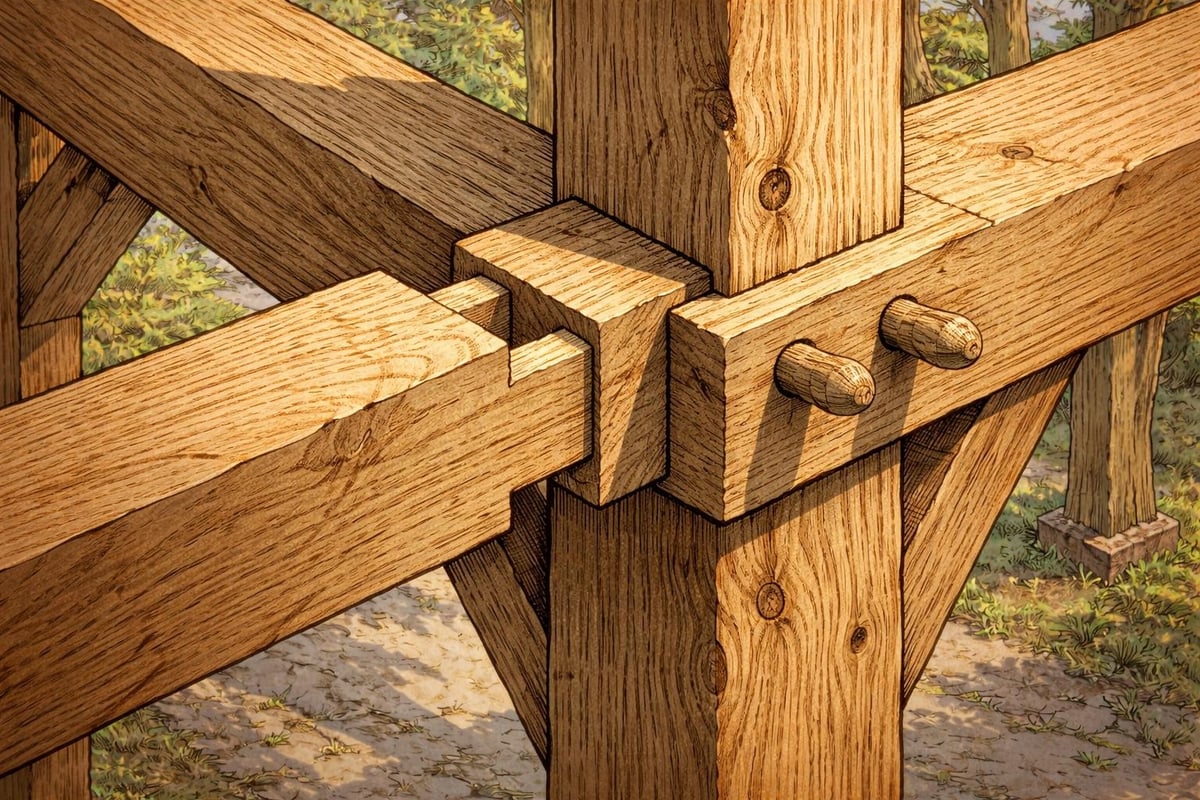
Traditional timber framing employs time-honoured joinery techniques, including mortise and tenon joints secured with oak pegs. This approach creates structures of remarkable longevity, as evidenced by medieval buildings still standing throughout Britain. Modern methods incorporate these traditional principles whilst integrating contemporary engineering standards and materials science.
Contemporary timber construction extends beyond conventional framing to include cross-laminated timber (CLT), glulam beams, and engineered wood products. These innovations enable tall timber buildings like the pioneering Stadthaus in London, demonstrating timber's potential in high-density urban environments.
Design Considerations for Timber Structures
Planning any timber structure requires careful consideration of multiple factors that influence both aesthetics and functionality. Building with timber demands respect for the material's properties whilst maximising its inherent strengths. Proper design ensures structures meet regulatory requirements whilst delivering the visual impact clients desire.
Structural Design Parameters
Timber frame design begins with understanding load distribution and structural behaviour. Engineers calculate beam sizes, joint configurations, and bracing requirements based on anticipated loads, span distances, and environmental factors. The Timber Construction Manual provides comprehensive technical guidance for professional designers and builders.
| Design Element | Consideration | Impact on Project |
|---|---|---|
| Timber Species | Strength, durability, appearance | Structural capacity, longevity, cost |
| Joint Design | Traditional vs modern connections | Aesthetic character, structural performance |
| Bay Configuration | Number and size of structural bays | Usable space, material efficiency |
| Roof Design | Pitch, covering, drainage | Weather protection, visual appeal |
| Foundation Type | Ground conditions, load transfer | Stability, moisture management |
Structural bays form the fundamental building blocks of timber frames. A single-bay structure provides compact functionality, whilst multi-bay configurations offer expanded space for workshops, garages, or entertaining areas.
Architectural Integration
Building with timber allows seamless integration with existing architecture or creation of standalone features. The material's versatility supports diverse architectural styles, from traditional barn conversions to contemporary minimalist designs. Oak framing particularly complements historic properties whilst providing striking contrast in modern settings.
Environmental context shapes design decisions significantly. Orientation affects natural light, weather exposure, and thermal performance. Thoughtful placement maximises solar gain during winter months whilst providing shade in summer. Integration with landscaping creates harmonious outdoor spaces that enhance property enjoyment.
Regulatory Compliance and Building Standards
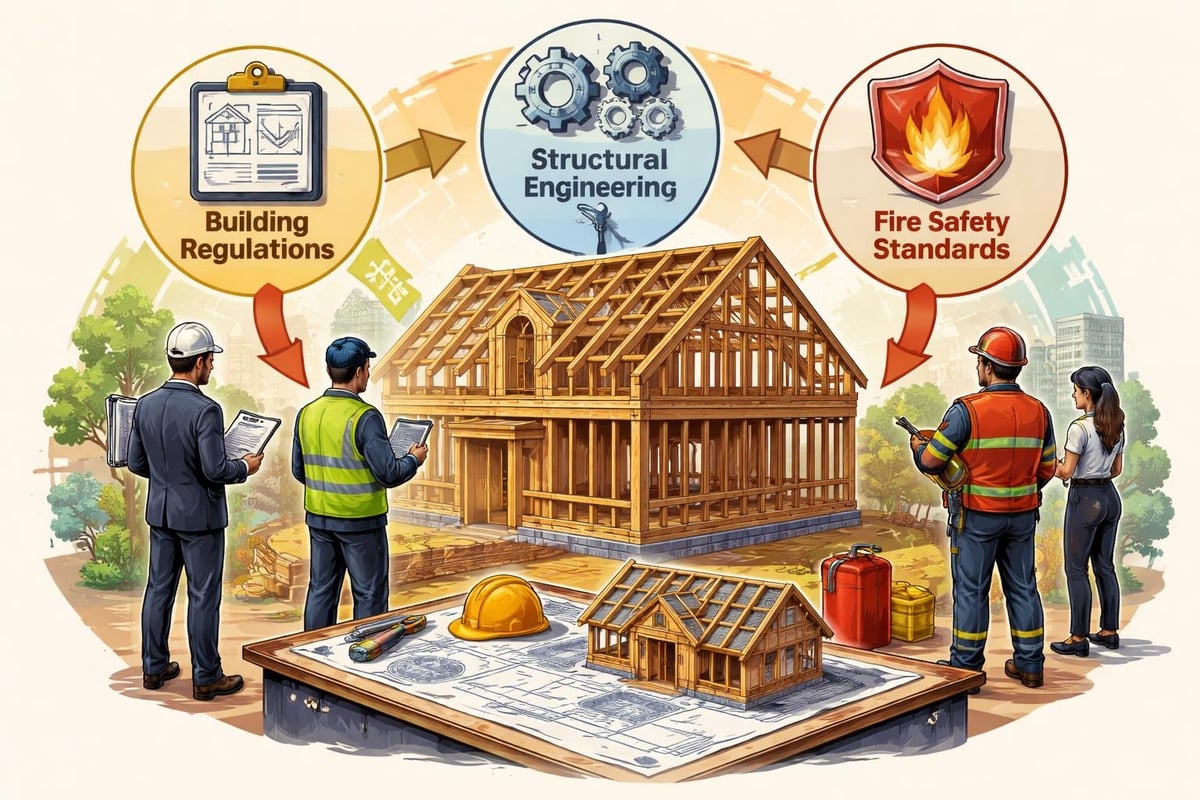
UK building regulations establish stringent requirements for all construction projects. Building with timber necessitates compliance with structural standards, fire safety provisions, and thermal performance requirements. Professional timber frame companies navigate these complexities whilst delivering structures that exceed minimum standards.
Fire Safety in Timber Construction
Modern timber construction incorporates sophisticated fire safety measures. Contrary to common misconceptions, engineered timber performs predictably in fire conditions, charring at measurable rates that engineers factor into design calculations. Resources like Timber Fire Safety provide evidence-based guidance for safe timber building practices.
Fire resistance ratings depend on timber dimensions, protective treatments, and overall building design. Larger timber sections offer inherent fire resistance through char layer formation, which insulates the inner wood and maintains structural integrity. Contemporary projects like Brock Commons Tallwood House demonstrate that properly designed timber buildings meet the most demanding fire safety standards.
Fire safety measures in timber construction:
- Adequate timber section sizes for structural fire resistance
- Compartmentation to prevent fire spread
- Appropriate surface treatments and finishes
- Compliant escape routes and detection systems
- Professional design certification and approval
Thermal Performance and Energy Efficiency
Building regulations mandate specific U-values for building elements, driving energy-efficient design. Timber frames accommodate excellent insulation systems whilst maintaining structural integrity. The natural cellular structure of timber provides inherent insulation properties that complement modern insulation materials.
Thermal bridging, a common issue in steel or concrete construction, minimises in timber frames. This characteristic enhances overall building performance and reduces heating costs. Combined with appropriate glazing and ventilation strategies, timber structures achieve exceptional energy efficiency ratings.
Sustainable Timber Sourcing and Environmental Impact
Environmental responsibility has become paramount in construction decision-making. Building with timber offers inherent sustainability advantages when combined with responsible sourcing practices. The construction industry increasingly recognises timber's role in reducing carbon emissions and supporting circular economy principles.
Carbon Sequestration and Life Cycle Analysis
Trees absorb atmospheric carbon dioxide throughout their growth, converting it into cellulose that forms wood structure. This carbon remains sequestered within timber throughout the building's lifespan, effectively removing it from the atmospheric carbon cycle. A typical oak frame structure stores several tonnes of carbon dioxide equivalent.
Life cycle analysis comparing timber with alternative materials reveals significant environmental advantages. Timber production requires substantially less energy than steel or concrete manufacturing. Processing timber generates minimal waste, with offcuts and sawdust finding valuable applications in biomass energy, animal bedding, or seasoned oak offcuts for woodworking projects.
Responsible Forestry Practices
Sustainable forestry ensures timber availability for future generations whilst maintaining ecological balance. Certification schemes like FSC (Forest Stewardship Council) and PEFC (Programme for the Endorsement of Forest Certification) verify responsible forest management practices. The Wood Protection Association advocates for sustainable building with wood across all construction sectors.
British oak, when sourced from managed woodlands, represents particularly sustainable timber choice. Selective harvesting encourages forest regeneration whilst maintaining habitat diversity. Local sourcing reduces transportation emissions and supports regional economies, creating additional environmental benefits beyond the material itself.
Construction Methods and Installation Processes
Building with timber encompasses various construction approaches, each suited to different project requirements and site conditions. Understanding these methods enables informed decision-making and realistic project planning.
Post-and-Beam Construction
Post-and-beam represents the traditional foundation of timber framing, utilising vertical posts supporting horizontal beams. This method creates open, flexible interior spaces without load-bearing walls. The structural clarity of post-and-beam design contributes to its enduring aesthetic appeal and functional versatility.
Modern interpretations of post-and-beam design incorporate engineered connections and contemporary materials whilst preserving traditional visual character. This hybrid approach delivers both authenticity and performance, satisfying building regulations without compromising architectural integrity.
Prefabrication and On-Site Assembly
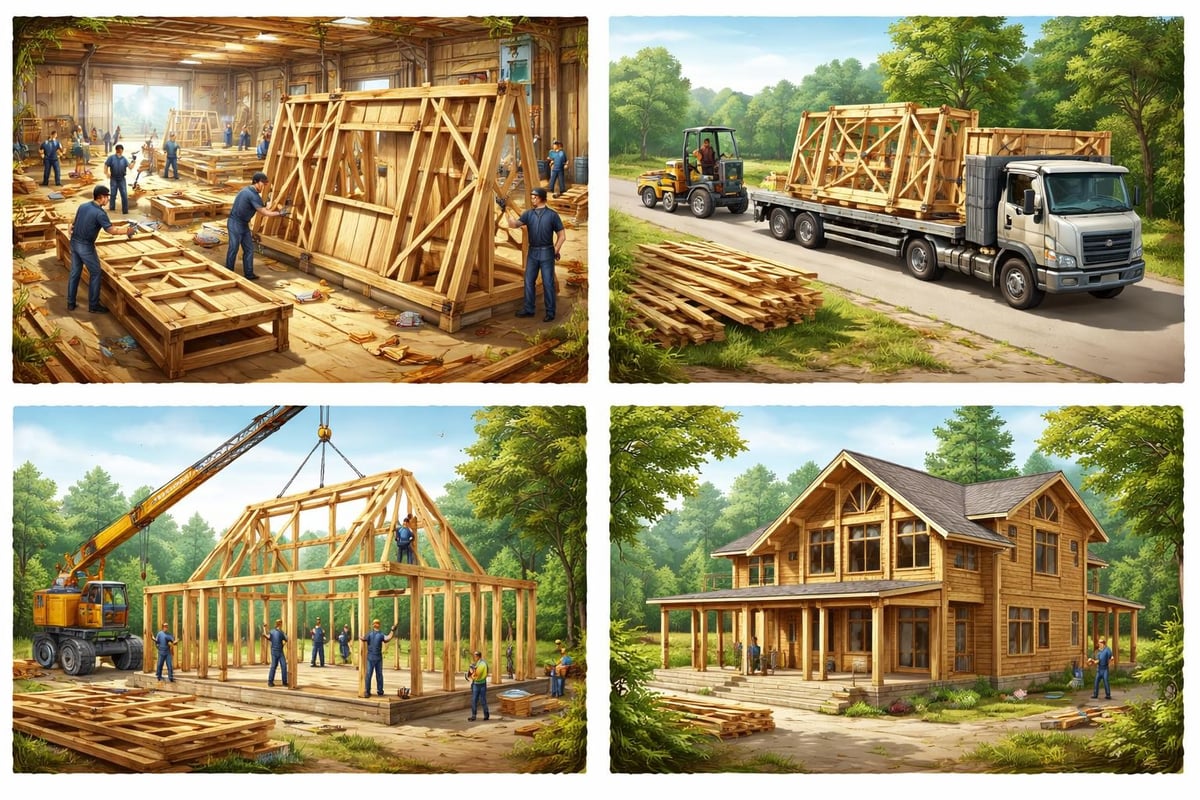
Contemporary timber construction increasingly employs prefabrication techniques. Frames manufactured in controlled workshop environments ensure precision, quality control, and efficient material usage. This approach reduces on-site construction time and minimises weather-related delays.
Prefabrication advantages:
- Enhanced accuracy through workshop-based manufacturing
- Reduced construction timeline and site disruption
- Quality control in optimal working conditions
- Efficient material usage with minimal waste
- Protection of timber during critical assembly phases
On-site assembly requires skilled craftspeople and appropriate equipment. Professional installation ensures structural integrity, weatherproofing, and compliance with design specifications. The transformation from individual timber components to completed frame typically occurs within days rather than weeks.
Project Types and Applications
The versatility of building with timber extends across numerous project categories. From garden rooms to substantial residential properties, timber framing adapts to diverse functional requirements and aesthetic preferences.
Residential Timber Frame Buildings
Full timber frame houses combine structural efficiency with design flexibility. Modern timber frame construction methods deliver energy-efficient homes with distinctive character. The structural system accommodates various external finishes, from traditional render to contemporary cladding systems.
Extensions represent another popular application, particularly for properties seeking sympathetic additions. A timber extension can complement existing architecture whilst providing modern living space. The relatively lightweight nature of timber frames often permits construction where heavier materials would require substantial foundation work.
Garages and Outbuildings
Oak-framed garages provide secure vehicle storage with architectural distinction. These structures range from single-bay designs for individual vehicles to substantial four-bay buildings accommodating multiple vehicles, workshop space, or storage facilities.
Outbuildings serve diverse purposes beyond vehicle storage. Garden offices, hobby workshops, and entertainment spaces benefit from timber construction's natural warmth and acoustic properties. Raised eaves buildings provide enhanced headroom for taller requirements.
| Building Type | Typical Bay Configuration | Common Applications |
|---|---|---|
| Garden Room | 1-2 bay | Home office, studio, guest accommodation |
| Garage | 2-3 bay | Vehicle storage, workshop, hobby space |
| Barn | 3-5 bay | Storage, agricultural use, conversion potential |
| Pavilion | 2-4 bay | Entertaining, poolside structure, garden feature |
Specialist Structures
Building with timber extends to specialist applications including gazebos and pergolas that enhance outdoor living spaces. These structures provide architectural focal points whilst offering functional shelter and vertical growing opportunities for climbing plants.
Commercial applications demonstrate timber's professional credentials. Farm buildings, retail spaces, and hospitality venues increasingly specify timber for its environmental credentials and aesthetic appeal. Projects like Carbon12 showcase timber's viability in urban commercial contexts.
Maintenance and Longevity
Properly constructed and maintained timber structures provide service lives measured in centuries. Understanding maintenance requirements ensures timber buildings preserve their beauty and functionality throughout extended operational periods.
Protective Treatments and Finishes
Oak's natural durability derives from high tannin content that resists decay and insect attack. Nonetheless, protective treatments enhance performance, particularly for timber exposed to sustained moisture. Modern treatments balance preservation with environmental responsibility, avoiding historic toxic formulations.
Untreated oak weathers naturally to attractive silver-grey patina without compromising structural integrity. This aesthetic appeals to many property owners, though others prefer maintaining original honey tones through regular oil application. The choice between natural weathering and maintained finish remains largely aesthetic rather than structural.
Routine Inspection and Care
Annual inspections identify potential issues before they compromise structural performance. Key inspection points include:
- Joint integrity and movement
- Moisture ingress around connections
- Ground clearance and damp-proof measures
- Roof covering condition and drainage
- General timber condition and surface treatment
Professional assessment every five years provides expert evaluation of structural condition. Specialist timber framers identify subtle indicators that untrained observers might overlook, ensuring early intervention when necessary.
Cost Considerations and Value
Investment in building with timber reflects multiple value dimensions beyond initial construction costs. Understanding these factors enables informed financial planning and realistic budget development.
Initial Construction Investment
Timber frame costs vary according to project complexity, timber species, design intricacy, and finishing specifications. Bespoke designs command premium pricing reflecting specialised design and manufacturing requirements. Standardised configurations from ranges like two-bay or three-bay structures offer more accessible entry points.
Comparative analysis against alternative construction methods reveals timber's competitive positioning. Whilst premium hardwood frames may exceed basic masonry construction costs, they deliver superior aesthetics, faster installation, and enhanced environmental performance. Life cycle costing frequently favours timber when considering operational energy costs and maintenance requirements.
Long-Term Value Creation
Property value enhancement represents significant return on timber building investment. Distinctive architectural features like oak framing create memorable visual impact that differentiates properties in competitive markets. Energy efficiency reduces operational costs whilst appealing to environmentally conscious purchasers.
Adaptability contributes to long-term value retention. Timber structures accommodate modifications and upgrades more readily than rigid masonry construction. This flexibility ensures buildings evolve with changing requirements rather than becoming obsolete.
Innovation and Future Developments
Building with timber continues evolving through materials innovation, engineering advancement, and architectural creativity. Contemporary developments position timber at the forefront of sustainable construction's future.
Engineered Timber Products
Cross-laminated timber (CLT) and glued-laminated timber (glulam) expand structural possibilities beyond solid timber capabilities. These engineered products enable longer spans, greater heights, and enhanced dimensional stability. The Framework building project exemplifies engineered timber's potential in substantial urban developments.
Research continues developing enhanced timber products with improved performance characteristics. Modified timber treatments increase durability without chemical preservatives. Hybrid systems combining timber with other materials optimise structural performance whilst maximising renewable material content.
Architectural Innovation
Contemporary architects push timber construction boundaries through innovative design approaches. Practices like Patkau Architects demonstrate timber's capacity for expressive, technically sophisticated architecture. Digital design tools enable complex geometries and precise prefabrication previously impossible with traditional methods.
Seismic engineering developments including Pres-Lam technology enhance timber's performance in earthquake-prone regions. These innovations prove timber's viability across diverse geographical and geological contexts, expanding its global construction applications.
Choosing Professional Timber Frame Specialists
Selecting appropriate timber frame specialists fundamentally influences project success. Professional expertise ensures regulatory compliance, structural integrity, and aesthetic excellence throughout the construction process.
Evaluating Expertise and Experience
Established timber framing companies demonstrate their capabilities through portfolio evidence, client testimonials, and technical qualifications. Specialist knowledge of traditional timber buildings combined with contemporary building standards ensures optimal outcomes.
Professional accreditations and insurance provisions protect clients whilst confirming technical competence. Membership in relevant trade associations indicates commitment to industry standards and ongoing professional development.
Design Consultation and Project Development
Collaborative design processes translate client visions into buildable realities. Initial consultations establish project parameters, budget frameworks, and timeline expectations. Professional designers balance aesthetic aspirations with practical constraints, regulatory requirements, and site conditions.
Detailed proposals specify materials, construction methods, and finishing options. Transparent pricing enables informed decision-making without unexpected cost variations during construction. Professional project management coordinates trades, deliveries, and inspections throughout the build programme.
Building with timber offers property owners an exceptional combination of sustainability, beauty, and structural performance that few construction methods can match. From traditional oak framing techniques to contemporary engineered timber systems, this versatile material continues demonstrating its relevance in modern construction whilst honouring centuries of craftsmanship heritage. Whether you're planning a garden structure, garage, or substantial residential project, Acorn to Oak Framing brings specialist expertise and dedication to quality that transforms timber construction visions into enduring reality.


