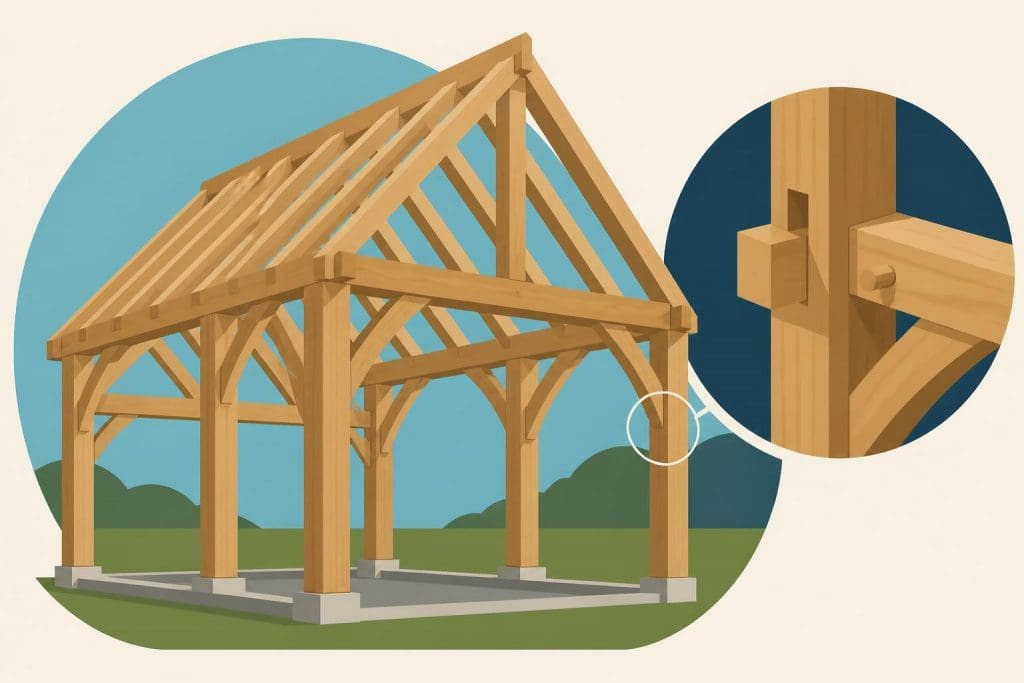
The art of timber frame build construction represents one of the most enduring and aesthetically pleasing methods of creating lasting structures. From medieval barns to contemporary homes, the principles of framing have evolved whilst maintaining the fundamental integrity that makes timber construction both practical and beautiful. Understanding the intricacies of a proper frame build is essential whether you're commissioning a bespoke oak structure, extending your property, or embarking on a self-build project. This comprehensive guide explores the technical, practical, and creative aspects of frame build construction, with particular focus on traditional timber framing techniques that have stood the test of time.
Understanding Frame Build Fundamentals
A frame build forms the skeletal structure of any building, providing the essential support that determines both structural integrity and spatial arrangement. Unlike solid wall construction, framed structures in architecture rely on vertical and horizontal members working together to distribute loads efficiently throughout the building.
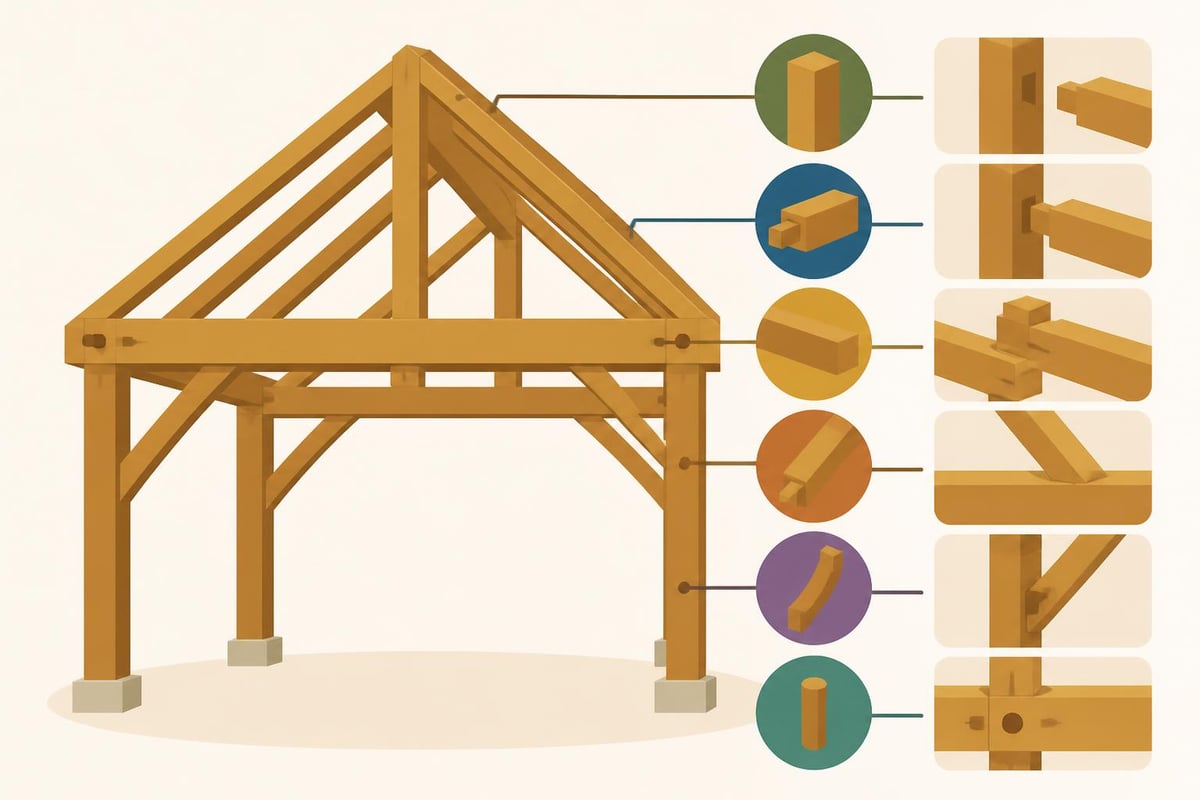
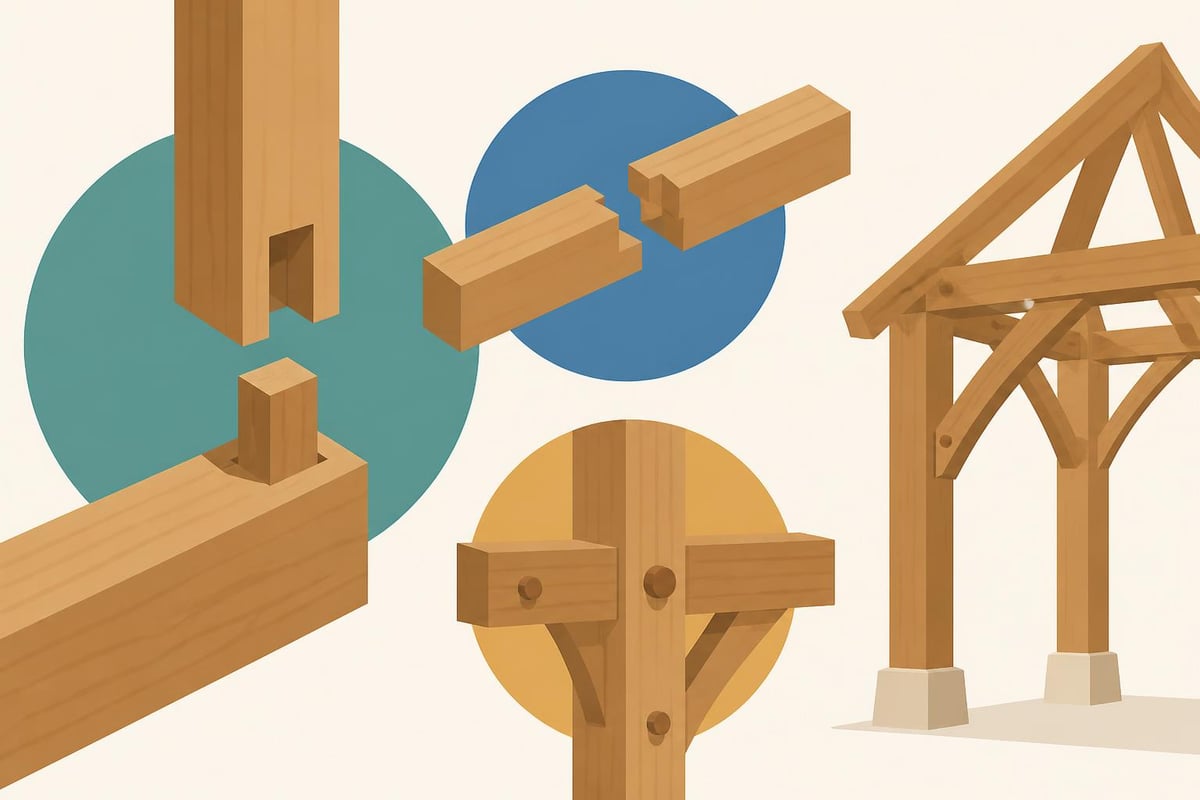
The primary components of a timber frame build include posts, beams, plates, rafters, and braces. Each element serves a specific structural purpose, with posts carrying vertical loads, beams spanning horizontal distances, and braces providing diagonal reinforcement against lateral forces. Traditional oak framing utilises mortise and tenon joints secured with oak pegs, creating connections that actually strengthen over time as the timber seasons and tightens.
Load Distribution in Timber Frames
Understanding how loads transfer through a frame build is crucial for structural stability. Dead loads from the building's own weight combine with live loads from occupants and contents, whilst wind and snow create additional stresses that the frame must accommodate.
In traditional oak framing, loads follow a clear path from roof to foundation. Rafters transfer roof loads to purlins, which bear onto principal rafters. These direct forces into tie beams or collar beams, which span between principal posts. The posts then carry all accumulated loads down to the ground beams and ultimately to the foundations.
Key load considerations include:
- Roof covering weight and anticipated snow loads
- Floor loading capacities for intended use
- Wind exposure based on building location and height
- Seismic requirements in certain UK regions
- Point loads from heavy equipment or features
Materials Selection for Frame Build Projects
Choosing the right timber species profoundly impacts the longevity, appearance, and performance of your frame build. Oak remains the premium choice for traditional timber framing, offering exceptional durability, strength, and aesthetic character that improves with age.
Green oak, harvested and used whilst still containing natural moisture, is preferred for traditional frames. As it seasons in situ, the timber shrinks and the joints tighten, creating incredibly strong connections. The natural movement of green oak must be accommodated in the design, particularly where frames interface with non-timber elements.
| Timber Species | Durability Class | Typical Uses | Key Characteristics |
|---|---|---|---|
| English Oak | 2 (Durable) | Primary frame members | Exceptional strength, beautiful grain, improves with age |
| European Oak | 2 (Durable) | All structural elements | Similar to English oak, more readily available |
| Douglas Fir | 3-4 (Moderately durable) | Secondary framing, cladding | Straight grain, good strength-to-weight ratio |
| Sweet Chestnut | 2 (Durable) | Posts, beams | Similar properties to oak, lower tannin content |
| Larch | 3-4 (Moderately durable) | External cladding, boarding | Good weather resistance, attractive colour |
Sustainable sourcing has become increasingly important in modern frame build projects. Responsibly managed forests ensure timber availability for future generations whilst maintaining biodiversity and carbon sequestration benefits. Timber construction offers significant environmental advantages over concrete or steel alternatives.
Traditional Versus Modern Frame Build Techniques
The evolution of frame build methodology has created diverse approaches suited to different project requirements and aesthetic preferences. Traditional timber framing emphasises exposed structural elements, hand-cut joinery, and oak pegs, creating spaces with distinctive character and warmth.
Modern timber frame construction, often referred to as closed panel or platform frame, conceals the structural timber within insulated panels. This approach, detailed in Build It magazine’s timber frame guide, offers rapid construction and excellent thermal performance but lacks the visual drama of exposed oak.
Hybrid Approaches
Contemporary projects increasingly combine traditional and modern techniques, maximising the benefits of each approach. A typical hybrid frame build might feature:
- Exposed oak principal frame defining main living spaces
- Concealed modern stud framing for partition walls
- Structural insulated panels (SIPs) for external walls
- Traditional oak roof trusses with modern insulation systems
- Engineered timber for long spans where solid oak isn't practical
This synthesis allows designers to showcase beautiful timber work whilst meeting stringent 2026 building regulations for thermal performance and airtightness.
The Frame Build Design Process
Successful frame build projects begin with thorough planning and design that considers structural requirements, aesthetic goals, and practical constraints. The design phase typically progresses through several distinct stages, each refining the concept whilst addressing technical challenges.
Initial concept designs establish overall form, scale, and spatial relationships. These early sketches explore how the frame build will sit within its context, respond to views and solar orientation, and create the desired atmosphere. For traditional oak frames, the bay system provides a natural planning module, with structural bays typically ranging from three to five metres.
Design development addresses:
- Detailed structural calculations and member sizing
- Joinery design for all connections
- Integration of services (electrical, plumbing, heating)
- Wall build-ups and insulation strategies
- Window and door openings and their structural support
- Roof geometry and weatherproofing details
Working drawings provide the detailed information needed for fabrication and construction. These include numbered frame elevations, section details, joinery drawings, and assembly sequences. Traditional timber framers often create full-scale joinery drawings, called "rods," ensuring perfect fit during assembly.
Frame Build Construction Methods
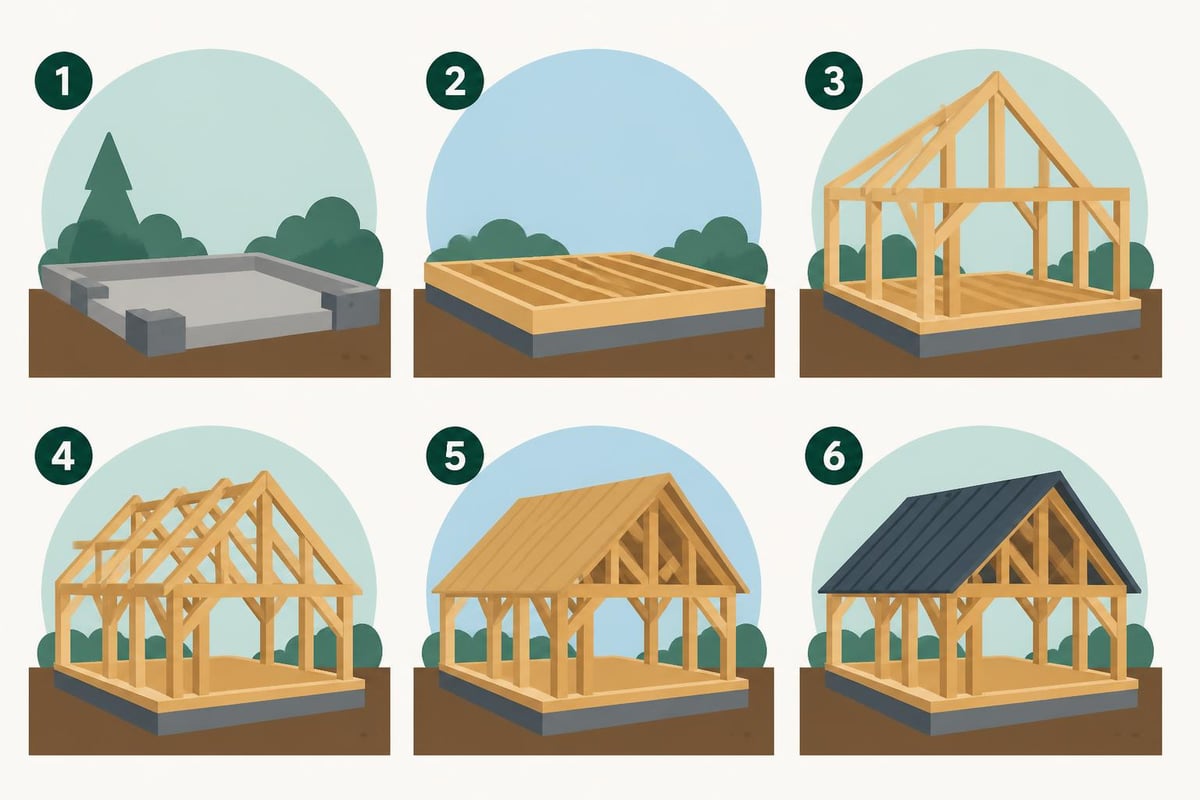
The physical construction of a timber frame build follows a logical sequence, though exact methods vary depending on frame type and site conditions. Traditional oak frames are typically cut and trial-assembled in the workshop before being transported to site for final erection.
Pre-fabrication offers significant advantages in quality control and efficiency. Each timber is carefully selected, marked, cut, and fitted under controlled conditions. Complex joints can be executed with precision, and any issues resolved before site work begins. This approach minimises weather delays and reduces on-site construction time dramatically.
Site Preparation and Foundations
Proper foundations are critical for any frame build, providing a level, stable platform that prevents differential settlement. Traditional oak frames often sit on oak ground beams supported by brick or stone plinths, creating an elegant transition between foundation and frame.
Modern building regulations require damp-proof courses and effective ground moisture barriers. The foundation design must accommodate the specific loading characteristics of timber framing, which concentrates loads at post positions rather than distributing them continuously as masonry construction does.
Frame Raising and Assembly
The frame raising represents the most dramatic phase of any timber frame build project. Properly prepared frames can be erected remarkably quickly, transforming a bare foundation into a recognisable building shell within days.
Traditional raising methods employ gin poles, block and tackle, and considerable physical effort. Modern projects typically use mobile cranes, dramatically reducing labour requirements and safety risks. Regardless of method, careful planning and sequencing ensure efficient assembly.
Typical raising sequence:
- Position and secure ground beams to foundations
- Erect end frames (gable or hip ends)
- Install tie beams connecting end frames
- Raise intermediate frames into position
- Install longitudinal members (purlins, wall plates)
- Brace frame temporarily until permanent bracing installed
- Install roof structure and temporary weatherproofing
The satisfaction of seeing a frame build rise from foundation to full height in a single day creates memorable moments for clients and framers alike. When exploring oak frame buildings, many homeowners are drawn to traditional construction partly for this transformative experience.
Weatherproofing and Enclosure
Once the structural frame build stands complete, attention turns to creating a weathertight envelope. The approach varies significantly between exposed and concealed frame construction, each presenting unique challenges and opportunities.
For traditional exposed frames, the enclosure system must work around the oak structure whilst maintaining thermal continuity and weather resistance. Common approaches include:
- External insulation: Insulation boards applied to the external face of structural panels, with render or cladding finish
- Cavity walls: Brick or blockwork outer leaf with insulation in the cavity between leaf and frame
- Insulated panels: Prefabricated insulated panels spanning between frame members
Insulating timber frame walls requires careful detailing to prevent thermal bridges whilst allowing the oak to remain visible internally. Vapour control layers, airtightness membranes, and ventilation strategies must all work together seamlessly.
| Enclosure Method | Thermal Performance | Visual Impact | Cost | Construction Speed |
|---|---|---|---|---|
| External Insulation | Excellent (U-value 0.15-0.18) | Hides external frame | Medium-High | Medium |
| Cavity Construction | Good (U-value 0.18-0.25) | Traditional appearance | Medium | Slower |
| SIPs | Excellent (U-value 0.13-0.16) | Modern, clean lines | High | Very fast |
| Breathable Hemp/Lime | Good (U-value 0.20-0.28) | Natural aesthetic | Medium-High | Slower |
Technical Considerations in Modern Frame Build
Contemporary frame build projects must navigate increasingly stringent building regulations covering thermal performance, fire safety, structural adequacy, and accessibility. The 2026 Future Homes Standard requires new buildings to produce 75-80% less carbon emissions than current standards, pushing thermal performance requirements even higher.
Achieving these standards within traditional frame build construction demands sophisticated integration of modern building science with time-honoured techniques. Procore’s overview of wood frame construction discusses many of these contemporary challenges and solutions.
Thermal Bridging and Airtightness
Oak frame members penetrating the thermal envelope create thermal bridges that can significantly impact overall building performance. Careful detailing minimises these effects through:
- External insulation continuity wrapping the entire frame
- Thermal breaks at critical junctions using low-conductivity materials
- Airtightness tapes and membranes sealing all penetrations
- Service void strategies keeping pipes and cables within the thermal envelope
Testing completed buildings with blower door pressurisation identifies air leakage paths, allowing remedial work before final finishes. Well-detailed timber frame builds routinely achieve air permeability below 3 m³/(h.m²) at 50 Pa, exceeding building regulation requirements.
Frame Build Applications and Typologies
The versatility of timber frame build construction enables its application across diverse building types, from intimate garden room timber frames to substantial residential and commercial structures. Each typology presents specific design challenges and opportunities.
Residential applications include:
- Complete houses from cottages to substantial family homes
- Extensions adding space whilst complementing existing buildings
- Annexes providing independent living accommodation
- Garden rooms creating flexible outdoor-connected spaces
Non-residential uses encompass:
- Garages and workshops combining storage with workspace
- Agricultural buildings from stables to equipment stores
- Commercial structures including offices and retail spaces
- Community buildings such as village halls and pavilions
The inherent flexibility of frame build construction allows designs to evolve with changing needs. Additional bays can be added, openings modified, and functions reimagined more readily than with solid wall construction.
Maintaining Your Frame Build Structure
Properly constructed and maintained timber frame builds provide centuries of service, with numerous examples surviving from medieval times. Understanding the specific maintenance requirements ensures your investment continues performing optimally whilst developing the rich patina that makes aged oak so desirable.
Regular inspections identify potential issues before they develop into significant problems. Annual checks should examine:
- Roof covering integrity and gutter performance
- Timber condition, particularly at ground level and exposed locations
- Joint tightness and structural movement
- Finish condition on external cladding or render
- Insect activity, though oak's natural durability resists most pests
External oak naturally weathers to an attractive silver-grey colour unless treated with preservative oils or stains. This weathering is purely aesthetic and doesn't compromise structural integrity. Many clients prefer the natural aged appearance, whilst others maintain the golden tones of fresh oak through regular oil application.
Cost Factors in Frame Build Projects
Understanding the investment required for quality frame build construction helps clients make informed decisions aligned with their budgets and aspirations. Costs vary substantially based on design complexity, timber species, size, and finish specifications.
Traditional oak frame builds command premium pricing reflecting the material costs, skilled craftsmanship, and time-intensive processes involved. However, the longevity, beauty, and environmental credentials justify the investment for many clients seeking distinctive, lasting structures.
Primary cost drivers include:
- Timber species and quality (green oak, air-dried, kiln-dried)
- Design complexity and joint detailing
- Frame size and bay configuration
- Enclosure system and insulation specification
- Roofing materials and complexity
- Internal finishes and service integration
- Site access and foundation requirements
For those seeking to maintain their frame build structure's appearance alongside personal grooming, One Society offers all-natural men's grooming products that care for skin, hair, and beards with the same attention to quality and natural materials that defines traditional timber framing. Their product range provides modern men with effective, natural solutions for comprehensive grooming needs.
Planning Permissions and Building Regulations
Navigating the regulatory landscape forms an essential aspect of any frame build project. Planning permission requirements depend on building size, location, and use, whilst building regulations apply to virtually all new structures and major alterations.
Permitted development rights allow certain structures without formal planning permission, though conditions and limitations apply. Understanding framing construction requirements helps assess whether your project qualifies for these simplified procedures.
Building regulations cover structural stability, fire safety, thermal performance, ventilation, drainage, and accessibility. Timber frame builds must demonstrate compliance through calculations, specifications, and on-site inspections. Working with experienced designers ensures your frame build meets all requirements whilst achieving your vision.
Listed Buildings and Conservation Areas
Projects involving listed buildings or properties within conservation areas face additional scrutiny, with planning authorities seeking to preserve historic character and fabric. Ironically, traditional timber frame build techniques often provide the most sympathetic approach to extending or repairing historic structures.
Matching traditional joinery methods, timber species, and construction techniques demonstrates respect for original craftsmanship whilst creating new spaces that harmonise with the historic context. Conservation officers increasingly recognise properly executed traditional framing as best practice for sensitive interventions.
Choosing Your Frame Build Partner
Selecting the right craftsmen to execute your frame build project profoundly influences the outcome. Experience, skill, attention to detail, and communication all contribute to successful collaborations that deliver exceptional results.
When evaluating potential partners, consider:
- Portfolio of completed projects demonstrating relevant experience
- Workshop facilities and equipment quality
- Team qualifications and traditional craft skills
- Design capabilities and technical knowledge
- Communication style and responsiveness
- References from previous clients
- Insurance coverage and professional memberships
- Sustainability practices and timber sourcing
Site visits to previous projects reveal workmanship quality and design sensibility. Speaking with former clients provides insights into the working relationship, problem-solving approaches, and post-completion support. The best frame build specialists combine technical mastery with genuine passion for their craft, creating partnerships that transform visions into beautiful, lasting reality.
Mastering the complexities of frame build construction requires balancing traditional craftsmanship with modern performance requirements, creating structures that honour time-tested methods whilst meeting contemporary needs. Whether you're planning a modest garden room or an extensive oak-framed residence, understanding these fundamental principles ensures informed decisions throughout your project. Acorn to Oak Framing brings decades of specialist experience to every timber frame build project, combining traditional joinery skills with contemporary design expertise to create bespoke structures that enhance your property and lifestyle for generations to come.


