Timber frame wall construction represents a time-honoured building method that continues to evolve with modern engineering principles and sustainability requirements. This construction technique combines structural efficiency with environmental responsibility, offering exceptional thermal performance, design flexibility, and speed of build. Whether you're planning a bespoke oak-framed home, a garden structure, or a commercial building, understanding the fundamentals of timber frame wall construction ensures your project meets contemporary building standards whilst delivering lasting value. Throughout this comprehensive guide, we'll explore the essential components, construction methods, and performance considerations that define successful timber frame buildings in 2026.
Understanding Timber Frame Wall Systems
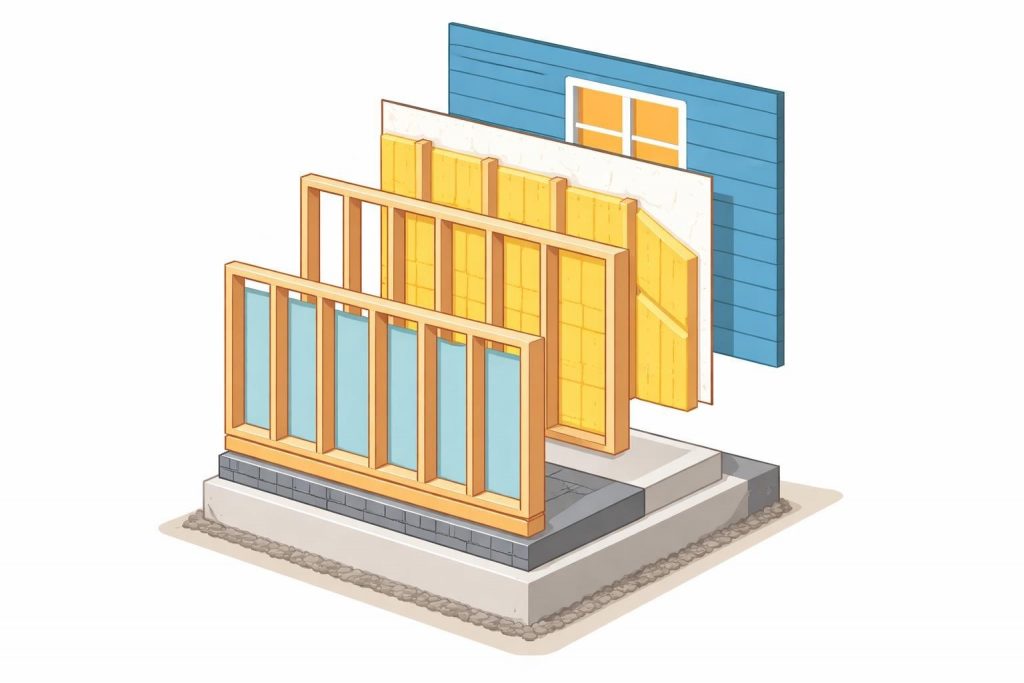
Timber frame wall construction utilises a skeletal framework of vertical studs, horizontal rails, and structural bracing to create load-bearing walls. This system differs fundamentally from masonry construction by distributing loads through the timber frame rather than solid walls. The frame typically consists of top plates, bottom plates, vertical studs, and noggins (horizontal blocking), all working together to provide structural integrity.
Primary Components and Their Functions
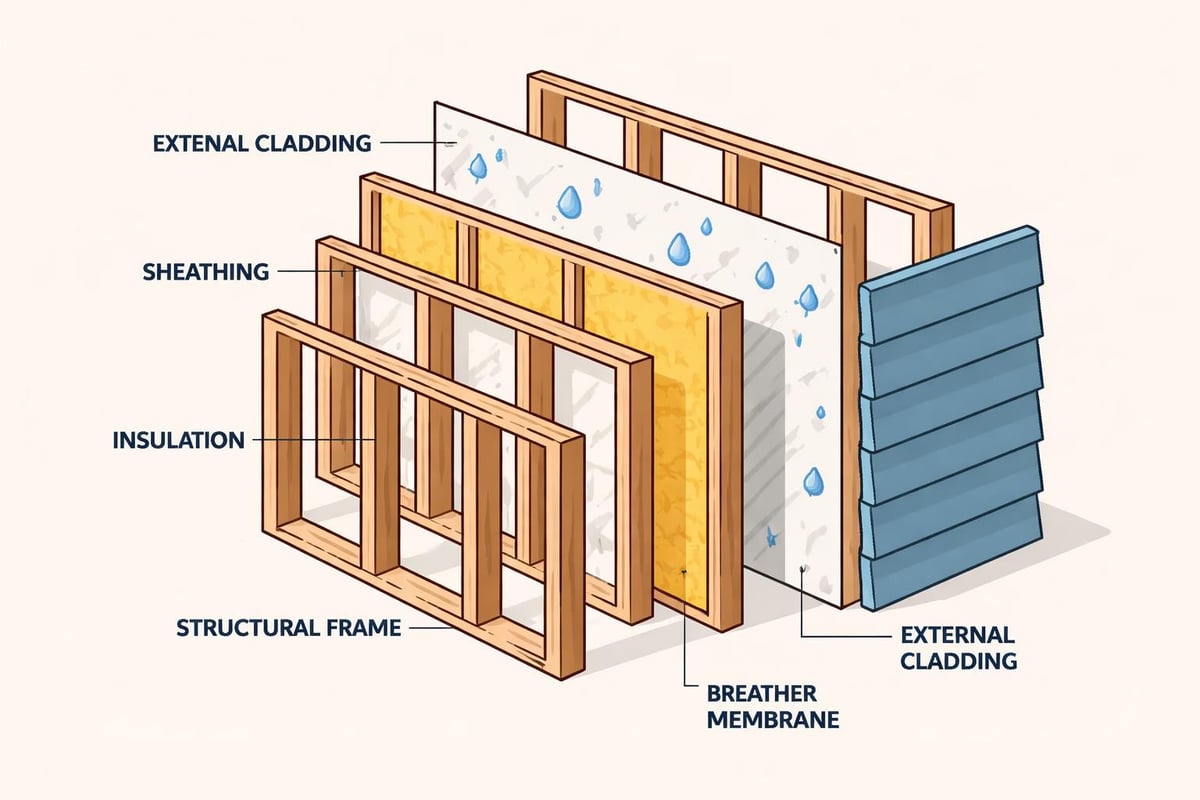
The structural integrity of timber frame wall construction depends on several key elements working in harmony:
- Sole plates anchor the wall to the foundation or floor platform
- Wall studs transfer vertical loads from roof to foundation
- Head plates distribute roof loads across the wall structure
- Sheathing boards provide lateral bracing and racking resistance
- Breather membranes manage moisture whilst allowing vapour transmission
- Insulation materials deliver thermal and acoustic performance
Modern timber frame wall construction incorporates engineered timber products alongside traditional sawn timber. This combination maximises structural performance whilst minimising material waste. The basics of construction with engineered wood products provide essential knowledge for anyone undertaking timber frame projects.
Wall Configuration Options
Different building requirements demand specific wall configurations. Standard configurations range from simple single-skin frames to complex multi-layer assemblies:
| Configuration Type | Typical Depth | Primary Application | U-Value Performance |
|---|---|---|---|
| Standard Stud Wall | 140mm | Internal partitions | N/A |
| External Wall (Basic) | 140mm + 50mm | Low-energy buildings | 0.28 W/m²K |
| High-Performance Wall | 200mm + 100mm | PassivHaus standards | 0.15 W/m²K |
| Hybrid Structural | Varies | Commercial projects | Custom engineered |
The choice of configuration directly impacts thermal efficiency, acoustic performance, and construction costs. Acorn to Oak Framing specialises in bespoke timber frame structures tailored to individual performance requirements.
Construction Methodology and Assembly Sequence
Successful timber frame wall construction follows a logical sequence that ensures structural accuracy and weathertight performance. The process begins with precise setting out and continues through frame assembly, panel installation, and external envelope completion.
Foundation and Base Preparation
Every timber frame wall construction project starts with properly prepared foundations. The base must provide a level, secure platform with adequate damp-proof protection. Concrete foundation walls or suspended timber floors serve as common bases for timber frames, each requiring specific detailing to prevent moisture ingress and ensure structural connection.
Installing a damp-proof course (DPC) beneath sole plates prevents rising moisture from compromising timber elements. Modern construction typically employs polyethylene DPC membranes or proprietary composite materials that exceed Building Regulations requirements. Proper base preparation prevents 90% of moisture-related failures in timber frame construction.
Frame Assembly Techniques
Timber frame wall construction employs two principal assembly methods: stick-building on site or panelised construction in a workshop environment. Each approach offers distinct advantages depending on project scale, access constraints, and weather exposure.
Stick-building involves constructing walls piece by piece on site:
- Install sole plates to foundation with appropriate fixings
- Mark stud positions at centres (typically 400mm or 600mm)
- Cut and install vertical studs to precise lengths
- Add noggins between studs for intermediate support
- Install head plates to complete the frame structure
- Apply sheathing boards to provide racking resistance
Panelised construction pre-assembles wall sections in controlled conditions:
- Build complete wall panels in workshop environment
- Install all structural elements, insulation, and services
- Transport completed panels to site
- Crane panels into position on prepared base
- Connect panels using proprietary fixing systems
- Complete junctions, corners, and external envelope
Understanding timber frame construction fundamentals helps project managers select the most appropriate methodology for their specific circumstances.
Insulation and Thermal Performance
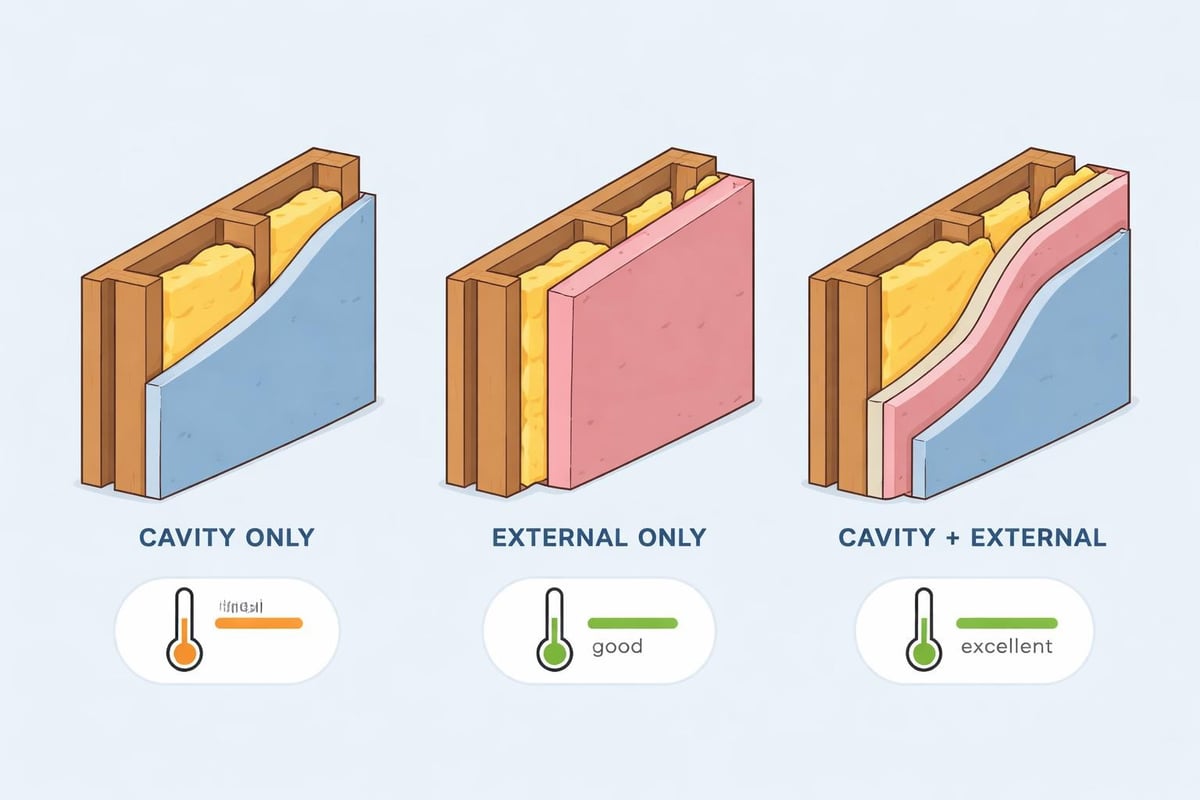
Timber frame wall construction excels at delivering superior thermal performance through effective insulation strategies. The cavity between timber studs provides natural space for insulation materials, whilst additional external insulation layers enhance overall U-values.
Insulation Material Selection
Contemporary timber frame buildings typically incorporate multiple insulation types to optimise thermal and acoustic performance:
- Mineral wool batts offer excellent fire resistance and acoustic absorption
- Rigid foam boards provide high R-values with minimal thickness
- Natural fibre insulation delivers sustainable performance with low embodied energy
- Spray foam systems eliminate air gaps for maximum thermal efficiency
The thermal bridge effect through timber studs can reduce overall wall performance by 15-20%. Advanced timber frame wall construction addresses this through external continuous insulation or service cavities that separate the thermal and structural layers. Projects like raised eaves buildings incorporate these principles to achieve exceptional energy efficiency.
Vapour Control and Moisture Management
Controlling moisture movement through wall assemblies prevents condensation, mould growth, and timber decay. Timber frame wall construction employs specific layers to manage both liquid water and water vapour:
| Layer Position | Material Type | Primary Function | Installation Side |
|---|---|---|---|
| External | Weather-resistant barrier | Liquid water protection | Outside sheathing |
| Mid-wall | Breather membrane | Vapour permeability | Outside insulation |
| Internal | Vapour control layer | Limit vapour diffusion | Warm side of insulation |
| Interior | Plasterboard/finish | Airtightness seal | Room-facing surface |
Proper sequencing of these layers creates a wall assembly that remains dry throughout seasonal temperature variations. The structural design principles for wood framing provide additional guidance on moisture management strategies.
Structural Engineering Considerations
Timber frame wall construction must satisfy stringent structural requirements for vertical loads, lateral stability, and resistance to wind forces. Engineers calculate loading scenarios and specify appropriate timber grades, fixing methods, and bracing configurations.
Load Distribution Mechanisms
Walls in timber frame construction serve multiple structural functions simultaneously. Loadbearing walls carry vertical loads from floors and roofs, whilst shear walls resist lateral forces from wind and seismic activity. The frame distributes these loads through a hierarchy of elements:
Roof loads transfer through rafters to wall plates, then down studs to sole plates and finally to foundations. Point loads from concentrated sources require additional studs or structural headers to prevent localised overstressing. Proper detailing at junctions and openings ensures continuous load paths throughout the structure.
Bracing and Lateral Stability
Wind forces and potential seismic activity demand robust lateral bracing systems. Timber frame wall construction achieves lateral stability through several mechanisms:
- Diagonal bracing installed within wall planes
- Structural sheathing panels providing diaphragm action
- Portal frames at building corners and intervals
- Metal cross-bracing for maximum strength-to-weight ratio
The exterior wall requirements in mass timber buildings outline contemporary approaches to achieving lateral stability whilst maintaining thermal performance. Acorn to Oak Framing's portfolio includes various bay building configurations that demonstrate effective bracing strategies in traditional oak frames.
External Cladding and Weather Protection
The outer skin of timber frame wall construction protects the structural frame whilst defining the building's aesthetic character. Cladding systems must shed water effectively, accommodate thermal movement, and provide adequate ventilation to prevent moisture accumulation.
Cladding Material Options
Modern timber frame buildings employ diverse cladding materials, each offering specific performance characteristics and visual qualities:
Timber cladding remains popular for its natural appearance and sustainability credentials. Vertical boarding, horizontal cladding, and shiplap profiles create distinctive architectural expressions whilst protecting the frame. Species selection impacts durability, with oak, larch, and cedar offering exceptional weather resistance without treatment.
Brick slips and masonry cladding provide traditional aesthetics over timber frame construction. These systems require cavity wall construction techniques, with structural ties connecting the outer skin to the timber frame. Proper cavity dimensions ensure adequate ventilation and drainage.
Render systems transform timber frames with contemporary smooth finishes. Flexible render boards accommodate timber movement whilst providing impact resistance and fire protection. Both traditional lime renders and modern polymer-modified systems suit timber frame applications.
Ventilation and Drainage Strategies
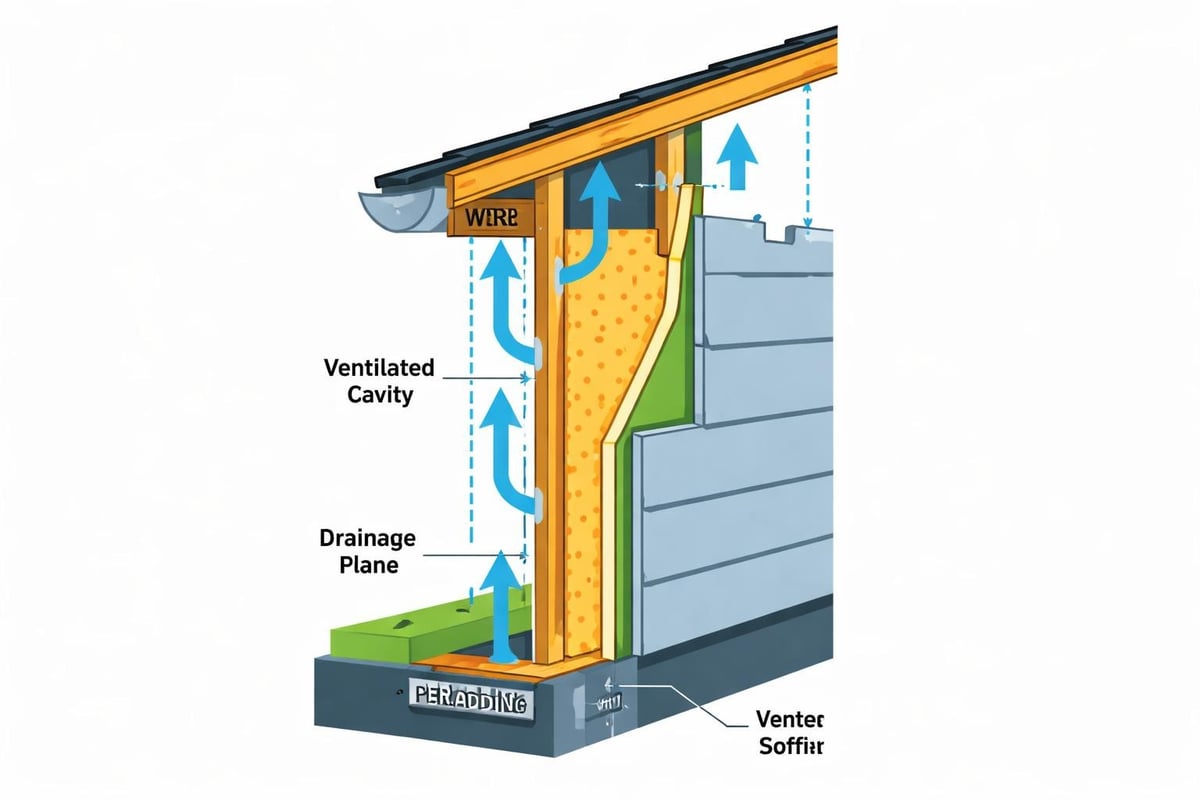
Effective ventilation behind cladding prevents moisture accumulation and premature material degradation. Timber frame wall construction incorporates ventilated cavities between weather-resistant barriers and cladding materials. Minimum cavity widths of 25mm allow adequate airflow, with vents at eaves and base promoting continuous air circulation.
Drainage planes direct water away from sensitive components through deliberate detailing:
- Cavity trays collect and redirect water penetration
- Weep holes allow accumulated water to escape
- Flashing systems protect vulnerable junctions and openings
- Cill details project beyond wall faces to shed water clear
Building Regulations and Standards Compliance
Timber frame wall construction in the UK must satisfy comprehensive Building Regulations covering structural safety, fire resistance, thermal performance, and acoustic separation. Understanding these requirements ensures projects receive approval and perform as intended throughout their service life.
Fire Safety Requirements
Fire resistance ratings for timber frame walls depend on building use, height, and proximity to boundaries. Load-bearing walls typically require 30-60 minute fire resistance, achieved through plasterboard layers and cavity barriers. Specifications include:
- Type F plasterboard for enhanced fire protection
- Cavity barriers at floor levels and compartment junctions
- Fire-stopping around service penetrations
- Protected escape routes with appropriate surface spread of flame ratings
The inherent combustibility of timber necessitates careful detailing to prevent fire spread. Modern timber frame wall construction incorporates multiple defence layers that delay ignition and limit flame propagation. Resources on timber framing engineering provide technical guidance on achieving required fire ratings.
Acoustic Performance Standards
Sound transmission through walls impacts occupant comfort and regulatory compliance. Timber frame wall construction must achieve specific sound reduction indices for party walls and floors in residential buildings. Current Building Regulations specify minimum airborne sound insulation of 45dB for walls separating dwellings.
Strategies for enhancing acoustic performance include:
- Increased wall mass through additional plasterboard layers
- Resilient bars or channels to isolate finishes from structure
- Acoustic insulation filling frame cavities completely
- Staggered stud configurations preventing direct sound paths
- Independent wall leaves for maximum sound separation
Sustainability and Environmental Performance
Timber frame wall construction aligns with contemporary sustainability objectives through renewable material use, carbon sequestration, and energy efficiency. Responsibly sourced timber provides exceptional environmental credentials compared to concrete and steel alternatives.
Carbon Impact and Life Cycle Assessment
Timber's capacity to store atmospheric carbon makes it uniquely valuable for climate-conscious construction. Every cubic metre of timber in walls, frames, and structures locks away approximately 0.9 tonnes of CO2 equivalent. A typical timber frame house stores 20-30 tonnes of carbon throughout its service life.
Life cycle assessments reveal timber frame wall construction's environmental advantages:
| Environmental Factor | Timber Frame | Masonry Cavity | Steel Frame |
|---|---|---|---|
| Embodied Carbon (kgCO2e/m²) | 45-65 | 120-145 | 95-125 |
| Manufacturing Energy (MJ/m²) | 280-340 | 650-780 | 520-640 |
| Recyclability Potential | High | Medium | High |
| Bio-based Content (%) | 85-95 | 5-10 | 0-5 |
Sustainable Sourcing and Certification
Responsible timber procurement ensures environmental benefits extend to forest management practices. Certification schemes verify sustainable forestry operations that maintain biodiversity, protect soil quality, and support local communities. Look for FSC (Forest Stewardship Council) or PEFC (Programme for Endorsement of Forest Certification) marks when specifying timber.
Acorn to Oak Framing prioritises sustainably sourced oak for all timber frame projects, ensuring environmental responsibility accompanies exceptional craftsmanship. Native British oak from certified woodlands supports local forestry whilst delivering unmatched durability and beauty.
Installation of Services and Building Systems
Integrating electrical, plumbing, and heating services within timber frame wall construction requires careful planning to maintain structural integrity, fire safety, and thermal performance. Service routes through walls must avoid compromising insulation continuity or creating thermal bridges.
Service Cavity Strategies
Professional timber frame wall construction incorporates service cavities or zones specifically designated for building systems. This approach separates services from the primary structural and thermal layers, facilitating installation, maintenance, and future modifications.
Common service integration methods include:
- Internal service zones using battens behind plasterboard finishes
- Dedicated service studs running parallel to structural frames
- Horizontal service runs through pre-formed noggin zones
- Vertical risers in non-structural partition walls
Planning service routes during design prevents conflicts with structural elements and ensures adequate space for all required systems. The products and building types overview demonstrates how Acorn to Oak Framing incorporates service provisions within traditional oak frames.
Minimising Thermal Bridge Effects
Every penetration through insulation layers creates potential thermal bridges that reduce overall wall performance. Timber frame wall construction minimises these effects through strategic detailing:
- Group services to limit the number of wall penetrations
- Seal penetrations with expanding foam or flexible sealants
- Insulate around services to maintain thermal continuity
- Use protective grommets where services pass through membranes
- Avoid compressing insulation around service runs
Maintaining airtightness around service installations proves critical for achieving design thermal performance. Even small gaps can significantly increase heat loss and enable moisture-laden air to reach cold surfaces where condensation occurs.
Quality Control and Construction Standards
Achieving excellence in timber frame wall construction demands rigorous quality control throughout design, fabrication, and installation phases. Systematic inspection protocols identify and rectify issues before they compromise performance or require costly remediation.
Manufacturing Quality Assurance
Workshop fabrication of timber frame components enables precise quality control under controlled conditions. Reputable manufacturers implement comprehensive quality management systems covering:
- Timber grading verification ensuring specified strength classes
- Moisture content testing preventing shrinkage and distortion
- Dimensional accuracy checks maintaining tolerances within 3mm
- Preservative treatment records documenting protection measures
- Assembly jig calibration ensuring consistent component geometry
Third-party certification schemes like UKTFA (UK Timber Frame Association) membership demonstrate commitment to industry best practices. These programmes audit manufacturing processes and provide independent verification of quality standards.
On-Site Installation Verification
Site installation requires equal attention to quality outcomes. Inspection checkpoints throughout construction ensure compliance with design specifications and building regulations:
- Verify foundation levels and DPC installations before frame erection
- Check plumb and alignment during frame assembly
- Confirm fixing specifications and spacings match structural calculations
- Inspect weather-resistant barrier continuity and tape seals
- Test airtightness before concealing services and insulation
Documentation of inspection findings creates an audit trail demonstrating regulatory compliance and provides valuable information for future maintenance activities.
Maintenance and Long-Term Performance
Properly constructed timber frame walls deliver decades of reliable performance with minimal maintenance requirements. Understanding routine care procedures and potential issues ensures structures remain sound, dry, and thermally efficient throughout their design life.
Routine Inspection Schedules
Systematic inspections identify minor issues before they develop into significant problems. Recommended inspection intervals for timber frame buildings include:
- Annual visual surveys checking cladding condition and drainage function
- Five-yearly detailed inspections examining vulnerable junctions and flashings
- Post-storm assessments verifying no weather-related damage occurred
- Pre-winter preparations clearing gutters and checking ventilation paths
Focus inspection attention on areas most susceptible to moisture ingress, including roof junctions, window openings, ground level details, and service penetrations.
Common Issues and Remediation
Despite proper design and construction, timber frame wall construction occasionally experiences performance issues requiring intervention:
Moisture ingress from failed flashings or cladding damage demands immediate attention. Remove affected materials, dry the frame thoroughly, and repair or replace damaged components. Modern moisture meters enable accurate assessment of timber moisture content to verify adequate drying.
Thermal bridge effects from missing or compressed insulation reduce energy efficiency. Thermal imaging surveys identify problem areas, allowing targeted remediation. Supplementary insulation and air sealing restore design performance levels.
Settlement and movement occur naturally as timber adjusts to moisture equilibrium. Minor cracking in finishes represents normal behaviour, but significant movement may indicate structural issues requiring professional assessment. Understanding structural design principles helps distinguish normal from concerning movement patterns.
Timber frame wall construction combines structural efficiency, environmental responsibility, and design flexibility to create buildings that stand the test of time. From understanding fundamental components through to maintaining long-term performance, this construction method rewards careful attention to detail and quality execution. Whether you're planning a traditional oak-framed structure or a contemporary low-energy home, Acorn to Oak Framing brings decades of specialist expertise to every project, ensuring your vision becomes reality through exceptional craftsmanship and sustainable building practices.


