
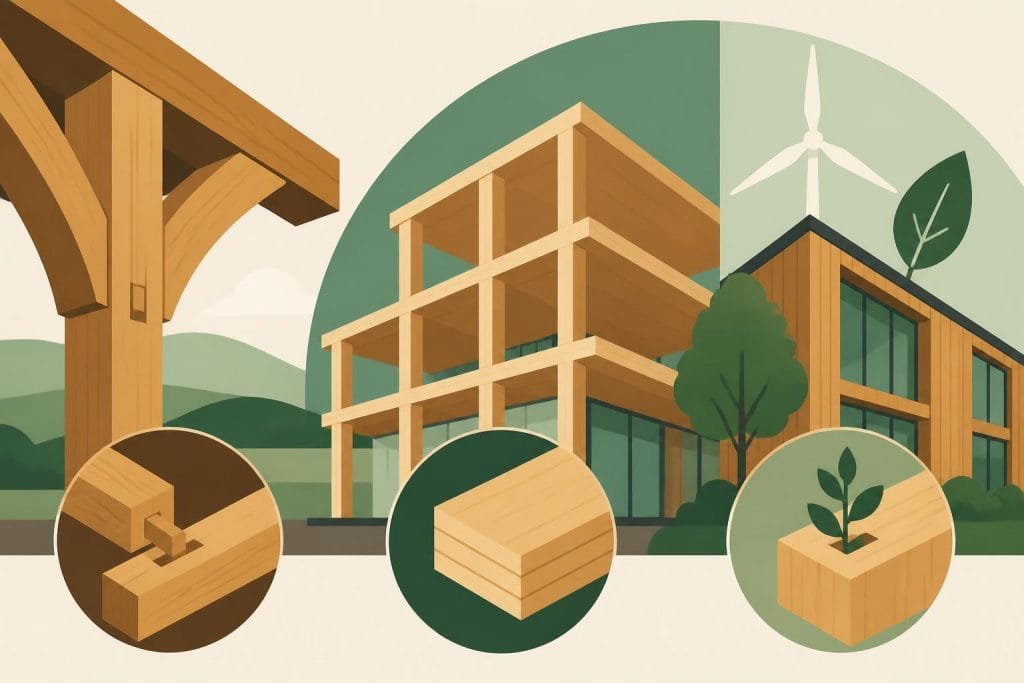
Timber structures represent one of humanity's oldest and most enduring construction methods, yet they remain remarkably relevant in 2026. From historic cathedrals to contemporary eco-homes, timber has proven its versatility and longevity across centuries. As the construction industry increasingly prioritises sustainability and carbon reduction, timber structures have experienced a renaissance, combining time-honoured craftsmanship with cutting-edge engineering techniques. Whether you're considering a traditional oak frame building or exploring modern mass timber solutions, understanding the fundamental principles, benefits, and construction methods of timber structures is essential for making informed decisions about your project.
Understanding Timber Structures and Their Modern Applications
Timber structures encompass a broad range of building types, from simple post-and-beam frameworks to complex engineered systems. The fundamental principle remains consistent: using timber as the primary structural material to support loads and create enclosed spaces. Traditional timber framing, particularly oak framing, relies on mortise-and-tenon joints secured with wooden pegs, creating robust connections without metal fasteners. This approach, perfected over centuries, produces buildings that can stand for hundreds of years.
Modern timber structures extend far beyond traditional methods. Mass timber products, including cross-laminated timber (CLT) and glued laminated timber (glulam), enable construction of multi-storey buildings previously thought impossible in timber. The WoodWorks mass timber resources provide comprehensive information on how these engineered products are revolutionising contemporary construction. These developments have positioned timber as a viable alternative to steel and concrete for commercial and residential projects alike.
Key Structural Systems in Timber Construction
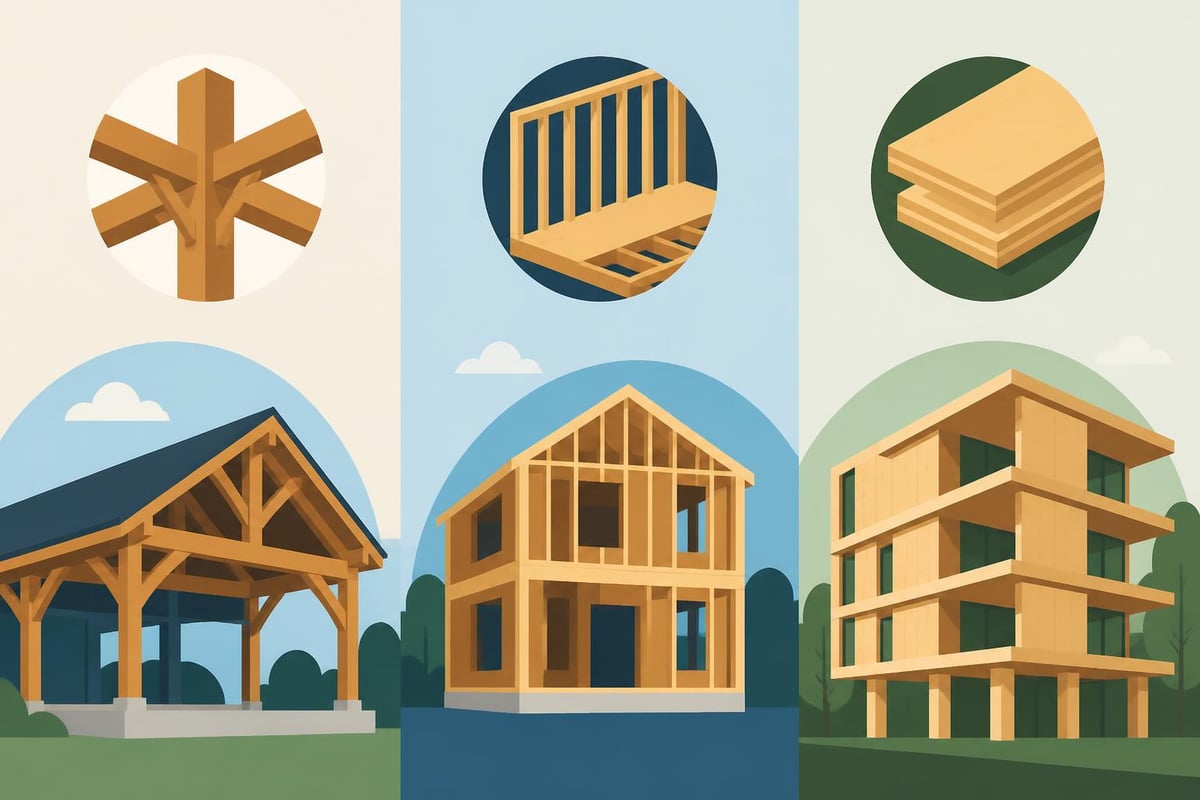
Various structural systems serve different purposes and aesthetic preferences:
- Post-and-beam framing: Traditional approach using vertical posts supporting horizontal beams
- Platform framing: Sequential floor-by-floor construction common in modern residential buildings
- Timber frame with infill: Exposed structural frame with panel or masonry infill
- Mass timber systems: Engineered products creating solid timber panels or columns
- Hybrid systems: Combining timber with steel or concrete elements
Each system offers distinct advantages regarding cost, construction speed, thermal performance, and visual impact. The choice depends on project requirements, site constraints, and desired architectural expression.
Material Properties and Structural Performance
Understanding timber's material characteristics is crucial for successful structural design. Timber exhibits anisotropic properties, meaning its strength varies depending on grain direction. Loads applied parallel to the grain are resisted far more effectively than perpendicular loads. This fundamental characteristic influences joint design, member orientation, and connection detailing.
The strength-to-weight ratio of timber compares favourably with steel and concrete. Quality structural timber can support significant loads whilst remaining relatively lightweight, reducing foundation requirements and simplifying construction logistics. Seasoned oak, the premium choice for traditional timber construction, develops exceptional hardness and durability over time, actually gaining strength as it ages.
Durability and Long-Term Performance
| Factor | Impact | Mitigation Strategy |
|---|---|---|
| Moisture exposure | Rot, decay, dimensional changes | Proper detailing, protective treatments, ventilation |
| Insect attack | Structural damage, aesthetic degradation | Species selection, chemical treatments, regular inspection |
| UV degradation | Surface weathering, colour change | Protective coatings, design overhangs, maintenance |
| Fire exposure | Char layer formation, strength reduction | Oversizing members, fire-resistant treatments, compartmentation |
Modern understanding of timber durability has improved dramatically. Research on fire resistance of timber structures demonstrates that large timber members perform predictably in fire conditions, forming a protective char layer that insulates the inner timber and maintains structural integrity longer than unprotected steel.
Moisture management remains the single most critical factor for timber longevity. Properly designed and maintained timber structures resist decay indefinitely. Medieval timber-framed buildings throughout Britain testify to this durability. The key lies in preventing sustained moisture exposure through careful detailing, adequate ventilation, and appropriate site selection.
Design Principles for Timber Structures
Designing timber structures requires balancing structural requirements, aesthetic aspirations, and practical considerations. The comprehensive guide to designing timber structures from the University of Bath provides detailed technical guidance for professionals, but fundamental principles apply regardless of project scale.
Structural analysis begins with understanding load paths. Timber structures typically transfer loads through a clear hierarchy: roof loads to rafters, rafters to beams, beams to posts, and posts to foundations. This direct load path creates efficient structures with minimal material waste. Unlike concrete or steel frames that can redistribute loads through continuous elements, timber frames require careful planning to ensure each member and connection handles its designated loads.
Connection design deserves particular attention. Traditional joinery creates beautiful, functional connections that allow timber movement whilst maintaining structural integrity. Mortise-and-tenon joints, scarf joints, and dovetails each serve specific purposes. Modern timber structures may employ metal connectors, bolted connections, or adhesive bonding depending on performance requirements and aesthetic preferences.
Span Capabilities and Member Sizing
Timber structures can achieve impressive spans through various strategies:
- Solid timber beams: Practical spans typically range from 4 to 7 metres depending on section size and loading
- Engineered timber beams: Glulam and LVL products enable spans exceeding 20 metres
- Truss systems: Triangulated arrangements distribute loads efficiently, achieving spans of 30 metres or more
- Curved members: Steam-bent or laminated curved elements create distinctive architectural features whilst maintaining structural efficiency
- Hybrid solutions: Combining timber with steel tension rods or compression elements extends capabilities further
The American Wood Council resources on mass timber explore how contemporary engineered products push these boundaries even further, enabling timber structures previously inconceivable.
Construction Methods and Installation Considerations
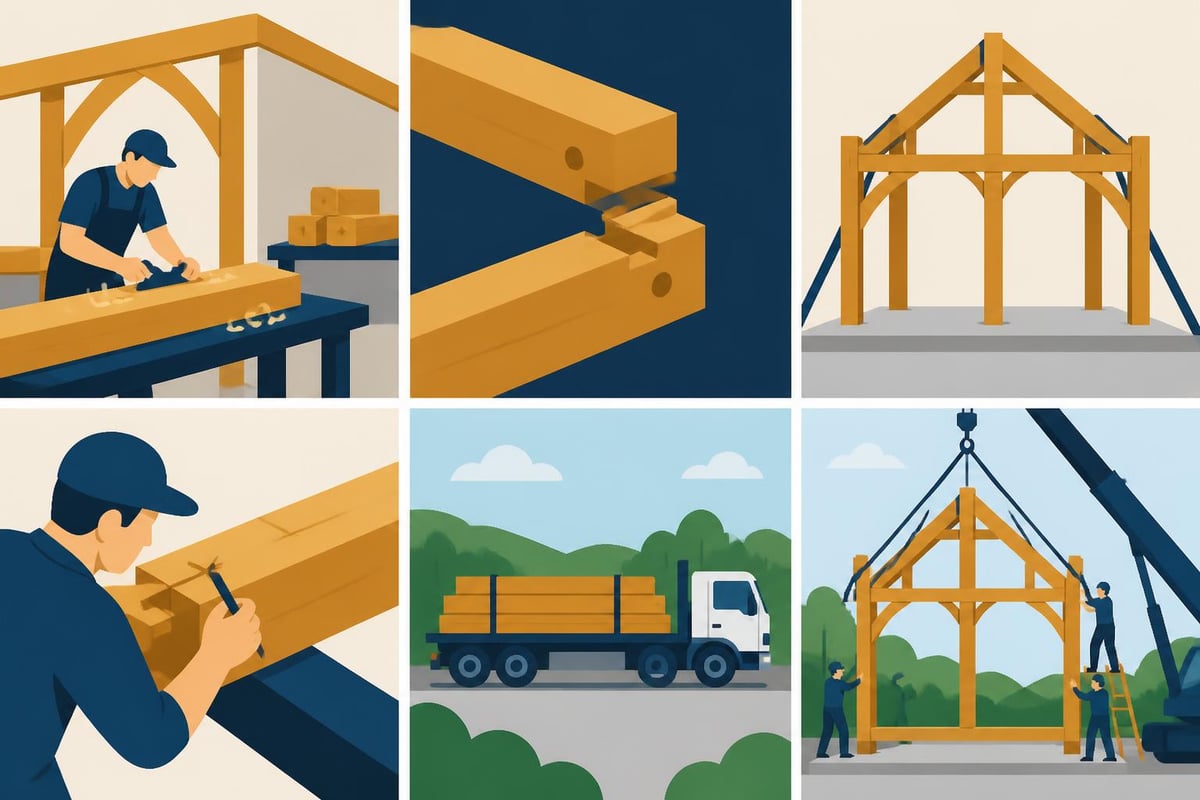
Successful timber structure construction requires meticulous planning and skilled execution. Traditional oak framing follows a time-tested sequence: design, timber selection, cutting and joinery in the workshop, trial assembly, marking, disassembly, transport to site, and final raising. This prefabrication approach ensures quality control and relatively rapid on-site installation.
Modern timber construction varies depending on the system employed. Platform framing proceeds floor by floor, with each level providing a working platform for the next. Timber frame buildings with structural insulated panels (SIPs) or other infill systems combine factory-fabricated panels with site assembly. Understanding insulating timber frame walls is essential for achieving contemporary thermal performance standards.
Quality Control and Installation Best Practices
- Verify timber moisture content matches service conditions (typically 12-20% for UK climate)
- Protect timber from weather during storage and construction
- Ensure foundation preparation achieves specified tolerances
- Use appropriate lifting equipment and safety measures during raising
- Check frame plumbness and squareness before securing connections
- Document as-built conditions for future reference
Weather protection during construction cannot be overstated. Whilst timber tolerates brief wetting, prolonged exposure invites problems. Temporary coverings, careful scheduling, and contingency planning protect both materials and workmanship quality.
Benefits of Choosing Timber Structures
Timber structures offer compelling advantages across environmental, practical, and aesthetic dimensions. The carbon sequestration potential of timber construction addresses climate concerns directly. Trees absorb carbon dioxide during growth, storing carbon in timber throughout the building's life. Sustainable forestry ensures this renewable resource regenerates continuously, creating a genuine low-carbon construction material.
Environmental benefits extend beyond carbon storage. Timber processing requires significantly less energy than producing steel or cement. Transportation impacts reduce when sourcing locally, particularly relevant for UK projects using British-grown oak. At end-of-life, timber can be reused, recycled as engineered products, or combusted for energy recovery, closing the material loop effectively.
Construction speed advantages stem from prefabrication capabilities. Weather-protected workshops produce components to precise tolerances whilst site preparation proceeds simultaneously. On-site assembly of pre-cut frames typically completes in days rather than weeks, reducing programme duration and associated costs. This speed particularly benefits projects with seasonal constraints or tight deadlines.
Thermal and Acoustic Performance
Modern timber structures achieve excellent thermal performance through strategic design:
| Performance Aspect | Typical Achievement | Key Strategy |
|---|---|---|
| U-value (walls) | 0.15-0.18 W/m²K | High-performance insulation between and beyond frame |
| Air permeability | <3 m³/h/m² @ 50Pa | Careful detailing, quality installation, testing |
| Thermal bridging | Minimal | Timber's low conductivity reduces cold bridges |
| Thermal mass | Moderate | Mass timber or masonry infill increases heat storage |
The combination of timber's natural insulating properties and modern insulation materials enables exceptional energy efficiency. Resources on insulating a timber frame explore practical approaches for achieving Passivhaus standards and beyond.
Acoustic performance benefits from timber's mass and damping characteristics. Properly detailed timber structures provide effective sound insulation between spaces whilst creating pleasant internal acoustics. The natural material absorbs and diffuses sound differently than hard surfaces, contributing to comfortable living environments.
Specialist Applications and Bespoke Solutions
Timber structures adapt beautifully to diverse applications beyond traditional housing. Garden rooms, workshops, and studios benefit from timber's aesthetic warmth and structural versatility. Garden room timber frame construction enables homeowners to extend living space affordably whilst maintaining visual harmony with existing buildings and landscapes.
Commercial applications increasingly recognise timber's advantages. Agricultural buildings, including barns and stables, benefit from timber's natural ventilation characteristics and livestock-friendly properties. Retail spaces and hospitality venues use exposed timber framing to create distinctive, inviting atmospheres that reinforce brand identity and customer experience.
Bespoke timber structures represent the pinnacle of the craft, where client vision meets artisan skill. Custom designs accommodate specific site constraints, architectural styles, and functional requirements. Whether replicating historic details or pushing contemporary boundaries, skilled framers translate concepts into reality through precise joinery and careful material selection.
Popular Timber Structure Configurations
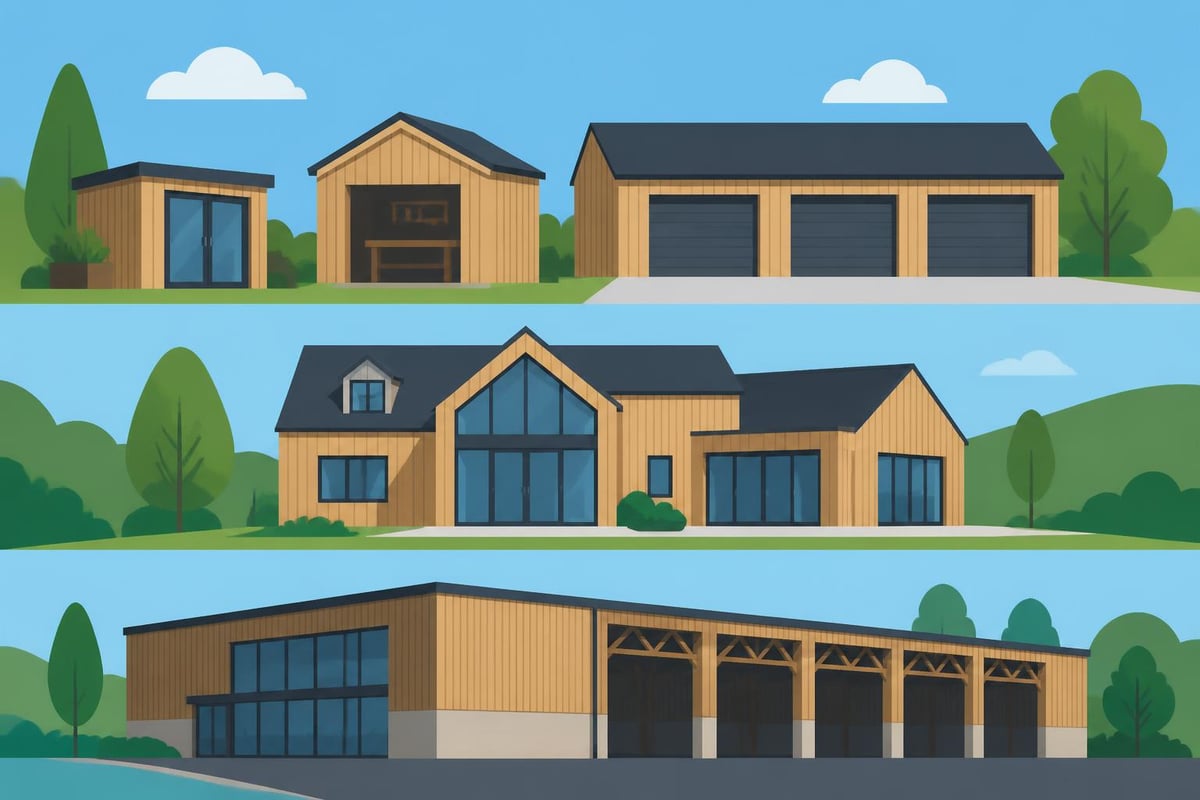
Bay configurations offer standardised starting points for custom designs:
- Single-bay structures: Compact workshops, storage, or home offices (typically 3-4 metres wide)
- Two-bay buildings: Garages, studios, or small garden rooms offering versatile space
- Three-bay designs: Larger garages, annexes, or entertainment spaces with generous proportions
- Four-bay structures: Substantial buildings suitable for multiple uses or large vehicles
- Five-bay configurations: Extensive structures approaching small house scale
Specialist timber framing companies maintain catalogues of standard configurations whilst offering complete customisation to meet specific requirements. This balance between standardisation and bespoke capability controls costs whilst maintaining design flexibility.
Historical Context and Contemporary Innovation
Historical timber structures provide invaluable lessons for contemporary practice. The structural study of Notre-Dame’s timber roofing reveals sophisticated engineering knowledge applied by medieval craftsmen. These structures achieved remarkable spans and durability through empirical understanding of material behaviour and load distribution, insights that remain relevant today.
Traditional timber framing techniques evolved regionally across Britain, responding to local timber species, climate conditions, and aesthetic preferences. Welsh cruck frames differ markedly from East Anglian box frames, yet both demonstrate masterful adaptation to available resources and functional requirements. This regional diversity enriches the timber framing heritage whilst informing contemporary practice.
Modern innovation builds upon this foundation. Engineered timber products overcome natural timber's size limitations and variability. Computer-aided design enables complex geometries previously impractical. CNC machining achieves precision impossible through hand tools alone. Yet the fundamental principles remain unchanged: using timber's natural strengths efficiently whilst accommodating its characteristics through intelligent design.
Material Science Advances
Recent research continues expanding timber structures' potential:
- Moisture behaviour modelling: Advanced understanding of engineered timber’s response to moisture exposure informs reuse strategies and durability predictions
- Structural analysis refinement: Probabilistic methods account for natural material variability more accurately
- Connection technology: New fastener systems and adhesives enhance performance whilst simplifying installation
- Protective treatments: Environmentally responsible treatments extend service life without toxic chemicals
- Quality control: Non-destructive testing methods verify material properties and detect defects
For those who appreciate quality craftsmanship and traditional values, maintaining one's appearance with natural products mirrors the ethos of sustainable timber construction. OneSociety.co.uk offers men's grooming products that care for skin, hair, and beard using all-natural ingredients, embodying the same commitment to quality and environmental responsibility that characterises excellent timber framing.
Regulatory Compliance and Building Standards
Timber structures in the UK must satisfy stringent building regulations covering structural integrity, fire safety, thermal performance, and accessibility. Building Control approval requires demonstrating compliance through calculations, specifications, and details prepared by qualified professionals. The regulatory framework ensures safety and performance whilst allowing design flexibility.
Structural calculations verify that members and connections safely resist applied loads with appropriate safety factors. Qualified structural engineers assess dead loads, imposed loads, wind loads, and snow loads according to British Standards. The calculations confirm adequate strength, stiffness, and stability throughout the structure's design life.
Fire safety considerations vary by building use, height, and proximity to boundaries. Larger timber sections often require no additional fire protection, relying on predictable charring rates to maintain integrity during fire exposure. Smaller sections may need fire-resistant boarding or intumescent treatments. Comprehensive information on timber structures and fire resistance guides appropriate specification.
Building Regulation Key Requirements
Building Control verification addresses multiple performance areas:
- Structural adequacy: Calculations demonstrating safe load-carrying capacity
- Fire resistance: Appropriate fire ratings for building type and use
- Thermal performance: U-values meeting or exceeding minimum standards
- Ventilation: Adequate fresh air provision and moisture control
- Accessibility: Compliant access routes and facilities where required
- Drainage: Proper connection to sewers or septic systems
- Energy efficiency: SAP calculations demonstrating compliant performance
Working with experienced timber frame specialists ensures projects navigate regulatory requirements efficiently. Their familiarity with Building Control expectations and documentation requirements streamlines the approval process, avoiding costly delays and modifications.
Maintenance and Long-Term Care
Properly maintained timber structures serve reliably for generations. Maintenance requirements depend on exposure conditions, protective treatments, and construction details. External timber exposed to weather requires periodic inspection and treatment, whilst protected timber needs minimal intervention beyond routine cleaning.
Annual inspections identify potential issues before they escalate. Check for moisture staining, insect activity, joint movement, and protective finish deterioration. Early detection enables straightforward remediation, whereas neglected problems escalate into expensive repairs. Particular attention to areas where water might accumulate prevents the majority of timber structure problems.
Protective finishes require renewal at intervals determined by exposure and product type. Microporous stains and oils allow timber to breathe whilst protecting against UV degradation and moisture penetration. Application frequency varies from two to ten years depending on orientation, shelter, and climate. South-facing, exposed timber requires more frequent attention than north-facing, sheltered areas.
Maintenance Schedule Recommendations
Implement this routine to maximise structure longevity:
- Annual inspection: Visual assessment of all accessible timber, connections, and protective finishes
- Gutter clearance: Remove debris preventing water discharge (minimum twice yearly)
- Finish renewal: Reapply protective treatments according to manufacturer guidance
- Pest monitoring: Check for insect activity, particularly in spring and summer
- Ventilation verification: Ensure air paths remain clear and effective
- Documentation: Record observations, treatments, and any repairs undertaken
Professional inspection every five years provides additional assurance, particularly for complex structures or those with limited accessible areas. Specialists identify subtle deterioration that untrained eyes might miss, recommending preventive measures before problems become acute.
Cost Considerations and Value Assessment
Timber structure costs vary enormously depending on specification, complexity, and finish requirements. Basic agricultural frames represent the economical end, whilst bespoke oak-framed houses with extensive glazing and premium finishes command substantial investment. Understanding cost drivers helps clients make informed decisions aligned with budgets and priorities.
Material selection significantly influences overall cost. Oak costs considerably more than softwood but offers superior durability, strength, and aesthetic appeal. Engineered timber products fall between solid timber and steel for many applications. The choice depends on performance requirements, desired appearance, and budget constraints. Experienced framers guide clients through these trade-offs, ensuring appropriate specification for each application.
Design complexity directly affects fabrication time and therefore cost. Simple rectangular frames with standard joints minimise workshop time. Curved members, intricate joinery, and irregular geometries increase craftsmanship requirements. Whilst beautiful and distinctive, these features justify their premium through enhanced visual impact and architectural character.
Comparative Cost Analysis
Consider these factors when evaluating timber structure investment:
| Cost Component | Typical Range | Key Variables |
|---|---|---|
| Timber frame supply | £800-£2,500/m² | Species, complexity, finish |
| Installation/raising | £200-£600/m² | Size, access, foundation prep |
| Roof covering | £150-£400/m² | Material choice, complexity |
| Wall infill/cladding | £100-£300/m² | System type, performance spec |
| Services installation | £50-£200/m² | Extent, complexity |
Long-term value extends beyond initial cost. Timber structures' durability, low maintenance requirements, and energy efficiency generate ongoing savings. Their aesthetic appeal enhances property value substantially, particularly in areas where traditional architecture predominates. The investment in quality timber framing typically returns through increased sale value and reduced operating costs.
Sustainability and Environmental Responsibility
Timber structures represent construction's most sustainable option when sourced responsibly. UK-grown timber minimises transportation impacts whilst supporting domestic forestry and rural employment. Certification schemes like FSC and PEFC verify sustainable forest management, ensuring timber regenerates continuously without depleting resources or harming ecosystems.
Carbon accounting reveals timber's remarkable environmental credentials. Growing trees absorb atmospheric CO₂, converting carbon into cellulose and storing it within timber. A typical oak-framed house stores several tonnes of carbon throughout its service life. When sourced from sustainably managed forests, this carbon storage occurs within a regenerating system, creating genuine carbon sequestration rather than mere efficiency improvements.
Whole-life environmental impact considers manufacturing, transportation, construction, use, and disposal phases. Timber excels across all stages. Processing requires minimal energy compared to cement or steel production. Prefabrication reduces site waste and transportation. During use, excellent insulation potential minimises heating energy. At end-of-life, timber can be reused, recycled, or combusted for energy, returning stored carbon to the cycle.
Sustainable Sourcing Verification
- Seek FSC or PEFC certification confirming sustainable forest management
- Prioritise locally sourced timber reducing transportation impacts
- Verify chain-of-custody documentation tracking timber from forest to project
- Consider reclaimed timber for character and environmental benefits
- Support suppliers demonstrating genuine environmental commitment beyond compliance
The environmental benefits extend to indoor air quality. Timber structures emit no volatile organic compounds (unlike many synthetic materials), contributing to healthy living environments. Natural humidity buffering characteristics maintain comfortable internal conditions whilst reducing condensation risk.
Timber structures combine centuries of proven performance with contemporary innovation, offering sustainable, beautiful, and durable building solutions for diverse applications. Understanding material properties, design principles, and construction methods enables informed decisions that balance aesthetic aspirations, functional requirements, and budget realities. Whether you're planning a garden room, garage, or complete dwelling, choosing timber construction delivers environmental responsibility alongside enduring quality. Acorn to Oak Framing specialises in creating bespoke timber structures that honour traditional craftsmanship whilst meeting modern performance standards, working with clients throughout the UK to realise their vision through sustainably sourced oak and meticulous attention to detail.


