
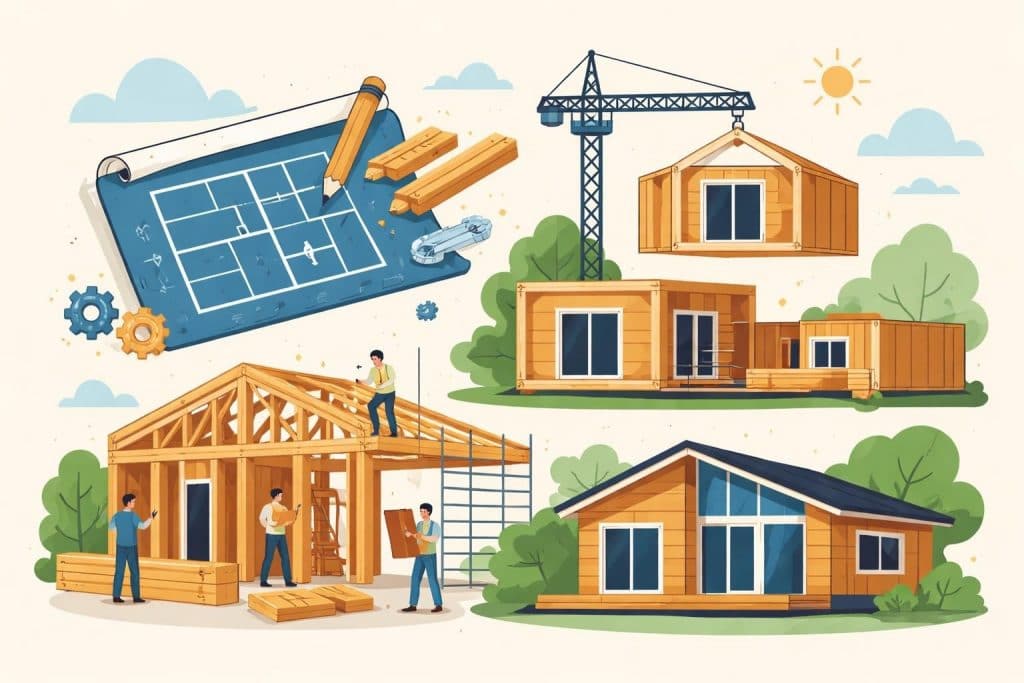
Wooden modular houses represent a revolutionary approach to sustainable construction, combining the natural beauty and strength of timber with the efficiency of prefabricated building methods. As homeowners across the UK increasingly seek environmentally responsible alternatives to traditional brick-and-mortar construction, these innovative structures offer an compelling solution that balances craftsmanship, speed, and ecological consciousness. The modular approach allows timber specialists to craft high-quality building components in controlled workshop environments before assembling them on-site, ensuring precision and minimising waste whilst delivering homes that meet the highest standards of British building regulations.
Understanding Modular Timber Construction Methods
The construction process for wooden modular houses differs significantly from conventional building techniques. Timber specialists create individual sections, or modules, within workshop facilities where environmental conditions remain constant. This controlled setting ensures optimal timber treatment, precise joinery, and superior quality control throughout the fabrication process.
Factory Precision and Quality Standards
Manufacturing wooden modular houses in workshop environments offers distinct advantages over traditional on-site construction. Each module undergoes rigorous inspection before leaving the facility, with craftsmen verifying structural integrity, moisture content, and dimensional accuracy. This approach significantly reduces errors whilst maintaining consistency across all building components.
Key quality control measures include:
- Regular moisture monitoring throughout timber selection and processing
- Structural testing of load-bearing components and connections
- Verification of insulation installation and thermal performance specifications
- Pre-installation checks of electrical and plumbing systems within modules
Workshop-based construction also protects timber from weather exposure during critical early stages, preventing moisture absorption that could compromise long-term structural performance. The eco-friendly nature of modular houses extends beyond material choice, encompassing efficient manufacturing processes that minimise environmental impact.
Design Flexibility and Architectural Possibilities
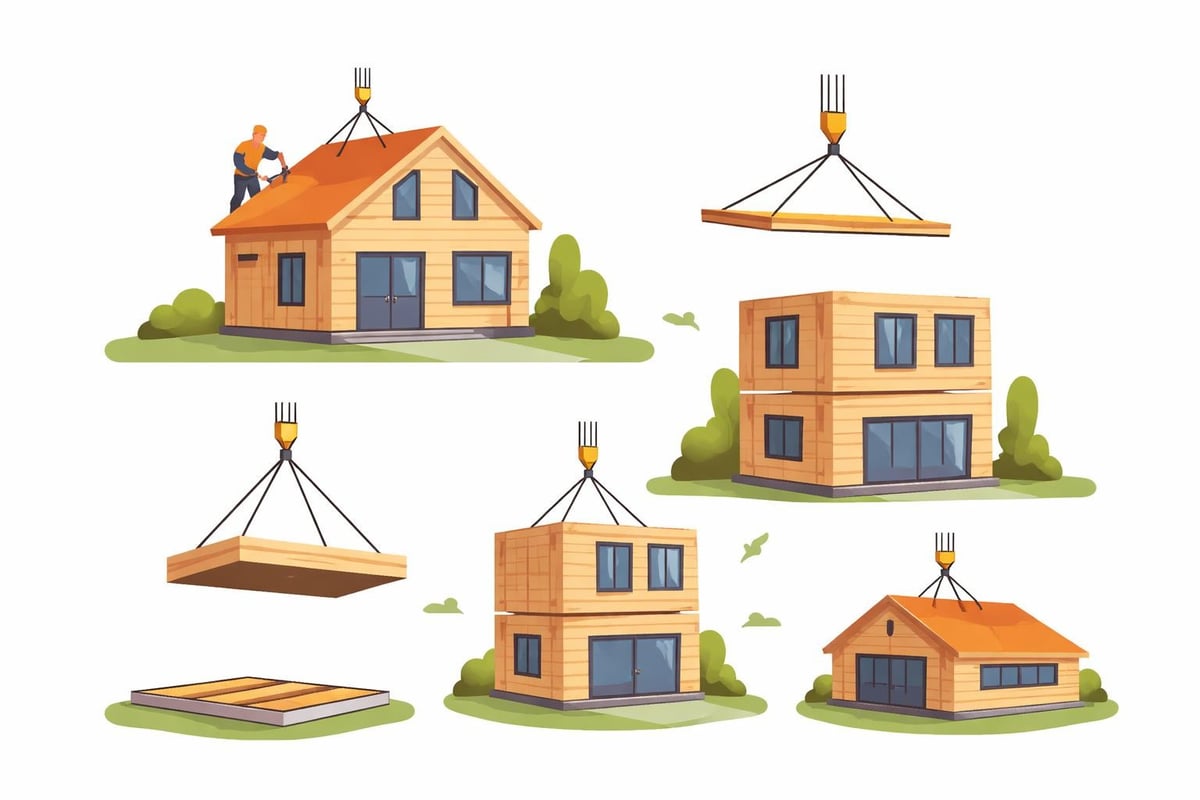
Wooden modular houses offer remarkable design versatility, accommodating both traditional and contemporary timber frame houses aesthetic preferences. The modular system supports various architectural styles whilst maintaining structural efficiency and thermal performance standards required by UK building regulations.
Customisation Options Available
Modern timber framing techniques enable extensive personalisation without sacrificing the benefits of modular construction. Clients can specify room layouts, window configurations, ceiling heights, and exterior finishes to create bespoke homes that reflect individual tastes and lifestyle requirements.
Timber modules can incorporate:
- Open-plan living spaces with exposed structural elements
- Multi-storey configurations with flexible room arrangements
- Extended glazing areas for natural light optimisation
- Bespoke external cladding materials and finishes
- Integrated sustainable features such as solar panel mounting systems
The inherent strength of timber framework allows for larger unsupported spans compared to conventional stud-wall construction, creating opportunities for spacious interiors and innovative floor plans. This flexibility extends to timber extensions and future modifications, as wooden modular houses can be adapted more readily than traditional masonry structures.
| Design Element | Traditional Build | Wooden Modular House |
|---|---|---|
| Customisation Timeline | 8-12 weeks | 3-6 weeks |
| Design Modifications | Limited after foundation | Flexible until manufacturing |
| Structural Span Capability | Standard | Enhanced due to timber strength |
| Future Adaptability | Significant disruption | Easier module replacement |
Environmental Benefits and Sustainability
The environmental credentials of wooden modular houses extend throughout their entire lifecycle, from timber sourcing through construction to eventual decommissioning. Sustainably harvested timber acts as a carbon store, sequestering atmospheric carbon dioxide throughout the building's lifespan whilst requiring significantly less energy to process than concrete or steel alternatives.
Carbon Footprint Reduction
Timber production generates substantially lower carbon emissions compared to traditional building materials. When sourced from responsibly managed forests, the timber used in wooden modular houses represents a renewable resource that actively contributes to climate change mitigation. The sustainability benefits of building a modular house include reduced construction waste and improved energy efficiency.
Environmental advantages include:
- Carbon sequestration averaging 0.9 tonnes of CO₂ per cubic metre of timber
- Minimal construction waste through precise factory cutting and assembly
- Reduced transportation impacts from consolidated delivery schedules
- Lower embodied energy compared to masonry or steel-frame construction
- Potential for complete recyclability at end of service life
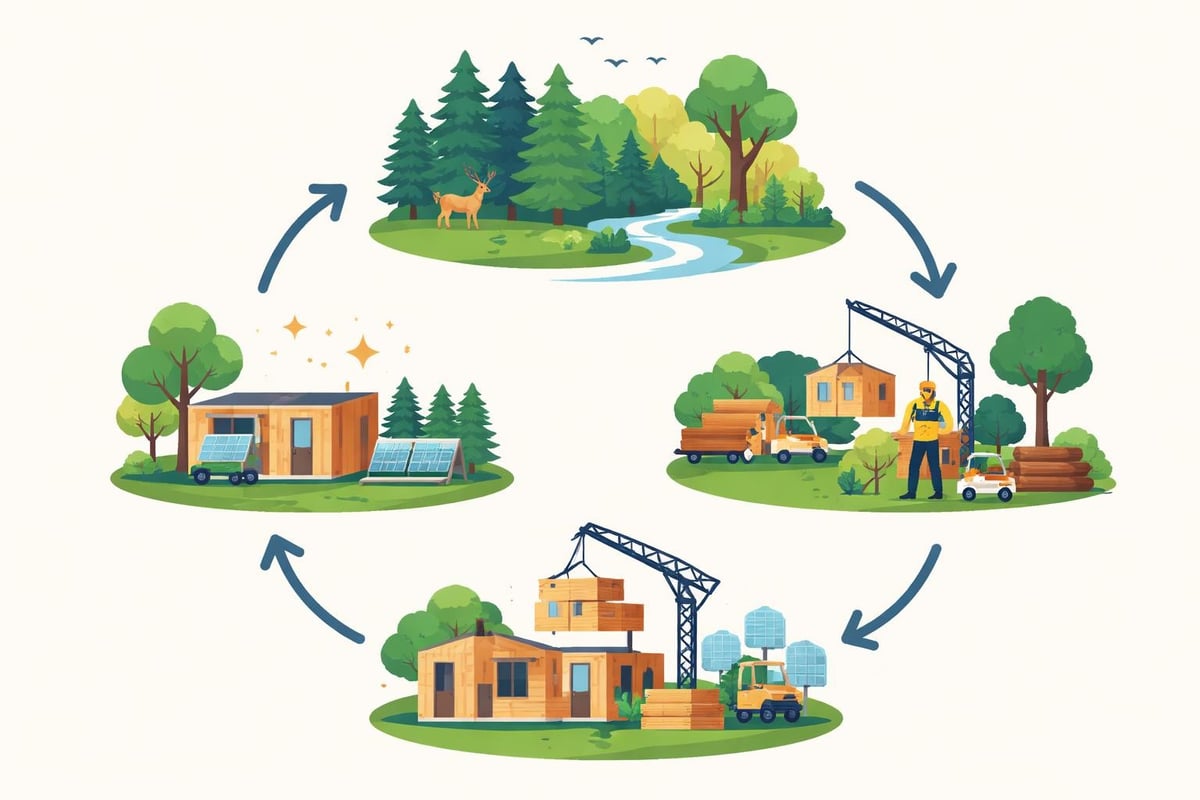
Modern timber treatments and construction techniques ensure wooden modular houses achieve longevity comparable to traditional buildings whilst maintaining their environmental advantages. Properly maintained timber structures regularly exceed 100-year service lives, demonstrating that sustainability needn't compromise durability.
Thermal Performance and Energy Efficiency
Wooden modular houses deliver exceptional thermal performance through a combination of timber's natural insulating properties and modern construction techniques. The cellular structure of wood provides inherent thermal resistance, whilst factory-controlled assembly ensures consistent insulating timber frame walls without gaps or thermal bridges common in traditional construction.
Heating and Cooling Benefits
Timber-framed walls typically achieve superior U-values compared to standard cavity wall construction, reducing heat loss during winter months and maintaining comfortable interior temperatures during summer. This thermal efficiency translates directly to reduced energy consumption and lower utility costs throughout the building's operational life.
The advantages of wooden houses in energy efficiency stem from both material properties and construction precision. Factory assembly allows for meticulous insulation installation, eliminating gaps and ensuring consistent thermal performance across all building elements.
| Performance Metric | Wooden Modular House | Traditional Masonry |
|---|---|---|
| Wall U-Value | 0.15-0.18 W/m²K | 0.25-0.30 W/m²K |
| Air Permeability | <3 m³/h/m² | 5-8 m³/h/m² |
| Annual Heating Costs | £600-800 (typical) | £1,000-1,400 (typical) |
| Thermal Mass Response | Moderate | High (slower response) |
Wooden modular houses respond more quickly to heating adjustments than masonry structures, allowing occupants to achieve comfortable temperatures rapidly when required whilst minimising energy waste during unoccupied periods. This responsiveness particularly benefits households with variable occupancy patterns.
Construction Timeline and Cost Considerations
The efficiency gains from modular construction significantly reduce overall project timelines compared to traditional building methods. Whilst site preparation proceeds, timber specialists simultaneously manufacture building modules in workshop facilities, effectively compressing the construction schedule by running parallel processes.
Project Duration Expectations
A typical wooden modular house project progresses from initial design to completion in 16-24 weeks, roughly half the duration required for equivalent traditional construction. This accelerated timeline reduces financing costs, temporary accommodation expenses, and site management overheads.
Construction phases include:
- Design and planning approval (4-8 weeks)
- Foundation preparation (2-3 weeks)
- Module manufacturing (8-12 weeks, concurrent with foundations)
- On-site assembly and weatherproofing (1-2 weeks)
- Internal finishing and services connection (3-4 weeks)
The features of modular houses include predictable pricing structures that reduce financial uncertainty. Factory production environments enable accurate material quantification and labour estimation, minimising the budget overruns frequently associated with traditional construction projects.
Understanding frame house costs requires considering both initial construction expenses and long-term operational savings. Whilst upfront costs for wooden modular houses may align closely with quality traditional builds, reduced energy consumption and maintenance requirements deliver superior lifetime value.
Structural Durability and Maintenance Requirements
Properly engineered wooden modular houses demonstrate exceptional structural integrity, with timber frameworks providing strength-to-weight ratios superior to many alternative materials. Modern timber treatments and construction techniques ensure resistance to biological degradation, moisture damage, and pest infestation when appropriate protective measures are implemented.
Long-Term Performance Factors
The durability of wooden modular houses depends on several interconnected factors, including timber species selection, treatment methods, structural design, and ongoing maintenance protocols. Oak and other hardwoods naturally resist decay through their dense cellular structure and chemical composition, whilst engineered timber products incorporate preservative treatments for enhanced longevity.
Essential maintenance considerations include:
- External timber inspection and protective coating renewal every 3-5 years
- Gutter and drainage system verification to prevent moisture accumulation
- Roof covering condition assessment and prompt repair of any breaches
- Ventilation system maintenance to control internal humidity levels
- Structural connection inspection at recommended intervals
The advantages and disadvantages of wooden houses include maintenance requirements that differ from masonry construction. Timber requires periodic attention to external finishes, though modern treatments have significantly extended service intervals compared to historical practices.
| Maintenance Aspect | Frequency | Typical Cost |
|---|---|---|
| External Treatment | 3-5 years | £1,500-3,000 |
| Structural Inspection | 10 years | £300-500 |
| Roof Maintenance | Annual check | £150-250 |
| Drainage Clearance | Bi-annual | £100-200 |
Building Regulations and Planning Considerations
Wooden modular houses must satisfy identical building regulation requirements as traditional construction, addressing structural stability, fire safety, thermal performance, accessibility, and numerous other technical standards. The modular approach often facilitates compliance through standardised designs and factory testing protocols that verify performance before site installation.
Planning Permission Pathways
Planning authorities evaluate wooden modular house applications using the same criteria applied to conventional buildings, focusing on design appropriateness, neighbourhood character integration, and environmental impact. The benefits of prefabricated wooden houses include faster approval processes in some cases, particularly when designs align with established local architectural precedents.
Pre-manufactured modules undergo rigorous structural calculations and testing to demonstrate compliance with British Standards. This factory verification provides building control officers with documented evidence of regulatory conformance, potentially streamlining approval processes and reducing on-site inspection requirements.
Specialist timber framing companies navigate these regulatory requirements routinely, ensuring projects meet all statutory obligations whilst delivering buildings that exceed minimum performance standards. Their expertise proves particularly valuable when pursuing innovative designs or implementing advanced sustainable technologies.
Integration with Modern Building Technologies
Contemporary wooden modular houses readily accommodate advanced building technologies, from renewable energy systems to intelligent home automation. The design flexibility inherent in timber construction supports integration of these features during initial manufacturing rather than requiring retrofitting.
Smart Home and Sustainable Systems
Solar photovoltaic panels, battery storage systems, heat pumps, and mechanical ventilation with heat recovery integrate seamlessly into wooden modular house designs. Factory installation of these systems ensures optimal positioning, proper commissioning, and complete weatherproofing before modules reach construction sites.
Timber's natural properties complement sustainable technologies particularly effectively. The material's thermal performance reduces heating demands, allowing smaller, more economical renewable energy systems to meet household requirements. Similarly, timber's hygroscopic characteristics help regulate internal humidity when combined with appropriate ventilation strategies.
Modern post and beam frame construction techniques support sophisticated service integration whilst maintaining aesthetic appeal through exposed structural elements. Concealed service routes within wall and floor modules provide flexibility for future technological upgrades without compromising architectural character.
The modular construction approach enables pre-wiring for emerging technologies, future-proofing homes against evolving connectivity and automation standards. This forward-thinking design consideration protects long-term property values whilst enhancing occupant comfort and convenience.
Site Preparation and Foundation Requirements
Successful wooden modular house projects begin with appropriate site preparation and foundation design. The relatively lightweight nature of timber structures compared to masonry buildings influences foundation specifications, often permitting more economical solutions whilst maintaining structural stability.
Foundation Options and Considerations
Wooden modular houses accommodate various foundation types depending on site conditions, budget constraints, and architectural requirements. Common approaches include traditional concrete strip foundations, reinforced concrete slabs, and engineered pile systems for challenging ground conditions.
Ground condition assessment remains critical regardless of foundation type selected. Geotechnical surveys identify load-bearing capacity, drainage characteristics, and potential obstacles that might affect construction timelines or costs. This investigation informs foundation design and identifies any remedial work required before module installation.
Foundation preparation steps typically include:
- Site clearance and topsoil removal
- Excavation to required depths according to engineering specifications
- Installation of drainage and service entry points
- Formwork construction and reinforcement positioning
- Concrete pouring, curing, and quality verification
The reduced weight of wooden modular houses compared to equivalent masonry structures decreases foundation loading, potentially enabling more economical solutions particularly on sites with moderate ground conditions. This weight advantage also reduces settlement risks and associated structural movement concerns.
Factory Production and Quality Assurance
The controlled environment of factory production facilities delivers consistent quality standards difficult to replicate with traditional on-site construction methods. Climate-controlled workshops eliminate weather-related delays whilst enabling year-round manufacturing regardless of seasonal conditions.
Manufacturing Process Overview
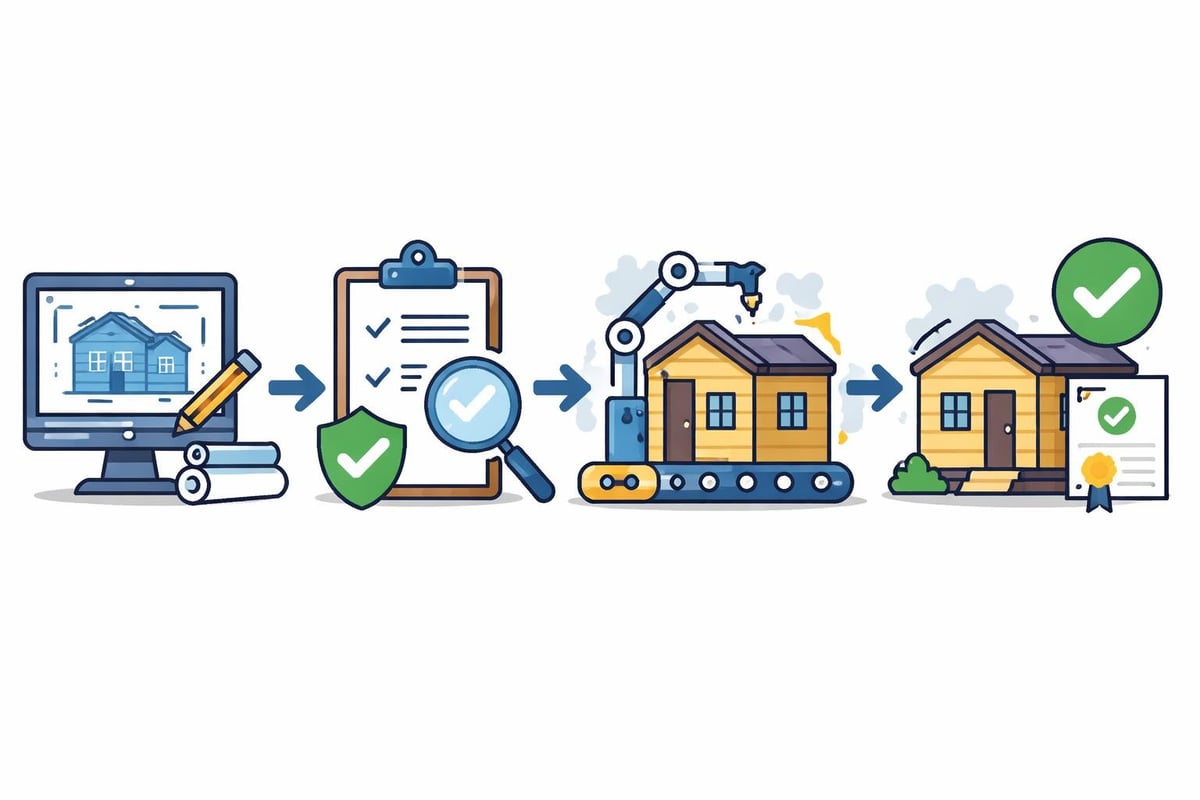
Timber specialists begin by selecting appropriate materials, verifying moisture content and structural properties before processing. Computer-controlled cutting equipment ensures dimensional accuracy, whilst experienced craftsmen execute complex joinery connections requiring traditional skills and judgement.
Assembly proceeds systematically with regular inspection checkpoints verifying compliance with specifications. Internal services, insulation, and membrane installations occur before modules receive protective coverings for transportation. This sequenced approach ensures each component meets exacting standards before progression to subsequent stages.
The precision achievable in factory settings surpasses typical site construction tolerances, resulting in tighter building envelopes and superior thermal performance. Modules arrive at construction sites substantially complete, requiring only connection to adjacent units and final finishing work.
| Production Stage | Quality Checks | Timeline |
|---|---|---|
| Timber Selection | Moisture, grade verification | Day 1-2 |
| Cutting and Processing | Dimensional accuracy | Week 1-2 |
| Frame Assembly | Joint integrity, alignment | Week 2-4 |
| Services Installation | System testing, compliance | Week 4-6 |
| Insulation and Sealing | Thermal performance | Week 6-8 |
| Final Inspection | Comprehensive review | Week 8-10 |
Transport and On-Site Assembly
Transporting wooden modular houses from manufacturing facilities to construction sites requires careful planning and coordination. Module dimensions must accommodate road transport restrictions whilst maximising factory completion to minimise on-site work.
Logistics and Installation Process
Specialist haulage contractors transport modules using low-loader vehicles equipped with appropriate securing systems. Journey planning considers route constraints including bridge clearances, road widths, and turning circles to ensure safe delivery without infrastructure damage.
On-site assembly typically requires crane equipment to position modules accurately onto prepared foundations. Experienced installation teams connect modules structurally and seal joints to achieve weathertight envelopes. This process generally completes within days, dramatically reducing site activity duration compared to traditional construction.
Following module positioning and connection, contractors complete external cladding application, service connections to utilities, and internal finishing work. The speed of this assembly phase minimises disruption to neighbouring properties whilst rapidly achieving weatherproof status that protects building components from environmental exposure.
Understanding timber used in construction helps appreciate the engineering required to create modules that withstand transportation stresses whilst maintaining structural integrity. Robust bracing systems protect components during handling and transit before removal after installation.
Interior Finishing and Customisation
Once wooden modular houses achieve weathertight status, interior finishing work proceeds rapidly compared to traditional construction where drying times for wet trades often extend project durations. Timber structures accommodate diverse finishing specifications from rustic exposed framework to contemporary minimalist interiors.
Design Expression Opportunities
Interior designers can specify various wall finishes, flooring materials, and decorative elements without structural limitations imposed by conventional construction. Timber frameworks readily support plasterboard linings, timber cladding, or painted finishes according to aesthetic preferences and functional requirements.
The dry construction nature of wooden modular houses eliminates lengthy drying periods associated with plasterwork and screeds, allowing decorative finishes and floor coverings to be installed immediately. This accelerates project completion whilst reducing risks of moisture-related defects during construction.
Exposed timber elements provide distinctive character whilst demonstrating the structural honesty of oak framed homes. Carefully detailed connections between framework members create visual interest whilst celebrating traditional joinery craftsmanship within contemporary living spaces.
Wooden modular houses represent the convergence of sustainable materials, efficient construction methods, and contemporary design flexibility, offering homeowners an environmentally responsible alternative to traditional building approaches. These timber structures deliver superior thermal performance, reduced construction timelines, and architectural versatility whilst supporting the UK's transition towards low-carbon housing solutions. If you're considering a timber-framed home that combines traditional craftsmanship with modern efficiency, Acorn to Oak Framing brings decades of expertise in creating bespoke timber structures that exceed expectations, delivering quality and attention to detail throughout every project phase.


