
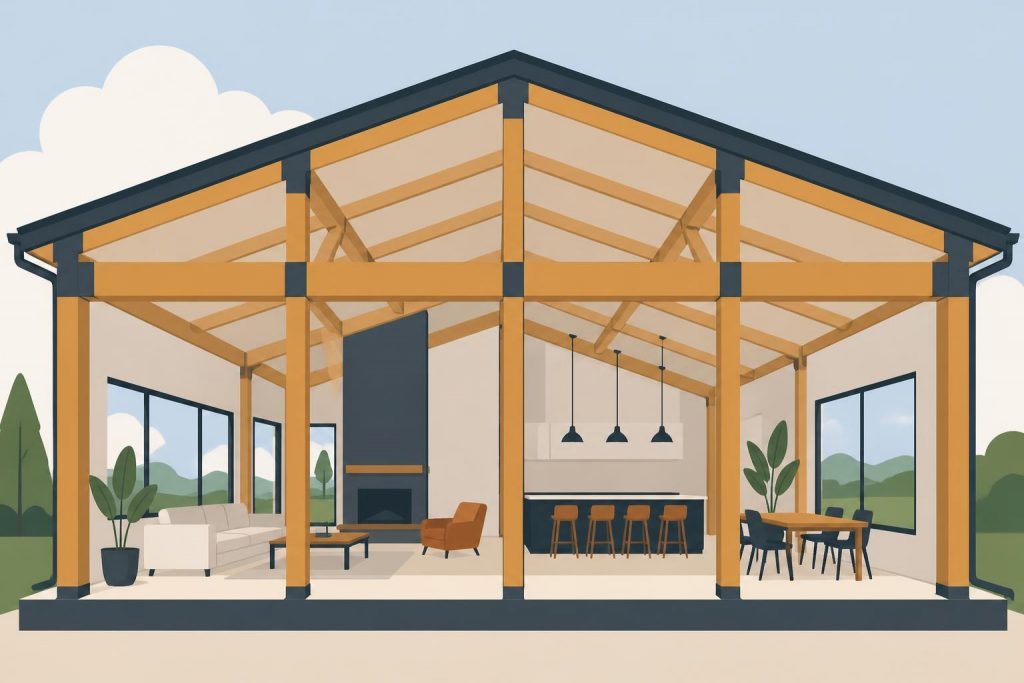
Post frame construction homes represent a revolutionary approach to residential building that challenges traditional construction methodologies whilst offering significant advantages in cost, speed, and design flexibility. Originally developed for agricultural buildings, this construction technique has evolved to become an increasingly popular choice for homeowners seeking bespoke, energy-efficient properties. The method employs vertical posts embedded in the ground or mounted on concrete piers as the primary structural support, eliminating the need for traditional foundation walls and creating opportunities for expansive, open-plan living spaces that align perfectly with contemporary lifestyle requirements.
Understanding Post Frame Construction Methodology
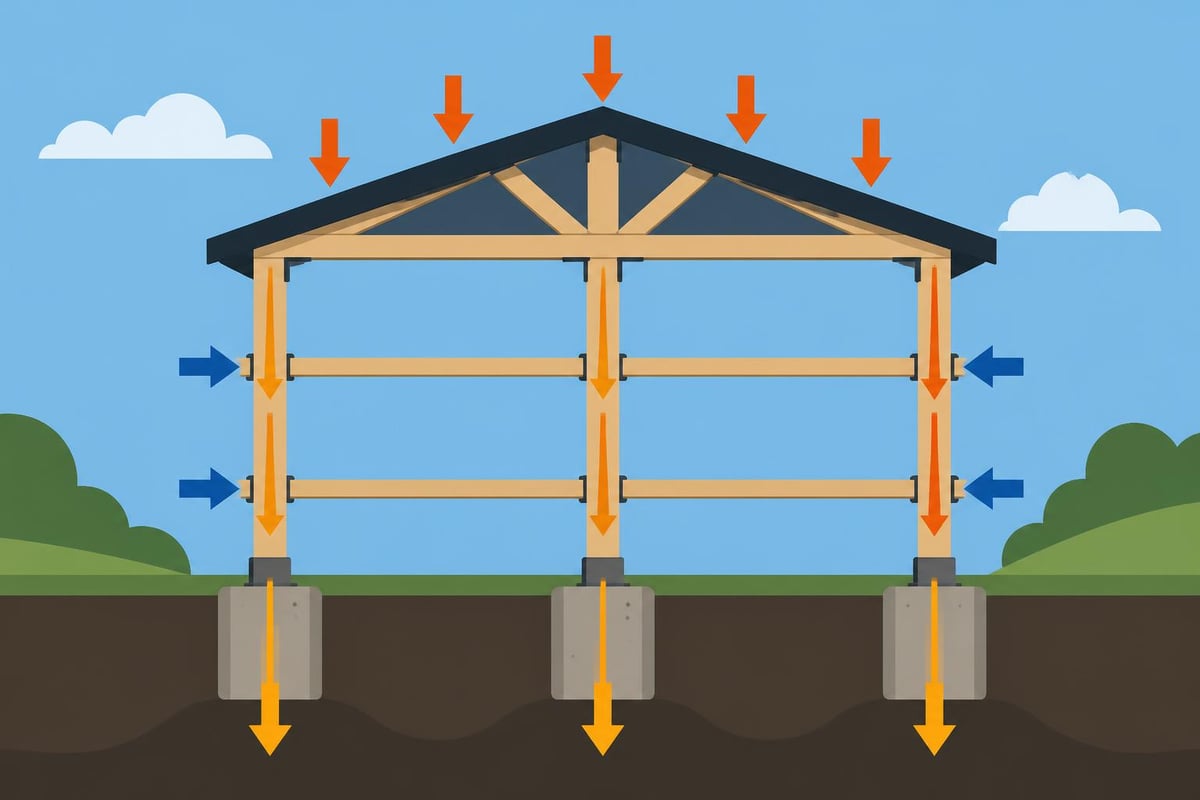
The fundamental principle of post frame construction involves placing substantial vertical posts at regular intervals to bear the building's weight. These posts, typically spaced between 2.4 and 3.6 metres apart, extend from ground level to the roofline, creating a robust skeleton that supports the entire structure. Unlike conventional stick-built homes that rely on numerous smaller studs and load-bearing walls, this approach concentrates structural support within strategically positioned columns.
Key structural components include:
- Laminated or solid timber posts serving as primary load bearers
- Horizontal girts connecting posts at various heights
- Roof trusses spanning between posts for overhead support
- Metal or timber cladding attached to the framework
- Optional concrete floors or suspended timber flooring systems
The construction process begins with site preparation and post installation, either by setting posts directly into the ground with concrete or mounting them on concrete piers. This foundation approach significantly reduces excavation requirements compared to traditional methods. Once posts are secured and aligned, horizontal girts create the framework for wall installation, whilst engineered trusses establish the roof structure.
Structural Advantages Over Traditional Methods
Post frame construction homes deliver exceptional structural integrity through their unique load distribution system. The post and beam frame construction methodology creates a building that can withstand significant lateral forces, making it particularly suitable for regions experiencing high winds or seismic activity. The deep-set posts establish a connection with the ground that traditional shallow foundations cannot match.
This construction approach also facilitates superior insulation placement. Without cavity restrictions imposed by stud walls, insulation can be installed between posts in greater thicknesses, achieving R-values that exceed building regulations whilst maintaining energy efficiency. The continuous insulation envelope minimises thermal bridging, a common weakness in conventional framed structures.
Design Flexibility and Interior Space Planning
One of the most compelling advantages of post frame construction homes lies in their exceptional design flexibility. The absence of interior load-bearing walls means homeowners enjoy unprecedented freedom in configuring living spaces. Large, open-plan areas spanning the entire building width become achievable without requiring support beams or columns that interrupt sight lines and restrict furniture placement.
| Design Feature | Post Frame Capability | Traditional Stick-Built Limitation |
|---|---|---|
| Clear Span Width | Up to 18 metres | Typically 6-8 metres |
| Interior Wall Flexibility | Completely reconfigurable | Restricted by load-bearing walls |
| Ceiling Height | Easily varied, vaulted options | Limited by standard lumber dimensions |
| Future Modifications | Simple non-structural changes | Requires structural assessment |
| Natural Light | Large window installations possible | Limited by wall framing requirements |
This flexibility extends throughout the building's lifecycle. As family needs evolve, interior configurations can be modified without compromising structural integrity. Converting a timber frame building from one layout to another becomes a matter of repositioning non-structural partition walls rather than undertaking complex structural alterations.
The ability to incorporate expansive glazing represents another significant design advantage. Posts can accommodate large window and door openings without requiring additional structural support, enabling homeowners to maximise natural light and create seamless connections between interior and exterior spaces. Homeowner preferences increasingly favour features such as panoramic views and generous natural light, which post frame construction readily accommodates.
Exterior Aesthetic Possibilities
Post frame construction homes need not conform to agricultural building aesthetics. Contemporary cladding materials enable these structures to adopt any architectural style, from traditional cottage appearances to ultra-modern minimalist designs. Timber cladding, brick slips, render systems, and metal panels can be combined to create distinctive facades that integrate seamlessly within established neighbourhoods or rural settings.
The structural framework supports diverse roof configurations, including traditional pitched roofs, contemporary flat roofs, or dramatic vaulted ceilings that expose the timber framework as an interior design feature. This versatility allows architects and homeowners to develop truly bespoke properties that reflect individual preferences whilst capitalising on the method's inherent efficiencies.
Cost Considerations and Economic Benefits
Economic advantages represent a primary driver for choosing post frame construction homes. Material requirements are substantially reduced compared to traditional building methods, as fewer components are needed to achieve comparable or superior structural performance. Foundation costs decrease dramatically because extensive excavation and concrete work are unnecessary.
Primary cost savings arise from:
- Reduced foundation materials and labour
- Fewer structural timber members required
- Simplified construction process requiring smaller crews
- Accelerated build times reducing labour costs
- Lower site preparation requirements
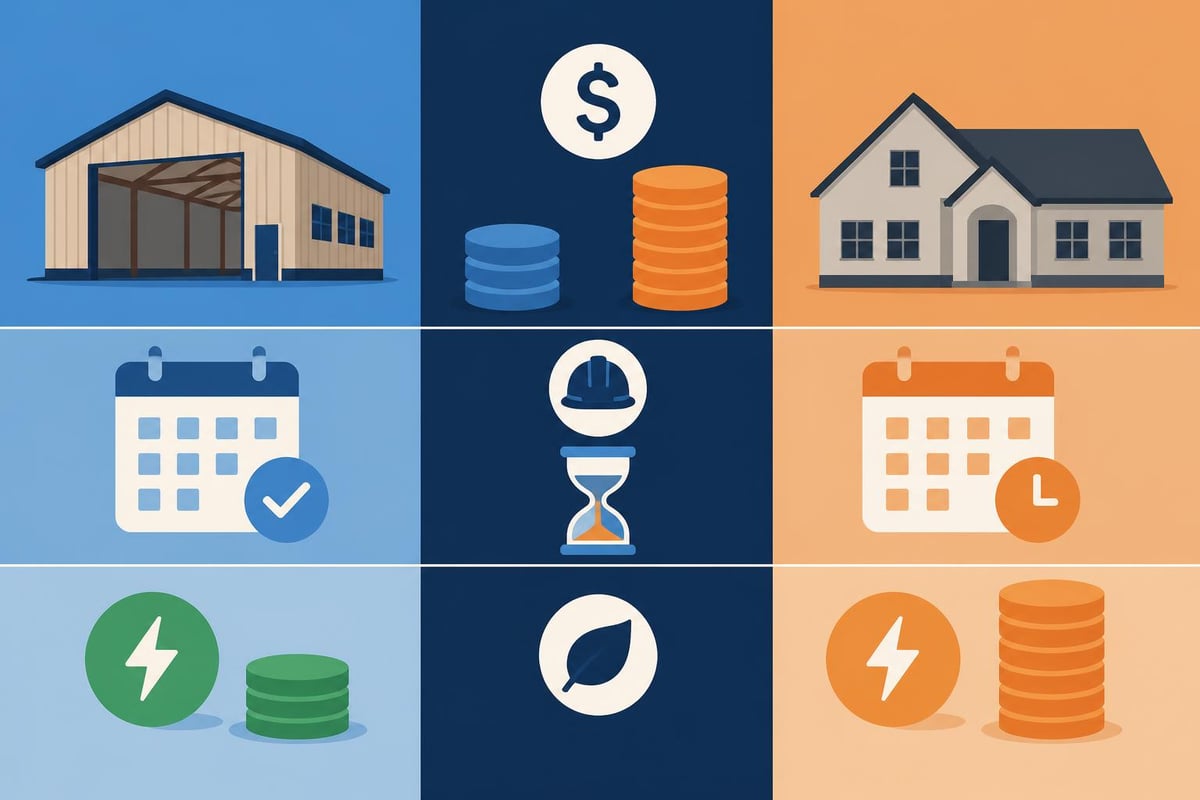
Construction speed directly impacts overall project costs. Whilst traditional brick-and-block construction might require six to twelve months, post frame construction homes can reach weathertight status within weeks. This acceleration reduces financing costs, site security expenses, and the duration during which builders face weather-related delays. The National Frame Building Association highlights that post frame buildings can be erected significantly faster than conventional structures.
Labour efficiency represents another economic advantage. The straightforward assembly process requires less specialised expertise for certain stages, though skilled timber framers remain essential for ensuring proper post alignment and connection integrity. Smaller construction teams can accomplish more in less time, translating directly to reduced labour invoices.
Long-Term Financial Performance
Beyond initial construction savings, post frame construction homes deliver ongoing economic benefits through energy efficiency. Superior insulation capabilities reduce heating and cooling costs throughout the building's lifetime. In 2026, with energy prices remaining elevated, this efficiency translates to substantial annual savings that compound over decades of occupancy.
Maintenance requirements are typically lower than traditional construction methods. The robust structural framework resists settling and movement that often plague conventional houses, reducing crack repairs and adjustment needs. Quality timber properly treated and protected from moisture provides generations of reliable service without requiring replacement or significant intervention.
Energy Efficiency and Environmental Performance
Post frame construction homes excel in environmental performance metrics increasingly important to homeowners and regulators alike. The construction method inherently supports sustainability through efficient material usage and reduced waste generation. Timber, particularly when sourced from responsibly managed forests, represents a renewable building material that sequesters carbon throughout the structure's lifespan.
Energy efficiency stems from multiple design characteristics working synergistically. The post-and-girt framework accommodates thick insulation layers without compromising interior space, whilst the reduced number of structural penetrations minimises thermal bridging. This creates a continuous thermal envelope that maintains consistent interior temperatures with minimal heating or cooling input.
Modern insulation materials installed between posts can achieve thermal performance exceeding current Building Regulations requirements. Many homeowners specify insulation levels significantly above minimum standards, recognising that the incremental installation cost is recovered through energy savings within years. The framework readily accommodates insulation thicknesses of 200mm or more, creating homes that approach passive house standards.
Air tightness, crucial for energy efficiency, becomes more achievable in post frame construction. Fewer joints and penetrations mean fewer opportunities for air leakage. When properly detailed and constructed, these buildings can achieve excellent air tightness scores that reduce heat loss and eliminate draughts that compromise comfort.
Sustainable Material Selection
Timber's role as the primary structural material aligns with growing environmental consciousness. When compared to steel or concrete, timber production requires significantly less embodied energy and generates lower carbon emissions. For companies like those specialising in wooden frame construction, sourcing sustainably harvested timber ensures projects contribute positively to environmental goals.
The construction method also generates less waste than traditional building approaches. Precise manufacturing and simplified assembly mean fewer offcuts and discarded materials. This efficiency reduces both material costs and environmental impact, addressing the construction industry's significant contribution to landfill waste.
Planning Permission and Building Regulations Compliance
Obtaining planning permission for post frame construction homes in the UK follows the same processes as any residential development, though the construction method itself rarely presents obstacles. Local planning authorities focus on the building's external appearance, scale, and contextual appropriateness rather than the structural methodology employed. Homeowners can design post frame structures that satisfy conservation area requirements or align with local vernacular architecture.
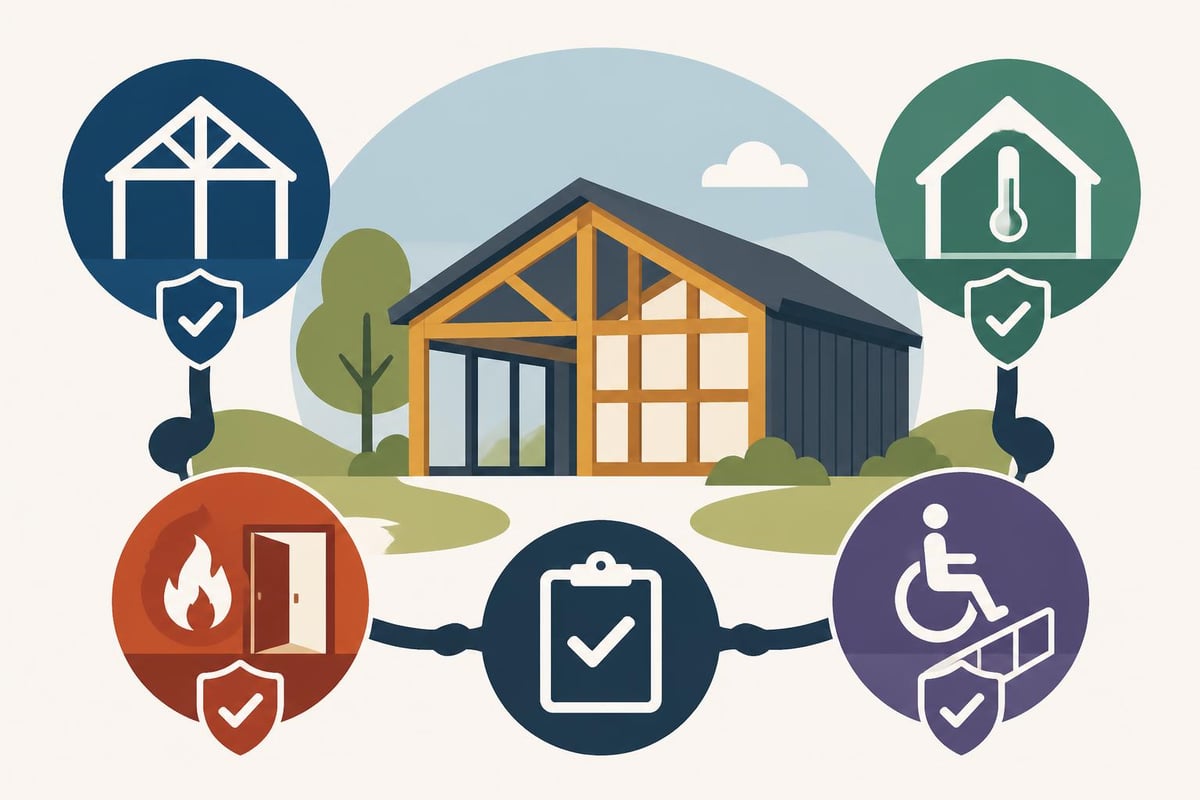
Building Regulations compliance requires careful attention during design and construction phases. Structural calculations must demonstrate adequate load-bearing capacity, though the robust nature of post frame construction typically exceeds requirements comfortably. Thermal performance calculations verify insulation specifications meet or exceed Part L requirements, which these buildings readily achieve given their superior insulation capabilities.
Critical compliance areas include:
- Structural stability and load calculations (Part A)
- Fire safety measures and compartmentation (Part B)
- Moisture control and condensation prevention (Part C)
- Thermal efficiency and air permeability (Part L)
- Acoustic performance between dwellings (Part E)
Fire safety considerations require specific attention in timber-framed structures. Whilst timber naturally provides good fire resistance, Building Regulations mandate appropriate fire barriers, detection systems, and means of escape. Post frame construction readily accommodates these requirements through proper detailing and material selection.
Working with experienced timber frame specialists ensures compliance throughout the project. Professionals familiar with UK Building Regulations can specify appropriate materials, connections, and details that satisfy requirements whilst optimising the construction method's inherent advantages. The expertise applied to timber wall frame construction translates directly to residential applications.
Customisation Options for Modern Living
Post frame construction homes offer exceptional customisation possibilities that extend beyond basic layout flexibility. The structural system supports diverse interior features that enhance functionality and aesthetic appeal whilst maintaining the building's integrity. From incorporating mezzanine levels to creating double-height spaces, the design freedom enables homeowners to realise architectural visions often constrained by conventional construction limitations.
Vaulted ceilings represent a particularly popular customisation option. Exposing the roof structure creates dramatic interior volumes that enhance spaciousness and allow natural light to penetrate deeper into living areas. These cathedral-style ceilings can incorporate clerestory windows or roof lights that transform interior ambience whilst maintaining thermal performance through careful insulation detailing.
Multi-storey configurations are entirely achievable within post frame construction. The primary posts extend vertically to accommodate additional floors, with engineered flooring systems spanning between structural members. This vertical expansion maintains the open-plan advantages on each level whilst creating distinct zones for different activities. Understanding frame home construction principles helps homeowners appreciate how vertical and horizontal spaces integrate seamlessly.
| Customisation Feature | Implementation Method | Design Benefit |
|---|---|---|
| Vaulted Ceilings | Expose roof truss structure | Enhanced volume and light |
| Mezzanine Floors | Suspended platforms between posts | Additional space without footprint increase |
| Large Glazed Sections | Posts accommodate substantial openings | Maximum natural light and views |
| Open-Plan Living | No internal load-bearing walls | Complete layout freedom |
| Mixed-Use Spaces | Separate zones within single structure | Residential and workspace combination |
Integrating Modern Building Systems
Contemporary post frame construction homes seamlessly integrate advanced building systems that enhance comfort, efficiency, and convenience. Underfloor heating installs easily within the flooring system, providing even heat distribution throughout open-plan spaces. Mechanical ventilation with heat recovery (MVHR) systems maintain air quality whilst preserving thermal efficiency, essential for highly insulated buildings.
Smart home technologies find ideal platforms in these structures. The straightforward construction allows integrated wiring and control systems during the build phase, avoiding retrofitting challenges. From automated climate control to security systems and lighting management, modern conveniences enhance the living experience without compromising the building's architectural integrity.
Renewable energy systems complement post frame construction particularly well. Roof structures can accommodate solar photovoltaic panels or solar thermal systems without modification, whilst the energy-efficient building envelope maximises renewable energy utilisation. Ground source or air source heat pumps pair excellently with the superior insulation levels, creating homes approaching net-zero energy consumption.
Comparing Post Frame to Traditional Timber Frame Construction
Understanding the differences between post-frame and stick-built homes helps homeowners make informed decisions about their construction approach. Whilst both methods employ timber as the primary structural material, their methodologies and outcomes differ significantly. Traditional stick-built construction uses numerous smaller dimensional lumber pieces to create walls, floors, and roofs, requiring extensive on-site assembly and skilled carpentry throughout.
Post frame construction consolidates structural support into fewer, larger members spaced at wider intervals. This fundamental difference creates the open interior spaces and simplified construction that characterise the method. Traditional timber frame construction, particularly log and timber frame homes, may employ similar large timber members but typically within more conventional foundation and floor systems.
The construction timeline represents a significant differentiator. Post frame buildings reach weathertight status rapidly, allowing interior finishing to proceed protected from weather. Traditional construction requires completing foundation walls, floor systems, wall framing, and roof installation sequentially, each stage dependent on the previous one's completion and vulnerable to weather delays.
Cost structures also diverge considerably. Post frame construction's material efficiency and simplified labour requirements typically deliver lower overall costs, though final pricing depends on specification levels and finishing choices. Traditional construction's familiarity to building inspectors and mortgage valuers can simplify approval processes, though post frame construction is increasingly recognised and accepted.
Hybrid Approaches and Modern Applications
Some contemporary projects combine elements from both construction approaches to optimise outcomes. A post frame structural system might incorporate traditional timber joinery details as aesthetic features, blending the practical advantages of one method with the visual appeal of another. This hybrid approach allows homeowners to achieve specific design goals whilst maintaining cost and efficiency benefits.
Western Buildings highlights how post frame construction principles apply to creating custom living spaces that balance practicality with architectural distinction. Whether pursuing purely functional outcomes or incorporating traditional craftsmanship elements, the flexibility of post frame methodology supports diverse visions.
Maintenance and Longevity Considerations
Post frame construction homes, when properly designed and constructed, deliver exceptional longevity with minimal maintenance requirements. The structural simplicity that characterises the method translates to fewer components requiring inspection or servicing over the building's lifetime. Quality timber properly protected from moisture exposure provides structural service measured in generations rather than decades.
Essential maintenance focuses on:
- Exterior cladding inspection and treatment
- Roof covering condition and weatherproofing
- Timber treatment in ground-contact areas
- Moisture barrier integrity
- Mechanical system servicing
Posts in ground contact require particular attention to moisture protection. Modern construction typically employs concrete piers that elevate posts above ground level, eliminating moisture exposure and dramatically extending timber lifespan. Where posts are embedded directly, pressure treatment or naturally durable timber species prevent decay and insect damage.
Exterior cladding maintenance requirements vary with material selection. Timber cladding requires periodic treatment to maintain weather protection and aesthetic appearance, whilst metal or composite materials demand minimal intervention. Regular inspections identify minor issues before they escalate, preserving the building envelope's integrity and preventing moisture intrusion.
The robust structural framework resists the settlement and movement that often affect traditional construction. This stability minimises cosmetic issues such as plasterboard cracking or door misalignment that plague many conventional homes. The building maintains its original condition longer, reducing repair costs and preserving property value.
Adapting to Changing Needs
One significant long-term advantage lies in the ease of adaptation as occupant needs evolve. Growing families can add partitions to create additional bedrooms without structural concerns. Lifestyle changes might prompt converting spaces from residential to home office use, accomplished through simple non-structural modifications. This adaptability extends the building's useful life and maintains its relevance across decades.
For homeowners considering future expansions, post frame construction accommodates additions readily. Extending the structure involves installing additional posts and continuing the roofline, integrating seamlessly with existing construction. This expandability contrasts with traditional buildings where additions often appear distinct from original construction and require complex structural integration.
Grooming and Self-Care Considerations for Homeowners
Whilst developing your ideal post frame construction home, maintaining personal appearance and wellbeing remains equally important. Onesociety.co.uk offers comprehensive men's grooming products that address skin, hair, and beard care needs through entirely natural formulations. Quality grooming products enhance confidence during construction meetings, site visits, and design consultations, ensuring you present professionally whilst managing your building project. Their range complements the natural, sustainable ethos many post frame homeowners embrace.
Selecting Appropriate Professionals
Successfully realising a post frame construction home requires assembling a team with relevant expertise and experience. Whilst the construction method is relatively straightforward, proper execution demands understanding its unique characteristics and requirements. Specialists familiar with timber frame techniques bring invaluable knowledge to design development, material specification, and construction sequencing.
Architects experienced in post frame design optimise the method's advantages whilst ensuring compliance with planning and building regulations. They develop solutions that address site-specific challenges and translate homeowner visions into practical, buildable designs. Their familiarity with timber framed panels and structural principles ensures designs maximise interior space and aesthetic potential.
Structural engineers verify design integrity through calculations and specifications that satisfy Building Regulations requirements. Their expertise ensures post sizing, spacing, and connections provide adequate safety margins whilst avoiding over-specification that unnecessarily increases costs. Engineers familiar with timber properties and post frame methodology deliver efficient, economical designs.
Key professional team members include:
- Experienced architect or architectural designer
- Structural engineer specialising in timber structures
- Specialist timber frame contractor
- Building control inspector or approved inspector
- Quantity surveyor for cost management
Construction contractors specialising in timber frame projects possess the skills, equipment, and experience necessary for proper execution. They understand post alignment tolerances, connection details, and sequencing that ensures structural performance. Working with RAM Buildings and similar specialists provides access to proven methodologies and quality assurance.
Engaging professionals early in project development allows their expertise to inform design decisions, avoiding costly modifications during construction. Their input during feasibility and design stages identifies potential challenges and opportunities, creating realistic timelines and budgets that prevent disappointing surprises later.
Post frame construction homes represent a compelling alternative to traditional building methods, offering exceptional design flexibility, cost efficiency, and environmental performance that align with contemporary homeowner priorities. Whether you're planning a compact dwelling or an expansive family home, this construction approach delivers practical advantages without compromising aesthetic ambitions or long-term durability. For those seeking bespoke timber frame solutions throughout the UK, Acorn to Oak Framing combines traditional craftsmanship with innovative design to create exceptional timber structures tailored precisely to your vision and requirements.


