
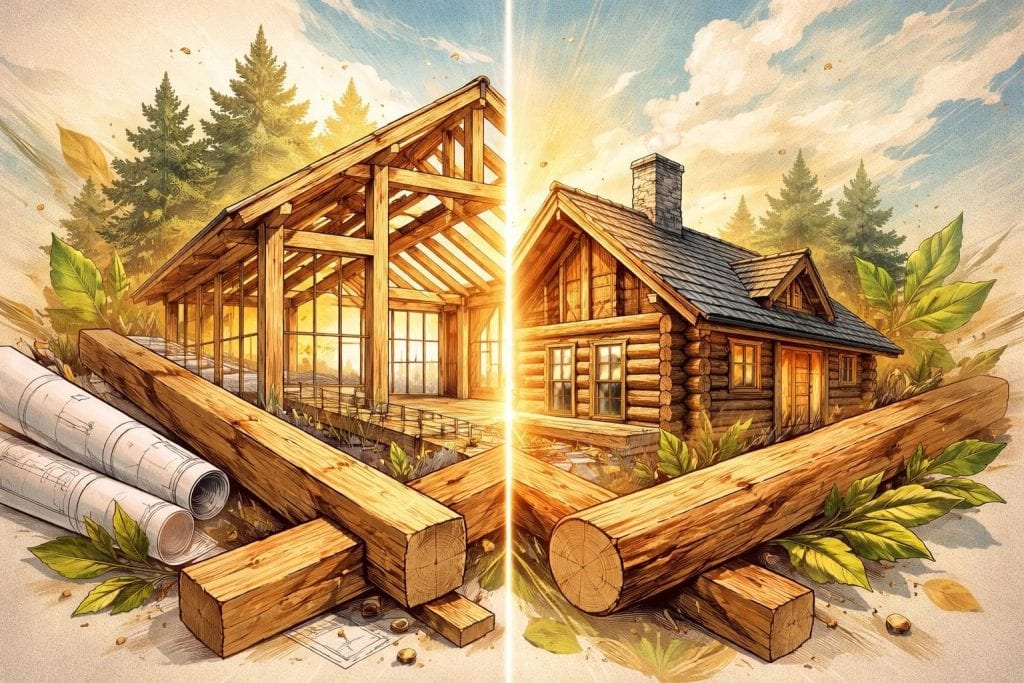
The fusion of traditional timber framing with log construction creates some of the most distinctive and enduring residential structures available today. A timber frame log home represents a unique architectural approach that combines the exposed structural beauty of timber framing with the rustic charm and thermal mass of log walls. For homeowners across the United Kingdom seeking a dwelling that balances heritage craftsmanship with modern performance standards, this building method offers exceptional versatility, sustainability, and aesthetic appeal. Understanding the nuances of timber frame log home construction empowers property owners to make informed decisions about design, materials, and long-term maintenance.
Understanding Timber Frame Log Home Construction
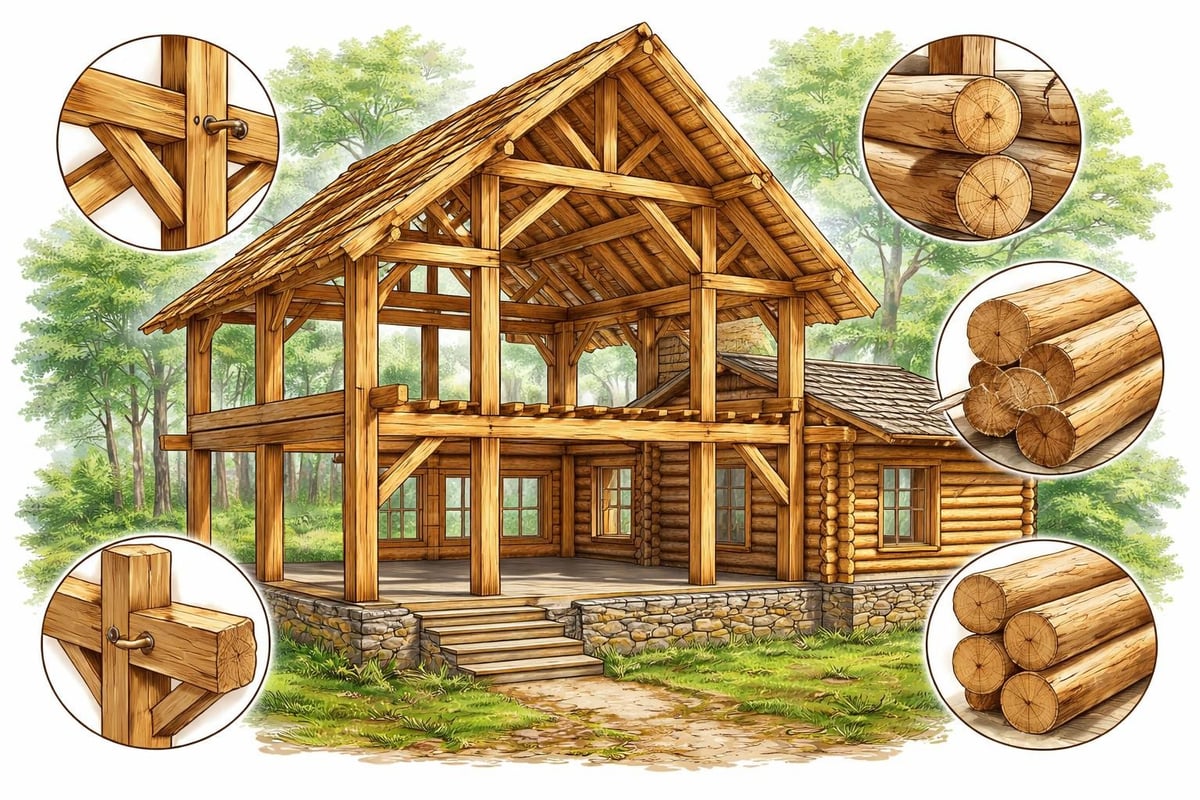
A timber frame log home differs fundamentally from conventional log cabins through its structural methodology. The timber frame serves as the primary load-bearing skeleton, whilst log elements provide infill, insulation, and exterior character. This hybrid approach offers greater design flexibility than traditional stacked log construction.
The structural integrity relies on carefully engineered timber frame joinery, typically featuring mortise and tenon connections secured with oak dowels or pegs. These joints distribute loads efficiently throughout the frame, allowing for larger open spaces and varied roof configurations. The log home industry basics demonstrate how professional construction standards ensure structural reliability.
Primary Components and Materials
Essential structural elements include:
- Post and beam framework in oak or engineered timber
- Horizontal log infill or structural insulated panels
- Ridge beams and purlins for roof support
- Knee braces and curved braces for lateral stability
- Foundation ties and anchoring systems
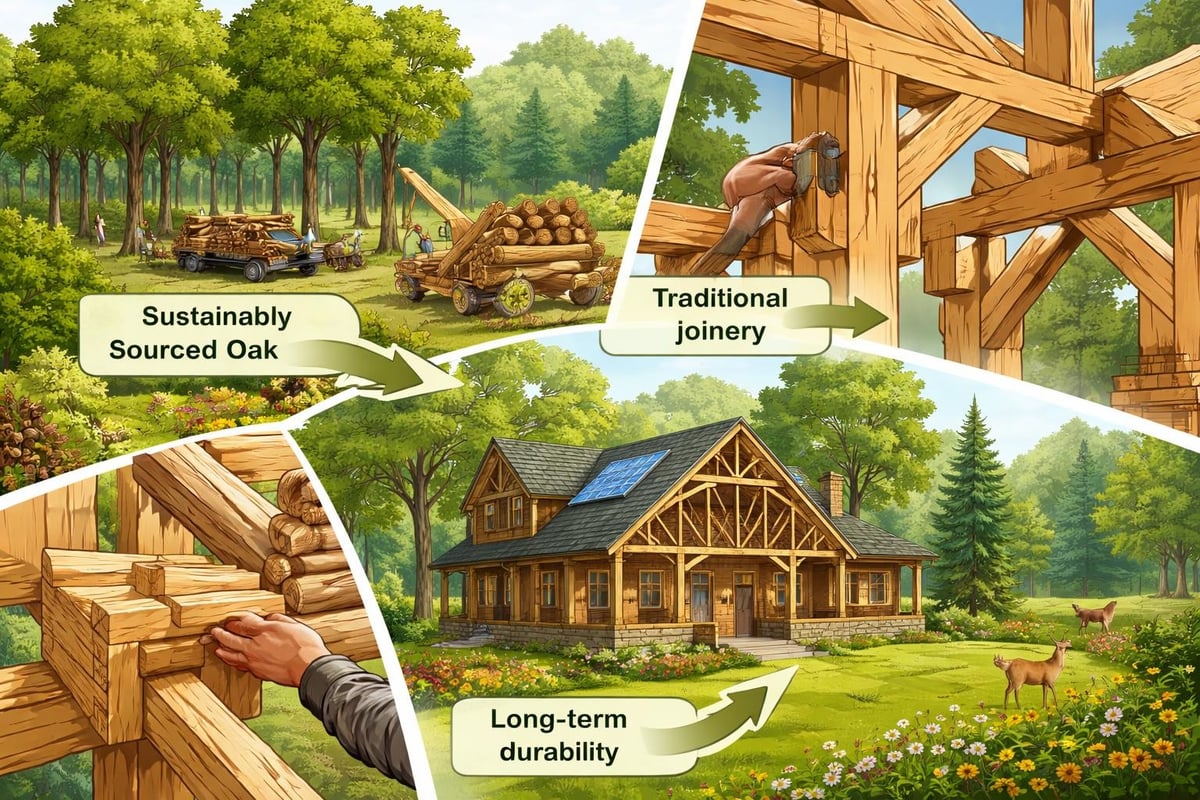
The timber species selection significantly impacts longevity and performance. Oak remains the premium choice for UK timber frame log home construction due to its density, durability, and natural resistance to decay. Sustainably sourced oak from timber buildings specialists ensures responsible forestry practices whilst maintaining structural excellence.
Design Flexibility and Architectural Possibilities
Timber frame log home construction liberates architects and homeowners from the geometric constraints of traditional log stacking. The frame accepts various infill materials, including full logs, half logs, timber panels, or even glazing between posts.
This versatility extends to interior spaces where exposed timber frames create dramatic visual focal points. Cathedral ceilings, mezzanine levels, and expansive glazed sections become structurally feasible without compromising the rustic aesthetic. The timber frame can accommodate modern amenities including underfloor heating, integrated technology systems, and advanced insulation standards required by UK building regulations.
| Design Aspect | Traditional Log Construction | Timber Frame Log Home |
|---|---|---|
| Wall height flexibility | Limited by log length | Unrestricted by frame design |
| Window/door placement | Restricted by structural needs | Flexible positioning |
| Interior partition walls | Load-bearing considerations | Non-structural freedom |
| Roof configurations | Simplified designs | Complex geometries possible |
Customisation Opportunities
Each timber frame log home presents unique customisation potential. Clients can specify timber grades, joinery visibility, infill materials, and finish treatments. Whether creating a bespoke structure or selecting from established configurations, the design process accommodates individual preferences whilst maintaining structural integrity.
The exterior profile varies significantly based on log selection. Full round logs create authentic rustic appeal, whilst squared timbers offer cleaner lines suited to contemporary aesthetics. Half-log siding provides the visual warmth of timber without the full thermal mass, allowing for enhanced insulation cavity depth.
Thermal Performance and Energy Efficiency
Modern timber frame log home construction addresses energy efficiency through strategic material layering and insulation placement. Unlike solid log walls which rely solely on timber mass for thermal resistance, the frame allows for dedicated insulation cavities.
Thermal performance strategies include:
- Structural insulated panels between timber posts
- Breathable membrane systems controlling moisture
- Natural fibre insulation compatible with timber movement
- Thermal mass from log elements moderating temperature swings
- High-performance glazing in timber frames
The timber frame itself contributes minimal thermal bridging when properly detailed. Oak posts and beams possess natural insulating properties superior to steel or concrete, whilst their relatively small cross-sectional area compared to wall surface reduces heat transfer pathways.
Meeting 2026 UK building regulations requires careful attention to U-values, air tightness, and renewable energy integration. A well-designed timber frame log home achieves these standards whilst preserving traditional character through thoughtful detailing and material specification.
Moisture Management
Successful long-term performance depends on moisture control. Timber frames require breathing wall assemblies that permit vapour diffusion whilst preventing liquid water penetration. Log infill naturally regulates humidity through its hygroscopic properties, absorbing and releasing moisture as conditions change.
Proper detailing at joints, roof overhangs, and foundation interfaces prevents water ingress that could compromise structural timber. Regular inspection and maintenance ensure protective finishes remain effective, particularly in the UK's varied climate conditions.
Construction Process and Timeline
Building a timber frame log home follows a systematic progression from design through completion. The timeline typically extends longer than conventional construction due to bespoke timber preparation and traditional joinery requirements.
Standard construction sequence:
- Foundation preparation and anchor point installation
- Timber frame fabrication in workshop conditions
- Frame erection and temporary bracing
- Roof structure completion for weather protection
- Log infill or panel installation between posts
- Window and door fitting within timber openings
- Interior finishing and service integration
- External treatment and final detailing
Workshop fabrication offers significant advantages over site assembly. Craftsmen work in controlled conditions, ensuring precise joinery and optimal timber quality. Each frame member receives individual attention, with joints cut using traditional techniques or CNC precision depending on project specifications.
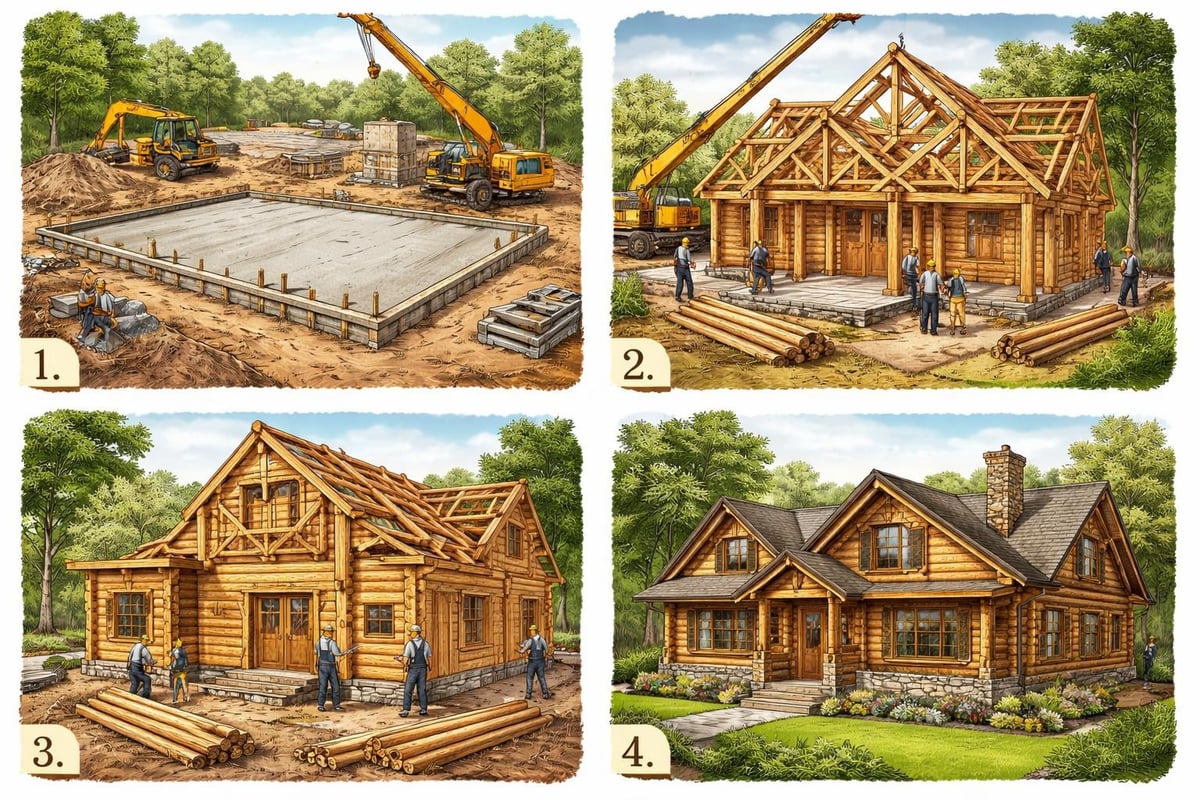
Frame erection typically progresses rapidly once components arrive on site. A skilled crew can raise substantial structures within days, immediately protecting the building footprint from weather. This swift enclosure reduces moisture exposure during construction, benefiting long-term timber performance.
Cost Considerations and Value Proposition
Timber frame log home construction represents a substantial investment reflecting the quality of materials, skilled labour, and bespoke design. Initial costs typically exceed standard construction methods, yet the value proposition extends beyond simple price comparison.
| Cost Factor | Consideration | Value Impact |
|---|---|---|
| Material quality | Premium oak vs. softwoods | Longevity and maintenance intervals |
| Joinery complexity | Traditional vs. modern connections | Aesthetic authenticity and structural performance |
| Customisation level | Standard vs. bespoke design | Personal satisfaction and property uniqueness |
| Energy performance | Enhanced insulation investment | Ongoing operational savings |
| Professional expertise | Specialist vs. general contractors | Build quality and regulatory compliance |
The durability of properly constructed timber frames measured in centuries rather than decades justifies premium initial investment. Oak timber develops greater structural strength as it seasons in place, whilst requiring minimal maintenance compared to materials susceptible to deterioration.
Property value appreciation often exceeds standard construction, particularly in rural and semi-rural locations where timber frame log home aesthetics complement natural surroundings. The distinctive character appeals to discerning buyers seeking homes with architectural integrity and sustainable credentials.
Budget Planning
Realistic budget planning encompasses foundation works, frame supply and erection, infill materials, roofing, glazing, services, and finishes. Engaging specialists like Acorn to Oak Framing early in the planning process ensures accurate cost projections based on specific design requirements.
Phased construction offers budget flexibility for some projects. Completing the weatherproof shell allows owner-builders to undertake interior finishing gradually, though professional installation of critical elements including structural frame, roofing, and building envelope ensures compliance with building regulations.
Maintenance and Long-term Care
A timber frame log home requires attentive maintenance to preserve structural integrity and aesthetic appeal. Whilst oak frames demand minimal intervention, protective treatments and regular inspection prevent deterioration.
Essential maintenance activities include:
- Annual inspection of timber for movement or checking
- Reapplication of external finishes every 3-5 years
- Monitoring foundation drainage and moisture barriers
- Checking roof weatherproofing and flashing details
- Treating any localised insect activity promptly
- Maintaining clearance between timber and ground contact
External timber finishes serve dual purposes: enhancing natural beauty whilst protecting against UV degradation and moisture penetration. Modern microporous treatments permit vapour diffusion whilst repelling liquid water, maintaining the breathing characteristics essential to timber frame performance.
Internal exposed timbers develop rich patinas over time, requiring only occasional cleaning to remove dust and maintain appearance. The natural movement of oak as it seasons creates character rather than defects, with minor checking and slight dimensional changes considered normal and desirable.
Addressing Common Concerns
Timber frame log home owners occasionally encounter settlement as green oak dries. Proper initial design accommodates this movement through adjustable fixings at service connections and flexible detailing at junctions with rigid elements. Understanding how authentic log homes manage these characteristics helps set appropriate expectations.
Insect activity remains rare in properly maintained oak frames, particularly when timber remains dry and well-ventilated. Prevention through good design proves more effective than remedial treatments, with adequate roof overhangs, proper drainage, and moisture barriers eliminating conditions conducive to infestation.
Sustainability and Environmental Credentials
The environmental benefits of timber frame log home construction align with growing awareness of sustainable building practices. Timber represents a renewable resource that sequesters carbon throughout its service life, contrasting favourably with energy-intensive materials like concrete and steel.
Sustainably managed forestry ensures timber harvesting supports biodiversity whilst maintaining forest cover. Certification schemes verify responsible sourcing, providing assurance that materials originate from well-managed woodlands. British-grown oak minimises transportation impacts whilst supporting domestic forestry industries.
The longevity of timber frames reduces lifecycle environmental impacts. Structures lasting centuries avoid the demolition waste and replacement resource consumption associated with shorter-lived building methods. At end of life, timber components can be reclaimed, repurposed, or returned safely to biological cycles.
Operational Sustainability
Beyond embodied carbon considerations, timber frame log home performance during occupation influences overall environmental impact. Excellent thermal mass from log elements reduces heating and cooling demands, whilst natural materials create healthy indoor environments without off-gassing concerns.
Integration of renewable energy systems including solar panels, ground source heat pumps, and rainwater harvesting enhances sustainability credentials. The robust structure readily accommodates these technologies, future-proofing homes against evolving energy standards and environmental regulations.
Planning Permission and Regulatory Compliance
Securing planning permission for a timber frame log home requires careful attention to local planning policies and design guidelines. Whilst timber construction enjoys broad acceptance across the UK, specific locations may impose restrictions on materials, height, or architectural style.
Conservation areas and green belt designations introduce additional considerations. The traditional character of timber frame log home construction often proves advantageous in sensitive locations where contemporary designs might face opposition. Demonstrating sympathy with local vernacular architecture strengthens planning applications.
Building regulations compliance extends beyond structural adequacy to encompass thermal performance, fire safety, accessibility, and drainage. Working with experienced timber frame specialists ensures designs meet all statutory requirements whilst preserving traditional aesthetic qualities. The products explained section helps clients understand how different timber structures comply with UK regulations.
Professional Partnerships
Successful project delivery depends on assembling appropriate professional expertise. Structural engineers with timber frame experience ensure designs satisfy loading requirements and provide necessary calculations for building control approval. Architects familiar with traditional construction methods translate client visions into practical, compliant designs.
Specialist timber frame companies bring invaluable knowledge of material behaviour, joinery techniques, and assembly methodologies. Their involvement from early design stages through construction ensures technical details support both performance and aesthetics.
Heritage and Cultural Significance
Timber frame construction represents one of humanity's oldest building technologies, with examples surviving from mediaeval periods demonstrating the technique's enduring viability. The timber framing craft tradition continues through organisations dedicated to preserving and advancing these skills.
A timber frame log home connects occupants with this rich heritage whilst serving contemporary needs. The visible joinery, substantial timbers, and honest expression of structural elements create spaces with character and authenticity often absent in modern construction.
This cultural continuity appeals to homeowners valuing craftsmanship and traditional building methods. Each timber frame represents hours of skilled labour, from timber selection through cutting, fitting, and assembly. The result transcends mere shelter, becoming a testament to human ingenuity and material understanding.
Regional Variations
Timber frame traditions vary regionally, reflecting local timber availability, climate conditions, and cultural preferences. Understanding the historical context of log houses reveals how construction methods evolved to suit specific environments and requirements.
UK timber framing typically employs oak for its superior durability in damp conditions, whilst continental European approaches might favour pine or fir. These regional variations inform contemporary practice, with builders selecting methods and materials proven effective in local conditions.
Selecting the Right Builder
Choosing a timber frame log home builder represents perhaps the most critical project decision. The builder's expertise, craftsmanship standards, and project management capabilities directly determine outcome quality and client satisfaction.
Essential evaluation criteria include:
- Portfolio demonstrating relevant experience and quality
- Professional certifications and insurance coverage
- Client testimonials and completed project references
- Workshop facilities and equipment capabilities
- Understanding of UK building regulations
- Transparent pricing and contract terms
- Communication responsiveness and professionalism
Visiting completed projects and speaking with previous clients provides invaluable insights into builder performance. Observing joinery quality, finish standards, and how well structures have aged reveals the builder's true capabilities beyond marketing materials.
Specialist companies focusing exclusively on timber frame construction typically offer superior expertise compared to general builders undertaking occasional timber projects. Their dedicated craftsmen develop refined skills through repetition, whilst accumulated knowledge informs design refinement and problem-solving.
Geographic Considerations
Builder location influences project logistics, site visit frequency, and transportation costs. Local or regional specialists understand area-specific planning requirements and climate considerations affecting design and material selection. However, exceptional builders warrant consideration regardless of distance for significant projects where quality supersedes convenience.
The gallery of completed structures demonstrates the range achievable with skilled craftsmanship and thoughtful design. Examining diverse examples helps clients articulate preferences and understand possibilities within budget parameters.
Interior Design and Living Experience
Living in a timber frame log home offers a distinctive experience shaped by natural materials, exposed structure, and connection to traditional building methods. Interior spaces benefit from the warmth and acoustic properties of timber, creating environments that feel grounded and authentic.
The exposed frame defines spatial organisation, with posts and beams creating natural zones within open floor plans. This structural expression eliminates needs for decorative beams or false timber details common in conventional construction attempting rustic aesthetics.
Natural light interaction with timber surfaces creates dynamic interior environments that change throughout the day and seasons. The grain patterns, colour variations, and surface textures of oak provide visual interest requiring minimal additional decoration. Many homeowners embrace minimalist approaches allowing the timber frame to dominate interior character.
Furniture placement and interior design work with rather than against structural elements. Posts become anchoring points for room arrangements, whilst beams define ceiling planes and sight lines. This integration of structure and space creates cohesive environments where architecture and occupancy complement each other.
Future Trends and Innovations
Timber frame log home construction evolves continuously as builders integrate new technologies with traditional methods. Computer-aided design and CNC machinery enable precise joinery whilst maintaining traditional aesthetics. Digital modelling allows clients to visualise completed structures before construction commences, reducing uncertainty and facilitating design refinement.
Material science advances improve timber treatments, adhesives, and protective finishes. Modern products enhance durability and reduce maintenance requirements whilst remaining compatible with timber's natural properties. Research into hybrid construction methods explores how timber frames combine with innovative insulation materials and renewable energy systems.
Growing environmental awareness drives demand for sustainable construction methods, positioning timber frame log home construction favourably for future market growth. As regulations increasingly penalise carbon-intensive building materials, timber's renewable credentials and carbon sequestration properties become compelling advantages.
The revival of traditional craftsmanship skills through training programmes and guild organisations ensures expertise continues to next generations. Young craftspeople entering the trade bring fresh perspectives whilst respecting time-tested techniques, advancing the craft without abandoning foundational principles.
Timber frame log home construction offers discerning property owners the opportunity to create distinctive, sustainable dwellings combining heritage craftsmanship with modern performance. From initial design through long-term enjoyment, these structures deliver exceptional quality and enduring value. Whether you're planning a new build or exploring alternatives to conventional construction, Acorn to Oak Framing brings specialist expertise in creating bespoke timber frame buildings that exceed expectations and stand the test of time.


