The art of traditional timber frame construction has survived for centuries, evolving from medieval necessity into a refined craft that combines heritage techniques with contemporary architectural vision. This ancient building method, characterised by its robust oak structures and intricate joinery, continues to captivate homeowners and builders seeking authentic, sustainable, and timelessly beautiful buildings. From grand manor houses to intimate garden structures, the principles established by master craftsmen hundreds of years ago remain relevant in today's construction landscape, offering durability, flexibility, and aesthetic appeal that modern materials struggle to replicate.
The Historical Foundations of Timber Framing
The Timber Framers Guild documents how traditional timber frame construction dominated European and Asian architecture for millennia before industrial manufacturing transformed building practices. In Britain, timber framing reached its zenith during the Tudor period, when skilled craftsmen created elaborate structures using locally sourced oak.
These historical buildings showcased remarkable engineering understanding. Master carpenters calculated loads, spans, and stresses without modern software, relying instead on proportional systems passed down through generations. The result was structures that have withstood centuries of weather, settlement, and use.
Why Oak Became the Timber of Choice
Oak emerged as the preferred species for several compelling reasons:
- Exceptional strength-to-weight ratio allowing wide spans with minimal deflection
- Natural durability resisting decay, insect damage, and moisture penetration
- Workability that permits precise joinery despite the wood's density
- Aesthetic character developing rich patina and figure over time
- Local availability throughout British woodlands for centuries
The relationship between timber frame construction heritage and oak remains inseparable. Green oak, freshly felled and still containing natural moisture, can be worked more easily than seasoned timber, allowing craftsmen to cut complex joints before the wood hardens fully.
Core Techniques and Joinery Methods
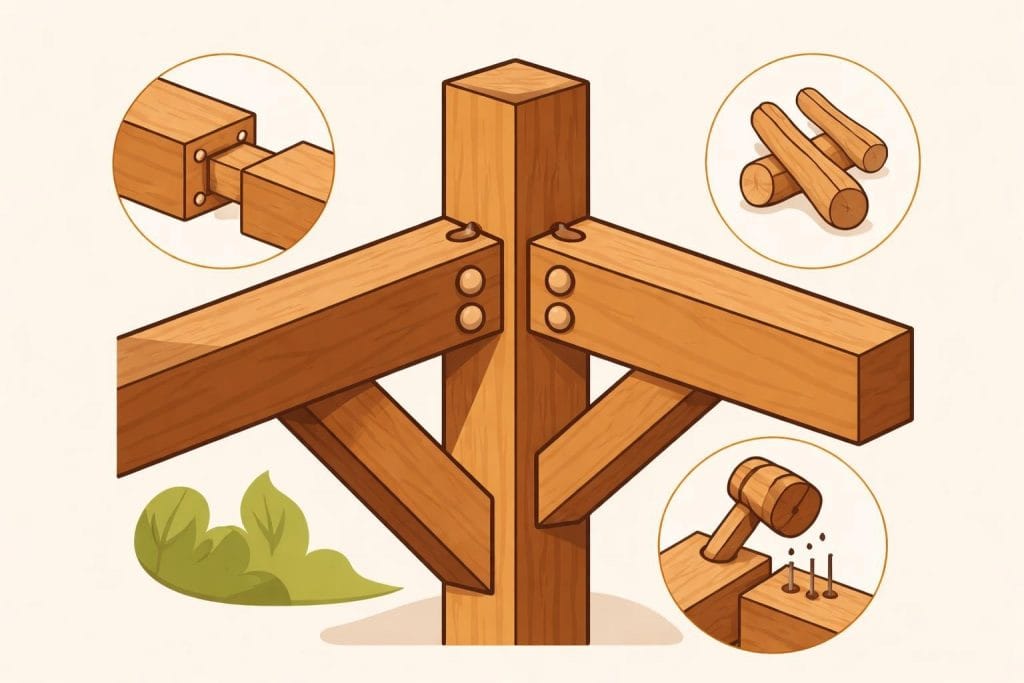
Traditional timber frame construction relies on sophisticated joinery rather than metal fasteners or adhesives. Each joint serves specific structural purposes, transferring loads through precisely cut timber-to-timber connections.
Essential Joint Types
The mortise and tenon forms the backbone of timber frame joinery. This joint features a projecting tenon cut on one member that fits snugly into a mortise cavity in another. Variations include:
| Joint Type | Application | Load Transfer |
|---|---|---|
| Through mortise and tenon | Post to beam connections | Compression and tension |
| Housed dovetail | Plate to post assemblies | Prevents lateral movement |
| Scarf joint | Extending beam length | Distributes bending stress |
| Lap joint | Brace to frame connections | Diagonal bracing stability |
Each joint achieves permanence through oak pegs driven through aligned holes, locking components together whilst allowing natural wood movement. Unlike modern fixings, these pegs compress slightly as timber seasons, actually tightening the joint over time.
The Timber Frame Assembly Process
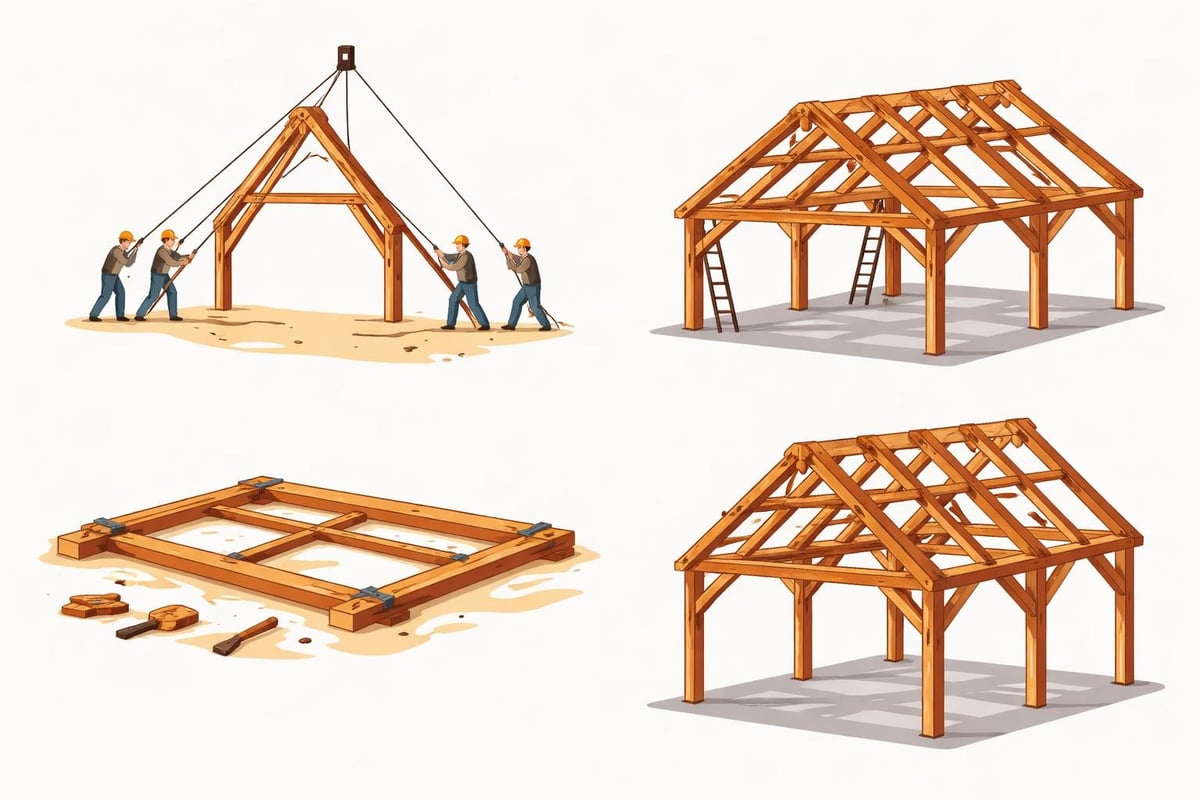
Constructing a traditional timber frame follows methodical sequences refined over centuries. Craftsmen first create full-scale drawings called rod work, establishing exact dimensions and joint locations for every component.
Next comes timber selection and preparation. Each piece must align with the grain, knots positioned away from stress points, and dimensions accounting for seasoning shrinkage. Marking out transfers rod measurements to actual timber using scribing tools and traditional numbering systems.
Cutting and fitting joints demands precision and experience. Modern power tools may speed rough cutting, but final fitting often requires hand tools that allow subtle adjustments. Frames traditionally rose in sections called bents, assembled horizontally then tilted upright into position.
Structural Principles and Load Distribution
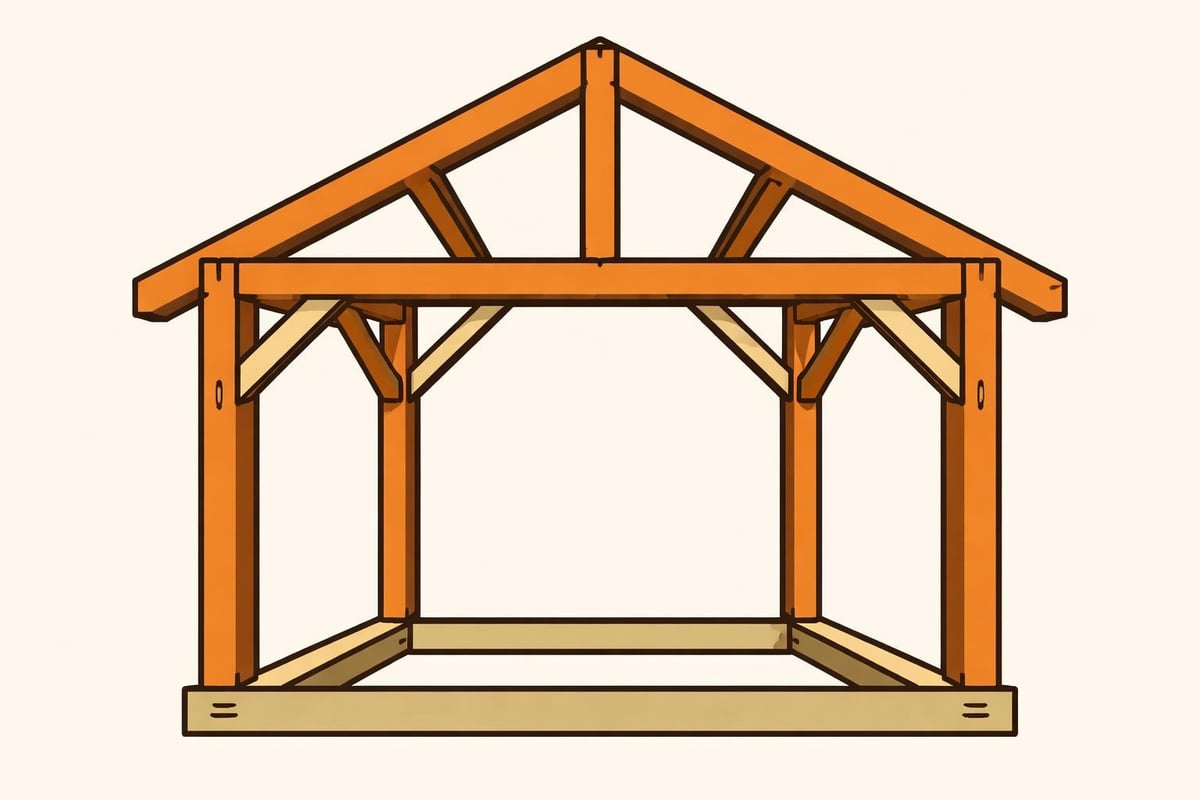
Understanding how traditional timber frame buildings carry loads reveals the engineering sophistication beneath apparent simplicity. The framework creates a rigid skeleton where vertical posts support horizontal beams, with diagonal braces providing lateral stability.
Post and Beam Fundamentals
Vertical posts stand at regular intervals, typically creating bays of 3 to 5 metres. These transfer roof and floor loads directly to foundation pads or sill beams. Horizontal tie beams connect post tops, resisting outward thrust from roof rafters whilst supporting floor joists.
The brilliance lies in how forces flow through joints into timber grain. Compression loads align with wood fibres, maximising strength. Where tension occurs, joint geometry and pegging prevent withdrawal.
Critical structural elements include:
- Principal posts forming primary vertical support at corners and bay divisions
- Tie beams spanning between posts to maintain frame geometry
- Braces positioned diagonally to resist racking and wind loads
- Plates running horizontally atop posts to distribute roof loads
- Sill beams forming the base framework and elevating timber above ground moisture
Wind Bracing and Stability
Traditional timber frame structures achieve lateral stability through strategically positioned braces. These diagonal members triangulate rectangular bays, preventing the frame from deforming under wind pressure or uneven loading.
Passing braces, extending from post base to opposite beam end, prove particularly effective. Their acute angles and long span create substantial resistance to racking. When combined with tension bracing in upper sections, the frame becomes remarkably resilient.
Modern Applications of Traditional Methods
Contemporary projects increasingly embrace traditional timber frame techniques, recognising benefits beyond aesthetic appeal. Modern timber frame construction demonstrates how heritage methods adapt to current building standards whilst preserving authentic character.
Residential Buildings and Extensions
Homeowners commission traditional timber frame structures for various applications. Complete dwellings showcase the frame as both structure and interior feature, with oak posts and beams defining living spaces whilst eliminating load-bearing walls.
Extensions benefit particularly from timber frame construction. The method allows substantial additions without disturbing existing foundations extensively. Oak frames complement both period properties and contemporary designs, bridging architectural styles through material authenticity.
Garden rooms, home offices, and leisure buildings represent growing markets. These smaller structures demonstrate timber framing at accessible scale, offering year-round comfort whilst creating distinctive focal points within landscapes.
| Building Type | Typical Span | Frame Complexity | Timeline |
|---|---|---|---|
| Two-storey house | 6-8m bays | High (multiple levels) | 4-8 months |
| Single-storey extension | 4-5m bays | Medium (one level) | 2-4 months |
| Garden room | 3-4m bays | Low (simple layout) | 1-2 months |
| Oak garage | 5-6m bays | Low to medium | 6-12 weeks |
Commercial and Agricultural Structures
Traditional timber frame construction serves commercial needs effectively. Farm buildings, particularly those in rural conservation areas, benefit from oak framing that satisfies planning requirements whilst providing functional space.
Visitor centres, retail environments, and hospitality venues use exposed timber frames to create memorable atmospheres. The structural system accommodates large open spans ideal for public spaces, whilst the natural materials contribute to wellbeing and environmental credentials.
Sustainability and Environmental Considerations
The history of timber framing reveals an inherently sustainable practice. Traditional methods prioritised local materials, minimal processing, and structures designed for centuries of service.
Carbon Benefits of Oak Construction
Timber frame buildings sequester carbon throughout their lifespan. Oak locks away atmospheric carbon absorbed during growth, storing it within the building fabric. This carbon remains captured for the structure's entire life, often exceeding 200 years.
Manufacturing timber requires significantly less energy than concrete or steel production. Processing logs into structural members demands minimal industrial intervention, particularly when using green oak that requires no kiln drying.
Environmental advantages include:
- Low embodied energy compared to conventional materials
- Renewable resource when sourced from managed woodlands
- Biodegradable at end of life without toxic residues
- Minimal construction waste through precise cutting
- Reduced transportation when using local timber
Responsible Sourcing and Woodland Management
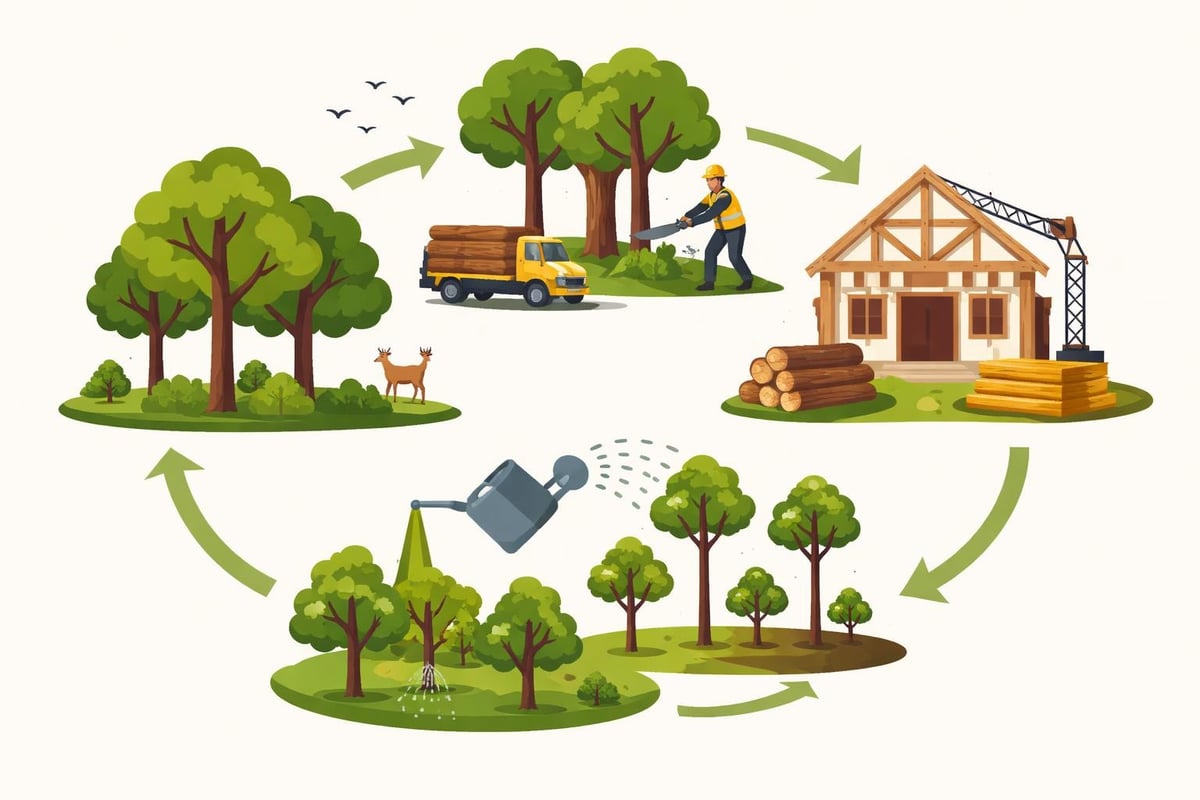
Sustainable traditional timber frame construction begins with responsible forestry. British oak from certified woodlands ensures replacement planting exceeds harvest rates, maintaining woodland ecosystems whilst providing building materials.
Selective thinning actually benefits woodland health, removing competing trees and allowing remaining specimens to develop stronger growth. This management creates diverse habitats whilst producing quality structural timber.
Design Flexibility and Architectural Expression
Traditional timber frame construction offers remarkable design freedom. The post and beam system creates clear spans without interior load-bearing walls, allowing floor plans to evolve with changing needs.
Interior Spatial Possibilities
Exposed oak frames define interior spaces through structural rhythm rather than solid partitions. Posts and beams articulate room divisions whilst maintaining visual connections and natural light flow. This approach suits contemporary open-plan living whilst providing traditional character.
Ceiling heights can vary dramatically within single structures. Vaulted spaces beneath exposed rafters contrast with lower, more intimate areas under flat ceilings. This three-dimensional variety creates architectural interest impossible with standard construction.
Accommodating modern services proves straightforward. Insulation panels fit between frame members, concealing wiring and plumbing whilst leaving structural oak exposed. This integrated approach delivers contemporary comfort without compromising aesthetic integrity.
Exterior Design Integration
Traditional timber frame structures adapt to diverse architectural styles. The frame can remain fully visible externally, with infill panels of glazing, oak boarding, or render providing weather protection. Alternatively, the frame can sit behind cladding, its presence revealed only in interior spaces.
Connecting timber frame extensions to existing buildings requires careful detailing. Oak frames must accommodate movement whilst maintaining weathertight junctions. Skilled craftsmen create transitional elements that respect both old and new construction.
Roof options range from traditional pegged rafters to modern truss systems. Exposed timber roof structures become interior features, whilst insulated solutions deliver superior thermal performance. The frame accommodates both approaches without structural compromise.
Regulatory Compliance and Building Standards
Modern traditional timber frame construction must satisfy comprehensive building regulations whilst preserving authentic methods. This balance requires expertise in both heritage techniques and contemporary performance standards.
Structural Calculations and Engineering
Current regulations demand structural calculations proving frame adequacy for anticipated loads. Engineers analyse timber grades, joint capacities, and deflection limits using established formulae adapted for traditional joinery.
The calculations account for oak's orthotropic nature, with different strengths parallel and perpendicular to grain. Joint efficiency factors recognise that traditional connections, whilst proven over centuries, transfer loads differently than modern fasteners.
Wind loading calculations consider exposure, building height, and frame geometry. Results determine brace sizing and positioning, ensuring stability without compromising the frame's traditional appearance.
Thermal Performance and Energy Efficiency
Achieving current U-value requirements challenges traditional construction, where solid oak provides limited insulation. Solutions typically involve insulated panels between structural members, creating thermal envelopes around the frame.
Various insulation strategies exist:
- External insulation with breathable membranes and cladding over frame
- Internal insulation between frame members with vapour control layers
- Hybrid approaches combining external and internal systems
- Structural insulated panels integrated with oak frame posts and beams
Each approach impacts design decisions, affecting reveal depths, junction details, and interior finishes. Insulating traditional timber frames requires balancing thermal performance with moisture management to prevent trapped condensation damaging oak.
Fire Safety and Protection
Building regulations specify fire resistance periods for structural elements. Oak frames in single-family dwellings often meet requirements through inherent fire resistance, as large-section timbers char slowly whilst maintaining structural capacity.
Multi-occupancy buildings or commercial applications may require additional protection. Intumescent coatings, plasterboard encasement, or increased section sizes provide necessary resistance whilst preserving traditional aesthetics where possible.
Comparing Traditional and Modern Frame Systems
Understanding differences between traditional timber frame methods and contemporary alternatives helps clients make informed decisions. Comparing timber frame construction approaches reveals distinct advantages in various applications.
Traditional Versus Platform Framing
Platform framing, dominating modern UK house building, uses small-section softwood studs at close centres. This method suits rapid construction with standardised components, whilst traditional oak framing emphasises bespoke design and exposed structure.
| Feature | Traditional Oak Frame | Platform Framing |
|---|---|---|
| Material | Green or air-dried oak | Kiln-dried softwood |
| Assembly | Mortise and tenon joints | Nailed or screwed connections |
| Visibility | Often exposed as feature | Typically concealed |
| Span capacity | Wide bays (4-8m) | Limited spans (max 4m) |
| Lifespan | 200+ years | 60-100 years |
| Flexibility | Easily modified interior | Fixed wall positions |
Post and Beam Versatility
Post and beam construction represents a modern interpretation of traditional principles. Whilst employing similar structural logic, post and beam systems may use engineered timbers, metal connections, or standardised dimensioning.
True traditional timber frame distinguishes itself through handcrafted joinery, authentic proportions, and oak's unique characteristics. The frame becomes architecture rather than merely structure, creating spaces where material, craft, and design unite.
Investment Considerations and Long-Term Value
Traditional timber frame buildings command premium pricing reflecting material costs, skilled labour, and extended construction timelines. Understanding these investments relative to long-term benefits helps clients appreciate true value.
Cost Components and Budgeting
Several factors influence timber frame construction costs:
- Oak timber pricing varies with specification, grade, and market conditions
- Joinery complexity affecting cutting time and skilled labour requirements
- Frame size and configuration determining material quantities and assembly duration
- Site accessibility influencing crane hire and logistics
- Finish specifications for infill panels, roofing, and services integration
Whilst initial costs exceed platform framing, traditional timber frames offer economic advantages through longevity, minimal maintenance, and aesthetic value contributing to property desirability.
Maintenance and Durability
Properly constructed traditional timber frame buildings require remarkably little maintenance. External oak exposed to weather develops silver-grey patina without structural degradation. Interior oak may darken slightly but remains stable and beautiful for generations.
Essential maintenance involves ensuring rainwater management systems function correctly and ventilation prevents excessive moisture accumulation. The frame itself, comprising heartwood from mature oaks, resists decay and insect attack without chemical treatments.
Regular inspections checking joint tightness, frame plumbness, and moisture levels prevent minor issues becoming significant problems. Most traditional frames reach 50 years without requiring any remedial work beyond basic cleaning.
Craftsmanship and Skill Requirements
Traditional timber frame construction demands skills developed over years of training and practice. The craft combines physical ability, spatial reasoning, material understanding, and aesthetic judgment.
Training and Knowledge Transfer
Historically, timber framers learned through apprenticeships lasting seven years or more. Modern training compresses timelines whilst maintaining rigorous standards. Organisations offer courses combining classroom theory with hands-on projects under master craftsmen supervision.
Essential skills include:
- Interpreting architectural drawings and creating rod work
- Selecting appropriate timber for specific structural roles
- Laying out and cutting precise joints by hand and machine
- Understanding wood movement and seasonal effects
- Managing frame assembly and raising operations safely
The knowledge extends beyond mechanical skills to encompass architectural history, building science, and client communication. Successful timber framers balance traditional methods with contemporary requirements.
Tools and Equipment
Traditional timber frame carpentry employs specialised tools refined over centuries. Whilst power equipment speeds rough cutting, hand tools remain essential for final fitting and adjustment.
Core hand tools include slicks (large chisels for mortise cleaning), timber scribes for marking joints, and traditional squares ensuring accuracy. Wooden mallets drive oak pegs without damaging timber surfaces. Each tool serves specific purposes, often modified to individual craftsman preferences.
Modern workshops combine tradition with technology. Chainsaws speed initial dimensioning, whilst portable mills convert logs to beams on-site. Computer-aided design helps visualise structures, though final marking and cutting still rely on craftsman judgment and skill.
Specialised Applications and Project Types
Traditional timber frame techniques suit diverse building types, each presenting unique design challenges and opportunities. Understanding these applications demonstrates the method's versatility.
Oak Garages and Outbuildings
Timber frame garages combine practical vehicle storage with architectural presence. The open-span capability accommodates multiple vehicles without internal posts obstructing access. Oak frames weather naturally, developing character whilst protecting contents.
These structures often incorporate upper storage, workshops, or living spaces. The frame carries floor loads easily, creating versatile buildings serving multiple functions throughout their lifespan.
Garden Structures and Outdoor Living
Traditional timber framing creates stunning outdoor structures. Oak frame porches provide sheltered entrances enhancing both period and contemporary properties. Their vertical proportions suit British architecture whilst offering practical weather protection.
Gazebos, pergolas, and timber frame garden rooms extend living space into landscapes. Open structures celebrate joinery craftsmanship whilst providing shade and shelter. Enclosed garden rooms create year-round retreats, home offices, or leisure spaces maintaining visual connection with gardens.
Heritage Projects and Conservation
Repairing historic timber frame buildings requires specialised knowledge matching original construction methods. Conservation work must respect traditional techniques whilst meeting modern performance standards where appropriate.
This work involves investigating existing structures, understanding original design intent, and sourcing matching materials. Repairs integrate seamlessly with historic fabric, maintaining authenticity whilst ensuring structural adequacy for continued use.
The Future of Traditional Timber Framing
Interest in traditional timber frame construction continues growing as clients seek sustainable, distinctive, and enduring buildings. Several trends shape the craft's evolution whilst preserving essential heritage methods.
Technology Integration
Digital tools increasingly assist traditional craftsmen. CAD software models complex frames, identifying potential conflicts before cutting begins. CNC machinery can rough-cut joints, though skilled fitters still refine and adjust components.
This technology integration improves efficiency without eliminating handcraft. The combination produces precise frameworks whilst maintaining traditional aesthetics and authentic joinery methods that define the craft.
Hybrid Construction Approaches
Modern projects often combine traditional timber framing with complementary systems. Timber frame hybrid construction might feature oak frames creating primary structure whilst insulated panel systems provide thermal performance.
These hybrids respect traditional principles whilst delivering contemporary comfort. The oak frame remains architecturally dominant, with modern elements receding to supporting roles. Results satisfy both heritage appreciation and practical requirements.
Traditional timber frame construction represents far more than nostalgic building methods; it offers proven durability, architectural distinction, and environmental responsibility that modern construction increasingly values. Whether you're considering a complete timber frame home, planning an extension, or dreaming of a distinctive oak structure, these time-honoured techniques deliver buildings combining authentic craftsmanship with lasting performance. Acorn to Oak Framing specialises in bringing traditional timber frame expertise to projects throughout the UK, creating bespoke structures where heritage skills meet contemporary living requirements.


